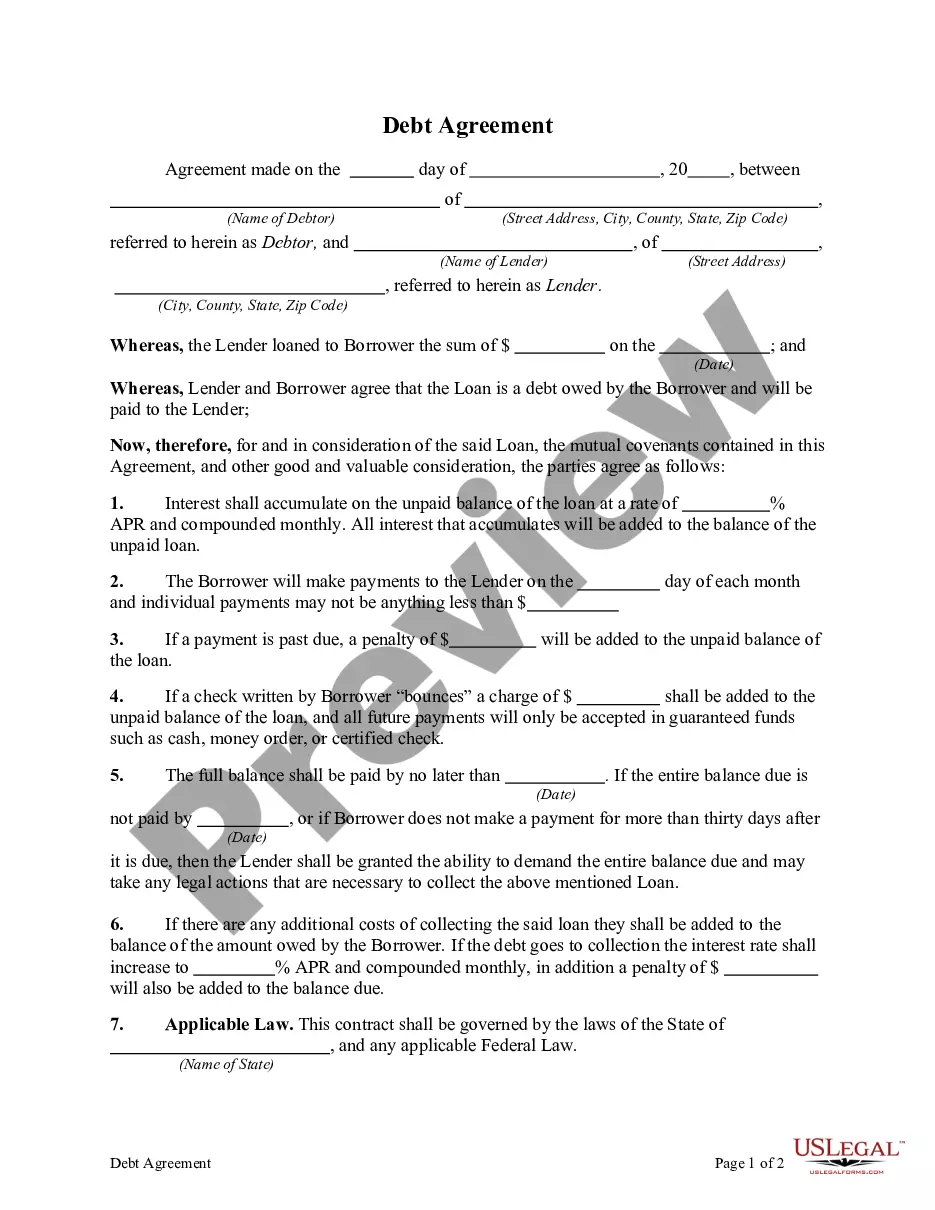
Maine Debt Agreement
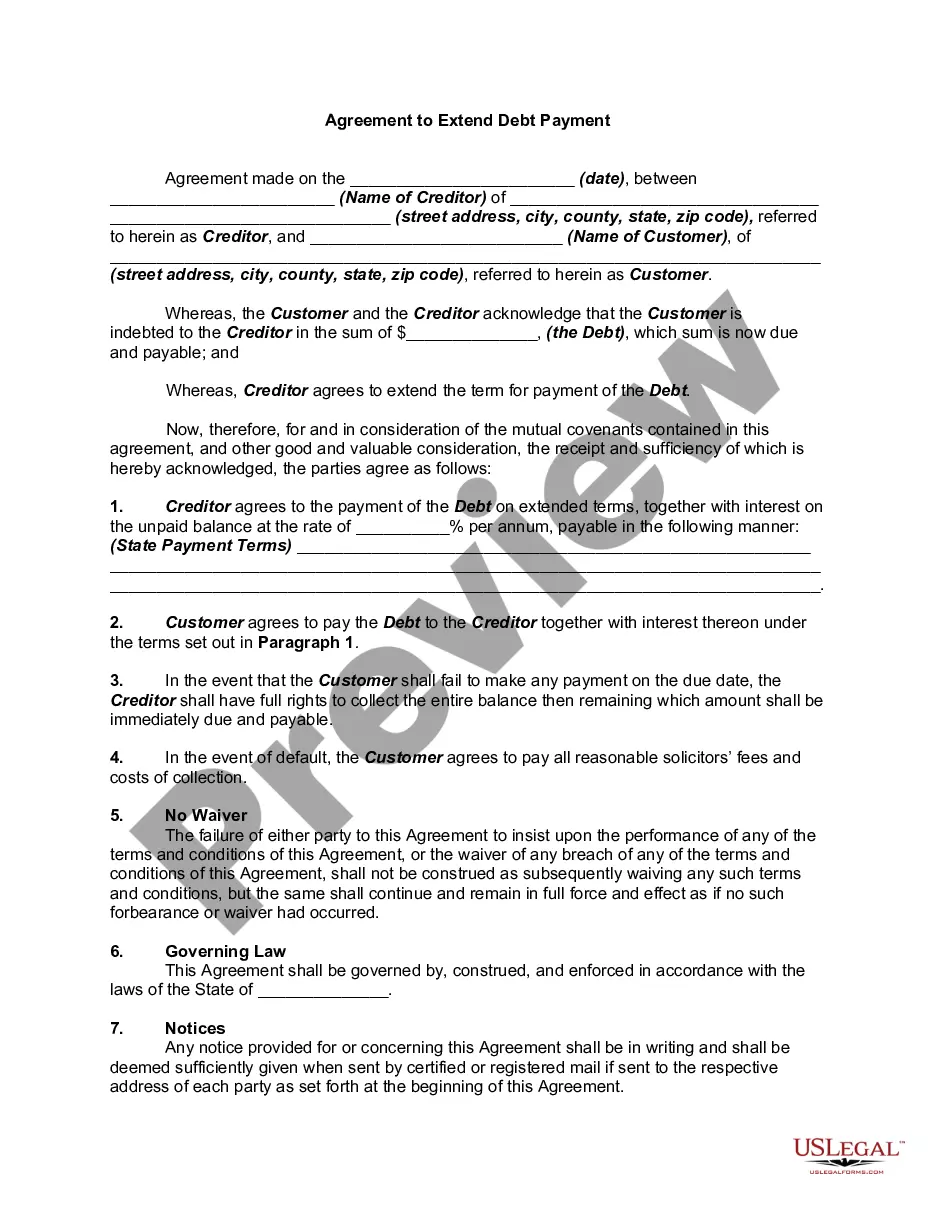
Description
Get your form ready online
Our built-in tools help you complete, sign, share, and store your documents in one place.
Make edits, fill in missing information, and update formatting in US Legal Forms—just like you would in MS Word.
Download a copy, print it, send it by email, or mail it via USPS—whatever works best for your next step.
Sign and collect signatures with our SignNow integration. Send to multiple recipients, set reminders, and more. Go Premium to unlock E-Sign.
If this form requires notarization, complete it online through a secure video call—no need to meet a notary in person or wait for an appointment.
We protect your documents and personal data by following strict security and privacy standards.

Make edits, fill in missing information, and update formatting in US Legal Forms—just like you would in MS Word.

Download a copy, print it, send it by email, or mail it via USPS—whatever works best for your next step.

Sign and collect signatures with our SignNow integration. Send to multiple recipients, set reminders, and more. Go Premium to unlock E-Sign.

If this form requires notarization, complete it online through a secure video call—no need to meet a notary in person or wait for an appointment.

We protect your documents and personal data by following strict security and privacy standards.
Looking for another form?









How to fill out Debt Agreement?
Have you ever found yourself in a situation where you need documents for either business or personal purposes on a daily basis.
There are numerous legal document templates accessible online, but finding reliable ones can be challenging.
US Legal Forms offers thousands of template options, including the Maine Debt Agreement, which can be tailored to meet both federal and state requirements.
Once you have located the right template, click Buy now.
Select the pricing plan you prefer, fill out the required information to create your account, and purchase your order using your PayPal or credit card.
- If you are already familiar with the US Legal Forms website and have an account, simply Log In.
- Then, you can download the Maine Debt Agreement template.
- If you do not have an account and wish to start using US Legal Forms, follow these steps.
- Find the template you need and ensure it is for the correct city/state.
- Utilize the Preview button to examine the form.
- Read the description to ensure you have selected the appropriate template.
- If the template isn’t what you are looking for, use the Search area to find the template that fits your needs.
Form popularity
FAQ
Deciding whether to go to small claims court for $500 depends on the situation and effort required. While $500 might seem small, pursuing the case can offer closure and potentially recover your funds. However, consider the time and resources you'll invest in the process. Utilizing a Maine Debt Agreement might provide a quicker resolution without the need for court involvement.
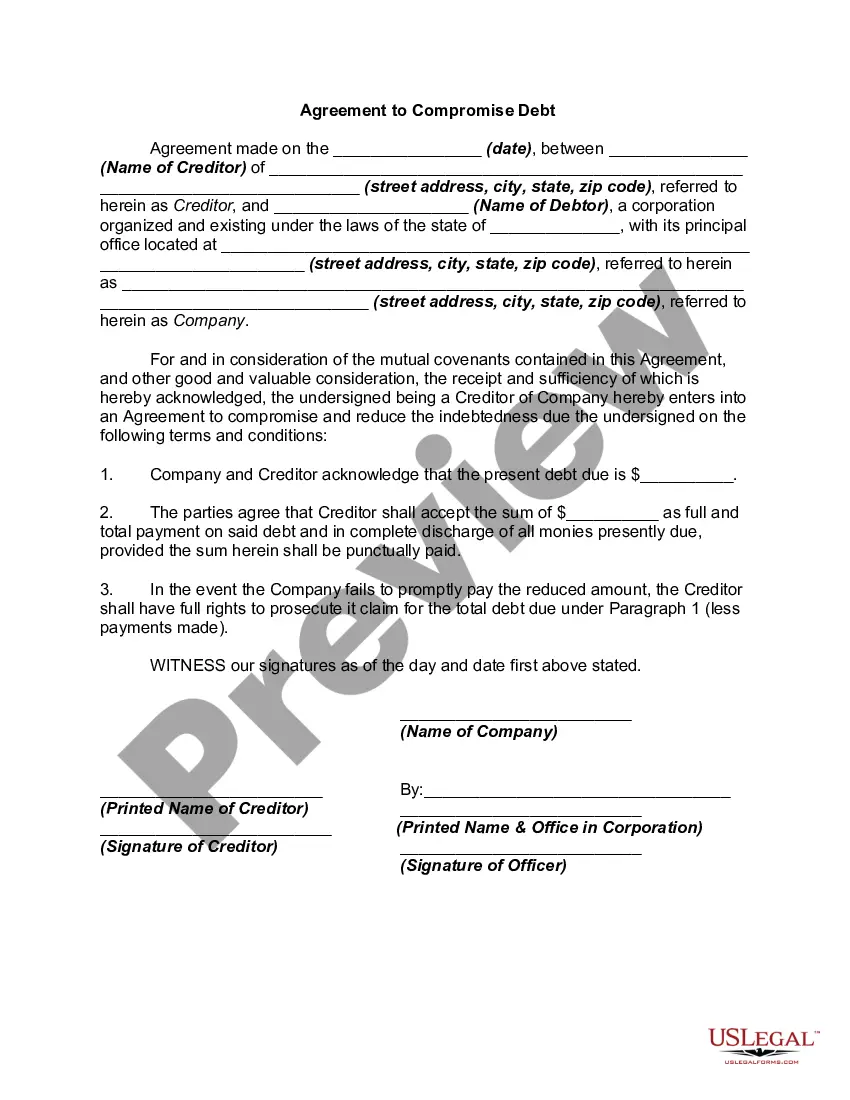
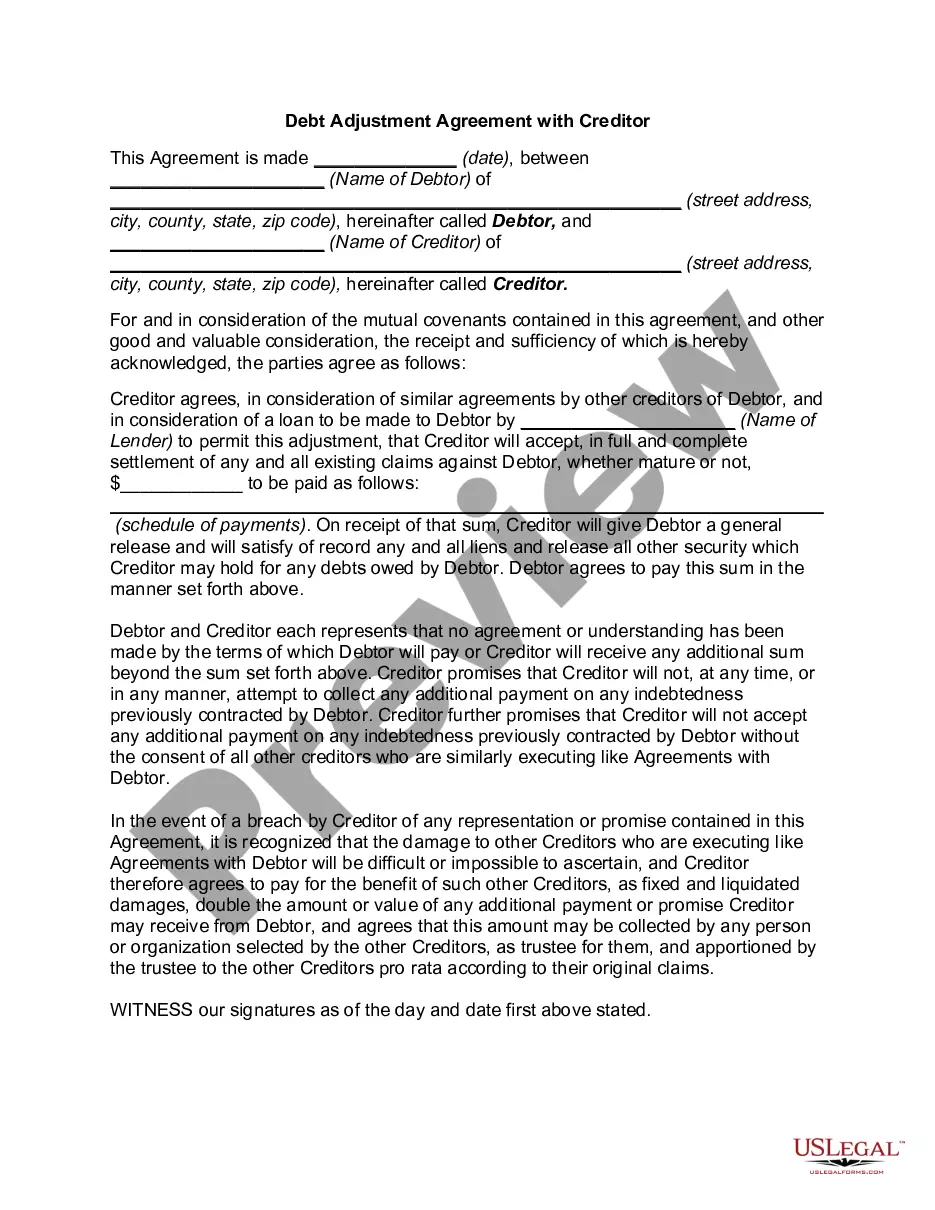
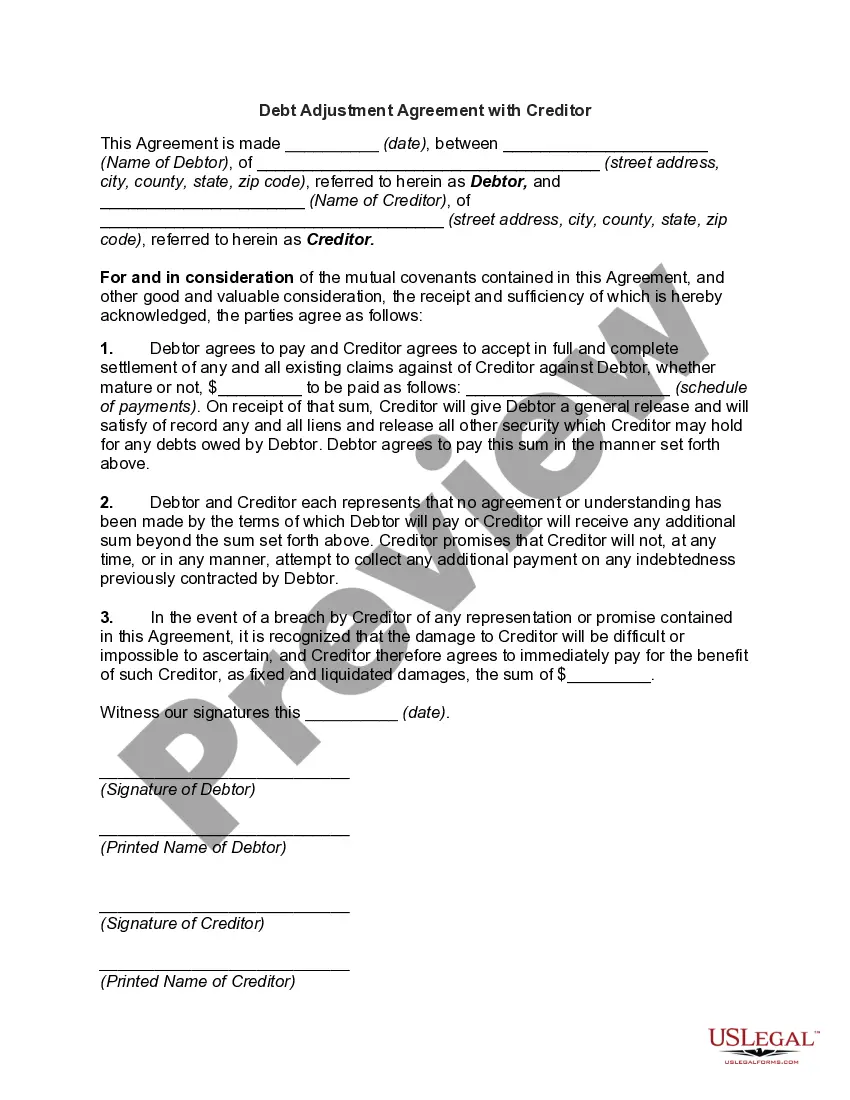
To write a debt settlement agreement, start by clearly stating the parties involved, the amount owed, and the terms of the settlement. Be sure to include payment methods, deadlines, and any other relevant conditions. Make it clear that the agreement resolves the debt entirely once completed. If you're unsure of how to draft such a document, platforms like USLegalForms offer templates that can guide you in creating a comprehensive Maine Debt Agreement.
In Maine, the maximum amount you can claim in small claims court is $6,000, similar to other jurisdictions. This limit provides an opportunity for individuals to settle disputes efficiently without the need for lengthy legal processes. If your financial dispute falls below this cap, pursuing a resolution through a Maine Debt Agreement might be an effective next step.
There are several states with restrictive wage garnishment practices, but North Carolina and Texas do not allow wage garnishments for most debts at all. These states protect a debtor's wages, prioritizing their financial stability. If you're dealing with wage garnishment issues, understanding your rights and possibly settling with a Maine Debt Agreement could be beneficial.
In most states, including Maine, the maximum claim amount in small claims court typically hovers around $6,000. This limit helps maintain quick and efficient resolution without the complexities of larger court cases. If your claim exceeds this threshold, you might need to file in a higher court. For claims under this amount, you can easily seek a Maine Debt Agreement to settle your financial disputes.
Yes, a debt collector can garnish your wages after obtaining a court judgment without prior notification. They often have the legal right to take a portion of your wages directly from your paycheck. However, you should receive a notice of the court decision regarding the debt. If you're facing issues with debt collection, consider exploring a Maine Debt Agreement to find a suitable resolution.
Debt collection in Maine is typically allowed for six years from the date of default. This time frame includes actions like court judgments and garnishments. After this period, creditors lose the legal right to pursue collections in court. Understanding this aspect is crucial, and a Maine Debt Agreement can provide guidance if you're dealing with lingering debts.
In Maine, the limit for filing a small claims case is $6,000. This court provides a simpler process for consumers to resolve disputes, often without the need for an attorney. If you find yourself in a dispute over debt or related issues, small claims court can be a viable option. A Maine Debt Agreement may also help you negotiate debts without court involvement.
Generally, a 10-year-old debt in Maine cannot be collected through legal action, as it falls outside the six-year statute of limitations. However, a collector may still attempt to collect the debt through other means. It’s essential to know your rights before responding to any requests regarding such old debts. A Maine Debt Agreement can clarify your options and help you move forward.
Yes, debt collectors can garnish wages in Maine after obtaining a court judgment against you. They must follow a legal process to get this judgment, and the amount they can take is limited. Typically, up to 25% of your disposable earnings can be garnished. If you’re facing this situation, consider exploring a Maine Debt Agreement as a possible solution.