A subcontractor is a person who is awarded a portion of an existing contract by a principal or general contractor. Subcontractor performs work under a contract with a general contractor, rather than the employer who hired the general contractor. Determining whether someone is a subcontractor depends on the facts in each case, but is generally determined by whether control over the manner and methods of the work is retained by the employer.
Building construction is a common example of how the contractor-subcontractor relationship works. The general contractor takes prime responsibility for seeing that the building is constructed and signs a contract to do so. Then they retain subcontractors to perform specialty work such as installing plumbing, laying carpet, making cabinetry, and landscaping. Usually each subcontractor is paid a somewhat lesser sum than what the contractor receives for the work. If the owner refuses to pay the general contractor for work a subcontractor has performed, the subcontractor has the right to file a mechanic's lien against the property for the cost of the unpaid work.
Maine Agreement Between Contractor and Subcontractor
State:
Multi-State
Category:
Control #:
US-02362BG
Format:
Word;
PDF;
Rich Text
388 downloads

Reviewed by
Description
Free preview
Get your form ready online
Our built-in tools help you complete, sign, share, and store your documents in one place.
Built-in online Word editor
Make edits, fill in missing information, and update formatting in US Legal Forms—just like you would in MS Word.
Export easily
Download a copy, print it, send it by email, or mail it via USPS—whatever works best for your next step.
E-sign your document
Sign and collect signatures with our SignNow integration. Send to multiple recipients, set reminders, and more. Go Premium to unlock E-Sign.
Notarize online 24/7
If this form requires notarization, complete it online through a secure video call—no need to meet a notary in person or wait for an appointment.
Store your document securely
We protect your documents and personal data by following strict security and privacy standards.

Make edits, fill in missing information, and update formatting in US Legal Forms—just like you would in MS Word.

Download a copy, print it, send it by email, or mail it via USPS—whatever works best for your next step.

Sign and collect signatures with our SignNow integration. Send to multiple recipients, set reminders, and more. Go Premium to unlock E-Sign.

If this form requires notarization, complete it online through a secure video call—no need to meet a notary in person or wait for an appointment.

We protect your documents and personal data by following strict security and privacy standards.
Looking for another form?

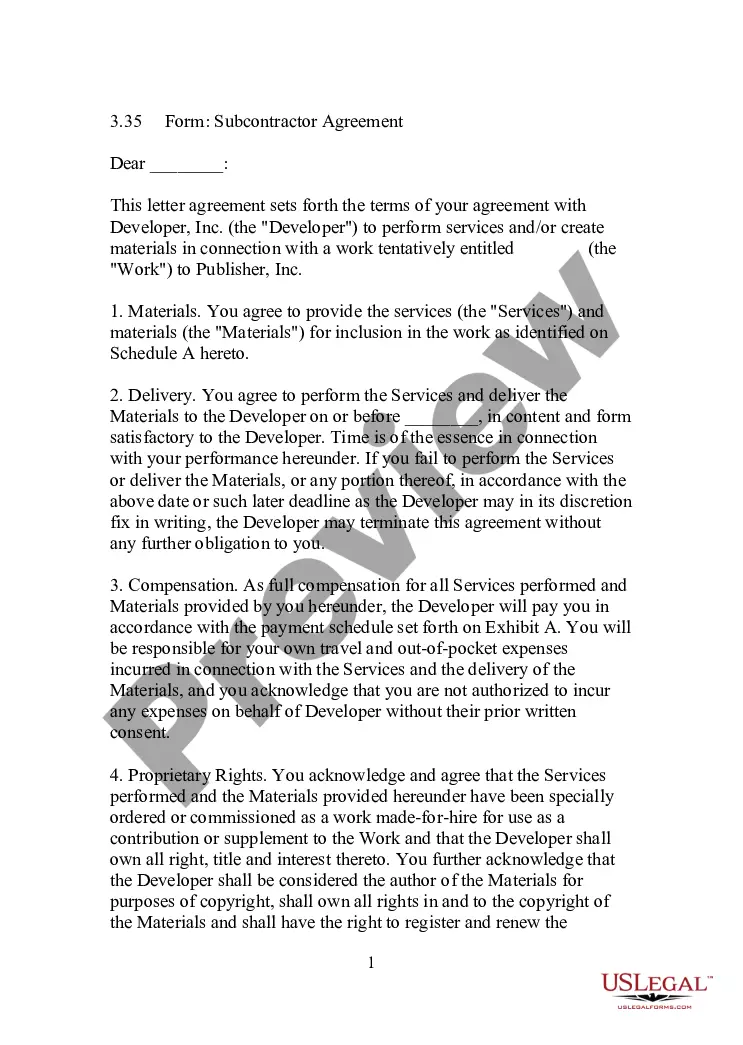
How to fill out Agreement Between Contractor And Subcontractor?
You can spend time online looking for the valid document template that meets the state and federal requirements you need.
US Legal Forms provides a vast array of legal forms that have been reviewed by experts.
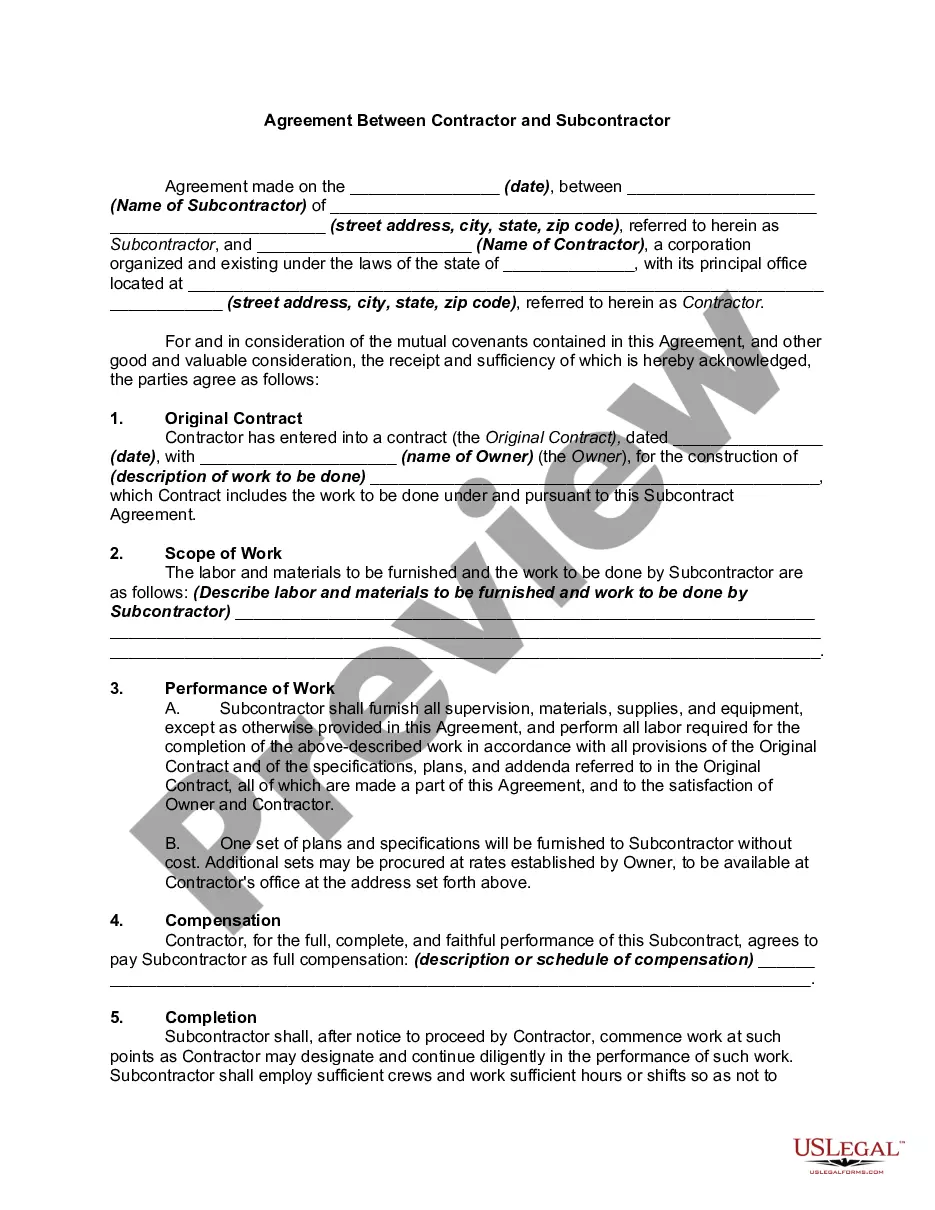
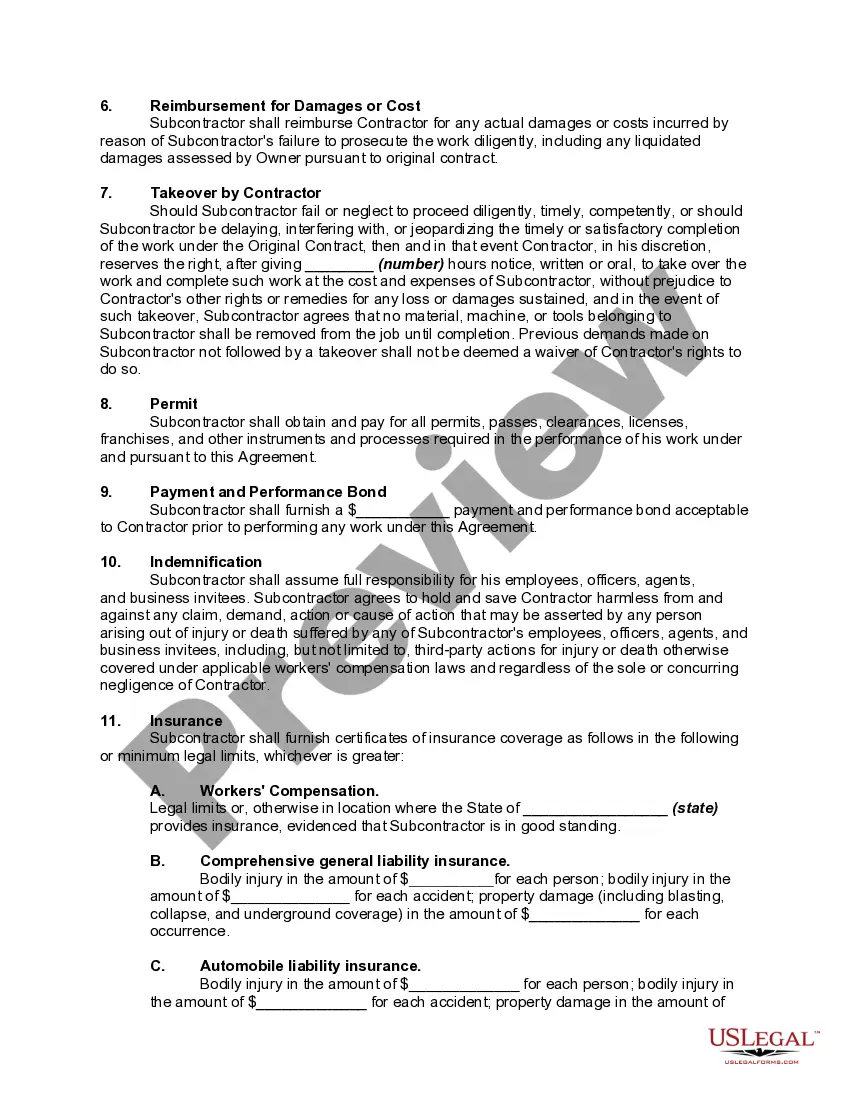
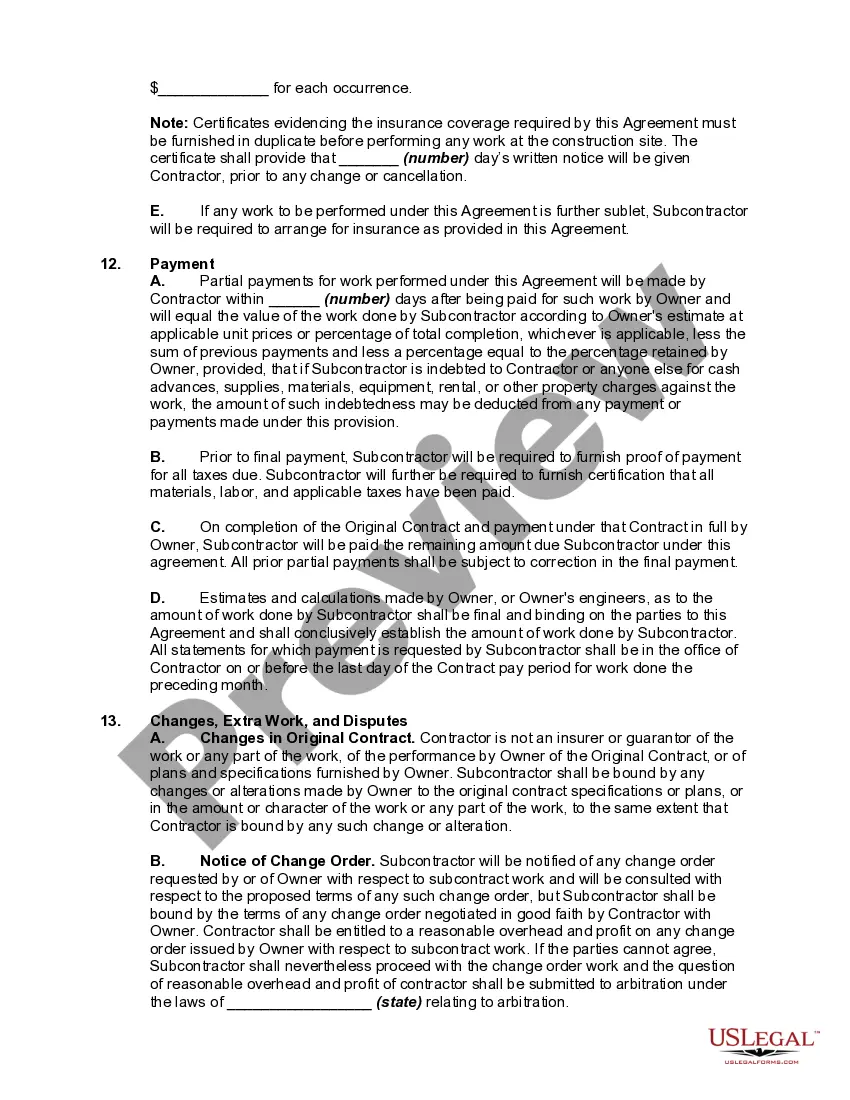
You can download or print the Maine Agreement Between Contractor and Subcontractor from the service.
If available, utilize the Review button to examine the document template as well.
- If you possess a US Legal Forms account, you can Log In and then select the Download button.
- Afterward, you can complete, modify, print, or sign the Maine Agreement Between Contractor and Subcontractor.
- Every legal document template you obtain is yours indefinitely.
- To get another copy of a purchased form, navigate to the My documents section and click the corresponding button.
- If you are using the US Legal Forms website for the first time, follow the simple instructions below.
- First, ensure you have selected the right document template for the county/region of your choice.
- Refer to the form description to confirm that you have chosen the correct document.
Form popularity
FAQ
Determining how much a contractor should make off a subcontractor involves understanding the terms outlined in the Maine Agreement Between Contractor and Subcontractor. Typically, this can vary depending on the scope of work and the market rates. Contractors often aim for a markup of 10% to 30% on subcontractor fees, which helps cover project management and coordination costs. It is essential to establish clear expectations in the agreement to ensure both parties understand their financial obligations.
Creating subcontractor agreements requires careful planning and detail. Start by defining the scope of work, payment structures, and timelines. Utilizing resources like US Legal Forms can simplify the process by providing templates and guidance tailored to the Maine Agreement Between Contractor and Subcontractor, ensuring your agreement is comprehensive and legally binding.
Yes, having a subcontractor agreement is essential, especially when engaging in the Maine Agreement Between Contractor and Subcontractor. This formal agreement protects both parties by clearly outlining duties, expectations, and compensation terms. It also provides legal recourse in the event of disagreements, ensuring that both parties are on the same page.
An MoU, or Memorandum of Understanding, is a document that outlines a mutual agreement between a contractor and a subcontractor. In the context of the Maine Agreement Between Contractor and Subcontractor, it serves as a preliminary agreement that can guide the formation of a more formal contract later. The MoU typically details the intentions of both parties regarding project scope and mutual responsibilities.
The relationship between a contractor and subcontractor, as established in the Maine Agreement Between Contractor and Subcontractor, is hierarchical yet collaborative. The contractor oversees the overall project, while the subcontractor focuses on specific tasks within that project. This relationship fosters teamwork and ensures that various aspects of the project are handled by specialized professionals.
In the context of the Maine Agreement Between Contractor and Subcontractor, this type of agreement specifies the relationship between a main company and a subcontractor. It includes details such as project timelines, specific tasks, and payment schedules. Having this agreement helps clarify roles and protect both parties in case of disputes.
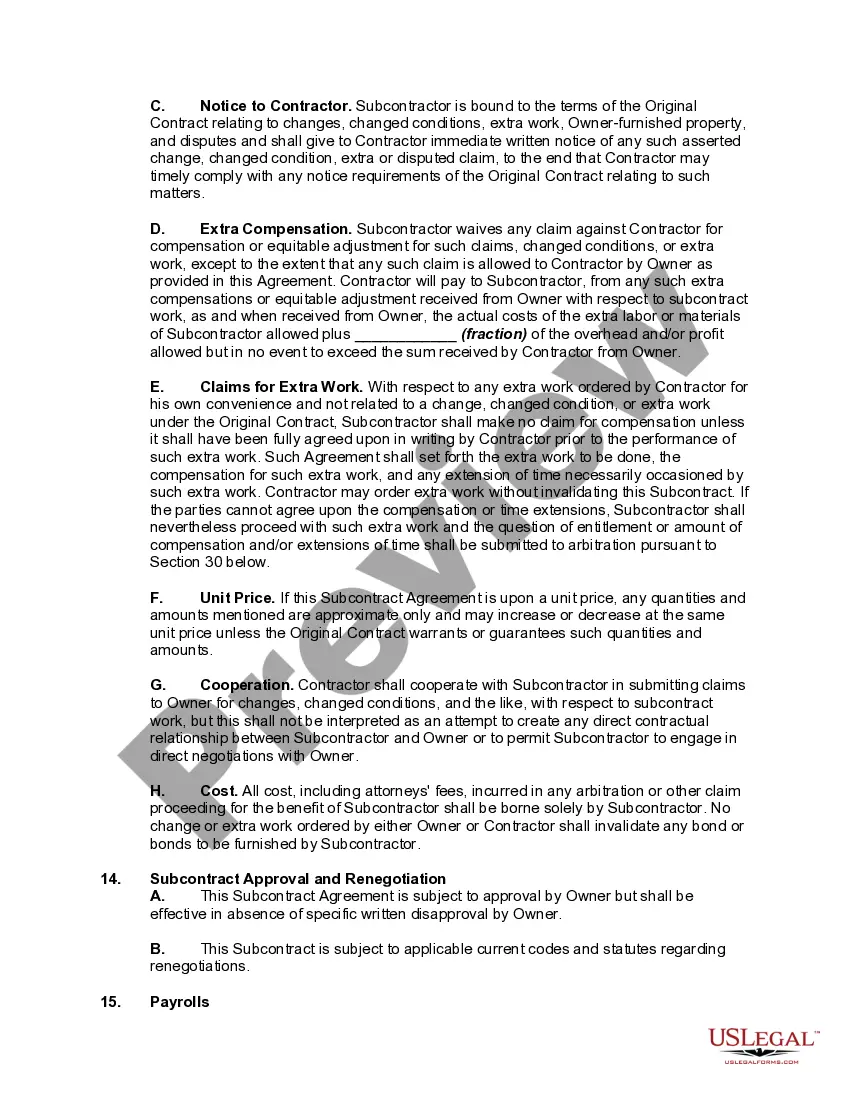
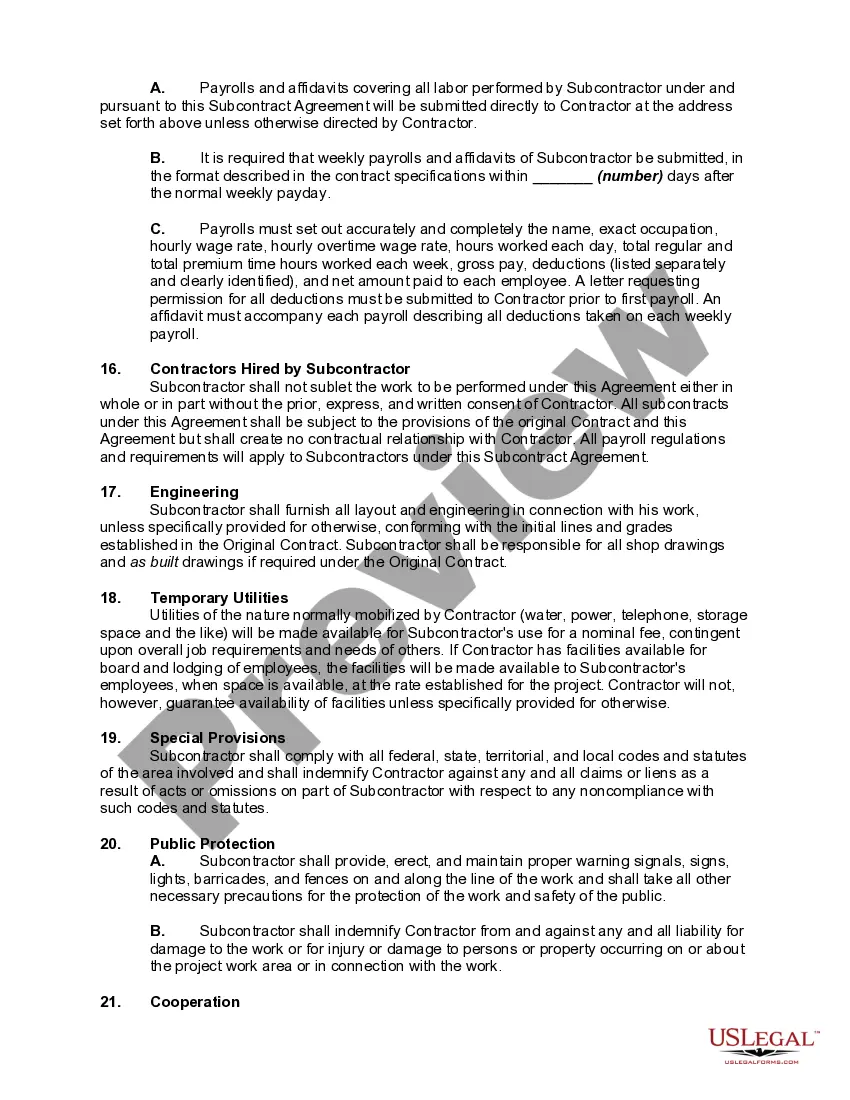
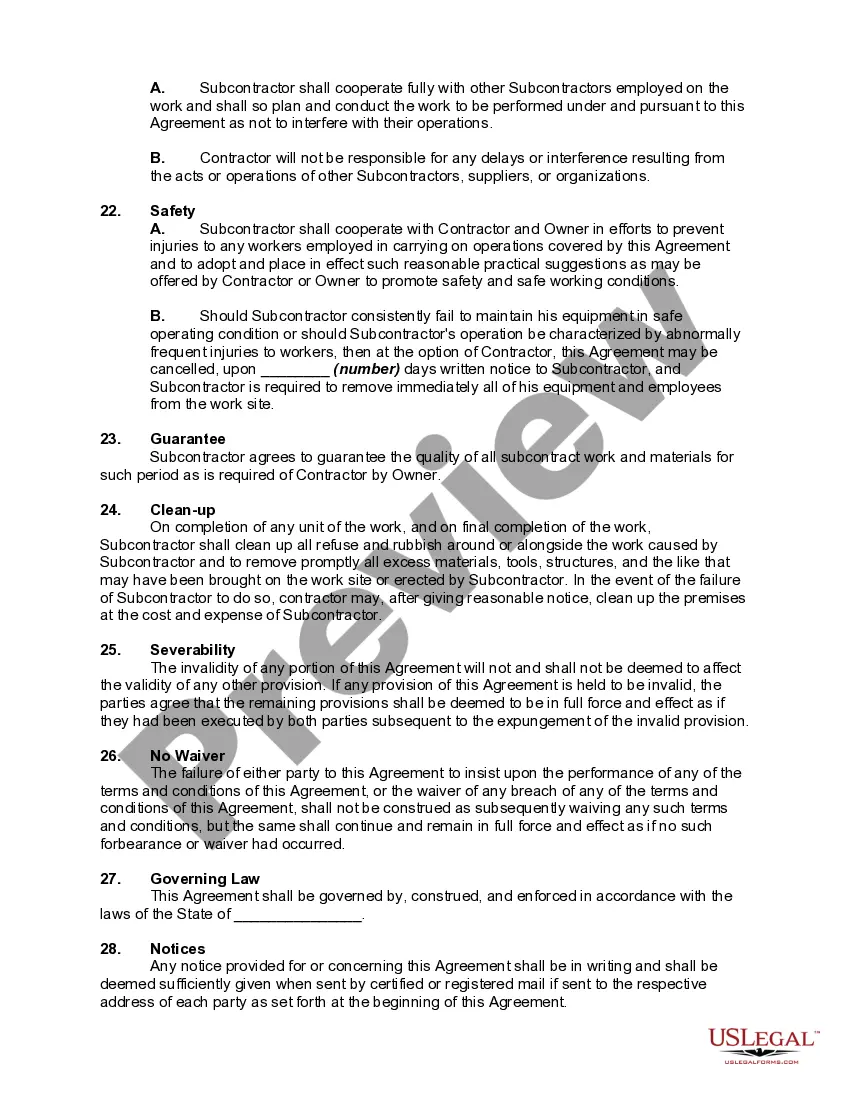
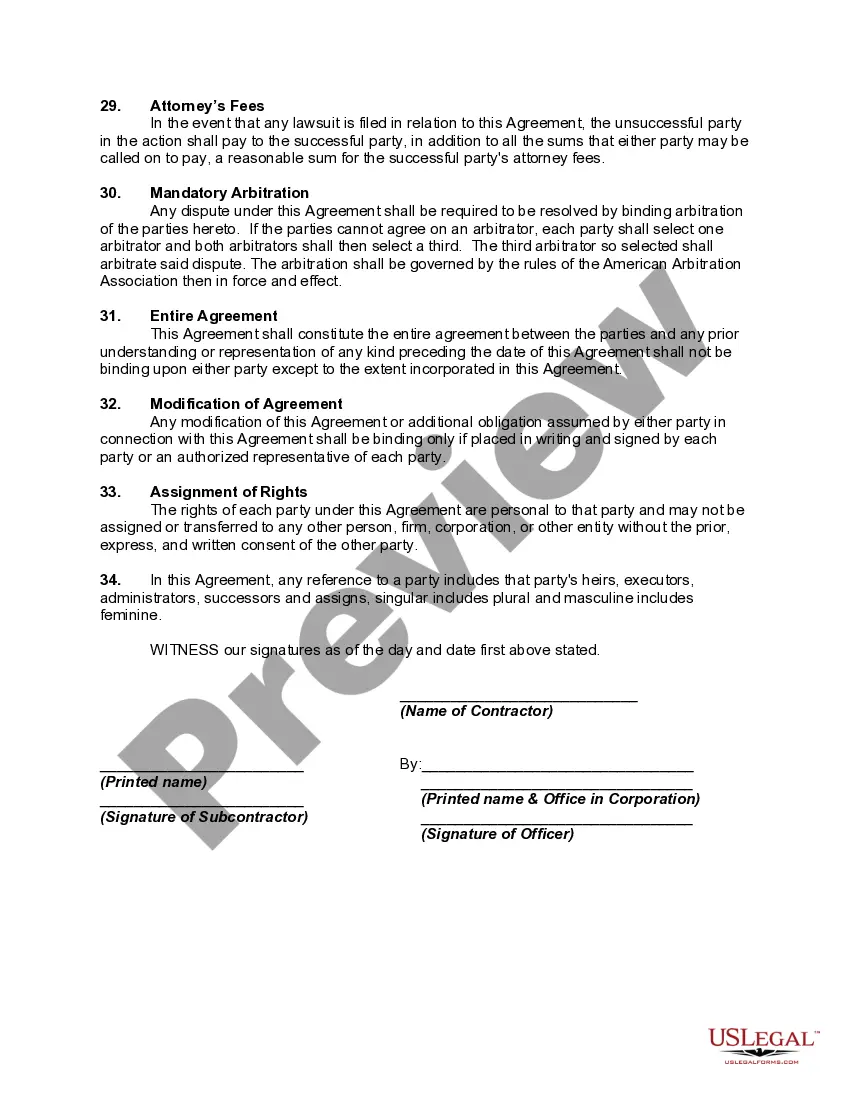
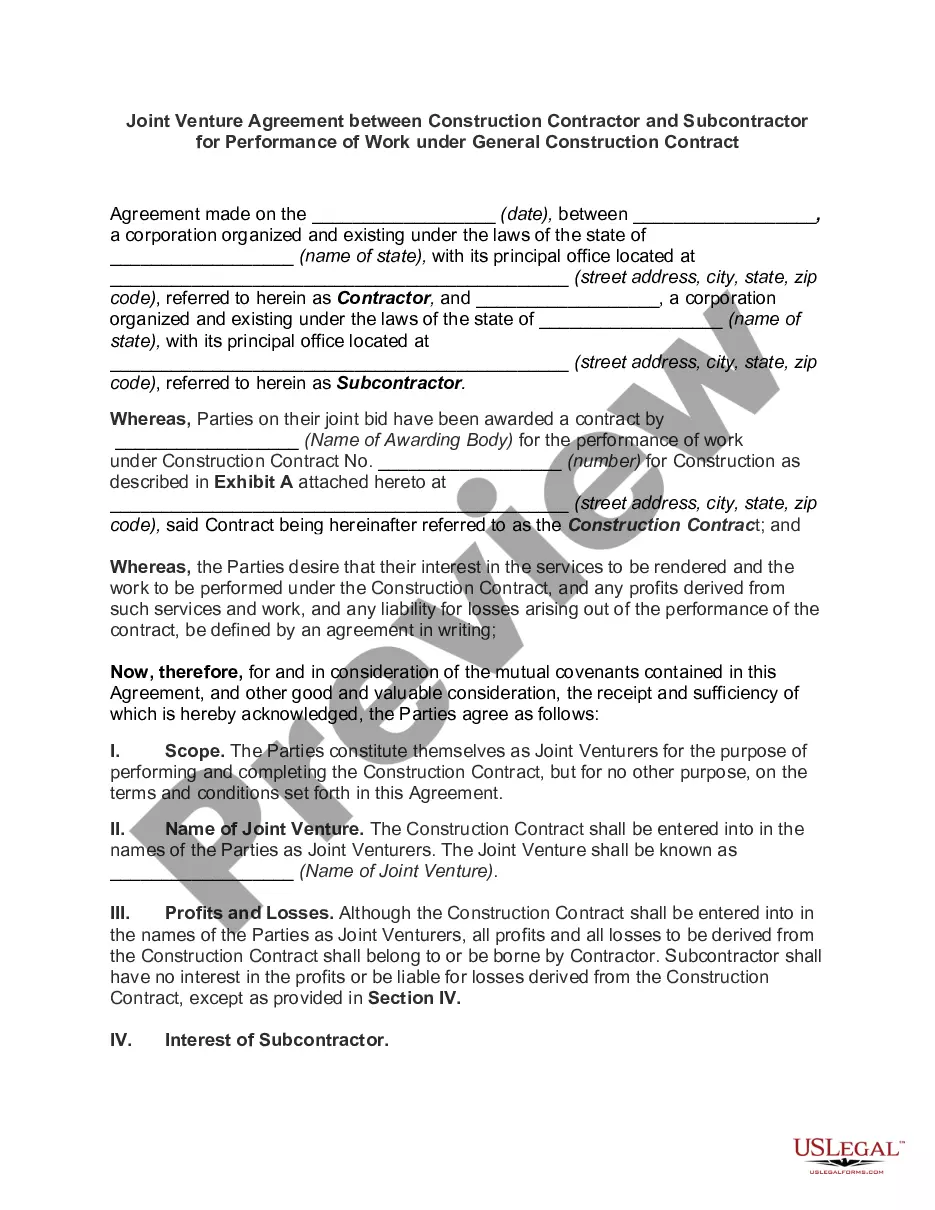
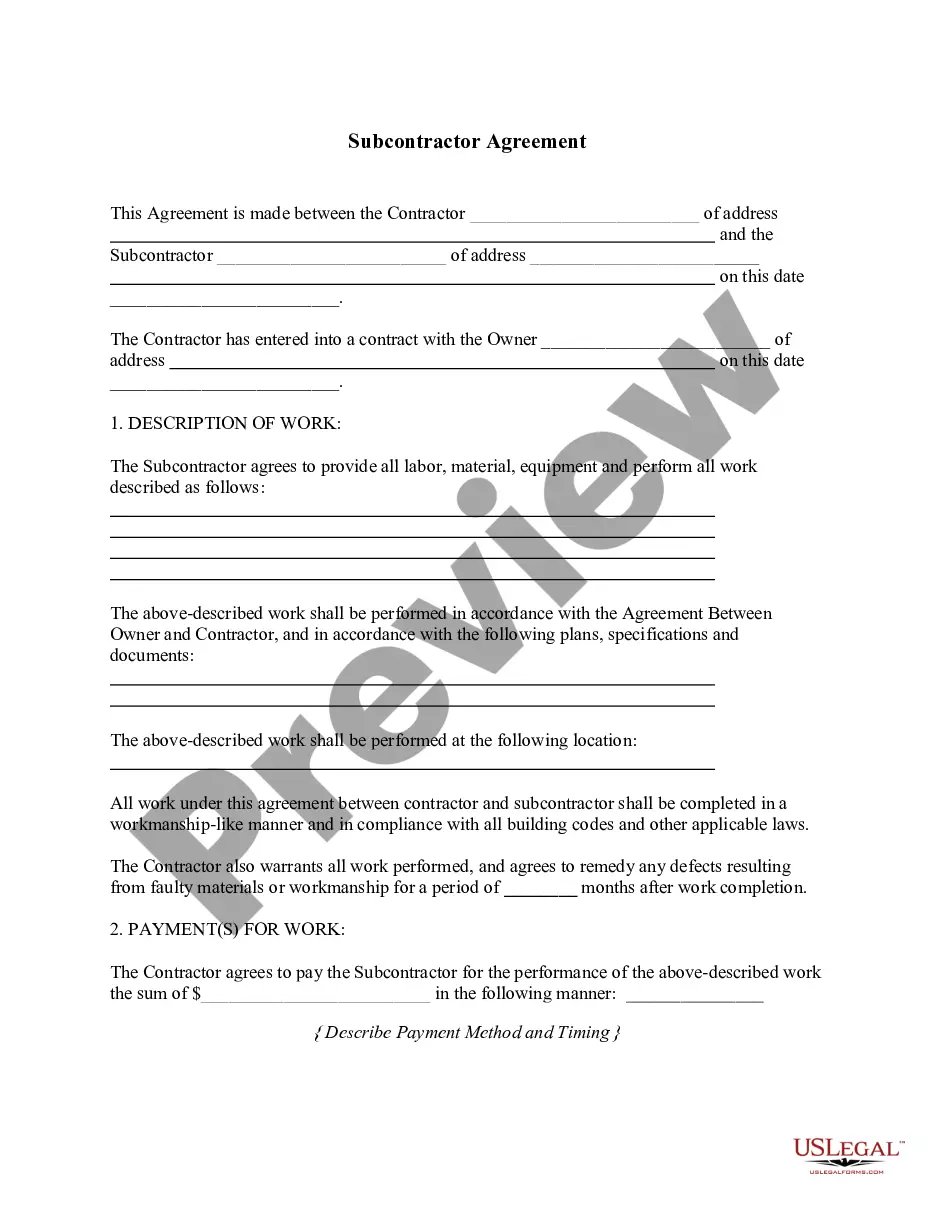
The Maine Agreement Between Contractor and Subcontractor is a formal contract that outlines the terms and conditions of the work to be done by a subcontractor for a general contractor. This agreement defines responsibilities, payment terms, and the scope of work. It ensures both parties understand their obligations, thereby reducing conflicts and promoting a smoother project flow.
Creating a subcontractor agreement involves outlining key details such as scope of work, payment terms, and liability clauses in a Maine Agreement Between Contractor and Subcontractor. You should specify timelines and expectations clearly to avoid misunderstandings. Consider using platforms like uslegalforms to access templates and guidance tailored to your needs.
Typically, the main contractor retains some liability for the actions of nominated subcontractors as outlined in the Maine Agreement Between Contractor and Subcontractor. This means if a nominated subcontractor fails to meet their obligations, the main contractor could still face repercussions. Establishing clear responsibilities in the agreement can help delineate liability.
Whether a contractor should indemnify a subcontractor depends on the specifics of the Maine Agreement Between Contractor and Subcontractor. In some cases, this arrangement provides protection for subcontractors against claims resulting from the contractor's negligence or actions. Contractors and subcontractors should discuss the terms to ensure fair risk distribution.