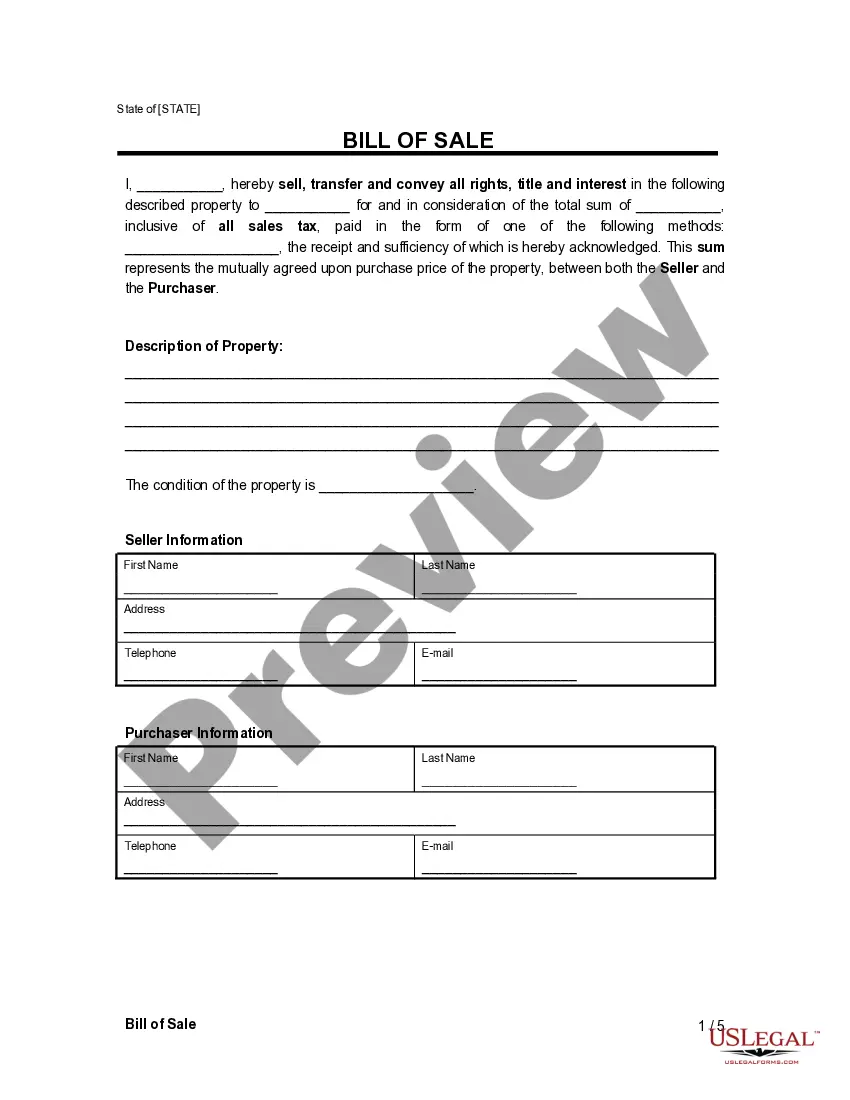
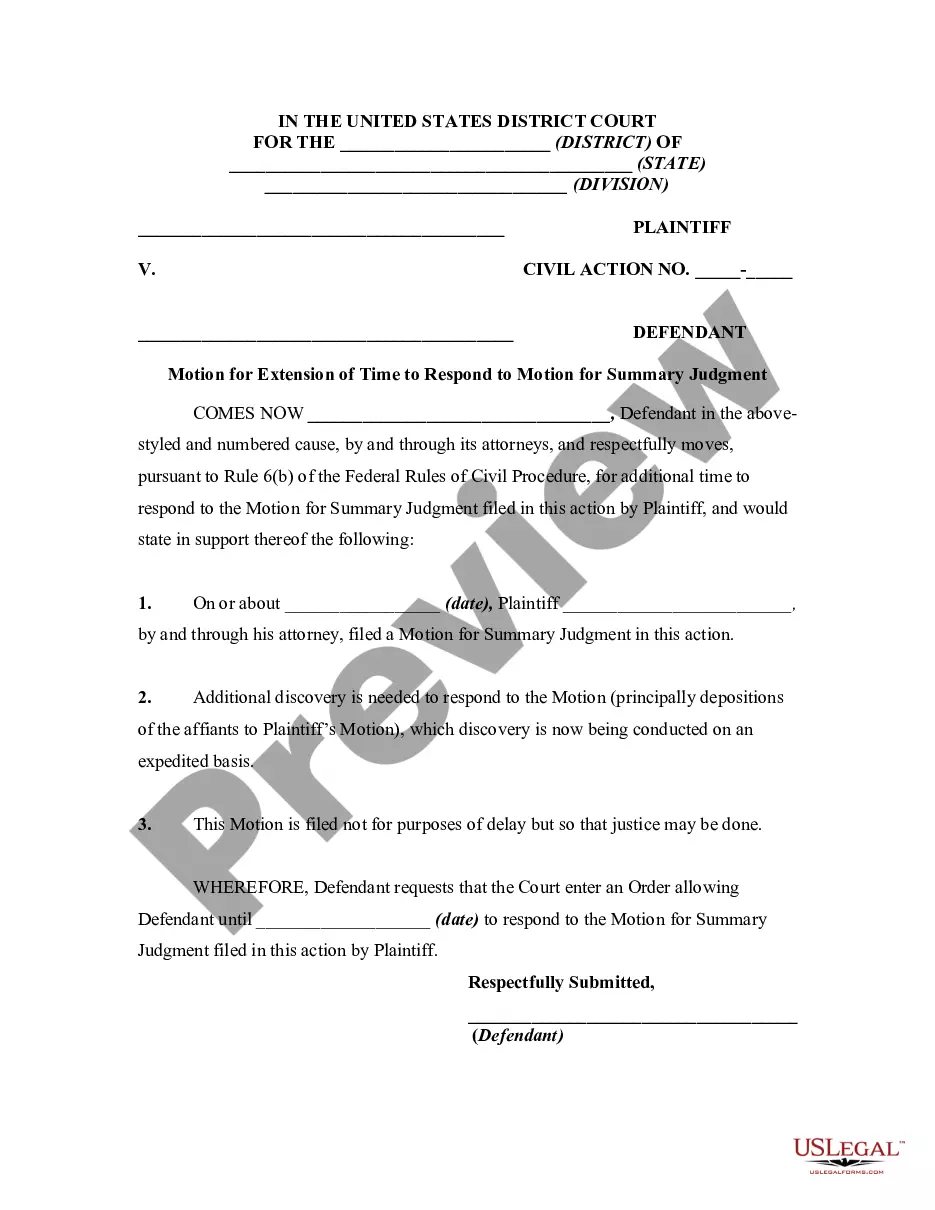
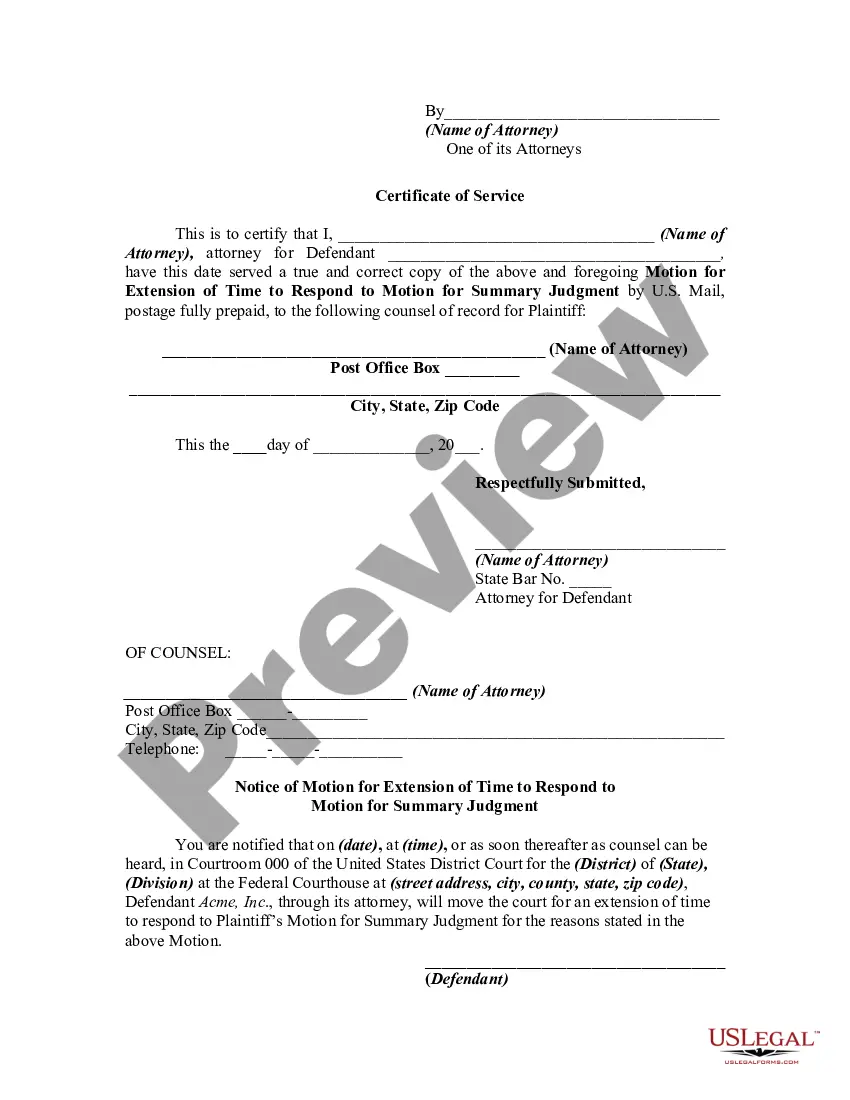
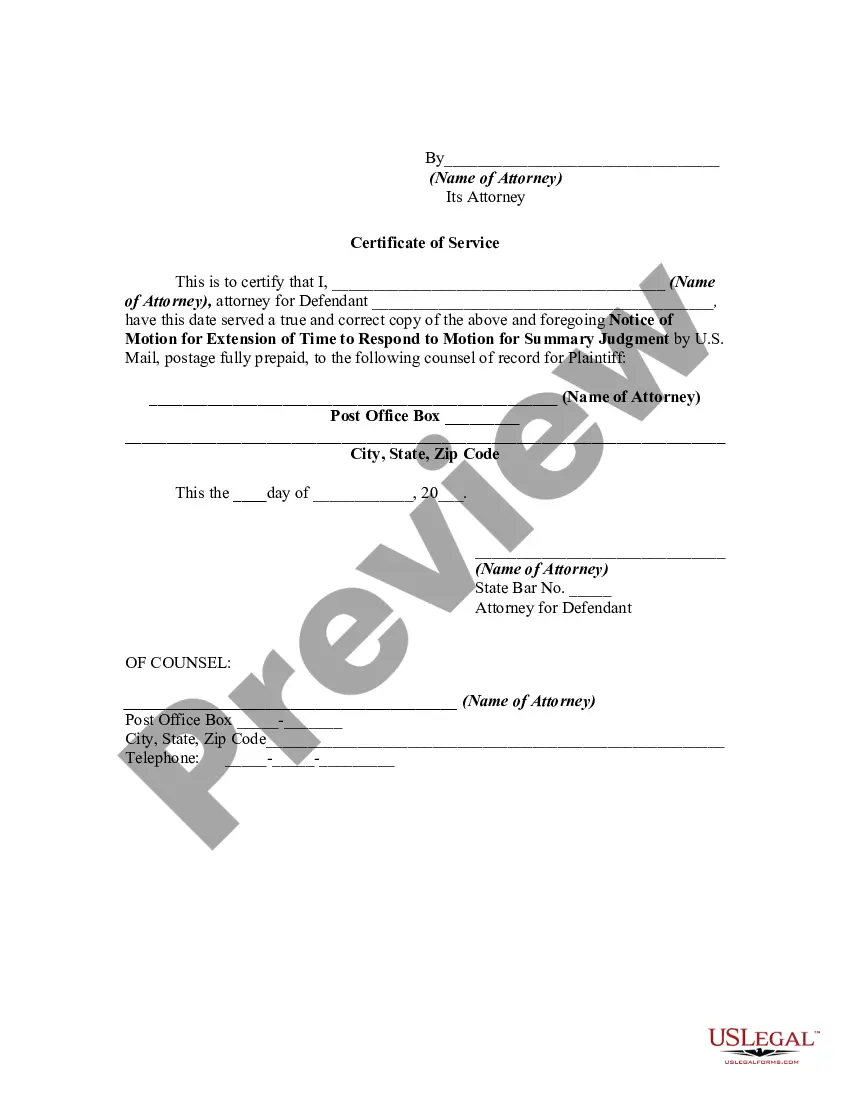
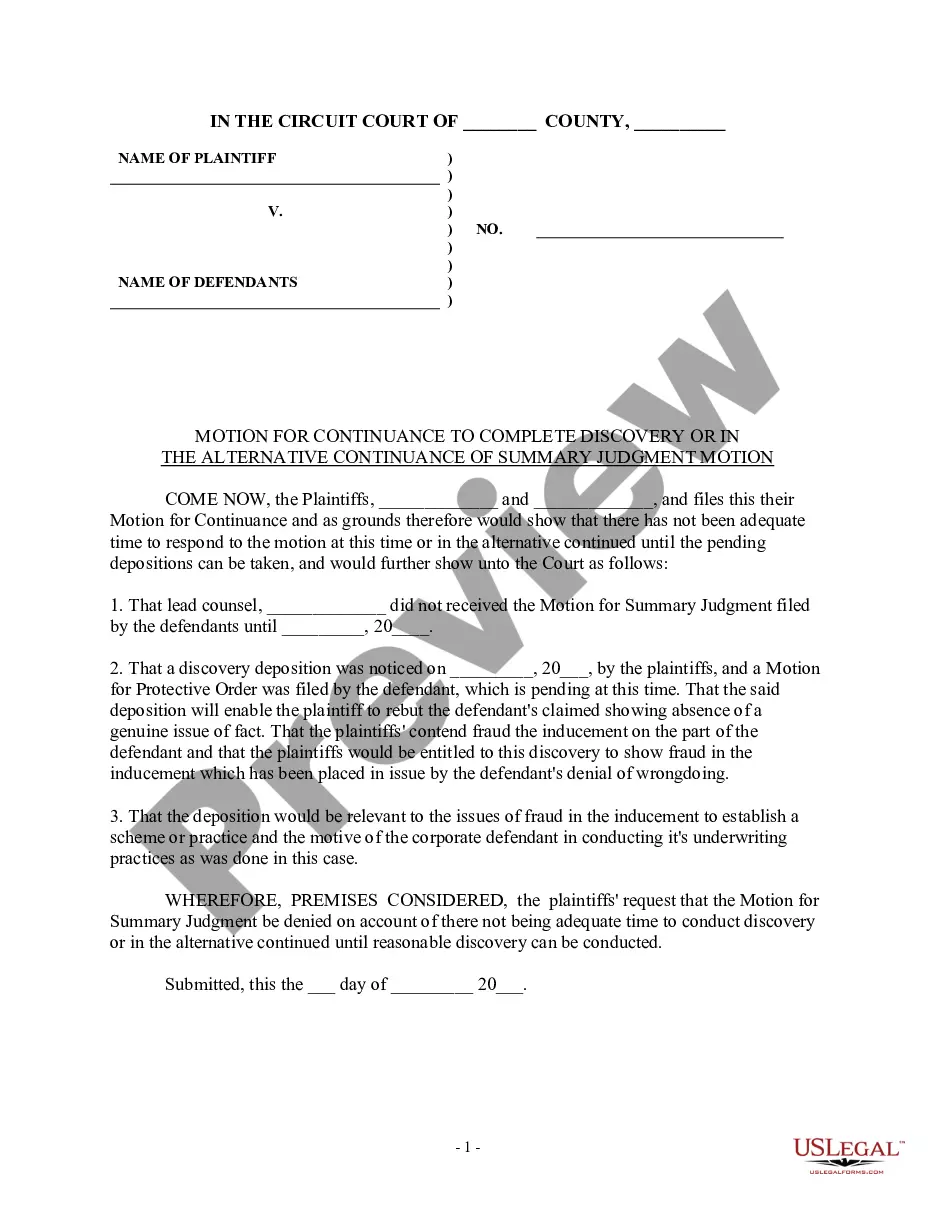
This form is a generic motion requesting additional time to respond to a motion for summary judgment.
Maine Motion Requesting Additional Time to Respond to Motion for Summary Judgment with Notice of Motion
Category:
State:
Multi-State
Control #:
US-00919BG
Format:
Word;
Rich Text
Instant download
Description
Free preview

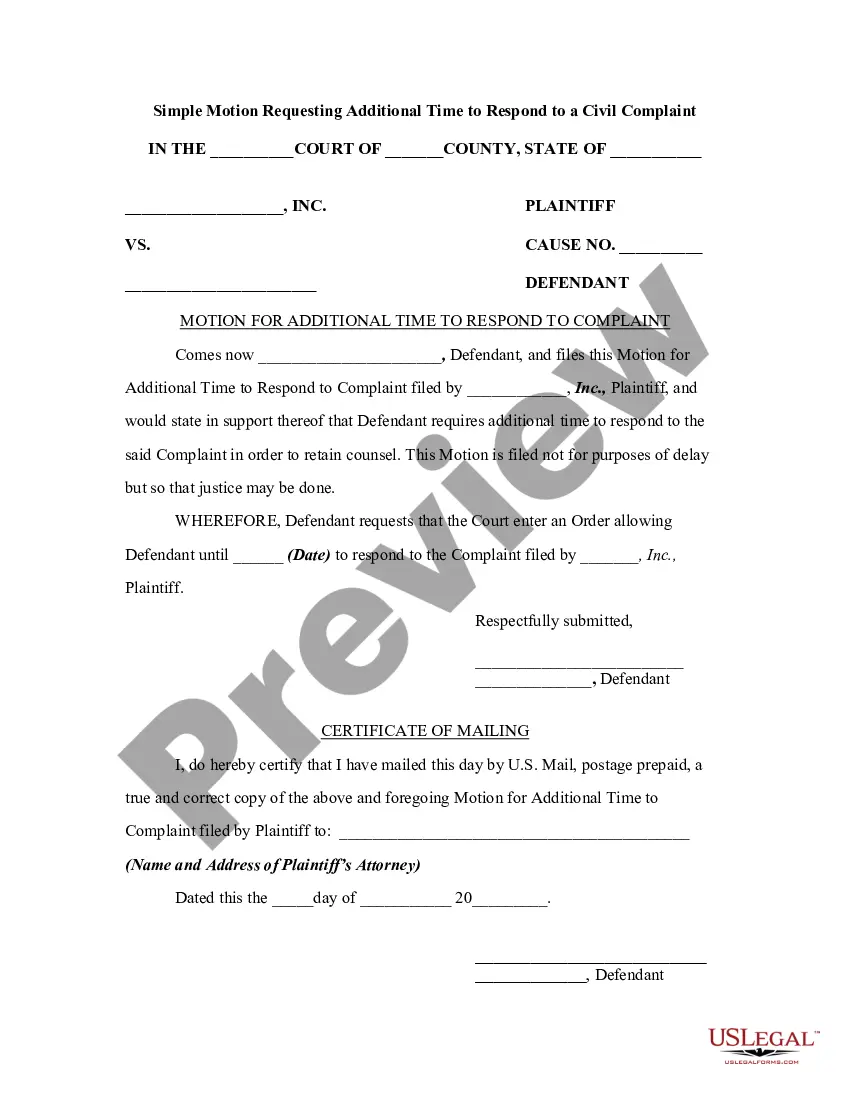
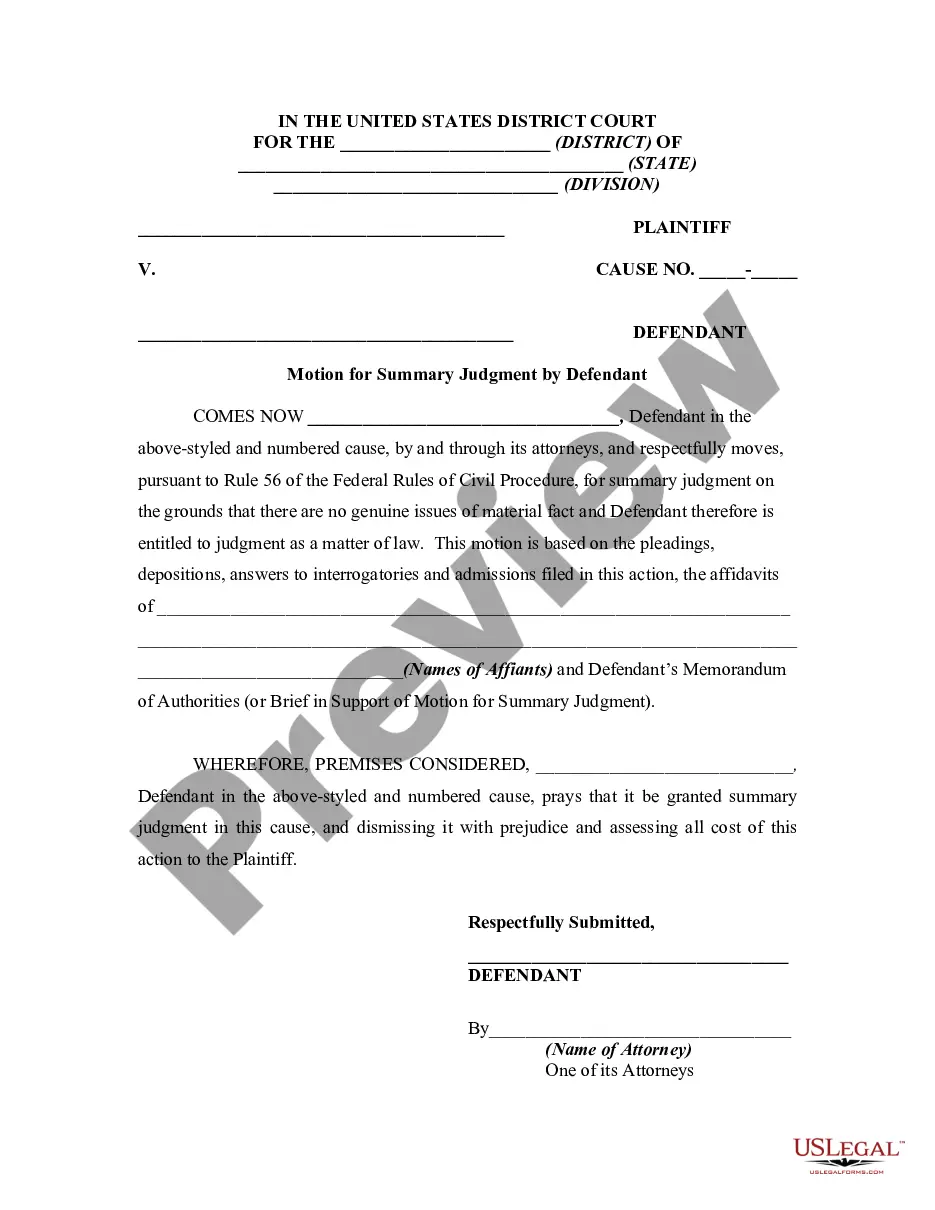
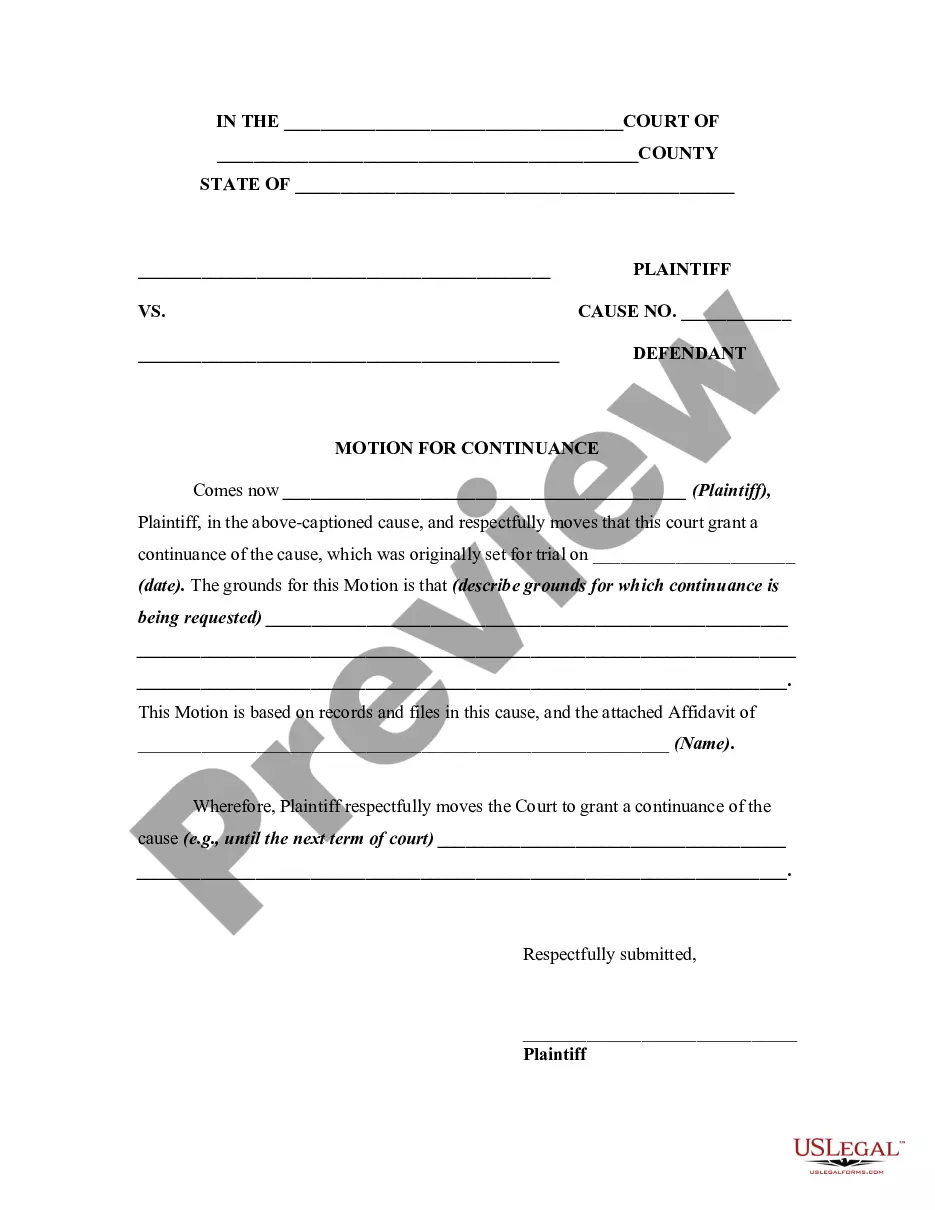
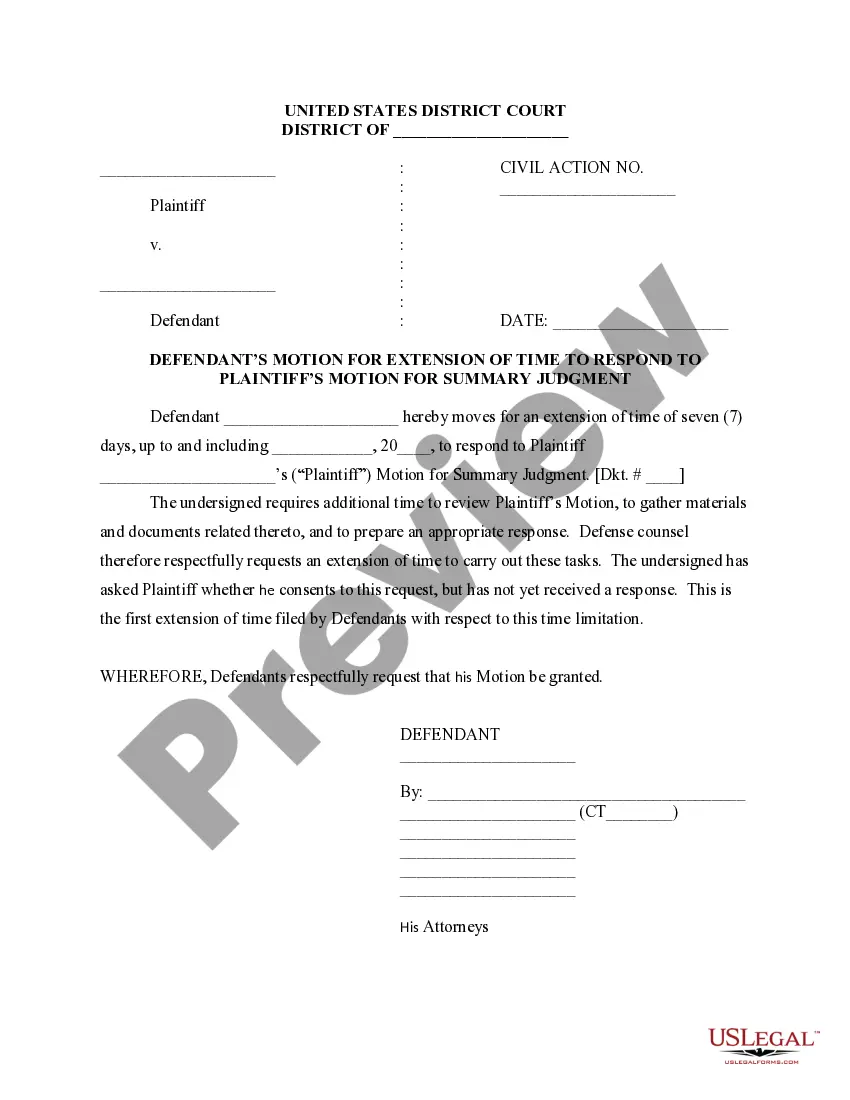
Get your form ready online
Our built-in tools help you complete, sign, share, and store your documents in one place.
Built-in online Word editor
Make edits, fill in missing information, and update formatting in US Legal Forms—just like you would in MS Word.
Export easily
Download a copy, print it, send it by email, or mail it via USPS—whatever works best for your next step.
E-sign your document
Sign and collect signatures with our SignNow integration. Send to multiple recipients, set reminders, and more. Go Premium to unlock E-Sign.
Notarize online 24/7
If this form requires notarization, complete it online through a secure video call—no need to meet a notary in person or wait for an appointment.
Store your document securely
We protect your documents and personal data by following strict security and privacy standards.

Make edits, fill in missing information, and update formatting in US Legal Forms—just like you would in MS Word.

Download a copy, print it, send it by email, or mail it via USPS—whatever works best for your next step.

Sign and collect signatures with our SignNow integration. Send to multiple recipients, set reminders, and more. Go Premium to unlock E-Sign.

If this form requires notarization, complete it online through a secure video call—no need to meet a notary in person or wait for an appointment.

We protect your documents and personal data by following strict security and privacy standards.
Looking for another form?



How to fill out Motion Requesting Additional Time To Respond To Motion For Summary Judgment With Notice Of Motion?
You can spend several hours online trying to locate the proper legal document template that meets the state and federal requirements you need.
US Legal Forms offers a vast array of legal forms that can be reviewed by professionals.
You can download or print the Maine Motion Requesting Additional Time to Respond to Motion for Summary Judgment with Notice of Motion from my service.
If available, use the Preview button to browse through the document template as well. If you would like to obtain another version of the form, utilize the Search field to find the template that meets your requirements and needs. Once you have found the document you need, click on Get now to proceed. Select the pricing plan you require, enter your credentials, and sign up for an account on US Legal Forms. Complete the purchase. You may utilize your credit card or PayPal account to pay for the legal document. Choose the format of the document and download it to your system. Make adjustments to the document if necessary. You are able to complete, modify, sign, and print the Maine Motion Requesting Additional Time to Respond to Motion for Summary Judgment with Notice of Motion. Acquire and print a vast number of document templates using the US Legal Forms website, which offers the largest collection of legal forms. Utilize professional and state-specific templates to address your business or personal needs.
- If you already possess a US Legal Forms account, you can Log In and then click the Acquire button.
- After that, you can complete, modify, print, or sign the Maine Motion Requesting Additional Time to Respond to Motion for Summary Judgment with Notice of Motion.
- Every legal document template you purchase is yours for life.
- To obtain another copy of the purchased form, go to the My documents tab and click the appropriate button.
- If you are using the US Legal Forms website for the first time, follow the simple instructions below.
- First, ensure you have chosen the correct document template for your state/city that you select.
- Check the form description to confirm you have selected the right template.
Form popularity
FAQ
Rule 7(b) of the Maine Rules of Civil Procedure governs the procedure in all proceedings in the Probate Courts, except that in probate proceedings an order shall be sought by application or petition where so provided by law or by these rules.
If a party has been fully heard on an issue during a nonjury trial and the court finds against the party on that issue, the court may enter judgment against the party on a claim or defense that, under the controlling law, can be maintained or defeated only with a favorable finding on that issue.
Rule 80B(m) is amended to clarify that an order of remand from the Superior Court to the governmental agency is not a final judgment from which an appeal lies, absent special circumstances. The amendment is not intended to change the law governing final judgments, moot issues or the preservation of issues for appeal.
Findings by the court. (1) In all actions tried upon the facts without a jury or with an advisory jury, the court shall find the facts specially and state separately its conclusions of law thereon and direct the entry of the appropriate judgment.
(a) Harmless Error . Any error, defect, irregularity or variance which does not affect substantial rights shall be disregarded. (b) Plain Error . Plain errors or defects affecting substantial rights may be noticed although they were not brought to the attention of the court.
The Supreme Court stated that the Federal Rule of Civil Procedure 52(a) provides that ?a finding is 'clearly erroneous' when although there is evidence to support it, the reviewing court on the entire evidence is left with the definite and firm conviction that a mistake has been committed.? Essentially, the appellate ...
If an application is made to produce the information under Rule 26(g), the party resisting discovery bears the initial burden to show the court that the information is not, in fact, "reasonably accessible because of undue burden or expense." The requesting party must then show "good cause" why the information should be ...
Harmless and Plain Error. (a) Harmless Error. Any error, defect, irregularity, or variance that does not affect substantial rights must be disregarded.