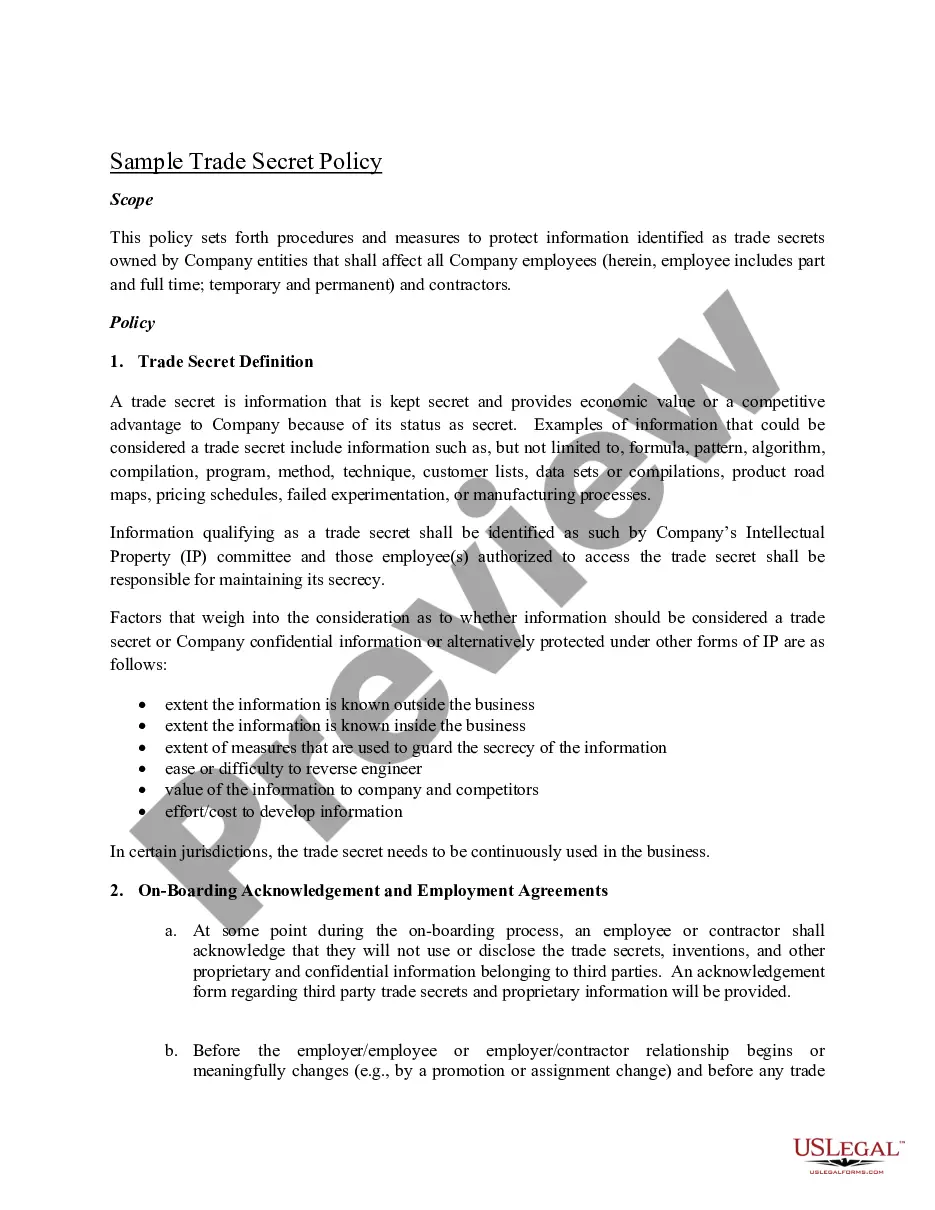
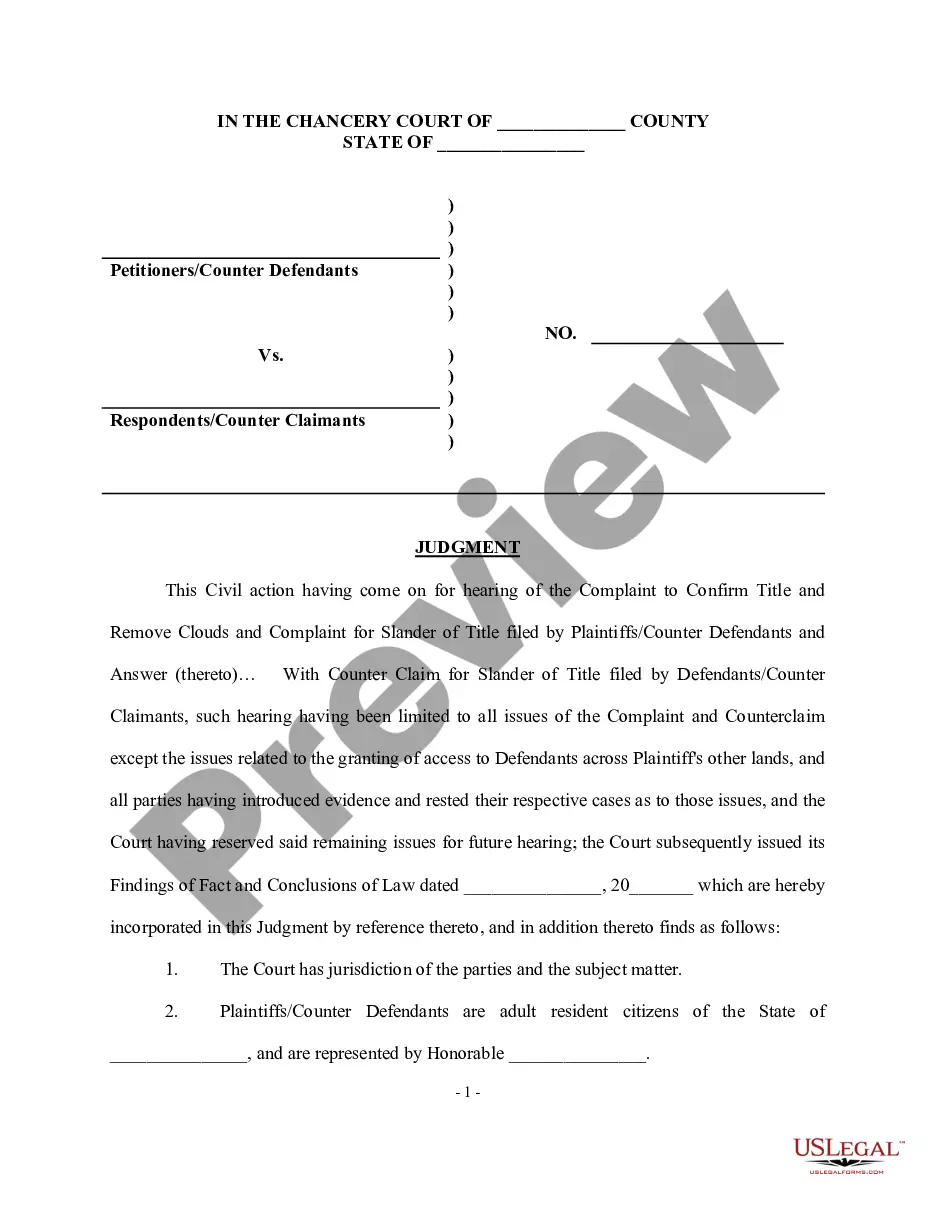
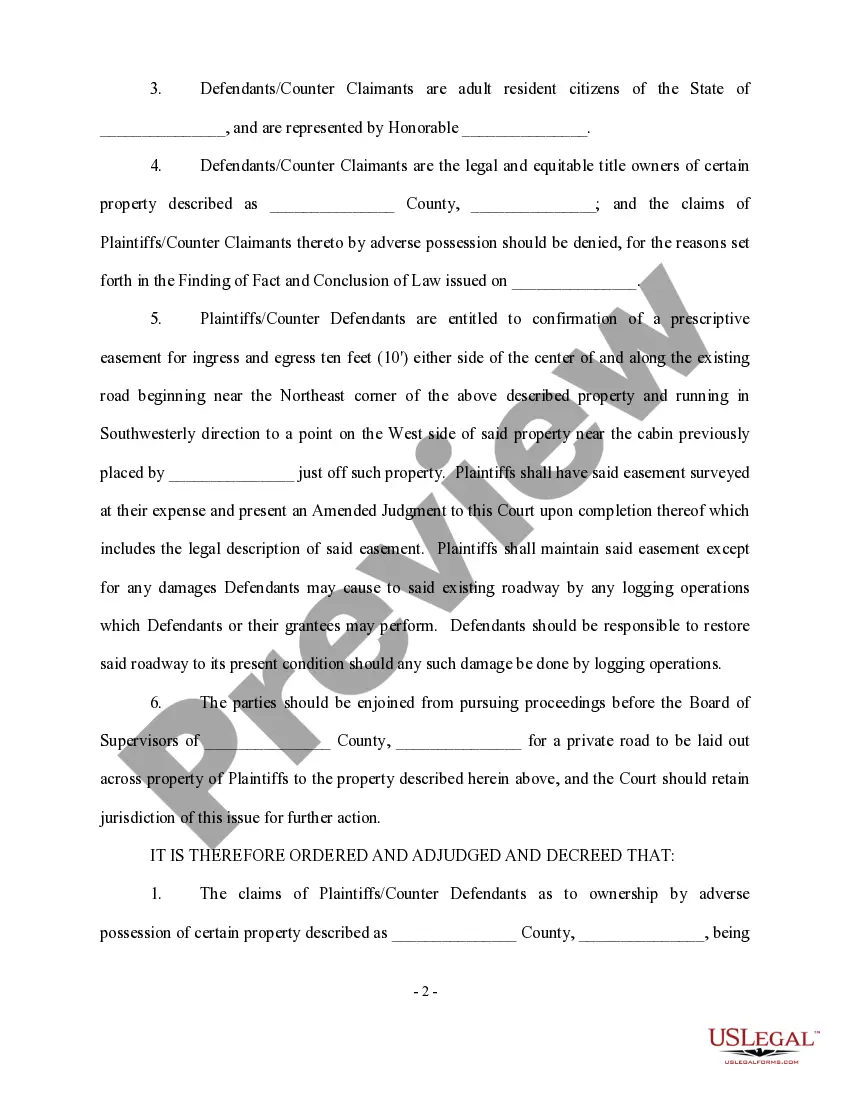
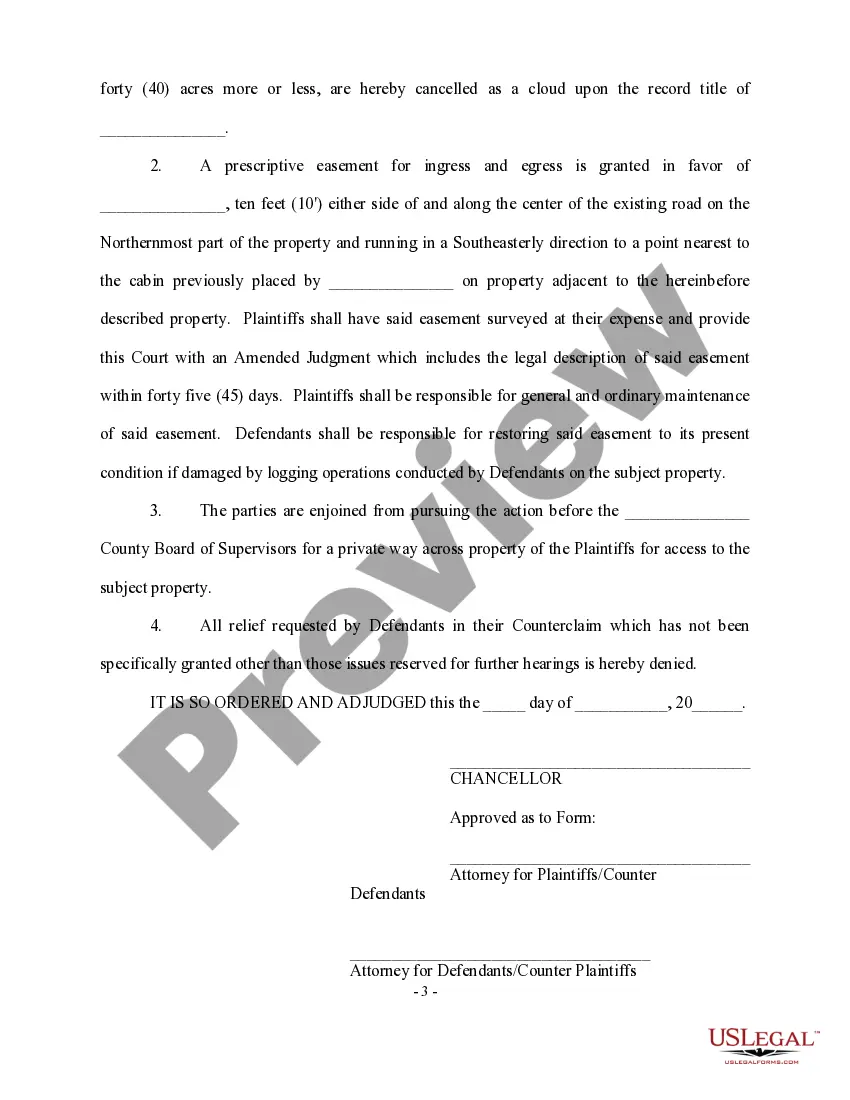
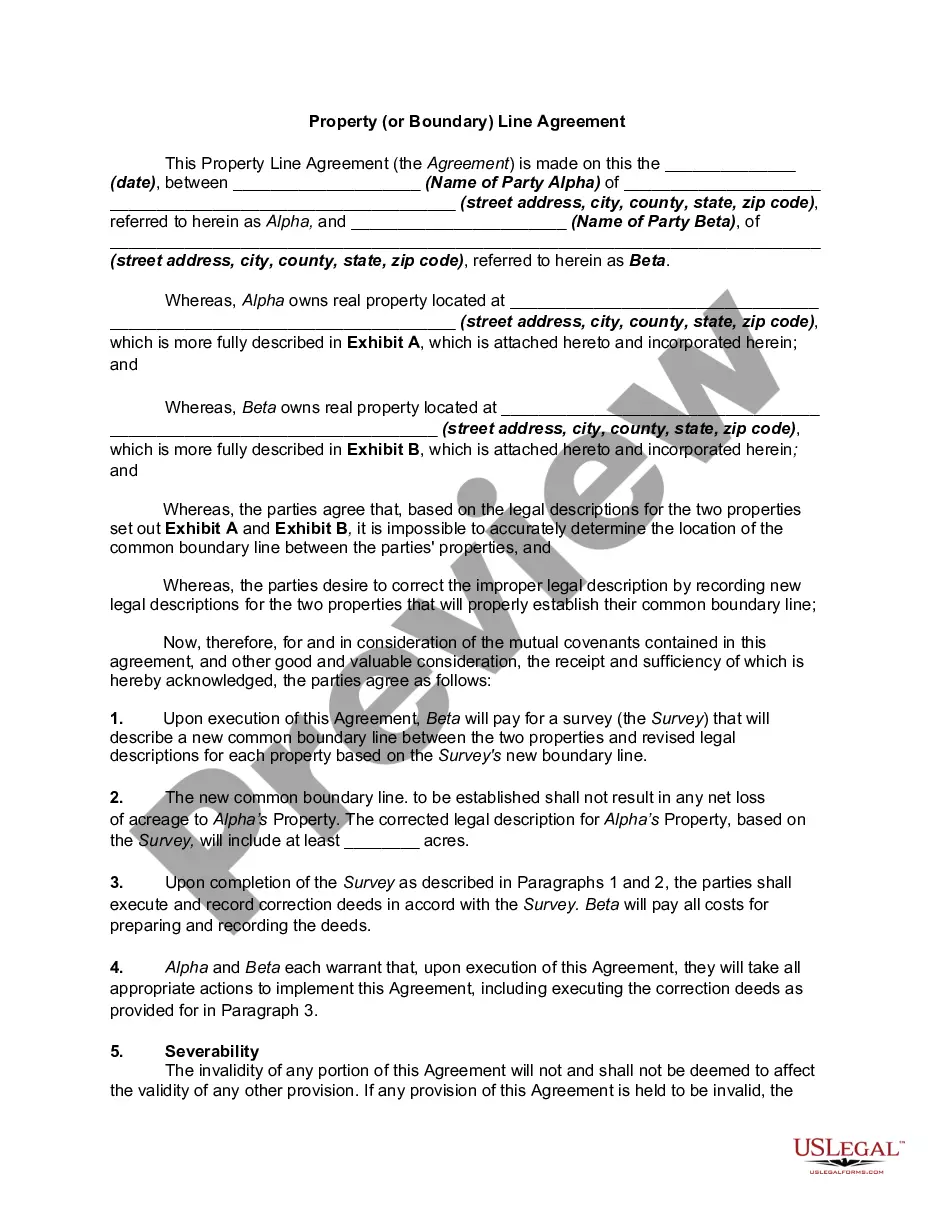
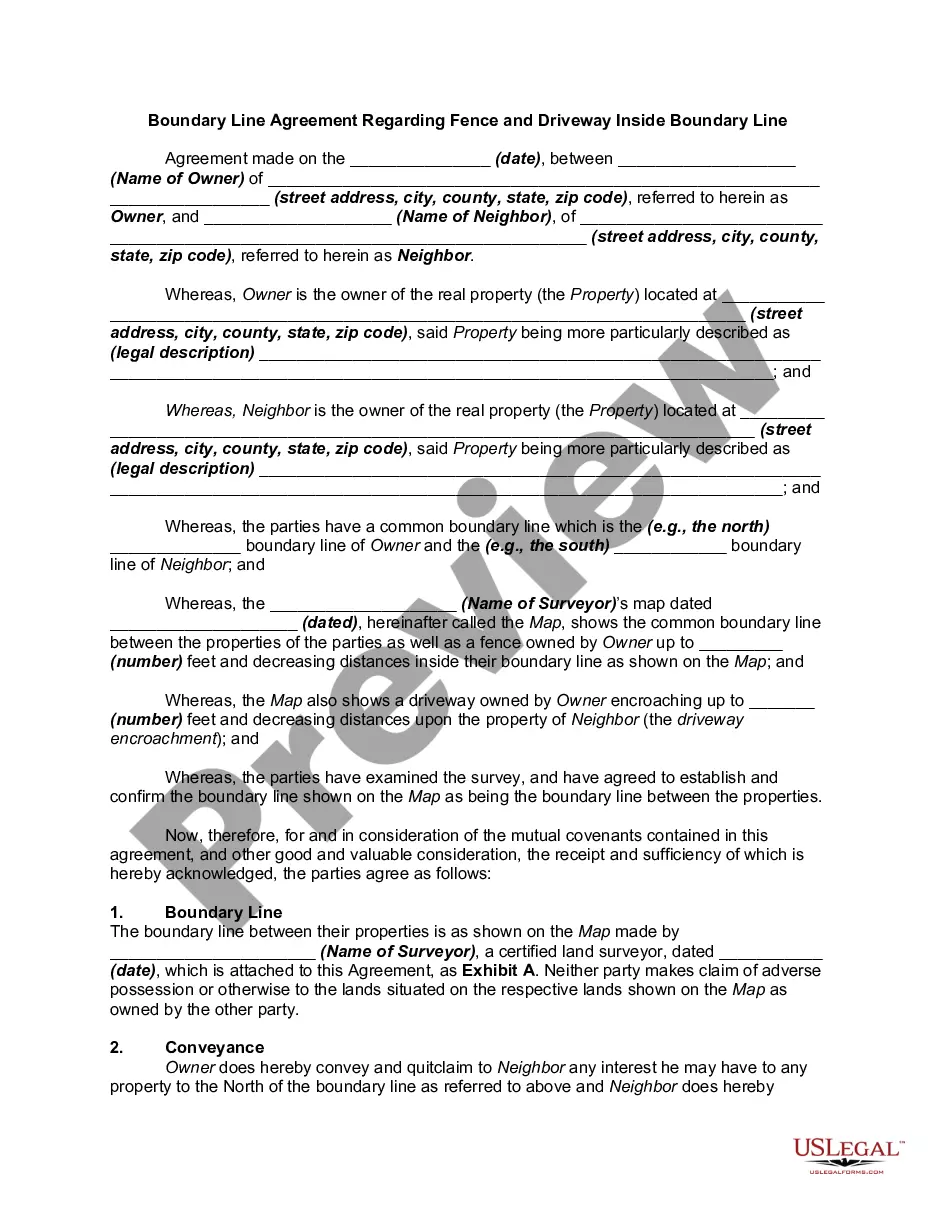
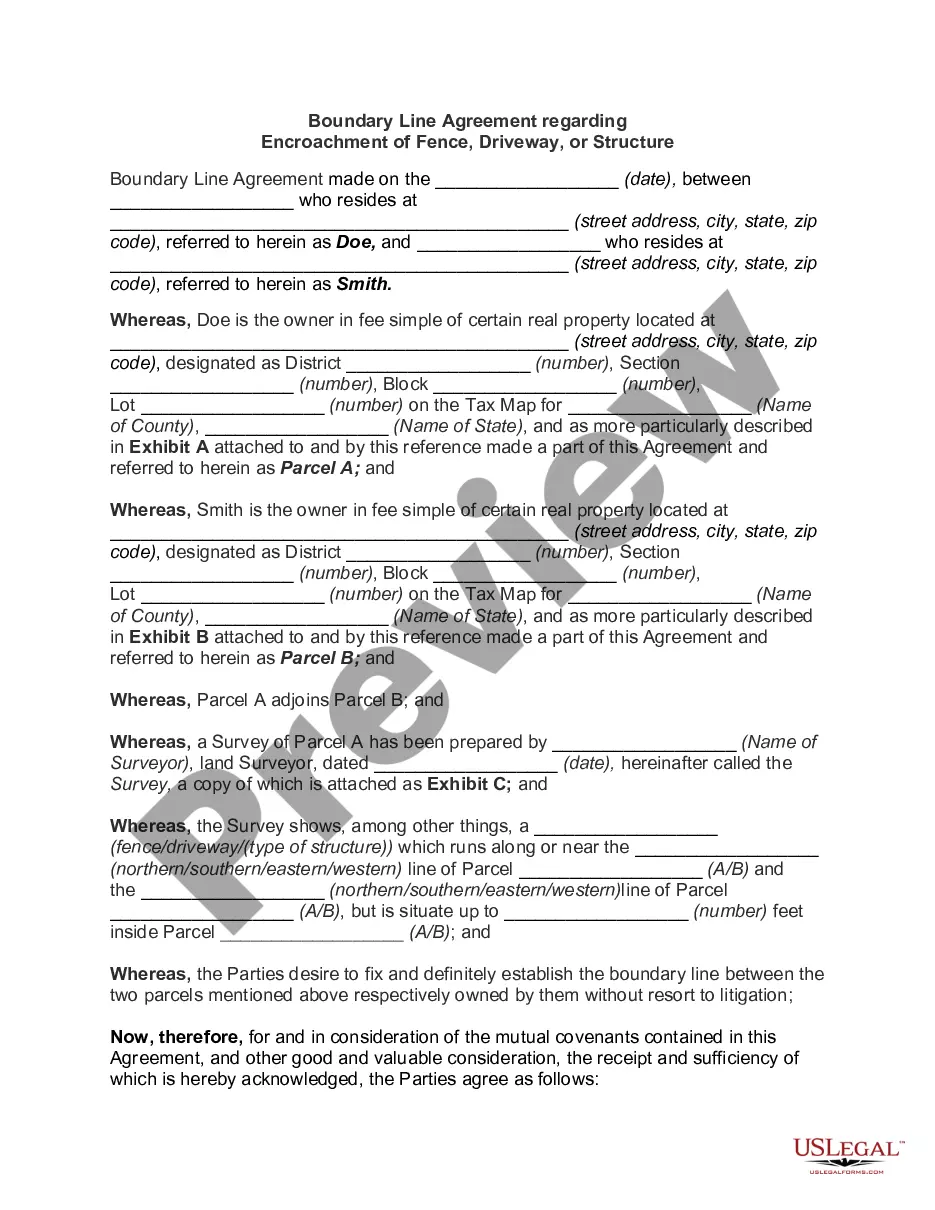
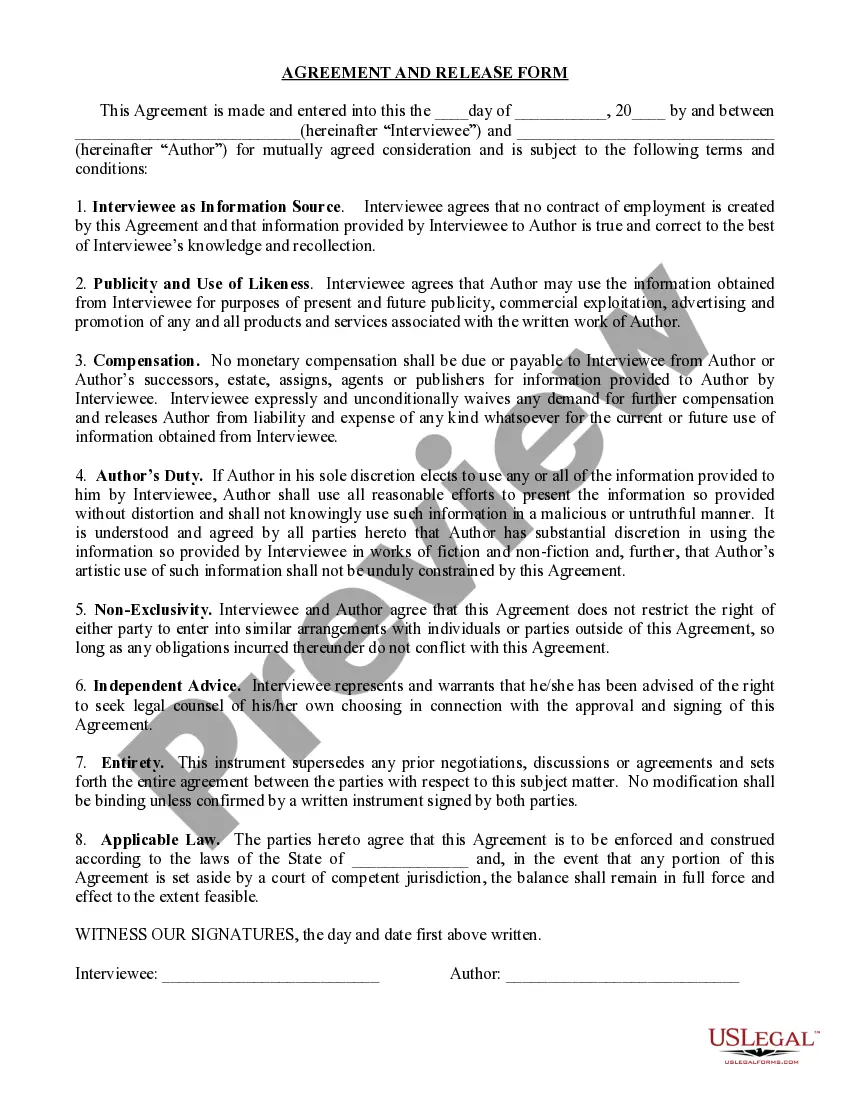
This form is a Judgment. The judgment provides that the plaintiffs/ counter defendants are entitled to a prescriptive easement for ingress and egress along an existing road. The judgment also provides that all relief requested by defendants in their counterclaim which was not specifically granted, other than those issues reserved for further hearing, are denied by the court.
Maine Judgment regarding Boundary Line Dispute
Category:
State:
Multi-State
Control #:
US-00748
Format:
Word;
Rich Text
Instant download
Description
Free preview

Get your form ready online
Our built-in tools help you complete, sign, share, and store your documents in one place.
Built-in online Word editor
Make edits, fill in missing information, and update formatting in US Legal Forms—just like you would in MS Word.
Export easily
Download a copy, print it, send it by email, or mail it via USPS—whatever works best for your next step.
E-sign your document
Sign and collect signatures with our SignNow integration. Send to multiple recipients, set reminders, and more. Go Premium to unlock E-Sign.
Notarize online 24/7
If this form requires notarization, complete it online through a secure video call—no need to meet a notary in person or wait for an appointment.
Store your document securely
We protect your documents and personal data by following strict security and privacy standards.

Make edits, fill in missing information, and update formatting in US Legal Forms—just like you would in MS Word.

Download a copy, print it, send it by email, or mail it via USPS—whatever works best for your next step.

Sign and collect signatures with our SignNow integration. Send to multiple recipients, set reminders, and more. Go Premium to unlock E-Sign.

If this form requires notarization, complete it online through a secure video call—no need to meet a notary in person or wait for an appointment.

We protect your documents and personal data by following strict security and privacy standards.
Looking for another form?









How to fill out Judgment Regarding Boundary Line Dispute?
You can spend hours online trying to locate the valid document template that meets the federal and state requirements you need.
US Legal Forms offers thousands of valid forms that have been reviewed by professionals.
You can easily download or print the Maine Judgment regarding Boundary Line Dispute from the service.
If available, utilize the Review option to look through the document template as well. If you wish to find another version of your form, use the Research field to discover the template that fits your needs and specifications. Once you have identified the template you require, click Acquire now to proceed. Select the payment plan you want, enter your details, and register for your account on US Legal Forms. Complete the purchase. You can use your credit card or PayPal account to pay for the legal document. Choose the file format of your document and download it to your device. Make adjustments to your document if necessary. You can complete, modify, and sign and print the Maine Judgment regarding Boundary Line Dispute. Download and print thousands of document templates using the US Legal Forms website, which offers the largest selection of valid forms. Utilize professional and state-specific templates to address your business or personal needs.
- If you have a US Legal Forms account, you may Log In and click the Download button.
- Afterward, you can complete, modify, print, or sign the Maine Judgment regarding Boundary Line Dispute.
- Every legal document template you purchase is yours forever.
- To obtain another copy of the purchased form, go to the My documents tab and click the corresponding option.
- If you are using the US Legal Forms website for the first time, follow the simple instructions below.
- First, ensure that you have selected the correct document template for your county/town that you choose.
- Review the form details to verify you have picked the right document.
Form popularity
FAQ
To prove slander of title a claimant must prove (1) there was a publication of a slanderous statement disparaging claimant's title; (2) the statement was false; (3) the statement was made with malice or made with reckless disregard of its falsity; and (4) the statement caused actual or special damages. Colquhoun v. Webber :: 1996 :: Maine Supreme Judicial Court Decisions justia.com ? cases ? maine ? supreme-court justia.com ? cases ? maine ? supreme-court
Slander of title occurs when an individual publishes false statements about the title to property (or the plaintiff's ownership interest) under circumstances that would lead one to reasonably foresee that a third party would be deterred from purchasing or leasing the property.
Maine law provides a method to prevent adverse possession and prescriptive claims to your property by following a few modest steps. You can prevent the acquisition of property rights by posting a notice detailing your apprehension in a conspicuous place on the property for 6 consecutive days. A Legislative Tool for Preventing Adverse Property Claims - LinkedIn linkedin.com ? pulse ? legislative-tool-preve... linkedin.com ? pulse ? legislative-tool-preve...
A slander of title will generally occur where one maliciously seeks to disparage another's interest to property, to make it unmerchantable, by recording an instru- ment whereby the maligner purports to have some interest in the property. For example, the making and recording of a deed, Chesebro v. Powers, 78 Mich.
The precise boundary line between Maine and New Brunswick remained a matter of often-heated argument for years after the close of the Revolutionary War. The dispute festered and smoldered until 1839, when it threatened to erupt into open warfare. Northeast Boundary Dispute - Maine.gov maine.gov ? legis ? general ? history ? hstry6 maine.gov ? legis ? general ? history ? hstry6
False and negligent statements about a person or business, which materially injure the reputation of a person or business, are considered defamatory under Maine's defamation law. In order to fall within the realm of defamation, statements must be made to a third party without consent.
In fact, it is illegal to make statements about someone that you know are blatantly false, and if you do this intentionally while speaking to someone. This act is referred to as slander. If the subject of the slander and their reputation suffer because of your actions, you may be taken to court.
Rule that requires a party seeking to gain title to property by adverse possession to have hostile intent, or an intent to take the property with knowledge that it belongs to someone else. The Maine Doctrine Legal Meaning & Law Definition - Quimbee quimbee.com ? keyterms ? the-maine-doctrine quimbee.com ? keyterms ? the-maine-doctrine