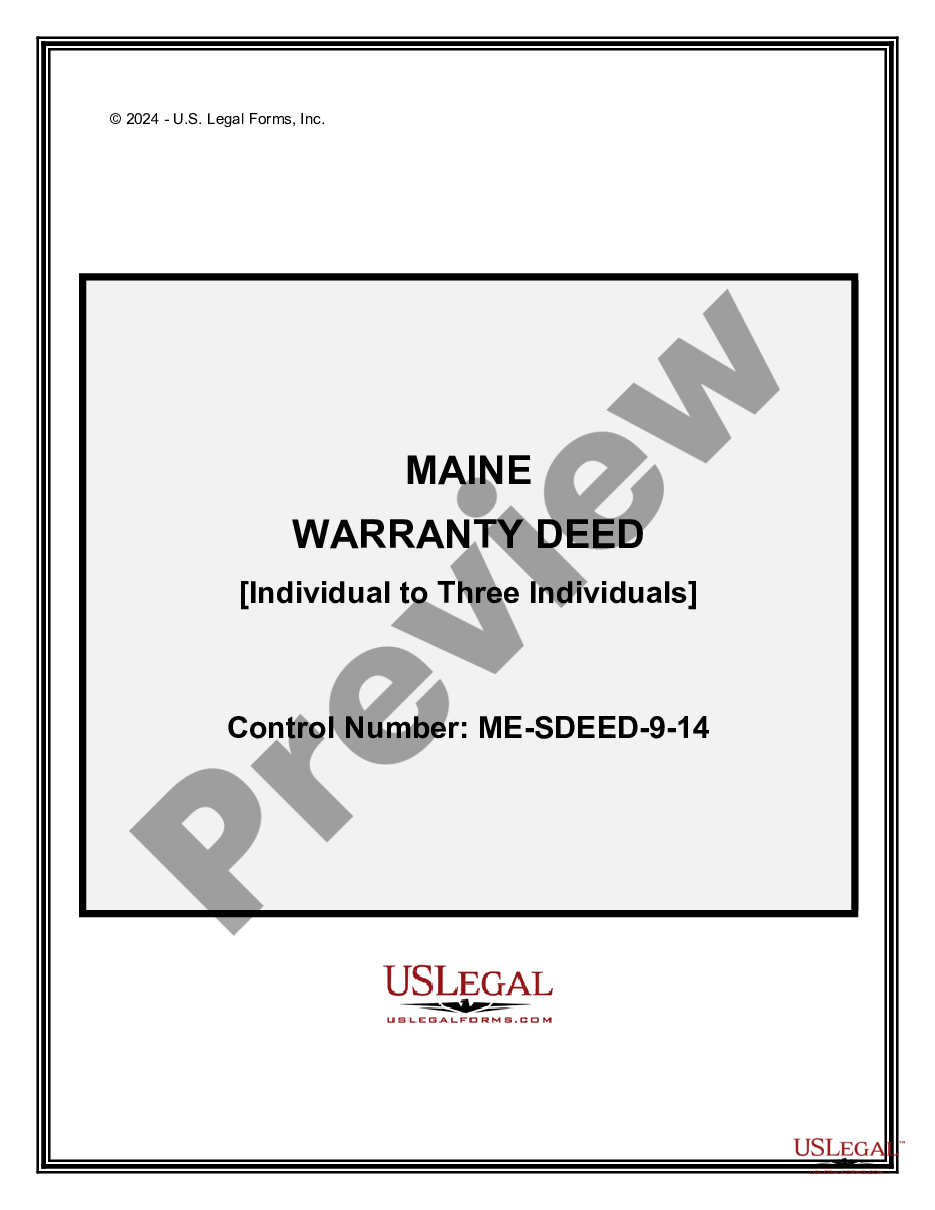
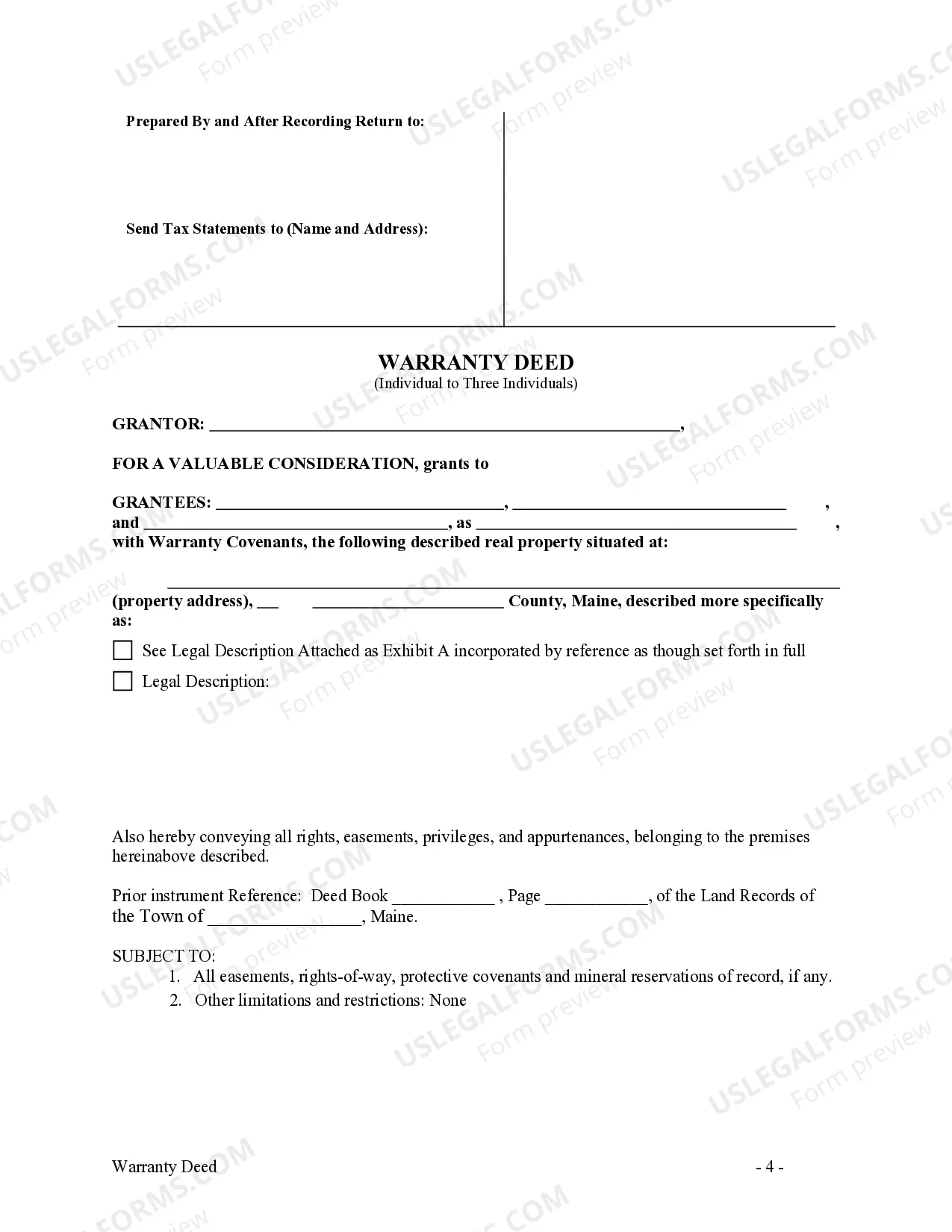
Maine Warranty Deed - Individual to Three Individuals
What is this form?
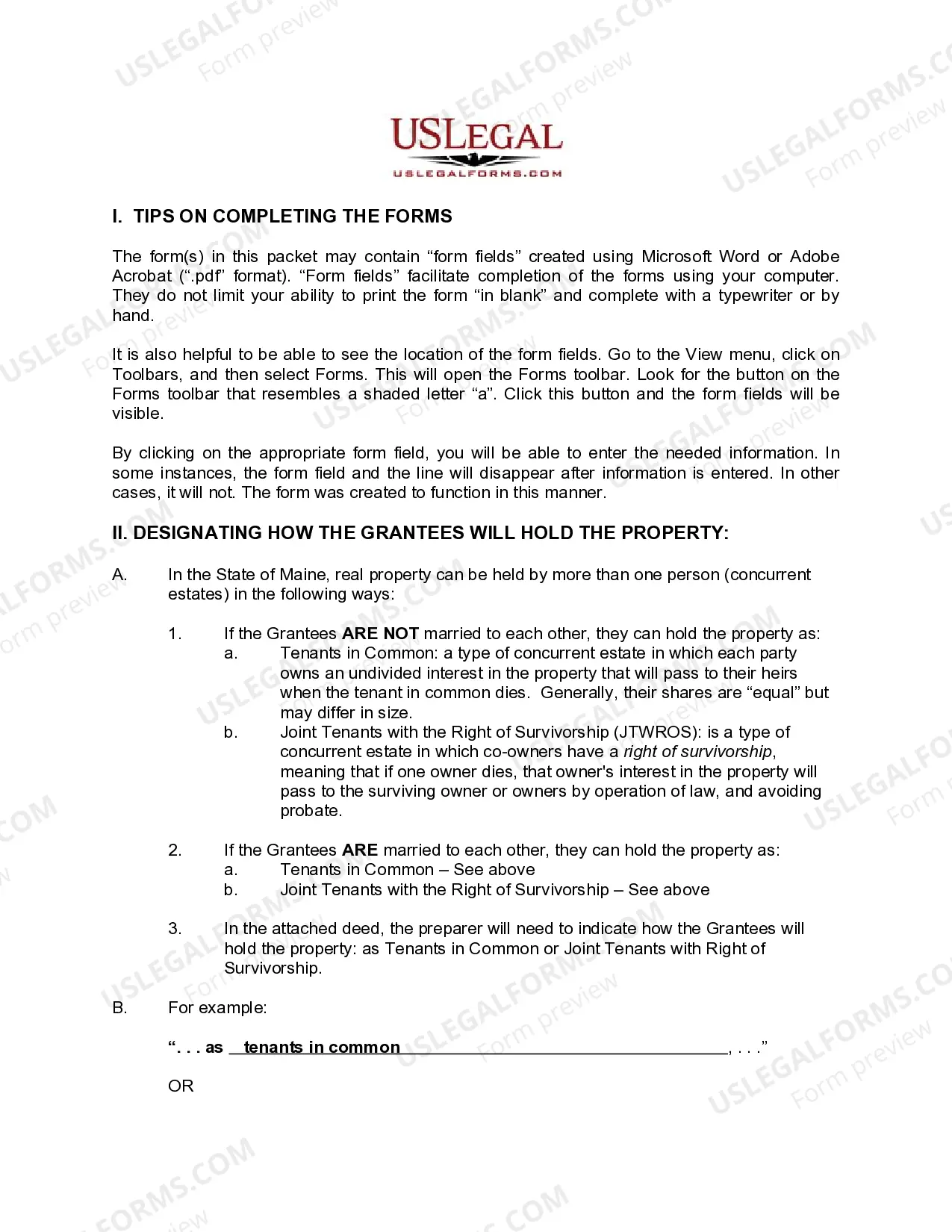
This Warranty Deed is a legal document in which an individual, referred to as the Grantor, transfers property ownership to three individuals, known as Grantees. This deed includes specific assurances regarding the title of the property, making it distinct from other types of deeds like quitclaim deeds. Grantees can hold the property either as tenants in common or as joint tenants with right of survivorship, depending on how the form is completed.
What’s included in this form
- Identification of the Grantor and the three Grantees.
- Property description, including legal identification and boundaries.
- Designation of how Grantees will hold the property (tenants in common or joint tenants with right of survivorship).
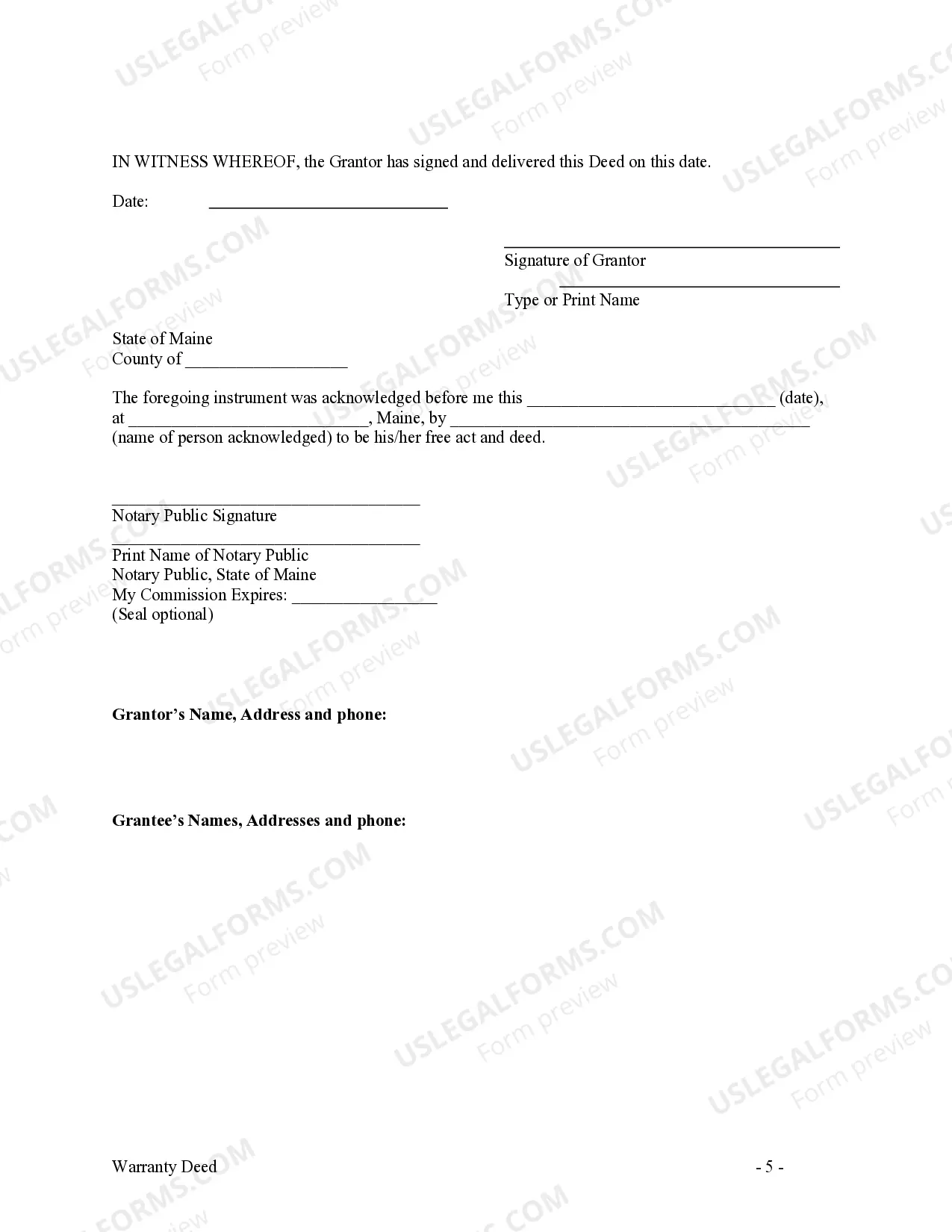
- Signatures of the Grantor and any required witnesses.
- Compliance statement regarding state statutory laws.




Common use cases
This form should be utilized when an individual intends to transfer ownership of real property to three other individuals. It is particularly useful in situations involving family inheritance, property sharing among friends, or co-ownership arrangements where specific instructions regarding ownership type (tenancy in common or joint tenancy) need to be legally established.
Who can use this document
This Warranty Deed should be used by:
- Property owners who wish to transfer ownership to multiple individuals.
- Individuals seeking to establish clear co-ownership terms.
- Families or groups planning to manage a shared property asset.
Steps to complete this form
- Identify the Grantor and the three Grantees, ensuring correct legal names are used.
- Clearly specify the property being transferred with a complete description.
- Select the ownership structure by indicating whether the Grantees are taking the property as tenants in common or joint tenants with right of survivorship.
- Obtain all required signatures, including any witnesses if necessary.
- File the completed deed with the appropriate local government office, if required.
Notarization requirements for this form
This form does not typically require notarization unless specified by local law. However, having it notarized is advisable to enhance its legal recognition and enforceability.
Get your form ready online
Our built-in tools help you complete, sign, share, and store your documents in one place.
Make edits, fill in missing information, and update formatting in US Legal Forms—just like you would in MS Word.
Download a copy, print it, send it by email, or mail it via USPS—whatever works best for your next step.
Sign and collect signatures with our SignNow integration. Send to multiple recipients, set reminders, and more. Go Premium to unlock E-Sign.
If this form requires notarization, complete it online through a secure video call—no need to meet a notary in person or wait for an appointment.
We protect your documents and personal data by following strict security and privacy standards.

Make edits, fill in missing information, and update formatting in US Legal Forms—just like you would in MS Word.

Download a copy, print it, send it by email, or mail it via USPS—whatever works best for your next step.

Sign and collect signatures with our SignNow integration. Send to multiple recipients, set reminders, and more. Go Premium to unlock E-Sign.

If this form requires notarization, complete it online through a secure video call—no need to meet a notary in person or wait for an appointment.

We protect your documents and personal data by following strict security and privacy standards.
Typical mistakes to avoid
- Failing to list all Grantees accurately, which can lead to disputes.
- Not providing a complete property description, which is crucial for legal validity.
- Neglecting to specify how the Grantees will hold the property.
- Inadequate signing or witnessing procedures that may invalidate the deed.
Why complete this form online
- Convenience of downloading the form instantly from anywhere.
- Pre-filled form fields help guide users through necessary information.
- Secure completion and storage of documents without needing to visit an office.
- Access to the latest legal form updates compliant with state laws.
Legal Use & Context:
- The warranty deed provides a higher level of protection by guaranteeing the Grantor's legal ownership of the property.
- This document is legally binding, ensuring that the Grantees have clear property rights.
- Proper execution of the deed can help avoid future disputes over ownership and heirs.
Summary of main points
Key Takeaways:
- This Warranty Deed is essential for transferring property ownership among multiple individuals.
- Understanding how to hold property jointly is crucial for legal clarity and shared rights.
- This form is tailored to meet the statutory needs of Maine, enhancing its legal standing.
Looking for another form?
Form popularity
FAQ
If you've recently married and already own a home or other real estate, you may want to add your new spouse to the deed for your property so the two of you own it jointly. To add a spouse to a deed, all you have to do is literally fill out, sign and record a new deed in your county recorder's office.
The only way to add or remove a name on a deed is to have a new deed recorded. Once a document is recorded, it cannot be altered. In order to protect your legal interests, we strongly suggest that you contact an attorney to have this done for you.
Adding someone to your house deed requires the filing of a legal form known as a quitclaim deed. When executed and notarized, the quitclaim deed legally overrides the current deed to your home. By filing the quitclaim deed, you can add someone to the title of your home, in effect transferring a share of ownership.
The original deed is returned to the owner of the property from the office of the recorder after proper entry. The office of the Recorder of Deeds maintains a set of indexes about each deed recorded, for an easy search. Almost all states have a grantor-grantee index including a reference to all documents recorded.
Yes you can. This is called a transfer of equity but you will need the permission of your lender. If you are not married or in a civil partnership you may wish to consider creating a deed of trust and a living together agreement which we can explain to you.
Typically, the lender will provide you with a copy of the deed of trust after the closing. The original warranty deeds are often mailed to the grantee after they are recorded. These are your original copies and should be kept in a safe place, such as a fireproof lockbox or a safe deposit box at a financial institution.
It is possible to be named on the title deed of a home without being on the mortgage. However, doing so assumes risks of ownership because the title is not free and clear of liens and possible other encumbrances. Free and clear means that no one else has rights to the title above the owner.
A warranty deed can include six traditional forms of Covenants for Title, sometimes known as the English covenants of title. Those six traditional forms of covenants can be broken down into two categories: present covenants and future covenants.
To add a co-owner, the bank would have to create a new home loan agreement, which must be registered after paying the due stamp duty and registration charges. The bank would also insist on making the co-owner a co-borrower in the home loan applicable.