Maine Annual Minutes
What is this form?
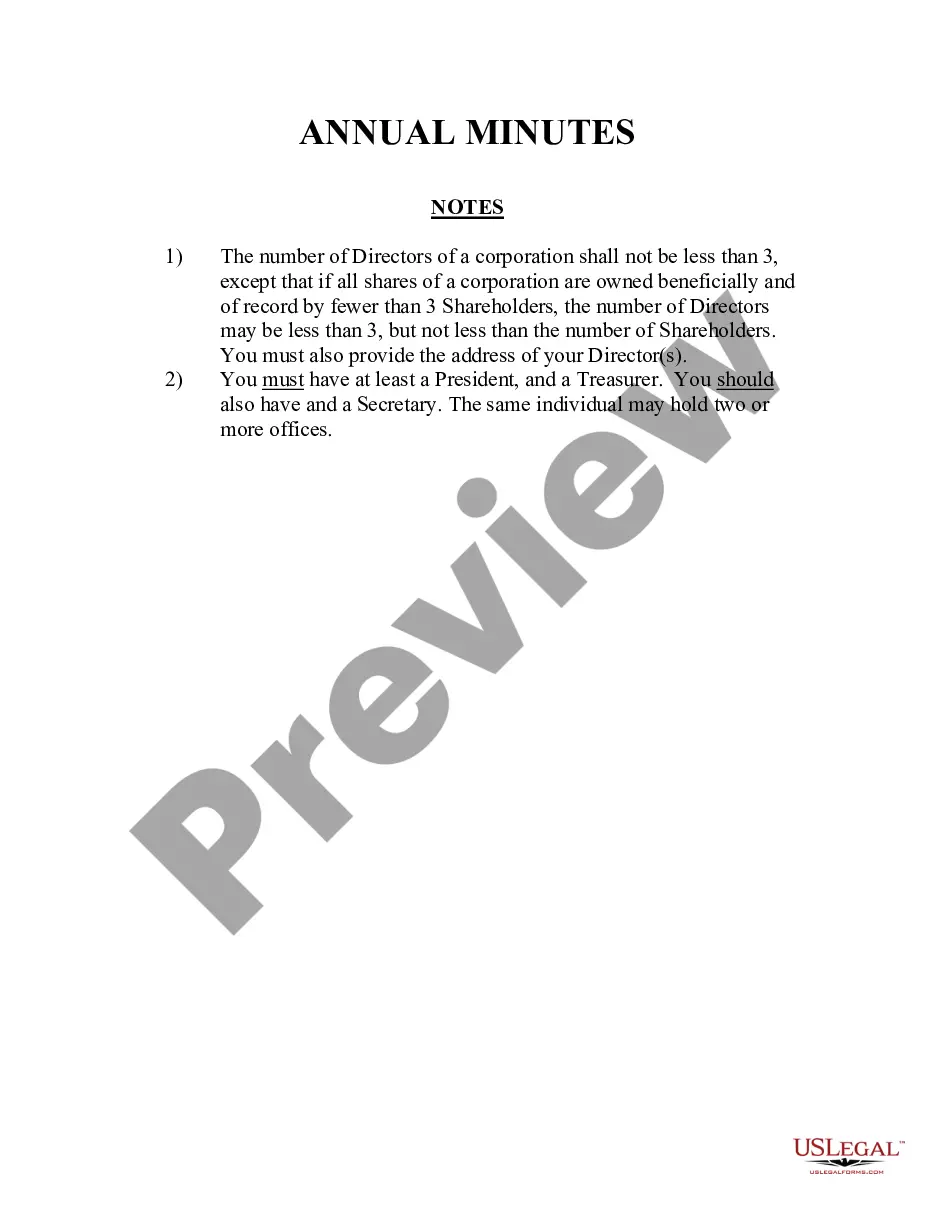
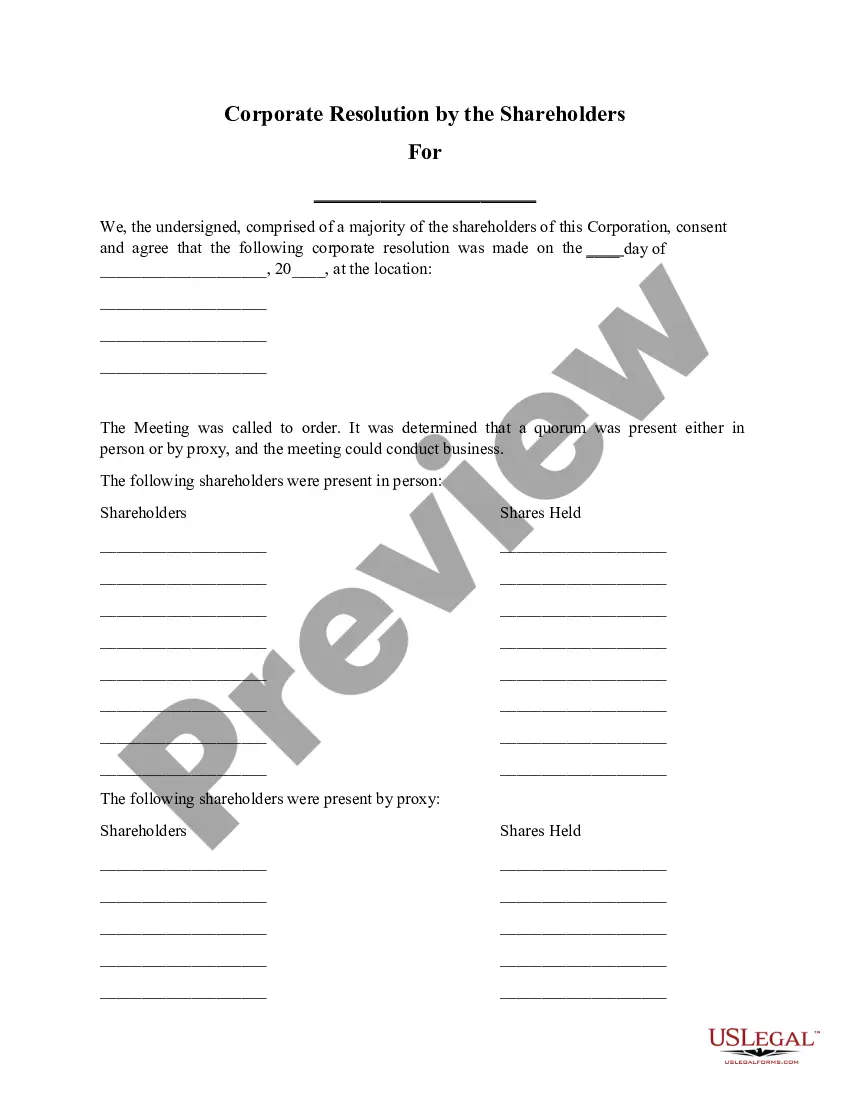
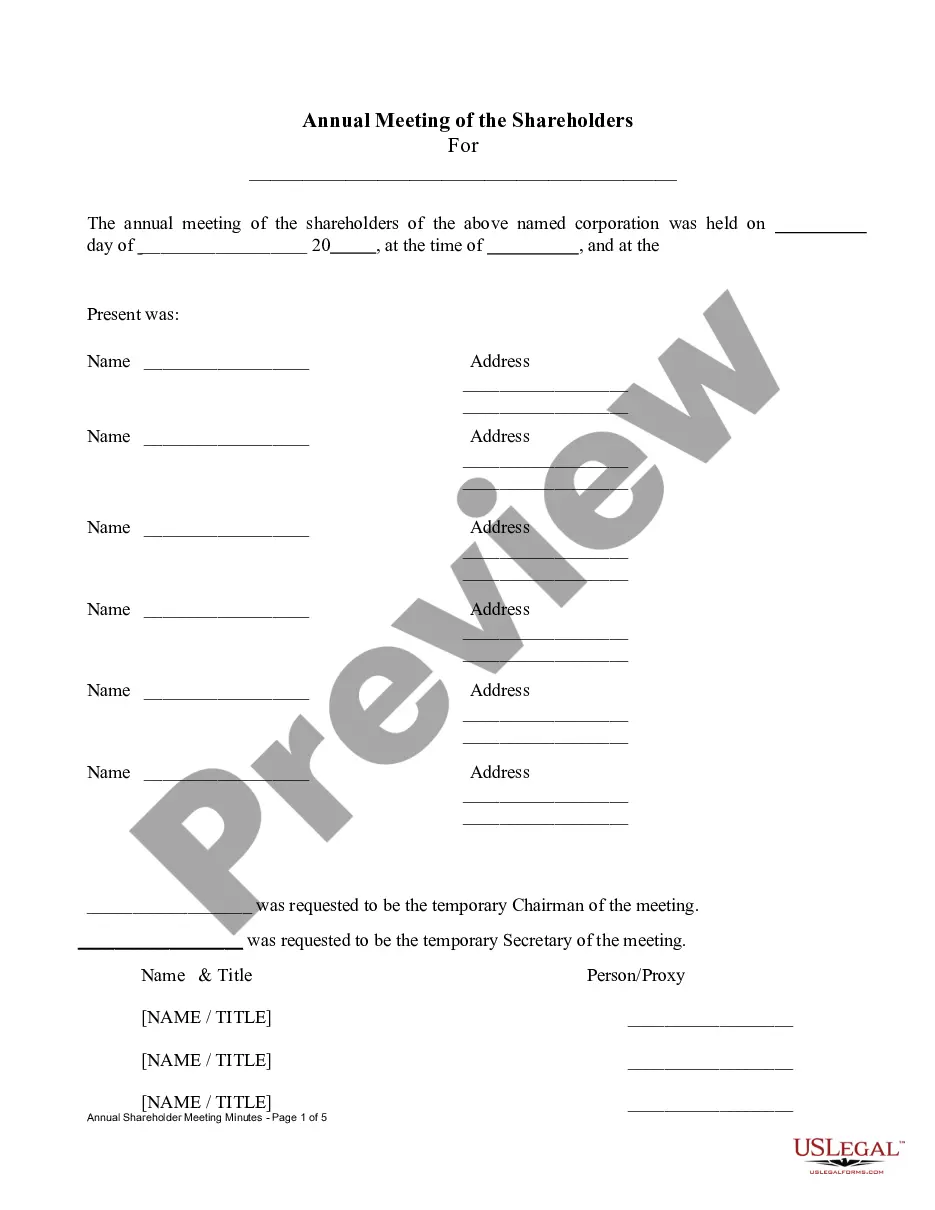
The Annual Minutes form is a crucial document used by corporations to formally record important decisions and changes made throughout the year. Unlike regular minutes from a meeting, this form allows corporations to capture actions taken by all shareholders and directors without convening a physical meeting. This ensures that compliance with legal requirements is maintained, particularly under the Maine Business Corporation Act.
What’s included in this form
- Identification of the corporation and the date of the consent.
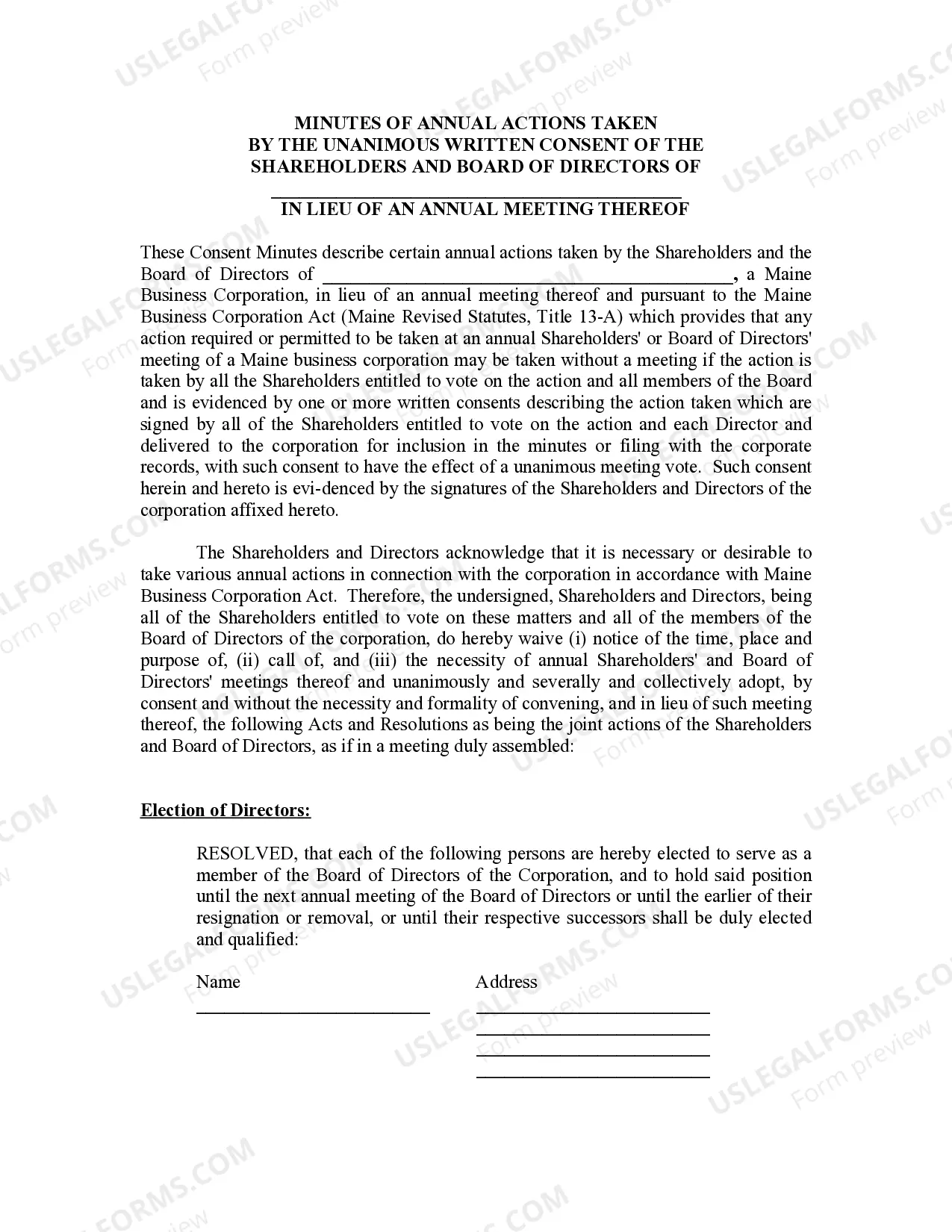
- Election of the Board of Directors, including names and addresses.
- Approval of actions taken by the Board during the previous year.
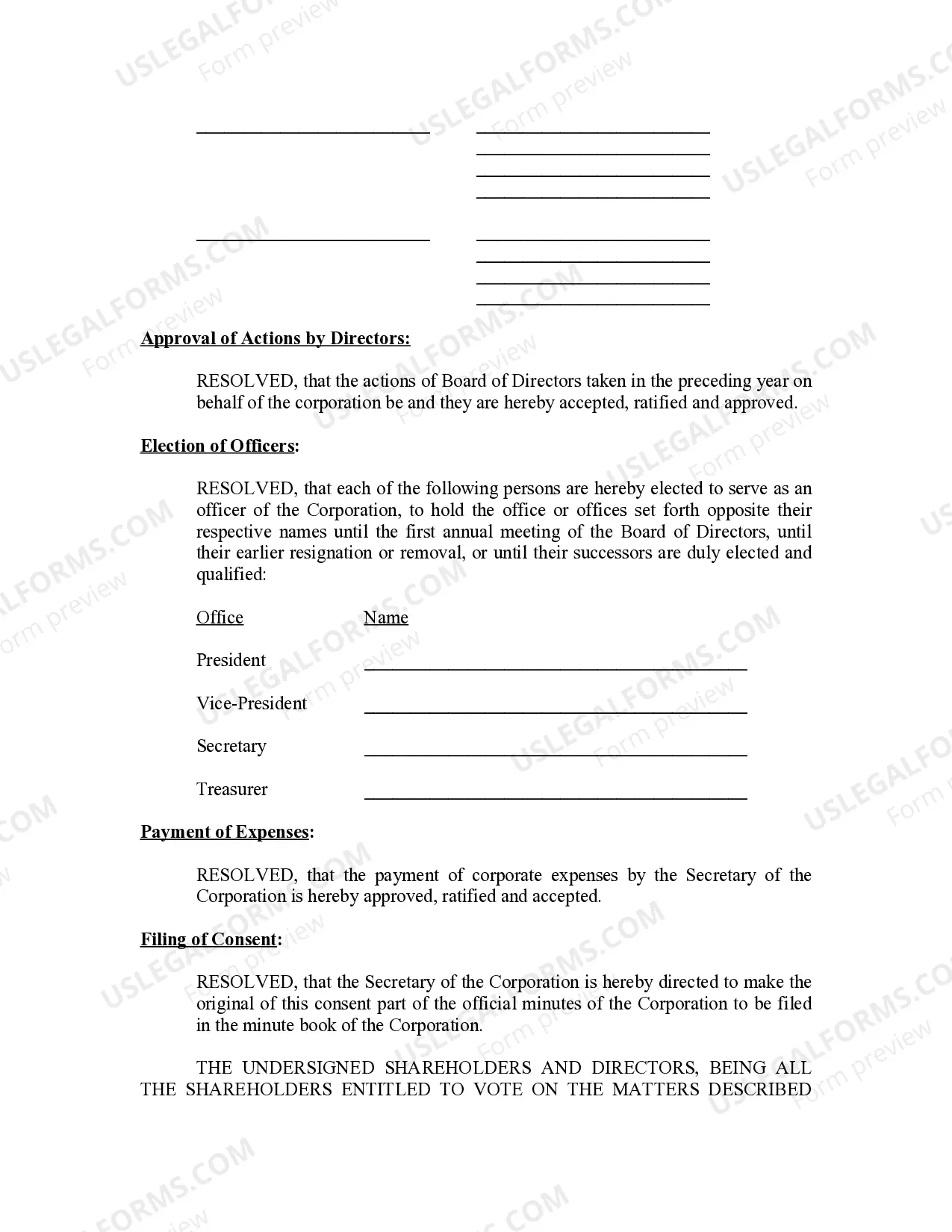
- Election of corporate officers such as President, Secretary, and Treasurer.
- Resolution for payment of corporate expenses.
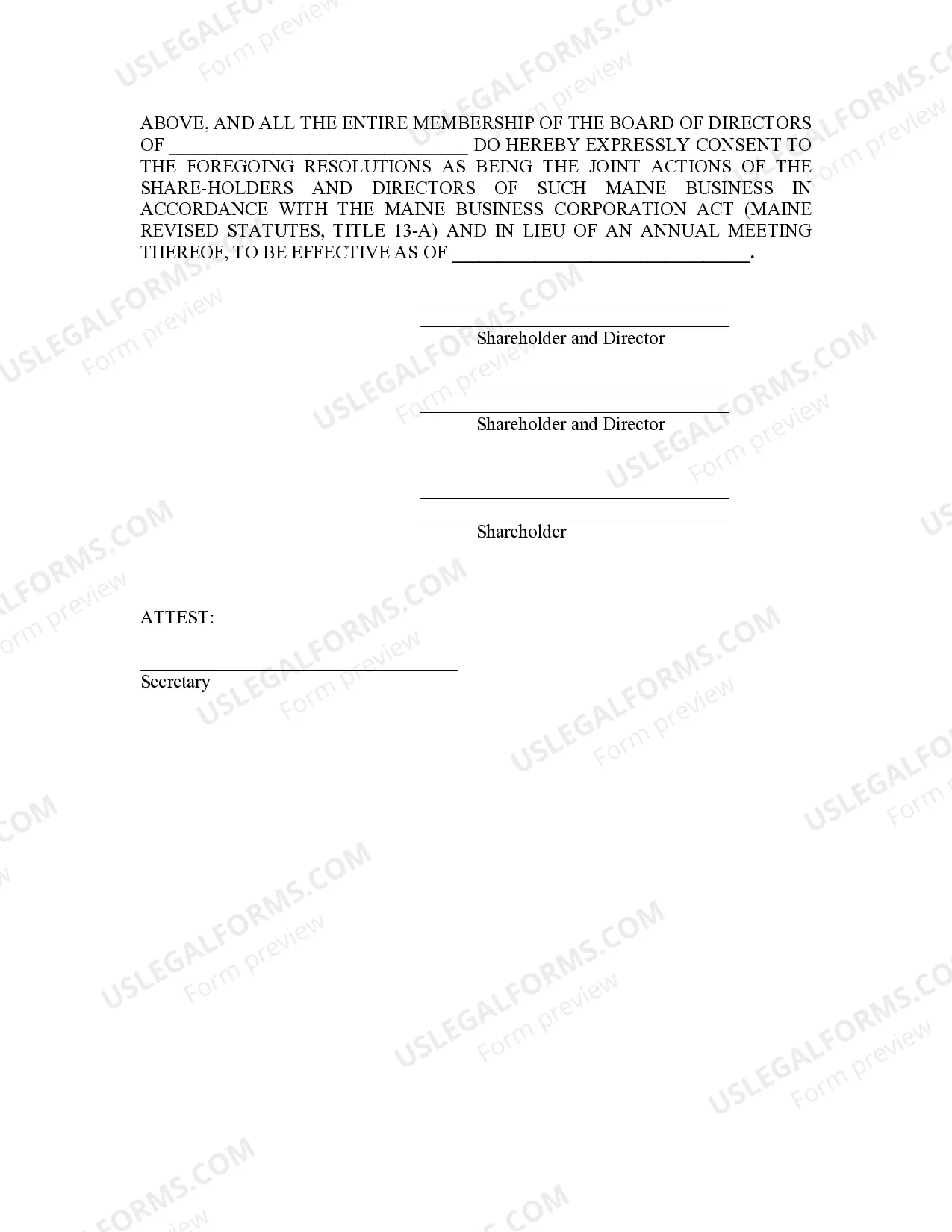
- Consent signatures from all shareholders and directors.
When to use this document
This form should be utilized when a corporation needs to formally document annual decisions made by its shareholders and board members. It is especially relevant in scenarios where a physical meeting is not feasible, as the consent of all parties involved can be captured in writing. Use this form to ensure that all annual compliance requirements are met, and to maintain organized corporate records.
Intended users of this form
- Corporations based in Maine looking to document annual meetings.
- Shareholders and directors of a corporation who need to record official actions without a formal meeting.
- Corporations needing to comply with the Maine Business Corporation Act requirements.
Completing this form step by step
- Enter the corporation's name and the date for recordkeeping.
- List the names and addresses of elected directors in the appropriate sections.
- Document the approval of actions taken by the Board during the past year.
- Select and name the individuals chosen for officer positions.
- Ensure all shareholders and directors provide their signatures to validate the document.
Does this document require notarization?
This form does not typically require notarization to be legally valid. However, some jurisdictions or document types may still require it. US Legal Forms provides secure online notarization powered by Notarize, available 24/7 for added convenience.
Get your form ready online
Our built-in tools help you complete, sign, share, and store your documents in one place.
Make edits, fill in missing information, and update formatting in US Legal Forms—just like you would in MS Word.
Download a copy, print it, send it by email, or mail it via USPS—whatever works best for your next step.
Sign and collect signatures with our SignNow integration. Send to multiple recipients, set reminders, and more. Go Premium to unlock E-Sign.
If this form requires notarization, complete it online through a secure video call—no need to meet a notary in person or wait for an appointment.
We protect your documents and personal data by following strict security and privacy standards.

Make edits, fill in missing information, and update formatting in US Legal Forms—just like you would in MS Word.

Download a copy, print it, send it by email, or mail it via USPS—whatever works best for your next step.

Sign and collect signatures with our SignNow integration. Send to multiple recipients, set reminders, and more. Go Premium to unlock E-Sign.

If this form requires notarization, complete it online through a secure video call—no need to meet a notary in person or wait for an appointment.

We protect your documents and personal data by following strict security and privacy standards.
Common mistakes
- Failing to include all required signatures from shareholders and directors.
- Not specifying the corporation's name and date clearly at the top of the form.
- Inconsistent information regarding the names and addresses of directors or officers.
Benefits of completing this form online
- Convenient access to templates that can be downloaded and completed at any time.
- Easily editable fields allow for customization to fit specific corporate needs.
- Reliable legal forms drafted by licensed attorneys ensure compliance with state laws.
Main things to remember
- The Annual Minutes form is essential for documenting corporate decisions annually.
- All shareholders and directors must sign the form to validate the resolutions.
- The form helps maintain compliance with state corporate laws and regulations.
Looking for another form?
Form popularity
FAQ
Unlike corporations, limited liability companies (LLCs) are not required by state law to hold meetings or record minutes of the meetings they do hold. Though they are not required by law, it is helpful for LLCs to keep minutes to help protect their business.
Date, time, and location. Minutes should include this basic information about when and where the meeting was held and how long it lasted. Creator. List of persons present. Topics list. Voting record. Review and approval.
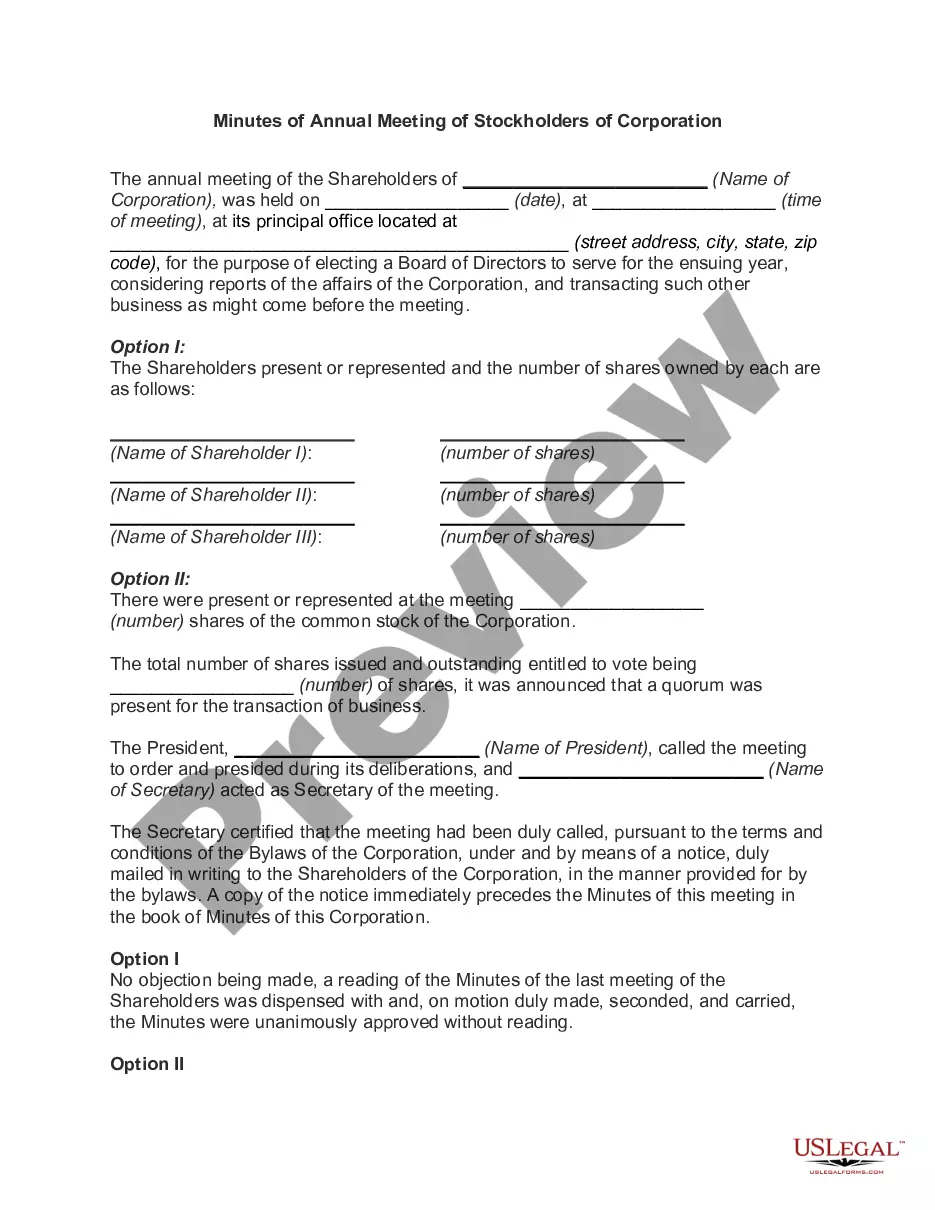
One of the most important formalities required of corporations is to hold annual shareholder meetings and to keep detailed reports of these meetings, known as annual meeting minutes.While there's no statutory requirement for LLCs to hold meetings, it may be required by your LLC's own operating agreement.
Single member LLCs should have meeting minutes for any actions that its operating agreement calls for a vote. Often this includes decisions to add new members to the company, merge with another company or dissolve the company.
Unlike the articles of organization, an operating agreement generally is not required in order to form an SMLLC, nor is it filed with the state. Instead, an operating agreement is optionalthough recommended. If you choose to have one, you'll keep it on file at your business's official location.
A single-member LLC is a limited liability company with a single owner, and LLCs refer to owners as members. Single-member LLCs are disregarded entities. A disregarded entity is ignored by the IRS for tax purposes, and the IRS collects the business's taxes through the owner's personal tax return.
As long as you continue to operate as an LLC or corporation, you must maintain a registered agent. And, most states require that you file an annual report that supplies current information regarding your company.
Minutes typically include: Meeting date, time, and location. Names of attendees and whether they missed any part of the meeting. List of those absent. Agenda items and brief descriptions. Any voting actions and how each individual voted. Time that meeting was adjourned.
Minutes typically include: Meeting date, time, and location. Names of attendees and whether they missed any part of the meeting. List of those absent. Agenda items and brief descriptions. Any voting actions and how each individual voted. Time that meeting was adjourned.