Maine Marital Domestic Separation and Property Settlement Agreement Adult Children Parties May have Joint Property or Debts where Divorce Action Filed
What this document covers
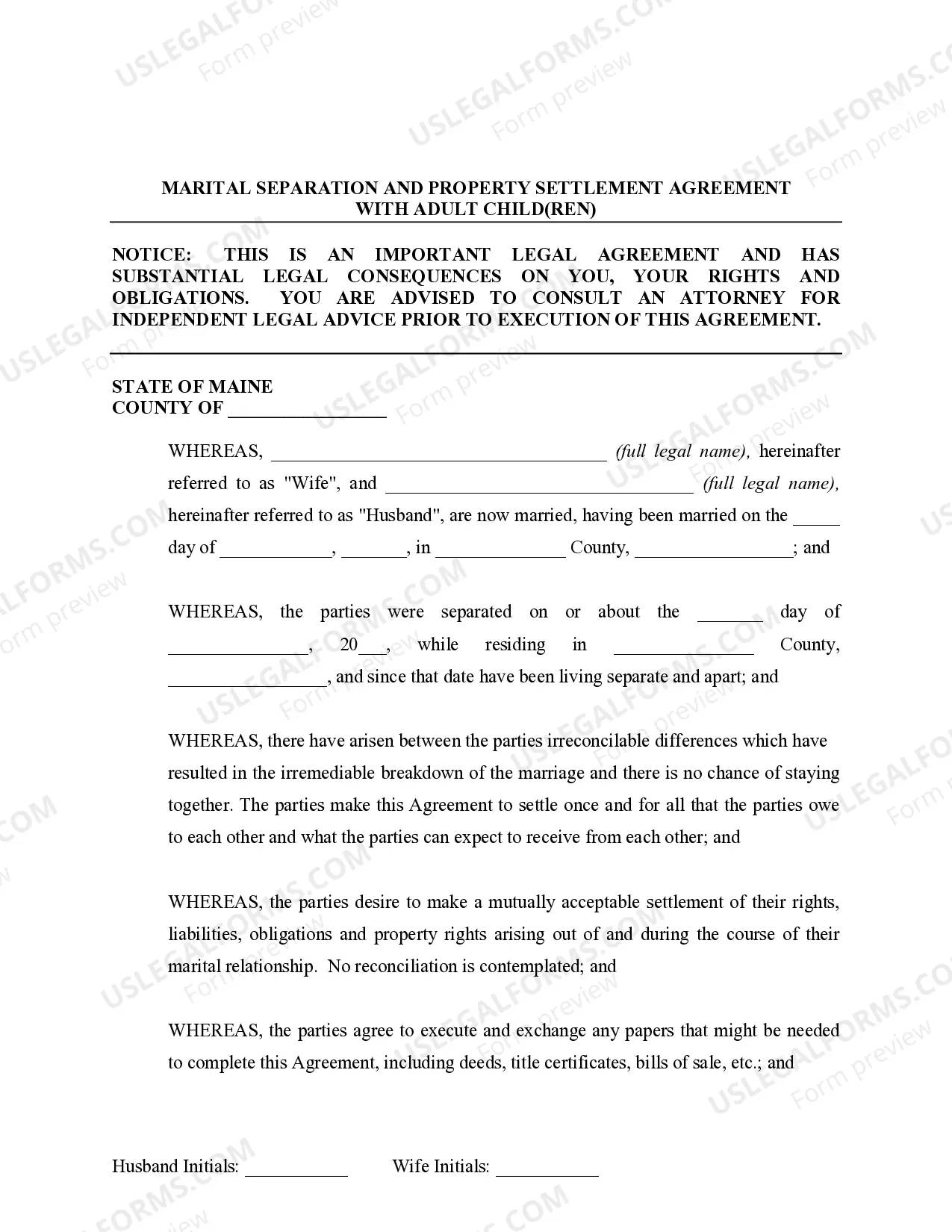
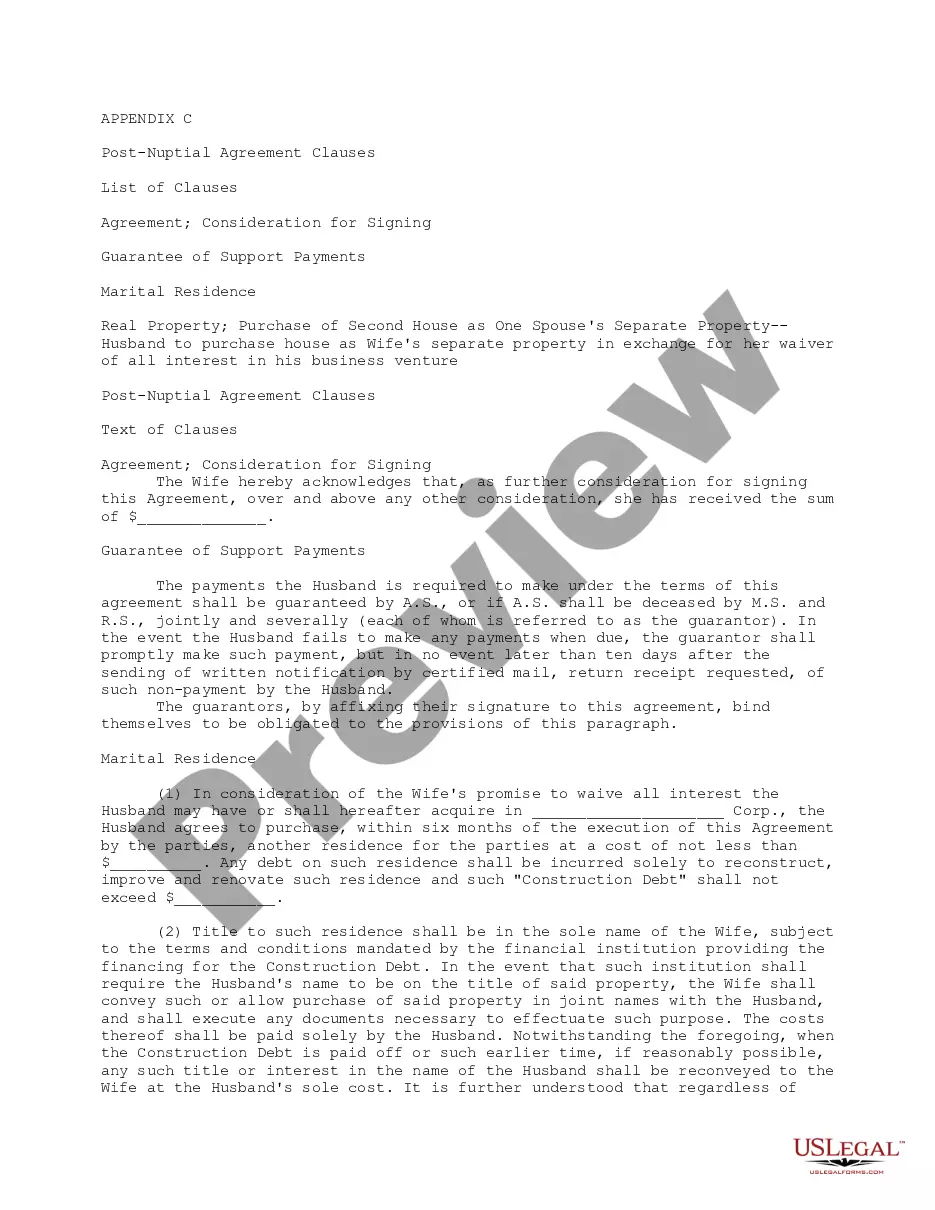
This Marital Domestic Separation and Property Settlement Agreement is designed for couples with adult children who are undergoing a divorce process. It serves as a legally binding document to outline the division of shared property and liabilities, ensuring a clear settlement between both parties. This agreement distinguishes itself by being specifically tailored for married couples with adult children and addresses joint ownership and debts, which is essential for effective dispute resolution during divorce proceedings.
What’s included in this form
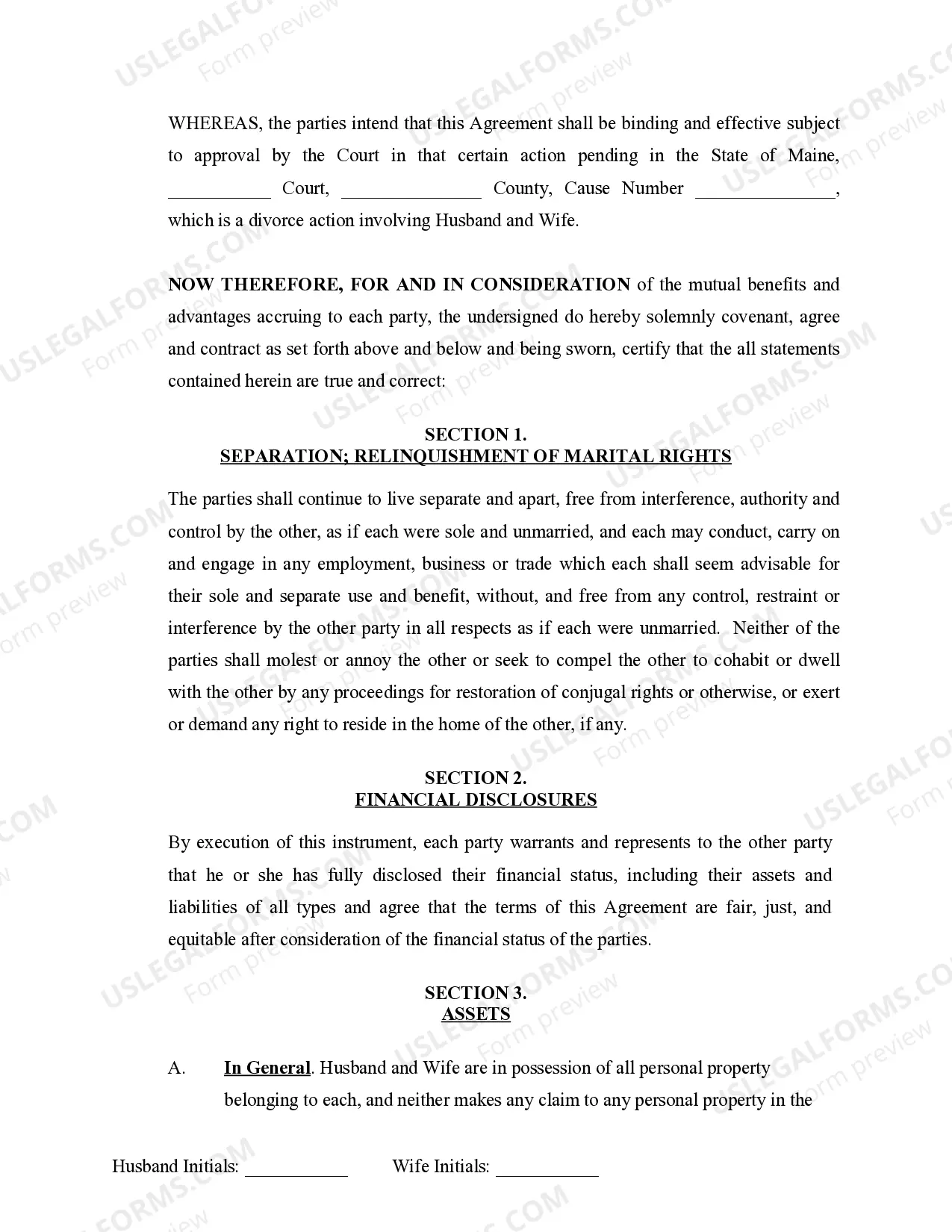
- Provisions for separation and relinquishment of marital rights.
- Financial disclosures to ensure transparency between both parties.
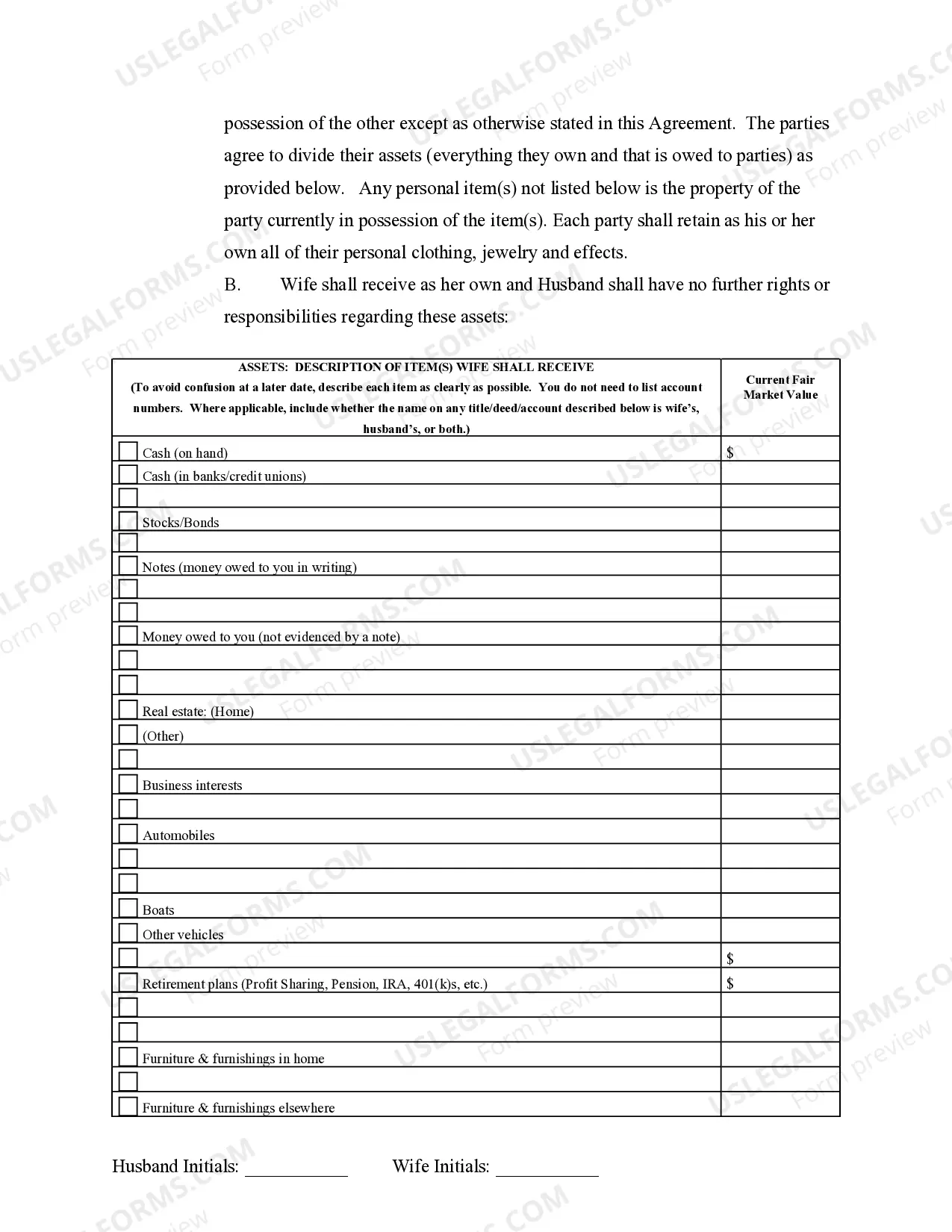
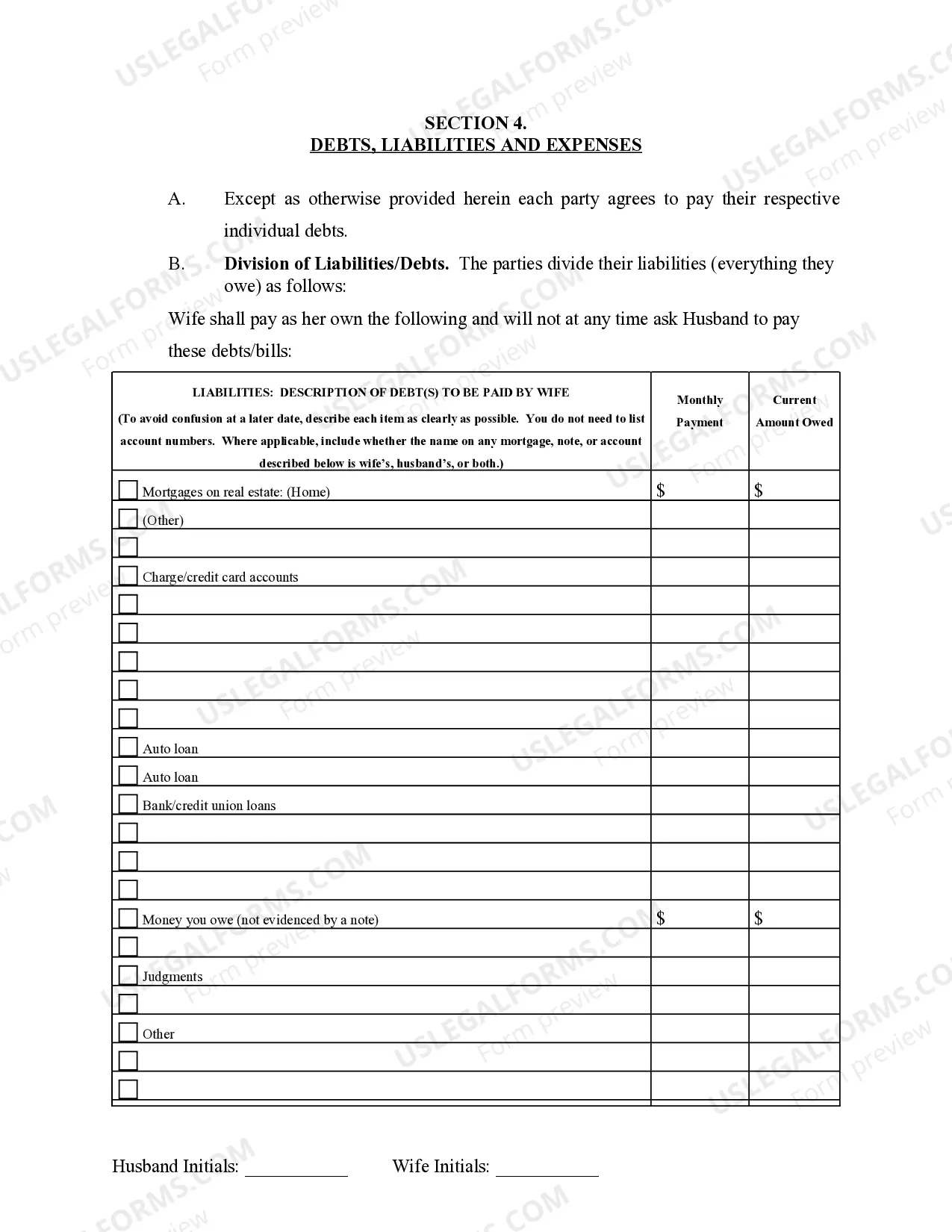
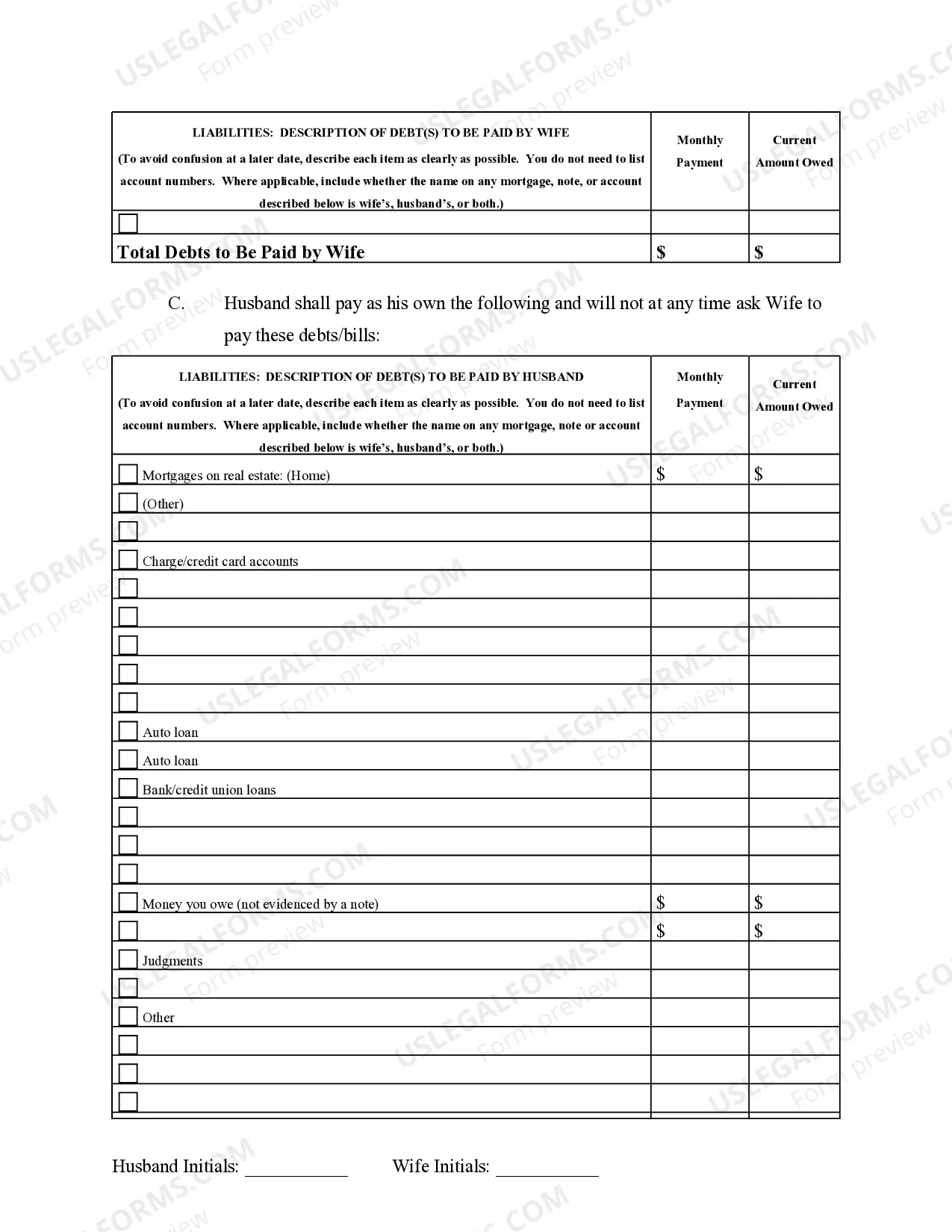
- Detailed sections for dividing assets and liabilities.
- Sections outlining spousal support agreements.
- Mutual indemnity clauses regarding debts and liabilities.
- Legal acknowledgment and terms governing modifications of the agreement.

Situations where this form applies
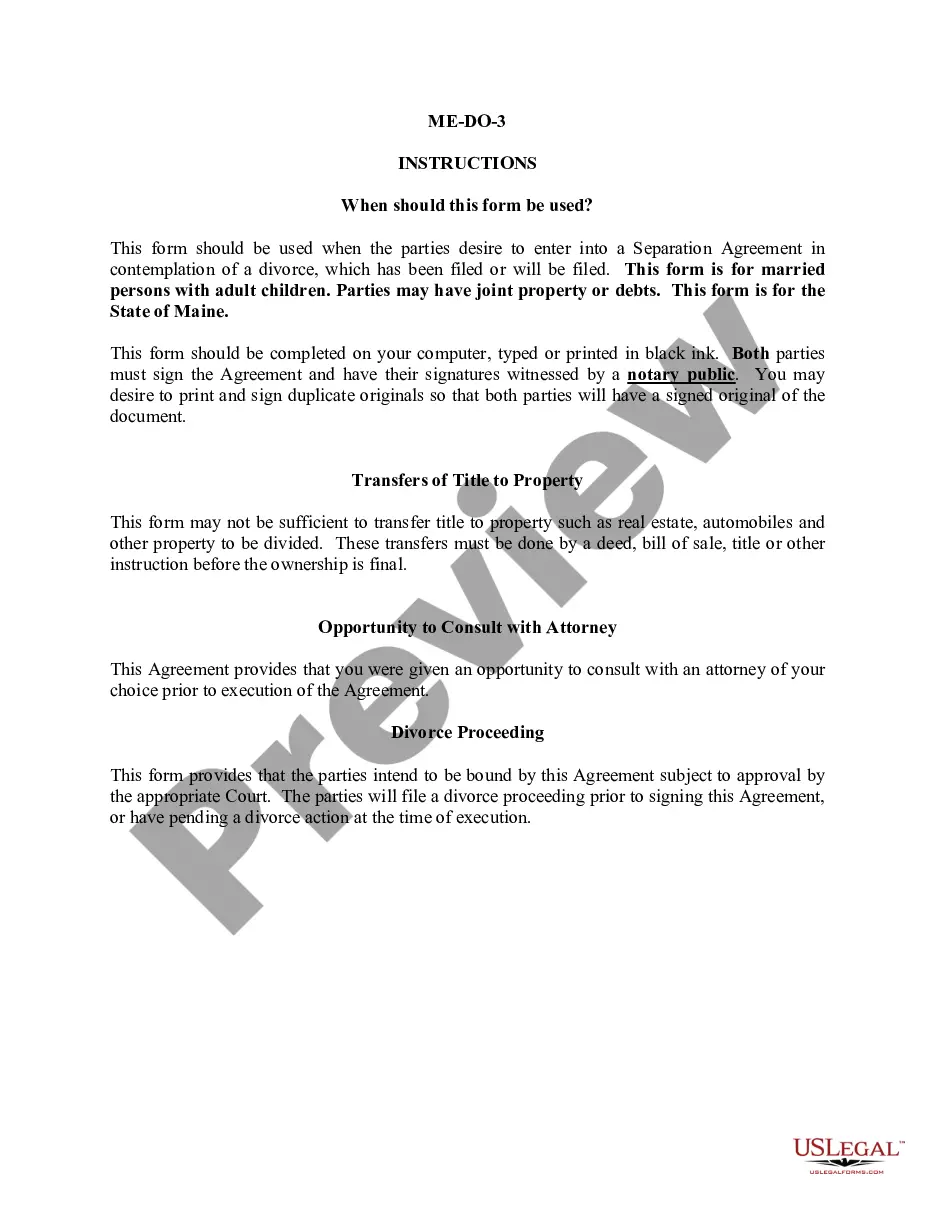
This form should be used when both parties are contemplating divorce and wish to clarify the separation of their assets and debts. It is particularly useful when couples with adult children want to establish a formal agreement on financial responsibilities and property division as part of the divorce process. If a divorce action is either pending or will soon be initiated, this Agreement can play a crucial role in settling expectations and responsibilities.
Who should use this form
- Married couples with adult children considering separation or divorce.
- Individuals who have joint property or debts that need to be addressed legally.
- Parties seeking a clear financial agreement to facilitate the divorce process.
How to prepare this document
- Identify and list the full names of both parties at the beginning of the agreement.
- Clearly disclose all financial assets and liabilities, ensuring both parties understand their financial standing.
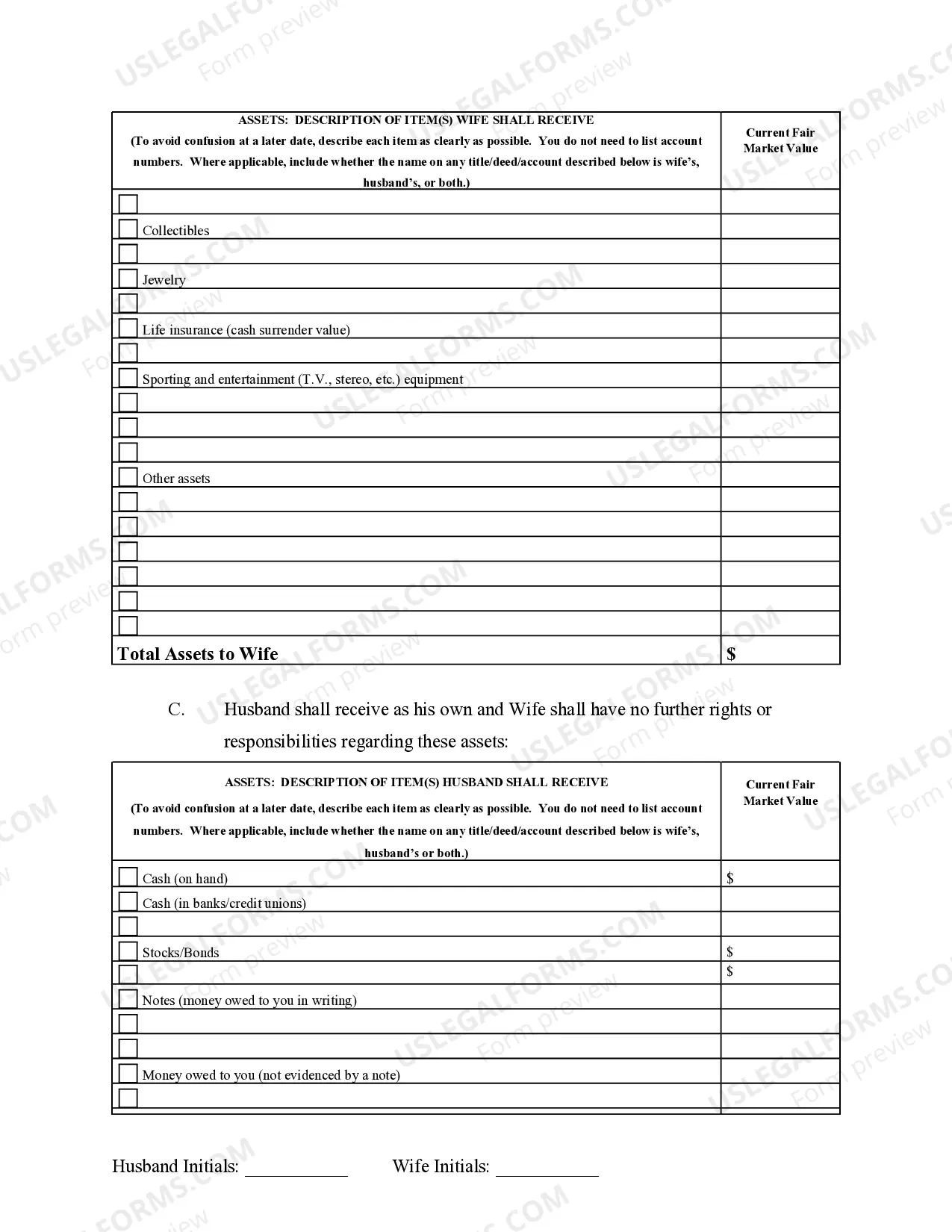
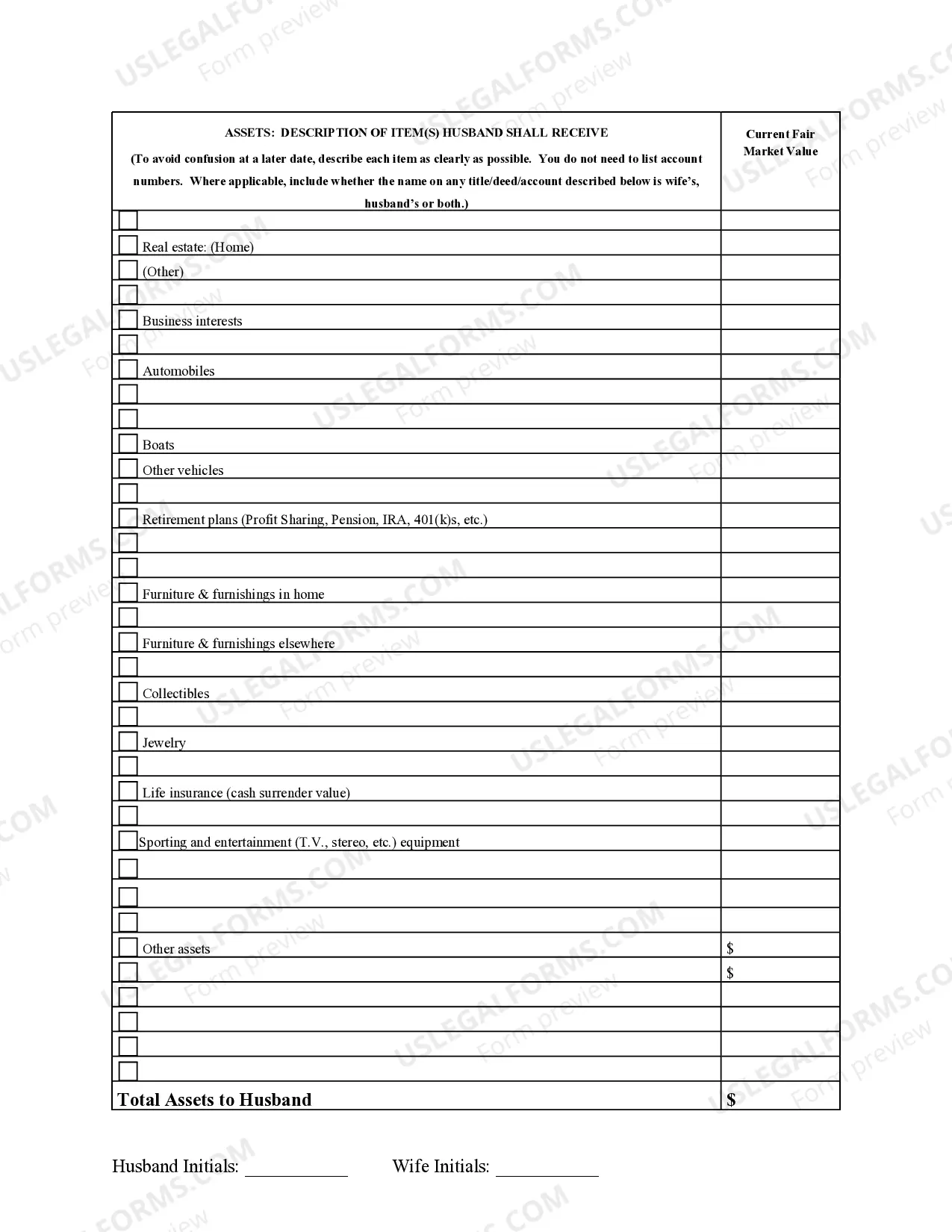
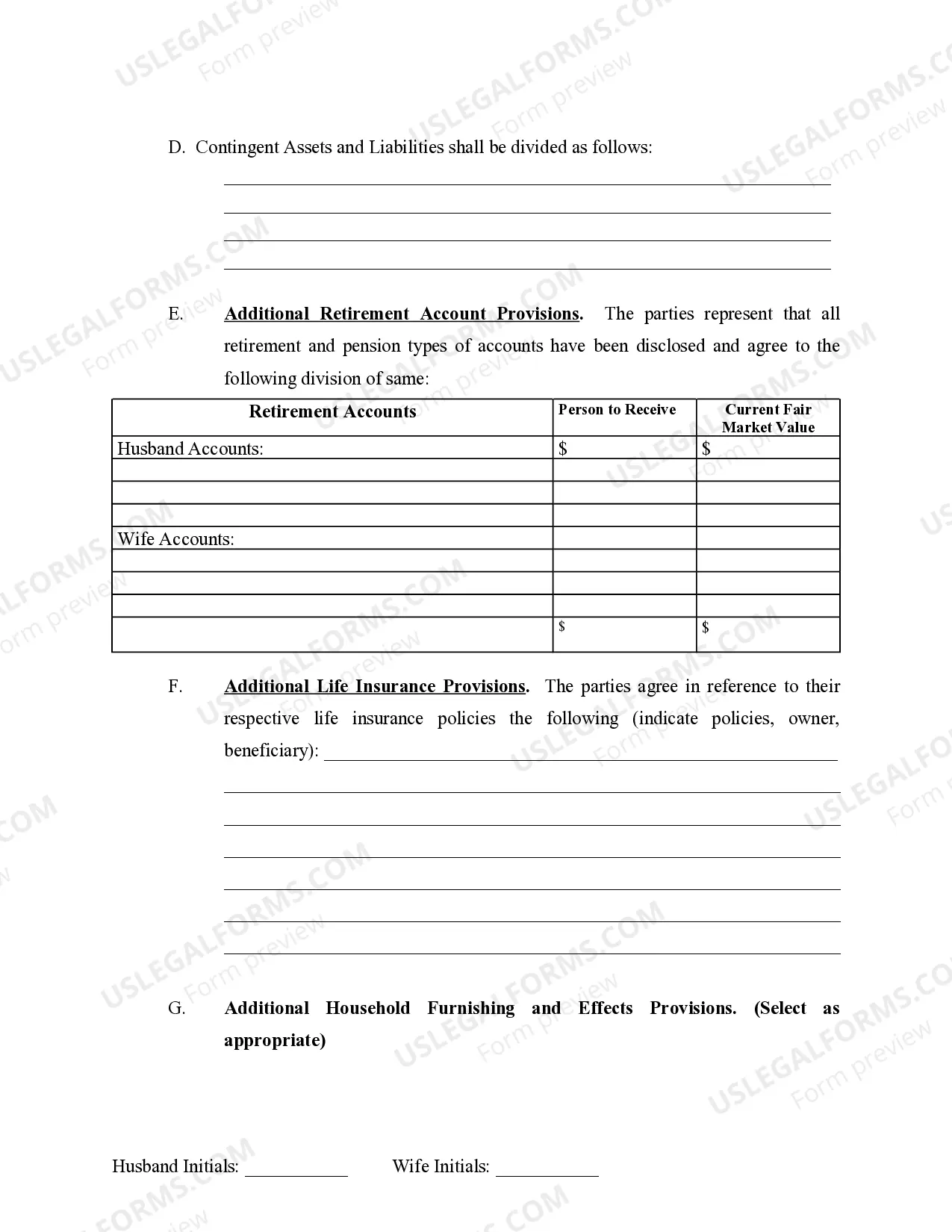
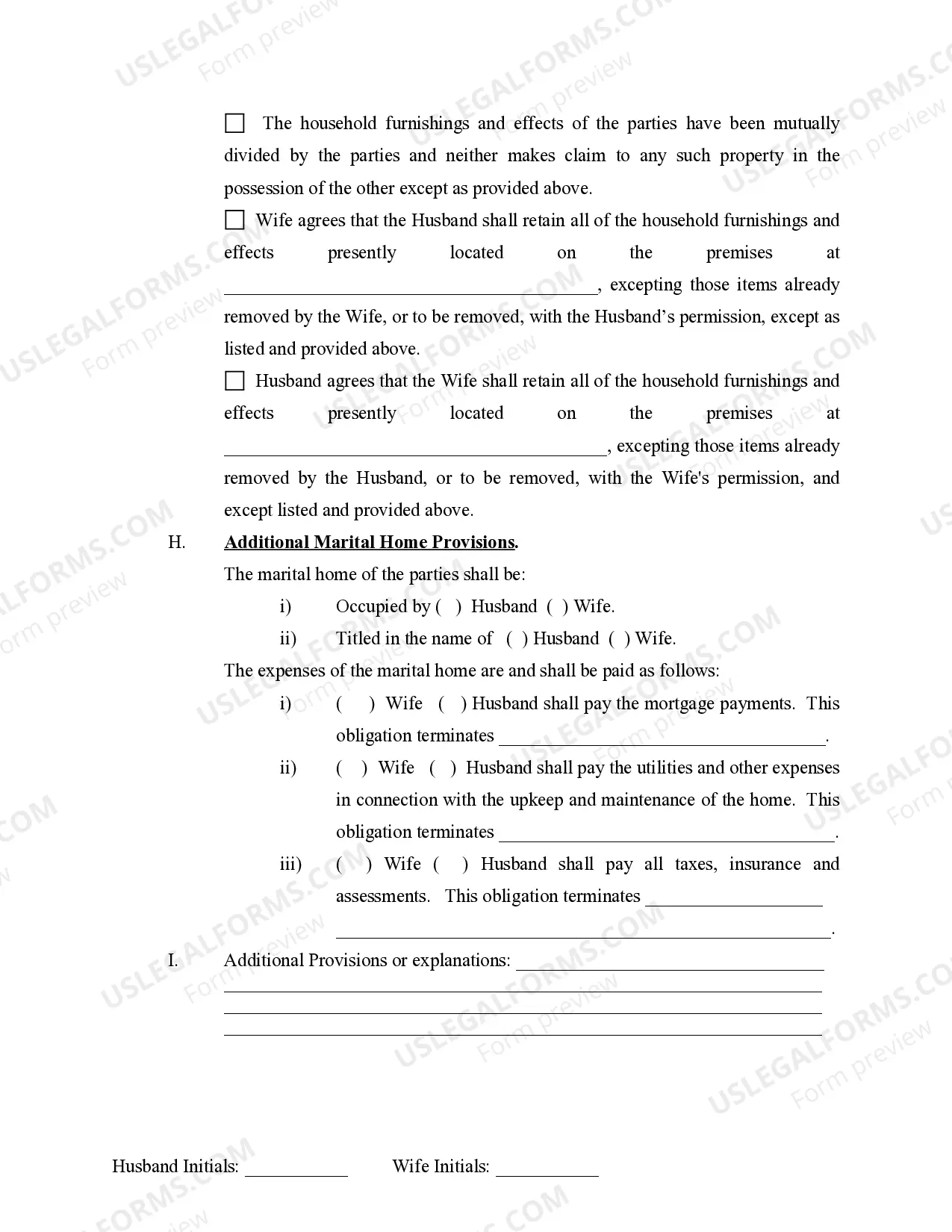
- Detail the division of assets, specifying what each party will retain, alongside current fair market values.
- Outline any spousal support arrangements, including amounts and payment schedules, if applicable.
- Both parties must sign the agreement in the presence of a notary public to make it legally binding.
Notarization requirements for this form
Yes, this form must be notarized to be legally valid. Both parties need to sign the Agreement in front of a notary public to ensure it is binding. US Legal Forms offers integrated online notarization, allowing you to complete this process securely via video call, available 24/7.
Get your form ready online
Our built-in tools help you complete, sign, share, and store your documents in one place.
Make edits, fill in missing information, and update formatting in US Legal Forms—just like you would in MS Word.
Download a copy, print it, send it by email, or mail it via USPS—whatever works best for your next step.
Sign and collect signatures with our SignNow integration. Send to multiple recipients, set reminders, and more. Go Premium to unlock E-Sign.
If this form requires notarization, complete it online through a secure video call—no need to meet a notary in person or wait for an appointment.
We protect your documents and personal data by following strict security and privacy standards.

Make edits, fill in missing information, and update formatting in US Legal Forms—just like you would in MS Word.

Download a copy, print it, send it by email, or mail it via USPS—whatever works best for your next step.

Sign and collect signatures with our SignNow integration. Send to multiple recipients, set reminders, and more. Go Premium to unlock E-Sign.

If this form requires notarization, complete it online through a secure video call—no need to meet a notary in person or wait for an appointment.

We protect your documents and personal data by following strict security and privacy standards.
Typical mistakes to avoid
- Failing to fully disclose all assets and liabilities, which may lead to disputes later.
- Not having the agreement notarized, which is crucial for its legal validity.
- Leaving out important details about spousal support or asset division.
- Assuming the agreement will automatically be accepted by the court without review.
Why complete this form online
- Convenient access to legal documents from anywhere at any time.
- Editable templates allow users to tailor the agreement to their specific circumstances.
- Provides an organized and clear layout to assist users in completing the form accurately.
- Ensures compliance with state-specific legal requirements.
Quick recap
- This agreement is crucial for couples with adult children during divorce proceedings in Maine.
- Proper completion and notarization are vital for legal enforceability.
- Clear communication of all financial aspects is essential to prevent future disputes.
Looking for another form?

Form popularity
FAQ
But the concept of equality in Family Law does not necessarily mean half, or a 50/50 split. Equality in Family Law means putting both parties in a similar position and invariably that means that it won't be a 50/50, or an equal, split of the matrimonial assets in a divorce settlement.Sadly, their marriage broke down.
California is a community property state, not an equitable distribution state. This means that any assets or property gained during the course of a marriage belong equally to both spouses and, therefore, the property must be equally divided between the two spouse by the court in a divorce.
Equitable distribution is a method of dividing property at the time of divorce. All states except for Arizona, California, Idaho, Louisiana, Nevada, New Mexico, Texas, Washington and Wisconsin follow the principles of equitable distribution.
In California, there is no 50/50 split of marital property. When a married couple gets divorced, their community property and debts will be divided equitably. This means they will be divided fairly and equally.
Because California law views both spouses as one party rather than two, marital assets and debts are split 50/50 between the couple, unless they can agree on another arrangement.
Your divorce settlement agreement should cover everything that is important to you, including custody of your children, child support payments, alimony, and the separation of your property, such as your family home, vehicles, and other assets.
In Alberta, the Court applies the Matrimonial Property Act (MPA) to divide assets fairly. The MPA only applies to legally married spouses in Alberta. It does not apply to individuals in a common-law relationship. So, following a divorce or legal separation, who gets to keep the house?
If both parties want to keep the marital home, or they individually cannot afford the home by themselves, the home can be sold. The proceeds from the sale will be split based on the agreement the parties have reached in their divorce settlement, or the manner ordered by the court.
Equitable distribution, also known as equitable division or division of property, takes into account a variety of factors when dividing assets and debts, including how long the parties were married, their needs, and the financial contribution each party made during the marriage.