Maine Flood Zone Statement and Authorization
About this form
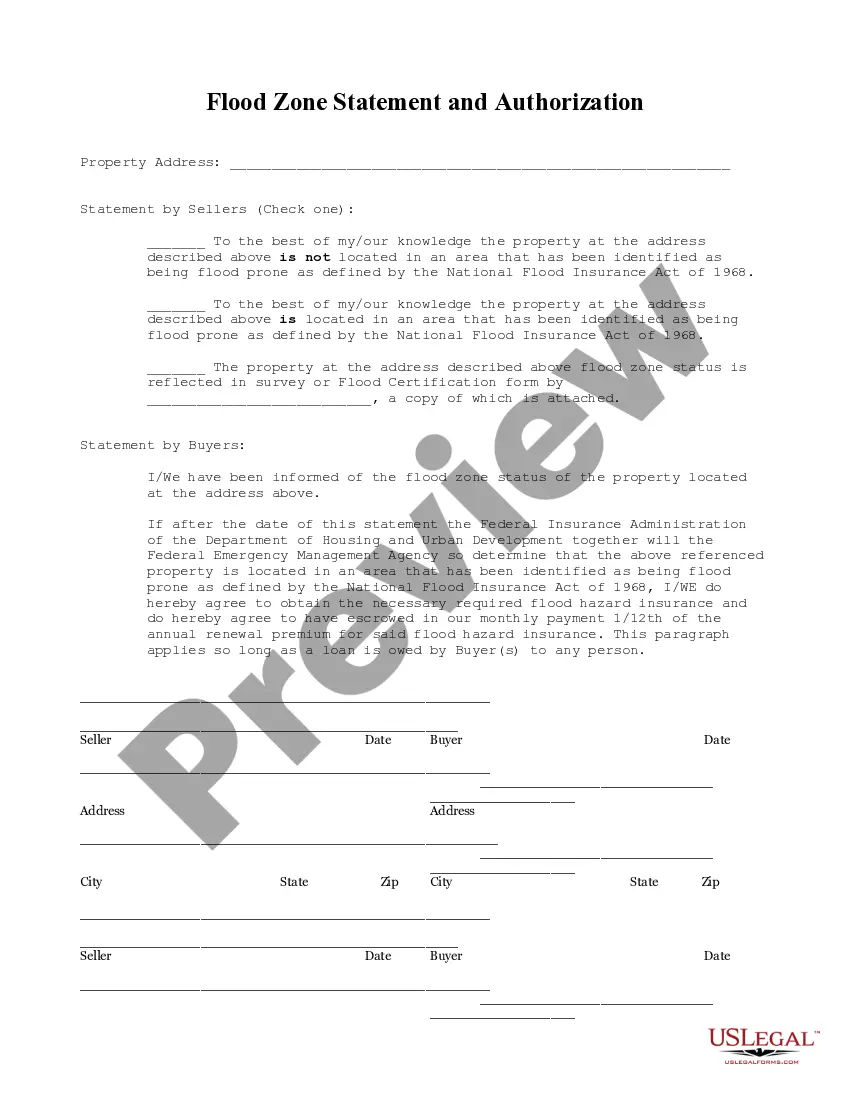
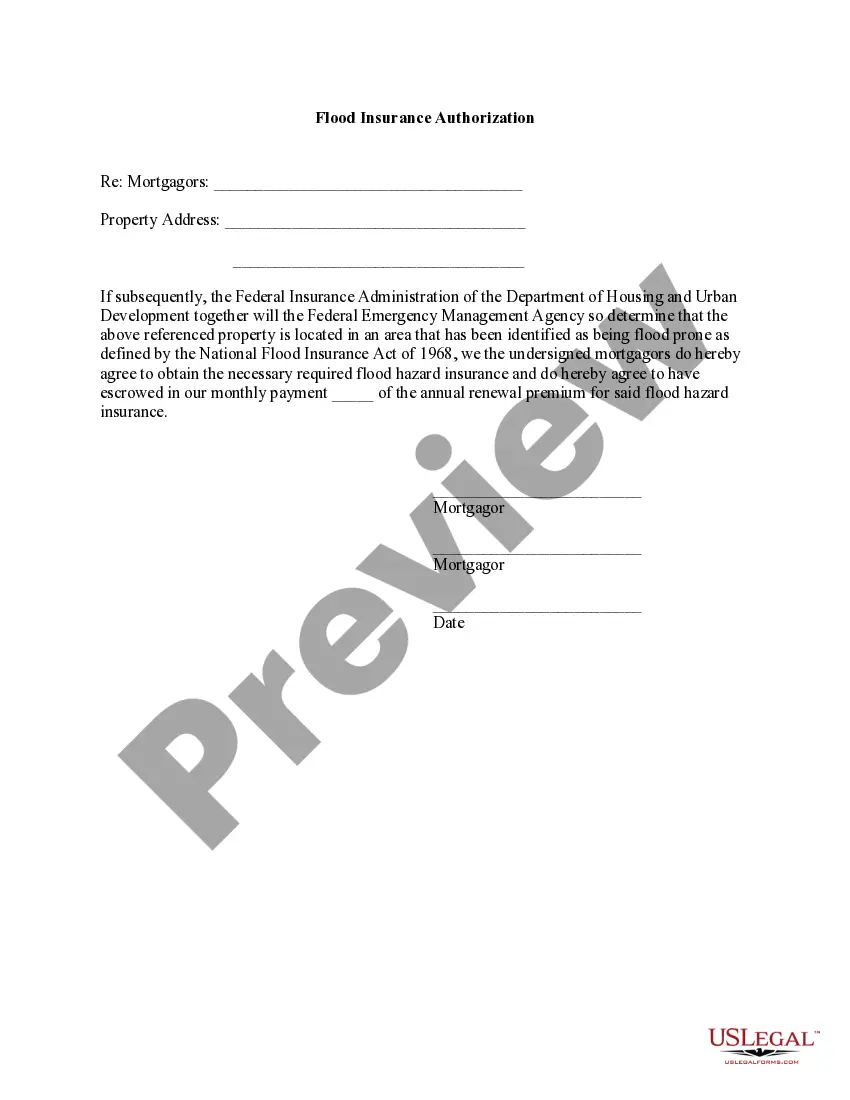
The Flood Zone Statement and Authorization form is a legal document used in real estate transactions. It allows sellers to disclose the flood zone status of a property and buyers to acknowledge this status. This form is essential for ensuring that both parties understand the flood risk associated with the property and that buyers commit to obtaining flood insurance if the property is later deemed to be in a flood-prone area.
Form components explained
- Property Address: Specific address where the property is located.
- Sellers Statement: A declaration by the seller regarding the flood zone status.
- Buyers Statement: Acknowledgment by the buyer of the flood zone information and agreement to obtain insurance if necessary.
- Signatures: Spaces for both sellers and buyers to sign and date the document.
- Attached Documentation: Option for sellers to attach a flood certification or survey.
Common use cases
This form should be used during real estate transactions when a property is sold. It is particularly critical in areas where flood risk is a concern. Sellers are required to disclose whether the property is in a flood zone, and buyers must acknowledge this information to protect themselves from future liabilities regarding flood damage.
Intended users of this form
- Property sellers who need to inform buyers about the flood zone status of their property.
- Property buyers who are purchasing real estate and want to be aware of flood risks associated with the property.
- Real estate professionals who facilitate transactions involving properties in flood-prone areas.
- Anyone involved in financing a property, as lenders often require disclosure of flood zone status.
Steps to complete this form
- Identify the property address and enter it at the top of the form.
- Sellers must check the appropriate box regarding the flood zone status of the property.
- If applicable, attach any surveys or flood certifications that provide additional details about the flood zone status.
- Buyers should read the acknowledgment section and confirm their understanding of the flood risks.
- Both sellers and buyers must sign and date the form to make it legally binding.
Does this document require notarization?
This form does not typically require notarization unless specified by local law. It is advisable to check with local regulations to confirm the requirements for your specific transaction.
Get your form ready online
Our built-in tools help you complete, sign, share, and store your documents in one place.
Make edits, fill in missing information, and update formatting in US Legal Forms—just like you would in MS Word.
Download a copy, print it, send it by email, or mail it via USPS—whatever works best for your next step.
Sign and collect signatures with our SignNow integration. Send to multiple recipients, set reminders, and more. Go Premium to unlock E-Sign.
If this form requires notarization, complete it online through a secure video call—no need to meet a notary in person or wait for an appointment.
We protect your documents and personal data by following strict security and privacy standards.

Make edits, fill in missing information, and update formatting in US Legal Forms—just like you would in MS Word.

Download a copy, print it, send it by email, or mail it via USPS—whatever works best for your next step.

Sign and collect signatures with our SignNow integration. Send to multiple recipients, set reminders, and more. Go Premium to unlock E-Sign.

If this form requires notarization, complete it online through a secure video call—no need to meet a notary in person or wait for an appointment.

We protect your documents and personal data by following strict security and privacy standards.
Typical mistakes to avoid
- Failing to check the correct flood zone status box by the seller.
- Not attaching required flood certifications or surveys.
- Buyers neglecting to sign the acknowledgment section or understand their insurance obligations.
- Not providing complete property address information.
Advantages of online completion
- Convenience: Easily complete the form at your own pace without the need for in-person appointments.
- Editability: Modify the form as needed before finalizing the document.
- Reliability: Access a professionally drafted legal form ensuring compliance with necessary legal standards.
Summary of main points
- The Flood Zone Statement and Authorization form is vital in real estate transactions involving properties at risk of flooding.
- Sellers must disclose the flood zone status, while buyers must acknowledge this information.
- Both parties must sign the document to create a legally binding agreement.
- Using this form can protect buyers from future liabilities and ensure informed decision-making.
Looking for another form?
Form popularity
FAQ
Evidence of flood insurance Completed and executed NFIP Flood Insurance Application PLUS a copy of the Borrower's premium check or agent's paid receipt.
Summary: Proximity to a flood zone lowers property values. By law, a property is considered in a flood zone if any part of the structure falls within a floodplain, an area that is adjacent to a stream or river that experiences periodic flooding.
Flood zones are geographic areas that the FEMA has defined according to varying levels of flood risk. These zones are depicted on a community's Flood Insurance Rate Map (FIRM) or Flood Hazard Boundary Map. Each zone reflects the severity or type of flooding in the area.
Flood Zone A. Areas subject to inundation by the 1-percent-annual-chance flood event generally determined using approximate methodologies. Flood Zone AE, A1-30. Flood Zone AH. Flood Zone AO. Flood Zone AR. Flood Zone A99. Flood Zone V. Flood Zone VE, V1-30.
A Flood Zone is a geographical area that is rated to reflect the severity or type of flooding in that area.Areas of minimal flood hazard, Zone C or Zone X are areas outside the SFHA and higher than the elevation of the 0.2-percent-annual-chance flood.
1Your local floodplain manager: Your local floodplain manager may already have a certificate on file.2The seller of your property: If you're buying a property, the sellers may already have the certificate, and you can ask them for it before purchasing.What Is An Elevation Certificate for Flood Insurance? - ValuePenguin\nwww.valuepenguin.com > elevation-certificate-flood-insurance
AE flood zones are areas that present a 1% annual chance of flooding and a 26% chance over the life of a 30-year mortgage, according to FEMA.Since these areas are prone to flooding, homeowners with mortgages from federally regulated lenders are required to purchase flood insurance through the NFIP.
The 1-percent annual chance flood is also referred to as the base flood or 100-year flood. SFHAs are labeled as Zone A, Zone AO, Zone AH, Zones A1-A30, Zone AE, Zone A99, Zone AR, Zone AR/AE, Zone AR/AO, Zone AR/A1-A30, Zone AR/A, Zone V, Zone VE, and Zones V1-V30.
Zone A. Zone A is the flood insurance rate zone that corresponds to the I-percent annual chance floodplains that are determined in the Flood Insurance Study by approximate methods of analysis.