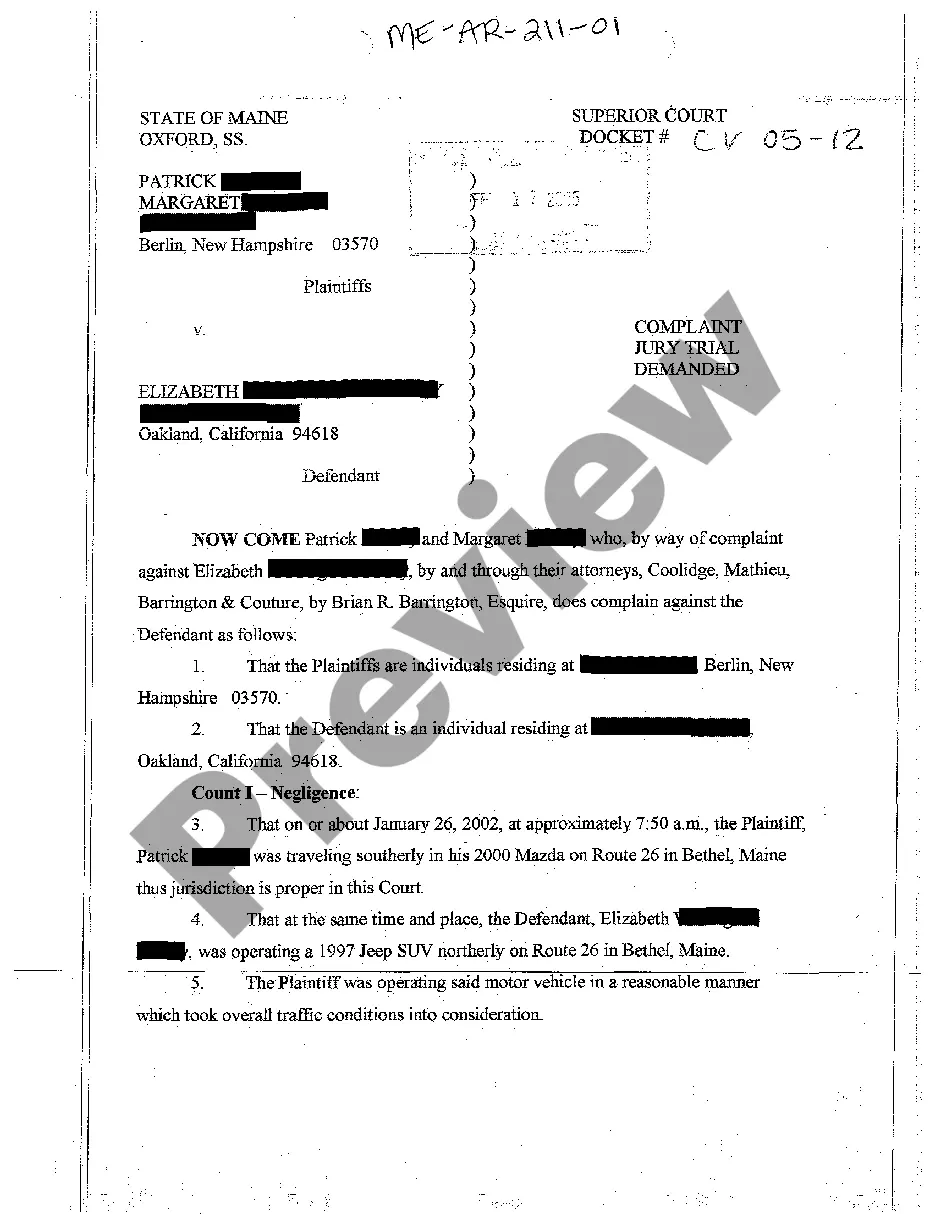
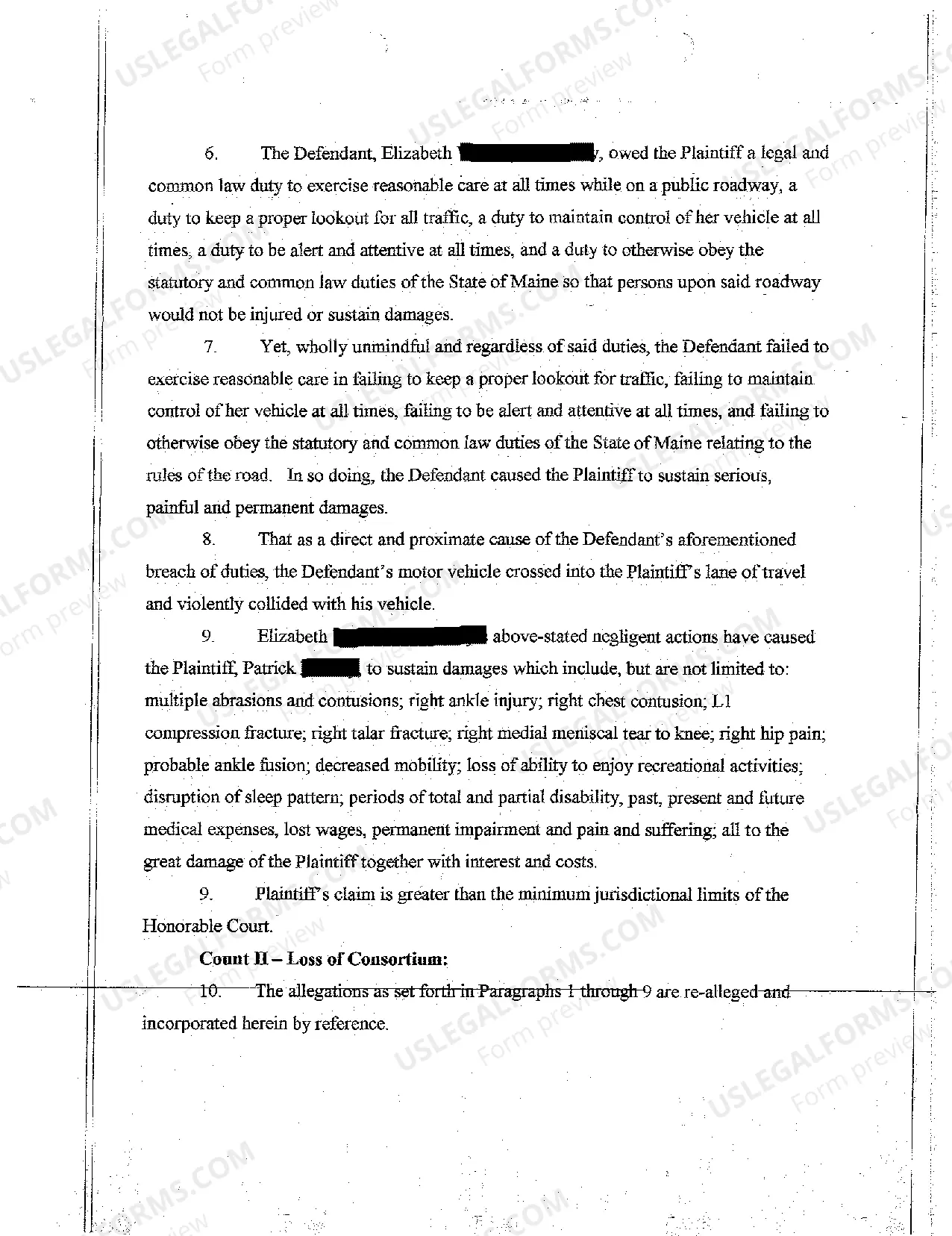
Maine Complaint - Personal Injury and Loss of Consortium Due to Negligent Operation of Motor Vehicle
Description
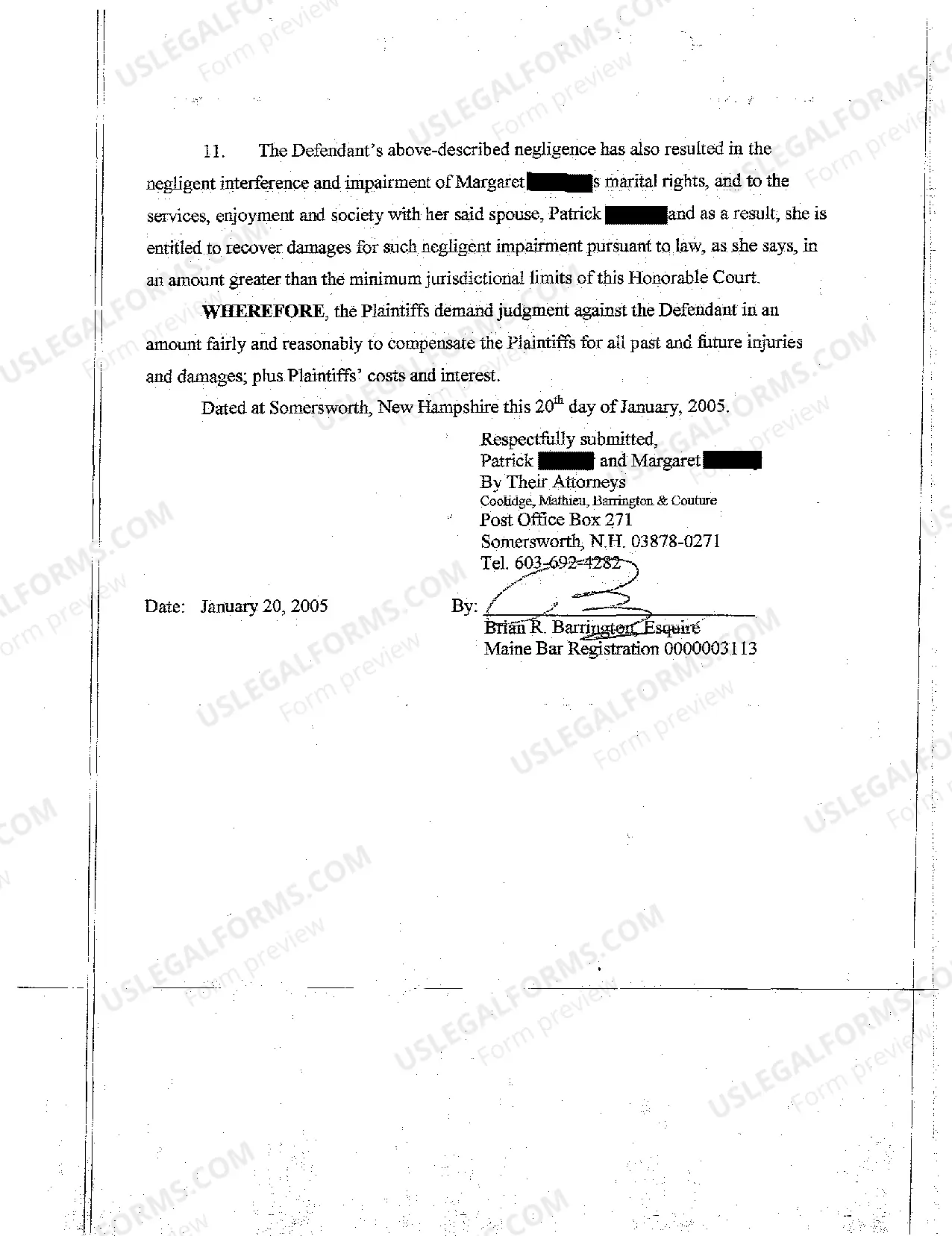
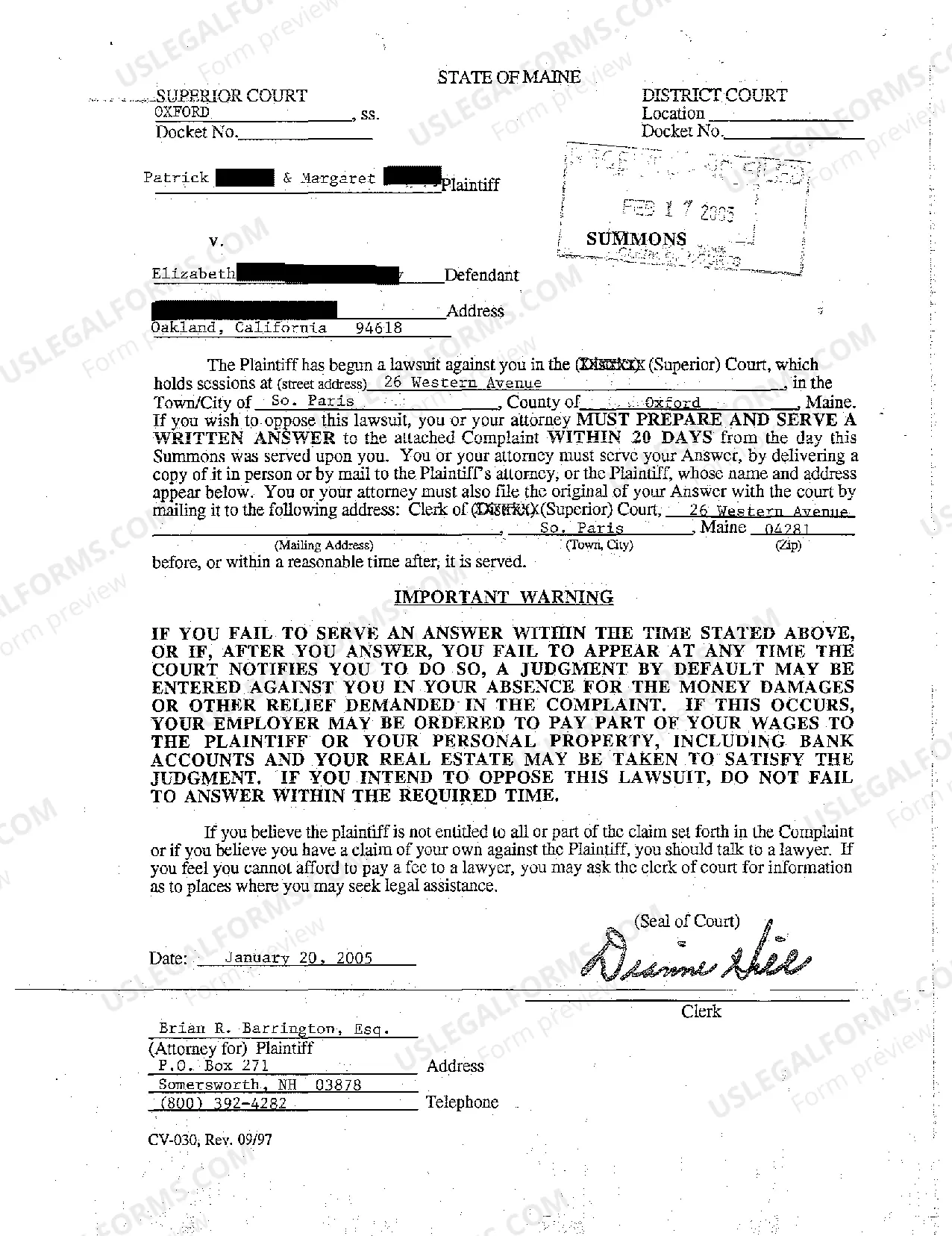
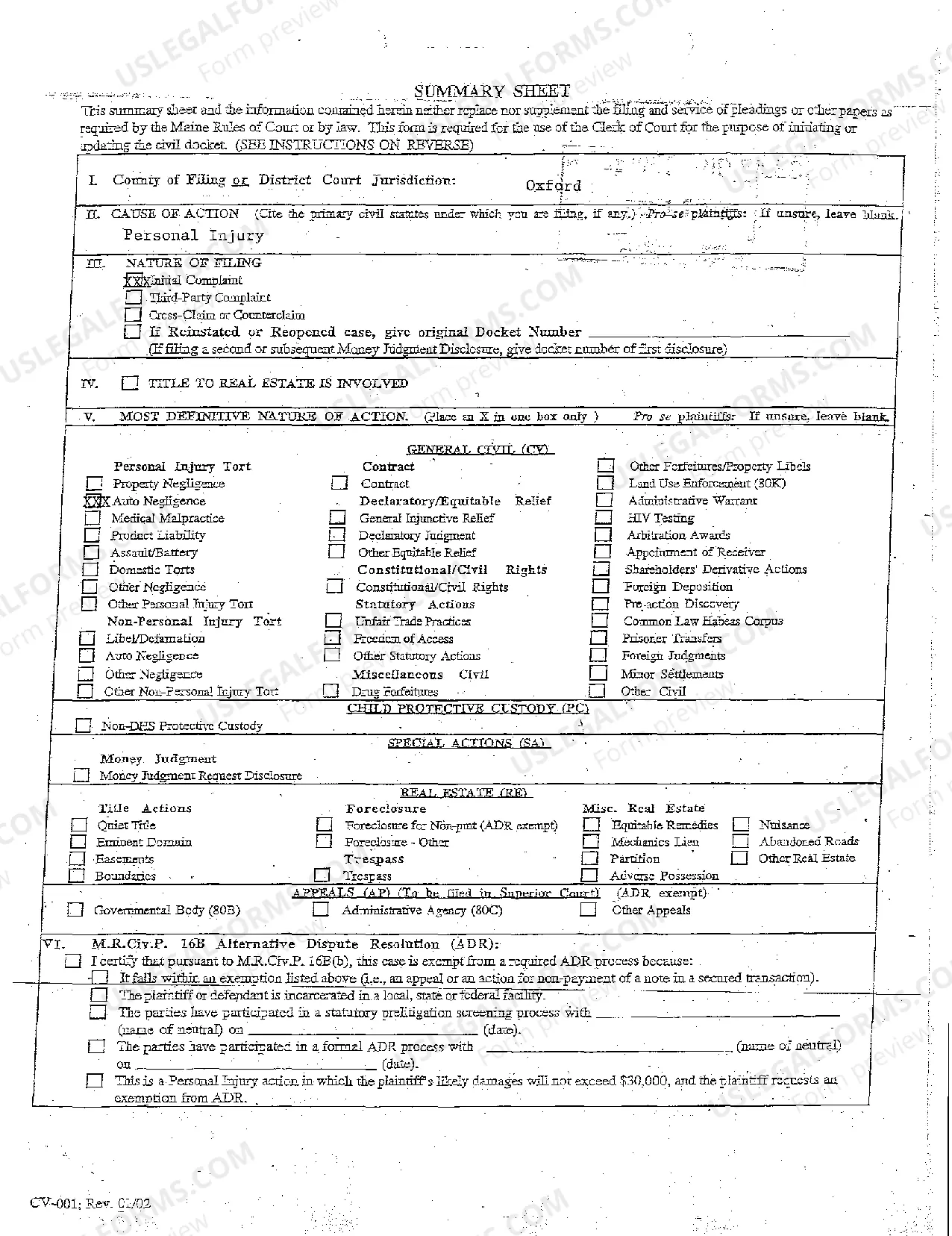
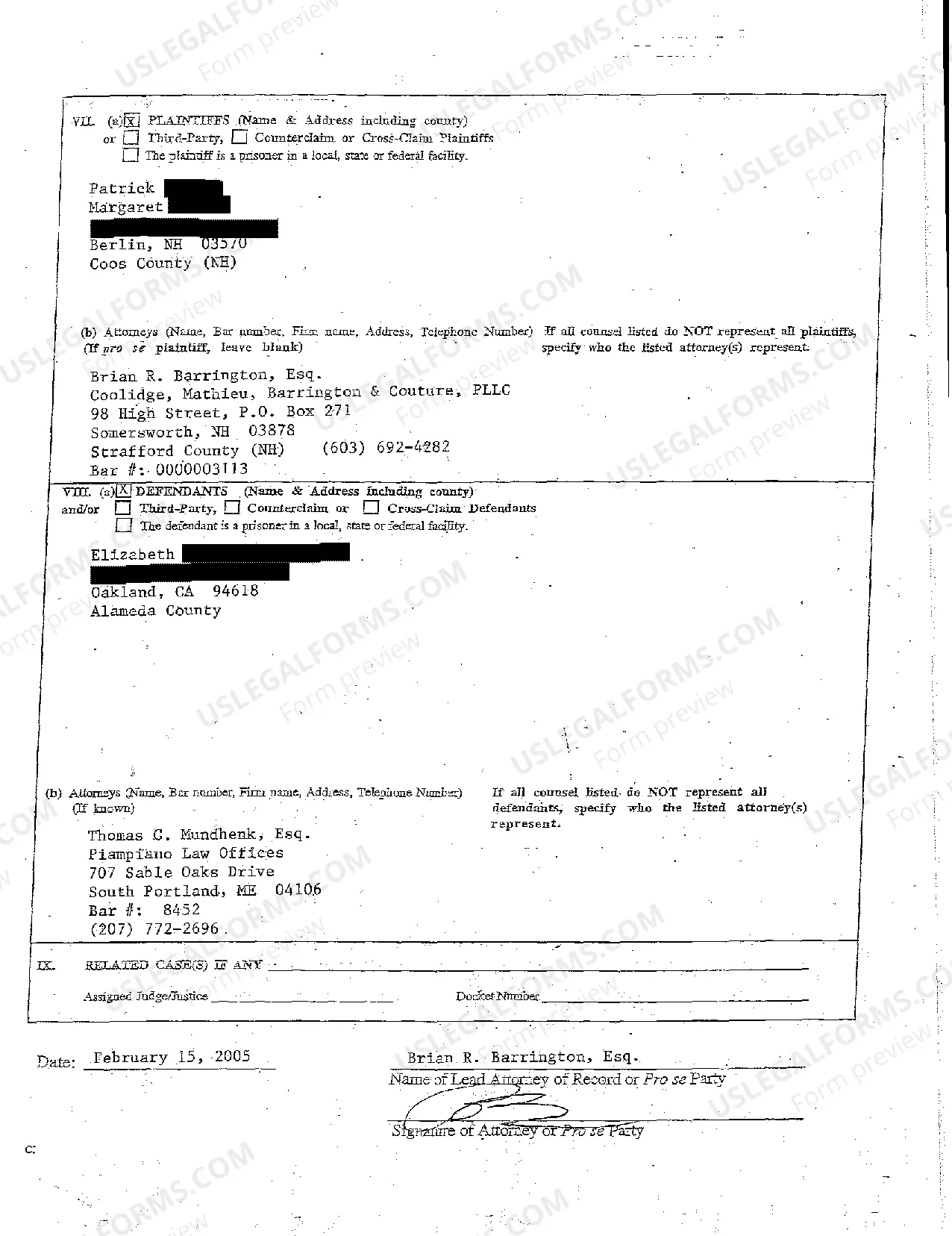
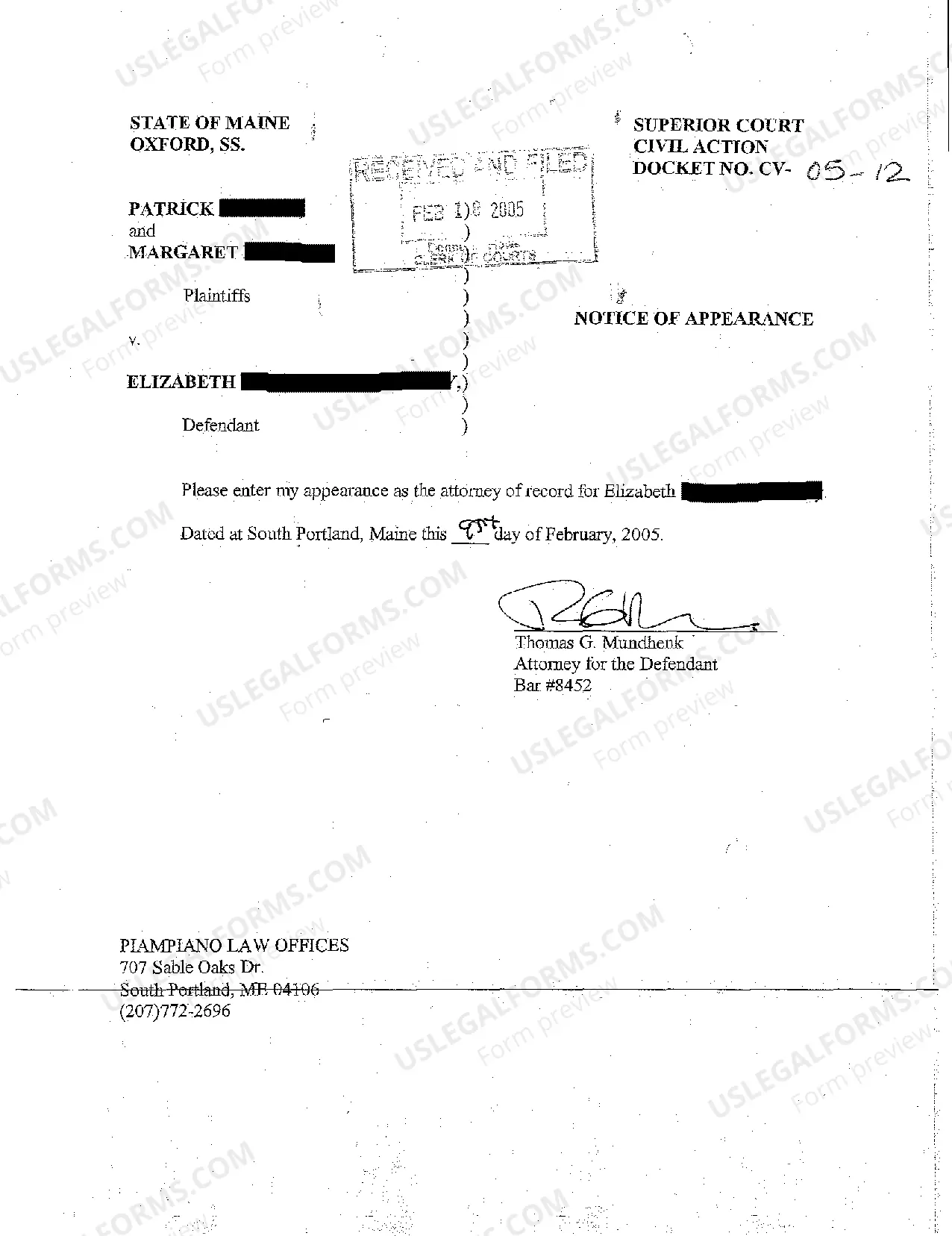
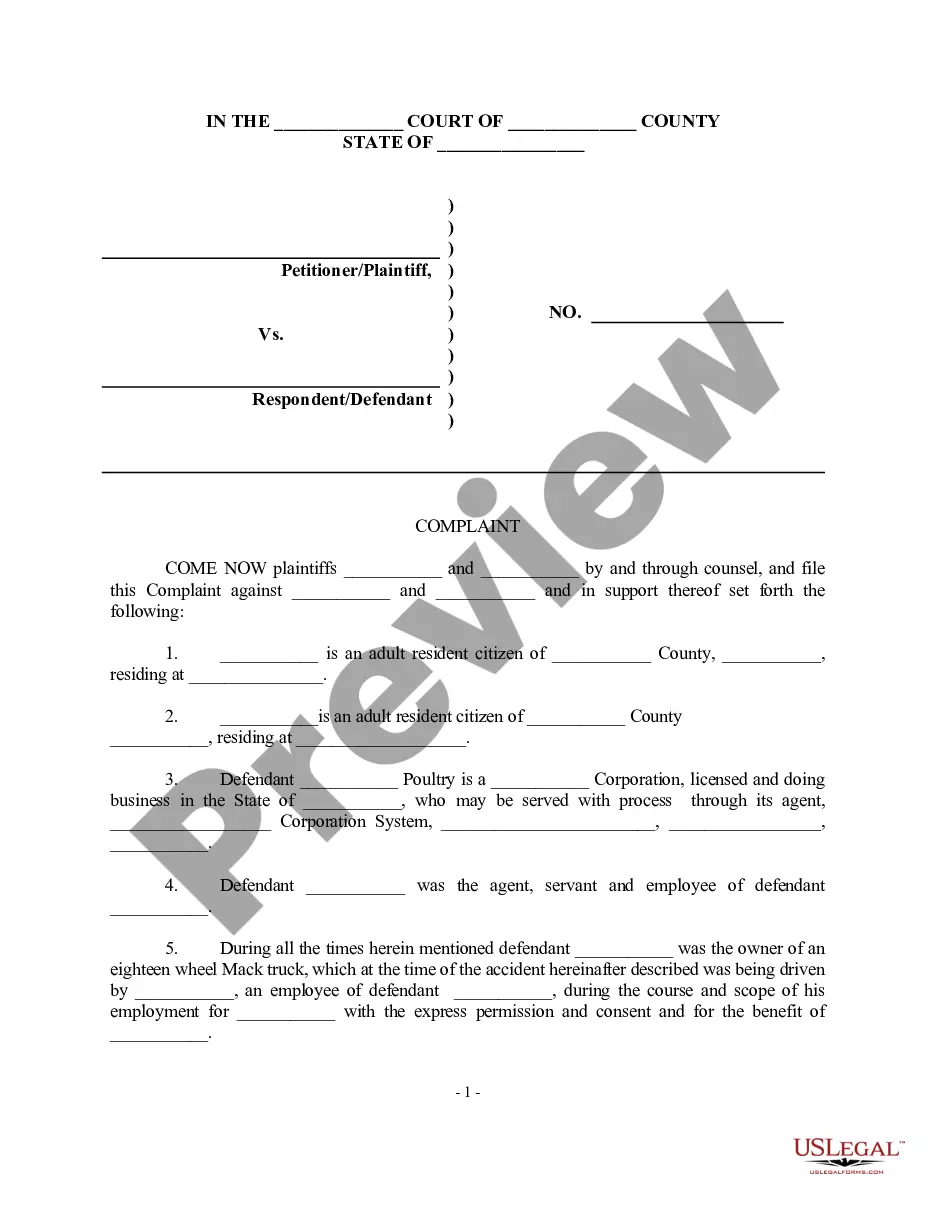
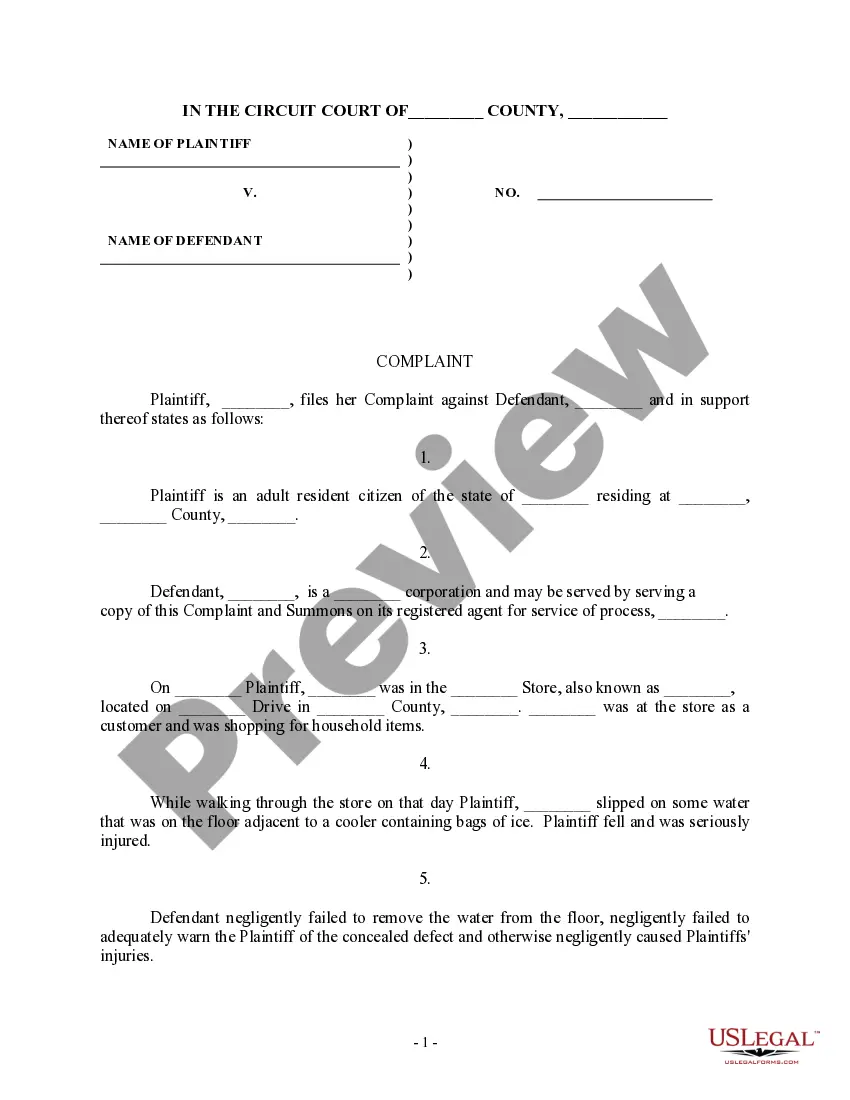
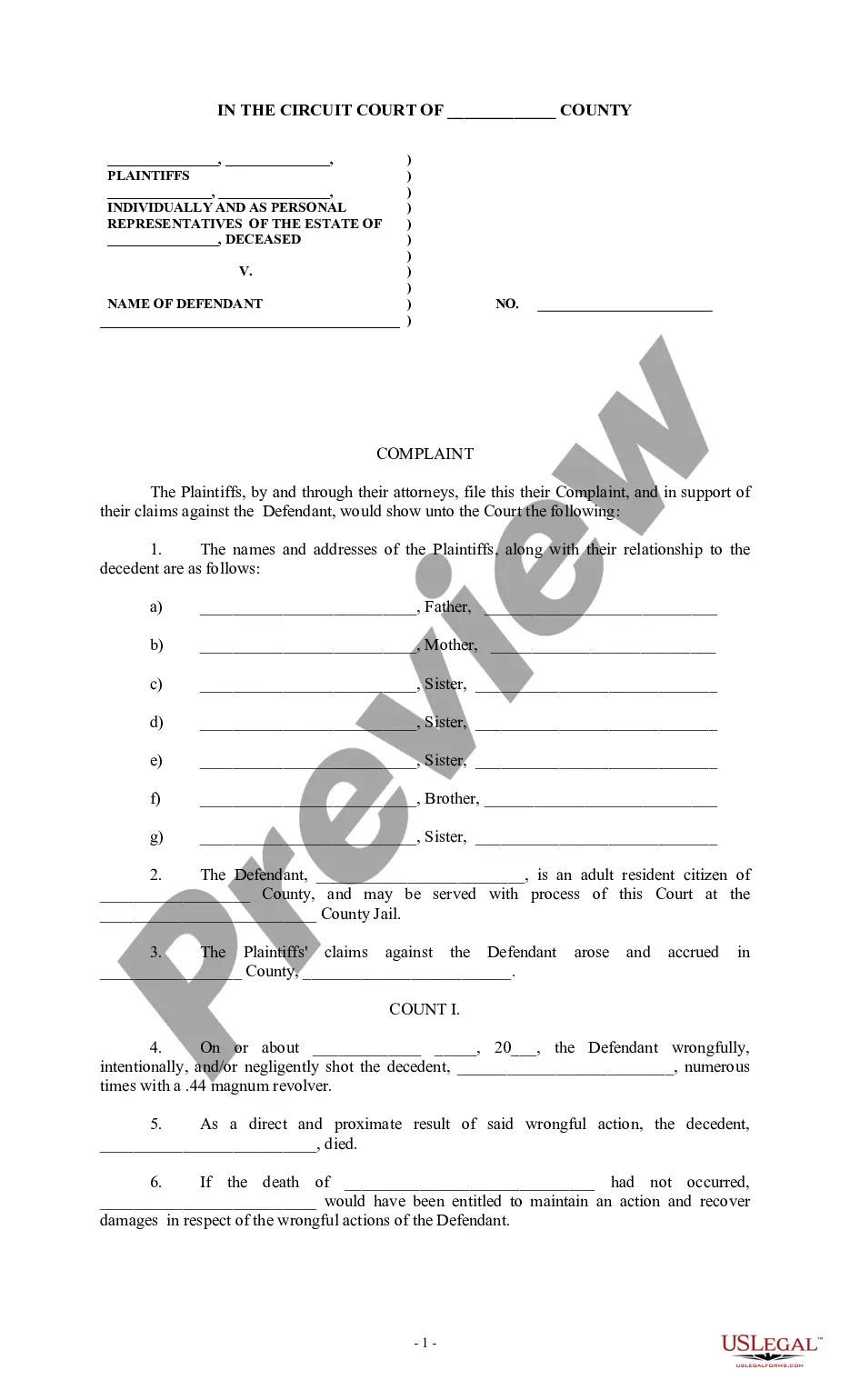
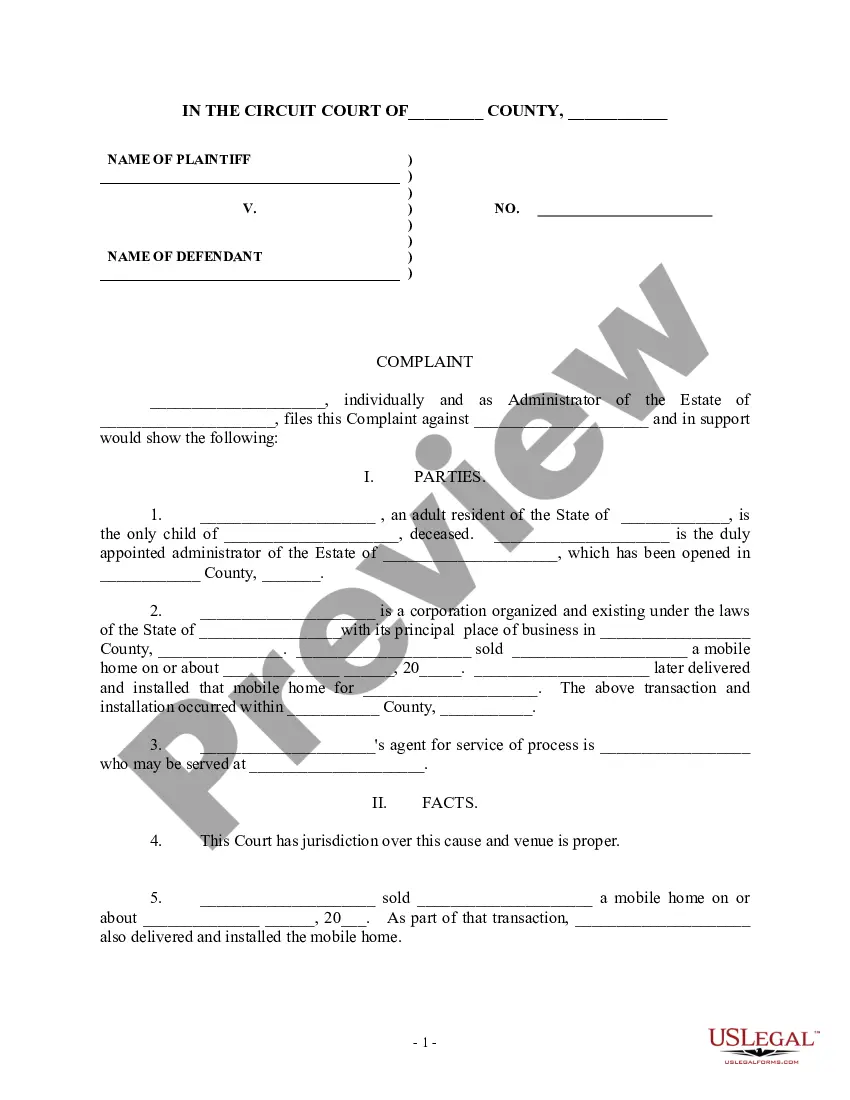
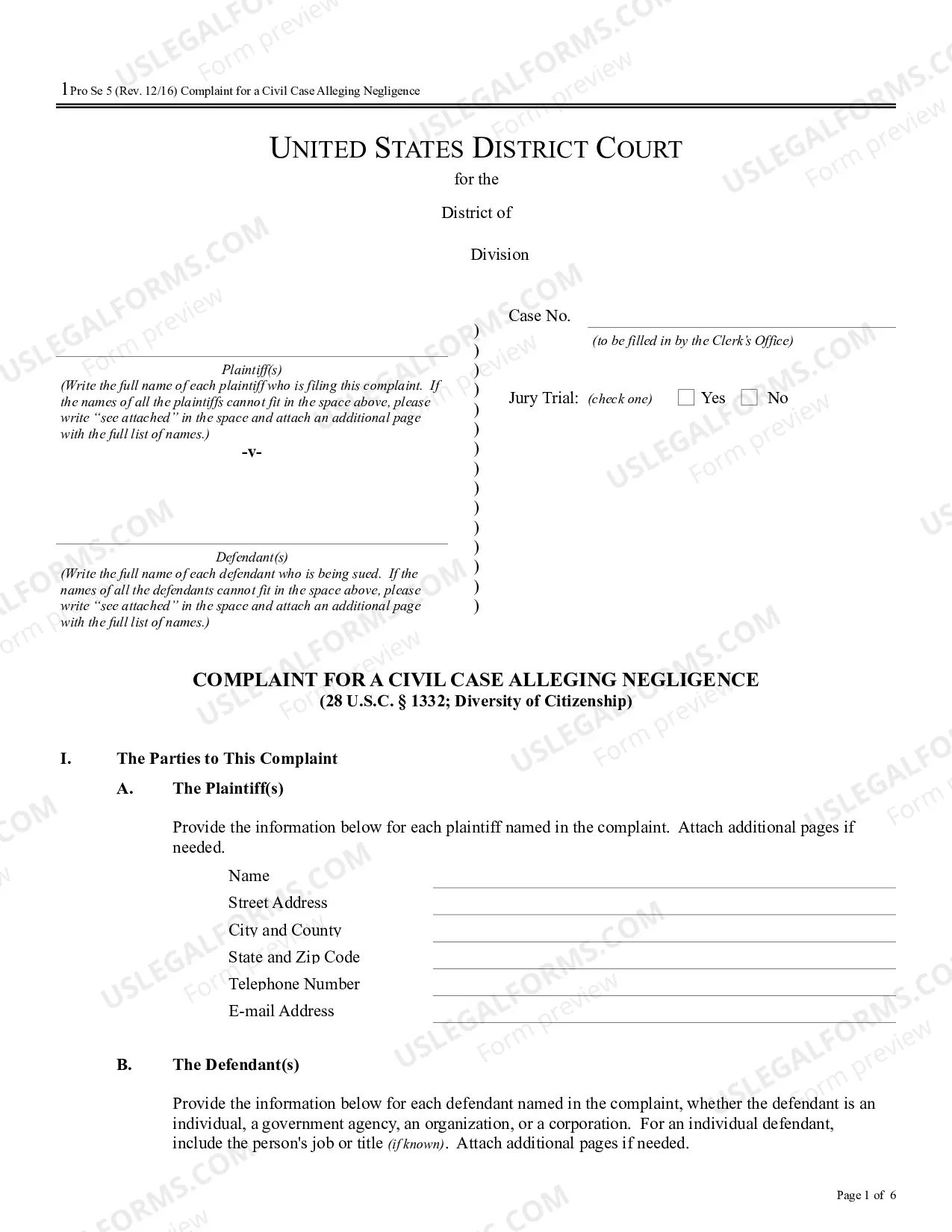

- Key Concepts & Definitions
- Personal Injury Complaint: A legal document filed in court when an individual alleges injury caused by someone elses negligence or misconduct.
- Slip and Fall: A personal injury category where an individual falls and sustains injury due to unsafe conditions on another's property.
- Loss of Consortium: A claim often made by the spouse of a person who has been injured or killed as a result of the defendant's wrongful actions, addressing the loss of companionship and support.
- Medical Malpractice: A lawsuit filed when a medical professional fails to provide competent care, resulting in injury or death to a patient.
- Wrongful Death: A lawsuit brought by relatives of a deceased person whose death was caused by someone elses negligence or wrongdoing.
- Step-by-Step Guide to Filing a Personal Injury and Loss Complaint
- Assess the Situation: Understand the nature of the injury or loss and its connection to another party's liability.
- Seek Medical Attention: Document all medical treatments as they could be crucial in your lawsuit.
- Consult a Legal Team: Find experienced attorneys familiar with cases involving personal injury, slip and fall incidents, or loss of consortium.
- Gather Evidence: Compile all potential evidence, including eyewitness accounts and photographs of the scene.
- File a Complaint: With the assistance of your legal team, draft and file a complaint in the appropriate jurisdiction. For instance, filings in Maryland could be submitted through the Maryland Courts system.
- Negotiate a Settlement: Before going to court, there may be an opportunity to resolve the matter through a financial settlement.
- Proceed to Trial: If a settlement is not reached, prepare to argue your case in court.
- Risk Analysis
- Financial Risks: Legal proceedings are often expensive and may not result in a favorable outcome.
- Time Constraints: Legal actions can be prolonged, influencing personal and professional life.
- Emotional Toll: The stress and emotional strain from reliving traumatic events during the lawsuit.
- Privacy Concerns: Sensitive personal information may become public during court proceedings. The need for a privacy disclaimer is crucial in protecting client details.
- Key Takeaways
- Understanding the nuances of personal injury and loss complaints can significantly affect the outcomes of legal actions.
- Engaging with a knowledgeable legal team and being prepared with all necessary documentation are critical steps.
- Be aware of the potential risks associated with filing a lawsuit, including financial, time, and emotional investments.
- Common Mistakes & How to Avoid Them
- Delayed Filing: Avoid waiting too long to file a complaint, as statutes of limitations could bar your claim.
- Inadequate Documentation: Ensure thorough and detailed record-keeping of injuries, expenses, and communications relevant to the case.
- Handling Without Expertise: Failing to hire a specialized lawyer for personal injury claims can lead to unanticipated legal complexities.
- FAQ
- What is the statute of limitations for a personal injury complaint in the United States? It varies by state, typically ranging from one to six years.
- Can I file a loss of consortium claim if I am not married to the injured person? Most jurisdictions require a legal or formal union, often limiting this claim to spouses or immediate family members.
- What evidence is crucial in a slip and fall lawsuit? Photos of the scene, witness testimonies, and a detailed report of the conditions that led to the fall are essential.
How to fill out Maine Complaint - Personal Injury And Loss Of Consortium Due To Negligent Operation Of Motor Vehicle?
You are invited to the most extensive legal document library, US Legal Forms. Here you will discover any template such as Maine Complaint - Personal Injury and Loss of Consortium Due to Negligent Operation of Motor Vehicle templates and save them (as many of them as you desire). Create formal documents in merely a few hours, rather than days or weeks, without needing to spend a fortune with an attorney. Obtain your state-specific template in a few clicks and feel assured with the assurance that it was crafted by our state-licensed attorneys.
If you are already a subscribed member, simply Log In to your account and select Download next to the Maine Complaint - Personal Injury and Loss of Consortium Due to Negligent Operation of Motor Vehicle you wish. Because US Legal Forms is internet-based, you’ll usually have access to your stored documents, regardless of the device you’re using. Find them inside the My documents section.
If you do not have an account yet, what are you waiting for? Review our instructions below to get started.
- If this is a state-specific template, verify its legitimacy in the state where you reside.
- Examine the description (if available) to determine if it’s the correct template.
- See additional content with the Preview feature.
- If the document meets all of your criteria, simply click Buy Now.
- To create an account, select a pricing option.
- Utilize a credit card or PayPal account to register.
- Download the file in your preferred format (Word or PDF).
- Print the document and complete it with your or your business’s information.
Form popularity
FAQ
1A valid and lawful marriage (or registered domestic partnership) existed between you and the injured party when the cause of action accrued;2Your spouse (or registered domestic partner) sustained a tortious injury;How to Prove Loss of Consortium - - Michael Waks\nwww.michaelwaks.com > how-to-prove-loss-of-consortium
What is Loss of Consortium? As part of a personal injury lawsuit, a loss of consortium action is usually a standalone claim brought by the spouse or family member of a person who has been injured or killed as a result of the defendant's negligent or intentional action.
A valid and lawful marriage (or registered domestic partnership) existed between you and the injured party when the cause of action accrued; Your spouse (or registered domestic partner) sustained a tortious injury;
Loss of consortium is a personal injury that relates to the loss of spousal relationships due to an accident caused by negligence.A loss of consortium is not for the injuries that your spouse has sustained, but rather a lawsuit for the impact that the injuries or death has had on the spousal relationship.
In California, loss of consortium claim is an independent tort that does not depend on whether the injured spouse proves his or her injury in court.
Additionally, California law imposes a $250,000 cap on noneconomic damages in medical malpractice cases. However, this cap applies to each spouse individually. So if your spouse was injured by medical malpractice, you could recover up to $250,000 for loss of consortium.
While the cause of action is triggered by the spouse's injury, 'a loss of consortium claim is separate and distinct2026 (Rosencrans v.The California Supreme Court first recognized a cause of action for loss of consortium in Rodriguez v. Bethlehem Steel Corp.
Loss of consortium (also called "loss of affection" and "loss of companionship") refers to the deprivation of the benefits of married life or parenting, such as the ability to show affection, after an accident or injury. The injured party must have sustained serious injuries or died as the result of a car accident.