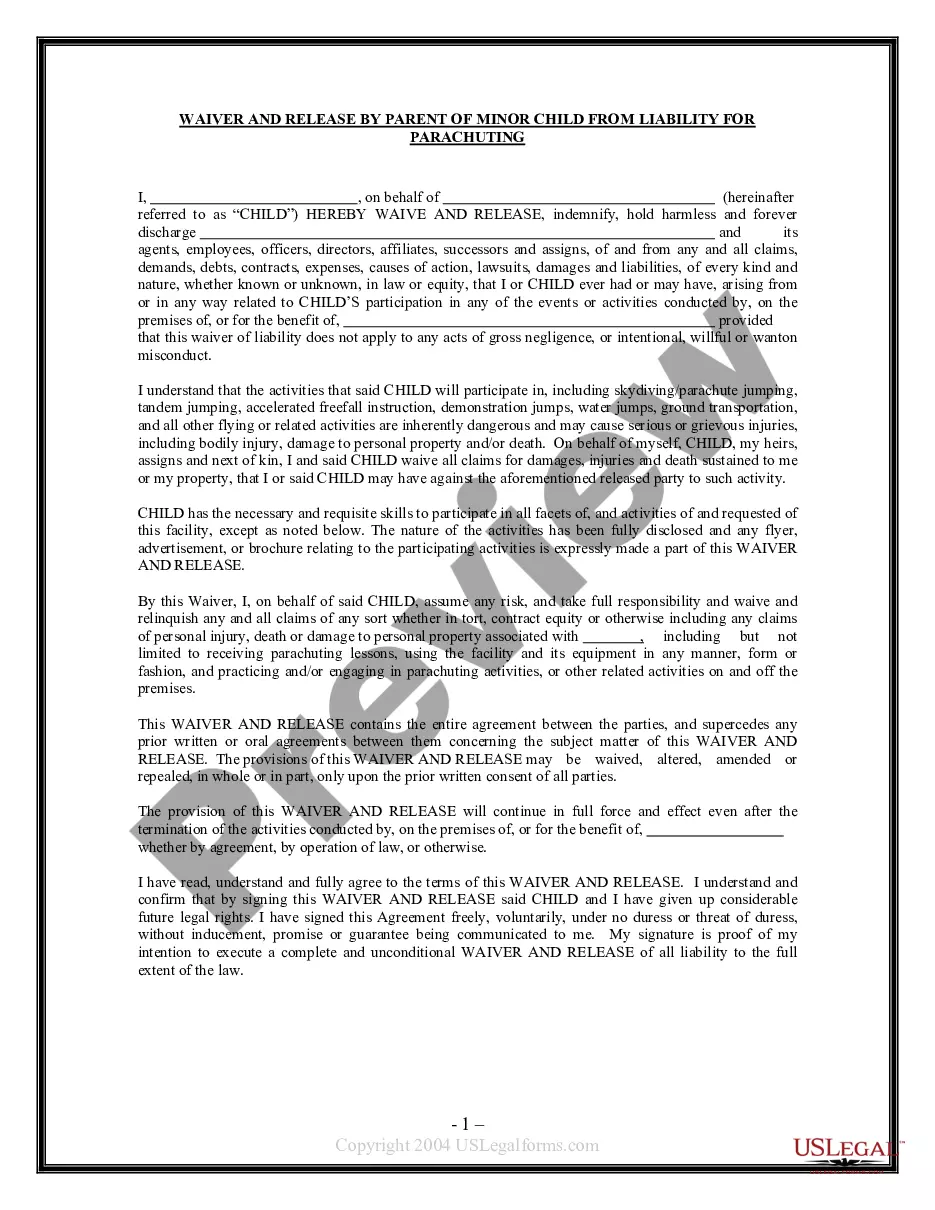
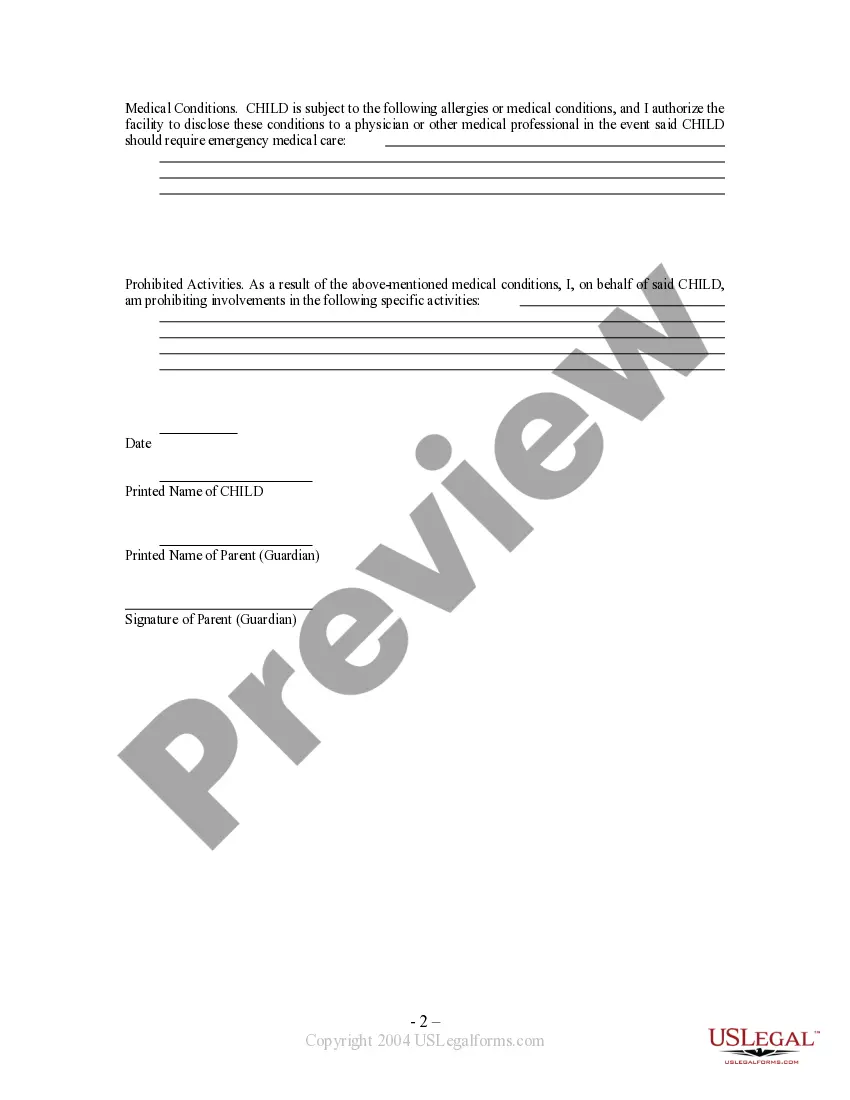
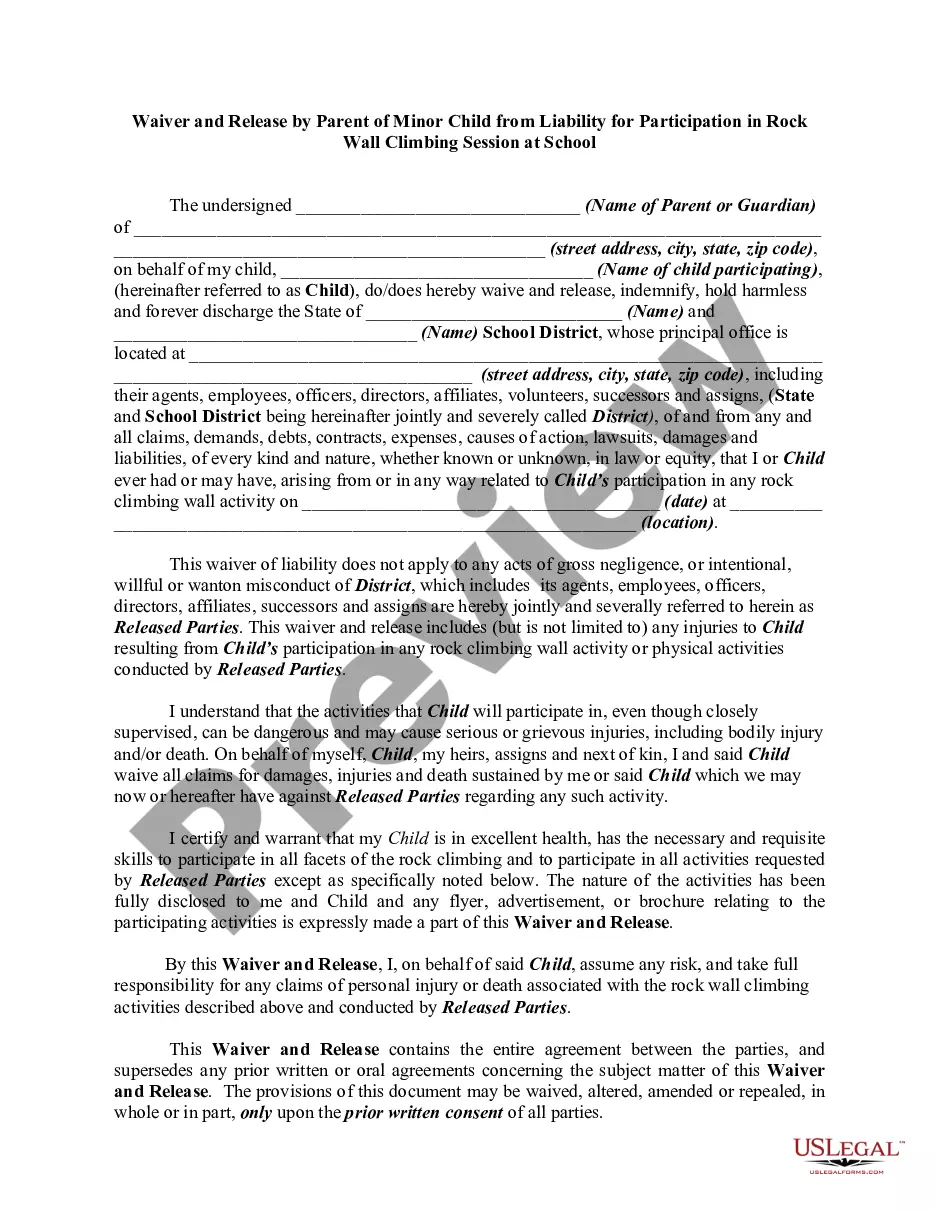
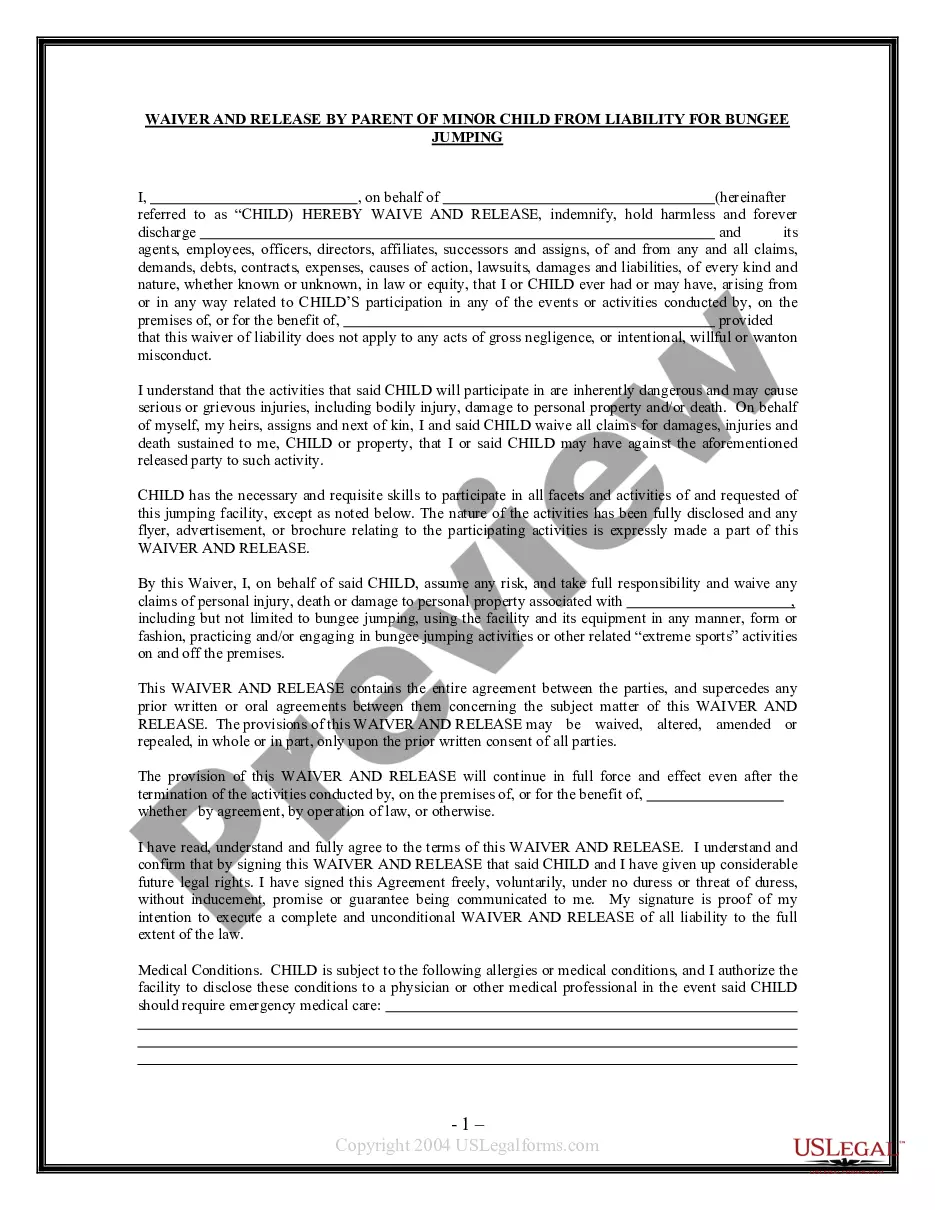
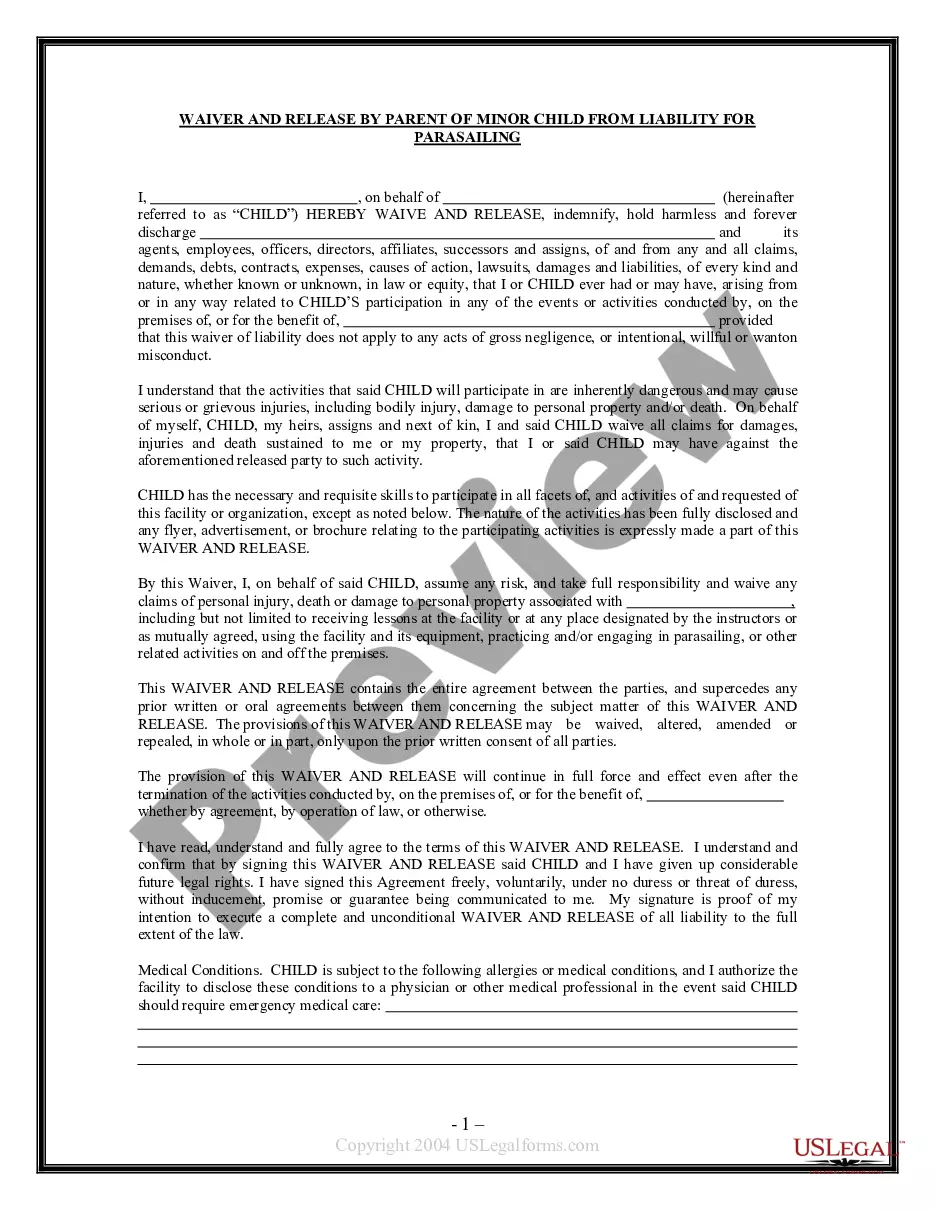
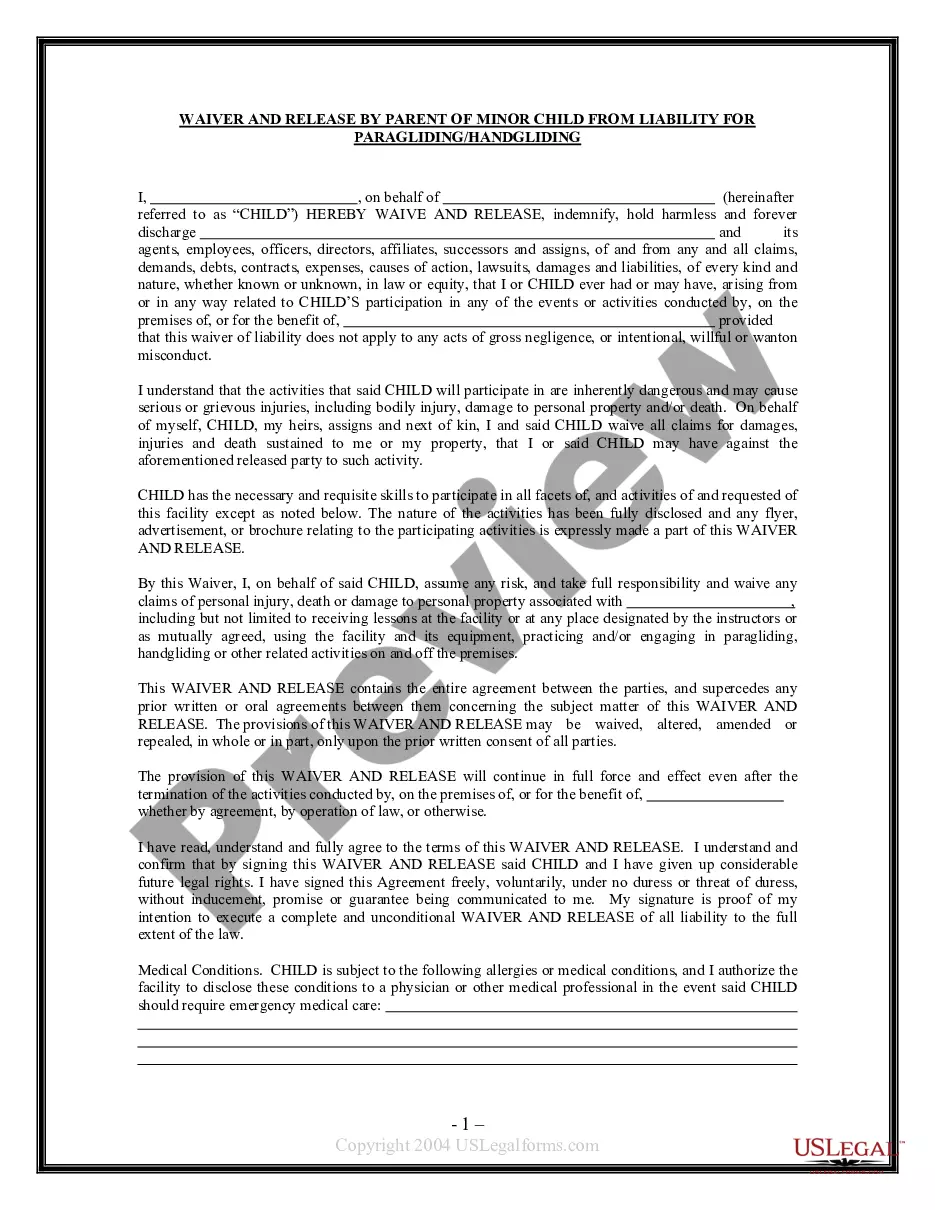
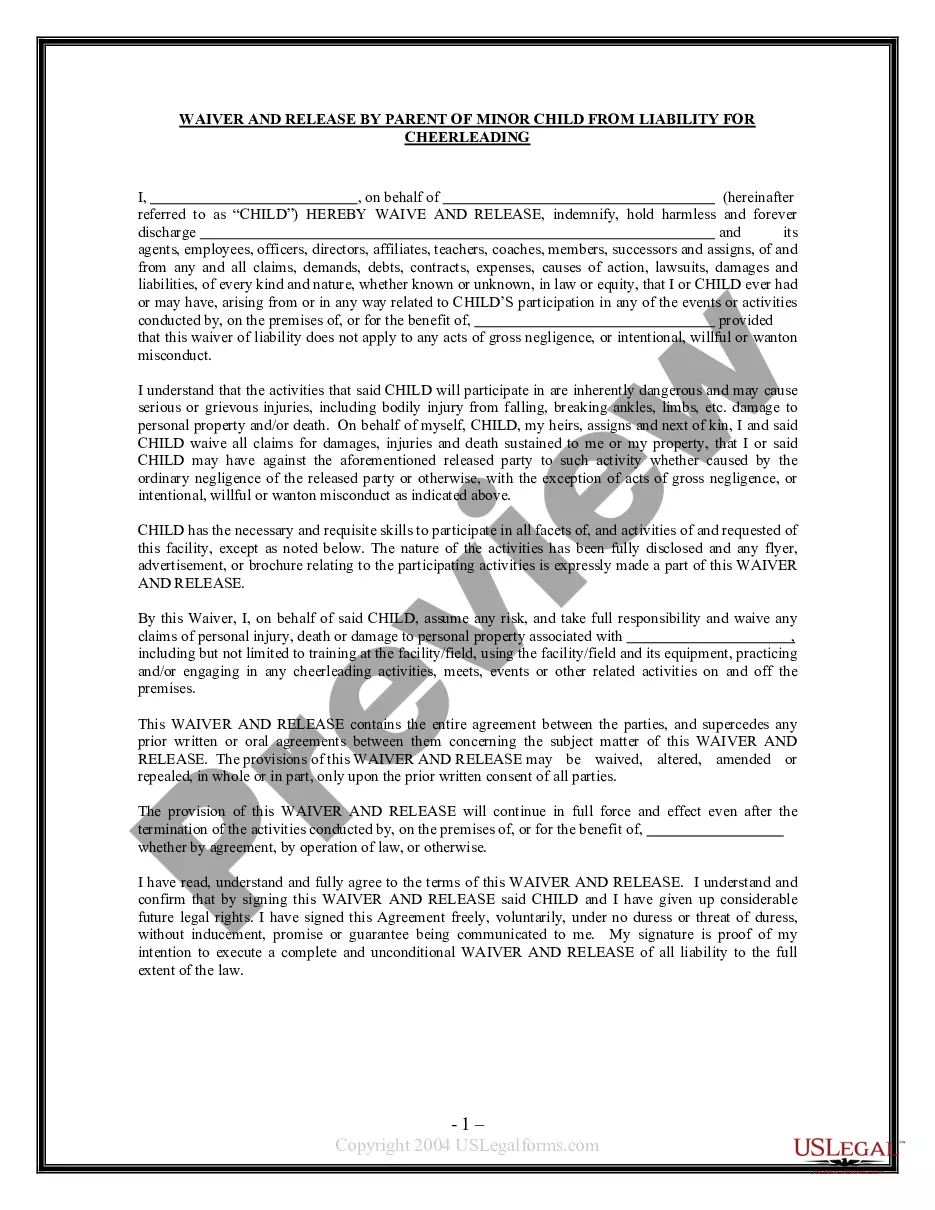
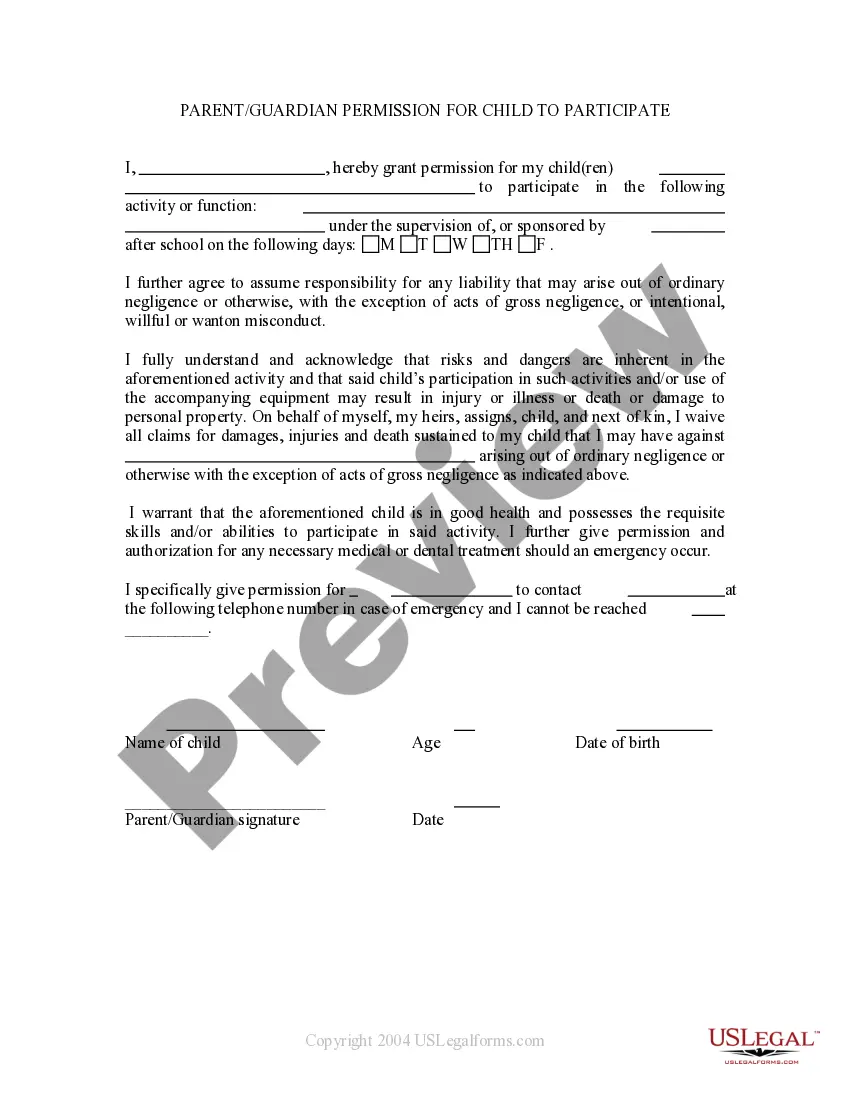
This form allows a parent or guardian to release a parachuting facility from liability for injuries which may be incurred by a minor child while on the premises, taking part in activities, etc.
Maryland Waiver and Release From Liability For Minor Child for Parachuting
Category:
State:
Multi-State
Control #:
US-WAV-28M
Format:
Word;
Rich Text
Instant download
Description
Free preview



How to fill out Waiver And Release From Liability For Minor Child For Parachuting?
Have you found yourself in a situation where you require documents for potential corporate or personal activities nearly every workday? There are numerous legal document templates available online, but locating ones you can trust is challenging.
US Legal Forms provides a vast array of form templates, including the Maryland Waiver and Release From Liability For Minor Child for Parachuting, which can be tailored to comply with federal and state regulations.
If you are already familiar with the US Legal Forms website and have an account, simply Log In. After that, you can download the Maryland Waiver and Release From Liability For Minor Child for Parachuting template.
Select a convenient document format and download your copy.
Access all the document templates you have purchased in the My documents section. You can retrieve an additional copy of the Maryland Waiver and Release From Liability For Minor Child for Parachuting anytime if needed. Just go through the required form to download or print the document template. Use US Legal Forms, the most extensive selection of legal forms, to save time and reduce errors. The service offers professionally designed legal document templates suitable for various purposes. Create an account on US Legal Forms and start simplifying your life.
- If you do not have an account and wish to start using US Legal Forms, follow these steps.
- Obtain the form you require and ensure it is for your correct area/region.
- Utilize the Review button to examine the form.
- Read the details to confirm you have selected the correct form.
- If the form is not what you are looking for, use the Search section to find the form that fits your needs and specifications.
- Once you find the appropriate form, click Buy now.
- Choose the pricing plan you prefer, fill out the necessary information to create your account, and pay for the order using your PayPal or credit card.
Form popularity
FAQ
Waivers signed by minors are generally not legally binding in Maryland, including the Maryland Waiver and Release From Liability For Minor Child for Parachuting. Minors lack the legal capacity to enter into contracts, which means parental or guardian consent is necessary. Therefore, it's essential to have a waiver signed by a parent or guardian to ensure its enforceability.
To write a release of liability waiver, start by clearly identifying the parties involved, the activity, and the risks associated with it. Include a statement that the participant understands these risks and agrees to release any liability, specifically mentioning the Maryland Waiver and Release From Liability For Minor Child for Parachuting. Finally, ensure that the document is signed and dated by the parents or guardians of the minor.
You can write your own liability waiver, but it is crucial to ensure that it is clear and comprehensive. Using the Maryland Waiver and Release From Liability For Minor Child for Parachuting as a template can help you cover all necessary aspects. However, consider having a legal professional review your waiver to ensure it effectively protects you and complies with Maryland laws.
Yes, liability waivers are generally enforceable in Maryland, including the Maryland Waiver and Release From Liability For Minor Child for Parachuting. However, enforceability can depend on specific circumstances, such as the clarity of the language used and whether there was any coercion involved. It's always advisable to consult with a legal expert to ensure your waiver meets the legal requirements in Maryland.
So, if an accident happens and injury occurs, is a Waiver effective in protecting the institution from liability and preventing a lawsuit from the injured party? The answer is that, if properly worded and signed, the Waiver is likely valid and will preclude legal claims for injuries.
You might think that since you signed a waiver acknowledging the risks of the activity, you have no legal leg to stand on to file a personal injury lawsuit. Waivers can make personal injury lawsuits more complex, but you can still seek damages for injuries that could have and should have been prevented.
A liability waiver, or release waiver, is a legal document that a company or organization requires members of the public to sign in order to protect their organization from being sued if you sustain an injury.
A waiver is an exculpatory contract. That means it's used to excuse a party from responsibility when the other contracted party is injured by either known or unknown risks in a particular activity. This includes inherent risks and ordinary negligence.
Generally, a liability waiver document is a legally binding agreement that relinquishes the right of one party to pursue legal remedy for injuries accrued on the property, regardless of fault involved.
Under California law, waivers of liability may not prevent people from suing for injuries resulting from gross negligence, recklessness, intentional torts or illegal acts.