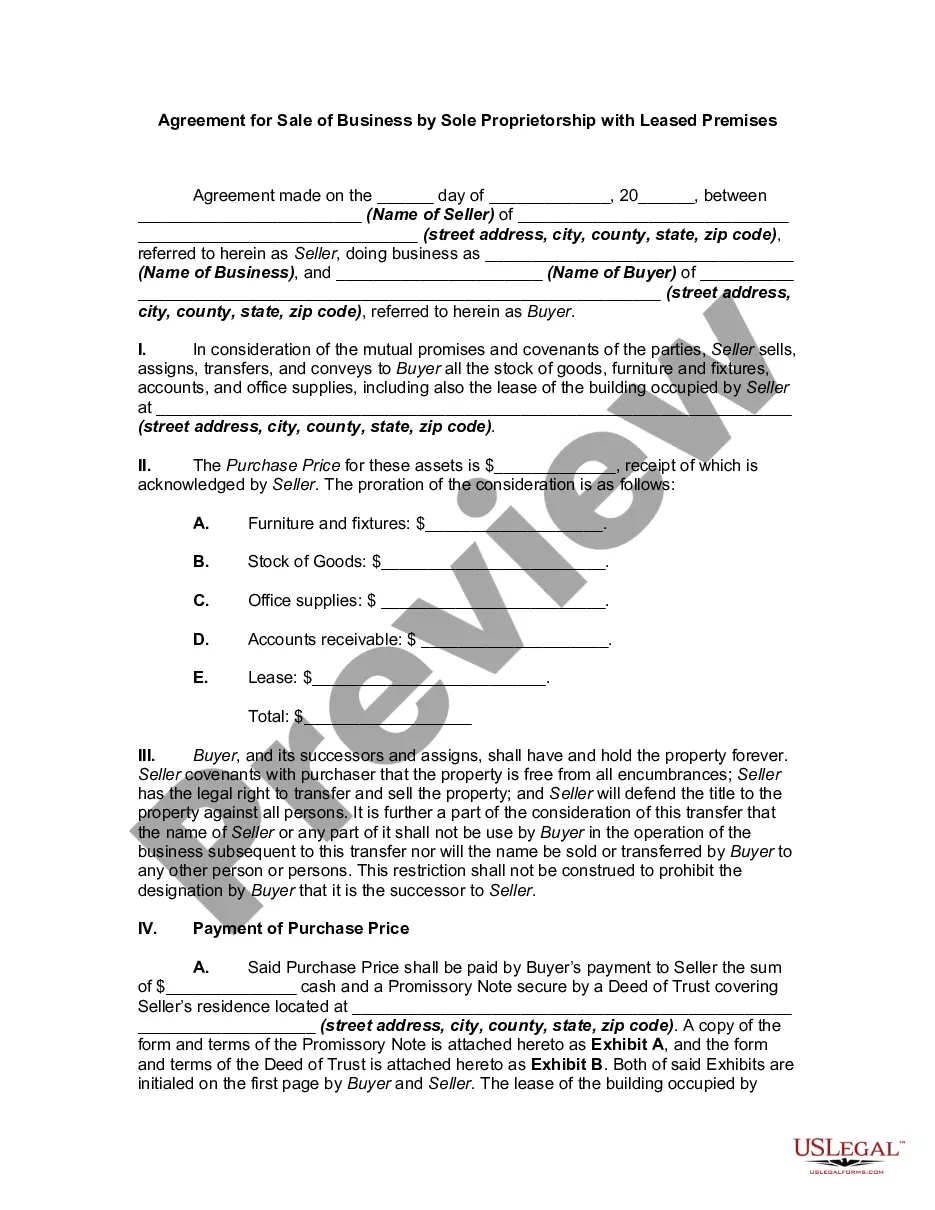
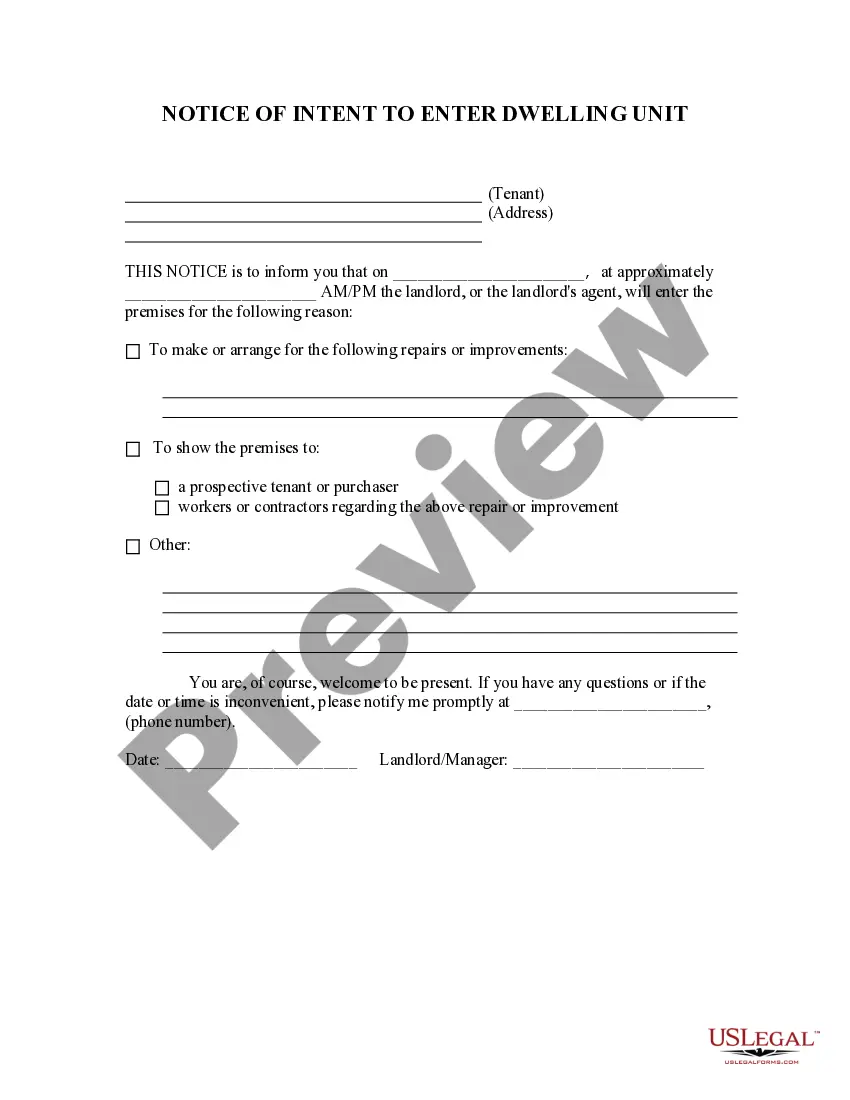
Maryland Landlord Notice of Intent to Enter Premises
Description
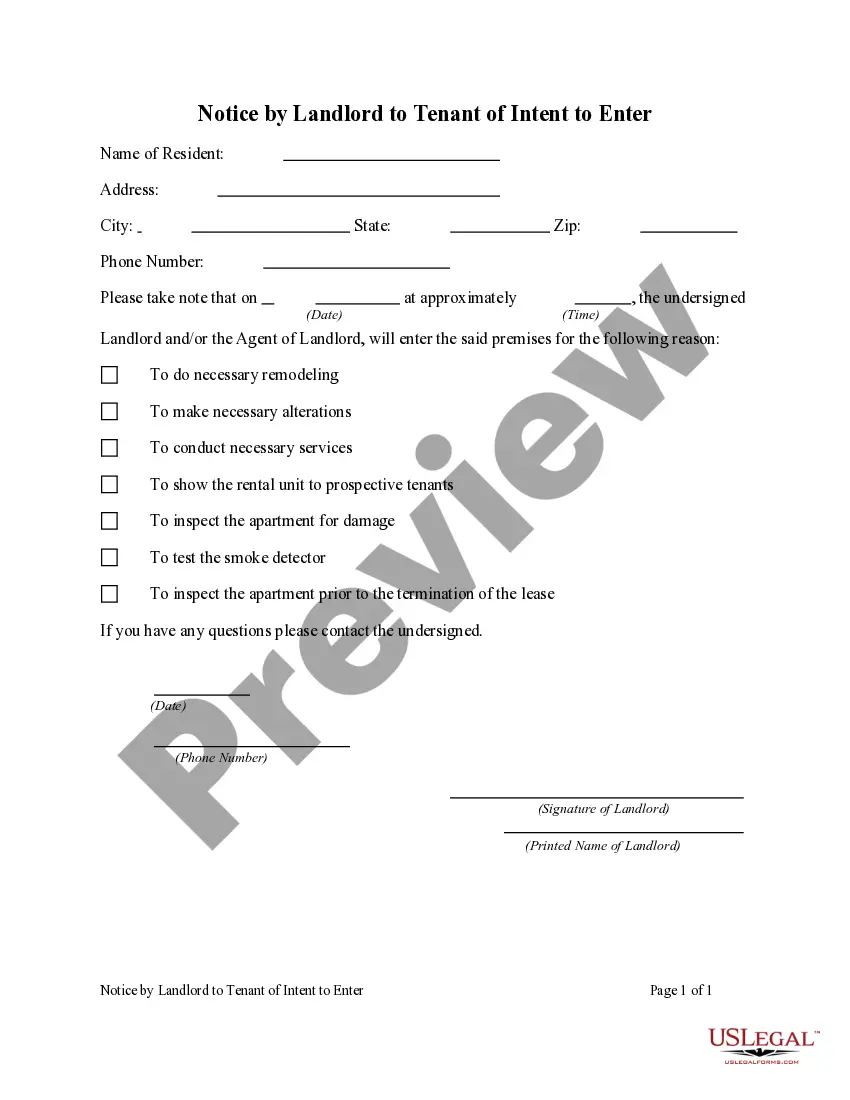
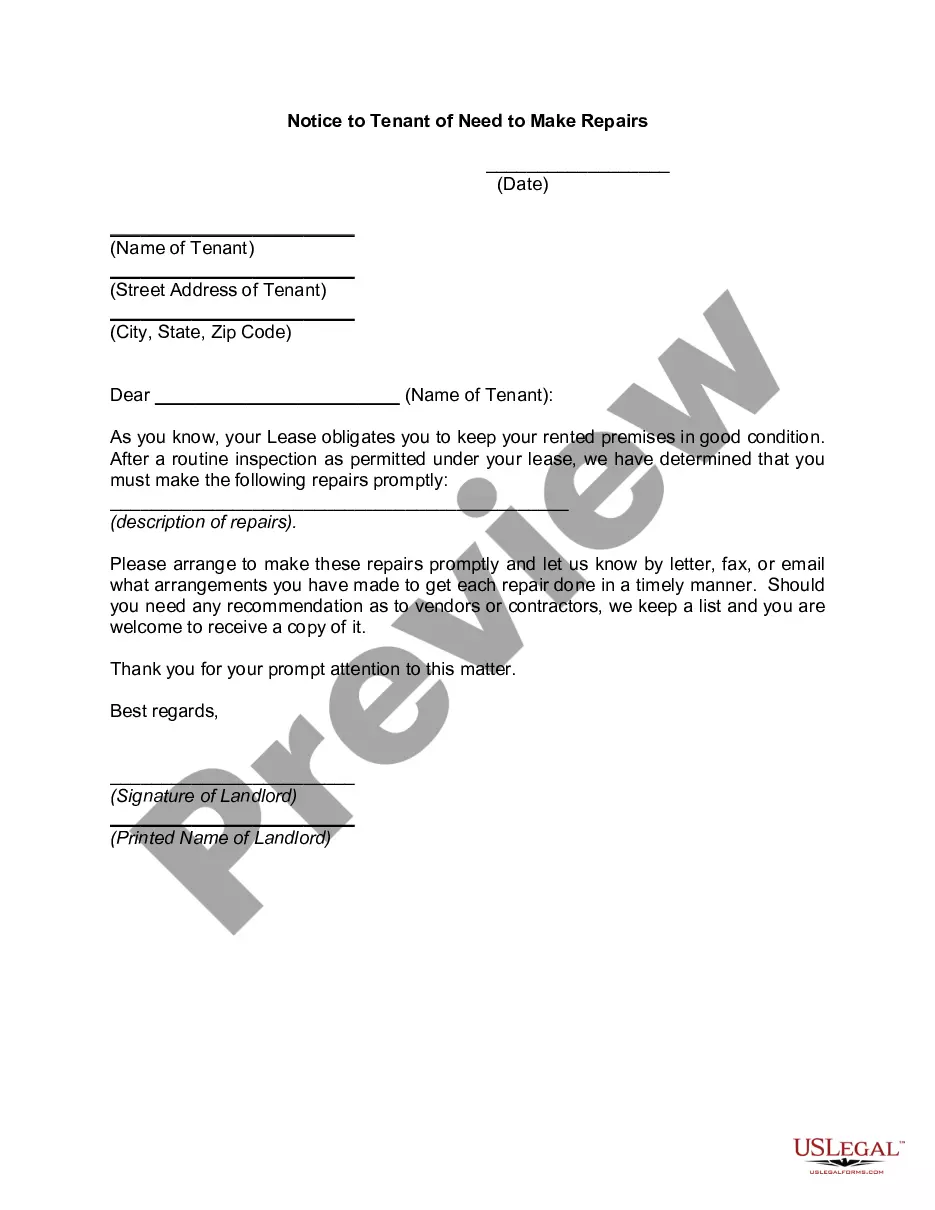
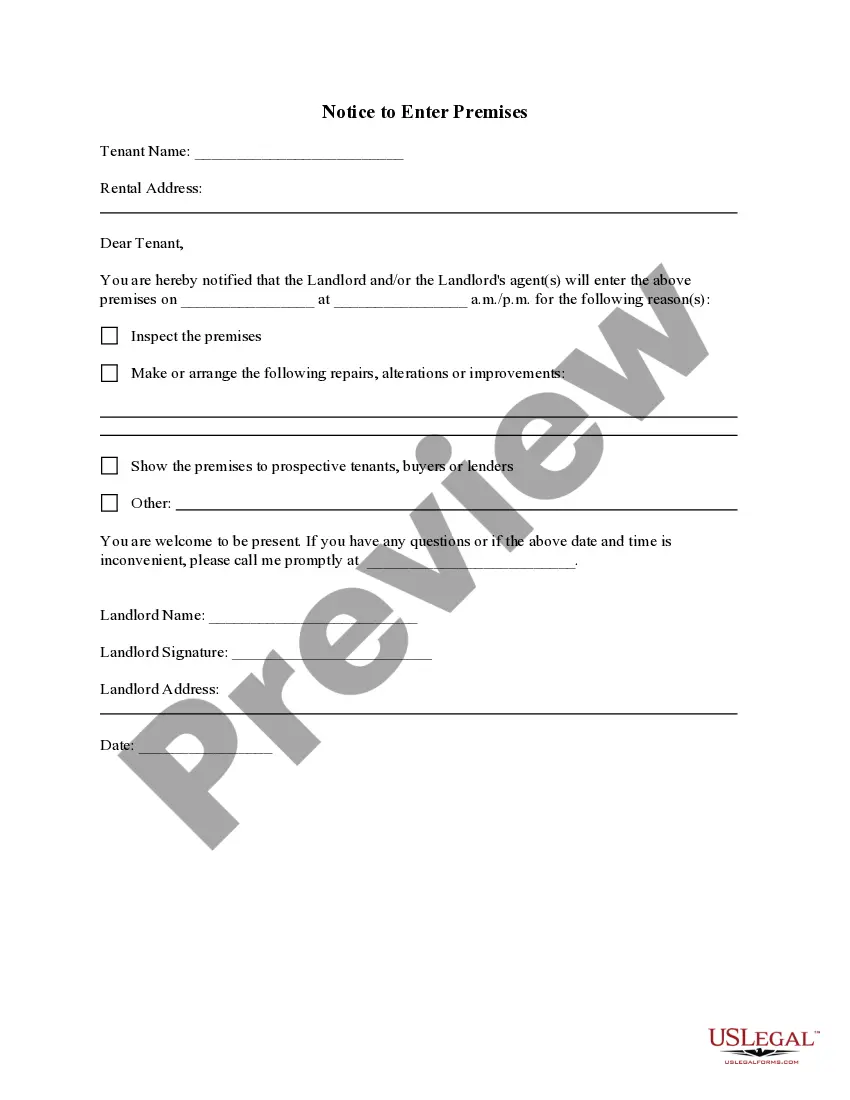
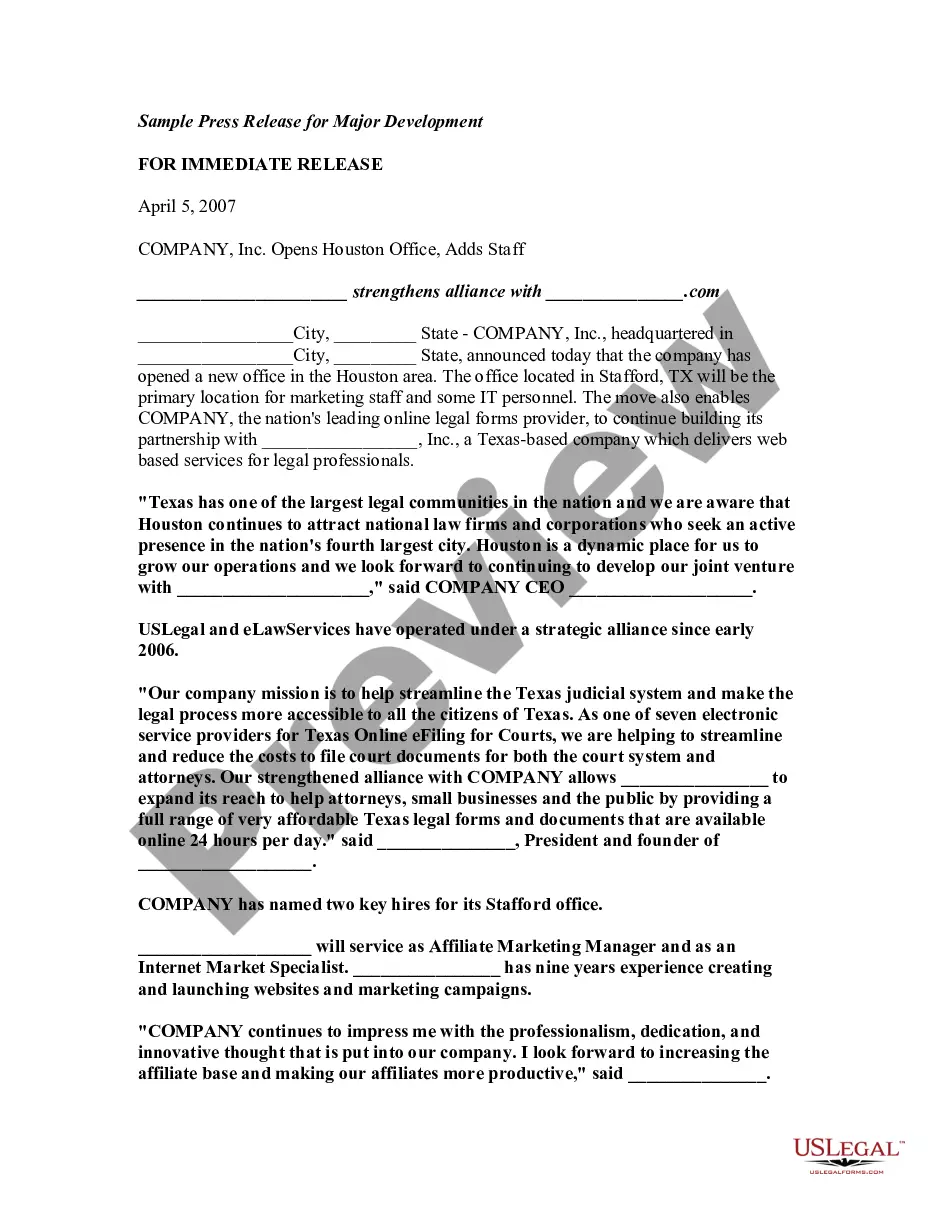
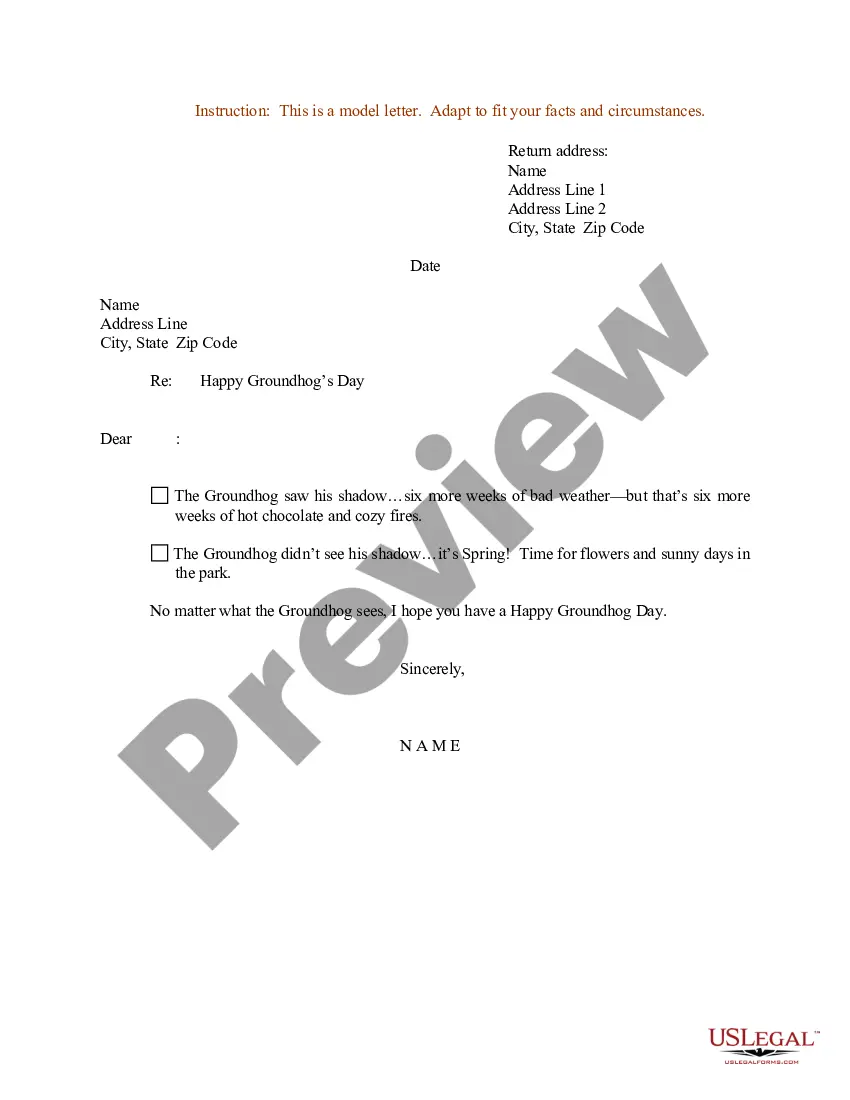
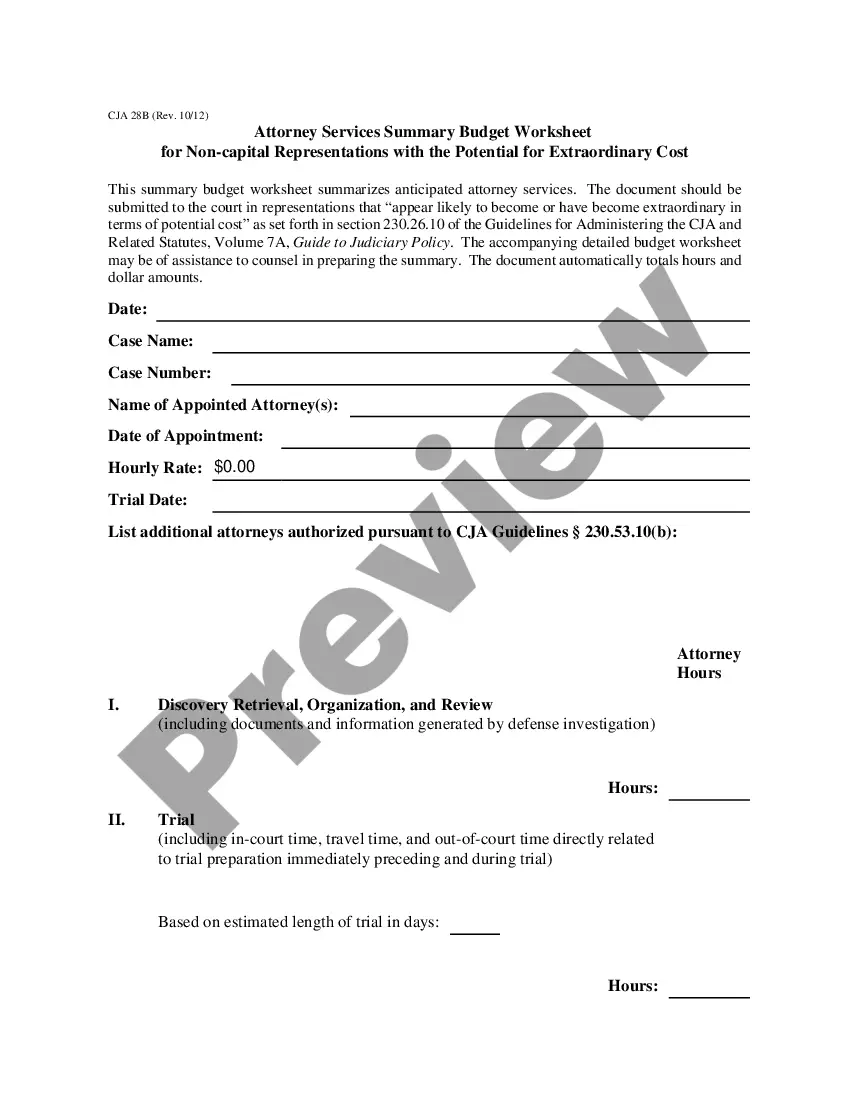

How to fill out Landlord Notice Of Intent To Enter Premises?
If you wish to finalize, obtain, or print validated document templates, utilize US Legal Forms, the premier collection of legal forms available online.
Take advantage of the site's straightforward and user-friendly search feature to locate the documents you require.
Various templates for business and personal purposes are organized by categories and states, or keywords.
Step 4. Once you have found the form you need, click the Get now button. Choose the payment plan you prefer and enter your information to sign up for an account.
Step 5. Complete the payment process. You may use your Visa or Mastercard or PayPal account to finalize the transaction.
- Utilize US Legal Forms to find the Maryland Landlord Notice of Intent to Enter Premises in just a few clicks.
- If you are already a US Legal Forms customer, Log In to your account and click the Download button to get the Maryland Landlord Notice of Intent to Enter Premises.
- You can also access forms you have previously downloaded in the My documents section of your account.
- If you are using US Legal Forms for the first time, follow the steps below.
- Step 1. Ensure you have selected the form for your correct region/state.
- Step 2. Use the Preview option to review the form's content. Don’t forget to read the description.
- Step 3. If you are not satisfied with the form, use the Search field at the top of the screen to find other versions of the legal form template.
Form popularity
FAQ
You are paying rent to the landlord for exclusive use as the property as your home and as such you have the right to decide who enters it and when. If a landlord enters your home without permission they are, technically, trespassing, unless they have a court order to allow them otherwise.
An LOI is a short written document signed by the landlord and tenant, which describes the basic terms of the lease. By signing an LOI, the landlord and tenant can make sure they agree to fundamental lease terms before taking the time and incurring the expense of preparing and negotiating a lease.
There is no statewide standard on landlord entry notification. As such, Maryland landlords are free to enter without permission, unless lease provisions state the contrary. Both parties must agree to entry notification procedures in a lease agreement. Landlords are allowed to enter without permission in emergencies.
A landlord may not enter the rental unit without notice to perform repairs even where the tenant has requested the repairs unless the landlord obtains the tenant's consent to enter the unit at the time the landlord goes to the unit to make the repairs.
Legally, your landlord would have to apply for a court order to get access. You could be at risk of section 21 eviction if you rent privately and refuse access for repairs or gas or electrical safety checks.
The big take-away is that in most circumstances a landlord cannot enter a property without agreement from the tenant. And If the landlord ignores the law and enters the property without permission, the tenant may be able to claim damages or gain an injunction to prevent the landlord doing it again.
So, while Maryland law does not specify the time period that landlords must give tenants to enter for non-emergency reasons, 24 hours is a good place to start.
Under Maryland law, tenants have a right to freedom from housing discrimination, a right to certain security deposit protections, the right to freedom from landlord retaliation, and the right to be protected after domestic violence. Learn four rights of tenants in Maryland.
Do landlords have to give notice before entering a tenant's property? In most instances, yes. The minimum notice a landlord is required to give by law is 24 hours, but they can give longer should they wish to do so.
There is no statewide standard on landlord entry notification. As such, Maryland landlords are free to enter without permission, unless lease provisions state the contrary. Both parties must agree to entry notification procedures in a lease agreement. Landlords are allowed to enter without permission in emergencies.