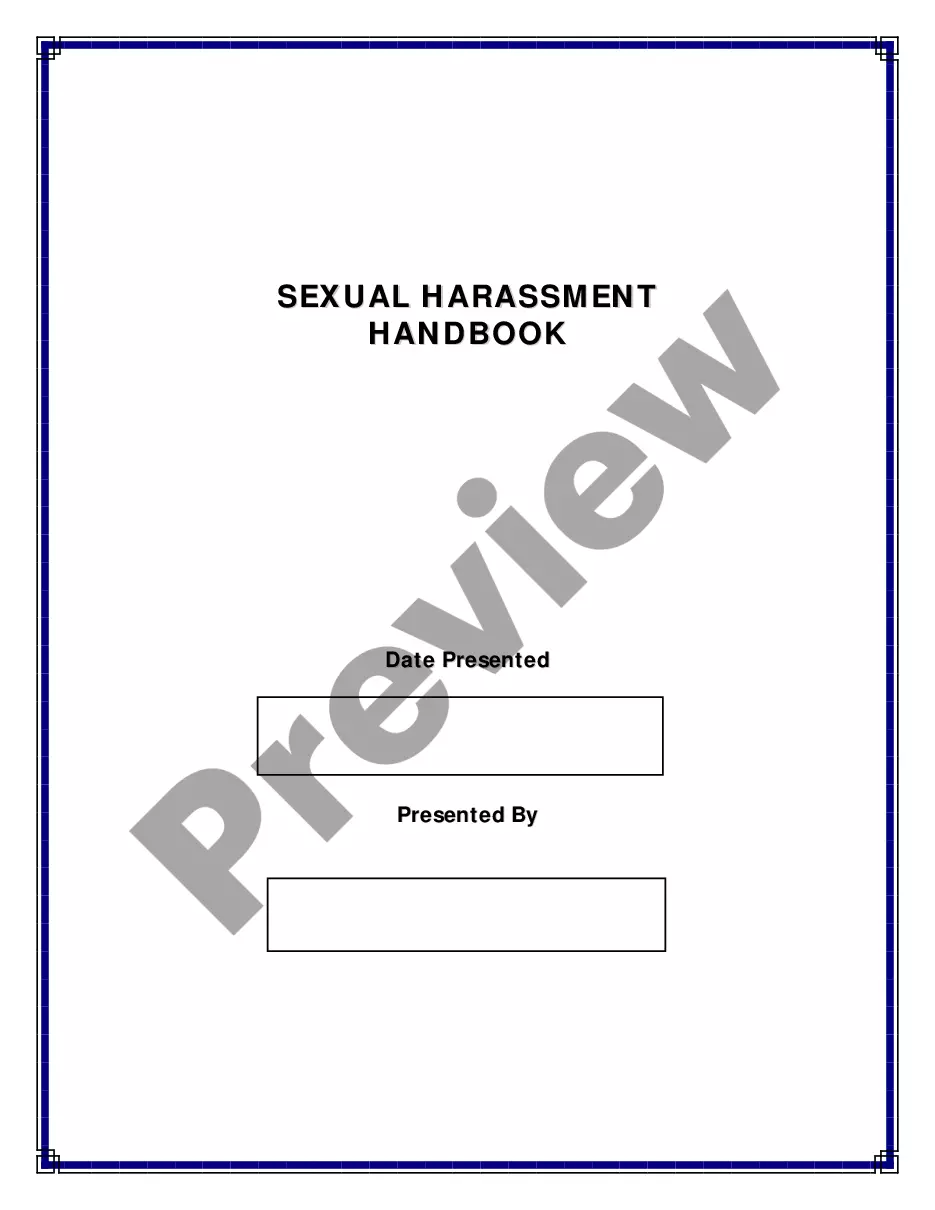
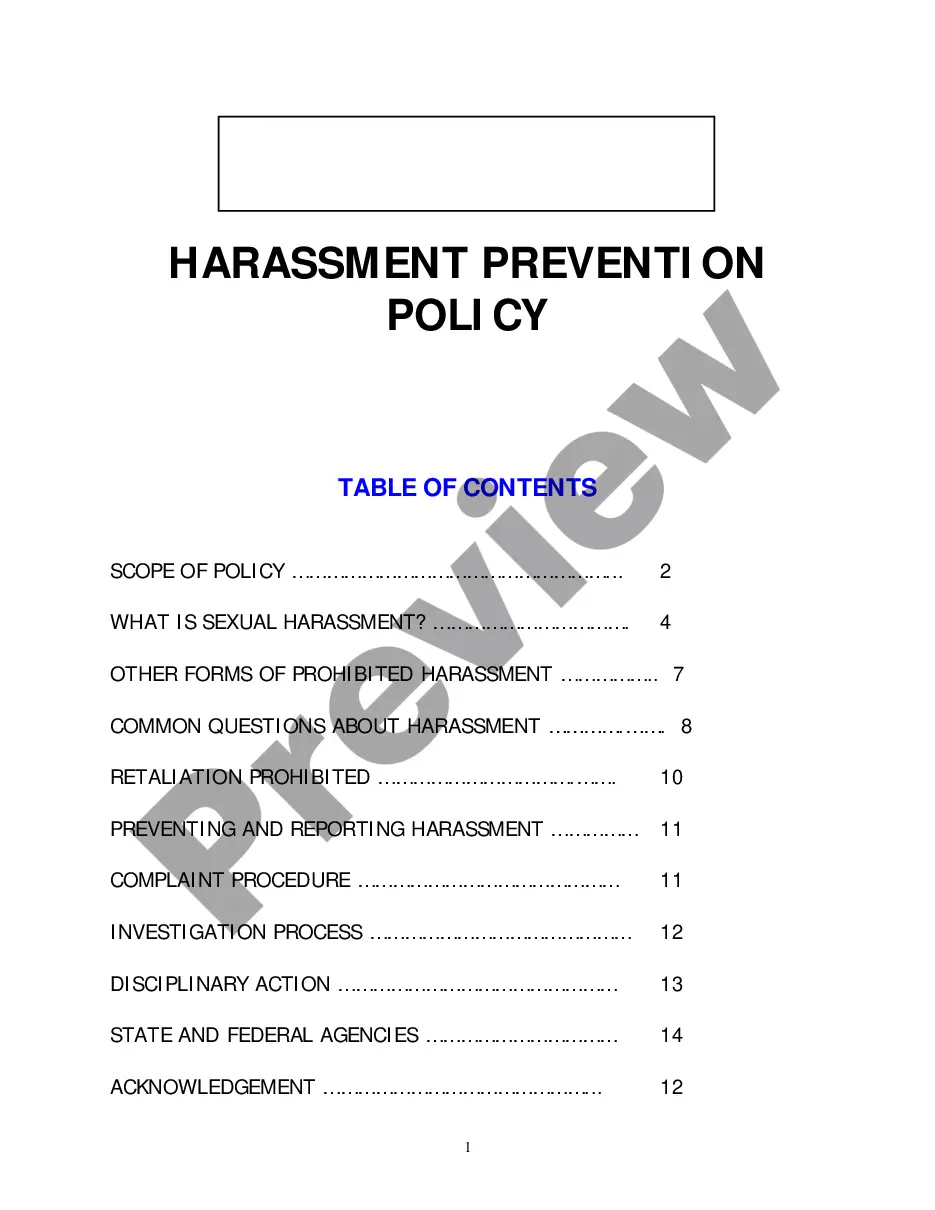
Maryland Sexual Harassment Policy - Workplace
Description
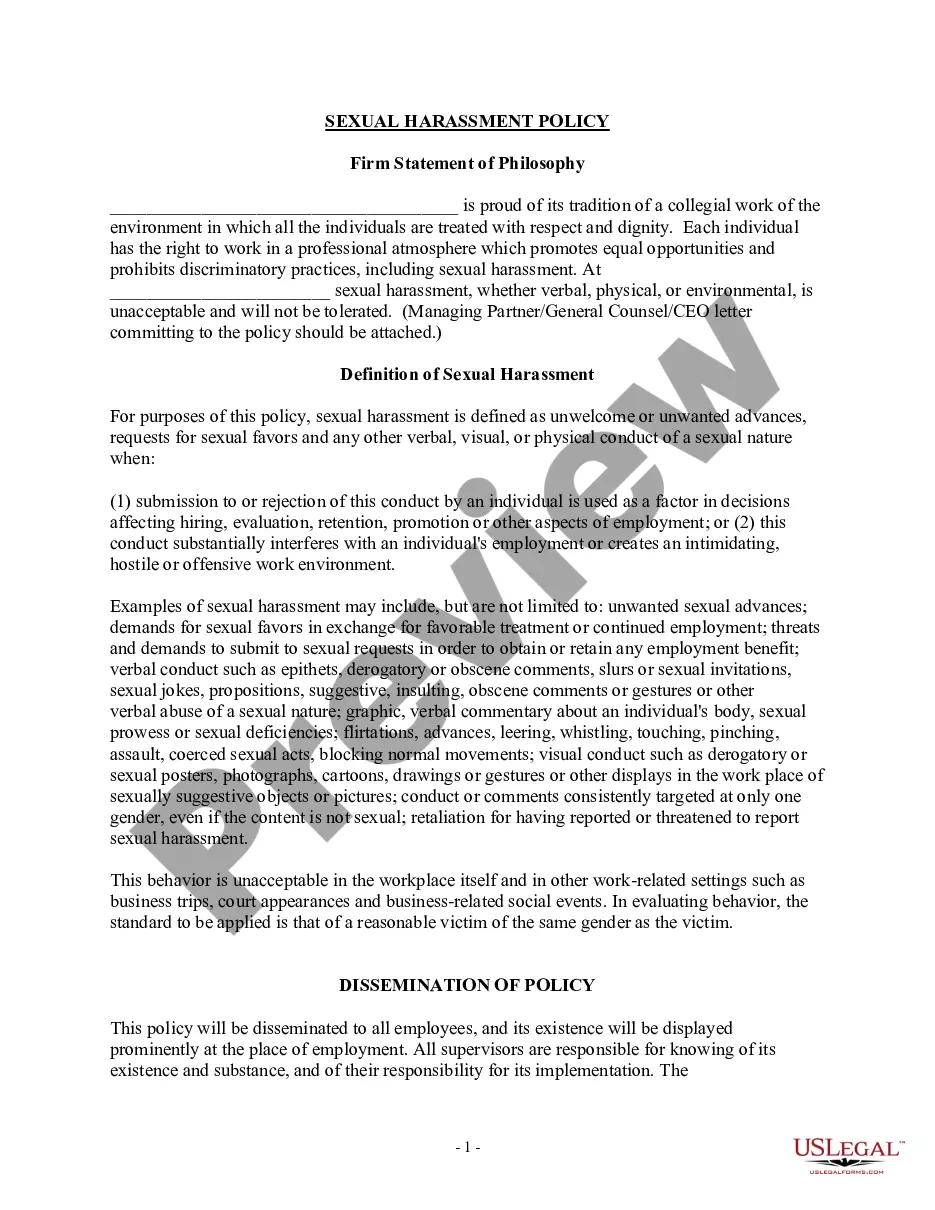
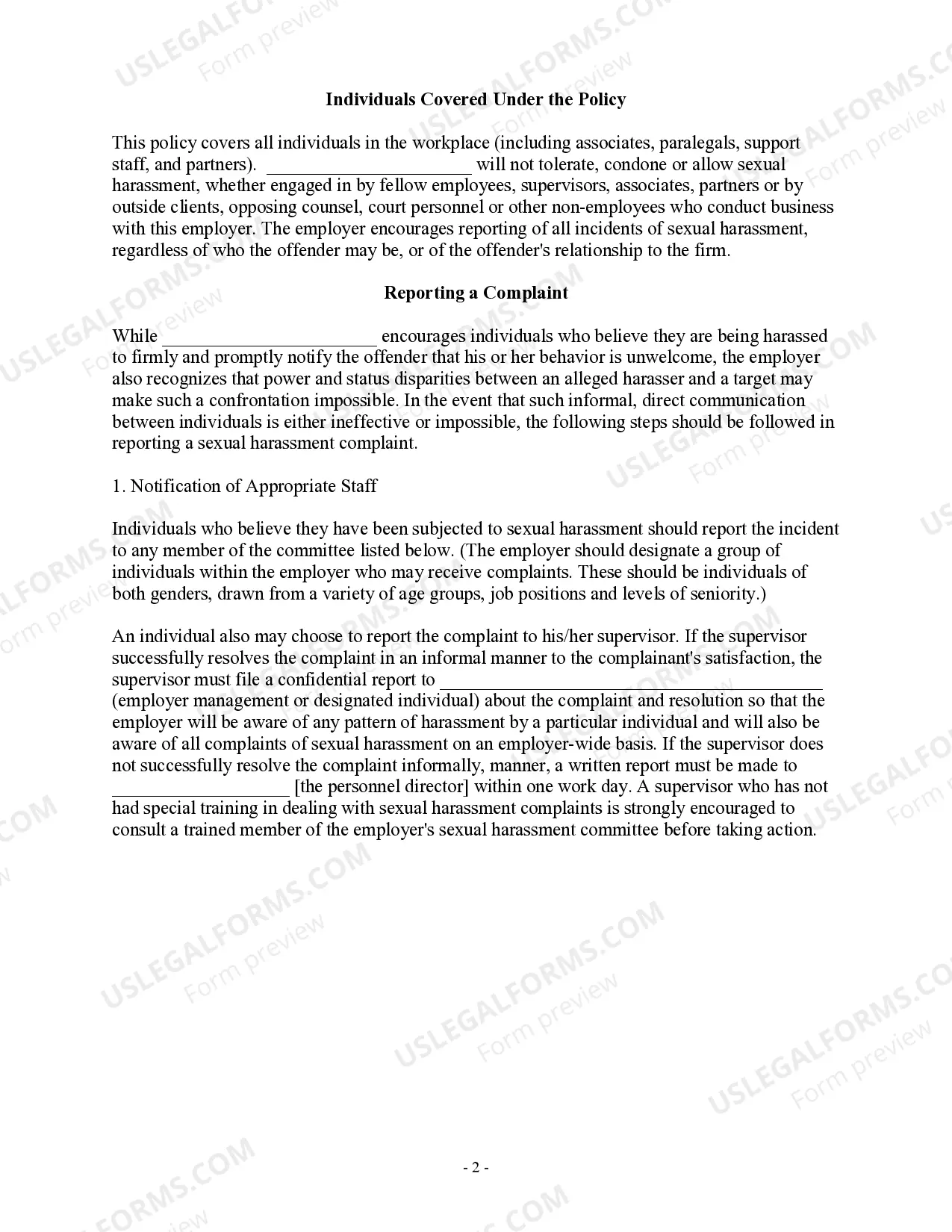
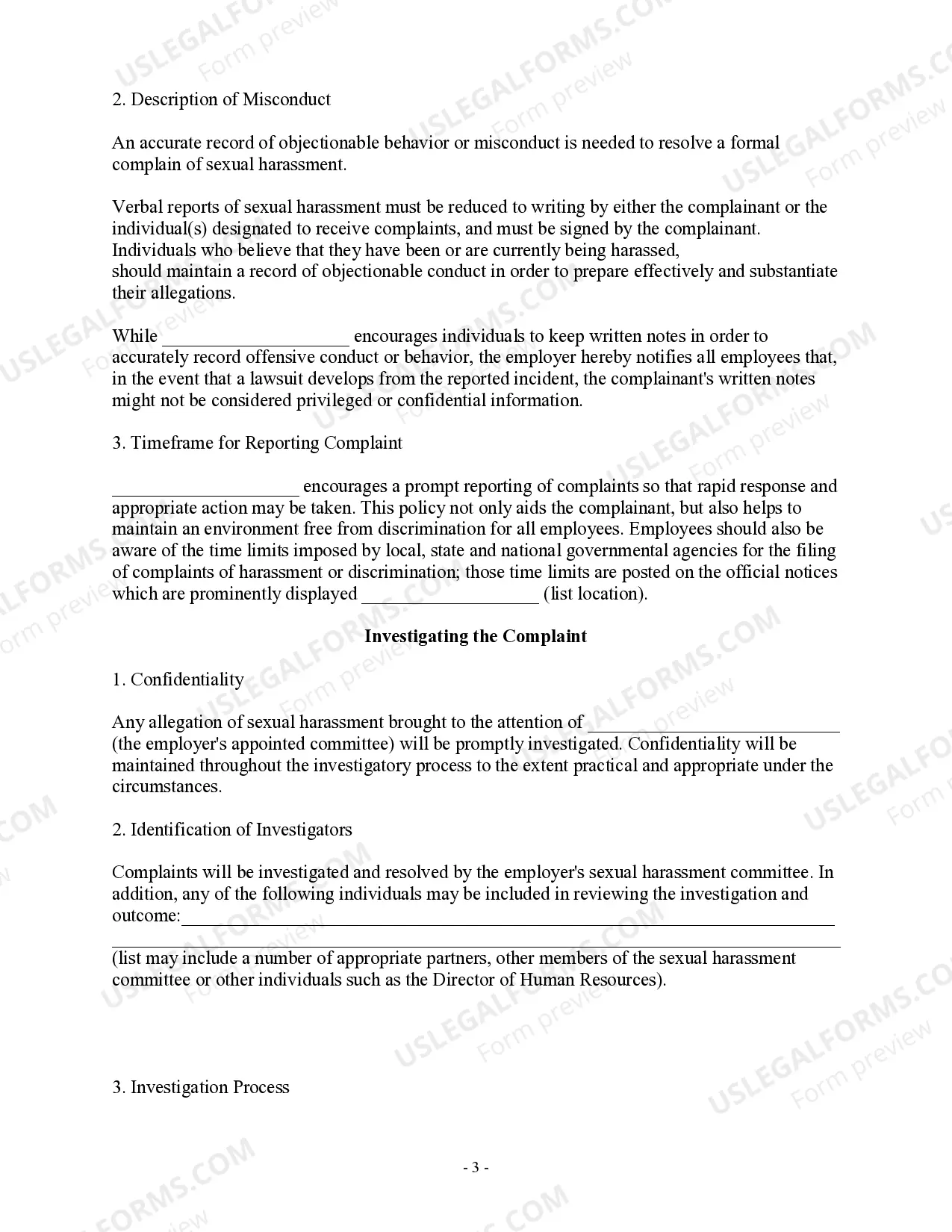
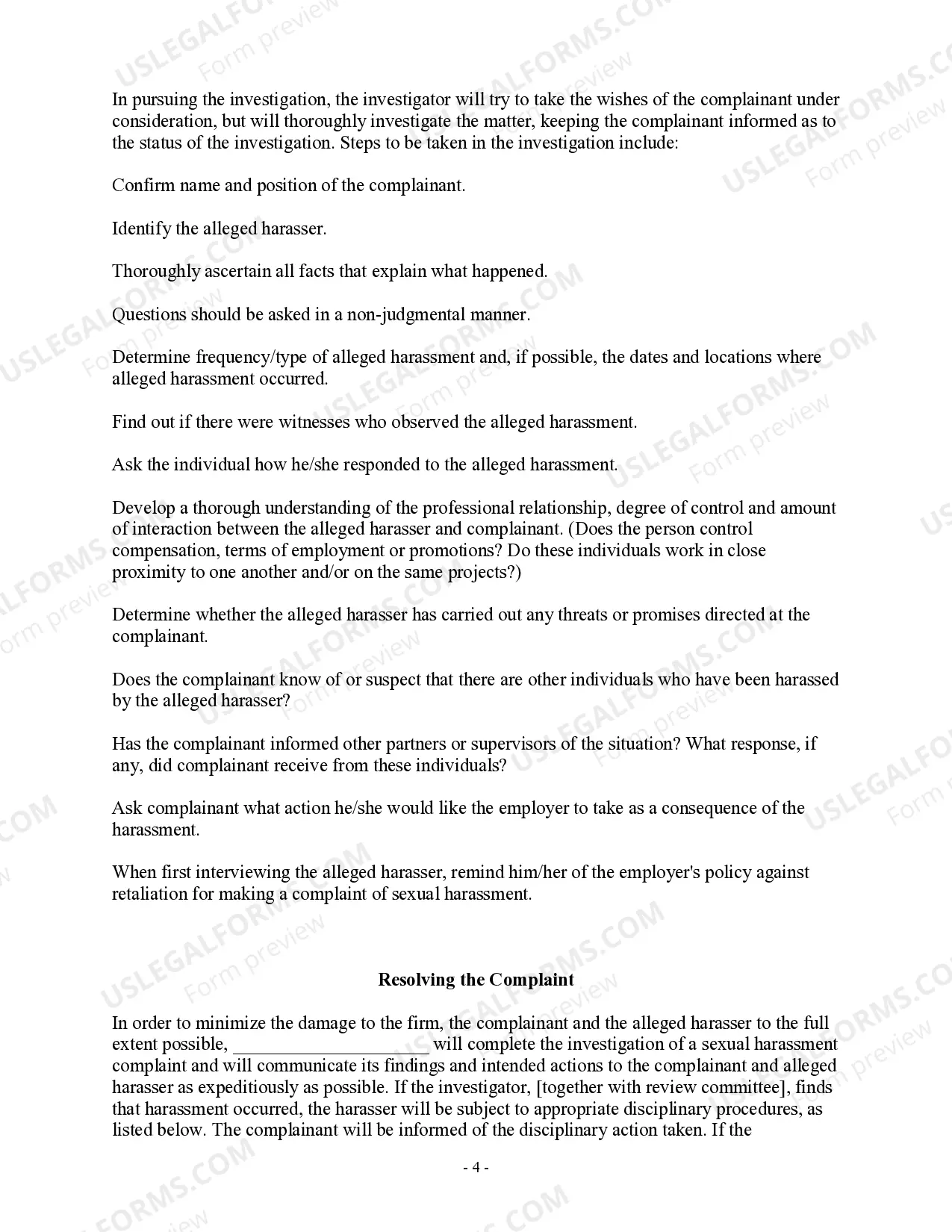
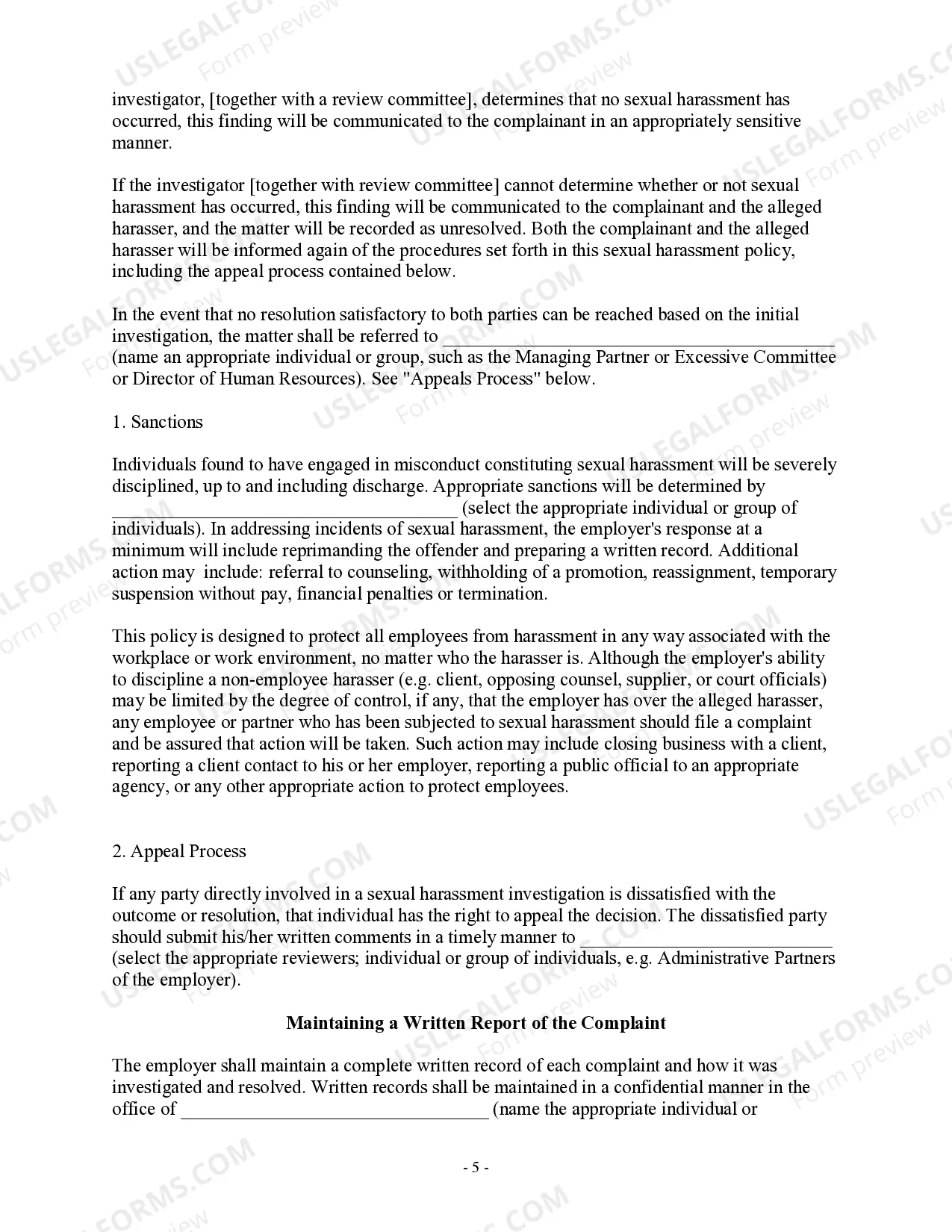
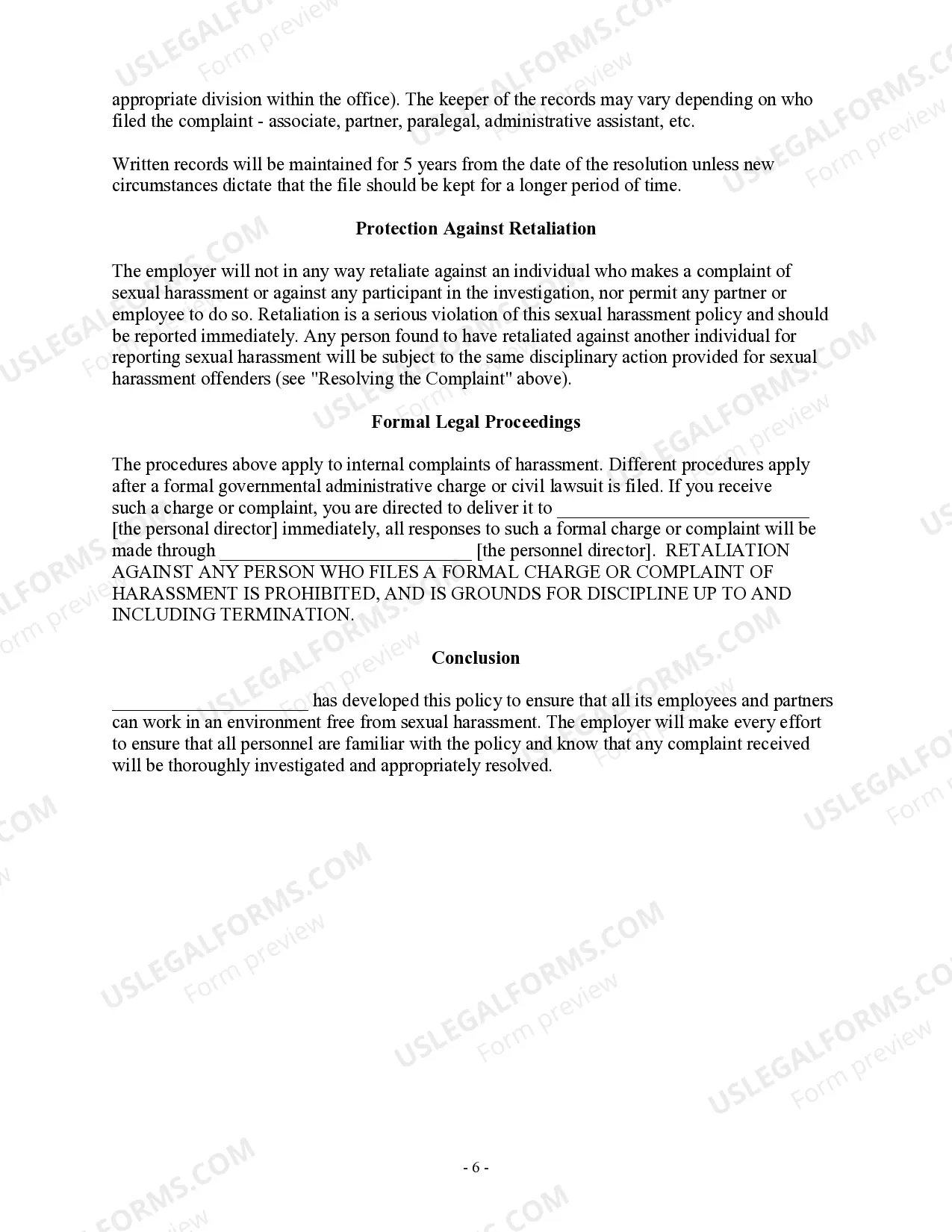
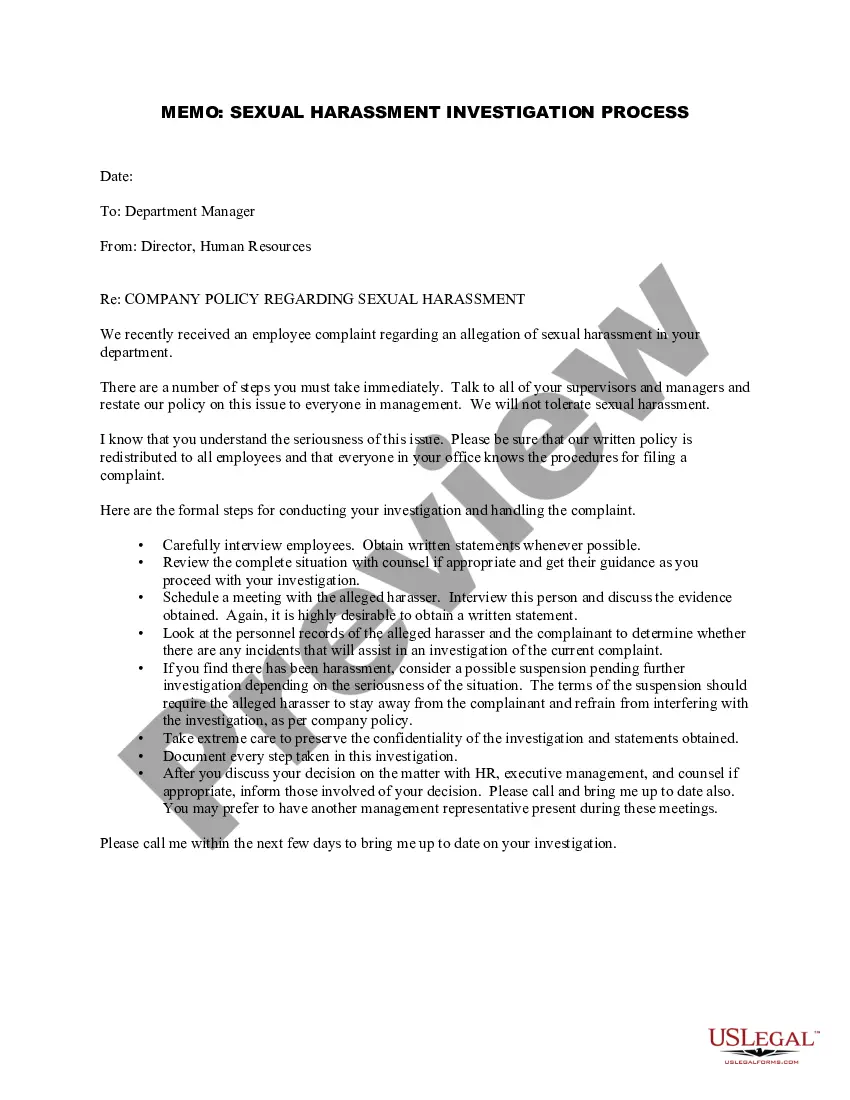
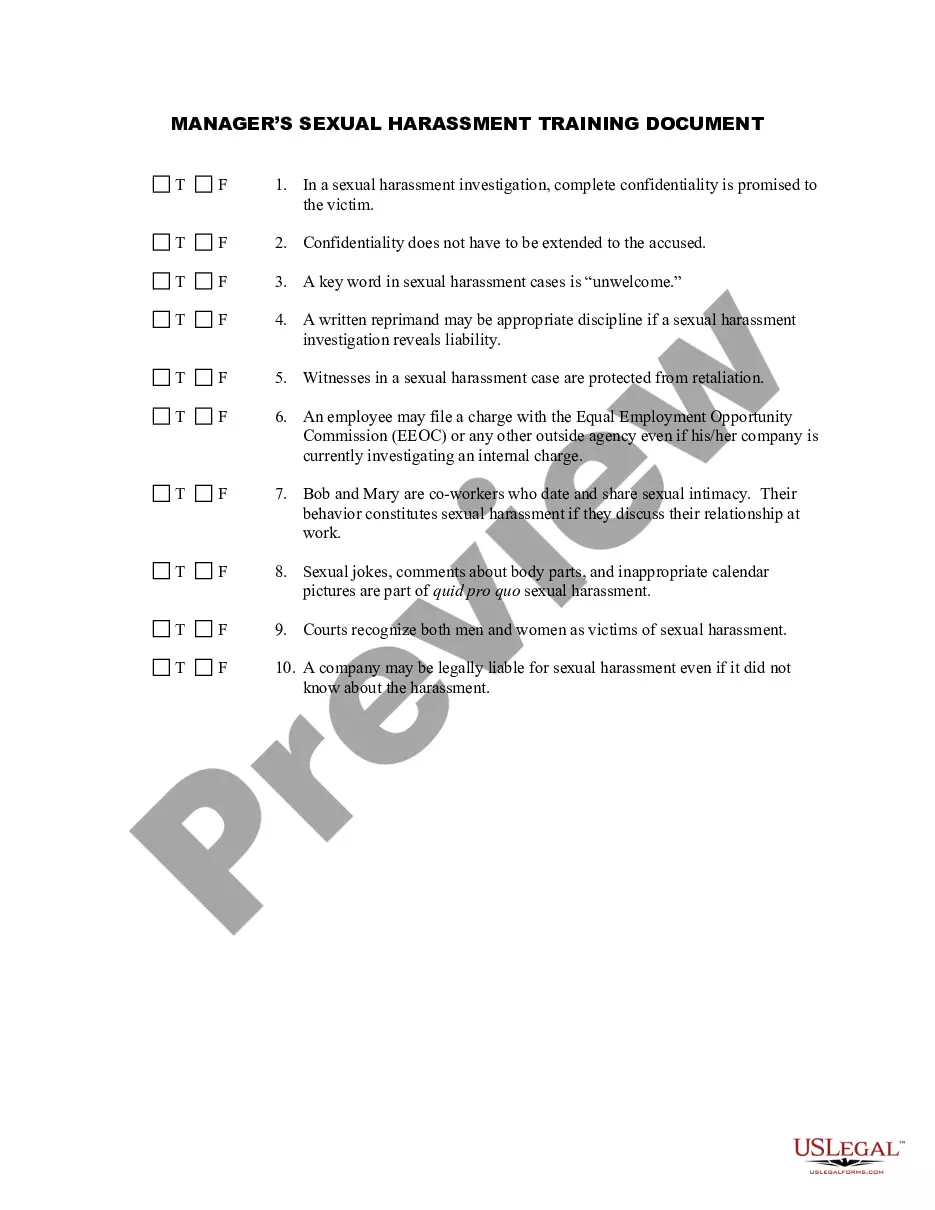
Get your form ready online
Our built-in tools help you complete, sign, share, and store your documents in one place.
Make edits, fill in missing information, and update formatting in US Legal Forms—just like you would in MS Word.
Download a copy, print it, send it by email, or mail it via USPS—whatever works best for your next step.
Sign and collect signatures with our SignNow integration. Send to multiple recipients, set reminders, and more. Go Premium to unlock E-Sign.
If this form requires notarization, complete it online through a secure video call—no need to meet a notary in person or wait for an appointment.
We protect your documents and personal data by following strict security and privacy standards.

Make edits, fill in missing information, and update formatting in US Legal Forms—just like you would in MS Word.

Download a copy, print it, send it by email, or mail it via USPS—whatever works best for your next step.

Sign and collect signatures with our SignNow integration. Send to multiple recipients, set reminders, and more. Go Premium to unlock E-Sign.

If this form requires notarization, complete it online through a secure video call—no need to meet a notary in person or wait for an appointment.

We protect your documents and personal data by following strict security and privacy standards.
Looking for another form?





How to fill out Sexual Harassment Policy - Workplace?
You can dedicate multiple hours online searching for the official document template that fits the federal and state requirements you require.
US Legal Forms offers a vast array of legal documents that can be inspected by experts.
You can obtain or print the Maryland Sexual Harassment Policy - Workplace from the service.
If available, use the Review button to browse through the document template as well. To obtain another version of your form, utilize the Search field to find the template that meets your requirements and specifications.
- If you already have a US Legal Forms account, you can Log In and click on the Obtain button.
- Next, you can complete, edit, print, or sign the Maryland Sexual Harassment Policy - Workplace.
- Each legal document template you purchase is yours permanently.
- To obtain another copy of the purchased form, go to the My documents tab and click on the corresponding button.
- If this is your first time using the US Legal Forms site, follow the simple steps below.
- First, ensure you have selected the correct document template for the county/region you choose.
- Review the form details to confirm you have chosen the right one.
Form popularity
FAQ
1. Sexual Harassment in the Workplace. From unwelcome and offensive comments to unwanted physical advances and requests for sexual favors, the #1 most common form of workplace harassment is familiar to us all.
Here are three types of workplace harassment, examples, and solutions to help you educate your employees for preventing workplace harassment.Verbal/Written.Physical.Visual.
Harassment is unwelcome conduct that is based on race, color, religion, sex (including sexual orientation, gender identity, or pregnancy), national origin, older age (beginning at age 40), disability, or genetic information (including family medical history).
The first is unlawful, which means the harassment is directed at a protected class. Unlawful harassment violates Equal Employment Opportunity (EEO) laws and can lead to prosecution....With that in mind, here are some other types of harassment to watch out for at work.Religious.Humor/Jokes.Disabilities.Ageism.
Types of Workplace HarassmentAbuse of Power. A manager can make unreasonable demands of an employee.Psychological Harassment. Psychological harassment can be overt or subtle.Online Bullying.Retaliation.
If an employee feels unsafe in their own workplace, it is important to discuss their potential claim with a Sexual Harassment Lawyer.1- Physical Sexual Harassment.2- Verbal Sexual Harassment.3- Visual Sexual Harassment.
1. Sexual Harassment in the Workplace. From unwelcome and offensive comments to unwanted physical advances and requests for sexual favors, the #1 most common form of workplace harassment is familiar to us all.
In order to have an actionable claim for an unlawful hostile working environment under Title VII and Maryland's FEPA statute, one must demonstrate that the workplace harassment, based on the protected characteristic, was (1) unwelcomed; (2) based on the protected characteristic; (3) subjectively and objectively severe
Types of HarassmentRace, Religion, Sex, and National Origin. Title VII of the Civil Rights Act of 1964 prohibits harassment on the basis of race, religion, sex, and national origin.Age.Disability.Status as a Veteran.Sexual Orientation and Marital Status.Gender Identification.Political Beliefs.Criminal History.More items...?
Examples of harassment in the workplace include derogatory jokes, racial slurs, personal insults, and expressions of disgust or intolerance toward a particular race. Abuse may range from mocking a worker's accent to psychologically intimidating employees by making threats or displaying discriminatory symbols.