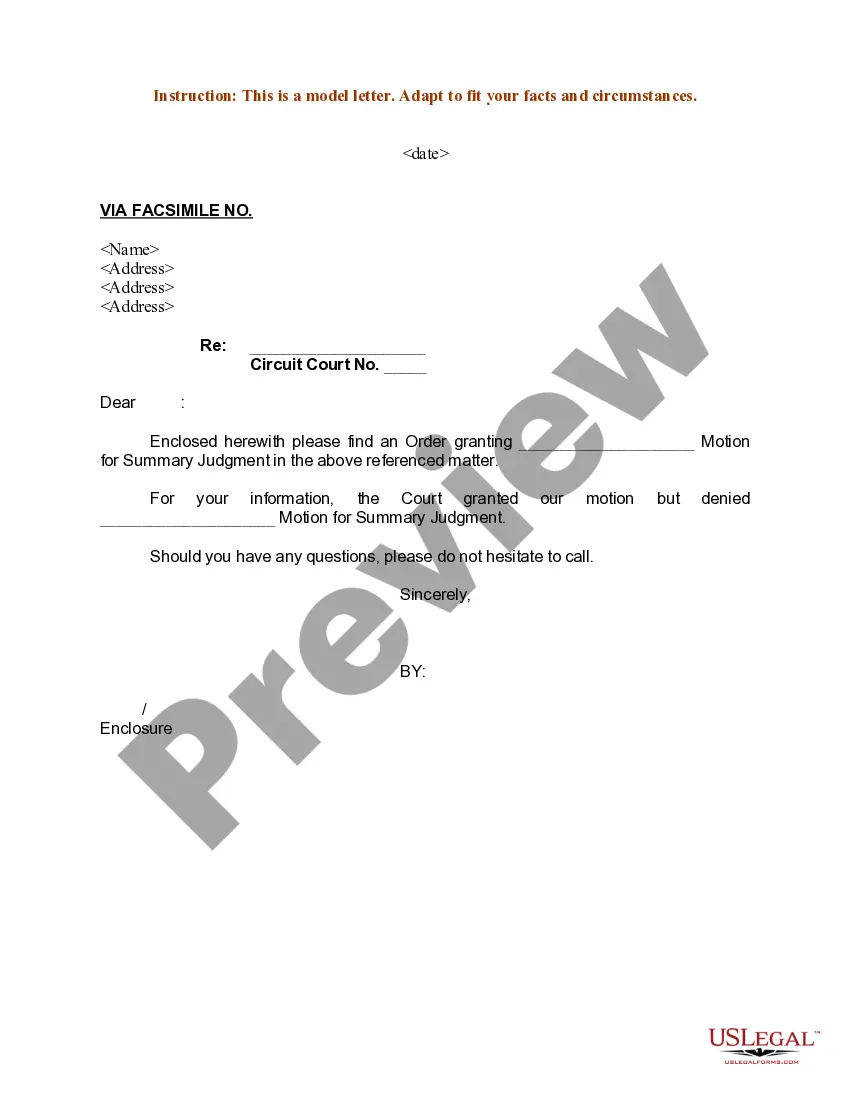
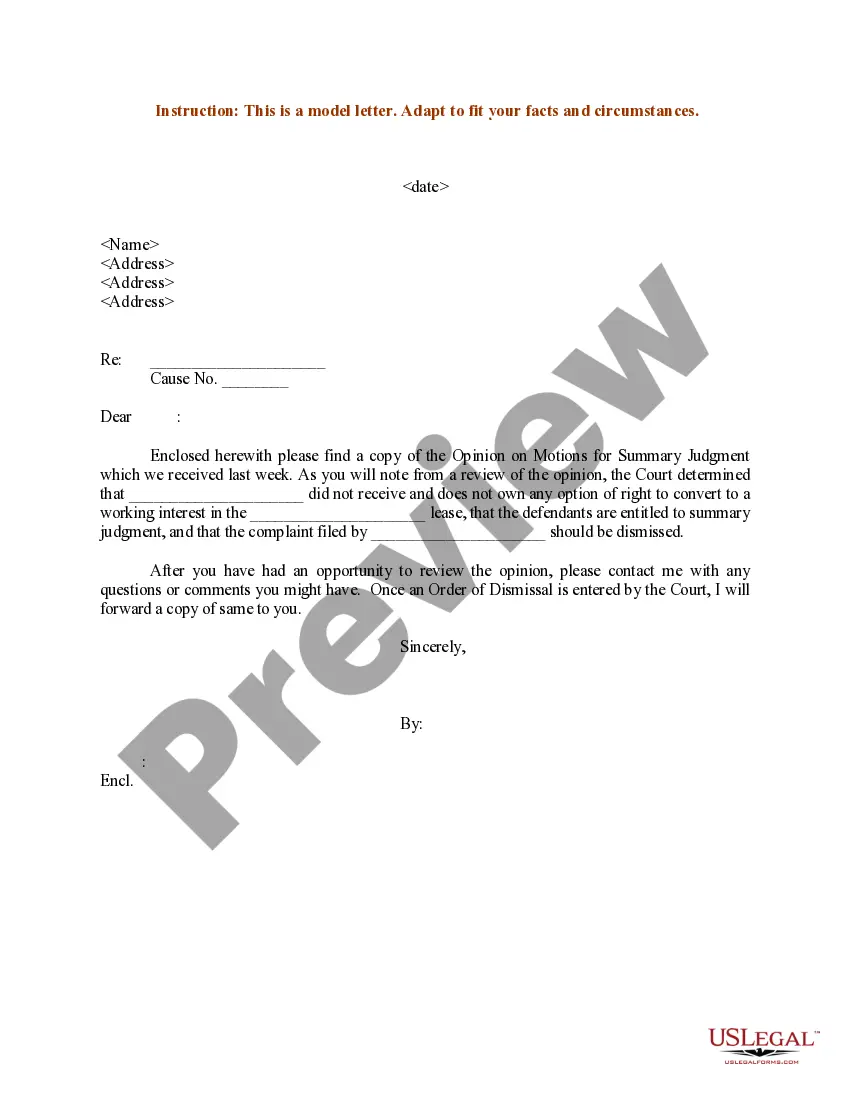
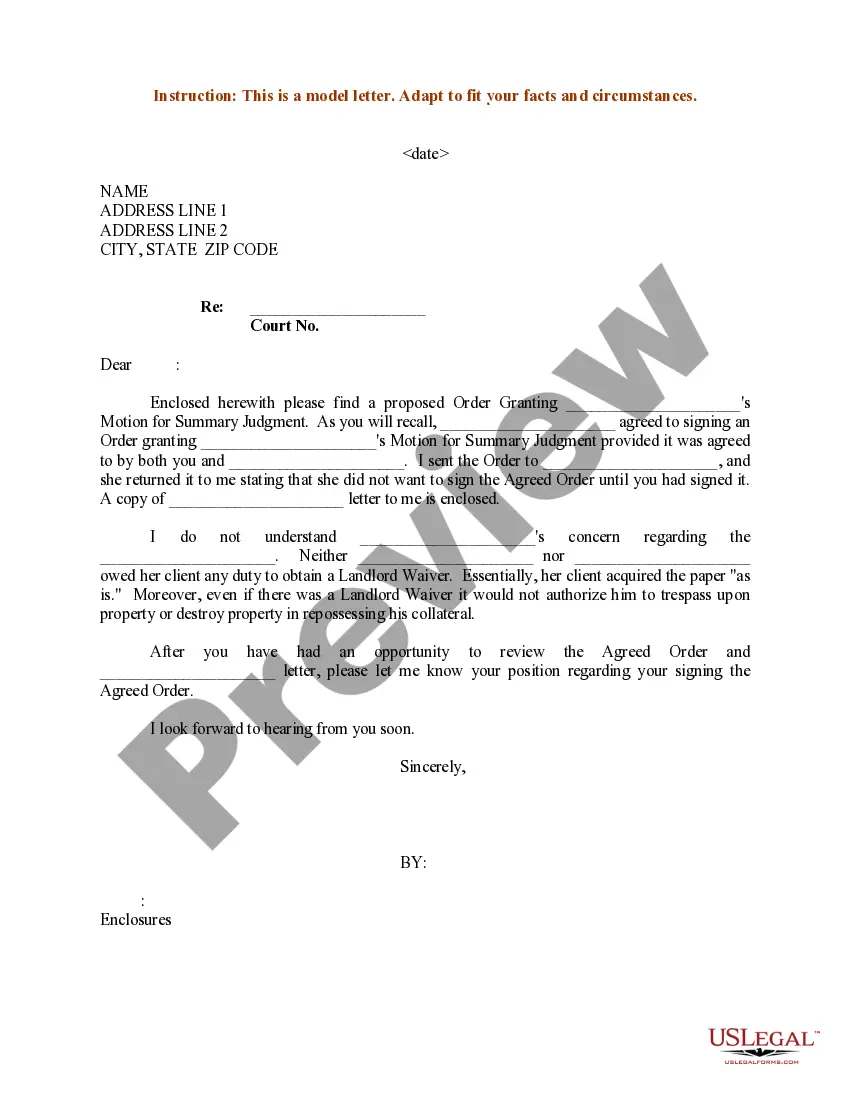
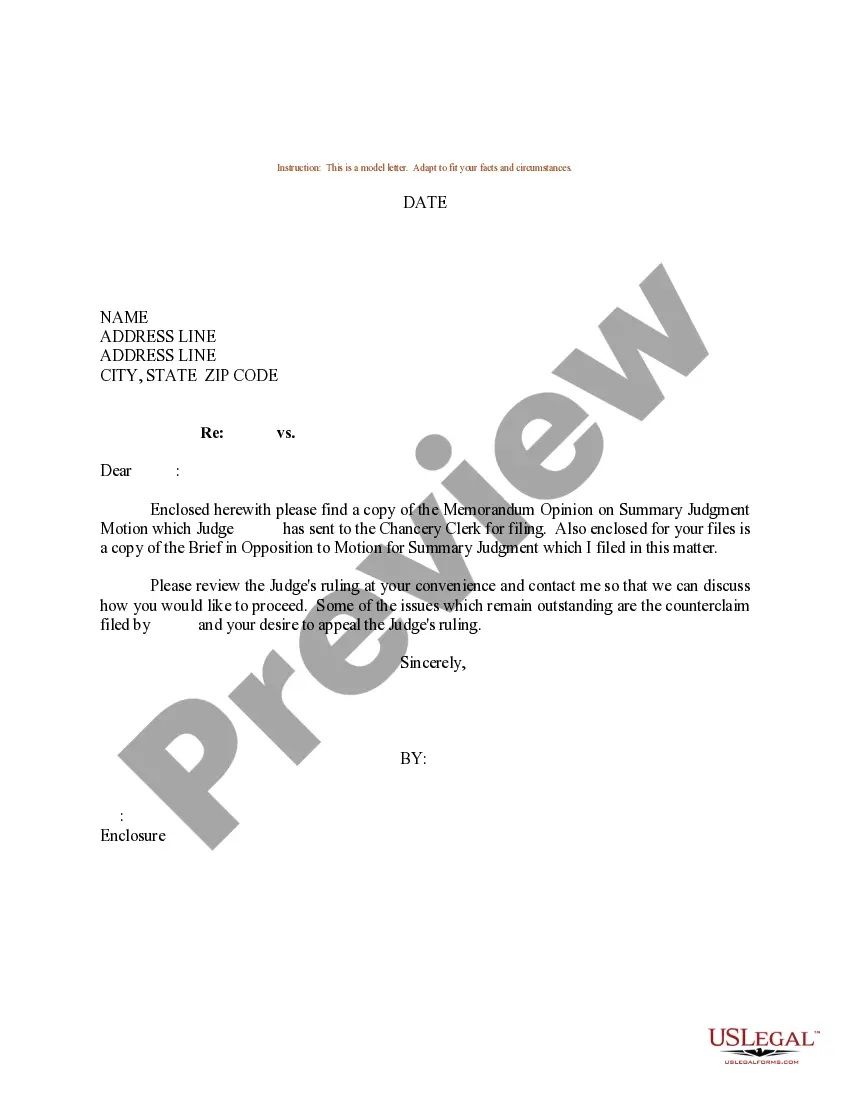
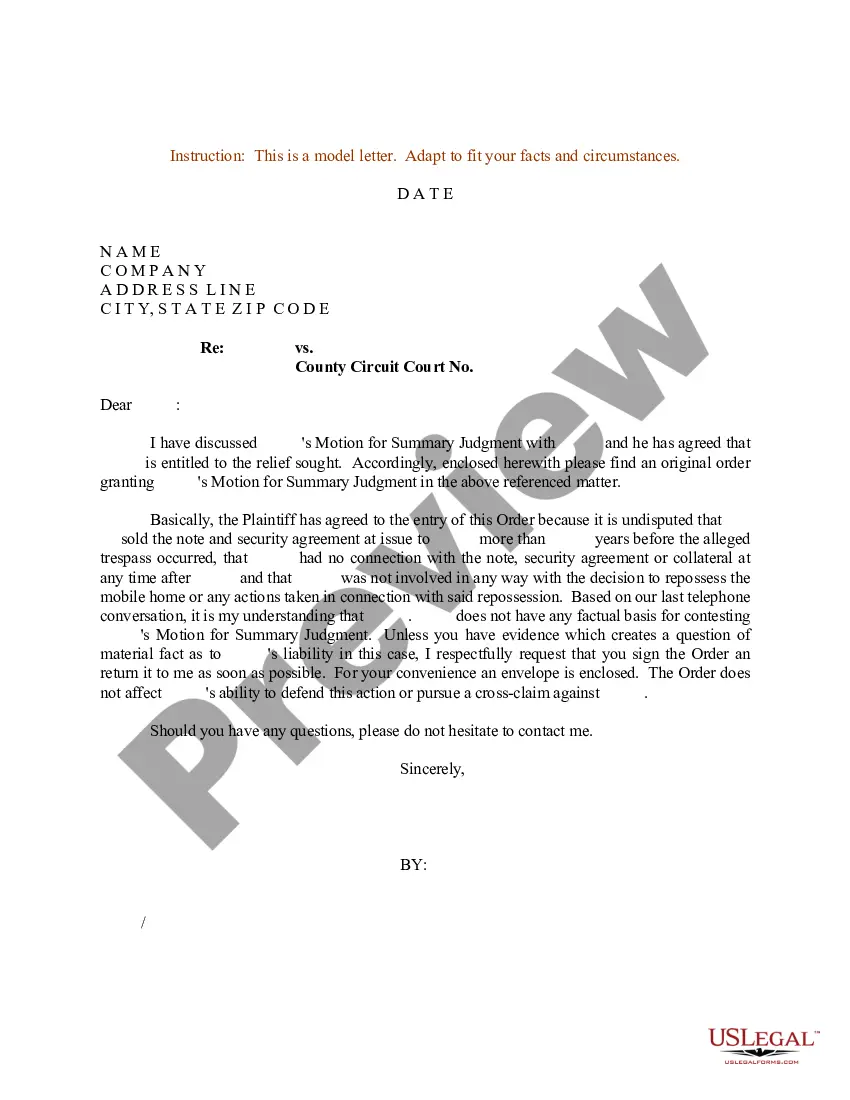
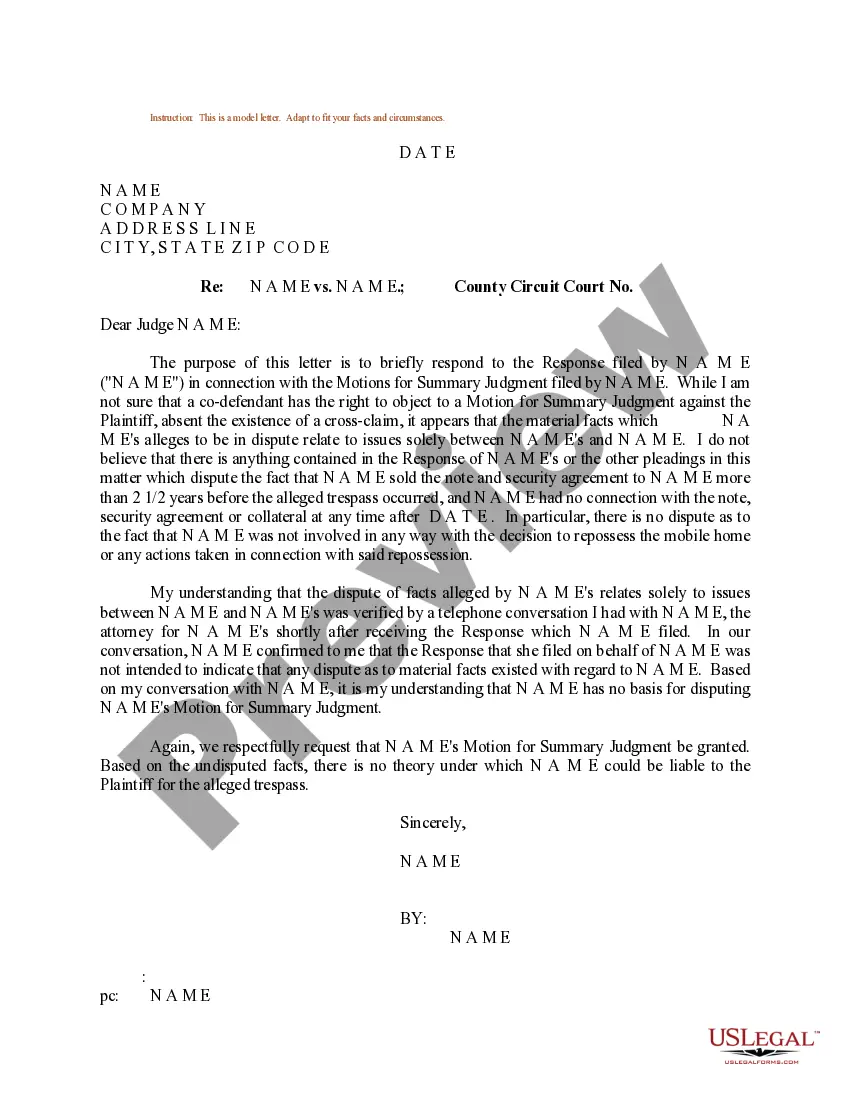
Maryland Sample Letter for Order Granting Motion for Summary Judgment
Description
Get your form ready online
Our built-in tools help you complete, sign, share, and store your documents in one place.
Make edits, fill in missing information, and update formatting in US Legal Forms—just like you would in MS Word.
Download a copy, print it, send it by email, or mail it via USPS—whatever works best for your next step.
Sign and collect signatures with our SignNow integration. Send to multiple recipients, set reminders, and more. Go Premium to unlock E-Sign.
If this form requires notarization, complete it online through a secure video call—no need to meet a notary in person or wait for an appointment.
We protect your documents and personal data by following strict security and privacy standards.

Make edits, fill in missing information, and update formatting in US Legal Forms—just like you would in MS Word.

Download a copy, print it, send it by email, or mail it via USPS—whatever works best for your next step.

Sign and collect signatures with our SignNow integration. Send to multiple recipients, set reminders, and more. Go Premium to unlock E-Sign.

If this form requires notarization, complete it online through a secure video call—no need to meet a notary in person or wait for an appointment.

We protect your documents and personal data by following strict security and privacy standards.
Looking for another form?


How to fill out Sample Letter For Order Granting Motion For Summary Judgment?
If you wish to obtain, acquire, or print legal document templates, utilize US Legal Forms, the largest assortment of legal forms available online.
Take advantage of the site’s straightforward and convenient search feature to locate the documents you need. Numerous templates for business and personal purposes are organized by categories and jurisdictions, or keywords.
Use US Legal Forms to quickly find the Maryland Sample Letter for Order Granting Motion for Summary Judgment in just a few clicks.
Step 5. Complete the transaction. You can use your Visa or MasterCard or PayPal account to finalize the purchase.
Step 6. Select the format of the legal form and download it to your device.Step 7. Fill out, modify, and print or sign the Maryland Sample Letter for Order Granting Motion for Summary Judgment. Every legal document template you acquire is yours to keep indefinitely. You have access to every form you downloaded within your account. Click the My documents section and select a form to print or download again.Compete and acquire, and print the Maryland Sample Letter for Order Granting Motion for Summary Judgment with US Legal Forms. There are thousands of professional and state-specific forms available for your business or personal needs.
- If you are already a US Legal Forms user, Log In to your account and click on the Download button to access the Maryland Sample Letter for Order Granting Motion for Summary Judgment.
- You can also access forms you previously downloaded in the My documents section of your account.
- If this is your first time using US Legal Forms, follow the instructions below.
- Step 1. Ensure you have selected the form for your specific state/region.
- Step 2. Use the Preview option to view the form’s content. Don’t forget to read the description.
- Step 3. If you are not satisfied with the form, use the Search box at the top of the screen to find other variations of the legal form template.
- Step 4. Once you have located the form you need, click on the Buy now button. Choose the pricing plan you prefer and provide your details to register for an account.
Form popularity
FAQ
A response to a motion for summary judgment shall be in writing and shall (1) identify with particularity each material fact as to which it is contended that there is a genuine dispute and (2) as to each such fact, identify and attach the relevant portion of the specific document, discovery response, transcript of ...
Rather than filing an answer, a defendant may file a preliminary motion (Md. Rule 2-322). The filing of a preliminary motion under Maryland Rule 2-322 automatically extends the time for filing an answer to either: ? 15 days after the court's entry of the decision on the motion.
3) Declaration in Support of Motion for Summary Judgment The Declaration is a sworn statement to the Court stating all of the declarant's facts supporting your Motion. These facts must come from the declarant's own personal knowledge of the events.
A party seeking summary judgment may refer to any evidence that would be admissible at trial, such as depositions (or deposition excerpts), party admissions, affidavits in support from witnesses, documents received during discovery (such as contracts, emails, letters, and certified government documents).
A motion for summary judgment "searches the record," meaning that the court reviews all of the evidence in the record, regardless of which side submitted it.
Rule 56(c)(4) provides that a formal affidavit or a written unsworn declaration that complies with 28 U.S.C. § 1746 can be used to support or oppose a motion for summary judgment.
In Maryland, summary judgment may only be granted if two conditions are met. First, the moving party must establish there is no genuine dispute as to any material fact. Second, the moving party must establish that it is entitled to judgment as a matter of law.
As an initial matter, the Court reiterated the utility of expert witness declarations in summary judgment motions: "An expert witness declaration is admissible to support or defeat summary judgment if the expert's testimony would be admissible at trial in ance with Evidence Code section 720.