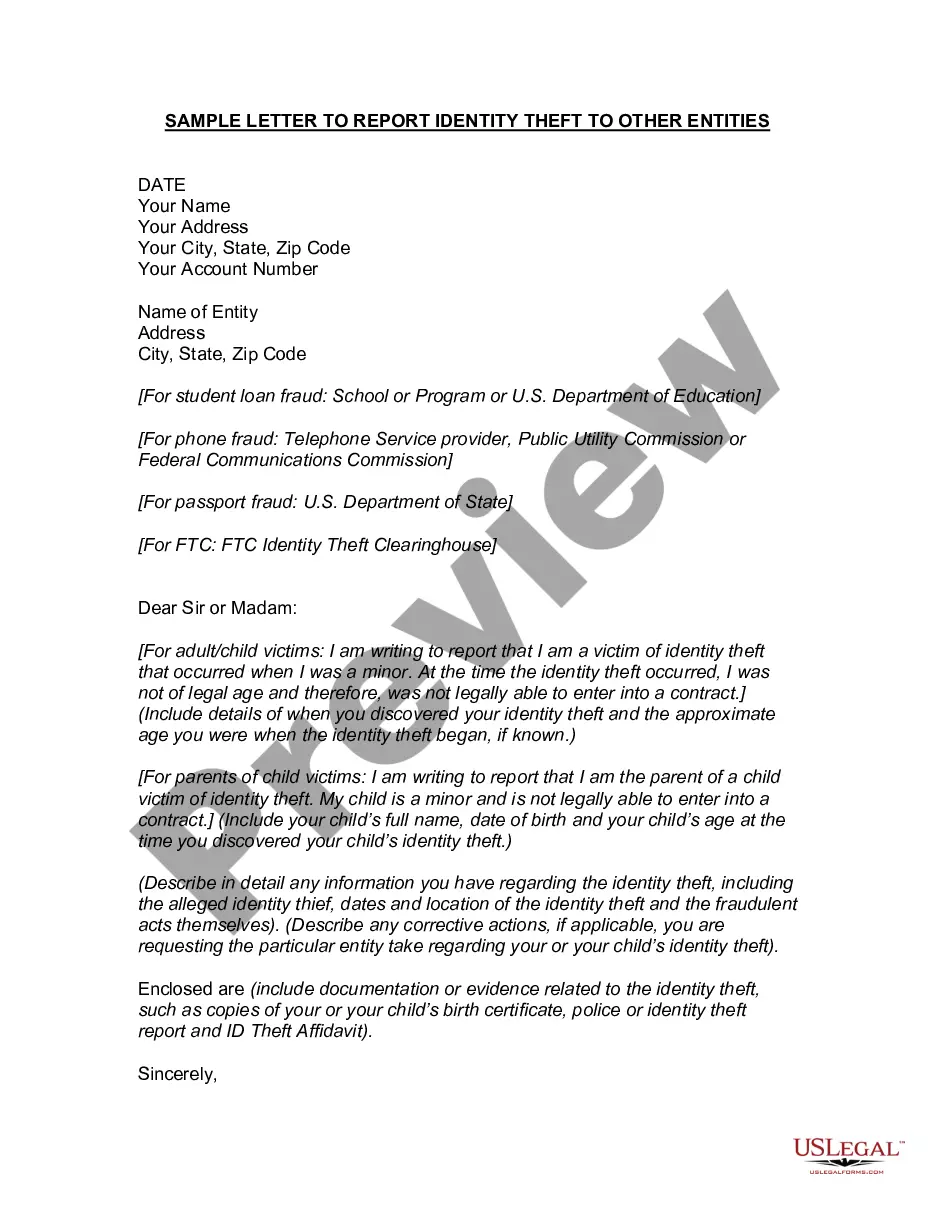
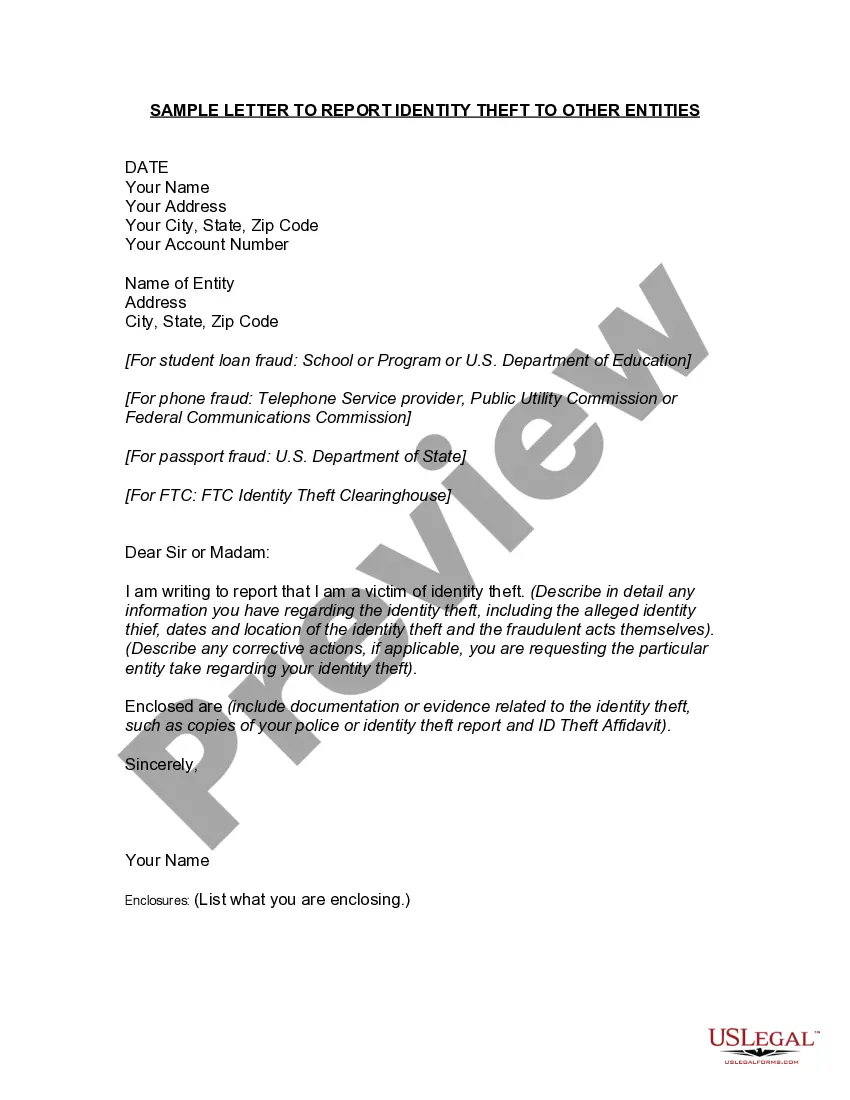
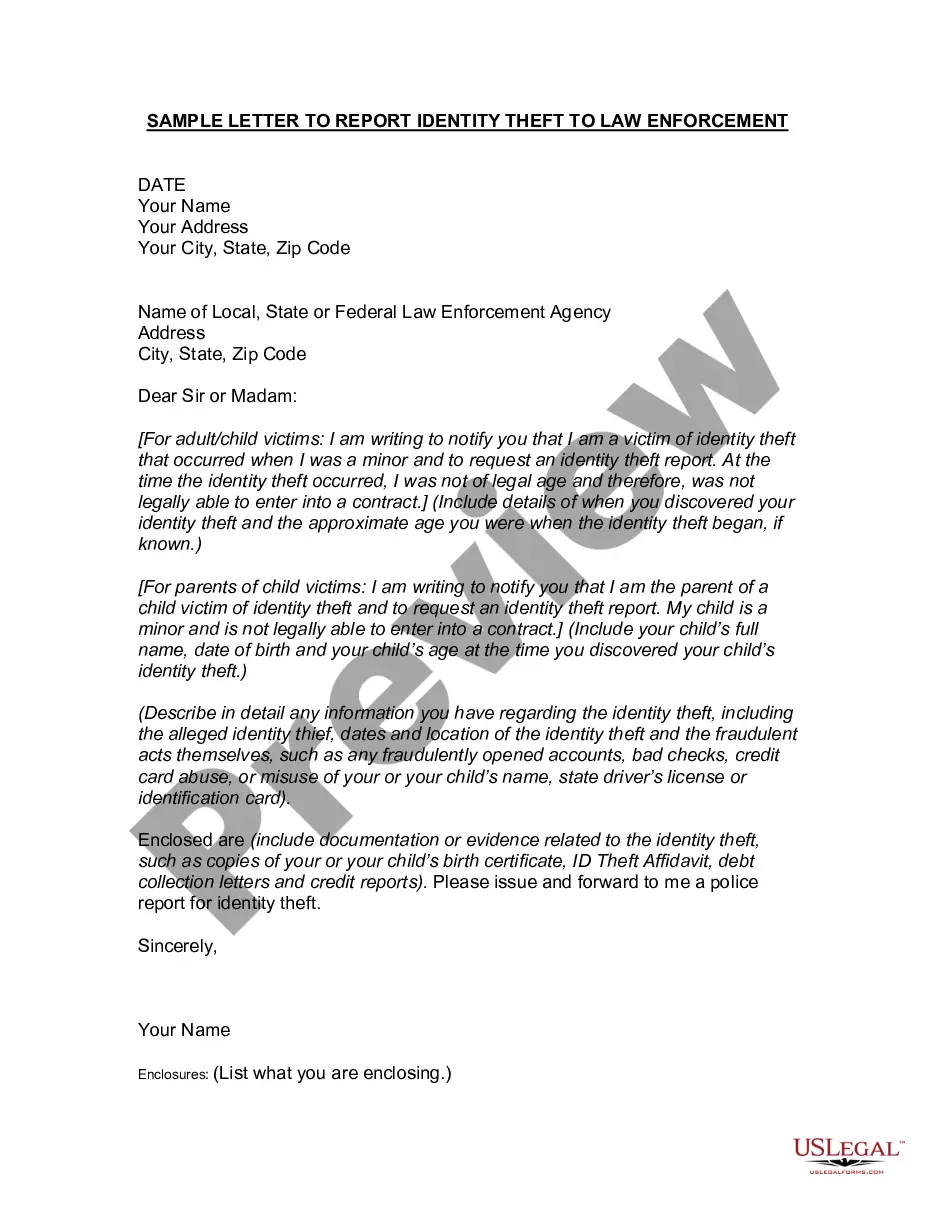
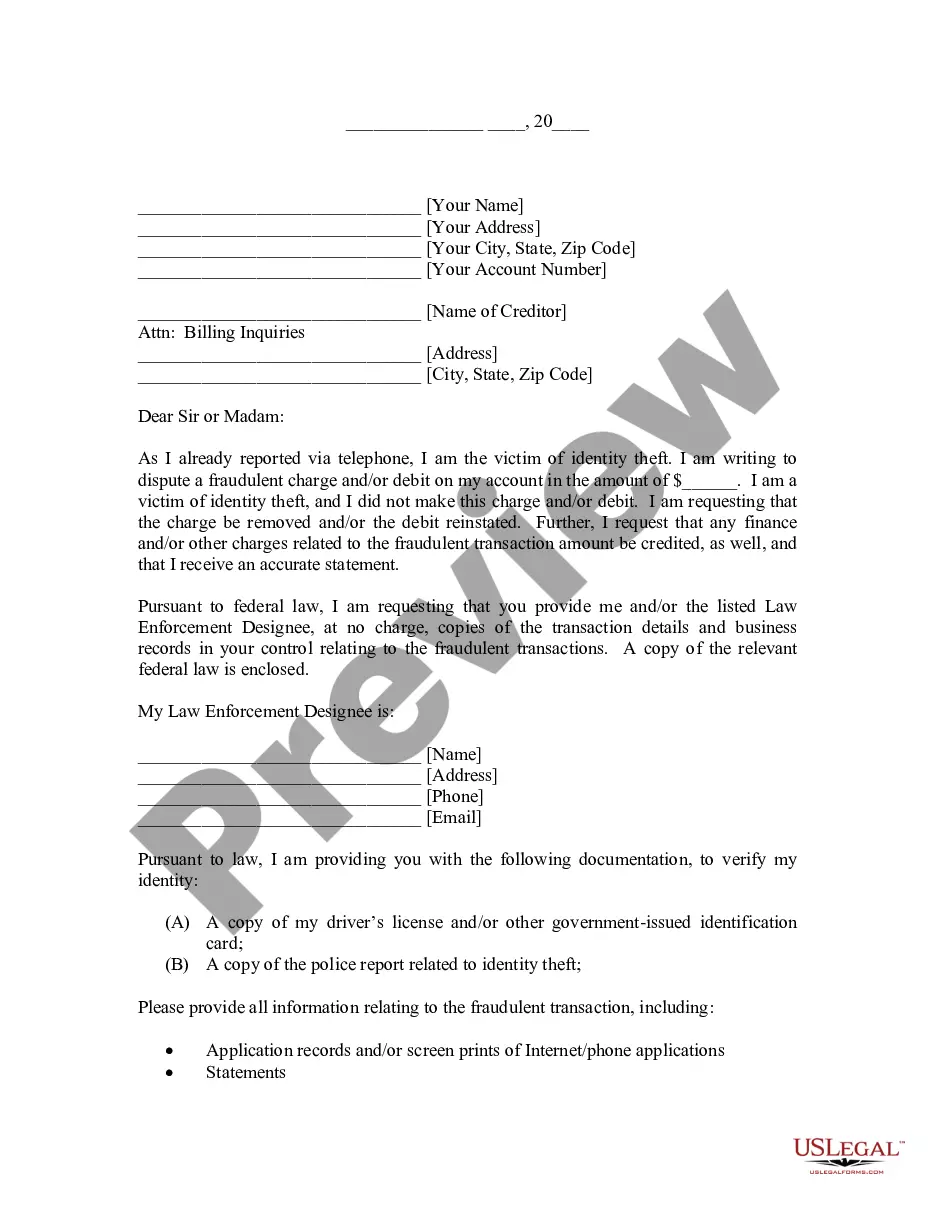
Maryland Letter to Other Entities Notifying Them of Identity Theft of Minor
Description

Get your form ready online
Our built-in tools help you complete, sign, share, and store your documents in one place.
Make edits, fill in missing information, and update formatting in US Legal Forms—just like you would in MS Word.
Download a copy, print it, send it by email, or mail it via USPS—whatever works best for your next step.
Sign and collect signatures with our SignNow integration. Send to multiple recipients, set reminders, and more. Go Premium to unlock E-Sign.
If this form requires notarization, complete it online through a secure video call—no need to meet a notary in person or wait for an appointment.
We protect your documents and personal data by following strict security and privacy standards.

Make edits, fill in missing information, and update formatting in US Legal Forms—just like you would in MS Word.

Download a copy, print it, send it by email, or mail it via USPS—whatever works best for your next step.

Sign and collect signatures with our SignNow integration. Send to multiple recipients, set reminders, and more. Go Premium to unlock E-Sign.

If this form requires notarization, complete it online through a secure video call—no need to meet a notary in person or wait for an appointment.

We protect your documents and personal data by following strict security and privacy standards.
Looking for another form?



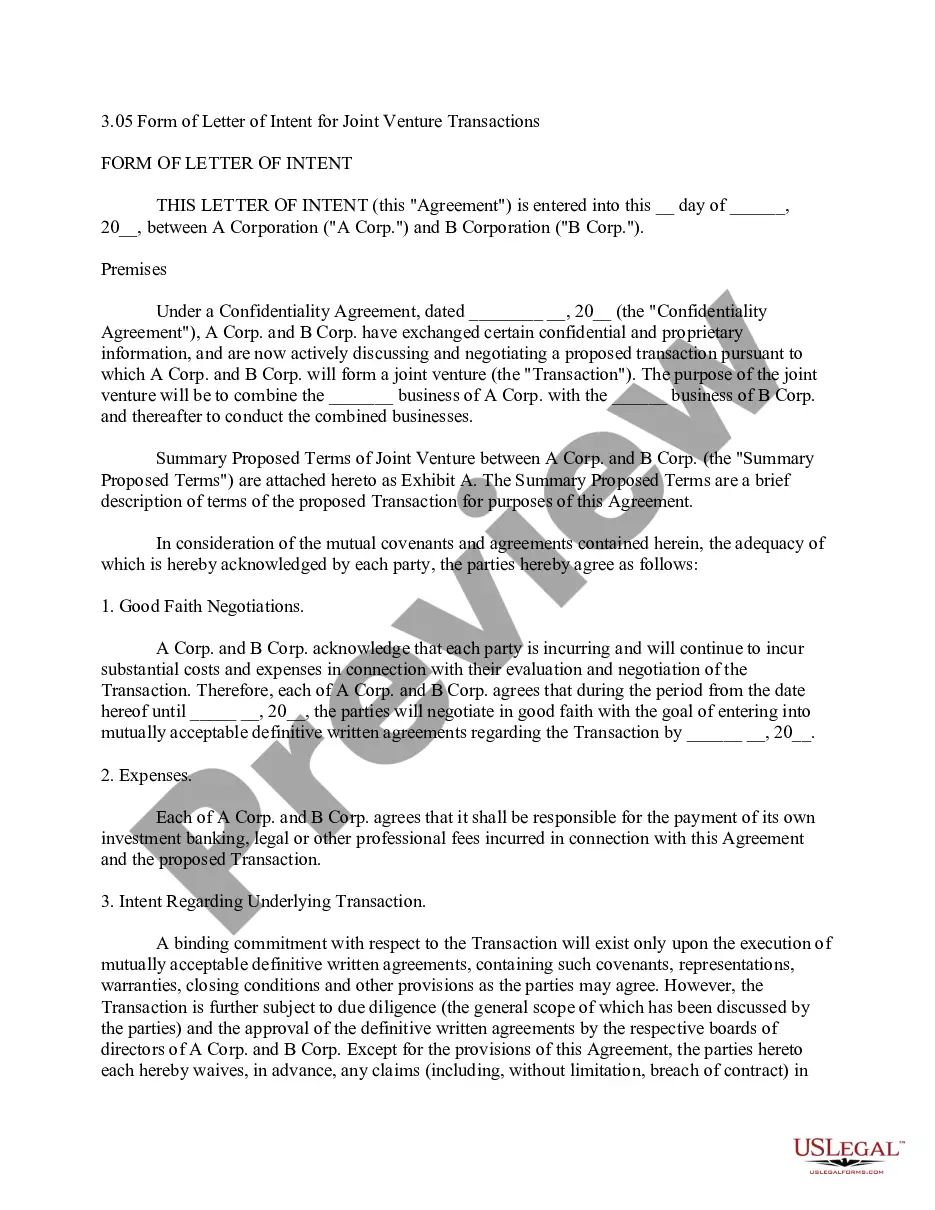
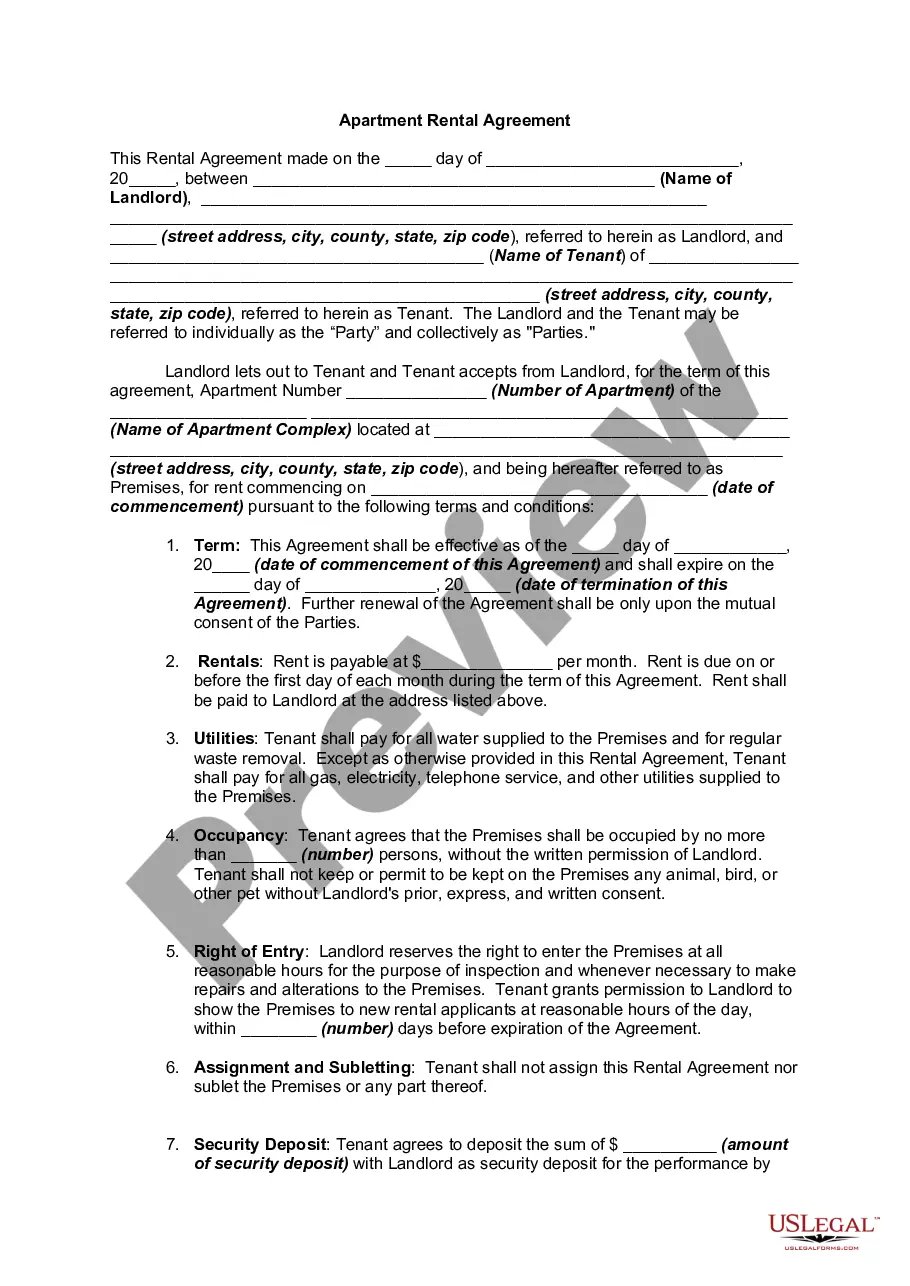
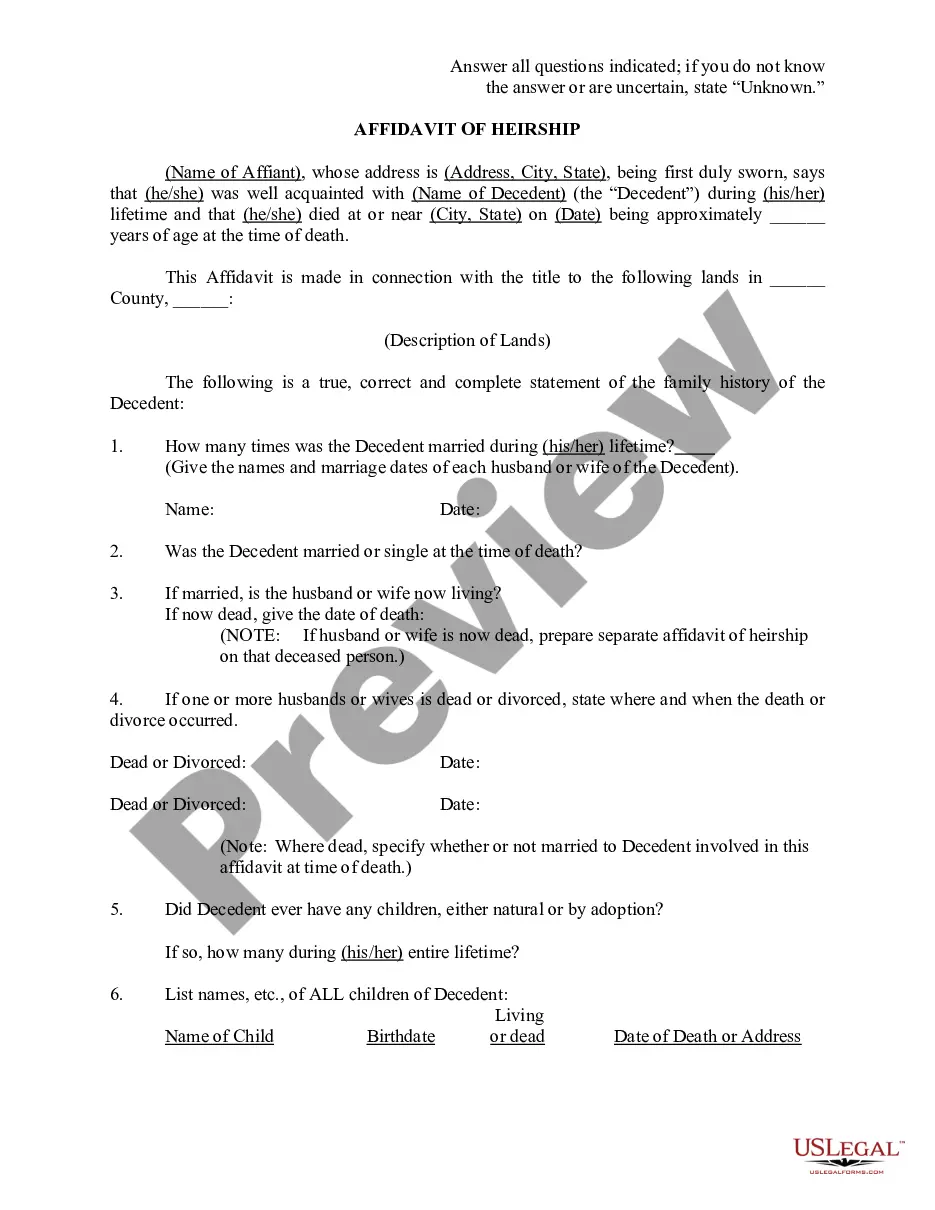
How to fill out Letter To Other Entities Notifying Them Of Identity Theft Of Minor?
If you desire to be thorough, acquire, or print out legal document templates, utilize US Legal Forms, the largest selection of legal forms available online.
Utilize the site's straightforward and user-friendly search to locate the documents you require. Various templates for business and personal purposes are organized by categories and states, or keywords.
Employ US Legal Forms to obtain the Maryland Letter to Other Entities Notifying Them of Identity Theft of Minor with just a few clicks.
Step 5. Complete the transaction. You can use your credit card or PayPal account to finalize the purchase.
Step 6. Select the format of the legal form and download it to your device. Step 7. Complete, modify, and print or sign the Maryland Letter to Other Entities Notifying Them of Identity Theft of Minor.
Every legal document template you purchase is yours permanently. You have access to every form you downloaded in your account. Choose the My documents section and select a form to print or download again.
Be proactive and acquire, and print the Maryland Letter to Other Entities Notifying Them of Identity Theft of Minor with US Legal Forms. There are numerous professional and state-specific forms available for your business or personal needs.
- If you are currently a US Legal Forms user, Log In to your account and click on the Download button to get the Maryland Letter to Other Entities Notifying Them of Identity Theft of Minor.
- You can also access forms you previously downloaded in the My documents tab of your account.
- If you are using US Legal Forms for the first time, follow the steps below.
- Step 1. Ensure you have selected the form for the correct state/country.
- Step 2. Use the Preview option to review the form's content. Be sure to read the description.
- Step 3. If you are dissatisfied with the form, use the Search field at the top of the screen to find alternative versions in the legal form category.
- Step 4. Once you have found the form you desire, click the Buy now button. Choose the payment plan you prefer and enter your details to register for the account.
Form popularity
FAQ
Identity fraud involving between $100 and $1,500 in goods or services is a misdemeanor, and the maximum penalty is one year in prison and/or a $500 fine. If the fraud involves between $1,500 and $25,000 in goods or services, it is a felony, and the maximum penalty is five years in prison and/or a $10,000 fine.
Identity theft laws under 18 U.S.C. § 1028 makes it a crime to misuse someone's identifying information, whether personal or financial. Personal identifying information can include social security numbers, driver's license number, credit card or bank account information, and PIN numbers obtained through the internet.
It is the unlawful violation of an individual's right to the protection of his/her privacy. This illegitimate acquisition of your information can be performed in a variety of ways. Most commonly, identity theft includes stealing, misrepresenting or hijacking the identity of another person or business.
If a person violates any part of this section under circumstances that reasonably indicate an intent to manufacture, dispense, or distribute another's personal identifying information then that individual is guilty of felony identity fraud and faces up to 15 years in prison and/or a fine of up to $25,000.
We understand that you are in a difficult situation, and will do our best to provide you with assistance to help you restore your good name and your credit record. If you have questions, please contact the Attorney General's Identity Theft Unit at (410) 576-6491 or by e-mail at idtheft@oag.state.md.us.
If the value of the property taken is less than $1,500, then it is a misdemeanor theft. Any theft of property with a value greater than $1,500 is deemed felony theft or grand larceny. Less than $100 ? A misdemeanor that carries a maximum penalty of a fine of $500 or 90 days in jail or both.
At 3010. In 1998, Congress enacted the Identity Theft and Assumption Deterrence Act (?the Identity Theft Act? or ?the Act?),1 directing the Federal Trade Commission to establish the federal government's central repository for identity theft complaints and to provide victim assistance and consumer education.