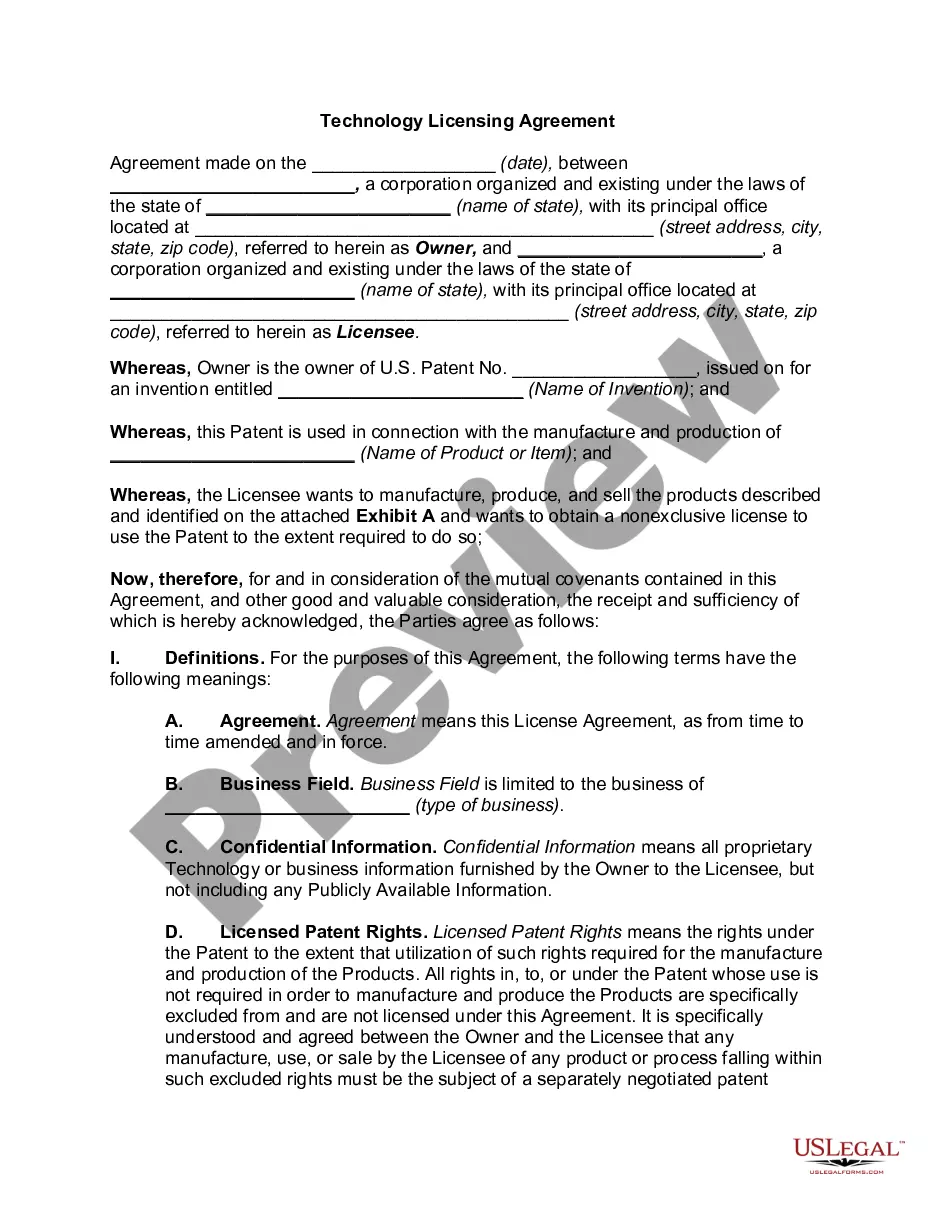
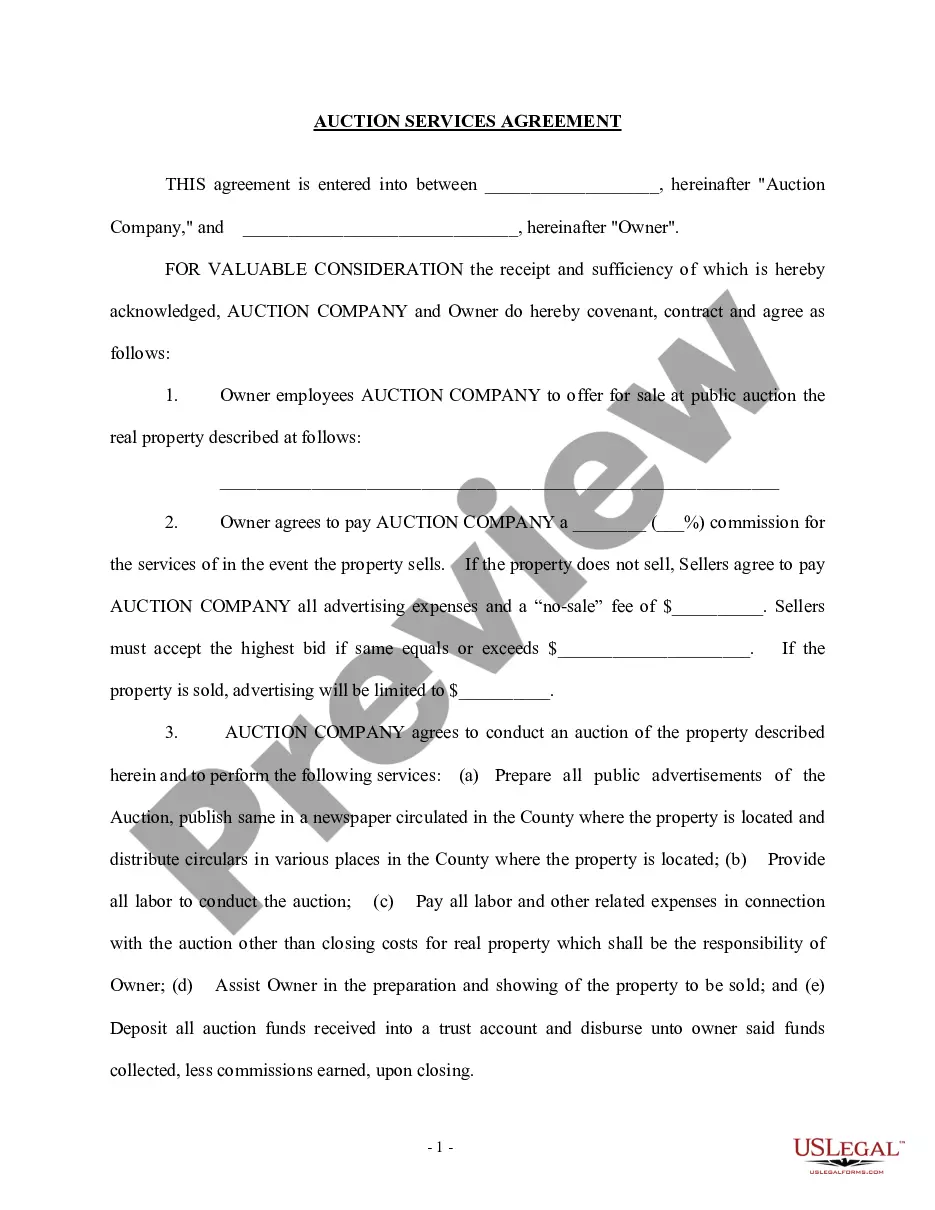
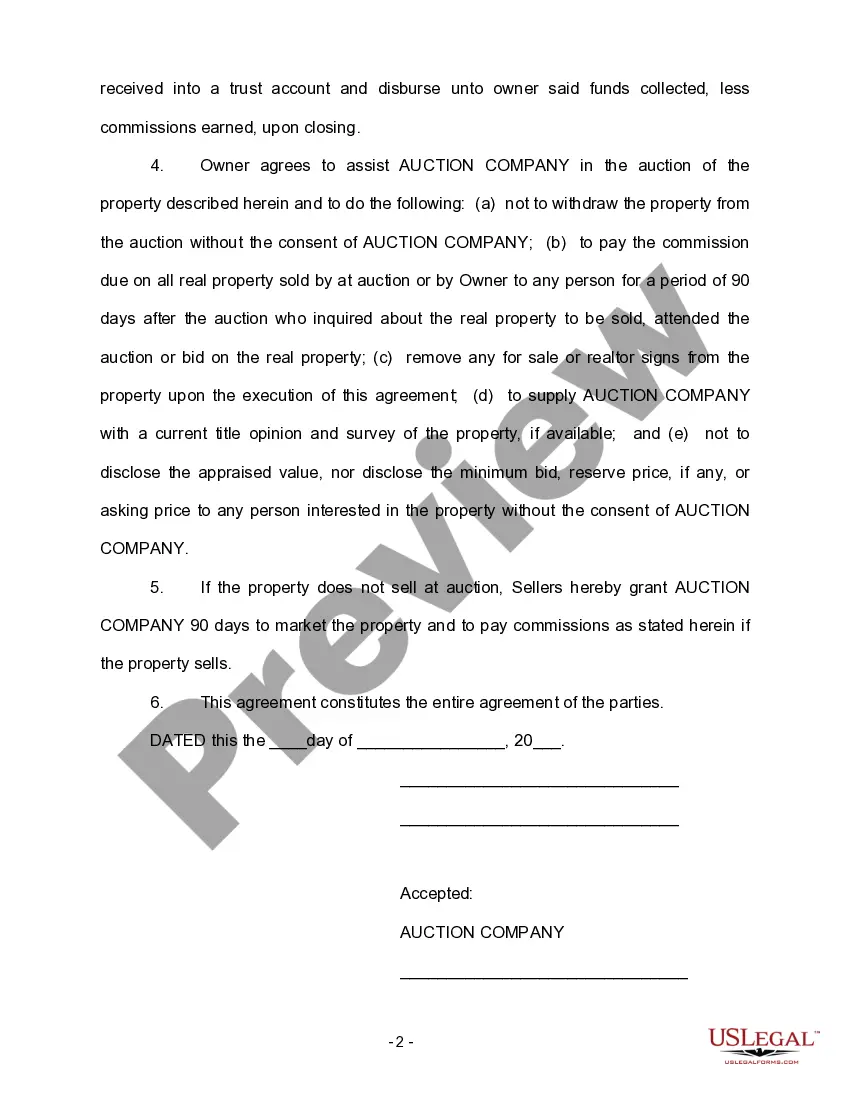
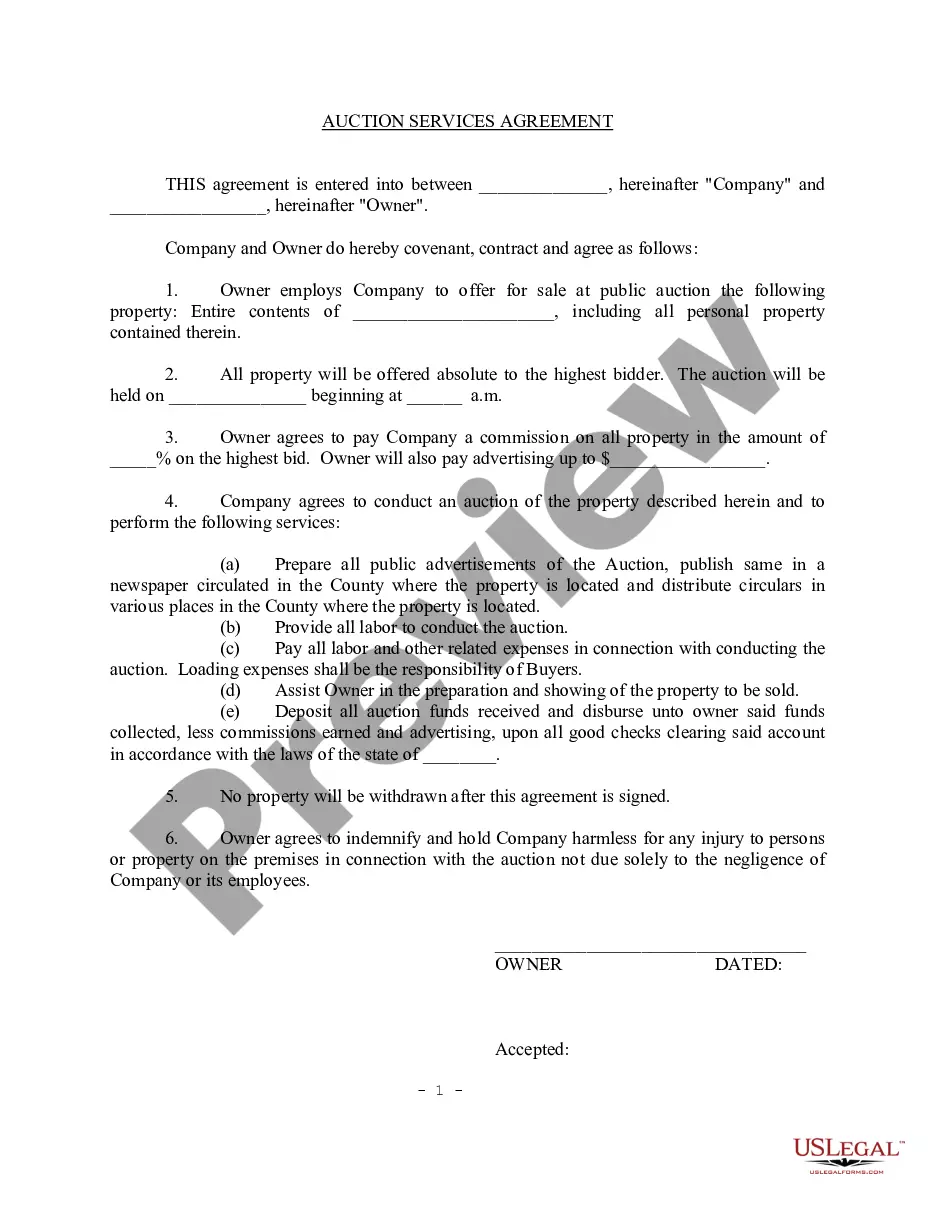
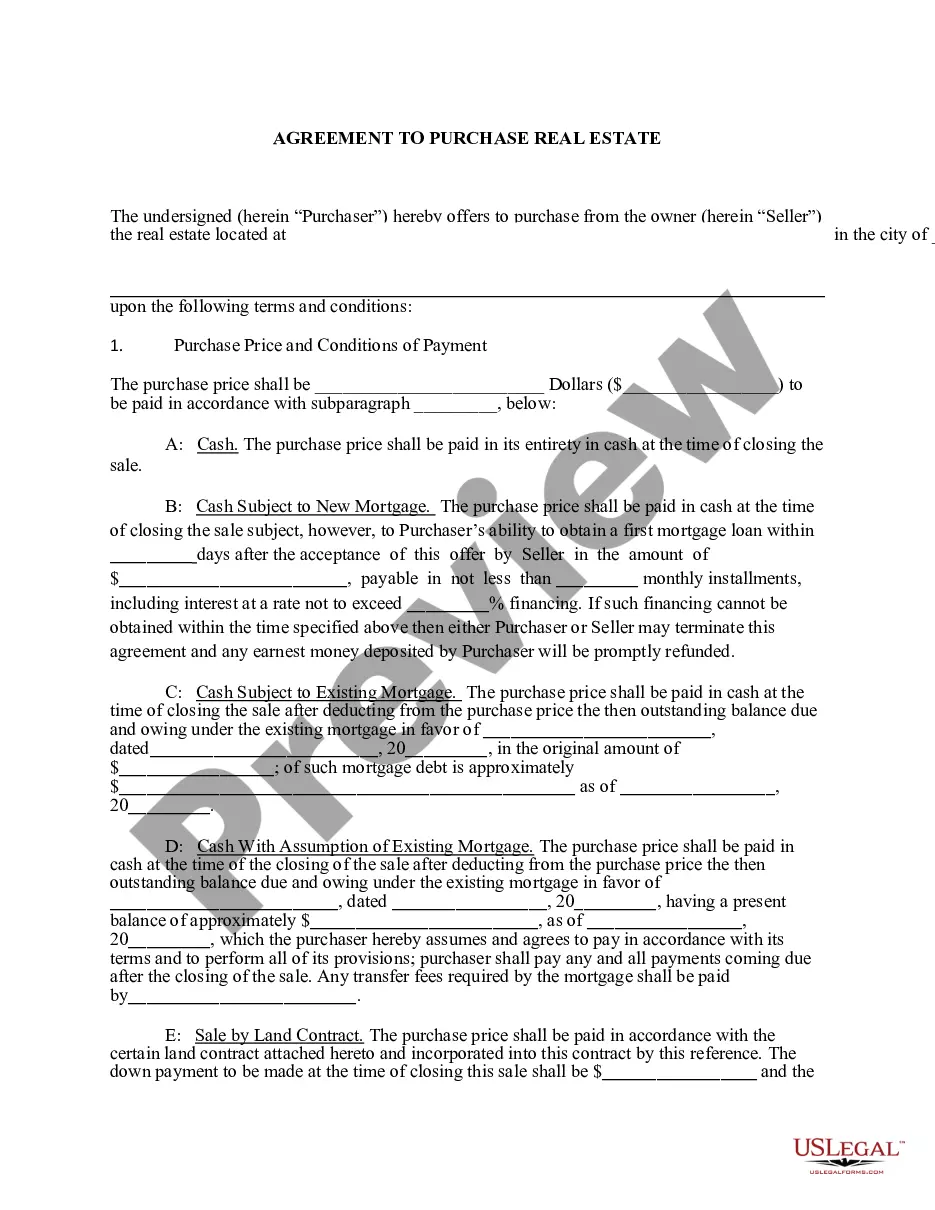
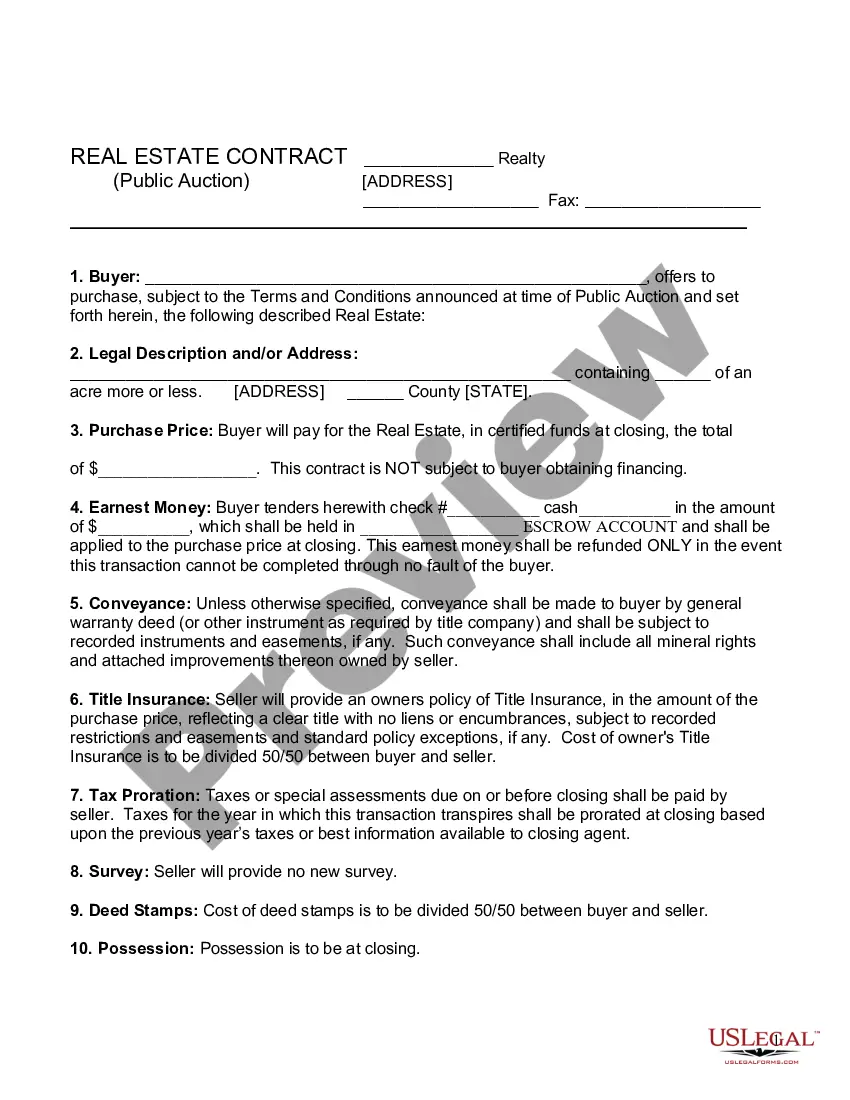
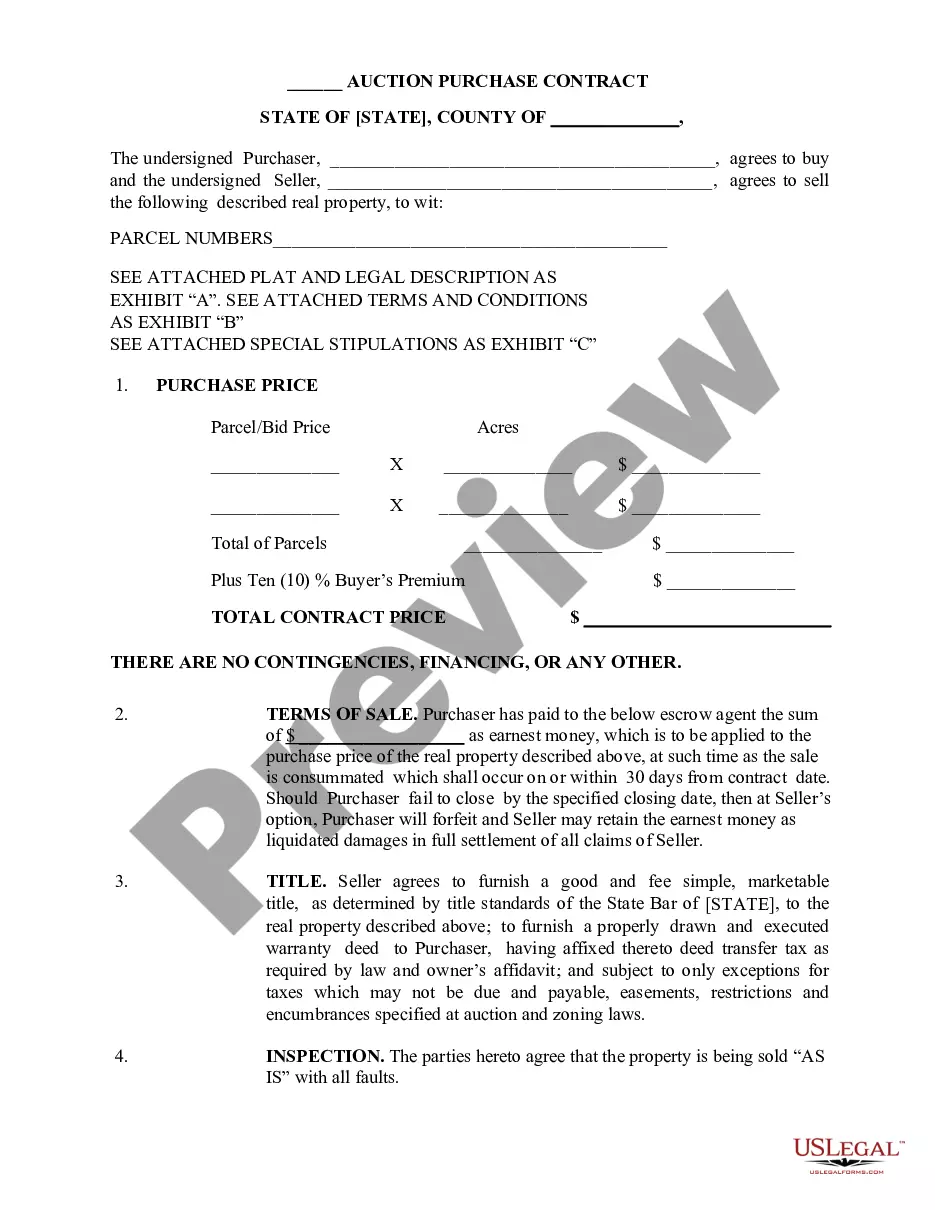
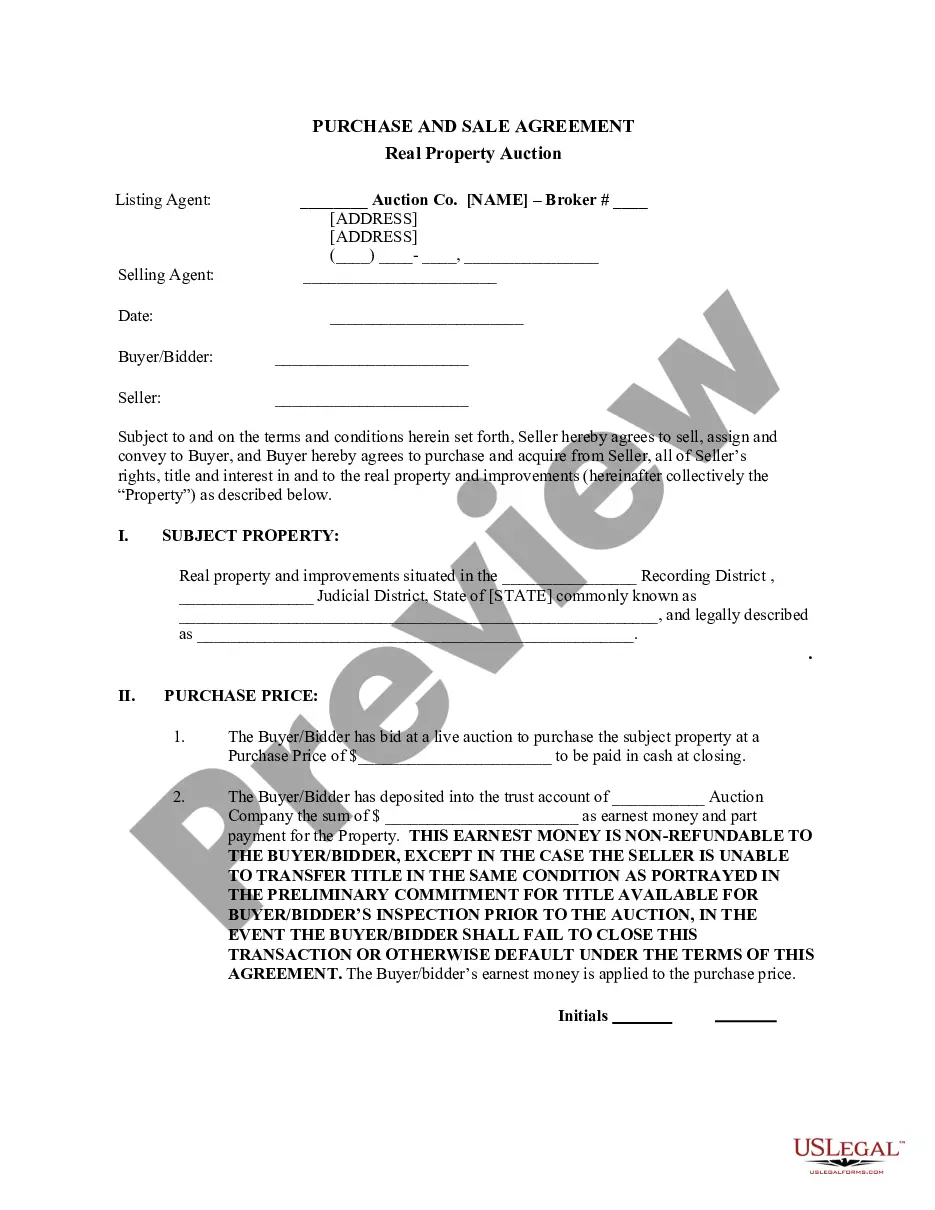
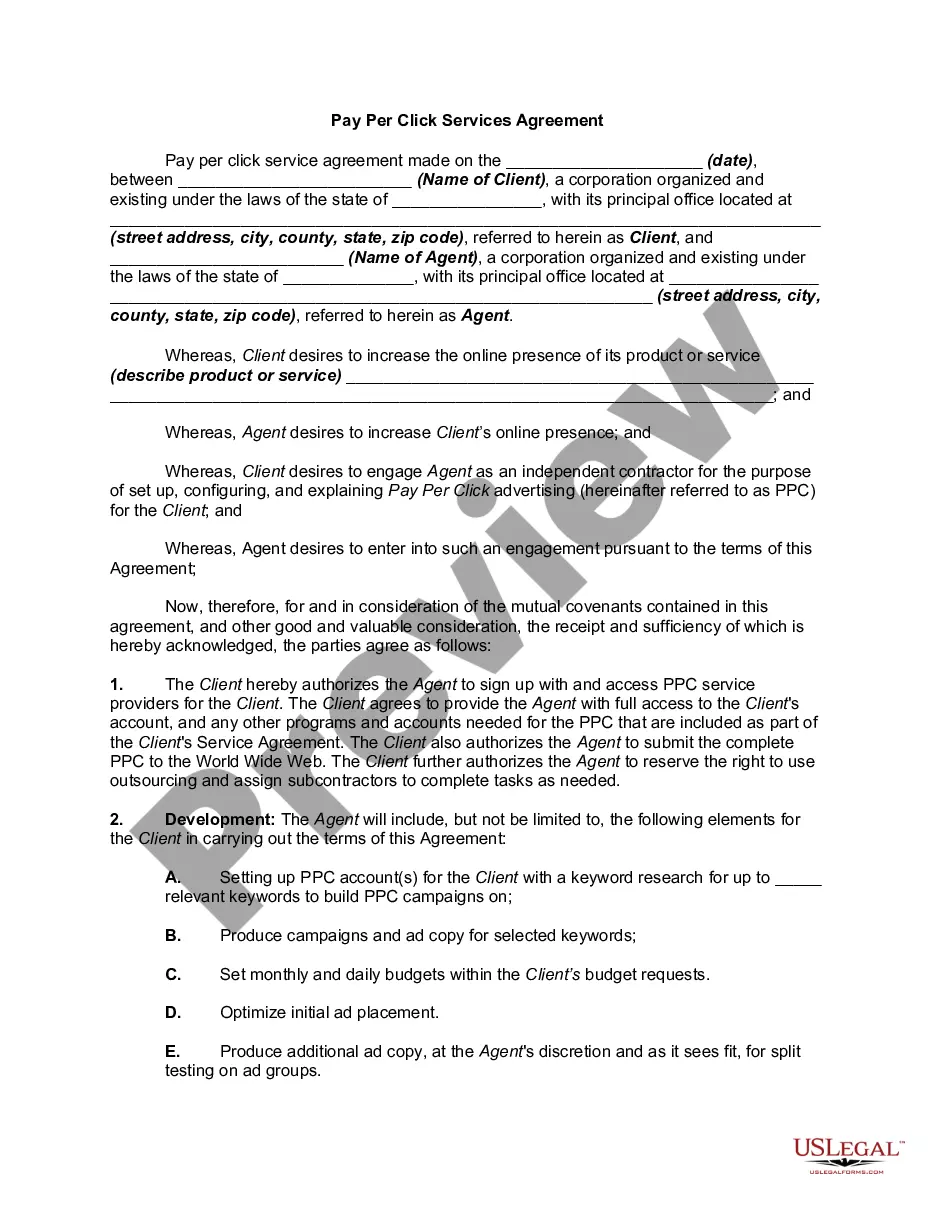
This form is an Auction Services Agreement. This agreement is between an auction company and the owner. The owner employs the auction company to offer for sale at a public auction the real property described in the form. The form also provides that the document constitutes the entire agreement between the parties.
Maryland Auction of Real Property Agreement
Instant download
Description
Free preview


How to fill out Auction Of Real Property Agreement?
US Legal Forms - one of the most important collections of legal forms in the United States - provides a variety of legal document templates that you can download or create.
By using the website, you can find thousands of forms for business and personal purposes, organized by categories, states, or keywords. You can locate the latest forms such as the Maryland Auction of Real Property Agreement within minutes.
If you already hold a membership, Log In and download the Maryland Auction of Real Property Agreement from your US Legal Forms library. The Download button will appear on every form you view. You can access all previously downloaded forms in the My documents section of your account.
Edit. Fill out, modify, and print and sign the downloaded Maryland Auction of Real Property Agreement.
Every template you add to your account has no expiration date and is yours permanently. So, if you want to download or print another copy, just go to the My documents section and click on the form you desire. Access the Maryland Auction of Real Property Agreement with US Legal Forms, the largest collection of legal document templates. Utilize thousands of professional and state-specific templates that meet your business or personal needs.
- If you want to use US Legal Forms for the first time, here are easy instructions to help you begin.
- Ensure you have selected the correct form for your city/region. Click the Preview button to review the content of the form. Check the form overview to confirm you have chosen the appropriate form.
- If the form does not meet your requirements, use the Search field at the top of the screen to find one that does.
- Once you are satisfied with the form, confirm your selection by clicking the Purchase now button. Then, select the pricing plan you want and provide your information to register for an account.
- Complete the payment. Use your credit card or PayPal account to finalize the transaction.
- Choose the format and download the form to your device.
Form popularity
FAQ
A notice of lien of judgment for unpaid taxes in Maryland serves as a public record indicating that a taxpayer owes taxes. This notice can affect your credit and property ownership, as it makes the debt known to other creditors. To resolve issues related to property liens, consider utilizing the Maryland Auction of Real Property Agreement. This agreement can guide you through the process of managing your property rights effectively.
The redemption period in Maryland typically lasts six months following a tax sale or foreclosure auction. During this time, the original owner has the right to reclaim their property by paying off any outstanding debts. This period is vital for those involved in a Maryland Auction of Real Property Agreement, as it provides a window for owners to recover their assets. Familiarizing yourself with this period can empower you to make informed decisions.
To avoid capital gains tax in Maryland, consider strategies such as reinvesting the proceeds into another property or taking advantage of tax exemptions. If you are selling property resulting from a Maryland Auction of Real Property Agreement, consult a tax advisor who can guide you through potential deductions. Understanding your tax obligations and opportunities can significantly impact your profits from the sale. Knowledge is your best ally in minimizing taxes.
In Maryland, the state can collect property taxes for the last three years. This means that if you owe taxes on a property sold at a Maryland Auction of Real Property Agreement, the state can pursue collection for those debts within this timeframe. It's important to stay updated on your tax obligations to avoid surprises during the auction process. Remember, being informed can help you make better decisions regarding your property.
The auction process begins with advertising the property, allowing potential buyers to gather information about the sale. When the auction starts, bidders place their bids, and the highest bid at the end wins the property. The Maryland Auction of Real Property Agreement formalizes the sale contract, detailing all necessary terms and conditions. To navigate this process smoothly, consider using platforms like USLegalForms, which provide resources and templates to prepare you for each step.
In Maryland, property code 8-119 outlines the regulations related to the sale of real property through public auction. This code is crucial for those engaging in a Maryland Auction of Real Property Agreement, as it provides the legal framework governing the auction process. Familiarizing yourself with this code ensures compliance and protects your rights during the auction. Consult legal resources or professionals if you need clarification on specific provisions.
When selling a property in Maryland, a landlord generally must provide tenants with reasonable notice before showings. This period can be defined in the lease agreement, but usually, a 24 to 48 hour notice is standard practice. By respecting this notice, landlords maintain good relationships while complying with legal requirements. Always refer to your lease for specific terms.
House auctions in Maryland typically involve a public bidding process where homes are sold to the highest bidder. Buyers can participate in-person or online, depending on the auction format. The Maryland Auction of Real Property Agreement outlines the terms and conditions of the sale, ensuring clarity for both buyers and sellers. Familiarizing yourself with these processes can enhance your auction experience.
Yes, a tenant can refuse viewings in Maryland under certain conditions. Generally, landlords must provide reasonable notice before entering the property for showings, and tenants have the right to privacy. However, if your landlord needs to show the property due to a sale, it's important to communicate openly. Understanding your rights helps maintain a positive relationship with your landlord.
A buyer broker agreement is not legally required in Maryland, but it can greatly benefit you during the home buying process. This agreement formalizes the relationship between you and your agent, ensuring their loyalty and assistance. It can also help you navigate the Maryland Auction of Real Property Agreement more effectively. Consider discussing this option with your real estate professional.