Maryland Residential Rental Lease Agreement
What this document covers
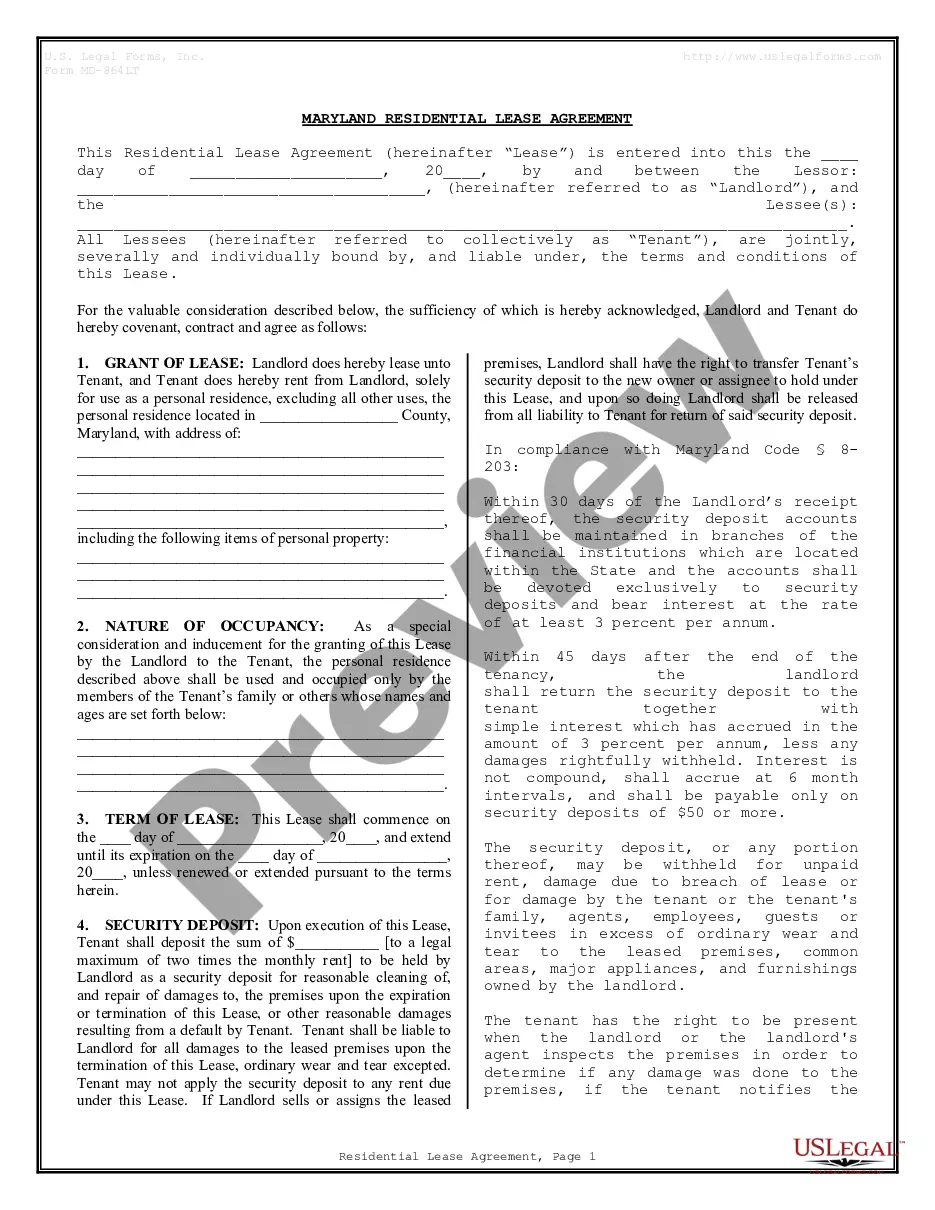
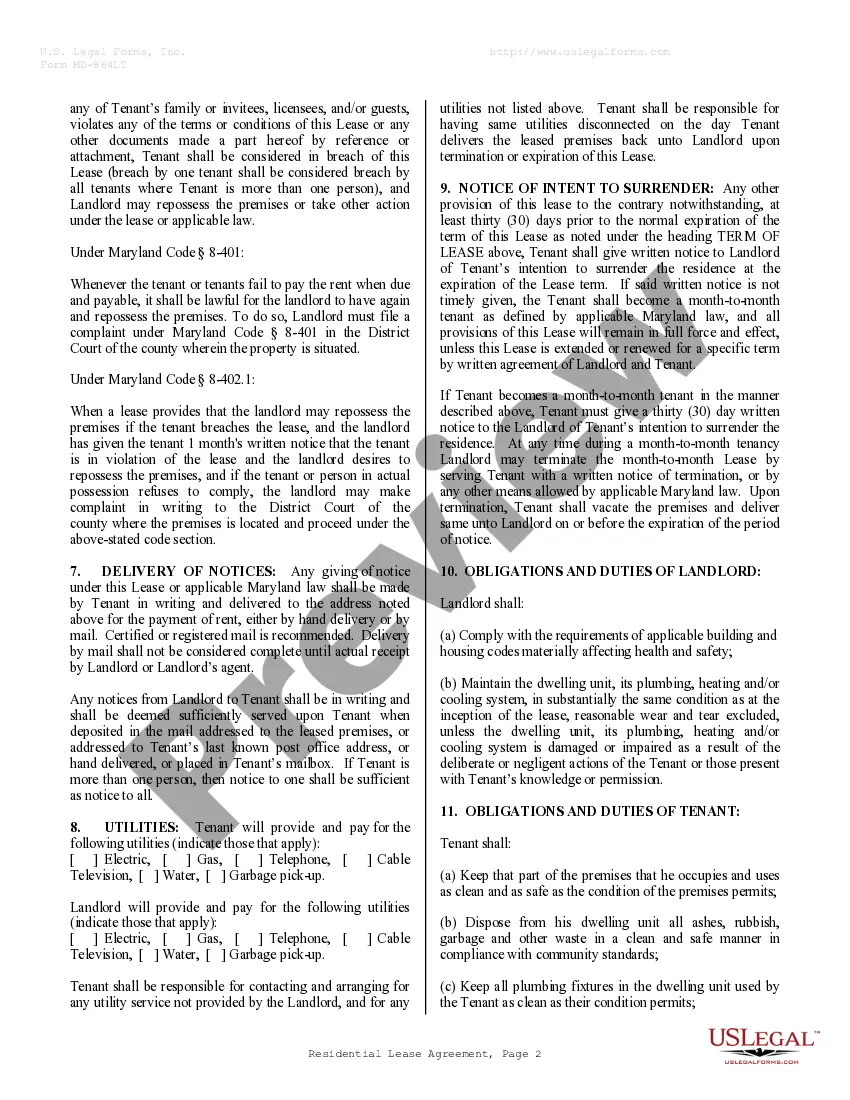
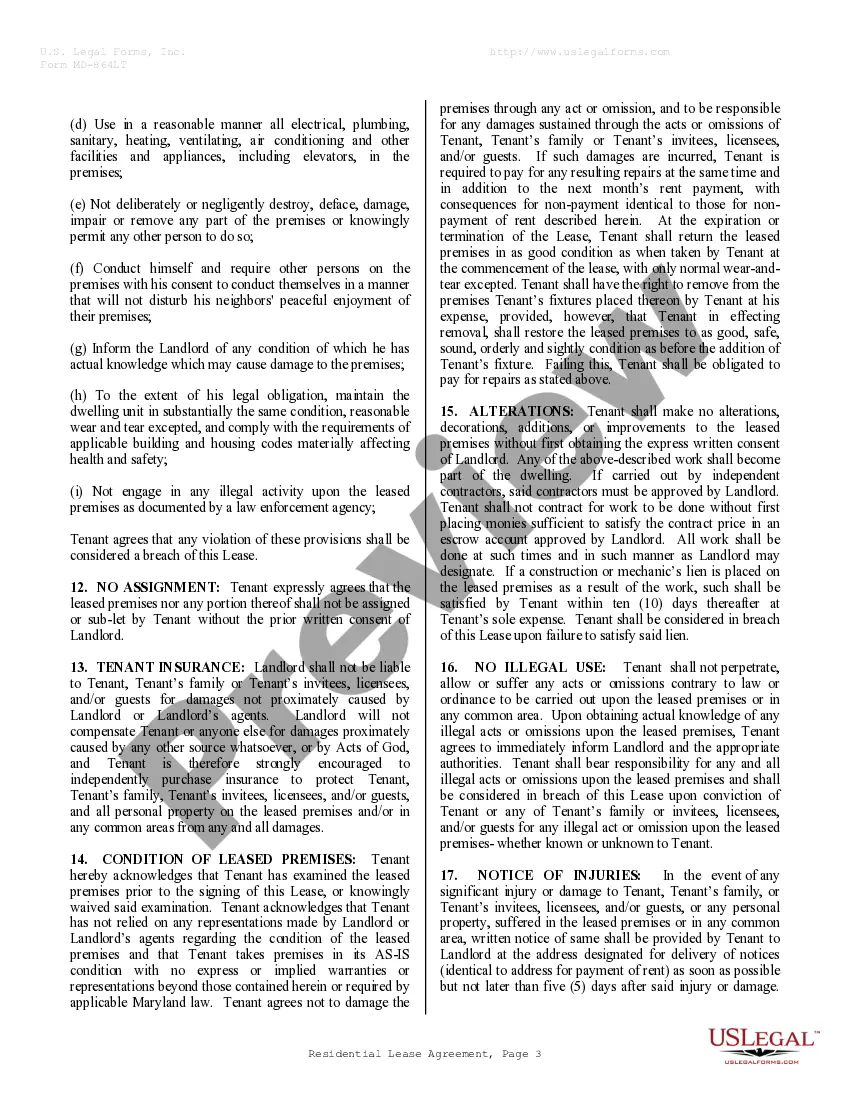
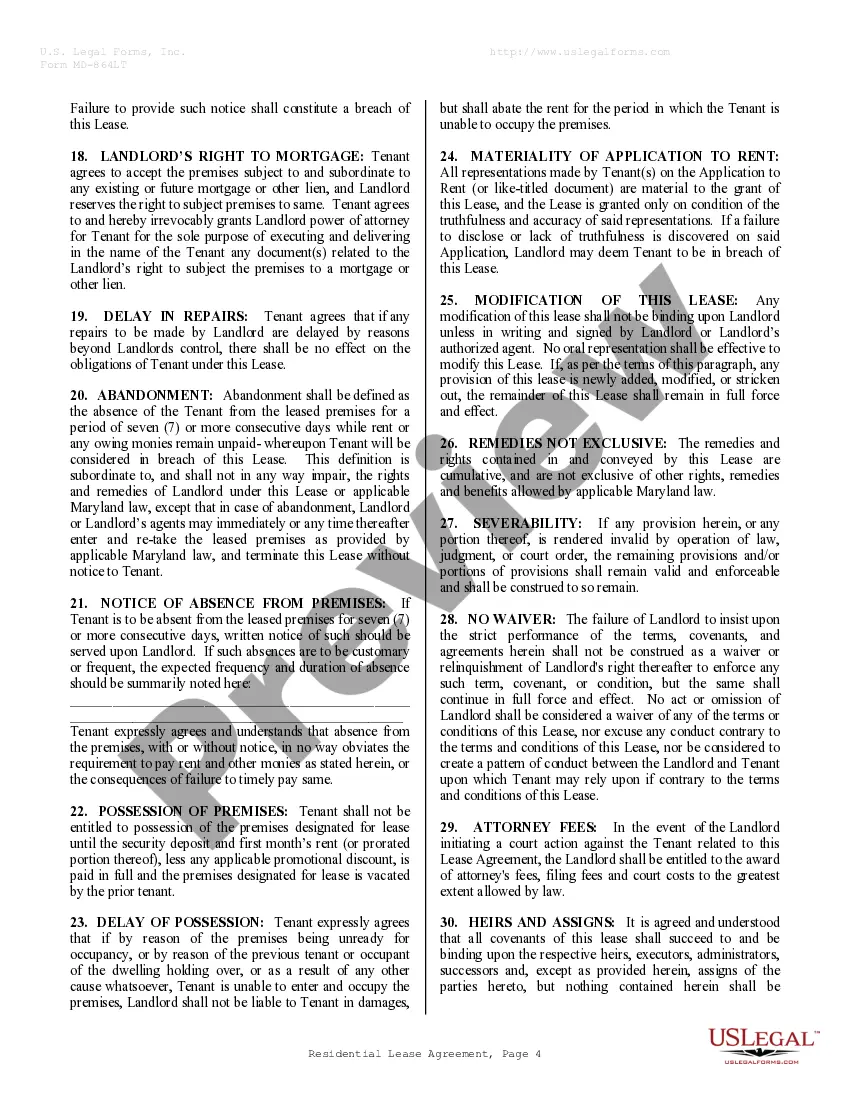
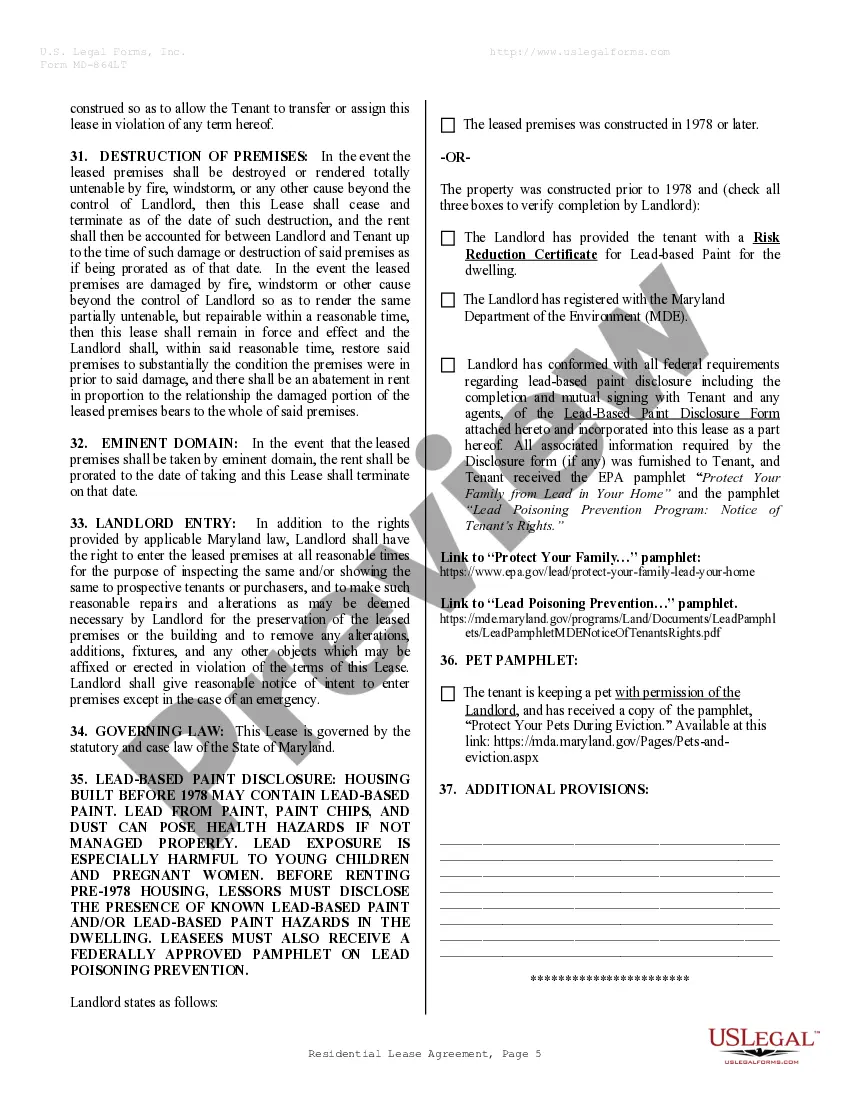
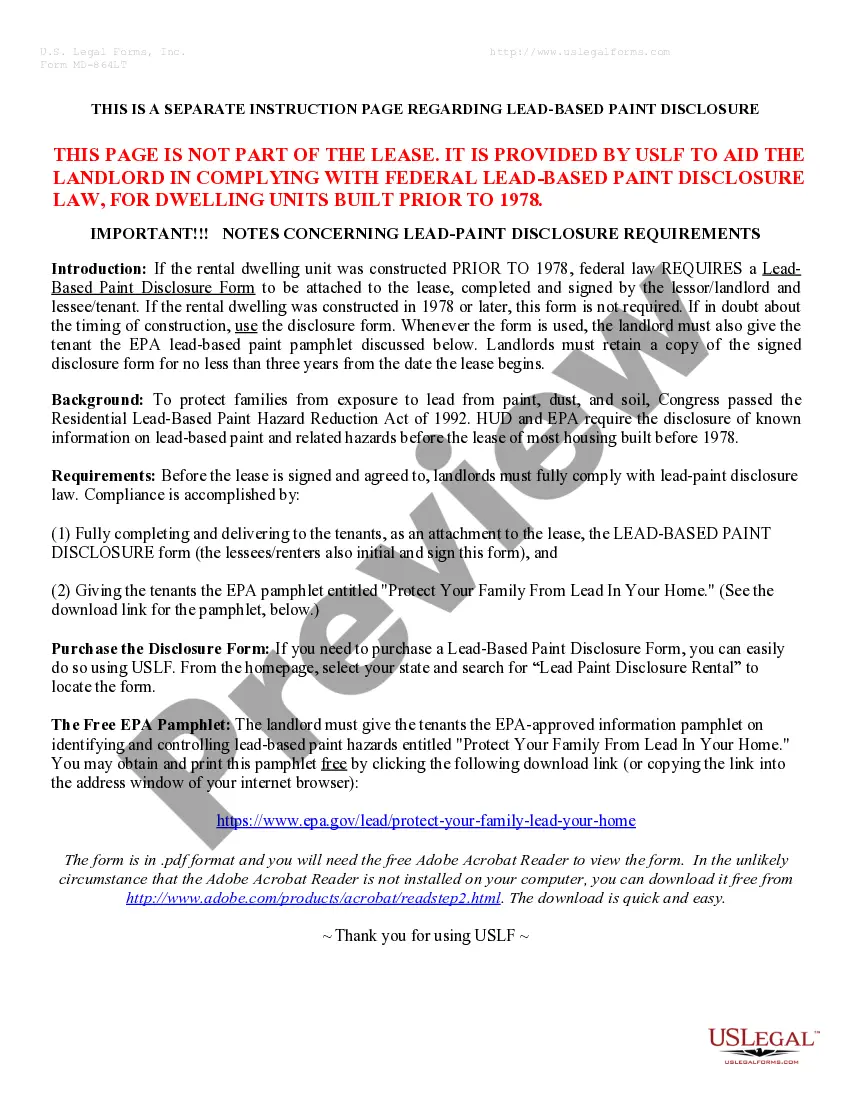
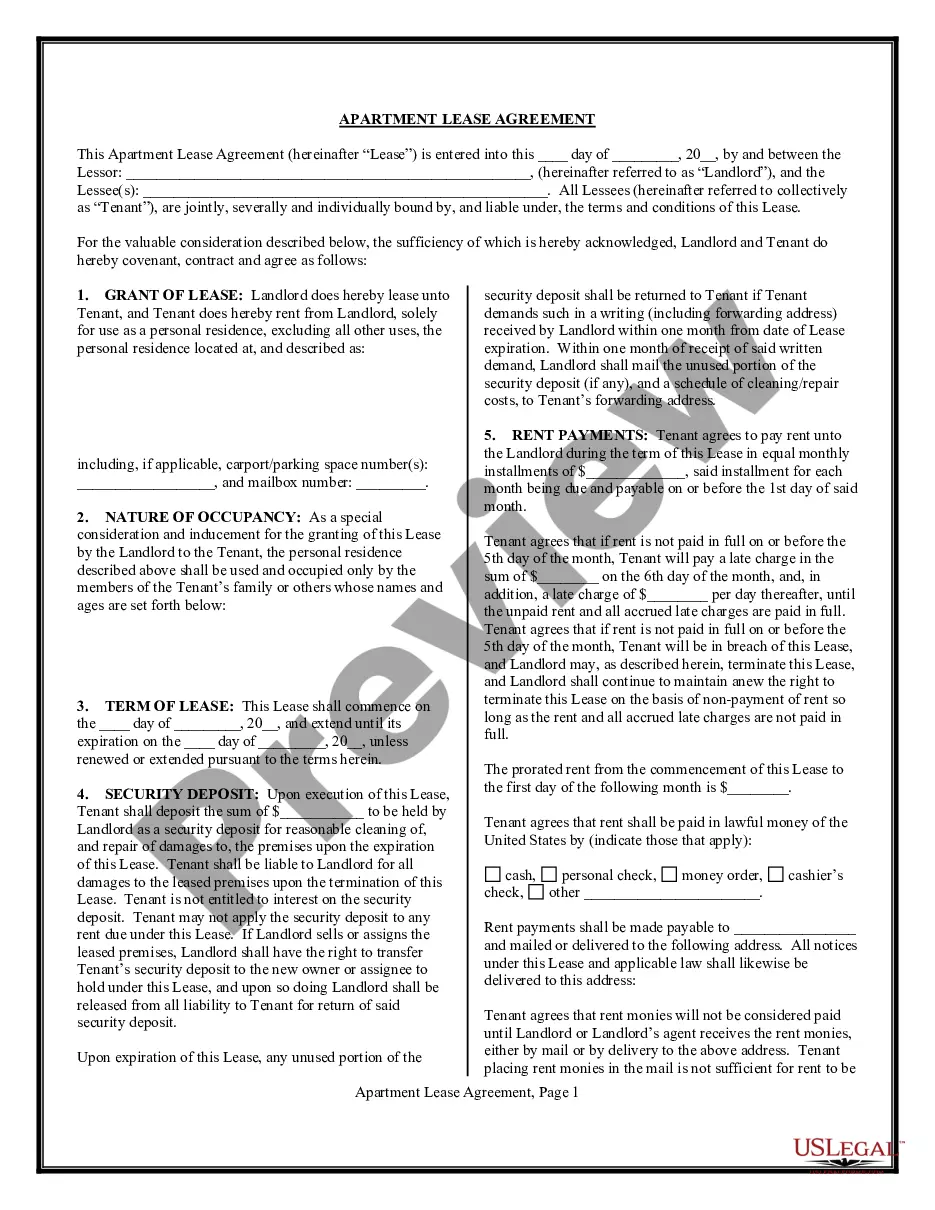
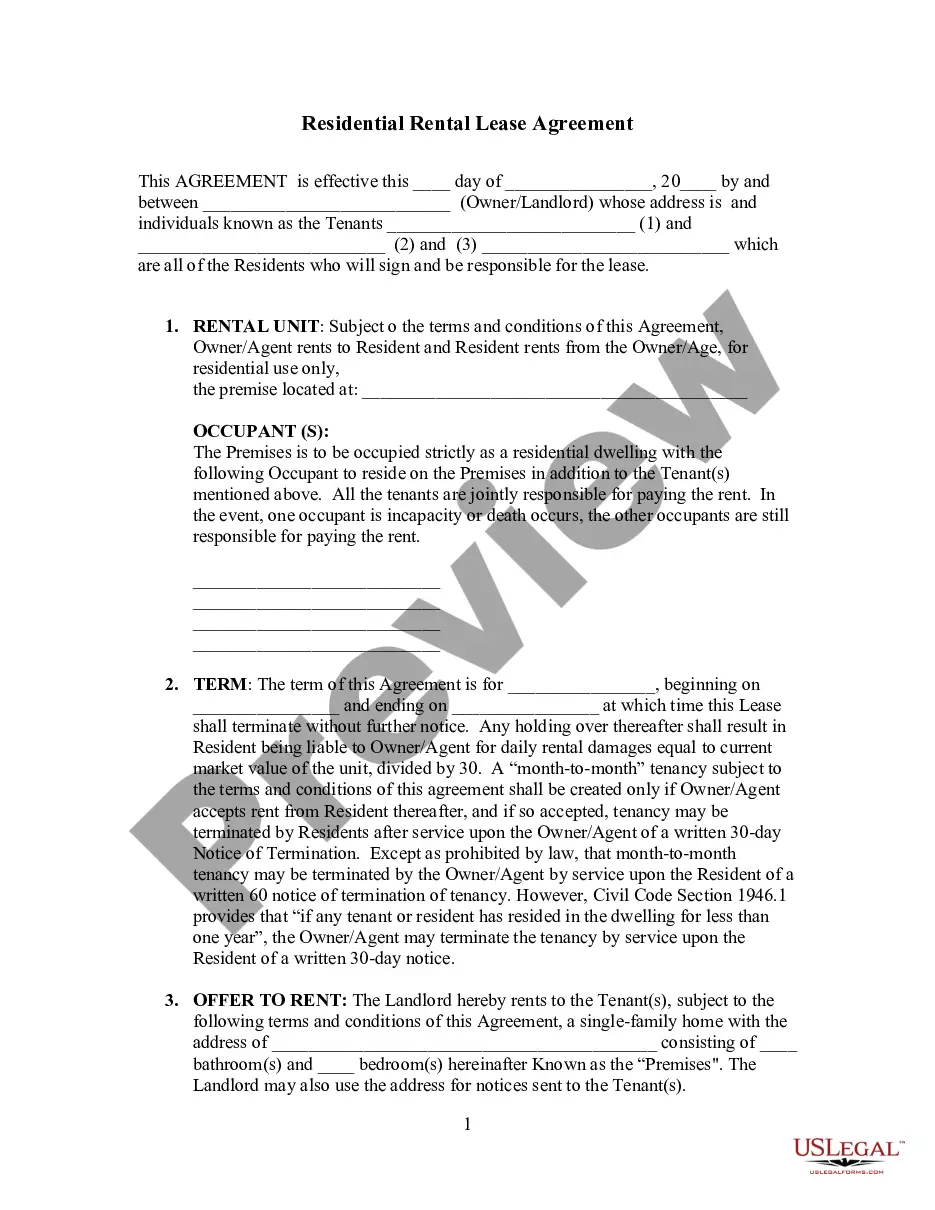
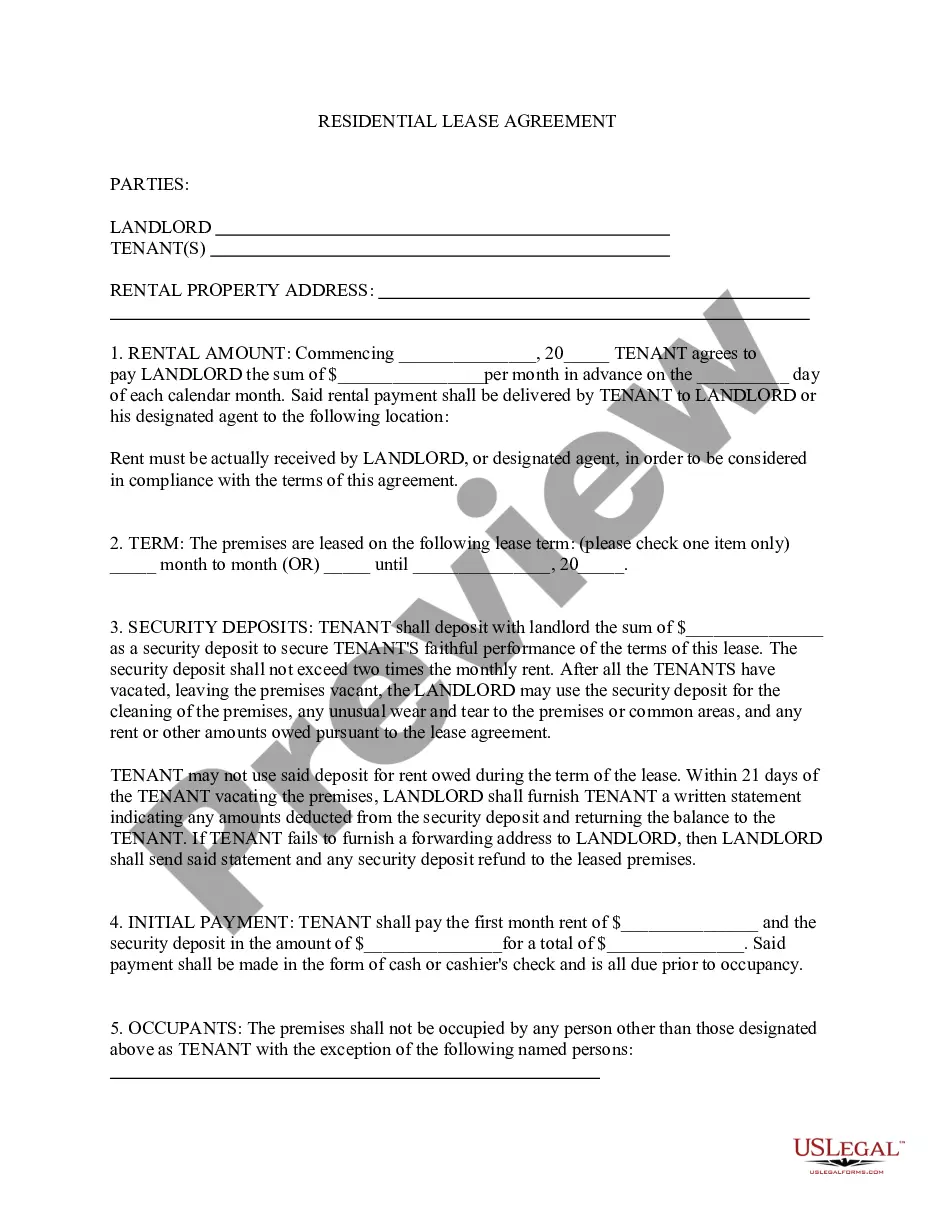
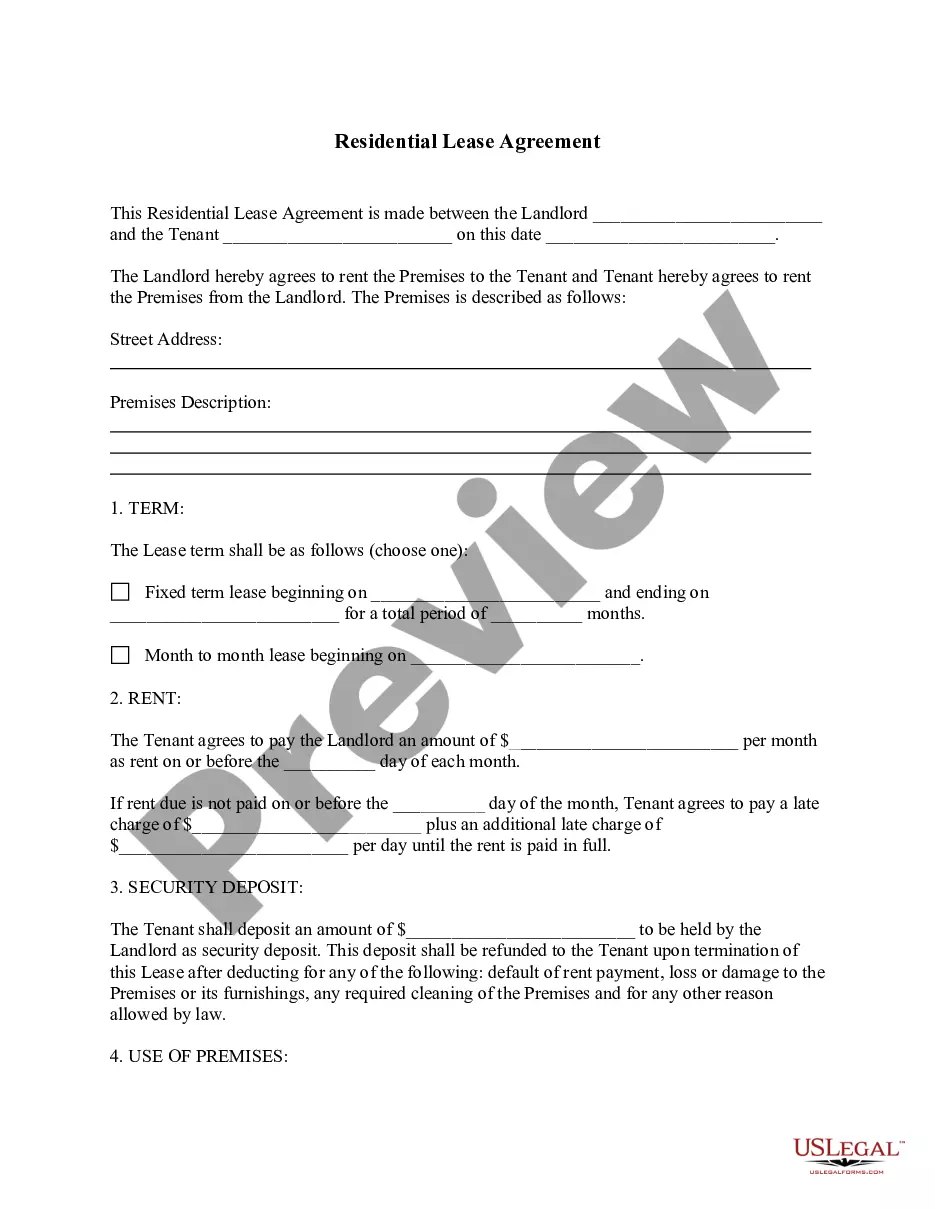
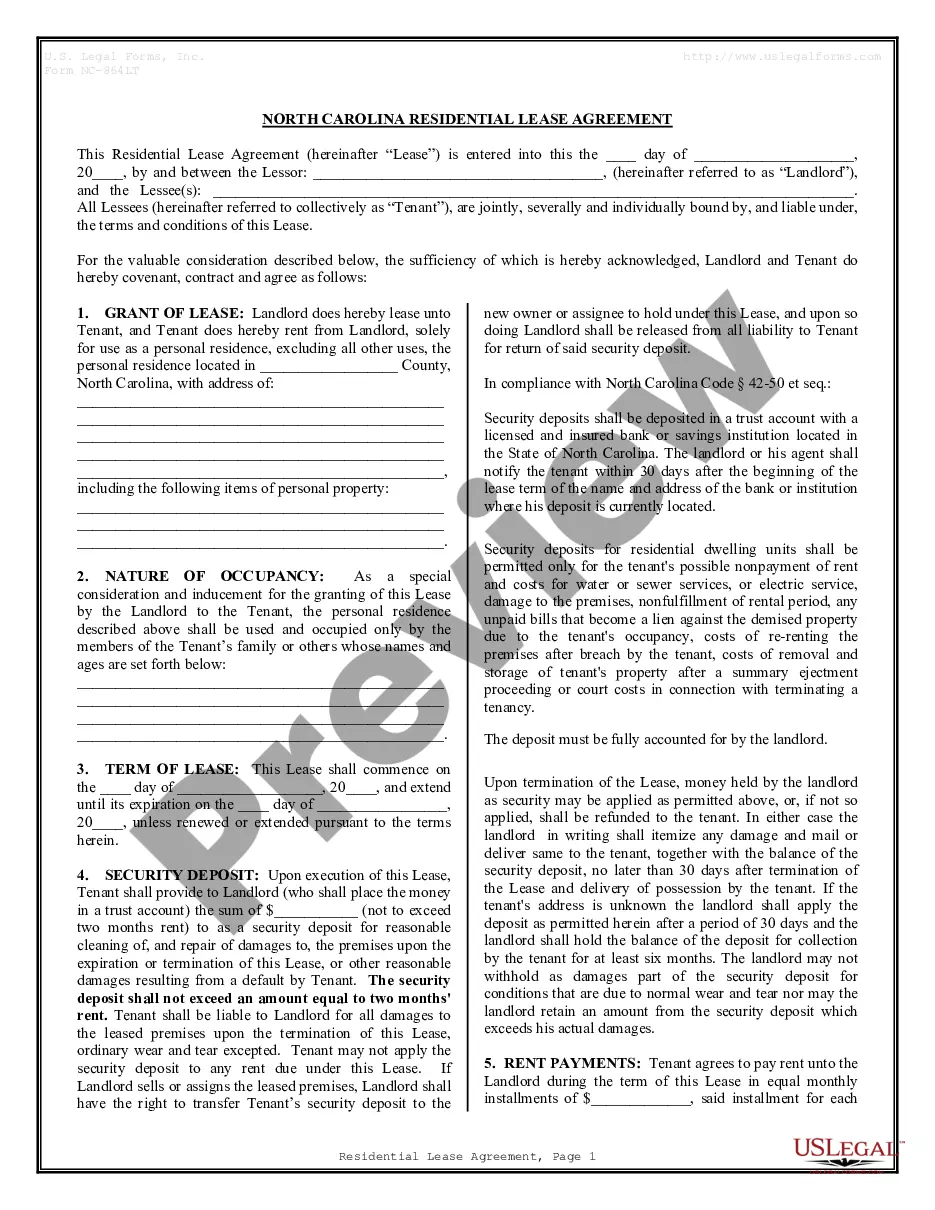
The Residential Rental Lease Agreement is a legally binding contract between a landlord and tenant outlining the terms and conditions of renting a residential property. This form is specifically designed for a fixed term, such as six months or one year, and includes essential provisions that may be customized based on the unique agreement between both parties. Unlike other rental agreements, this form provides specific legal language tailored to conform to laws in your state, ensuring clarity and protection for both the landlord and tenant.
Key components of this form
- Identification of parties involved: Clear information about the landlord (Lessor) and tenant (Lessee).
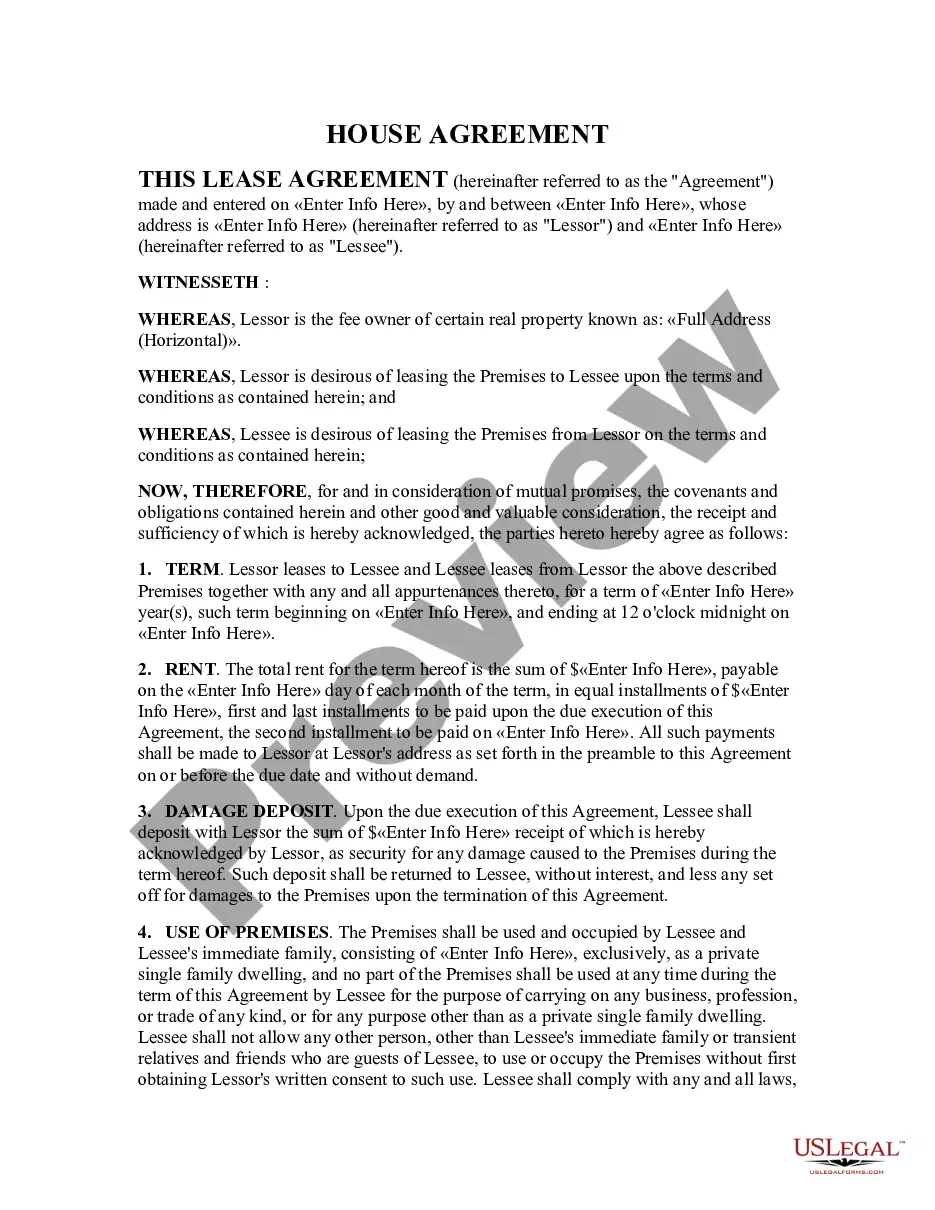
- Term of lease: Specifies the duration of the tenancy and the commencement date.
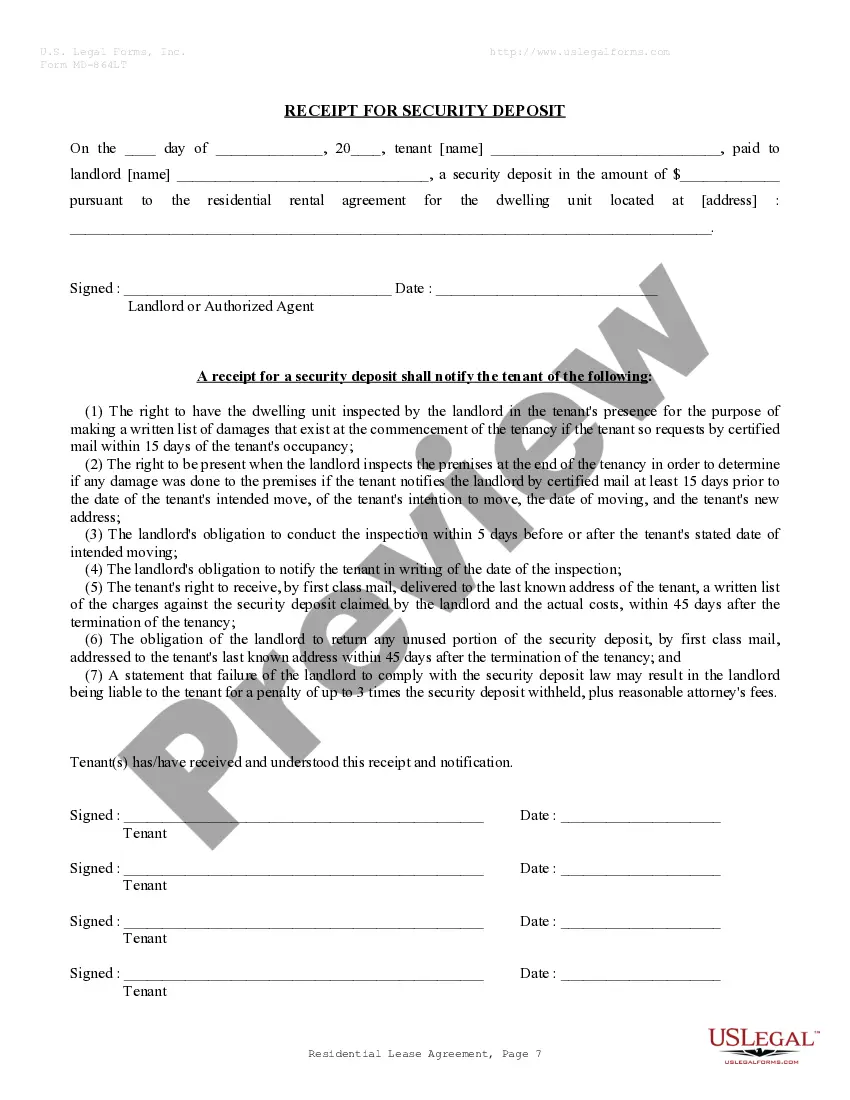
- Security deposit: Details on the required security deposit amount, return conditions, and handling of funds.
- Rent payments: Outlines the amount due, payment methods, and consequences for late payments.
- Utilities: Clarifies which party is responsible for paying various utility services.
- Termination notice: Requirements for providing written notice of intent to surrender the property.
Common use cases
This Residential Rental Lease Agreement is useful in various situations, such as when a landlord wants to formalize the rental of a property to new tenants or when tenants seek a clear understanding of their rights and responsibilities while occupying a rental unit. It's suitable for both individual landlords and property management companies engaging in residential leasing, ensuring all legal aspects are addressed from the start of the tenancy.
Who can use this document
This form is intended for:
- Landlords seeking to rent out residential properties to tenants.
- Tenants looking to secure a rental property with a clear, enforceable agreement.
- Property managers who need to standardize lease agreements for multiple properties.
Completing this form step by step
- Identify the parties: Fill in the names and contact information for both the landlord and tenant(s).
- Specify the property: Provide the complete address of the rented premises and any included furnishings.
- Enter term details: Clearly outline the lease term, including start and end dates.
- Determine rent and deposit: State the monthly rent amount and the security deposit needed.
- Sign and date: Both parties should sign and date the agreement to confirm acceptance of the terms.
Does this form need to be notarized?
Notarization is not commonly needed for this form. However, certain documents or local rules may make it necessary. Our notarization service, powered by Notarize, allows you to finalize it securely online anytime, day or night.
Avoid these common issues
- Failing to include all necessary parties, which may cause confusion regarding responsibility.
- Not specifying the correct lease term, leading to potential disputes over tenancy duration.
- Incorrectly calculating the security deposit limit as per state law.
- Neglecting to clarify what utilities each party is responsible for, causing billing issues later.
- Overlooking necessary signatures from all tenants or the landlord, making the lease unenforceable.
Advantages of online completion
- Convenience: Easily download and fill out the form from the comfort of your home.
- Editability: Modify the agreement to meet your specific needs before finalizing.
- Reliability: The form is crafted by licensed attorneys, ensuring it is legally sound.
- Time-saving: Quickly generate necessary legal documents without waiting for legal consultations.
Form popularity
FAQ
Because few tenants are able to make the ending of the lease coincide with the purchase of a house, unless you reach an agreement with your landlord or there is a cancellation section in your lease, you will be responsible for the rent which is due for the remainder of the lease.
A lease is automatically void when it is against the law, such as a lease for an illegal purpose. In other circumstances, like fraud or duress, a lease can be declared void at the request of one party but not the other.
The lease is mutually beneficial. A tenant can't stop paying rent or vacate the property during the lease term this is a violation of the agreement.A rental agreement, by contrast, is a month-to-month agreement. At the end of each 30-day period, the landlord and tenant are both free to change the terms.
A lease can be written or verbal, but a verbal lease can be very difficult to enforce.Most leases are fairly standard and cover basic components such as rent amount, duration of lease term, resposiblities of each party and penalties for not following the terms.
The Lease Must be in Writing It does not matter if the lease is handwritten or typed.
A written agreement can act as a roadmap for the landlord-tenant relationship, especially if a dispute arises. Also, real estate (land) leases for more than one year must be in writing. If a lease for over one year is not in writing, it will generally not be enforceable in court.
The lease becomes legally binding when all parties have signed: the landlord and all tenants living in the unit who are 18 and older. If you're worried about situations where a lease needs to end early, learn about breaking a lease and grounds for eviction.
The difference between lease and rent is that a lease generally lasts for 12 months while a rental agreement generally lasts for 30 days.That means the landlord can't raise the rent without your written consent or evict you without cause, and you can't stop paying rent or break the lease without consequence.
Collect each party's information. Include specifics about your property. Consider all of the property's utilities and services. Know the terms of your lease. Set the monthly rent amount and due date. Calculate any additional fees. Determine a payment method. Consider your rights and obligations.