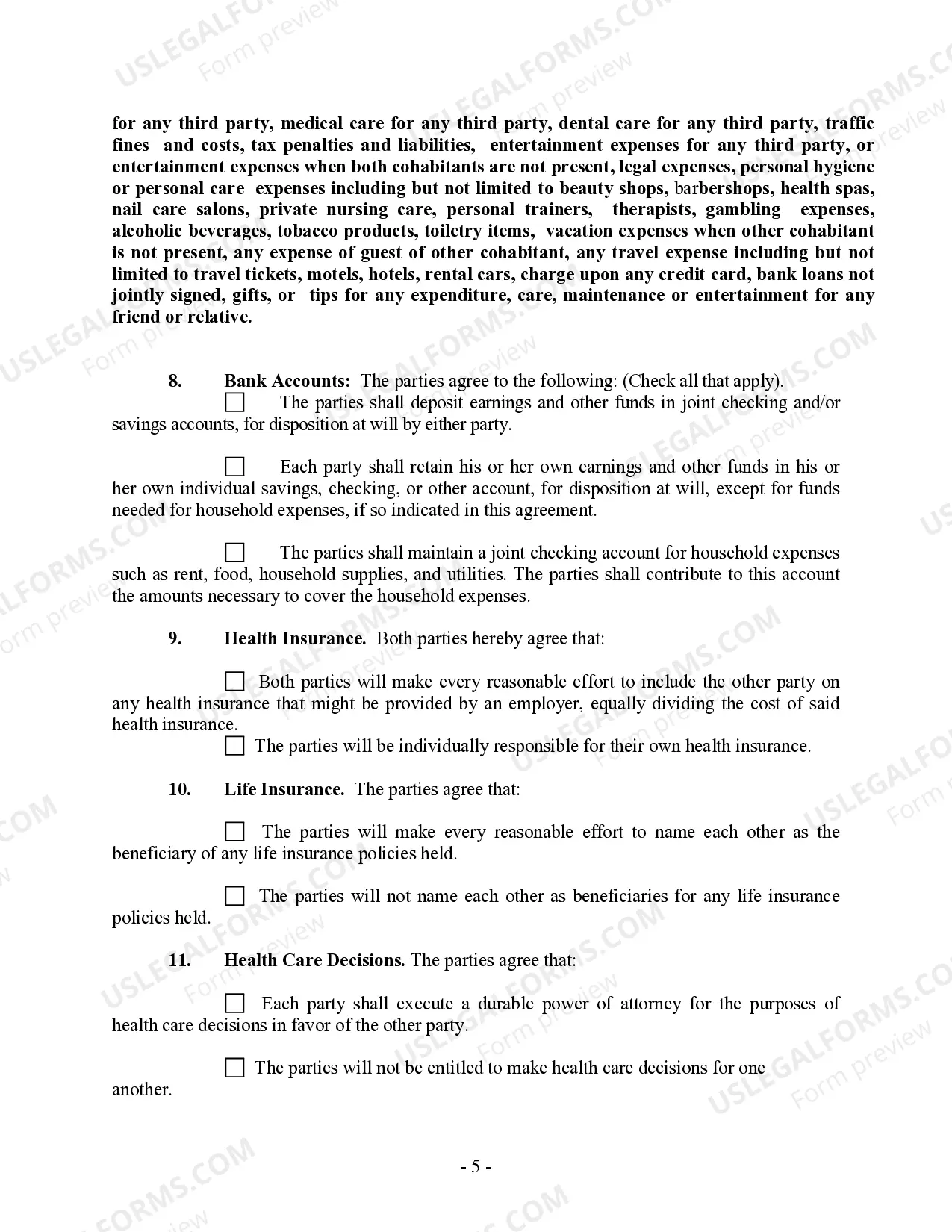
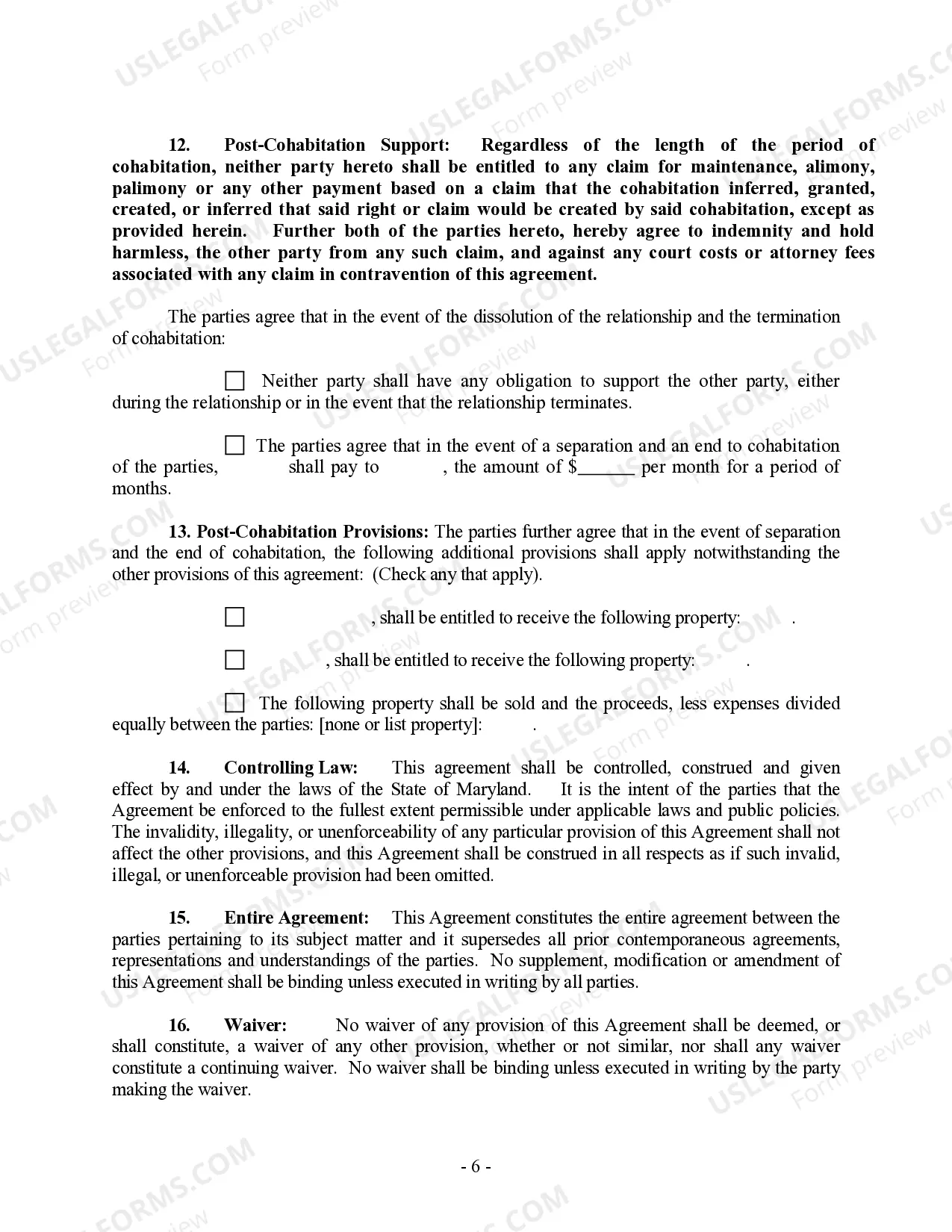
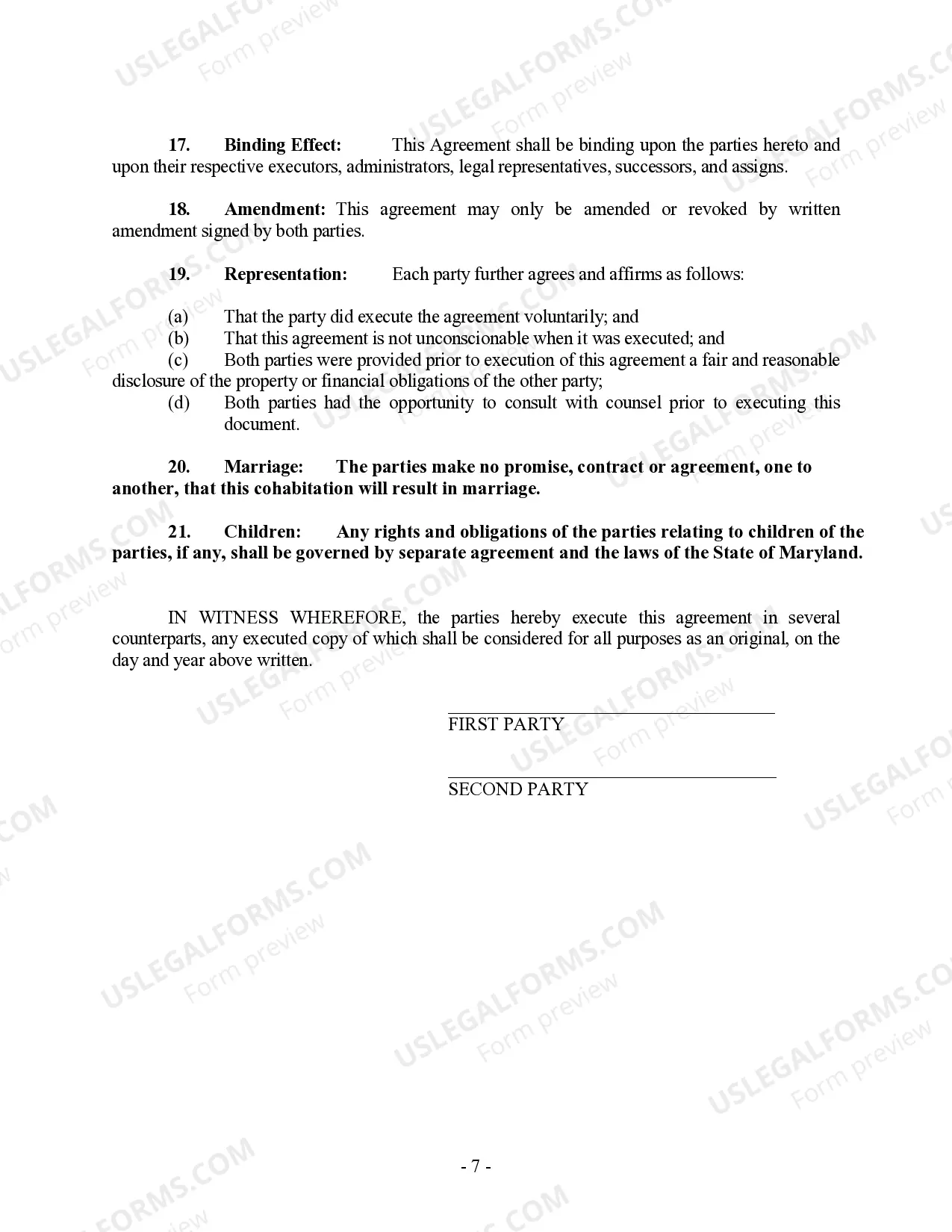
The Non-Marital Cohabitation Agreement helps clarify what is expected of each party. It contains provisions relating to expenses, assets and what happens if the parties discontinue the living arrangement, including ownership and division of property acquired during the course of the relationship.
Maryland Non-Marital Cohabitation Living Together Agreement
Instant download
Description
Non-Marital Cohabitation Agreement: Many disputes can arise from forming a living arrangement with another person. Expectations are often not clear causing disharmony and other problems.
Free preview
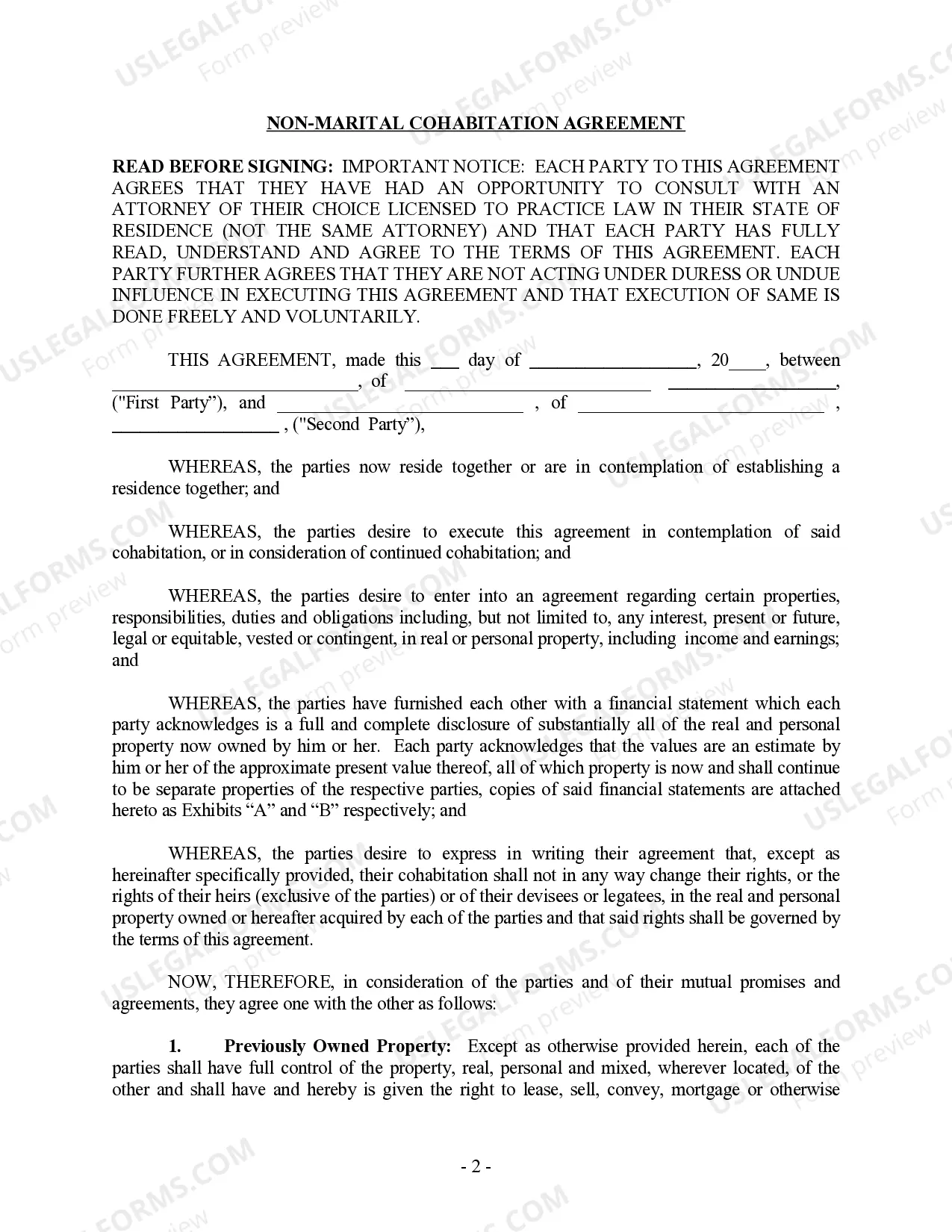
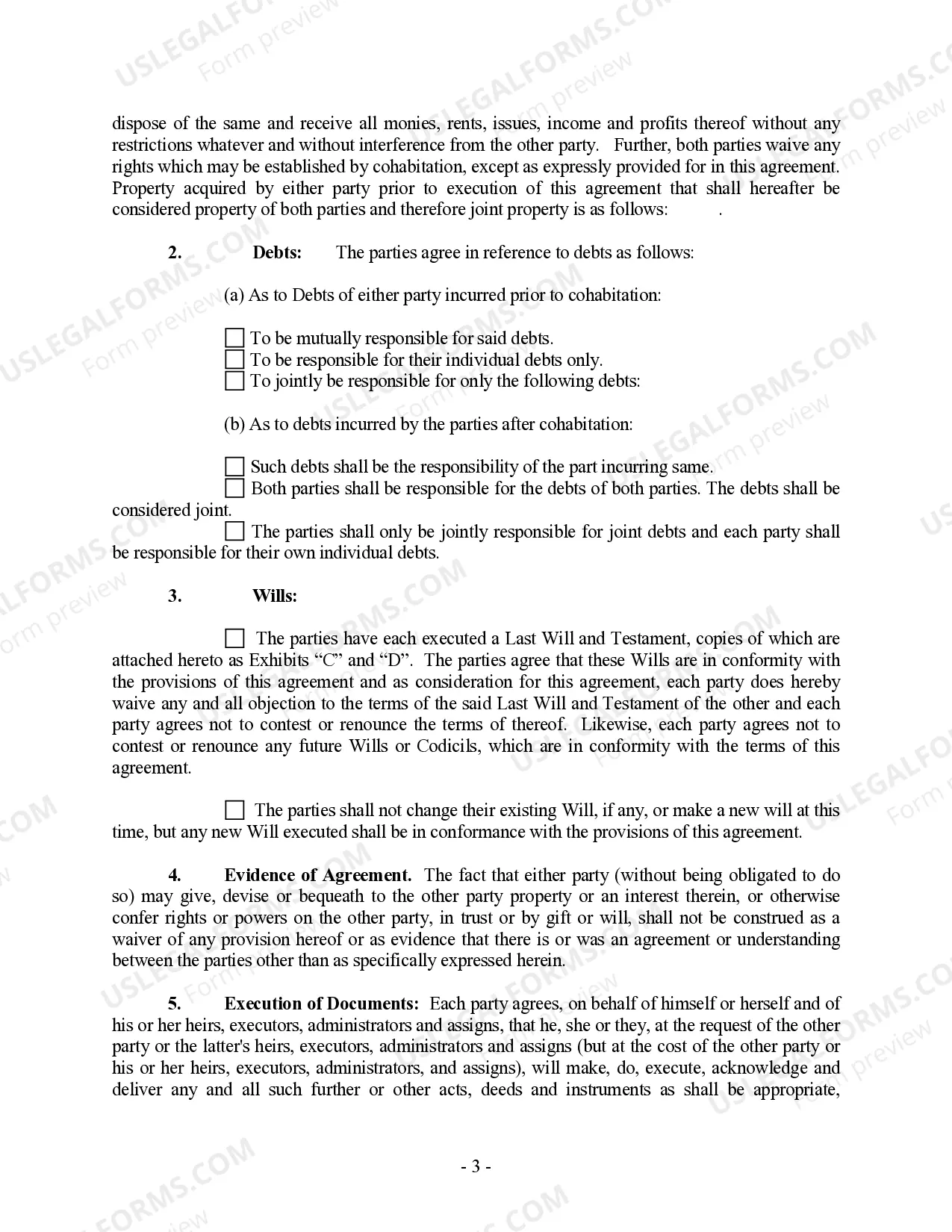
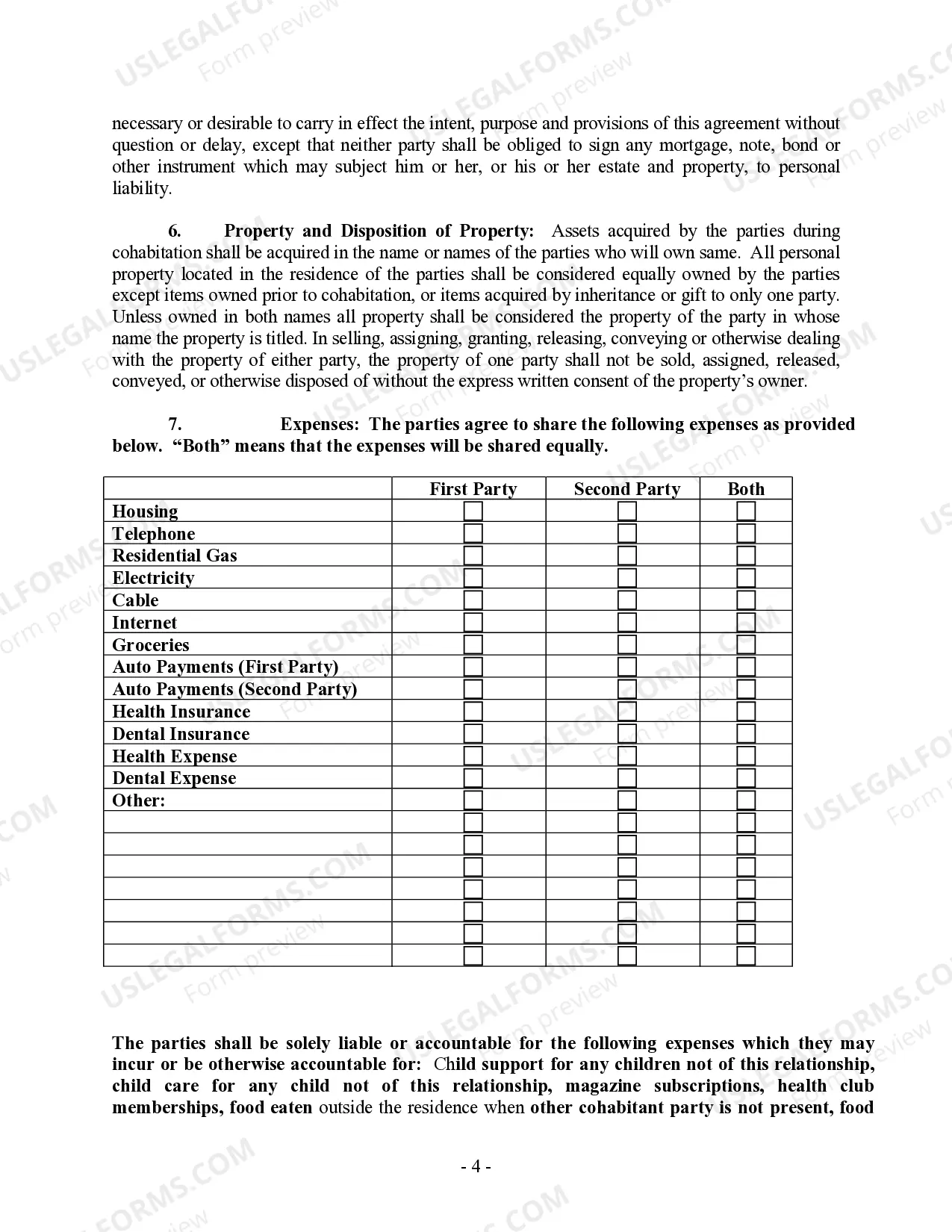




How to fill out Maryland Non-Marital Cohabitation Living Together Agreement?
You are welcome to the greatest legal documents library, US Legal Forms. Here you can get any example such as Maryland Non-Marital Cohabitation Living Together Agreement forms and save them (as many of them as you want/need to have). Prepare official papers with a several hours, instead of days or weeks, without having to spend an arm and a leg on an lawyer. Get your state-specific form in clicks and be assured understanding that it was drafted by our state-certified attorneys.
If you’re already a subscribed consumer, just log in to your account and then click Download next to the Maryland Non-Marital Cohabitation Living Together Agreement you want. Due to the fact US Legal Forms is web-based, you’ll always get access to your downloaded templates, no matter the device you’re utilizing. Find them within the My Forms tab.
If you don't have an account yet, what are you awaiting? Check out our guidelines below to begin:
- If this is a state-specific form, check its applicability in your state.
- View the description (if readily available) to learn if it’s the correct template.
- See a lot more content with the Preview option.
- If the example matches your needs, just click Buy Now.
- To create an account, select a pricing plan.
- Use a card or PayPal account to subscribe.
- Save the template in the format you require (Word or PDF).
- Print the document and complete it with your/your business’s details.
When you’ve completed the Maryland Non-Marital Cohabitation Living Together Agreement, send it to your attorney for verification. It’s an extra step but an essential one for making confident you’re fully covered. Sign up for US Legal Forms now and get access to a large number of reusable samples.
Form popularity
FAQ
Cohabitation is an arrangement where two people are not married but live together. They are often involved in a romantic or sexually intimate relationship on a long-term or permanent basis.More broadly, the term cohabitation can mean any number of people living together.
Some couples choose not to enter into a marriage or legally recognized domestic partnership but choose to enter into a cohabitation agreement instead. Oftentimes, these agreements are made orally and difficult to enforce after the relationship has ended.
Example of Cohabitation Two single people meet at a university and live together to save on expenses and have a sexual relationship.
Cohabitation agreements are legally binding contracts, provided that they are drafted and executed properly, and are signed as a deed. It is therefore essential to obtain legal advice before preparing an agreement.
Whether you've been living together for 1 year, 10 years or even 50 years, if you're not married, you have no automatic legal right over your partner's assets.Often someone will move into a property that their partner already owns, or it may be that one person can't afford to contribute to the purchase of a new house.
Cohabitation agreements are similar contracts for unmarried spouses. These contracts allow you to make legal decisions about your rights in a relationship and decide how you want to arrange your finances if your relationship ends.
In both types of agreements, the disclosure requirements are onerous but necessary. Full disclosure includes things such as income tax returns, pay stubs, banks account and credit card statements, RRSP/investment statements and a statutory declaration of all income, assets and debts, among others.
Common-law marriage, also known as non-ceremonial marriage, sui iuris marriage, informal marriage, or marriage by habit and repute, is a legal framework where a couple may be considered married without having formally registered their relation as a civil or religious marriage.
Cohabitation is an arrangement where two people are not married but live together.