Massachusetts Cease and Desist for Non Compete
Description
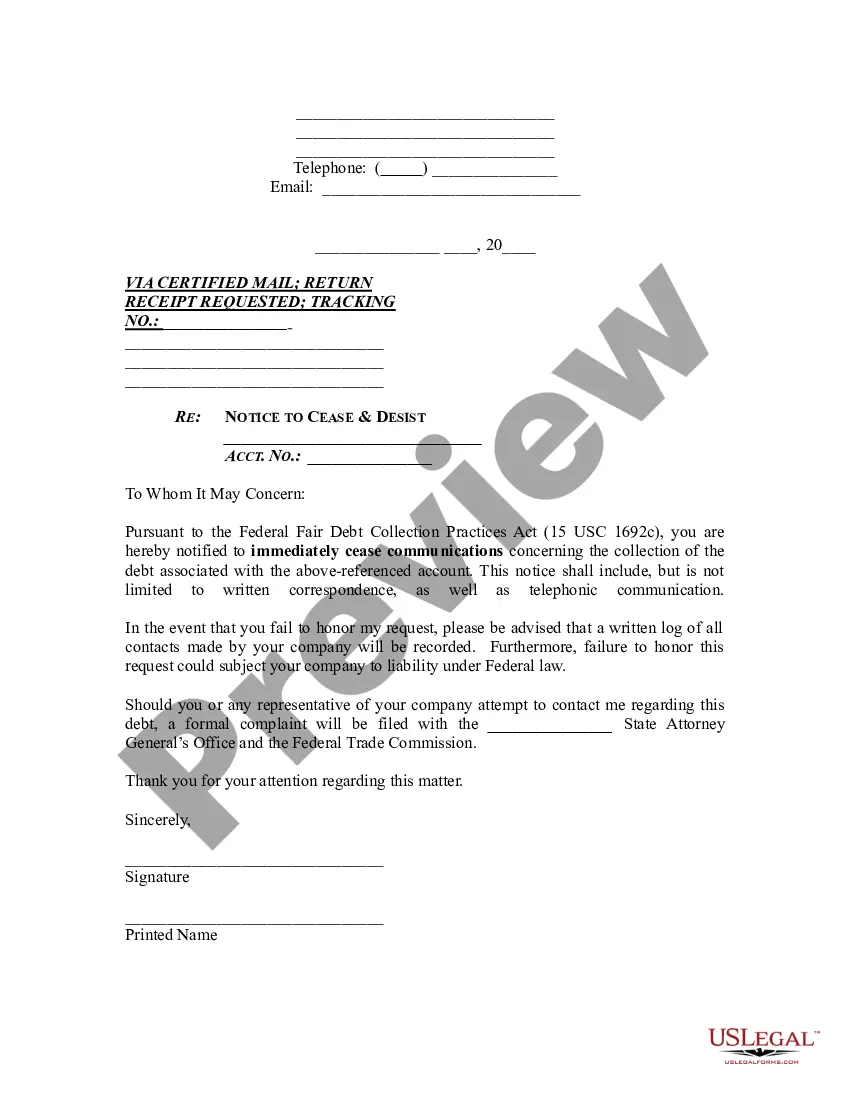
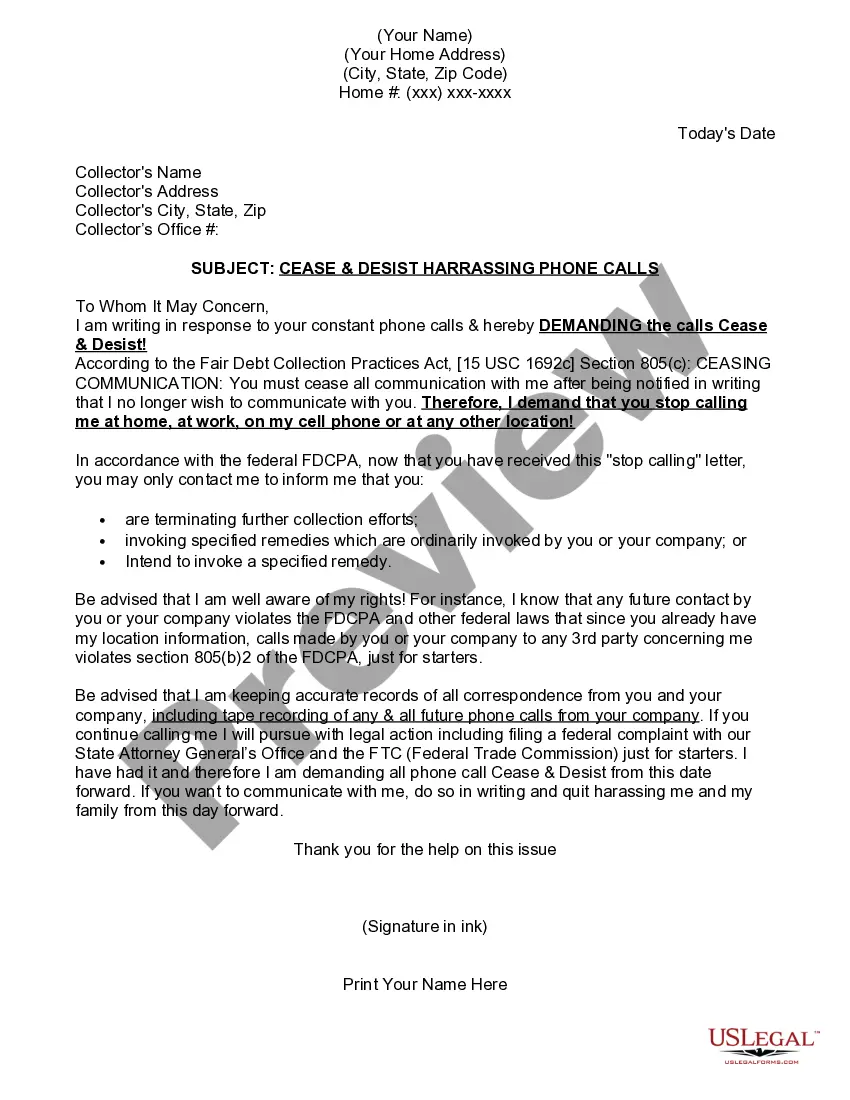
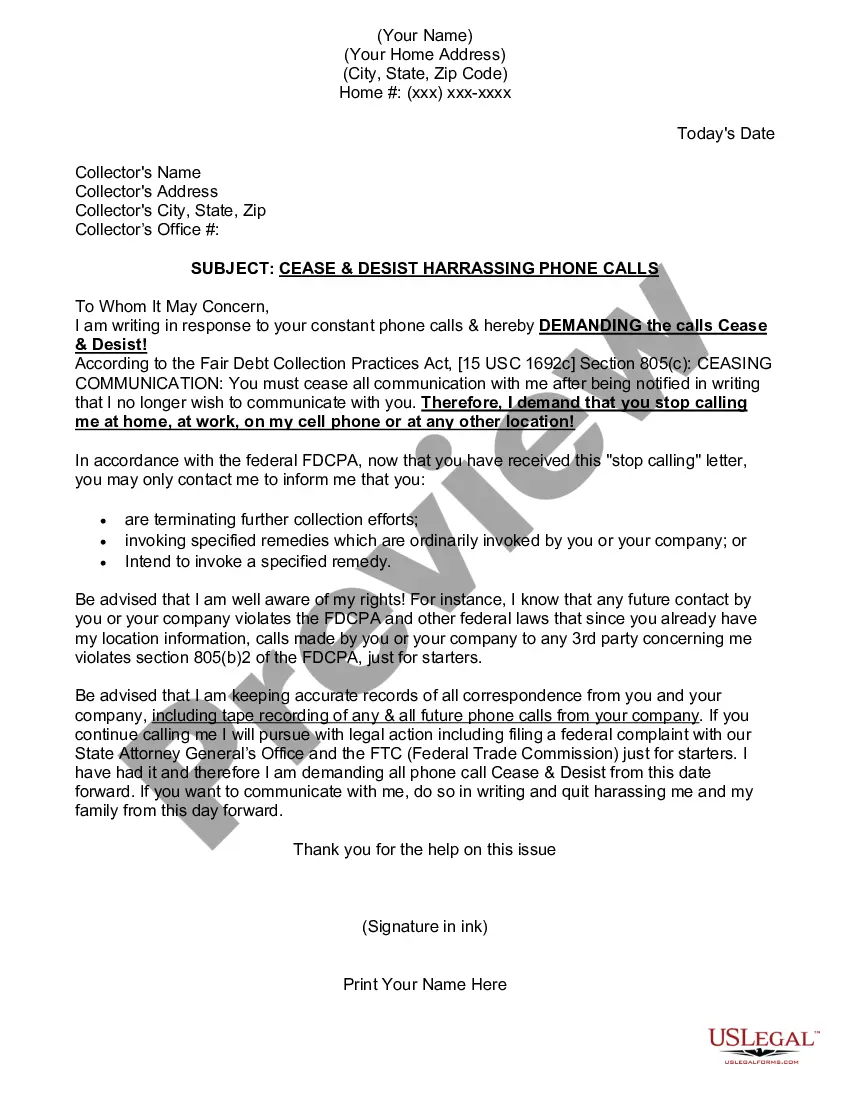

How to fill out Cease And Desist For Non Compete?
If you require to gather, acquire, or print legal document templates, utilize US Legal Forms, the largest array of legal documents available online. Utilize the site's straightforward and user-friendly search to find the forms you need.
Various templates for business and personal purposes are categorized by types and regions, or keywords. Use US Legal Forms to obtain the Massachusetts Cease and Desist for Non Compete with just a few clicks.
If you are already a US Legal Forms customer, Log In to your account and click the Download button to acquire the Massachusetts Cease and Desist for Non Compete. You can also retrieve forms you previously saved in the My documents tab of your account.
Every legal document template you obtain is yours permanently. You have access to every form you saved in your account. Click on the My documents section and choose a form to print or download again.
Stay competitive and acquire, and print the Massachusetts Cease and Desist for Non Compete with US Legal Forms. There are numerous professional and state-specific forms available for your business or personal needs.
- Step 1. Ensure you have chosen the form for the correct city/state.
- Step 2. Use the Preview option to review the form's details. Remember to read the description.
- Step 3. If you are not satisfied with the form, use the Search field at the top of the screen to find other types of your legal form template.
- Step 4. Once you have found the form you need, select the Get now button. Choose the pricing plan you prefer and provide your details to register for an account.
- Step 5. Complete the transaction. You can use your credit card or PayPal account to finalize the transaction.
- Step 6. Choose the format of your legal form and download it to your device.
- Step 7. Complete, review, and print or sign the Massachusetts Cease and Desist for Non Compete.
Form popularity
FAQ
compete agreement may restrict you from working for a competitor, but its enforceability depends on several factors. The agreement must be reasonable and not overly broad in scope or duration. If you believe a noncompete is preventing you from pursuing a job opportunity, a Massachusetts Cease and Desist for Non Compete can be a valuable tool to assert your rights and clarify your employment options. Explore options through platforms like uslegalforms for tailored solutions.
In Massachusetts, non-compete clauses can be enforceable under specific conditions. The law requires that they be reasonable in scope, duration, and geographic reach. Additionally, Massachusetts now mandates that employees must receive a copy of the non-compete agreement at least 10 days before their employment begins. If you find yourself needing to challenge a non-compete, consider using a Massachusetts Cease and Desist for Non Compete to protect your rights.
In Massachusetts, non-compete clauses are enforceable, but they must meet certain criteria. They must be reasonable in duration, geographic scope, and must protect legitimate business interests. If you believe a non-compete clause unfairly restricts your employment opportunities, you might consider issuing a Massachusetts Cease and Desist for Non Compete. Consulting with a legal expert will help you understand your rights and options.
Yes, you can write your own cease and desist letter, but it's important to ensure it is clear and legally sound. A well-crafted letter should outline the specific actions you want to stop and the reasons why. However, for the best results, consider using a platform like USLegalForms to access templates and legal guidance tailored to Massachusetts cease and desist for non compete situations.
To legally get out of a non-compete, you should first review the terms of your agreement. Many non-compete clauses in Massachusetts have specific limitations on duration and geographic scope. If your situation meets these limits, you may have grounds to challenge the enforceability of the clause. Additionally, consider consulting with a legal professional who can guide you through the process and help you draft a Massachusetts Cease and Desist for Non Compete if necessary.
To establish a valid Massachusetts Cease and Desist for Non Compete, you need to provide evidence of a violation of the non-compete agreement. This may include documentation such as a copy of the signed agreement, proof of the competing activities, and any communications that demonstrate the breach. Collecting these materials strengthens your case and ensures that your request is backed by solid facts. Utilizing platforms like US Legal Forms can help you draft a comprehensive cease and desist letter that outlines your claims effectively.
Among other provisions, the 2018 law a/k/a the Massachusetts Non-Competition Act (MNCA) generally limits non-competition agreements to one year, requires advance notice and an opportunity to consult with counsel.
Typically, the only way to fight a non-compete agreement is to go to court. If you are an employee (or former employee) who signed such an agreement, this means you must violate the agreement and wait to be sued. It may be that your former employer has never sued another employee to enforce the non-compete agreement.
An "anti-raiding" restrictive covenant is only reasonable, and thus enforceable, if it is (1) necessary to protect a legitimate business interest, (2) reasonably limited in time and space, and (3) consonant with the public interest.
Here are five ways to beat a non-compete agreement.Prove your employer is in breach of contract.Prove there is no legitimate interest to enforce the non-compete agreement.Prove the agreement is not for a reasonable amount of time.Prove that the confidential information you had access to isn't special.More items...