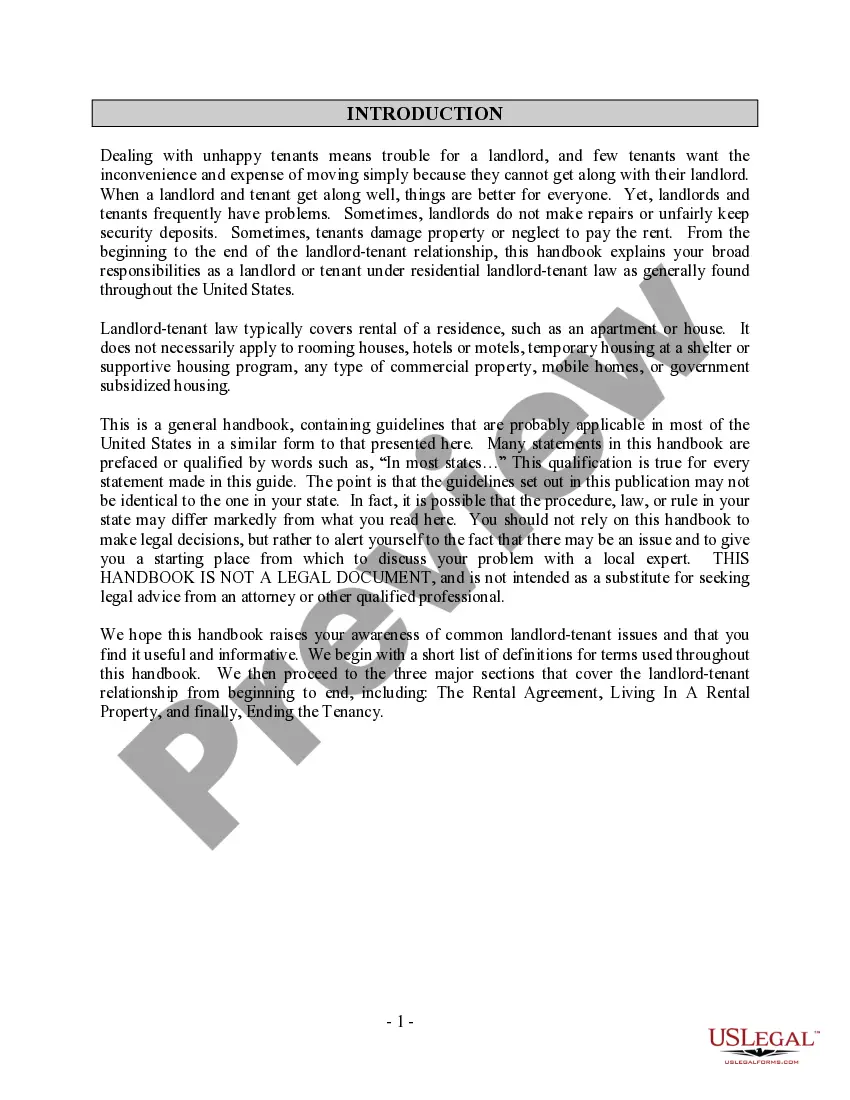
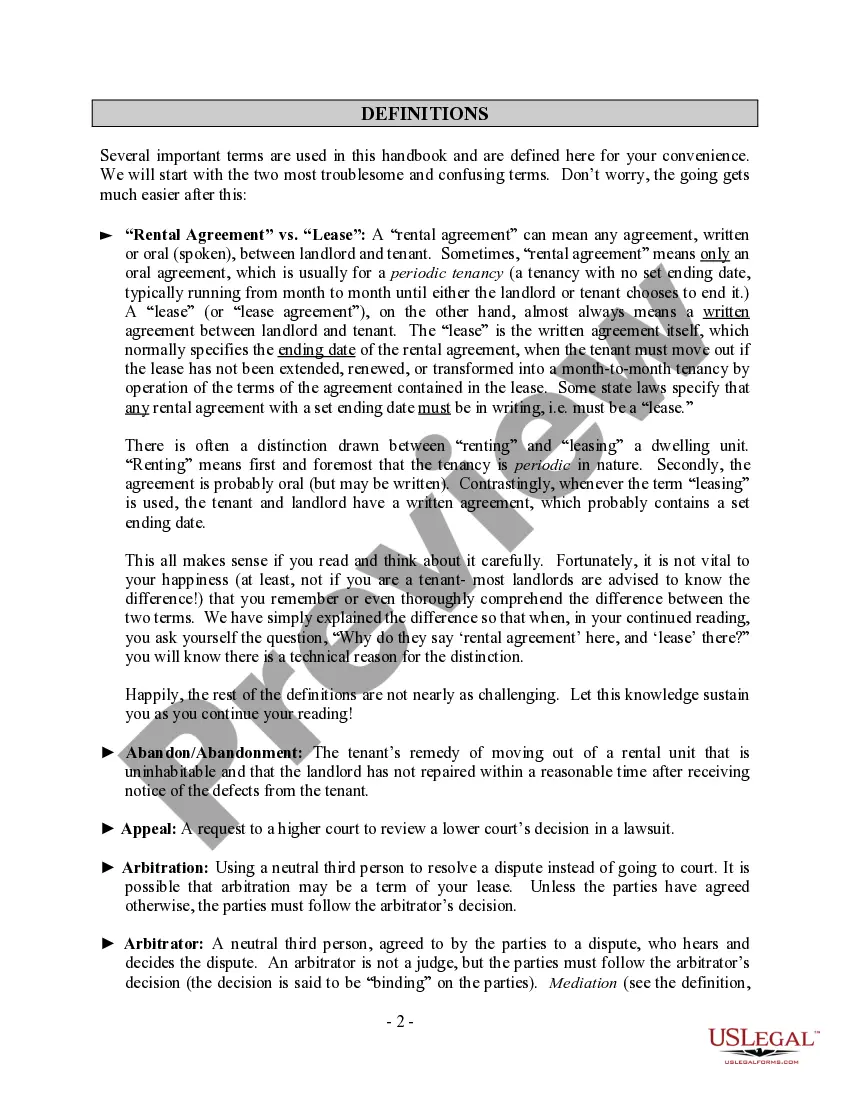
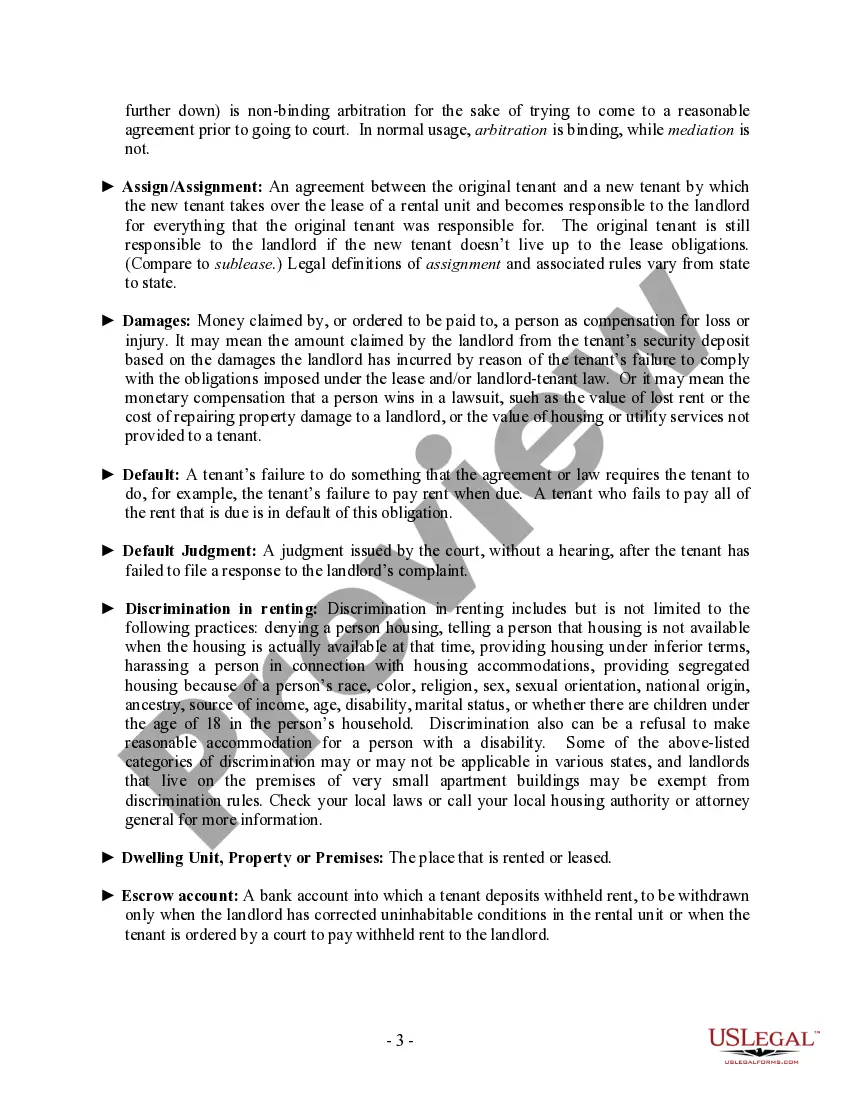
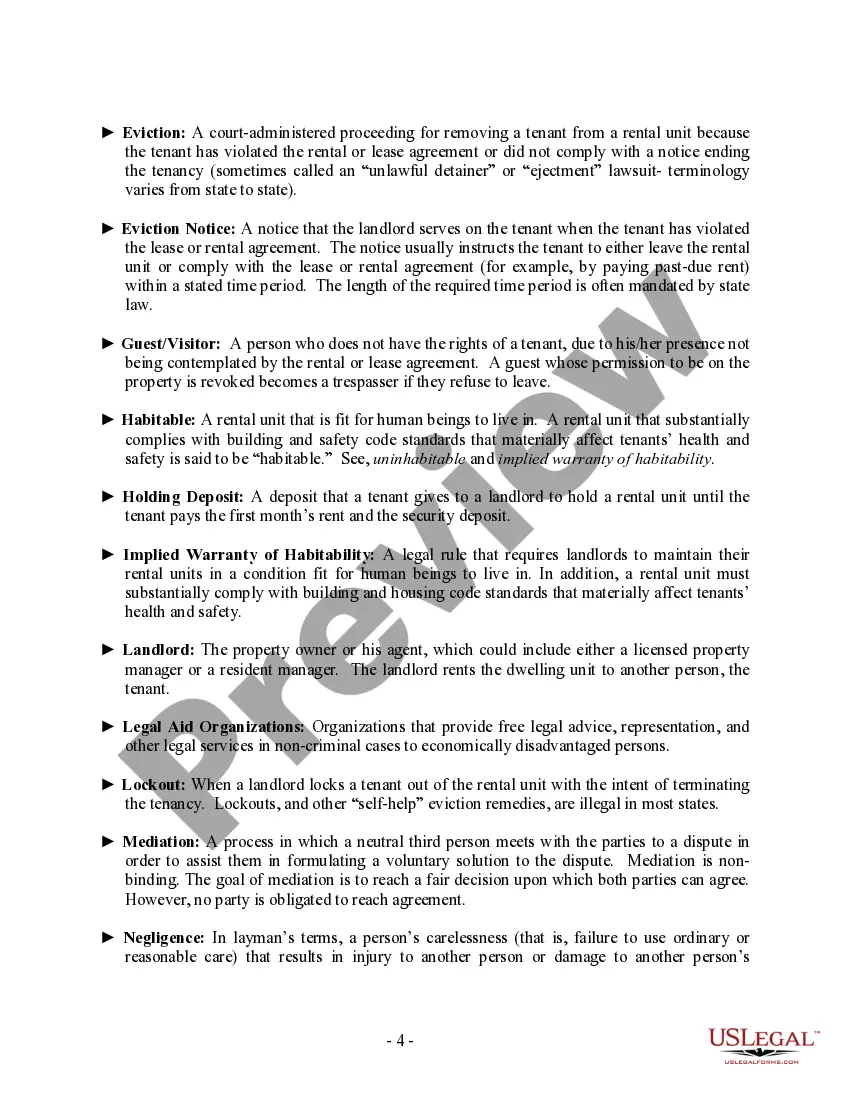
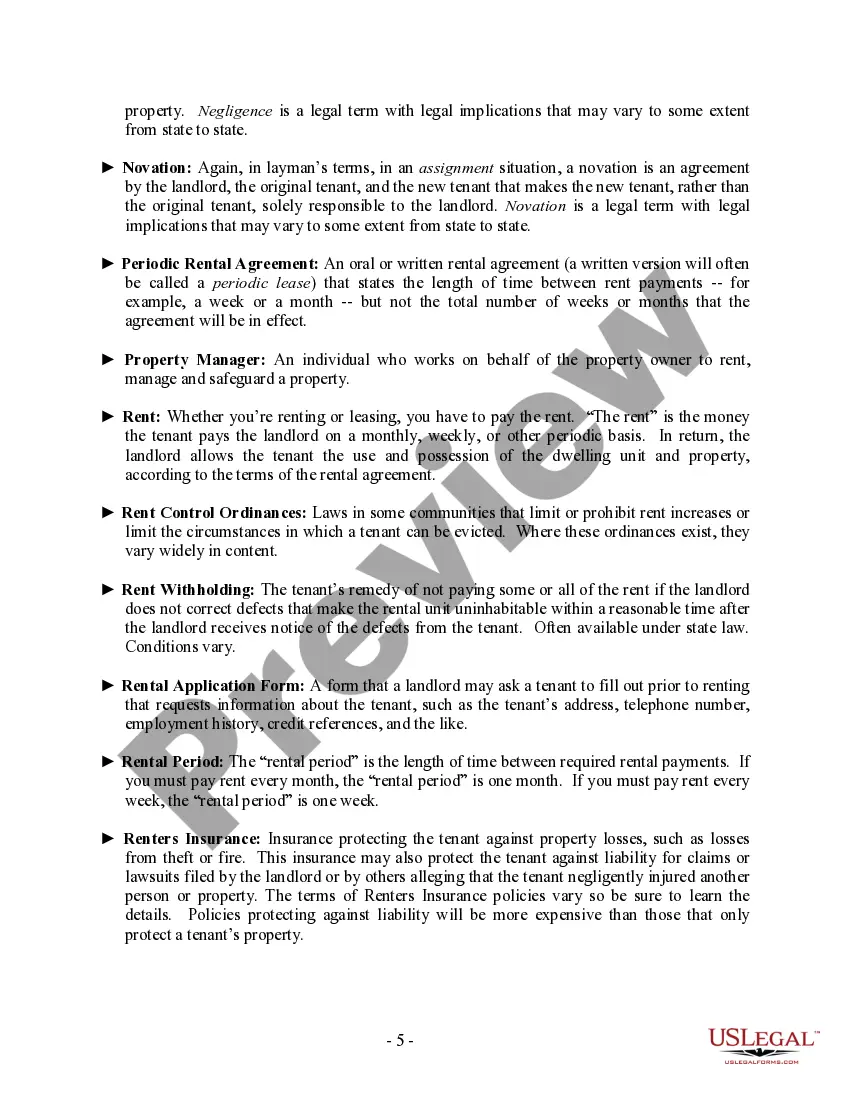
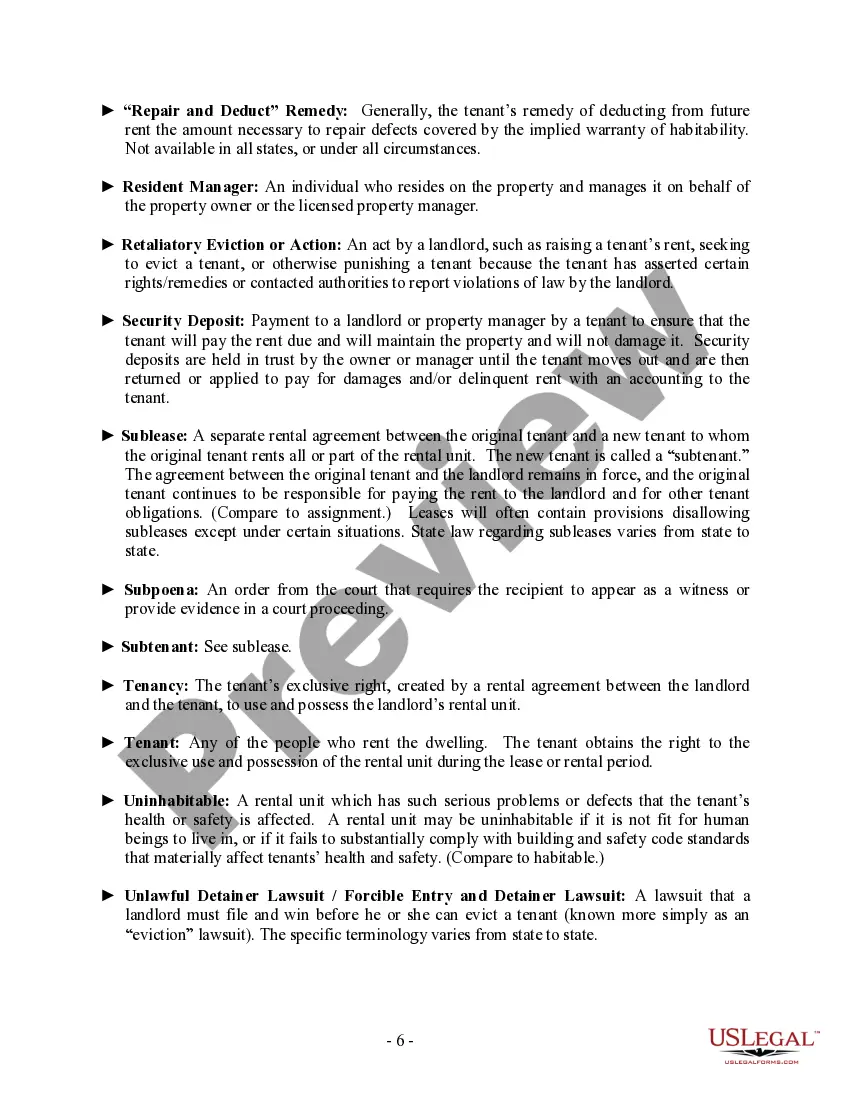
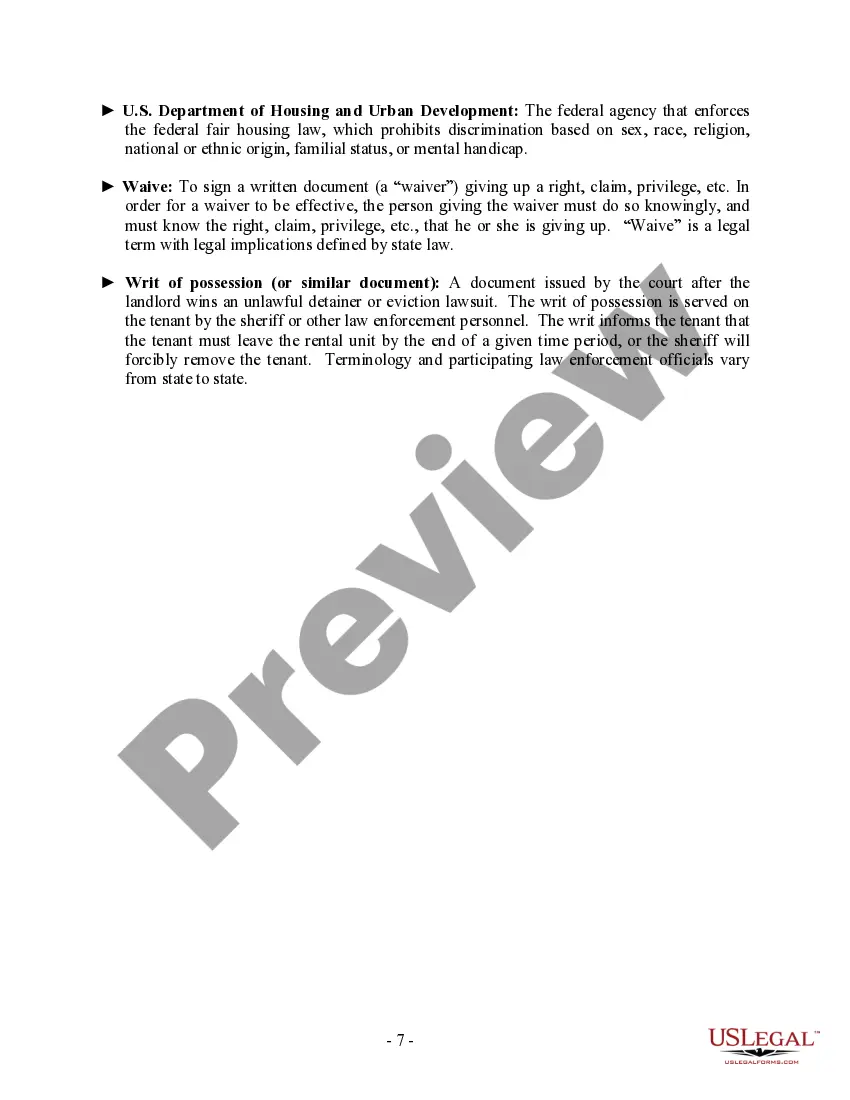
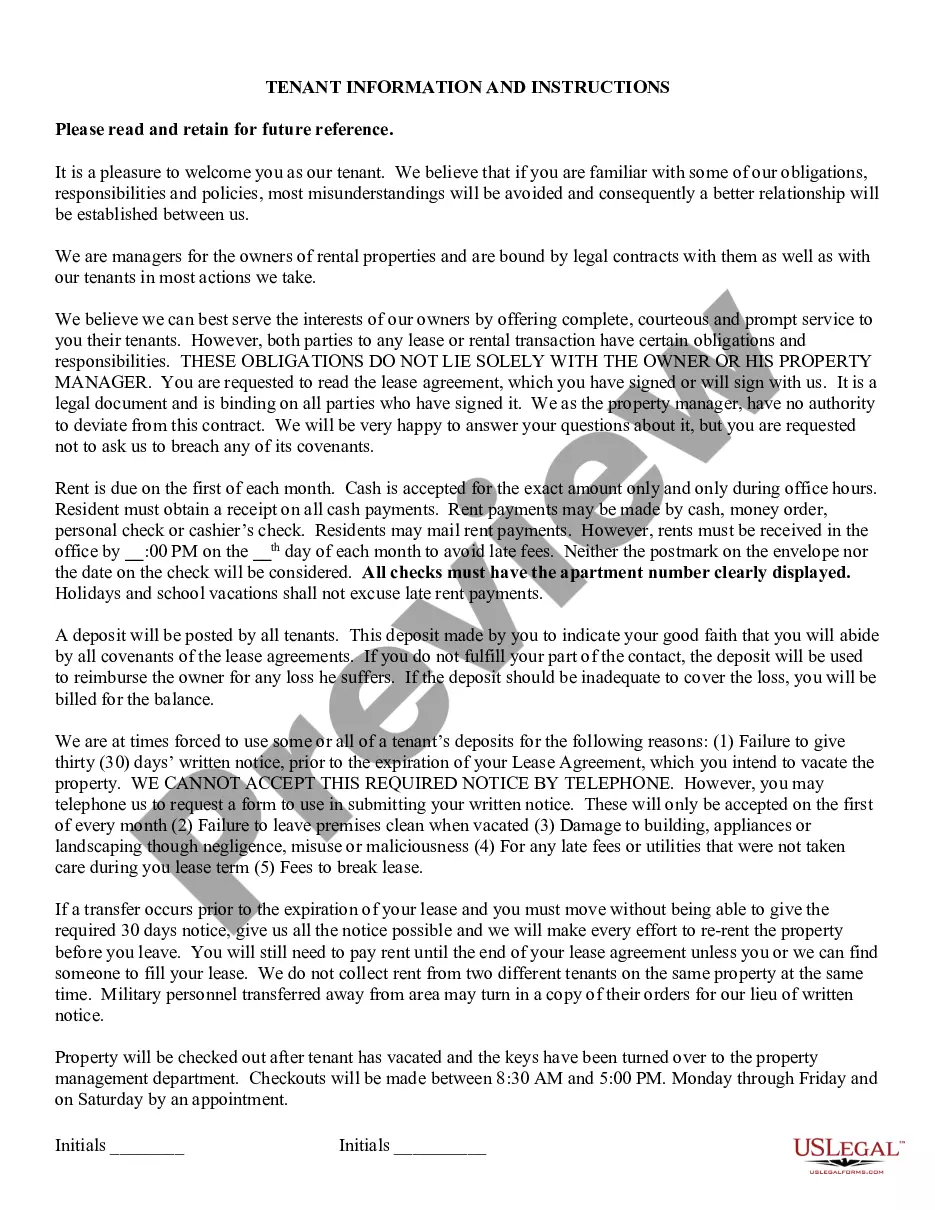
This Handbook summarizes the rights and obligations of landlords and tenants, and is designed to be a helpful guide to both landlords and tenants. Information about rental applications, leases, security deposits, inventory checklists, repair responsibilities, rent increases, termination of leases, eviction notices and much more is included in 40+ pages of materials.
Massachusetts Multistate Landlord Tenant Handbook - Guide - Laws
Instant download
Description
Free preview
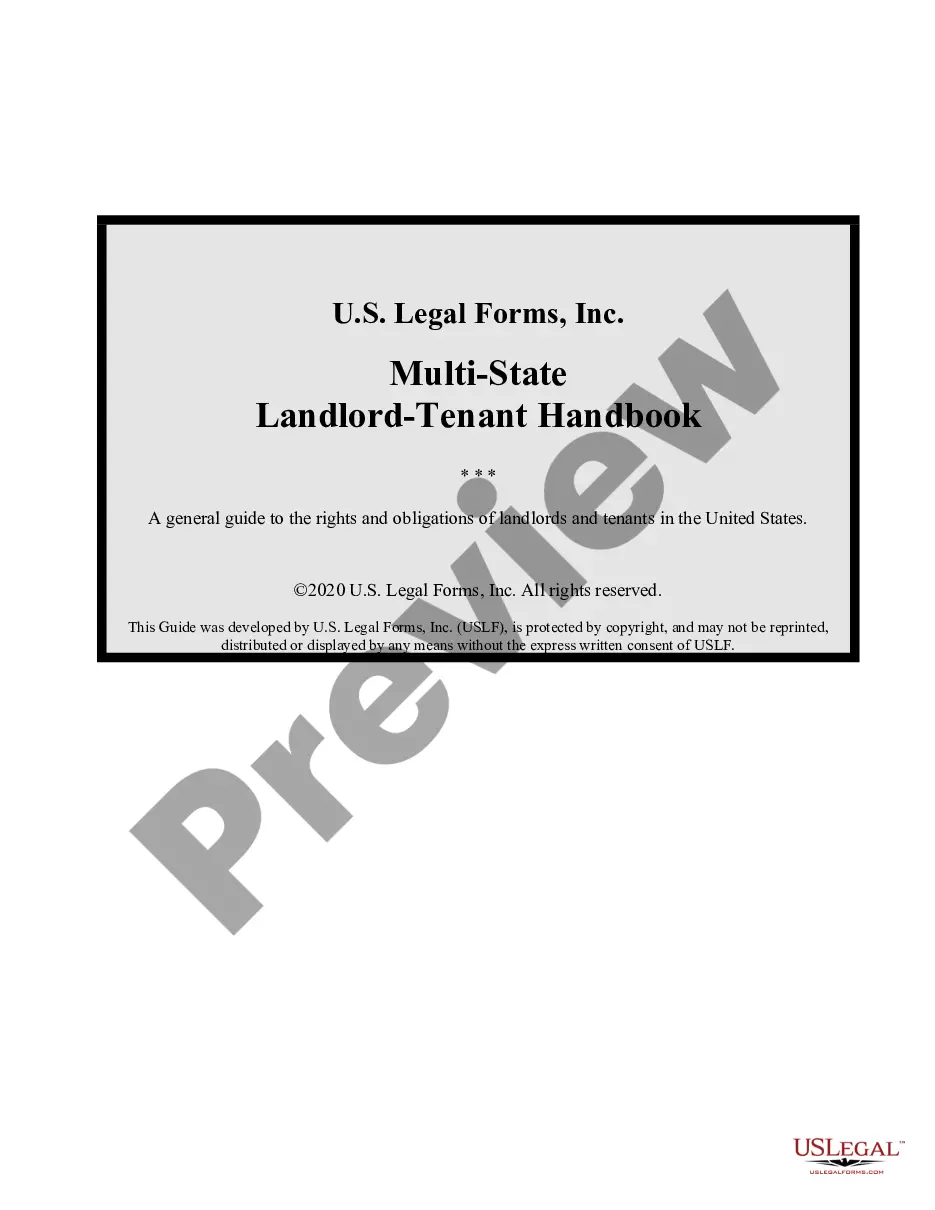
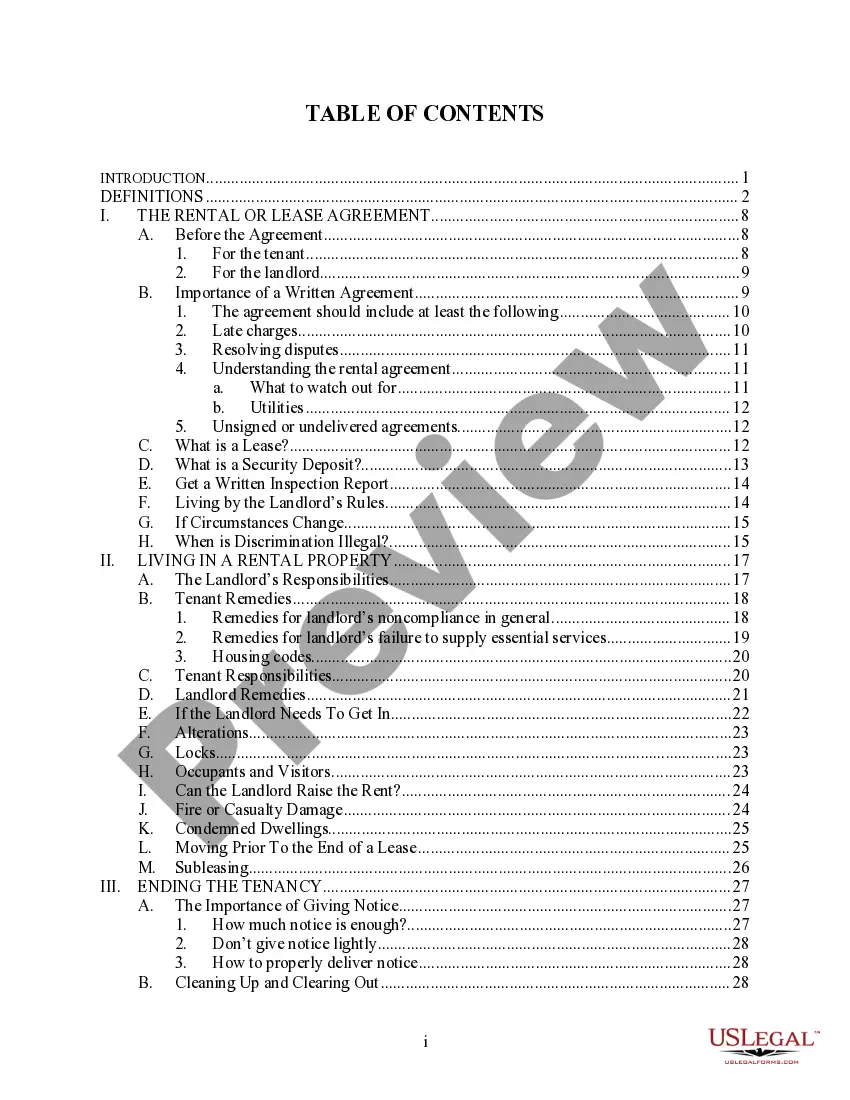
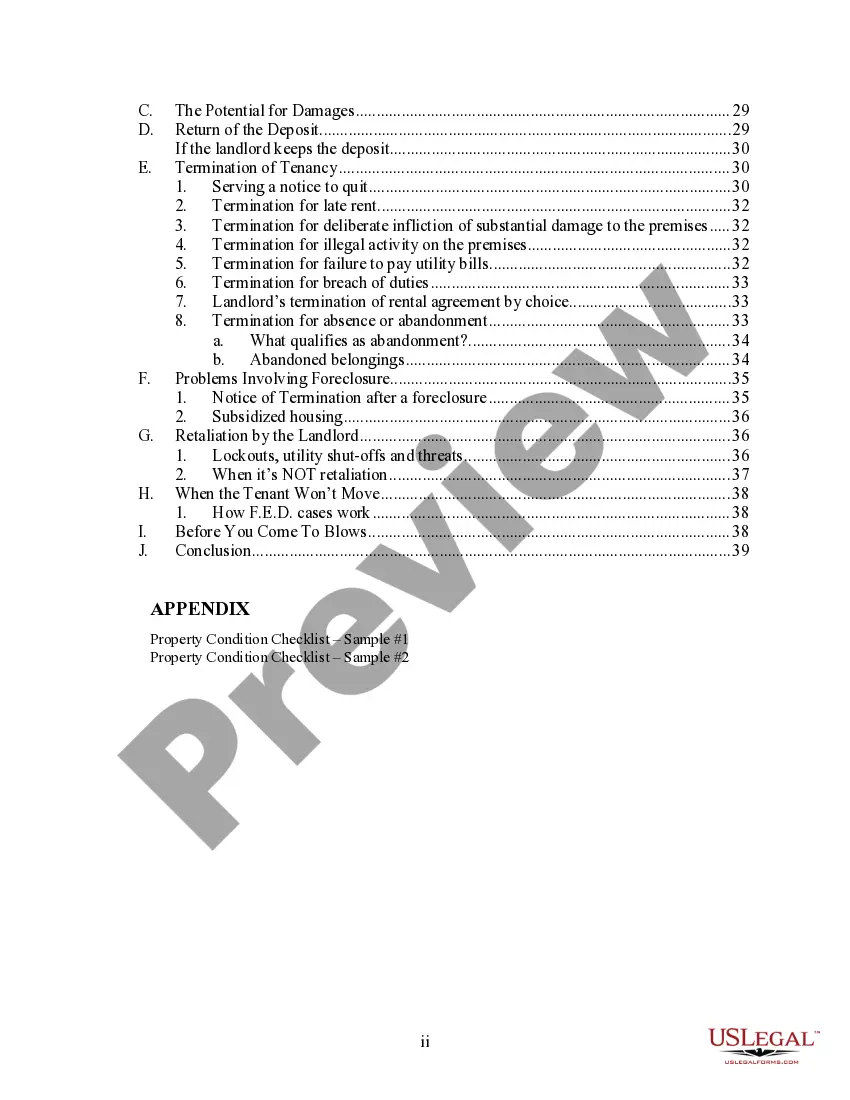

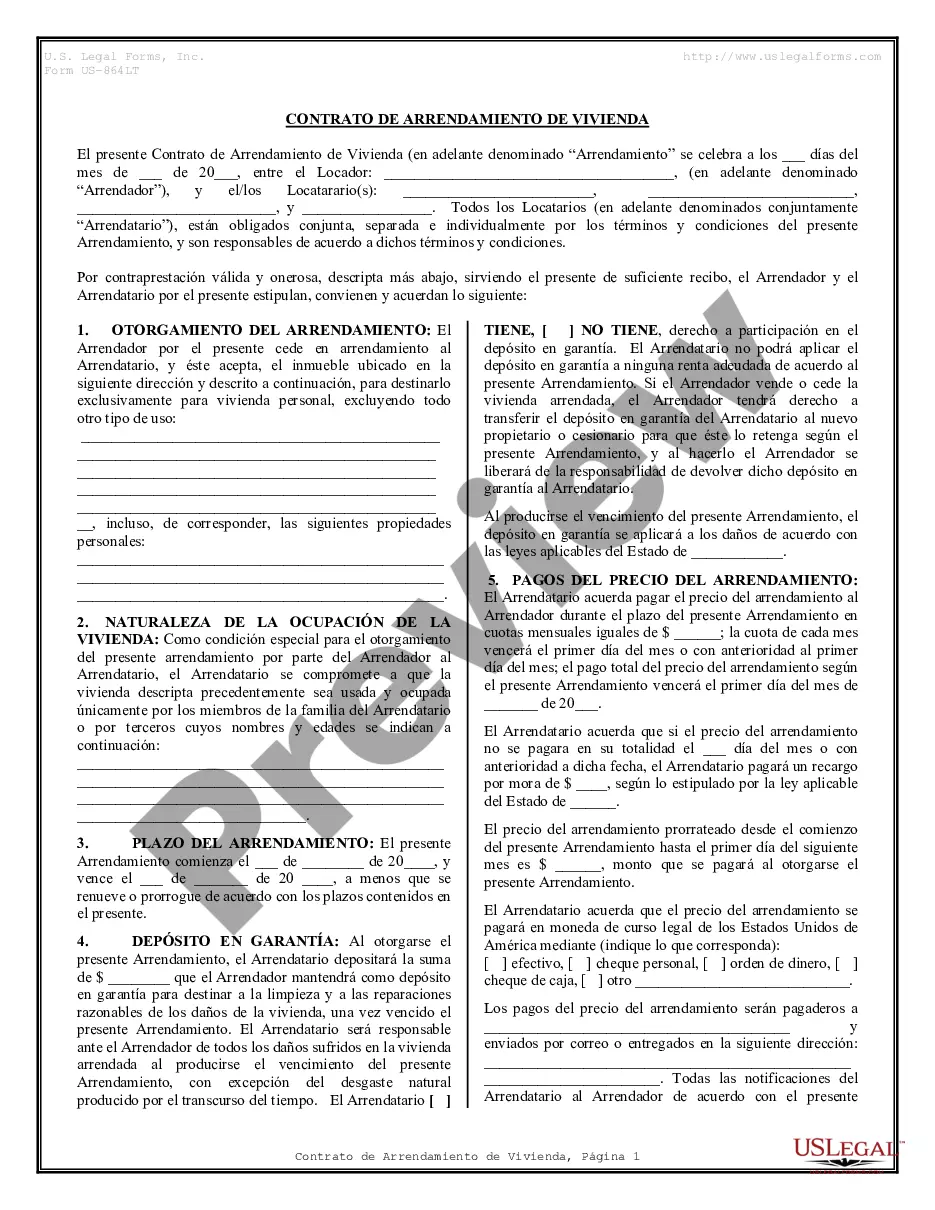
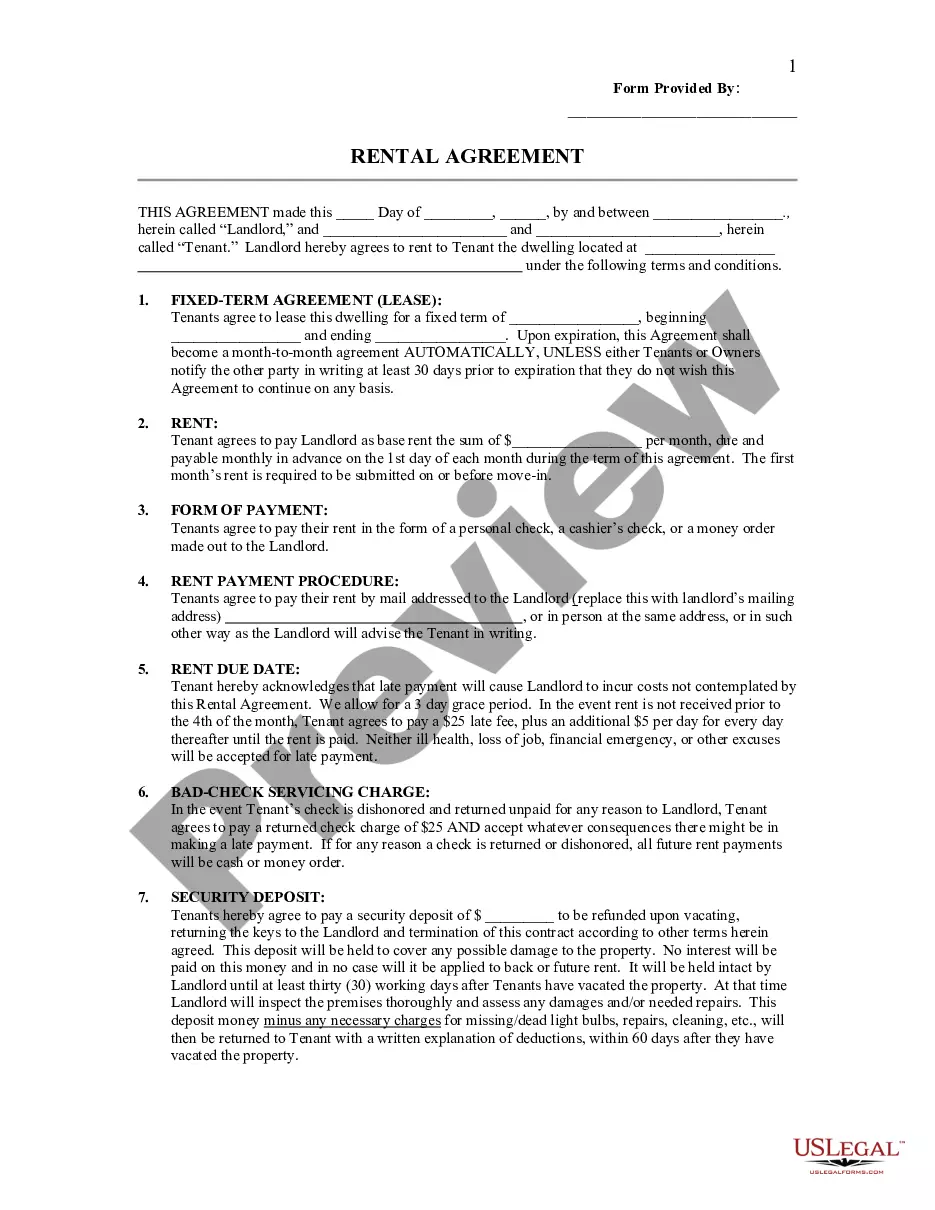
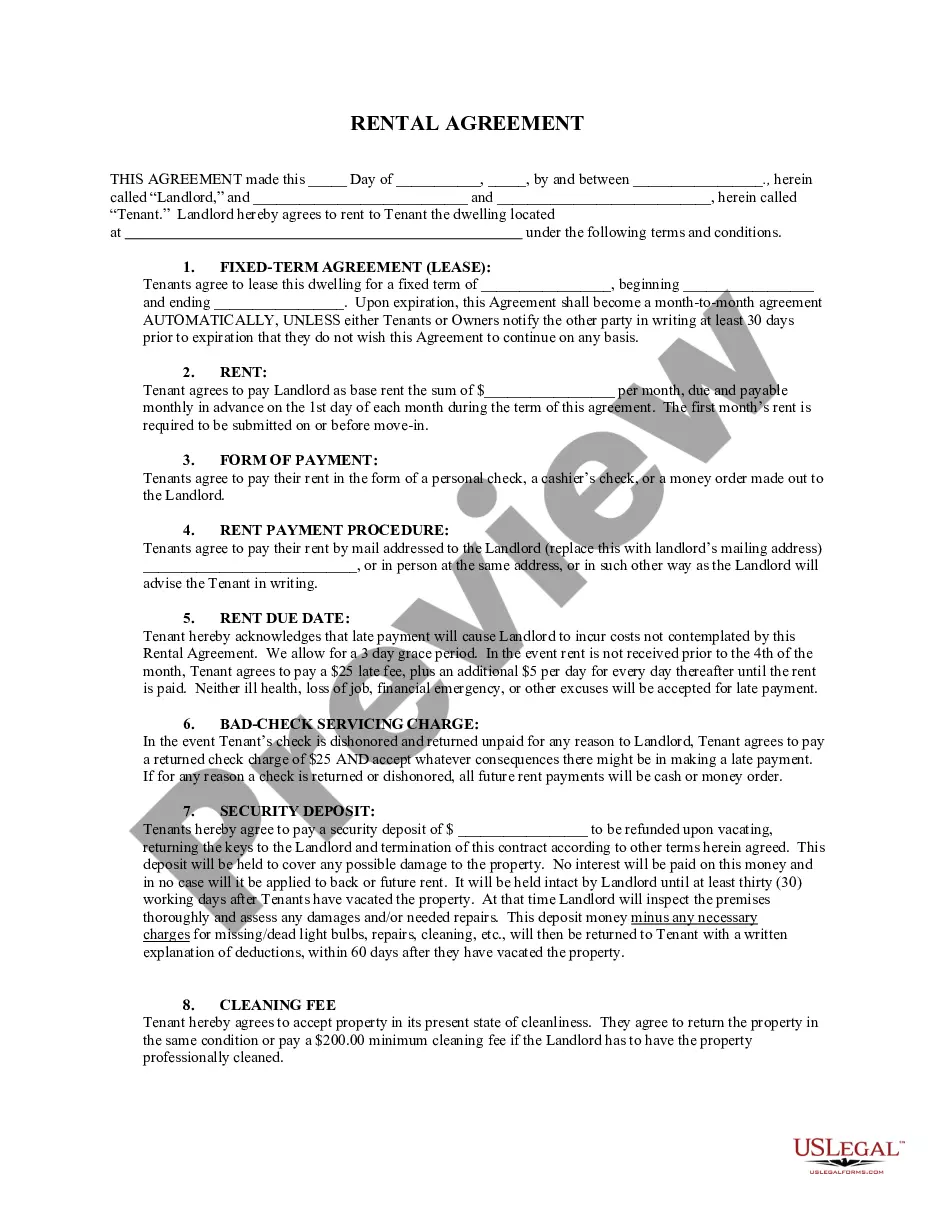
How to fill out Multistate Landlord Tenant Handbook - Guide - Laws?
You can waste hours online attempting to locate the legal document template that satisfies the federal and state criteria you require. US Legal Forms provides a multitude of legal forms that are reviewed by professionals.
You can easily acquire or generate the Massachusetts Multistate Landlord Tenant Handbook - Guide - Laws from my assistance.
If you already have a US Legal Forms account, you may Log In and then click the Download button. After that, you may complete, modify, print, or sign the Massachusetts Multistate Landlord Tenant Handbook - Guide - Laws. Every legal document template you purchase is yours permanently. To obtain another copy of any purchased form, go to the My documents section and click the corresponding button.
Complete the transaction. You may use your credit card or PayPal account to pay for the legal document. Choose the format of the document and download it to your device. Make modifications to the document if necessary. You can complete, alter, and sign and print the Massachusetts Multistate Landlord Tenant Handbook - Guide - Laws. Download and print numerous document templates using the US Legal Forms website, which offers the largest collection of legal forms. Utilize professional and state-specific templates to address your business or personal needs.
- If you are using the US Legal Forms website for the first time, follow the simple instructions below.
- First, ensure you have chosen the correct document template for your region/area of interest.
- Review the form description to confirm you have selected the right form.
- If available, use the Review button to browse through the document template as well.
- To find another version of the form, use the Search field to locate the template that fulfills your needs.
- Once you have found the template you require, click Get now to continue.
- Select the pricing plan you prefer, enter your details, and register for an account on US Legal Forms.
Form popularity
FAQ
The new law in Massachusetts for renters enhances tenant rights significantly, providing more security and transparency. It includes provisions to limit eviction processes and requires landlords to maintain safe living conditions. Tenants can benefit from the Massachusetts Multistate Landlord Tenant Handbook - Guide - Laws, which outlines their rights and responsibilities. Understanding these laws empowers renters to advocate for themselves and create a safer housing environment.
The new rental law in Massachusetts focuses on improving housing stability and tenant protections. Key changes include restrictions on eviction notices and requirements for landlords to provide advance notice before rent increases. For detailed insights, the Massachusetts Multistate Landlord Tenant Handbook - Guide - Laws serves as an excellent resource. This guide helps landlords navigate these new regulations while ensuring they meet their legal obligations.
New laws for landlords in Massachusetts are being introduced to enhance tenant rights and ensure fair treatment. The Massachusetts Multistate Landlord Tenant Handbook - Guide - Laws provides a comprehensive overview of these changes. Landlords must stay informed about regulations regarding rent control, eviction processes, and tenant protections. Staying updated not only helps landlords comply with the law but also fosters positive landlord-tenant relationships.
It is illegal for landlords to retaliate against tenants for reporting housing code violations or to discriminate based on race, gender, or other protected classes, as outlined in the Massachusetts Multistate Landlord Tenant Handbook - Guide - Laws. Additionally, landlords cannot lock out tenants or shut off utilities to force them to leave. Understanding these illegal actions helps landlords operate within the law and fosters a fair rental environment.
Landlords can collect rent, make necessary repairs, and set reasonable rules for their properties, as stated in the Massachusetts Multistate Landlord Tenant Handbook - Guide - Laws. However, they cannot engage in illegal eviction practices, harass tenants, or discriminate against them. Knowing these dos and don'ts is essential for maintaining a positive landlord-tenant relationship.
The Massachusetts Multistate Landlord Tenant Handbook - Guide - Laws outlines seven permitted grounds to end a tenancy, including non-payment of rent, violation of lease terms, and the landlord's intention to occupy the unit. Landlords must follow specific procedures when terminating a lease, ensuring they comply with state laws. By understanding these grounds, landlords can make informed decisions about their rental agreements.
According to the Massachusetts Multistate Landlord Tenant Handbook - Guide - Laws, a landlord cannot enter a tenant's unit without proper notice, retaliate against tenants for exercising their rights, or discriminate based on race, gender, or disability. It's important for landlords to understand these restrictions to maintain a legal and respectful relationship with tenants. Violating these laws can lead to serious legal repercussions.