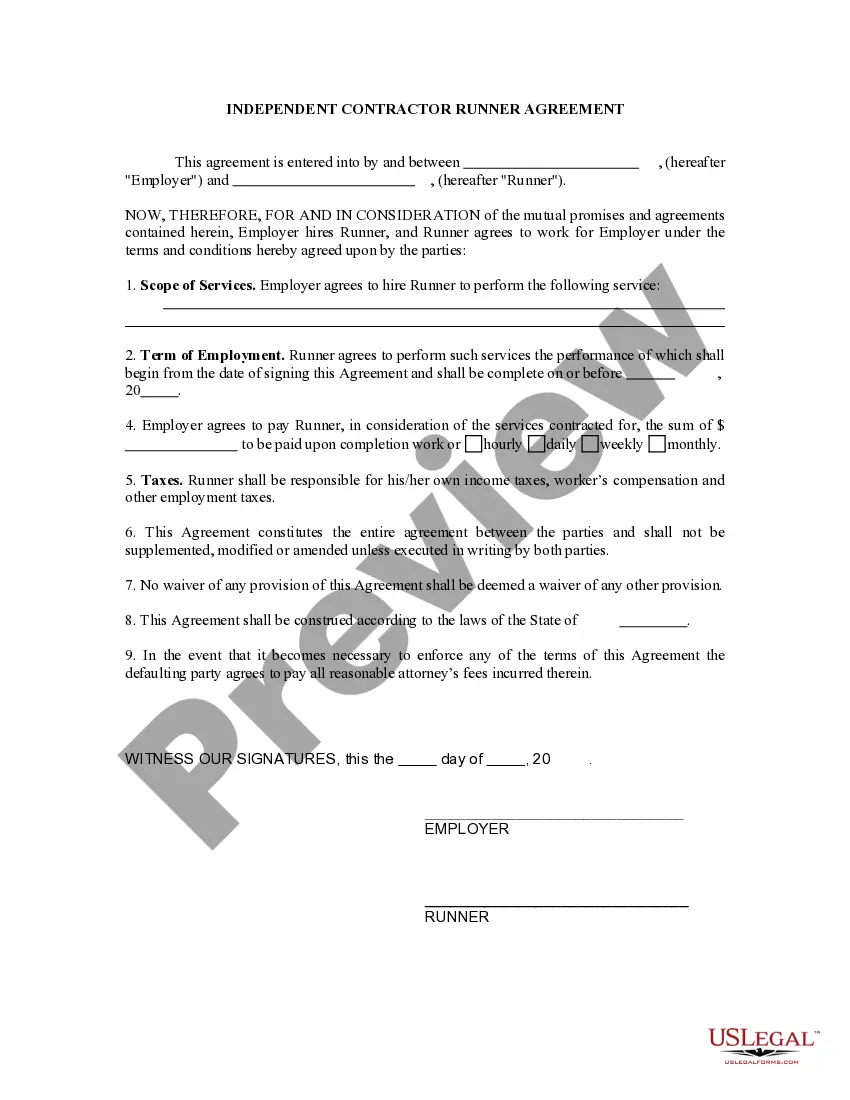
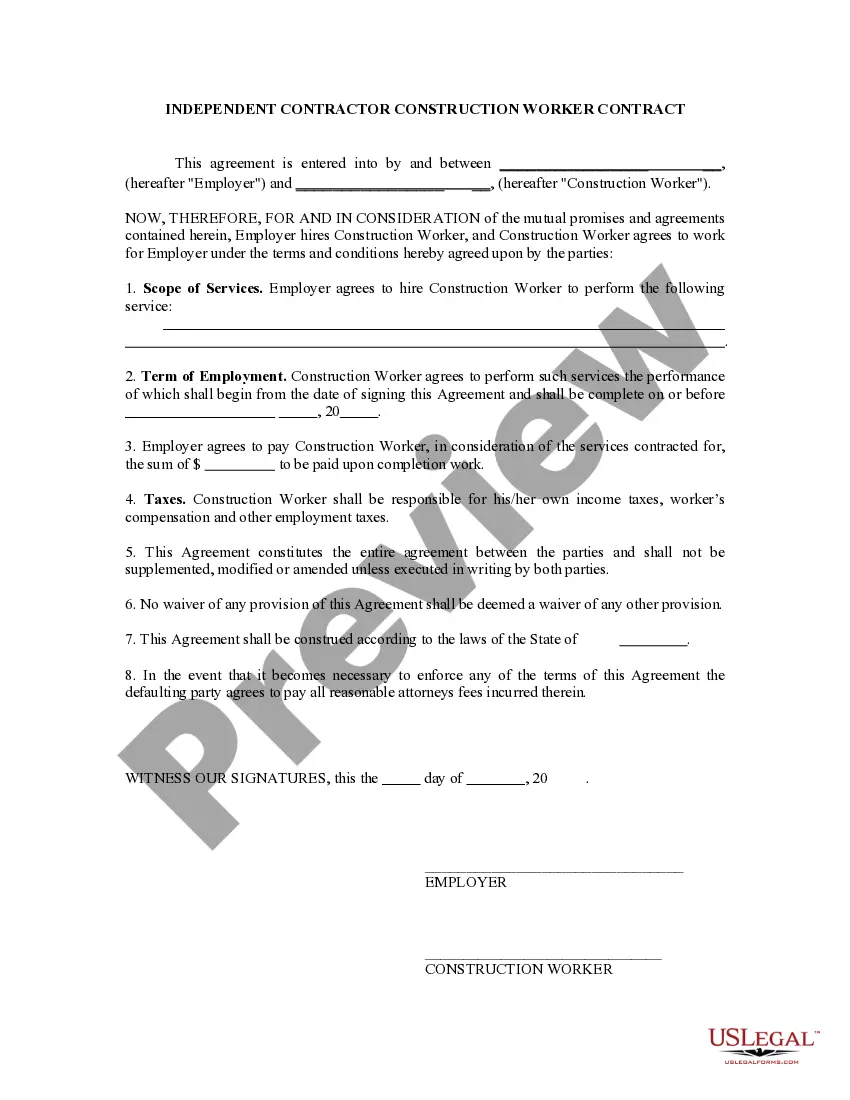
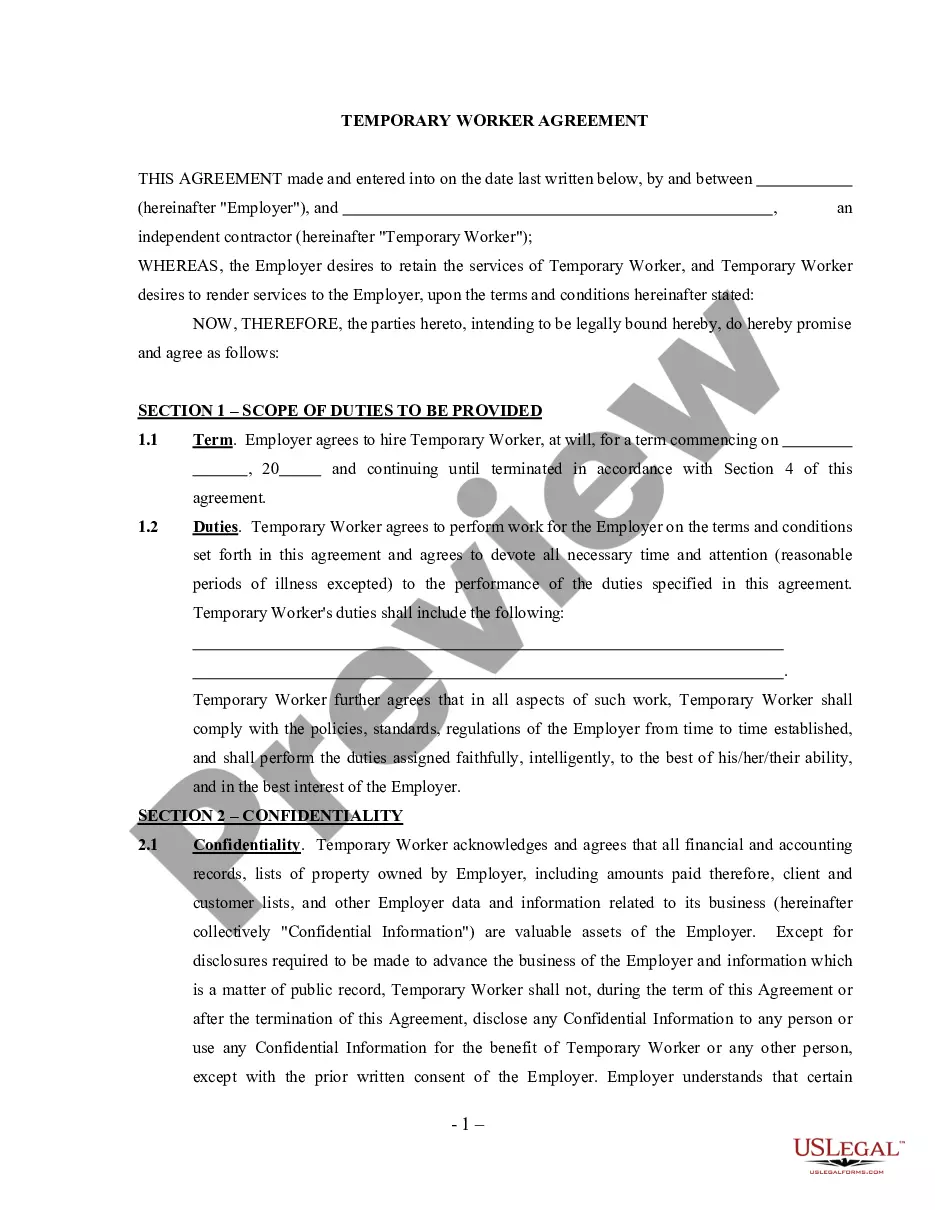
This is a contract between an employer and a runner to hire the runner as an independent contractor.
Massachusetts Runner Agreement - Self-Employed Independent Contractor
State:
Multi-State
Control #:
US-INDC-36
Format:
Word;
Rich Text
Instant download
Description
Get your form ready online
Our built-in tools help you complete, sign, share, and store your documents in one place.
Built-in online Word editor
Make edits, fill in missing information, and update formatting in US Legal Forms—just like you would in MS Word.
Export easily
Download a copy, print it, send it by email, or mail it via USPS—whatever works best for your next step.
E-sign your document
Sign and collect signatures with our SignNow integration. Send to multiple recipients, set reminders, and more. Go Premium to unlock E-Sign.
Notarize online 24/7
If this form requires notarization, complete it online through a secure video call—no need to meet a notary in person or wait for an appointment.
Store your document securely
We protect your documents and personal data by following strict security and privacy standards.

Make edits, fill in missing information, and update formatting in US Legal Forms—just like you would in MS Word.

Download a copy, print it, send it by email, or mail it via USPS—whatever works best for your next step.

Sign and collect signatures with our SignNow integration. Send to multiple recipients, set reminders, and more. Go Premium to unlock E-Sign.

If this form requires notarization, complete it online through a secure video call—no need to meet a notary in person or wait for an appointment.

We protect your documents and personal data by following strict security and privacy standards.
Looking for another form?




How to fill out Runner Agreement - Self-Employed Independent Contractor?
You can spend hours online searching for the valid document template that satisfies the federal and state requirements you need.
US Legal Forms offers a multitude of valid forms that are verified by experts.
You can conveniently obtain or print the Massachusetts Runner Agreement - Self-Employed Independent Contractor from this service.
If available, utilize the Preview option to browse through the document template as well.
- If you already have a US Legal Forms account, you can Log In and select the Obtain option.
- Then, you can complete, modify, print, or sign the Massachusetts Runner Agreement - Self-Employed Independent Contractor.
- Every valid document template you purchase is yours forever.
- To acquire another copy of any purchased form, visit the My documents section and click the appropriate option.
- If you are using the US Legal Forms website for the first time, follow the straightforward instructions below.
- First, ensure that you have selected the correct document template for the area/city of your choice.
- Review the form summary to confirm you have chosen the right form.
Form popularity
FAQ
A 1099 employee is a US self-employed worker that reports their income to the IRS on a 1099 tax form. Freelancers, gig workers, and independent contractors are all considered 1099 employees. In contrast, actual company employees are considered W-2 employees.
Becoming an independent contractor is one of the many ways to be classified as self-employed. By definition, an independent contractor provides work or services on a contractual basis, whereas, self-employment is simply the act of earning money without operating within an employee-employer relationship.
An independent contractor is not an employee; therefore, he's not paid through the payroll. As a small-business owner with both employees and independent contractors, it is important that you know the differences between the two.
If a person is truly an independent contractor (meaning they meet all three elements of the three part test), then the wage and hour laws are not applicable. This includes minimum wage, overtime, and rules for the timely payment of wages under the Massachusetts Wage Act.
If you work for an employer, you're an employee. If you're self-employed, you're an independent contractor.
How do I create an Independent Contractor Agreement?State the location.Describe the type of service required.Provide the contractor's and client's details.Outline compensation details.State the agreement's terms.Include any additional clauses.State the signing details.
Some general protections provided under the Fair Work Act 2009 extend to independent contractors and their principals. Independent contractors and principals are afforded limited workplace rights, and the right to engage in certain industrial activities.
The most common contractor payroll form is the 1099-MISC, which you're required to file if you pay a contractor more than $600 in a year. This can be a chore for the small business owner, as it means manually sending each contractor you hire their respective 1099.
On Monday, April 20, 2020, Massachusetts became one of the first states to begin providing unemployment benefits to gig workers, self-employed individuals, independent contractors, freelancers, and others not traditionally covered by unemployment compensation laws.
Contractors do not fall under most general employment legislation such as the ERA and the Holidays Act 2003, meaning they do not need to have a written employment agreement, and are not entitled to minimum wage or other employment entitlements, such as paid statutory holidays or sick leave.