Training material for Harassment-Sexual and other issues.
Massachusetts Harassment Training Handbook - Sexual as well as other forms of Harassment - Workplace
Instant download
Description
Free preview
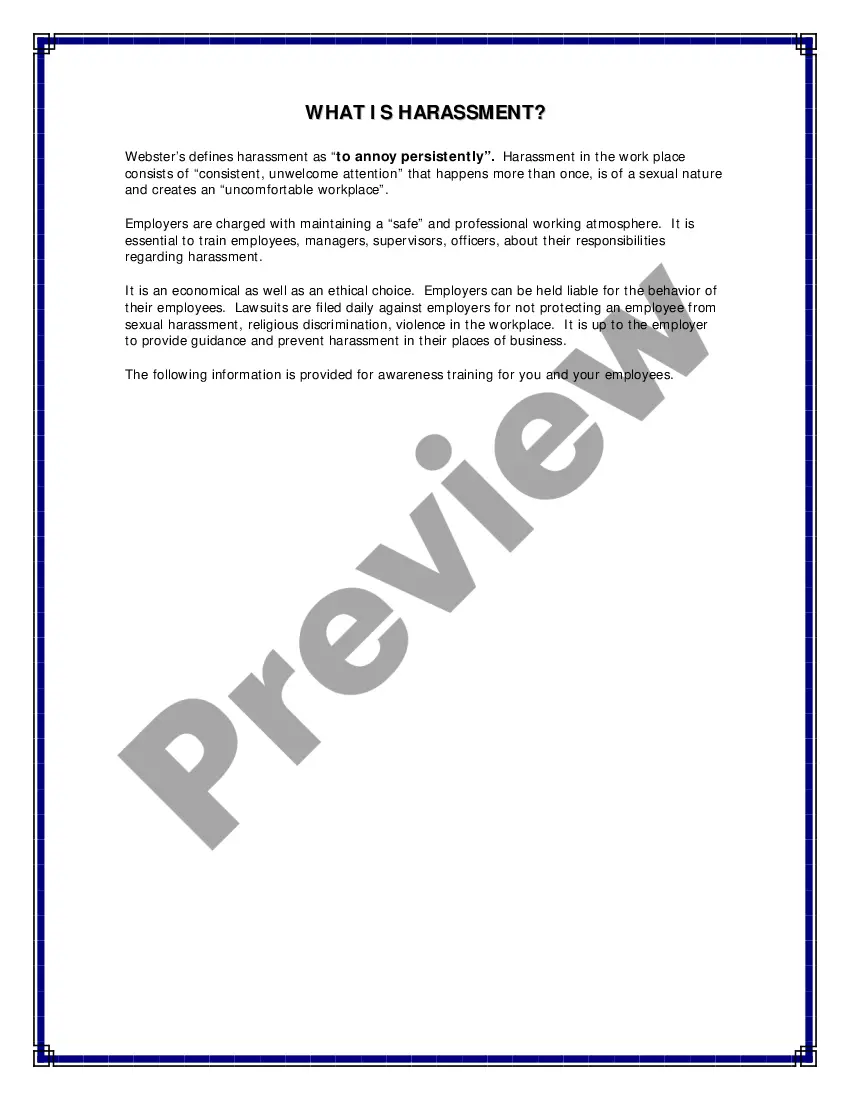
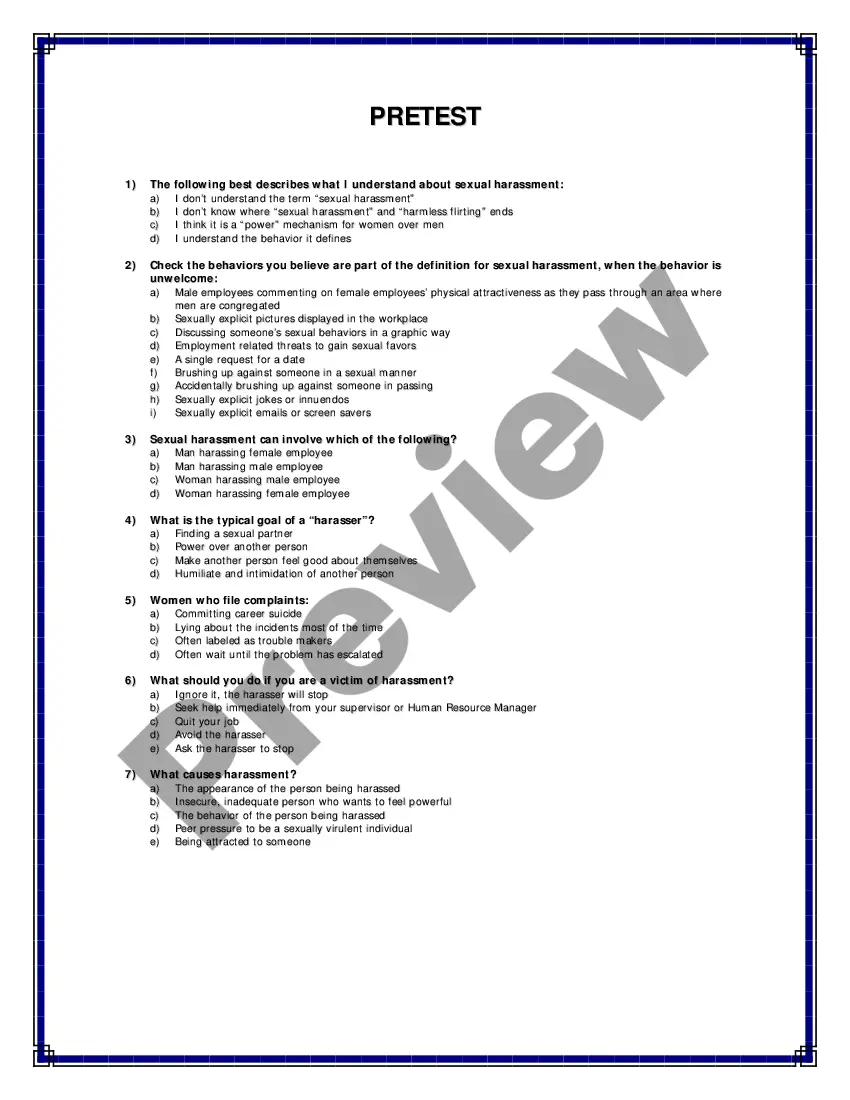
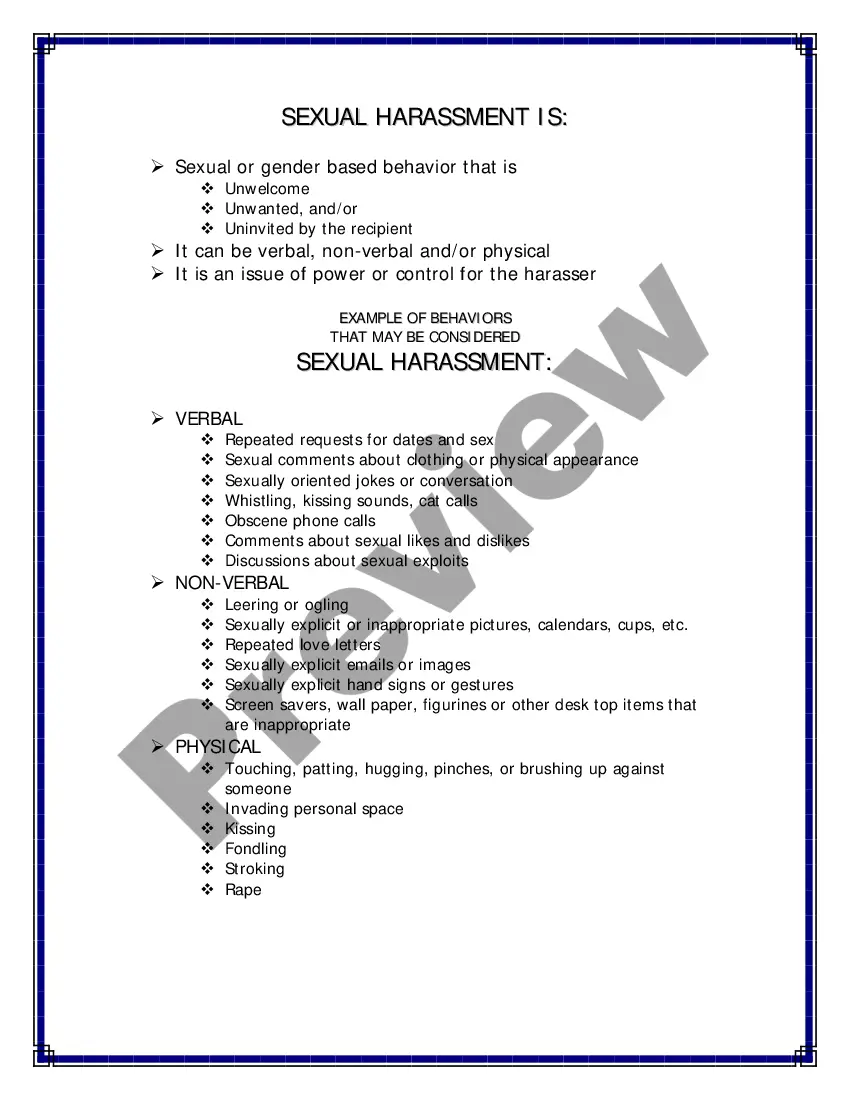
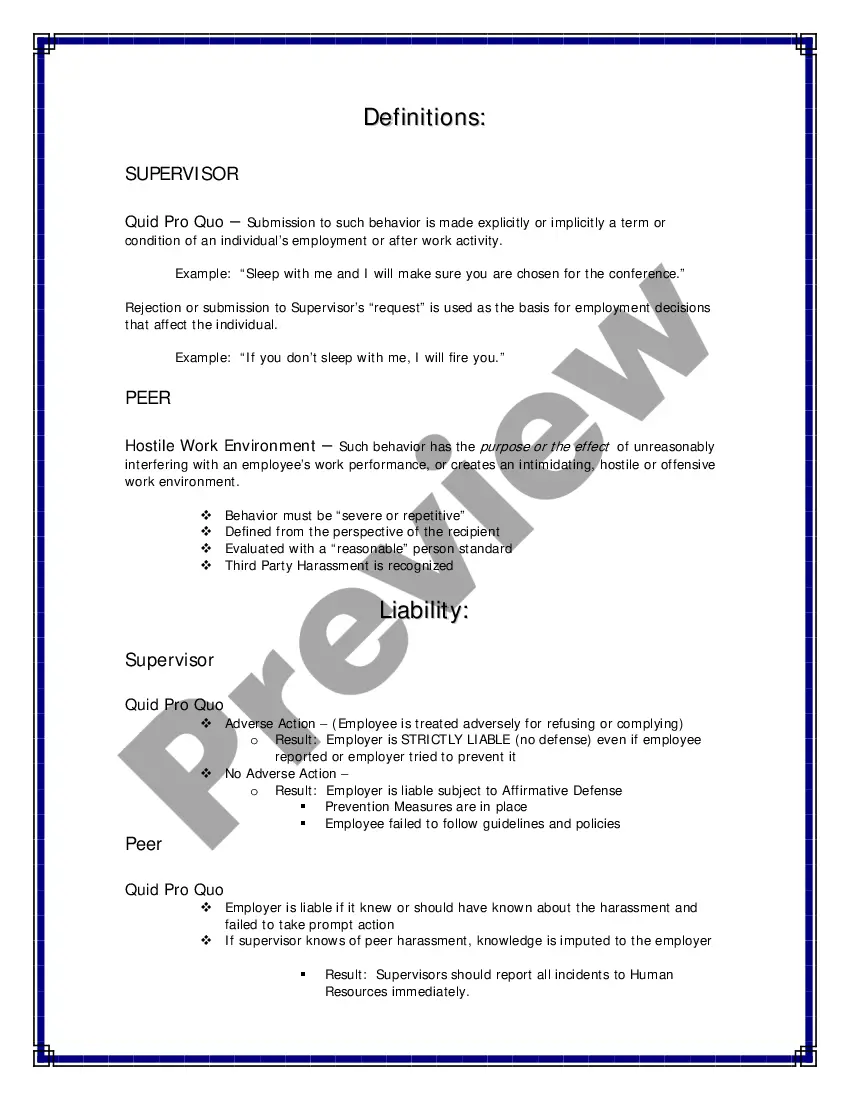
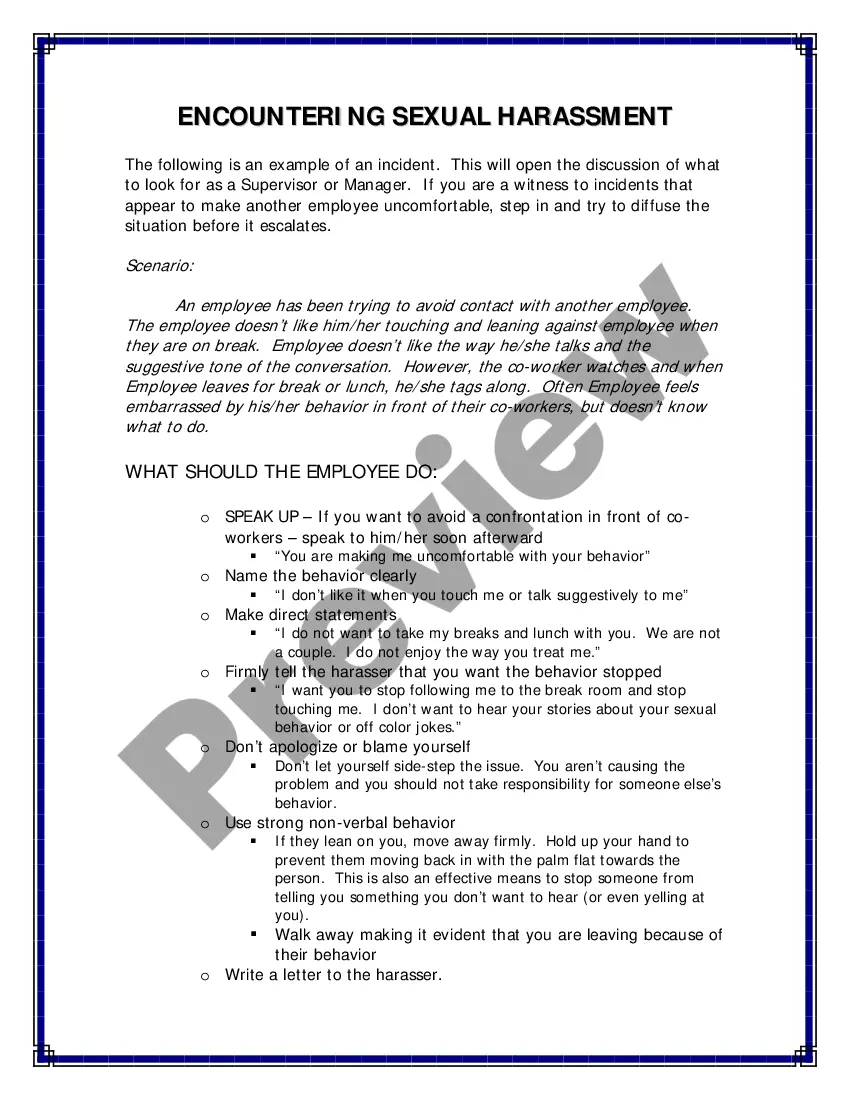
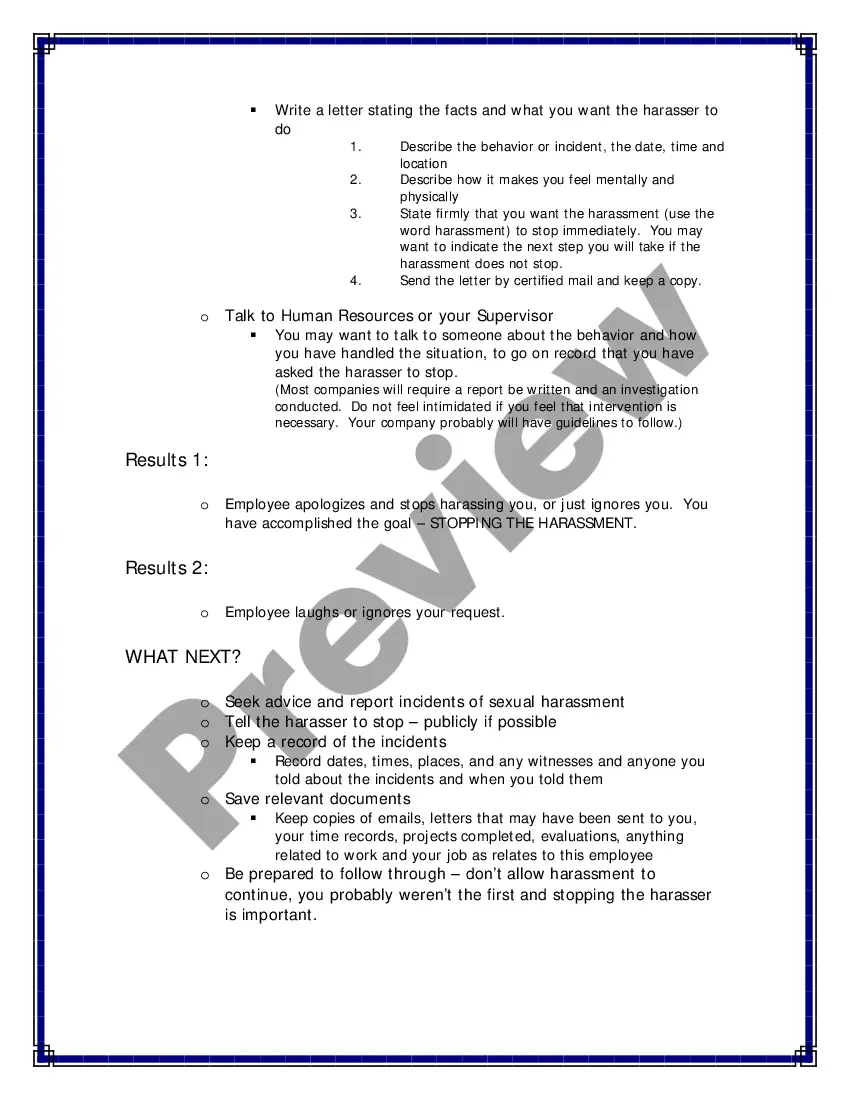
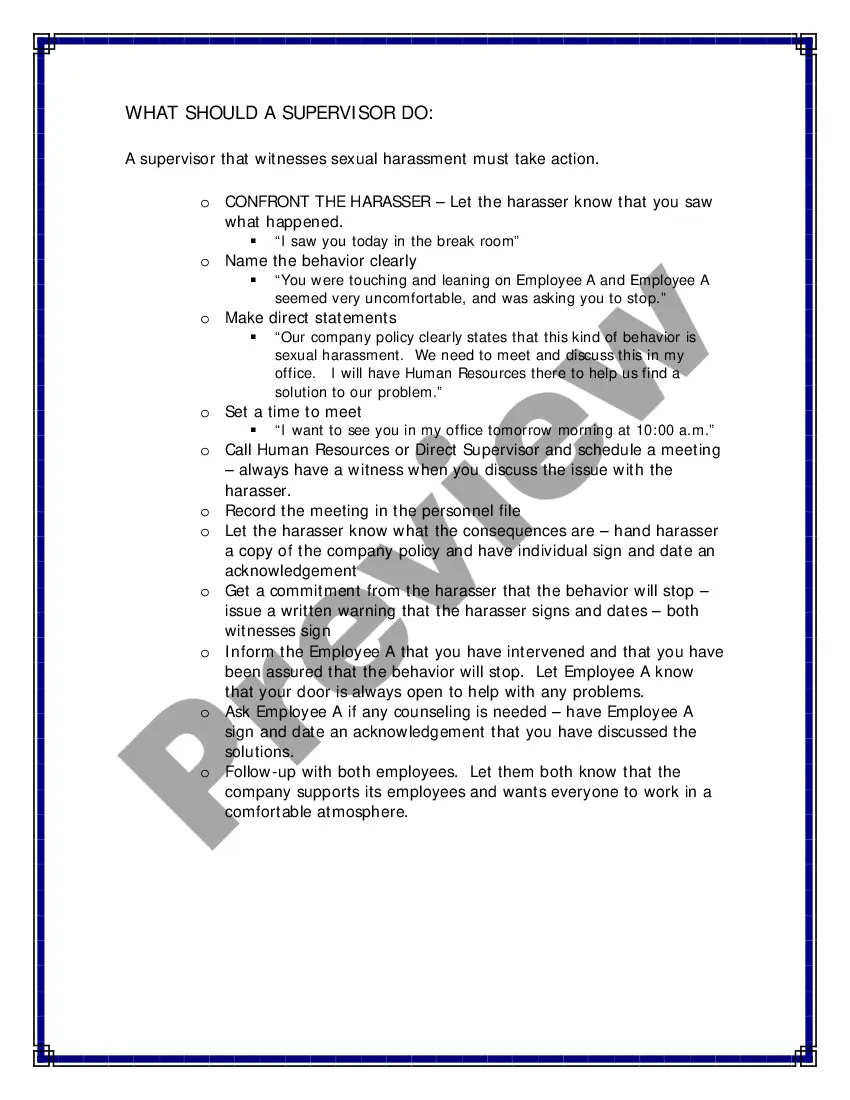
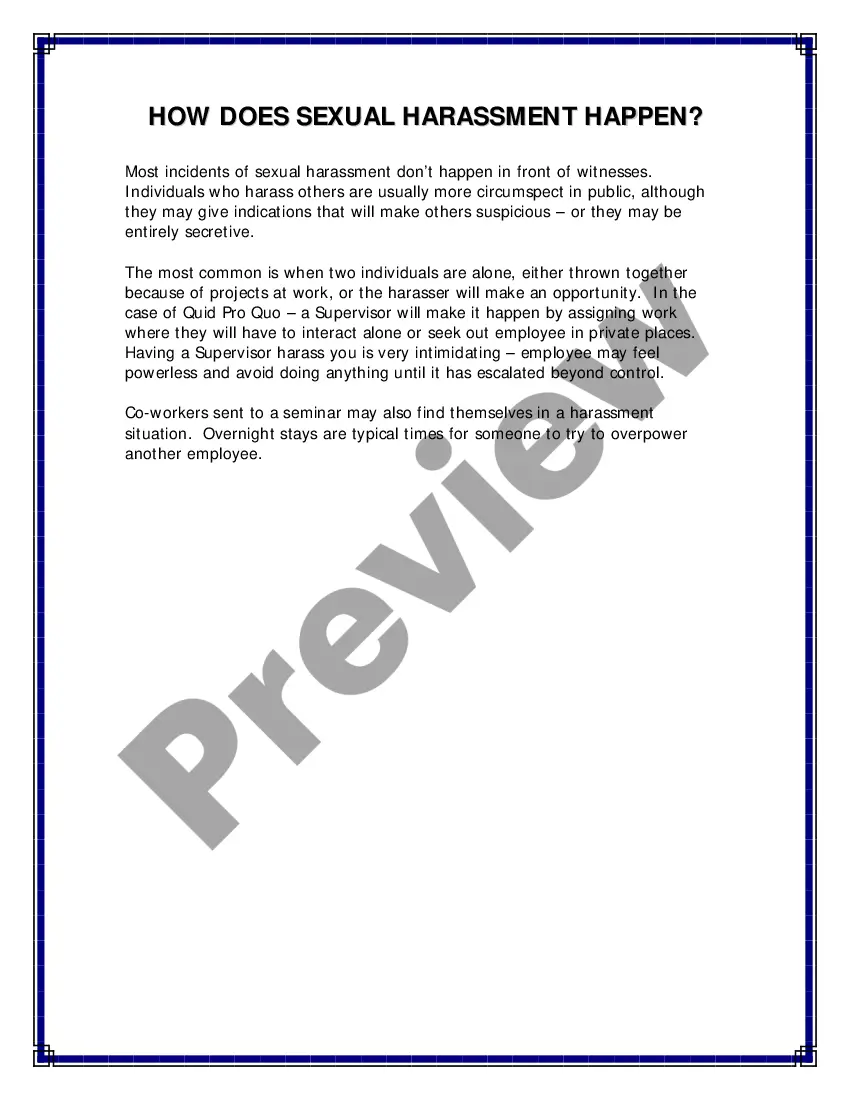
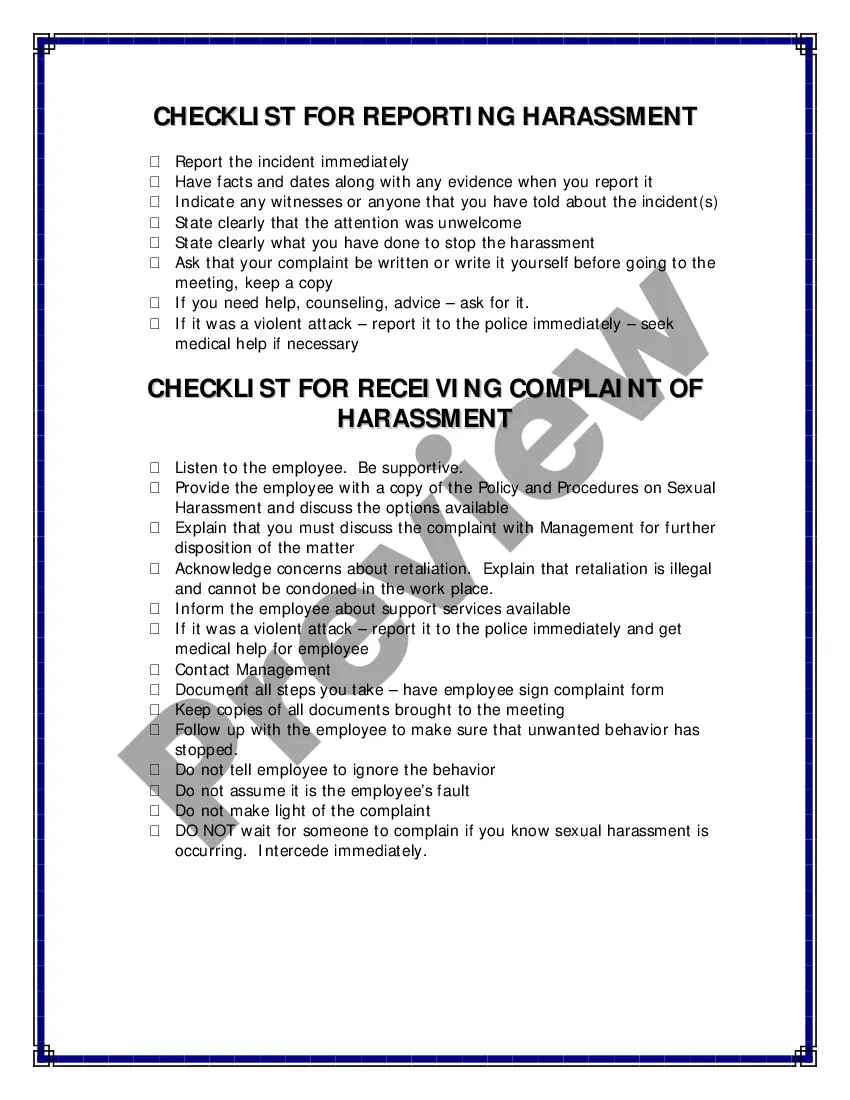

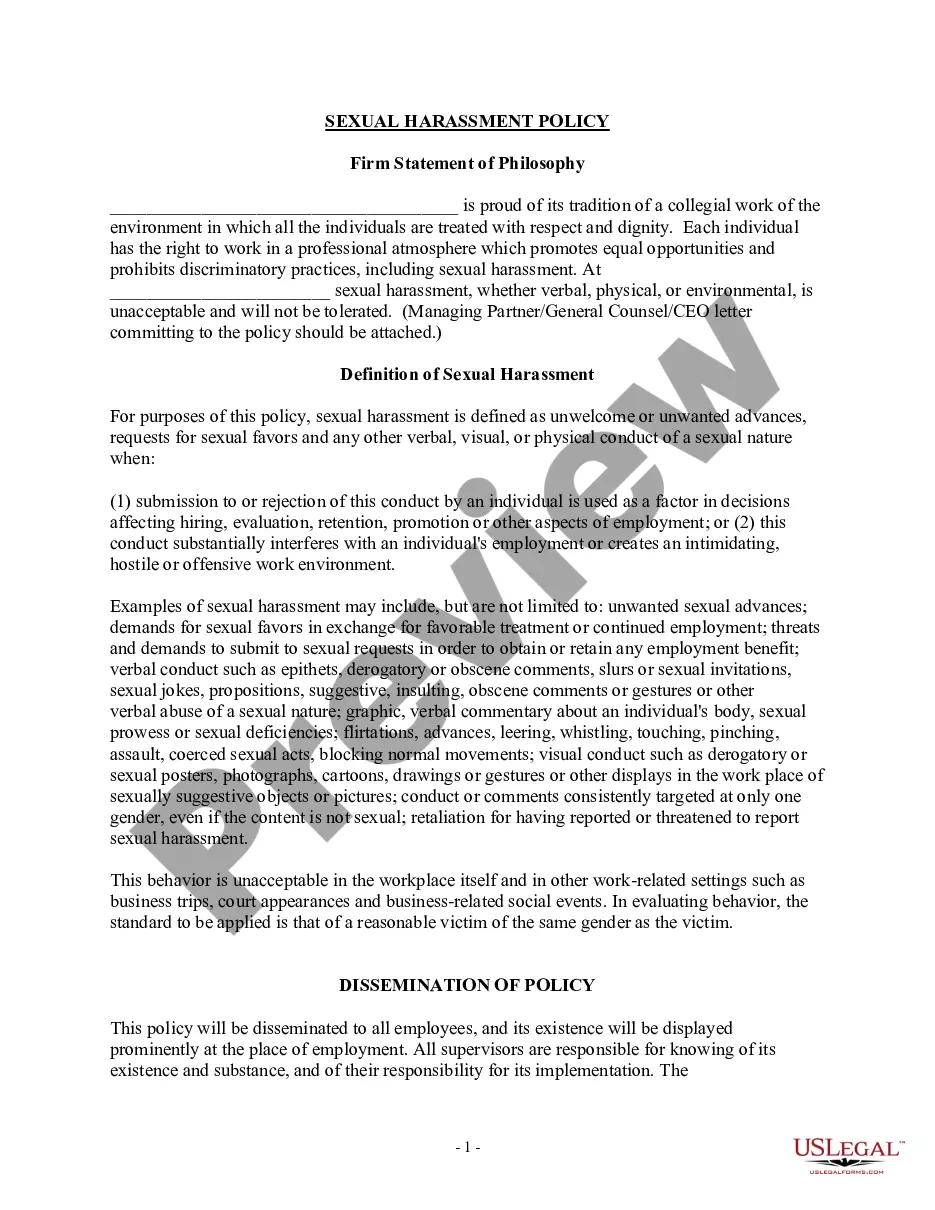


How to fill out Harassment Training Handbook - Sexual As Well As Other Forms Of Harassment - Workplace?
If you require thorough, obtain, or print legitimate document templates, utilize US Legal Forms, the primary collection of legal forms accessible online.
Utilize the website's straightforward and efficient search feature to find the documents you need.
A selection of templates for business and personal purposes are organized by categories and states, or keywords.
Step 3. If you are not satisfied with the form, use the Search field at the top of the screen to find other models in the legal form template.
Step 4. Once you have found the form you need, click the Download now button. Choose your preferred pricing plan and enter your details to register for an account.
- Utilize US Legal Forms to access the Massachusetts Harassment Training Handbook - Sexual as well as other Harassment - Workplace in just a few clicks.
- If you are a current US Legal Forms user, Log Into your account and click on the Download button to locate the Massachusetts Harassment Training Handbook - Sexual and other forms of Harassment - Workplace.
- You can also access templates you have previously downloaded in the My documents tab of your account.
- If this is your first time using US Legal Forms, follow the instructions below.
- Step 1. Ensure you have chosen the form for your correct city/state.
- Step 2. Use the Preview option to browse the content of the form. Don't forget to check the details.
Form popularity
FAQ
To prove harassment, you typically need documentation of the behavior that created a hostile work environment. This may include written complaints, emails, or witness testimonies. Using tools and resources from the Massachusetts Harassment Training Handbook - Sexual as well as other forms of Harassment - Workplace can guide you in collecting and organizing this evidence effectively. Having proper proof is vital for reporting incidents and seeking resolution in a fair manner.
In Illinois, harassment includes any unwelcome behavior that creates an intimidating, hostile, or abusive work environment. This can range from offensive jokes to unwanted physical contact or repeated unwanted communications. Employers are encouraged to refer to the Massachusetts Harassment Training Handbook - Sexual as well as other forms of Harassment - Workplace for guidance on how to recognize and prevent such behavior. This resource can significantly assist you in fostering a respectful workplace.
Workplace harassment generally falls into three main categories: sexual harassment, racial harassment, and bullying. Each type of harassment creates a hostile work environment and often leads to emotional distress. Understanding these classifications is vital, especially when utilizing the Massachusetts Harassment Training Handbook - Sexual as well as other forms of Harassment - Workplace. This handbook provides comprehensive strategies to identify and address these issues for a safer workplace.
To report harassment, you should collect evidence that demonstrates the unwanted behavior and its impact on you. This can include emails, texts, audio or video recordings, and eyewitness accounts. The Massachusetts Harassment Training Handbook - Sexual as well as other forms of Harassment - Workplace offers insights on what constitutes effective evidence and how to compile it. Presenting a well-documented case will help authorities address the harassment appropriately and support your claims.
Filing harassment charges in Massachusetts involves submitting a complaint to the Massachusetts Commission Against Discrimination (MCAD). First, gather your evidence, as outlined in the Massachusetts Harassment Training Handbook - Sexual as well as other forms of Harassment - Workplace, to strengthen your case. After preparing your documentation, you can fill out the complaint form, which will outline the specific incidents of harassment and request an investigation. It’s beneficial to consult legal resources to ensure you follow the correct procedures.
To prove harassment in Massachusetts, you must show that unwanted behavior occurred, which created a hostile work environment. This evidence can include witness statements, emails, or texts that demonstrate the harassment. Utilizing the Massachusetts Harassment Training Handbook - Sexual as well as other forms of Harassment - Workplace can guide you in understanding your rights and gathering necessary documentation. It is essential to keep a detailed record of incidents to support your claim effectively.
Workplace harassment can manifest in several ways, including verbal, physical, and visual harassment. Verbal harassment involves inappropriate jokes or comments, while physical harassment can include unwanted touching or aggression. Visual harassment encompasses offensive images, gestures, or displays that create a hostile environment. To better understand and combat these issues, consider the Massachusetts Harassment Training Handbook - Sexual as well as other forms of Harassment - Workplace, which provides detailed guidance and best practices.
In Massachusetts, the 3 hour rule refers to the minimum training requirement for harassment prevention in the workplace. Employers must provide at least three hours of training for employees covering sexual harassment, along with information on other forms of harassment. Adhering to these guidelines is essential to comply with state laws and create a safe work environment. The Massachusetts Harassment Training Handbook - Sexual as well as other forms of Harassment - Workplace can be an invaluable resource for understanding these requirements.
When identifying harassment, it's vital to consider the context and the impact of the behavior on individuals. The Massachusetts Harassment Training Handbook - Sexual as well as other forms of Harassment - Workplace emphasizes listening to affected parties and gathering all relevant details. Understanding the power dynamics at play is also crucial. Creating a culture of openness encourages individuals to come forward, aiding in proper identification and resolution.
Addressing harassment starts with establishing clear policies and procedures in your workplace. The Massachusetts Harassment Training Handbook - Sexual as well as other forms of Harassment - Workplace offers crucial strategies for response. Training employees to report incidents fosters a safe and respectful environment. By implementing these guidelines, organizations can effectively manage and reduce harassment cases.