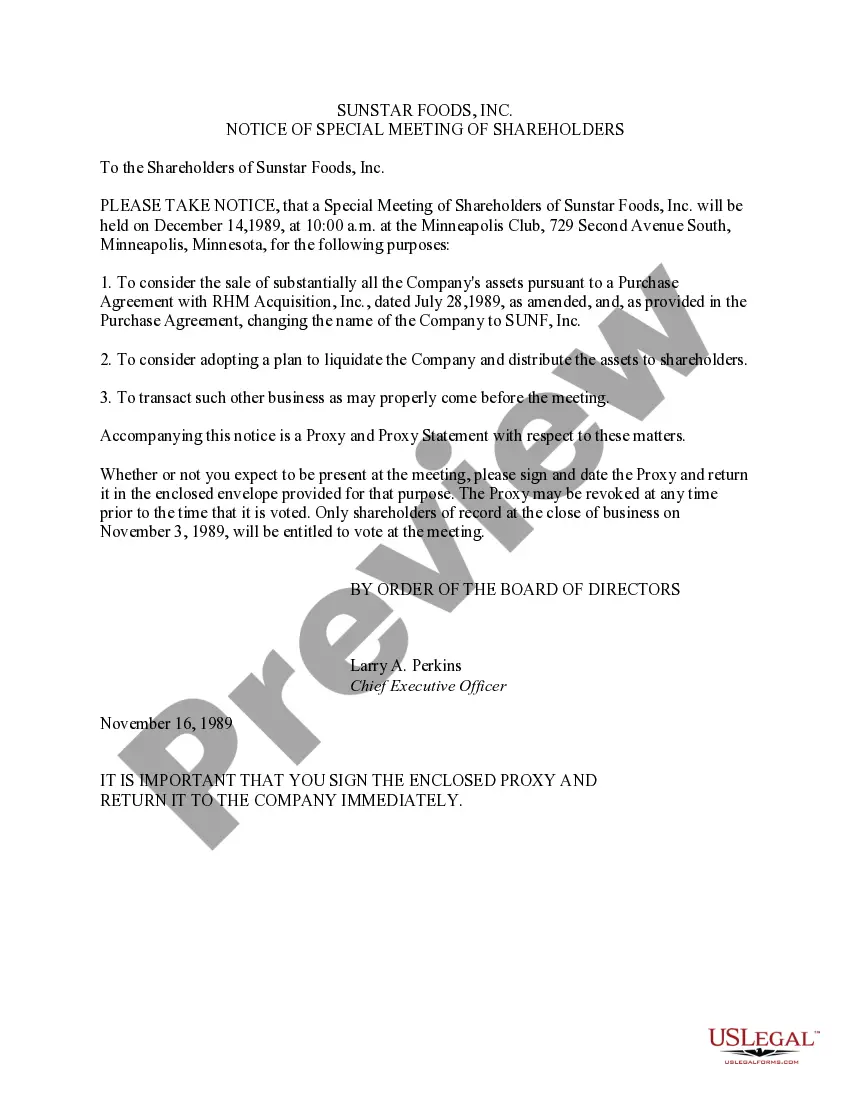
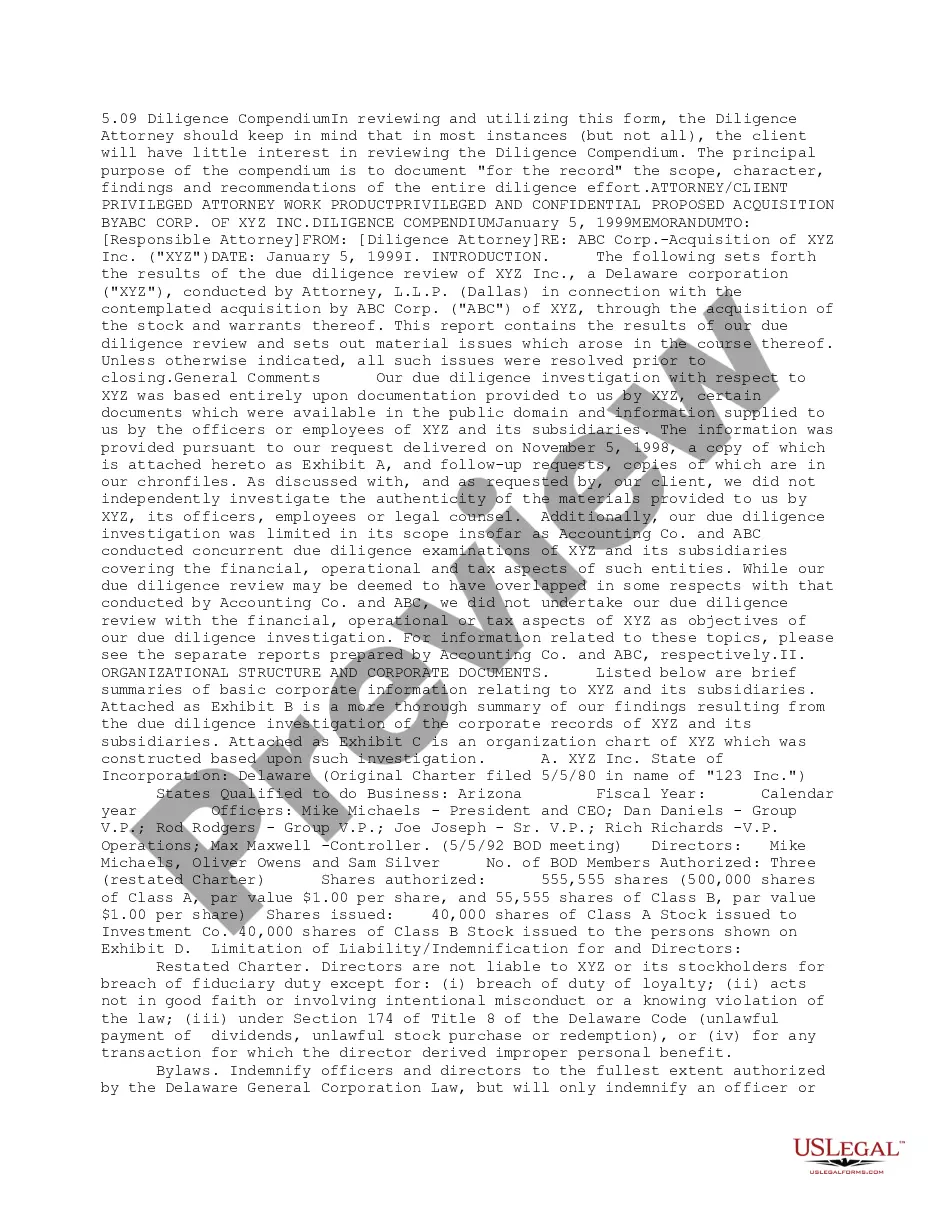
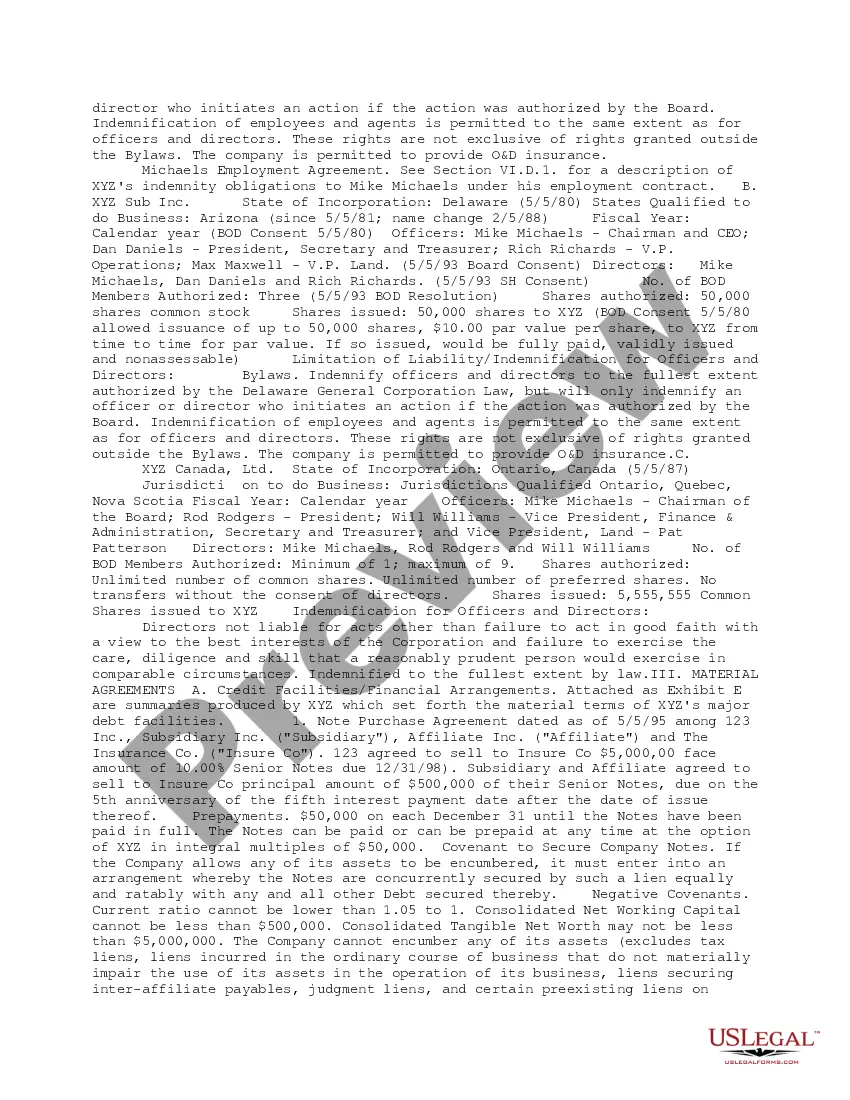
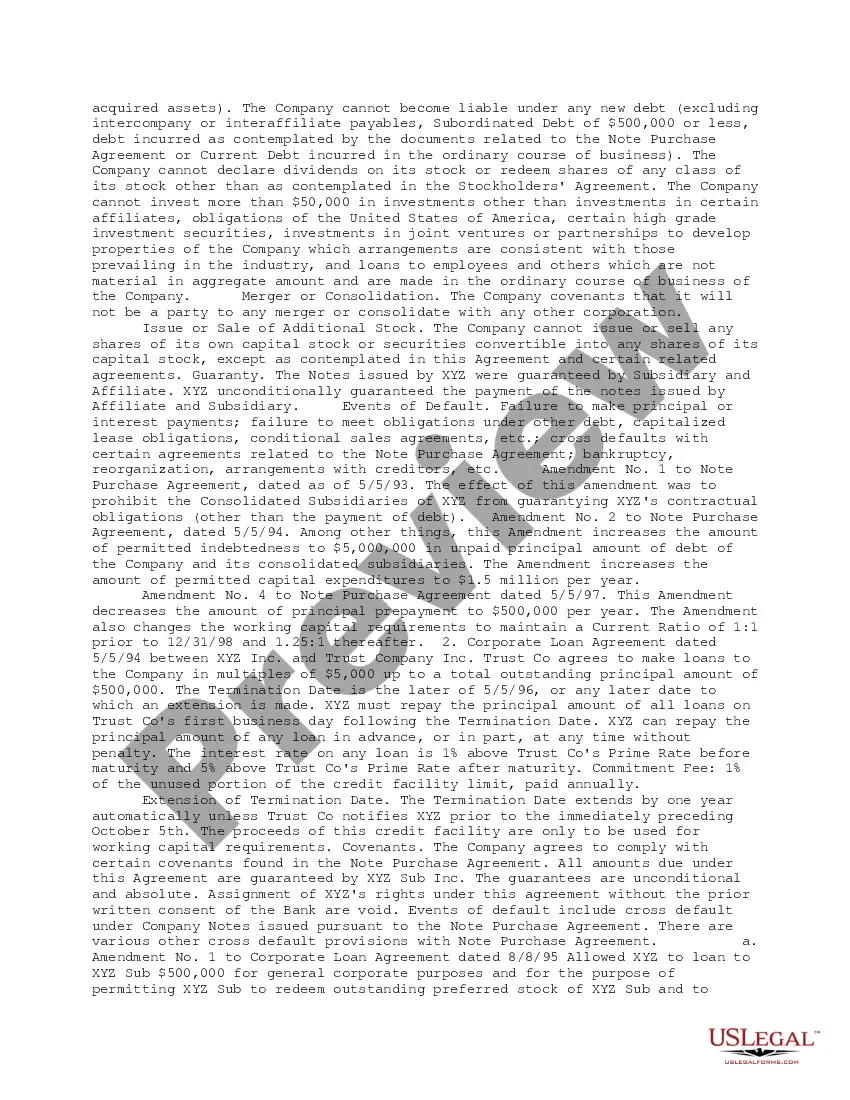
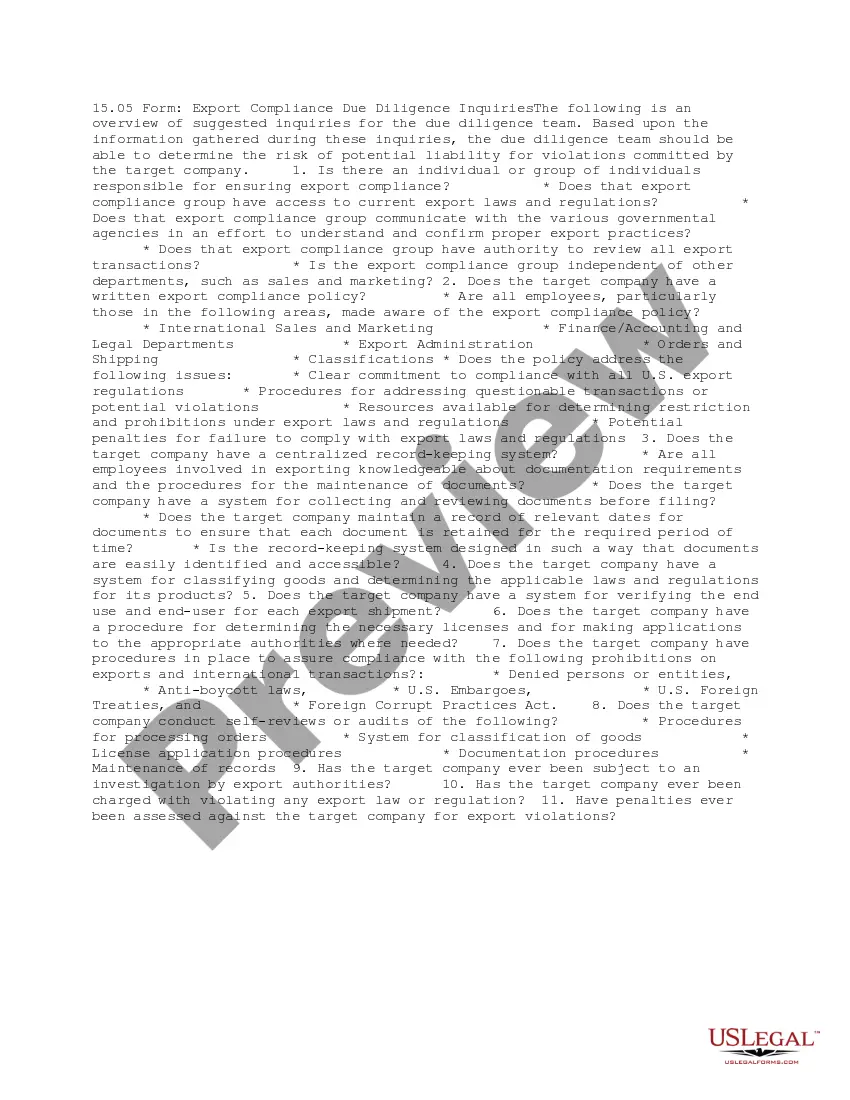
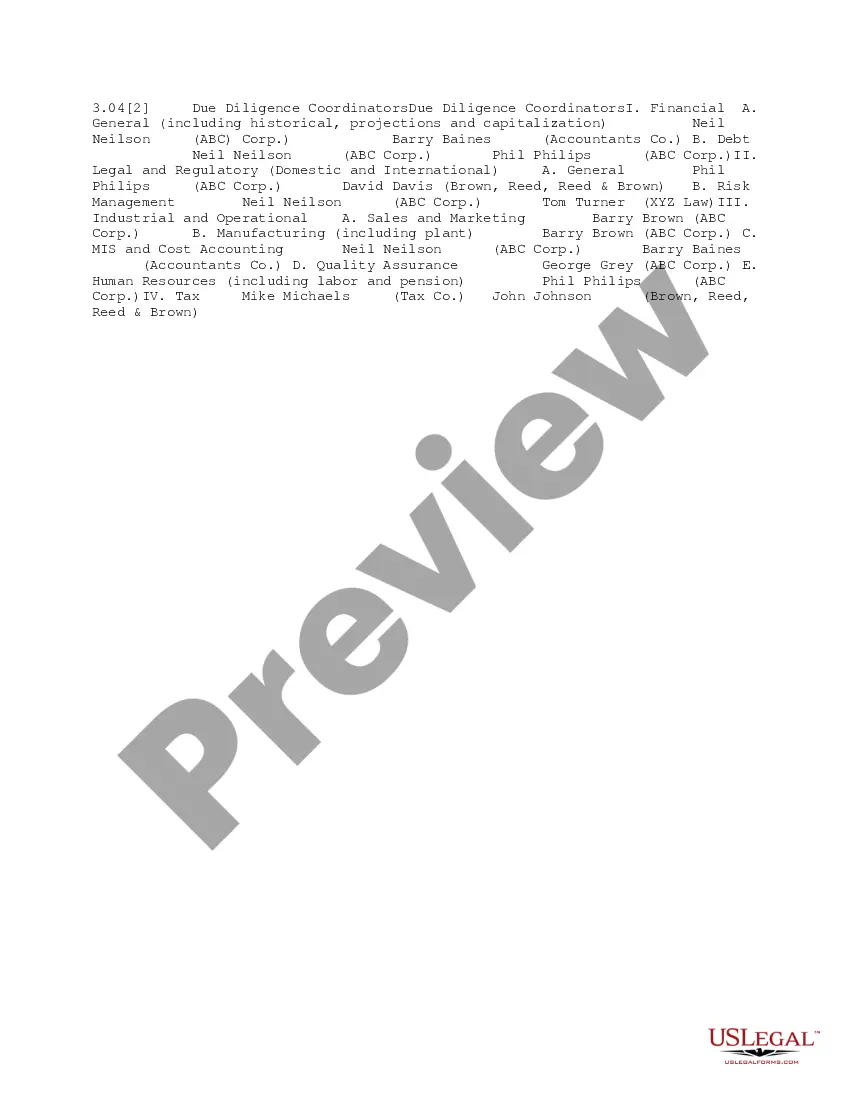
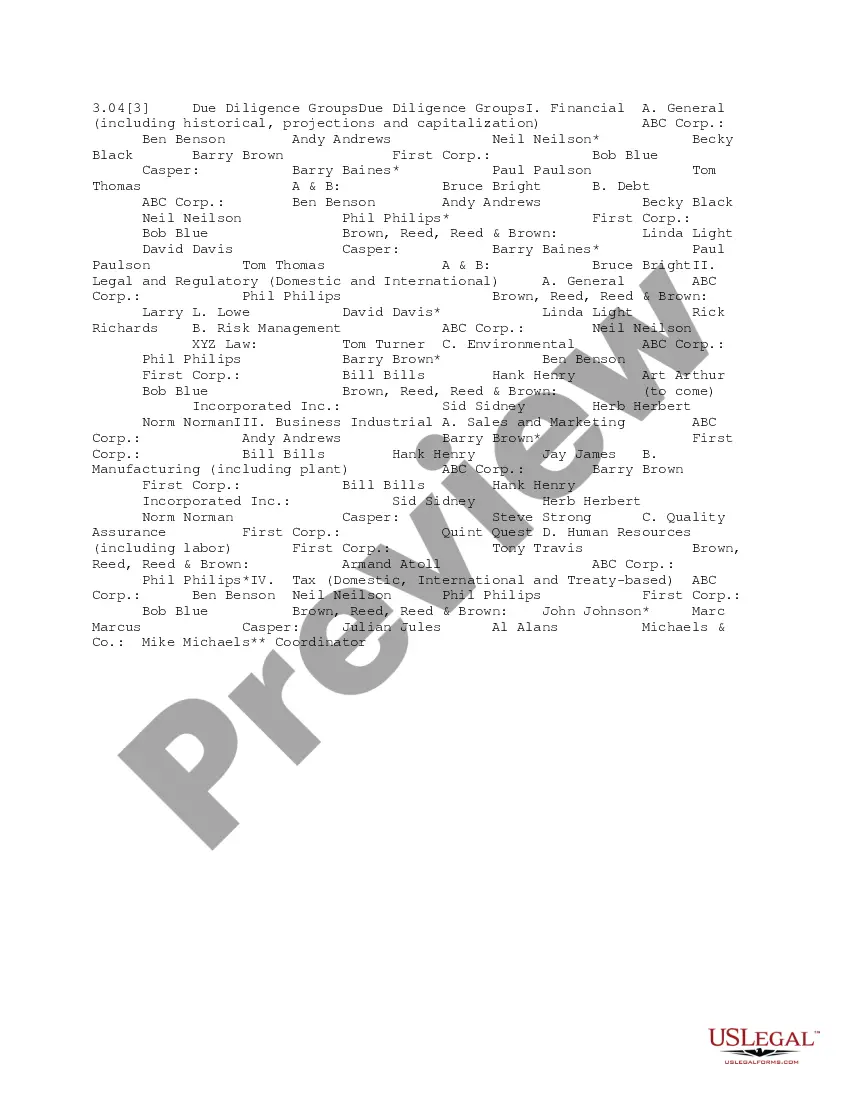
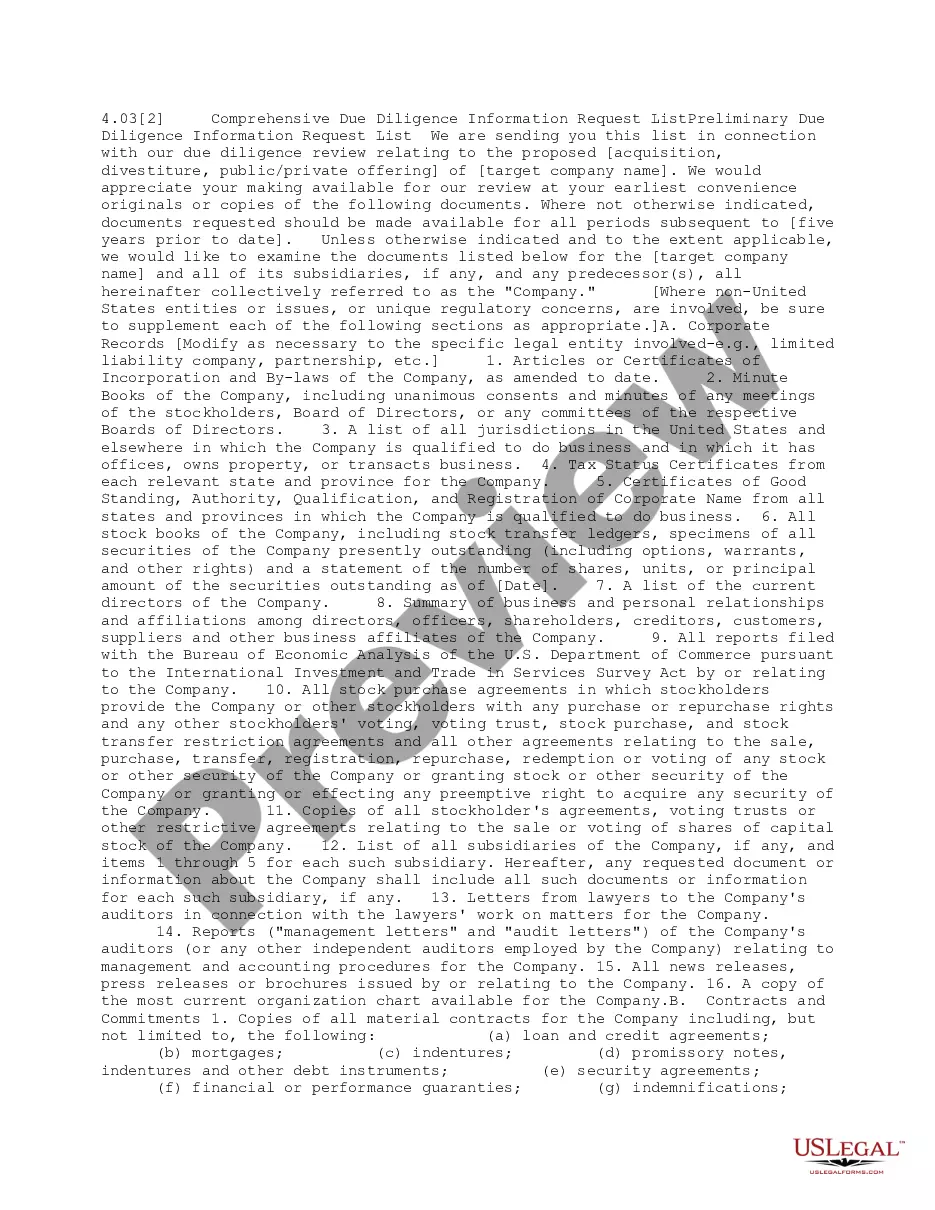
This due diligence form is used to document "for the record" the scope, character, findings and recommendations of the entire diligence effort in business transactions.
Massachusetts Diligence Compendium
Category:
State:
Multi-State
Control #:
US-DD0509
Format:
Word;
PDF;
Rich Text
Instant download
Description
Free preview
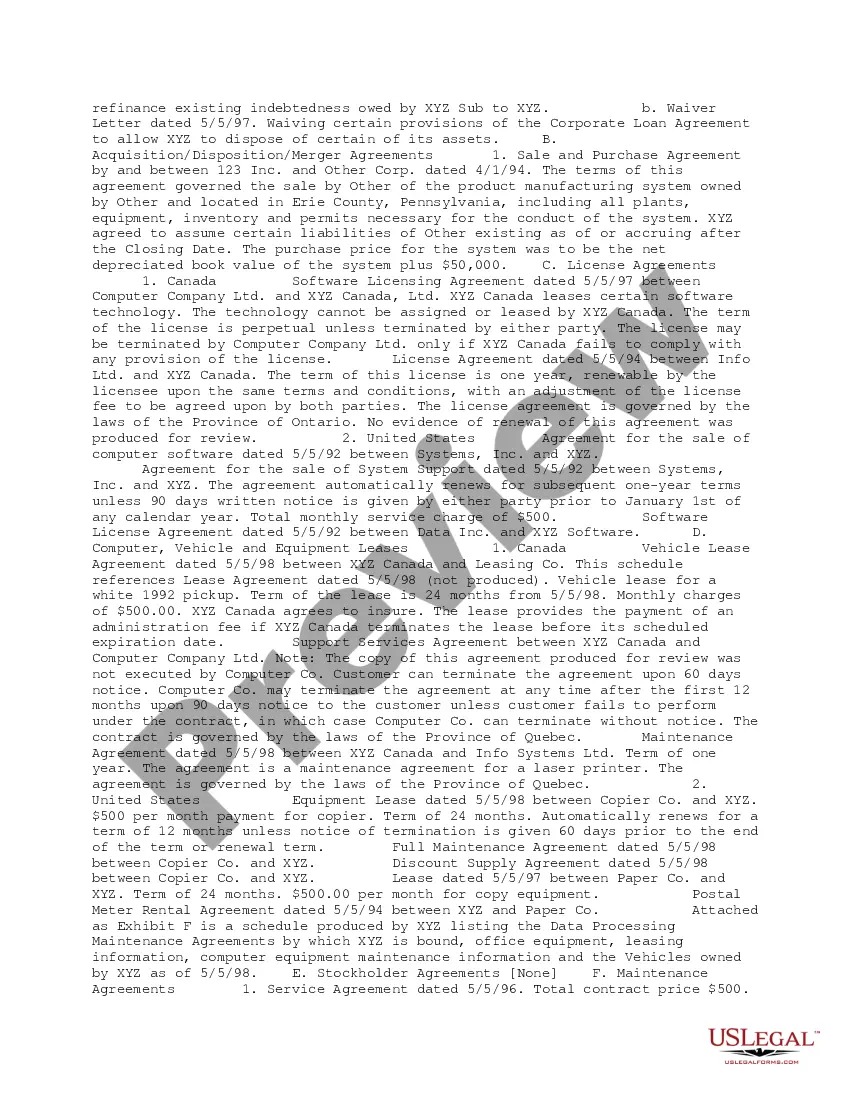
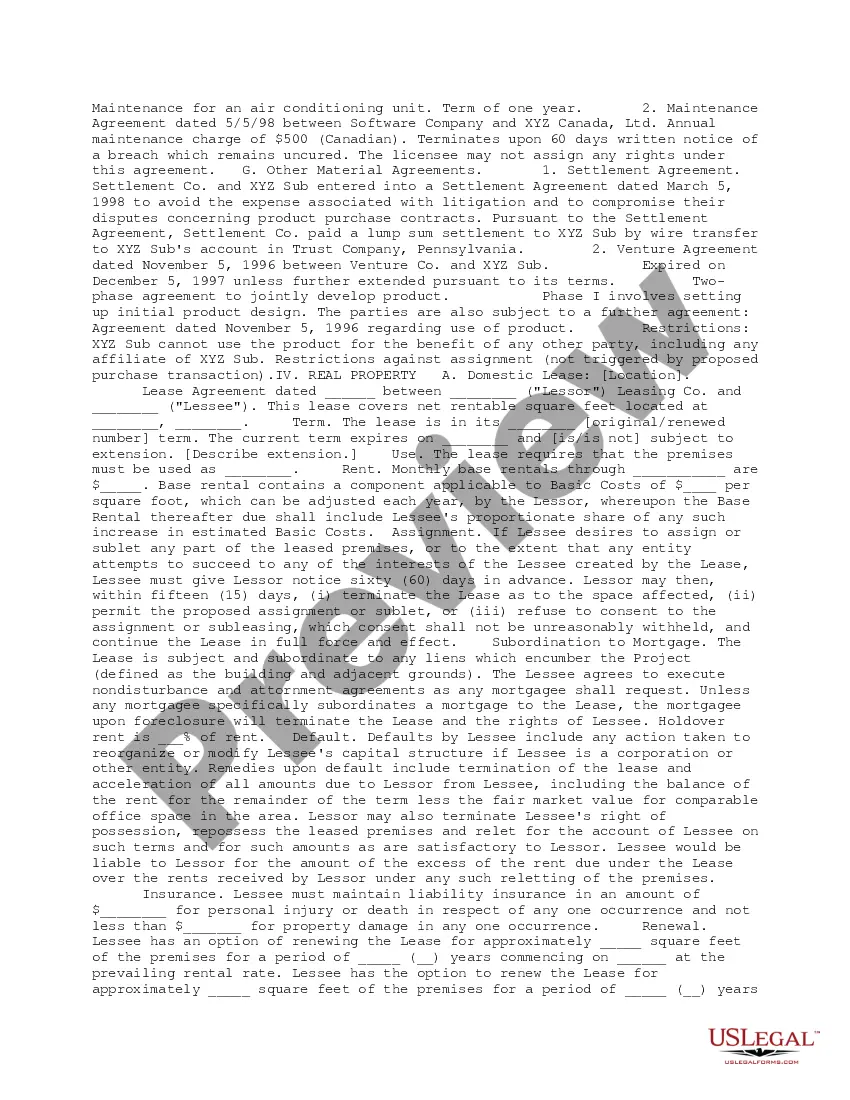
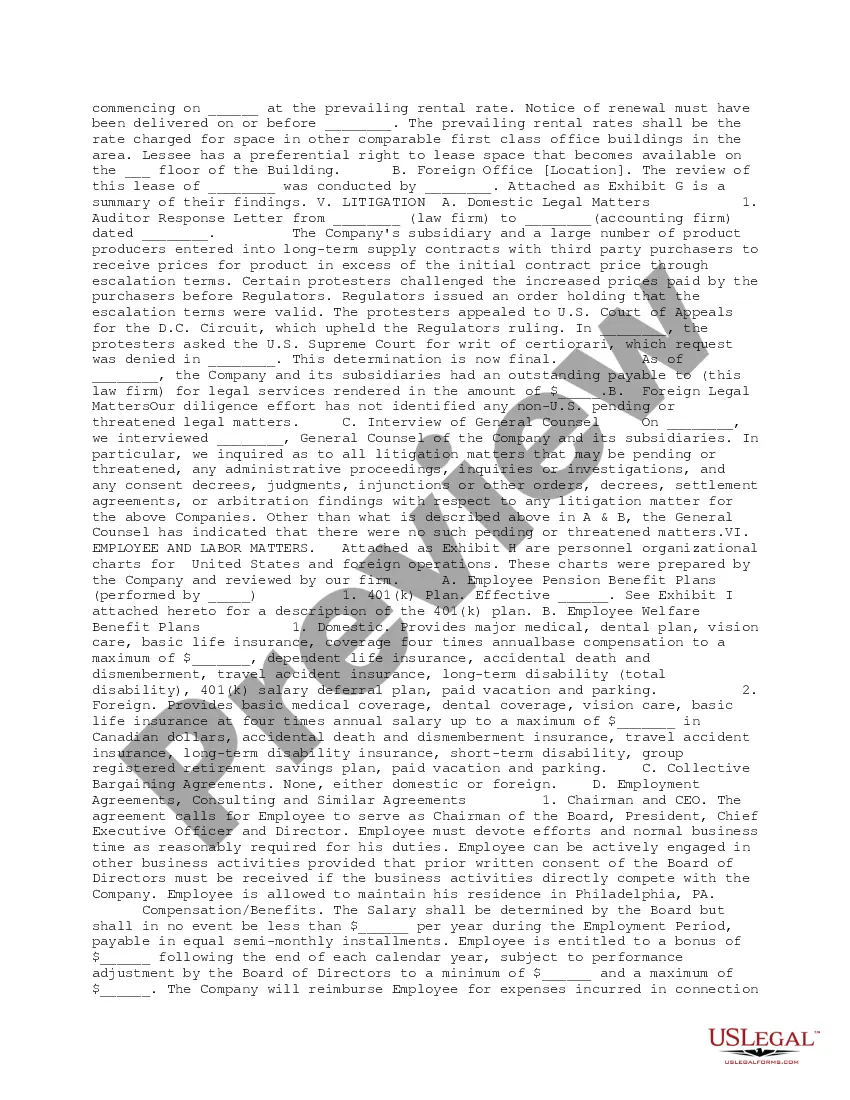
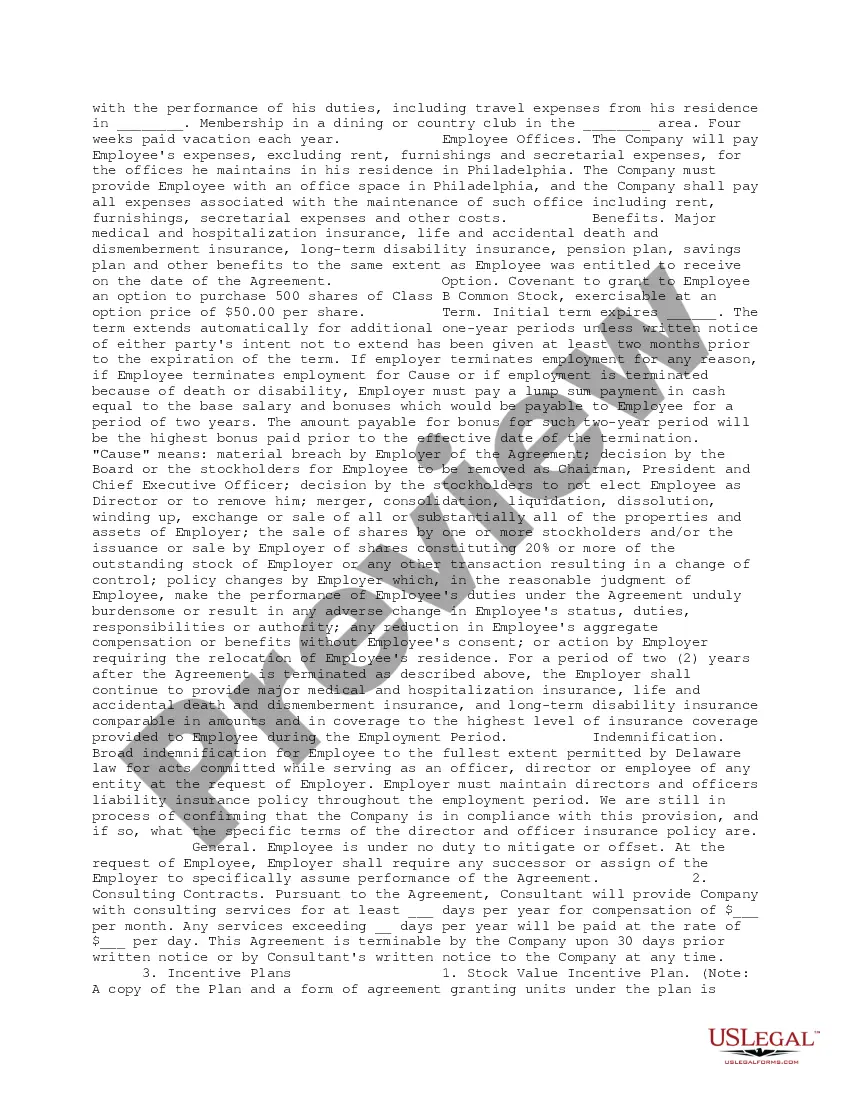

Get your form ready online
Our built-in tools help you complete, sign, share, and store your documents in one place.
Built-in online Word editor
Make edits, fill in missing information, and update formatting in US Legal Forms—just like you would in MS Word.
Export easily
Download a copy, print it, send it by email, or mail it via USPS—whatever works best for your next step.
E-sign your document
Sign and collect signatures with our SignNow integration. Send to multiple recipients, set reminders, and more. Go Premium to unlock E-Sign.
Notarize online 24/7
If this form requires notarization, complete it online through a secure video call—no need to meet a notary in person or wait for an appointment.
Store your document securely
We protect your documents and personal data by following strict security and privacy standards.

Make edits, fill in missing information, and update formatting in US Legal Forms—just like you would in MS Word.

Download a copy, print it, send it by email, or mail it via USPS—whatever works best for your next step.

Sign and collect signatures with our SignNow integration. Send to multiple recipients, set reminders, and more. Go Premium to unlock E-Sign.

If this form requires notarization, complete it online through a secure video call—no need to meet a notary in person or wait for an appointment.

We protect your documents and personal data by following strict security and privacy standards.
Looking for another form?

How to fill out Diligence Compendium?
If you need to aggregate, download, or print legal document templates, utilize US Legal Forms, the largest collection of legal forms available online.
Use the site’s straightforward and convenient search to find the documents you require.
Various templates for business and personal purposes are organized by categories and states, or keywords.
Step 4. Once you have found the form you need, click the Get now button. Choose the pricing plan you prefer and enter your details to create an account.
Step 5. Complete the transaction. You can use your credit card or PayPal account to finalize the purchase.
- Use US Legal Forms to locate the Massachusetts Diligence Compendium with just a few clicks.
- If you are already a US Legal Forms user, Log In to your account and then click the Obtain button to retrieve the Massachusetts Diligence Compendium.
- You can also access forms you previously downloaded in the My documents section of your account.
- If this is your first time using US Legal Forms, follow the steps below.
- Step 1. Ensure you have selected the form for the appropriate city/state.
- Step 2. Use the Preview option to review the form’s content.
- Step 3. If you are dissatisfied with the form, use the Search field at the top of the screen to find other versions of the legal form template.
Form popularity
FAQ
Diligence checks refer to the various assessments and verifications conducted during the due diligence process. These checks evaluate legal, financial, and operational aspects of a property or business. The Massachusetts Diligence Compendium provides resources to help you navigate these checks effectively and confidently.
A diligence checklist is a comprehensive tool used to track all tasks and documents required during the due diligence phase. It ensures that you do not overlook important elements that impact the transaction. The Massachusetts Diligence Compendium offers detailed checklists to facilitate smooth and efficient due diligence.
Due diligence in Massachusetts involves thoroughly investigating a business or property before completing a transaction. This process enables buyers to assess risks, confirm asset value, and uncover any potential issues. Utilizing the Massachusetts Diligence Compendium can streamline this process and provide essential insights.
A diligence request list is a document outlining the specific information and documents needed during the due diligence process. It helps stakeholders organize and gather the necessary materials efficiently. The Massachusetts Diligence Compendium includes various templates for diligence request lists, ensuring you cover all required areas.
The due diligence process includes several key steps. First, start with a comprehensive assessment of the target, examining operations, finances, and legal standing. Then, leverage the Massachusetts Diligence Compendium for thorough checklists and frameworks to streamline your analysis. Conclude by summarizing the insights and making sound recommendations to guide your next steps.
The steps of due diligence typically begin with identifying the objectives of your investigation. Next, you'll gather relevant information, evaluate the data you collected, and analyze the findings. During this process, the Massachusetts Diligence Compendium serves as a crucial resource, offering you insights and guidelines to ensure you cover all necessary aspects. Finally, you will take action based on your findings, securing informed decisions.
A due diligence checklist is a comprehensive list that outlines all necessary steps and documents needed for the due diligence process. It typically includes categories such as finances, legal documents, and operational aspects. By leveraging the Massachusetts Diligence Compendium, users can create an effective due diligence checklist tailored to their specific needs.
The 4 P's of due diligence include People, Product, Process, and Purpose. These elements help organizations evaluate key aspects before entering a business agreement. The Massachusetts Diligence Compendium outlines these factors clearly, ensuring businesses address each element to mitigate risks effectively.
Due diligence refers to the investigation or audit of a potential investment or product to confirm all material facts. For example, when investing in real estate, a potential buyer examines property records, zoning laws, and financials. The Massachusetts Diligence Compendium provides a structured approach to ensure all necessary assessments are conducted.
The 3 P's of due diligence are People, Process, and Product. Understanding these components helps organizations evaluate potential risks and benefits of a transaction. The Massachusetts Diligence Compendium elaborates on these concepts, offering users valuable insights into how to conduct due diligence effectively.