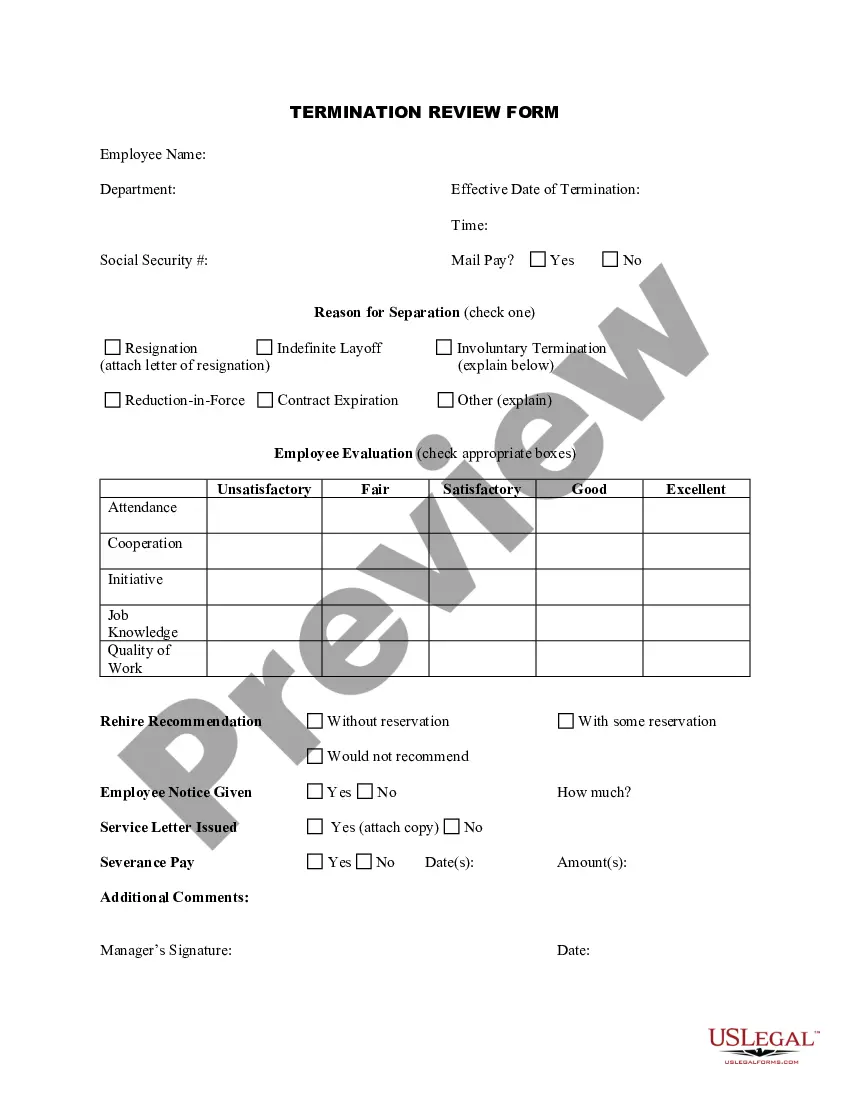
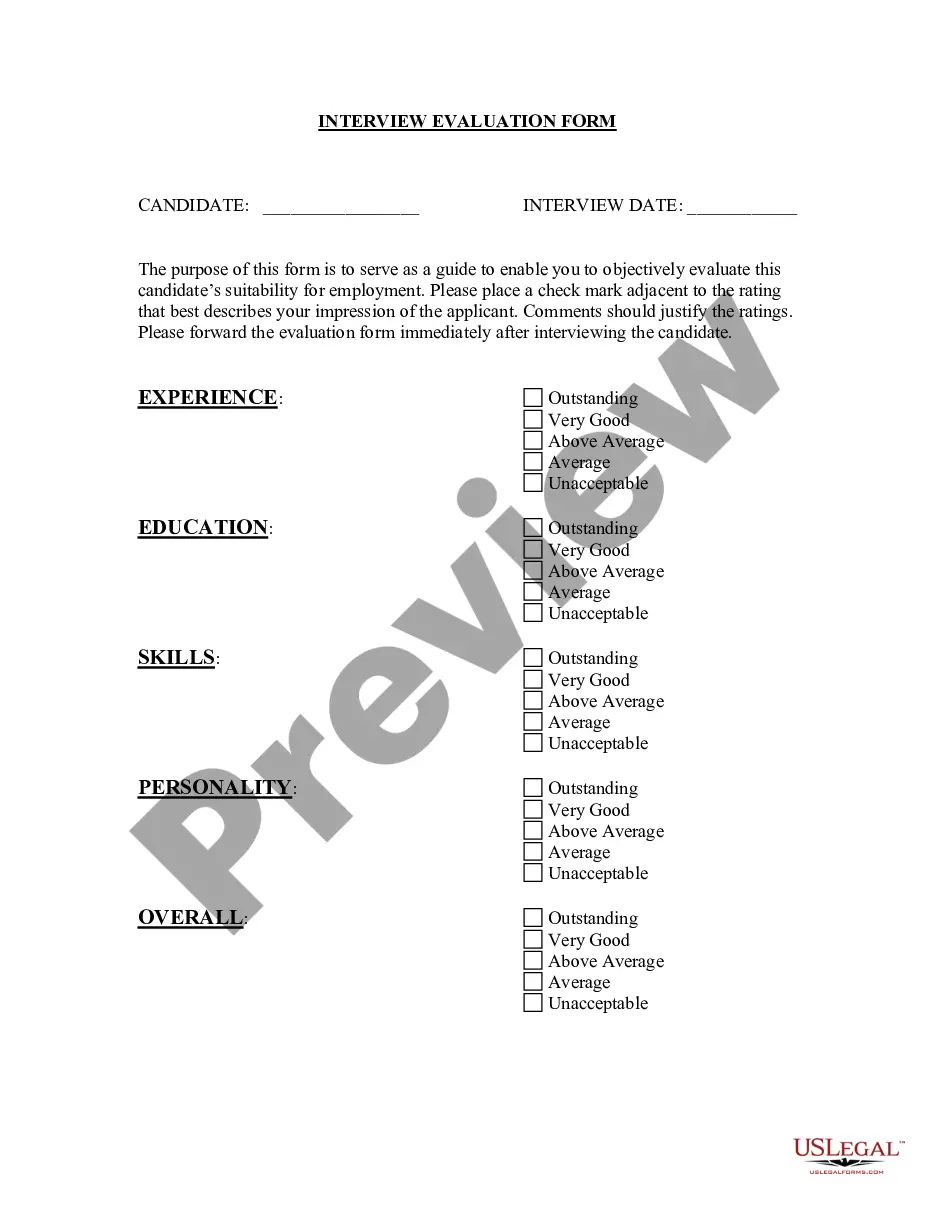
Massachusetts Termination Review Form
Description
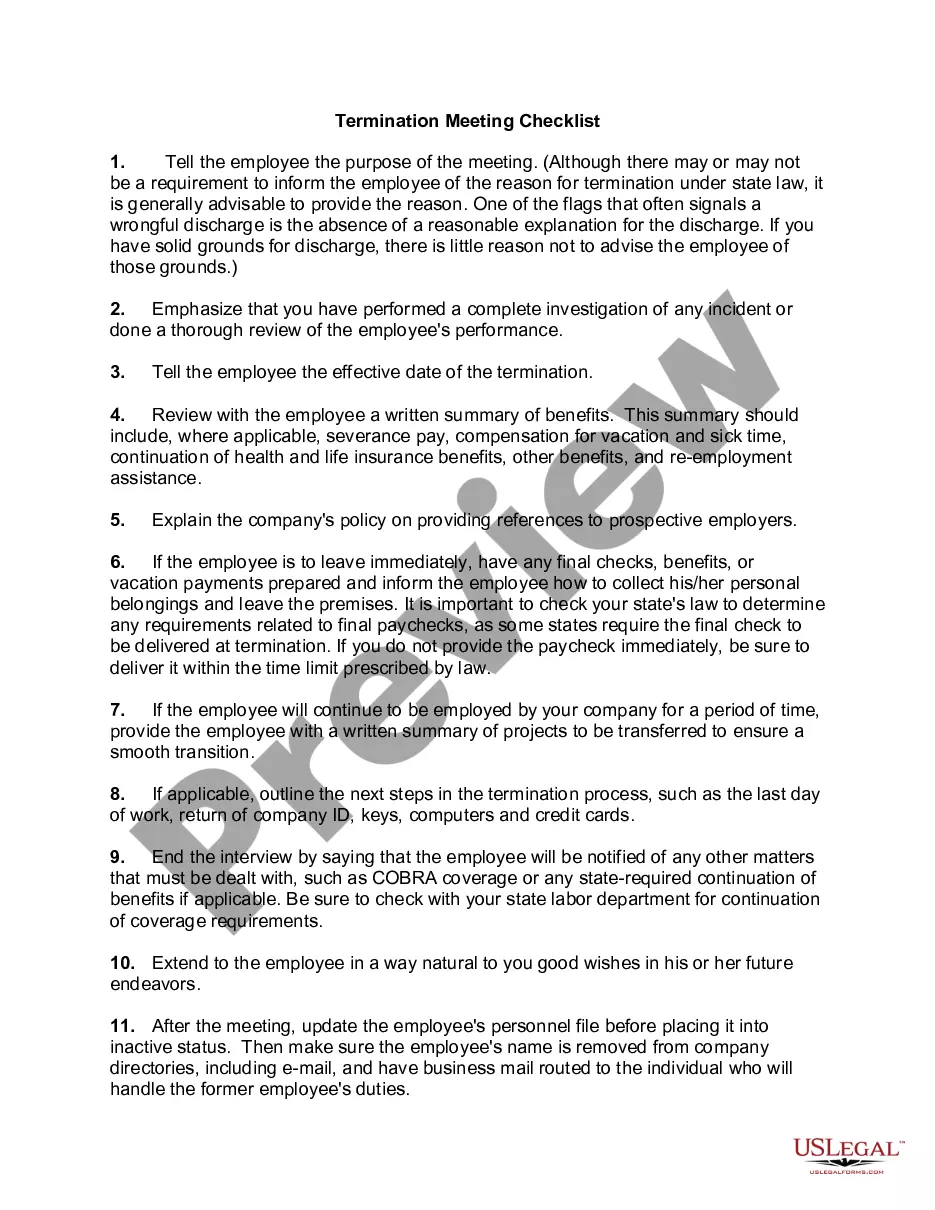
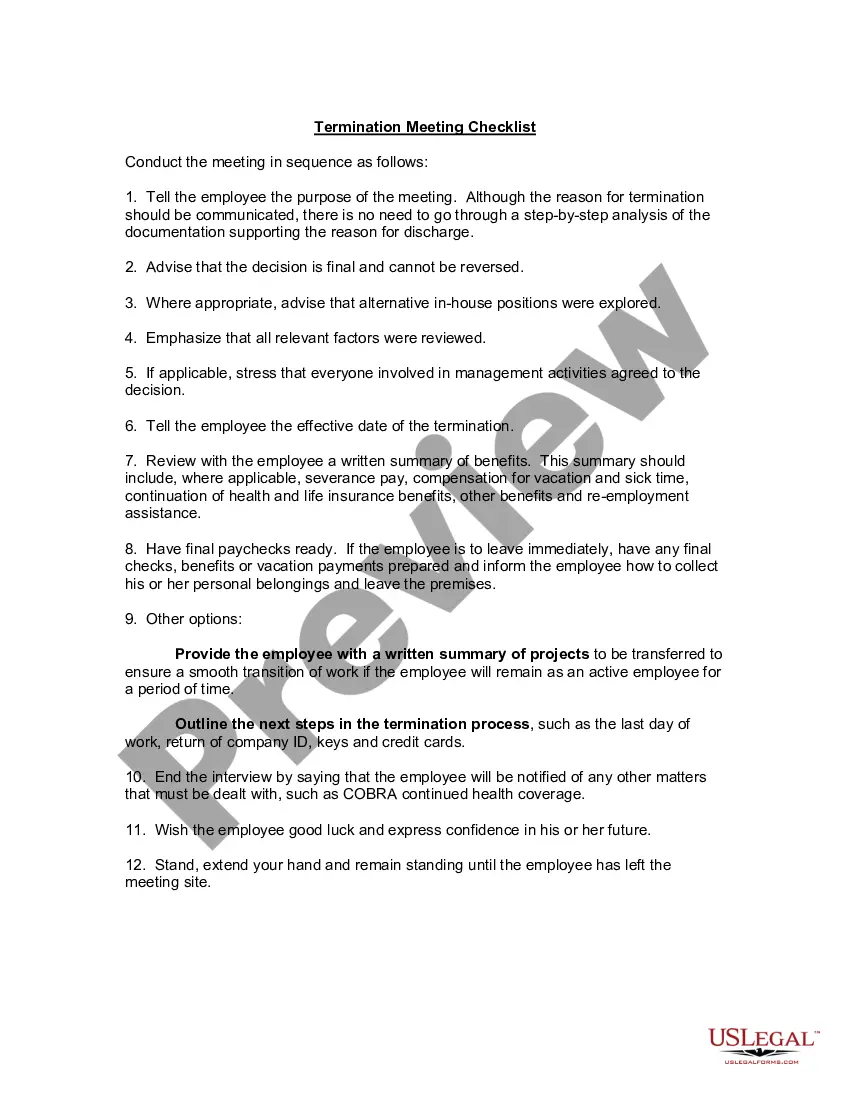
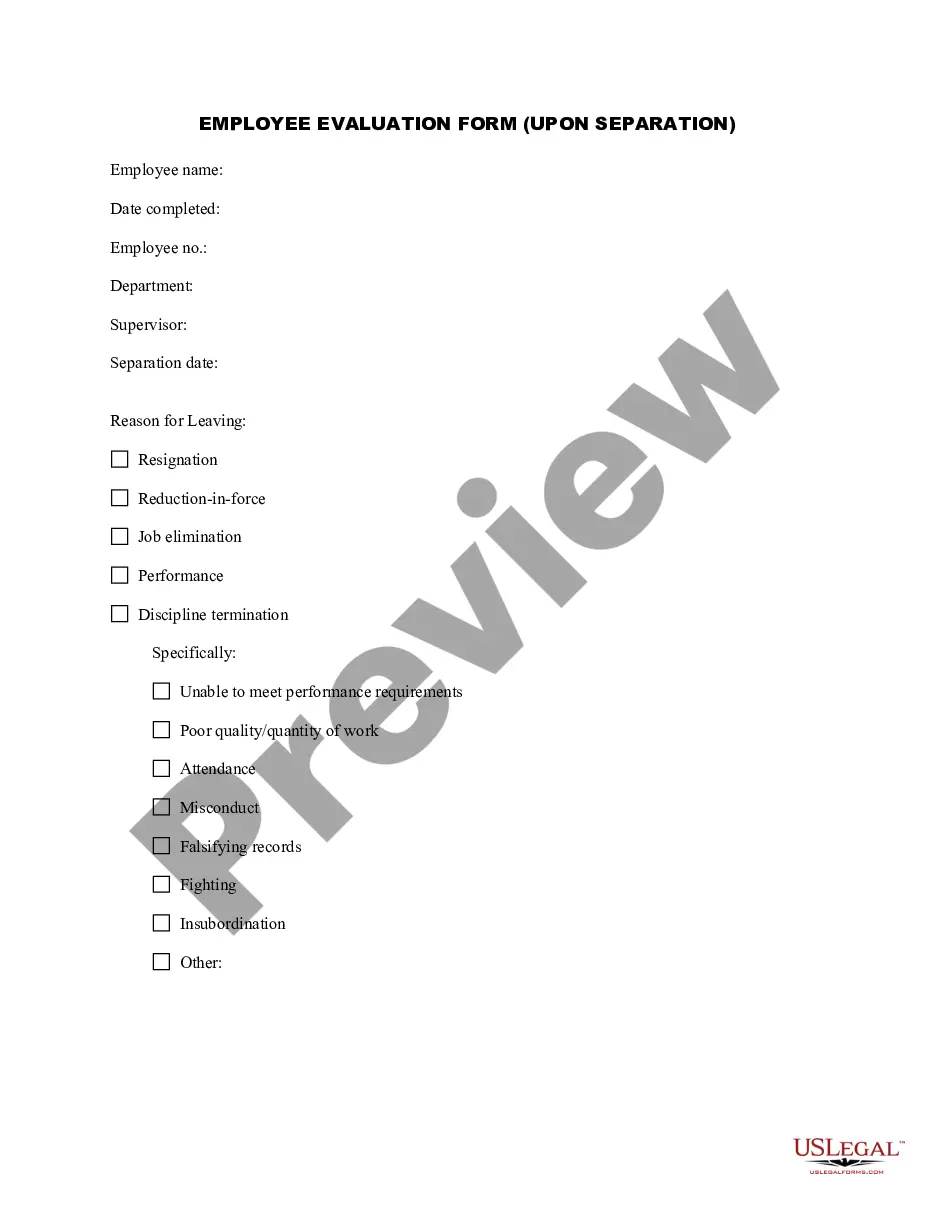
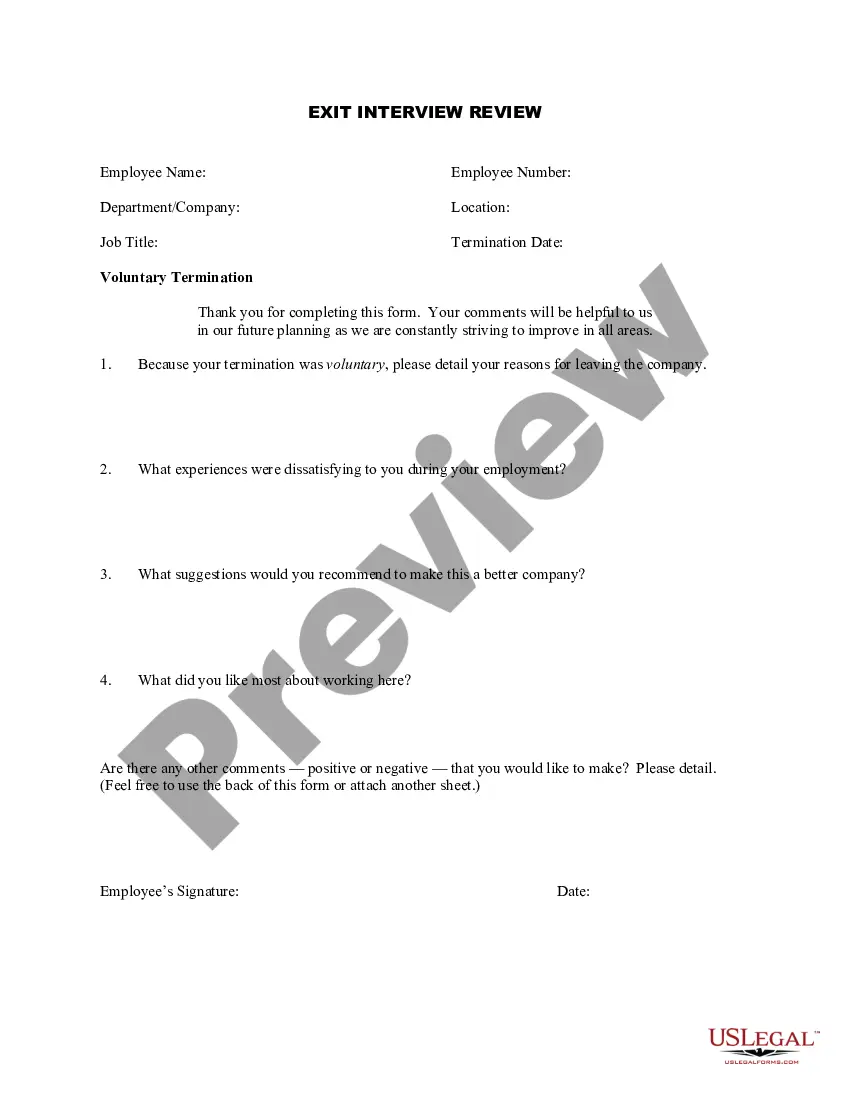
Get your form ready online
Our built-in tools help you complete, sign, share, and store your documents in one place.
Make edits, fill in missing information, and update formatting in US Legal Forms—just like you would in MS Word.
Download a copy, print it, send it by email, or mail it via USPS—whatever works best for your next step.
Sign and collect signatures with our SignNow integration. Send to multiple recipients, set reminders, and more. Go Premium to unlock E-Sign.
If this form requires notarization, complete it online through a secure video call—no need to meet a notary in person or wait for an appointment.
We protect your documents and personal data by following strict security and privacy standards.

Make edits, fill in missing information, and update formatting in US Legal Forms—just like you would in MS Word.

Download a copy, print it, send it by email, or mail it via USPS—whatever works best for your next step.

Sign and collect signatures with our SignNow integration. Send to multiple recipients, set reminders, and more. Go Premium to unlock E-Sign.

If this form requires notarization, complete it online through a secure video call—no need to meet a notary in person or wait for an appointment.

We protect your documents and personal data by following strict security and privacy standards.
Looking for another form?
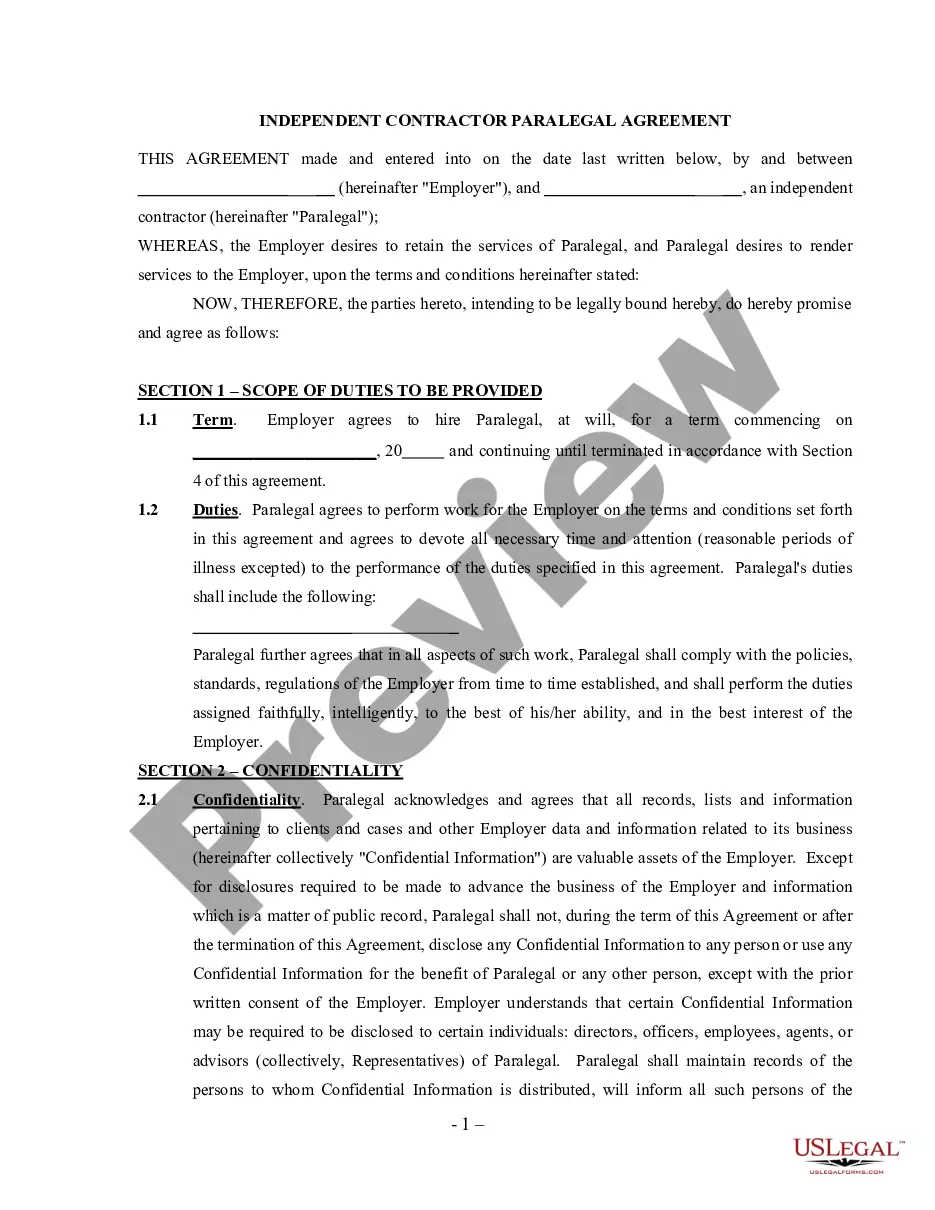
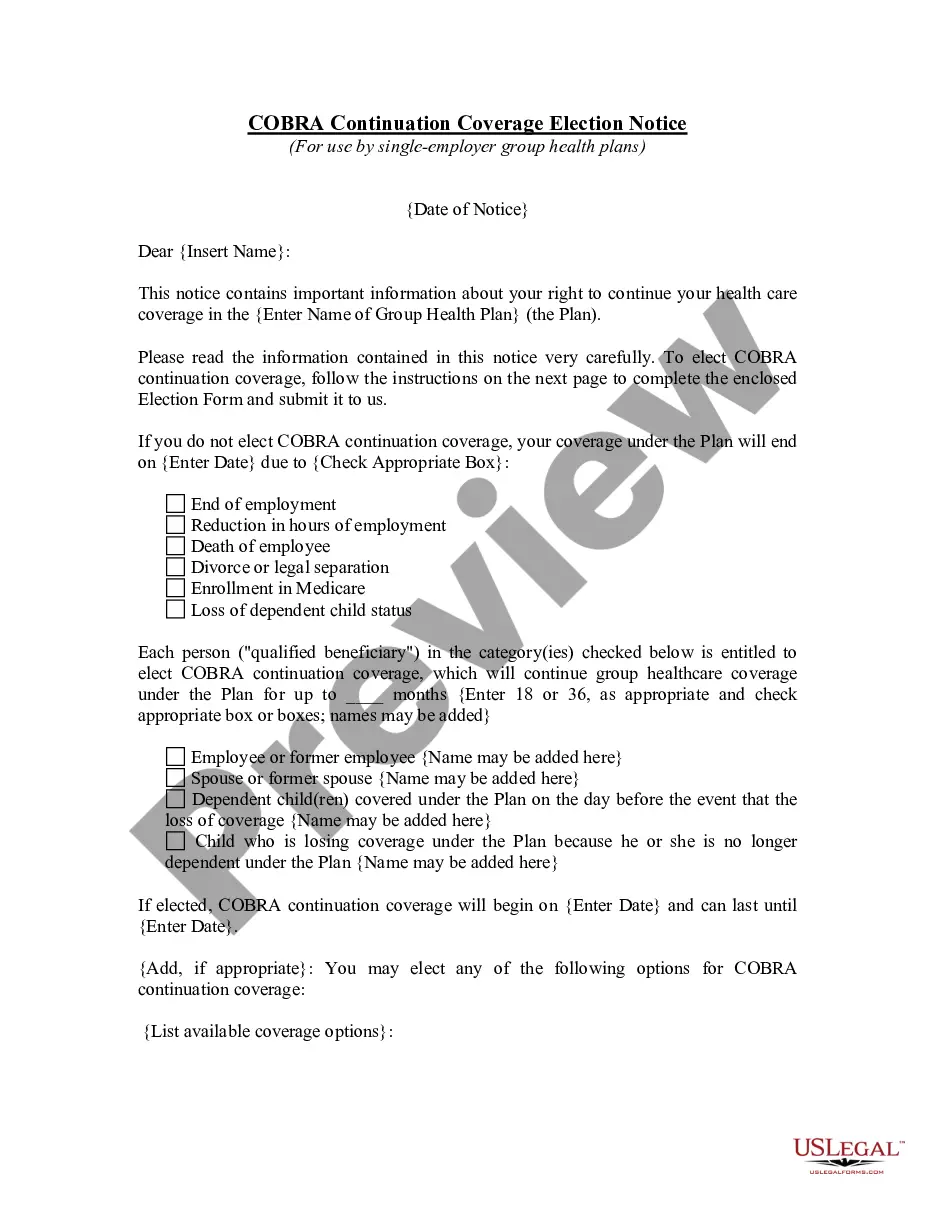
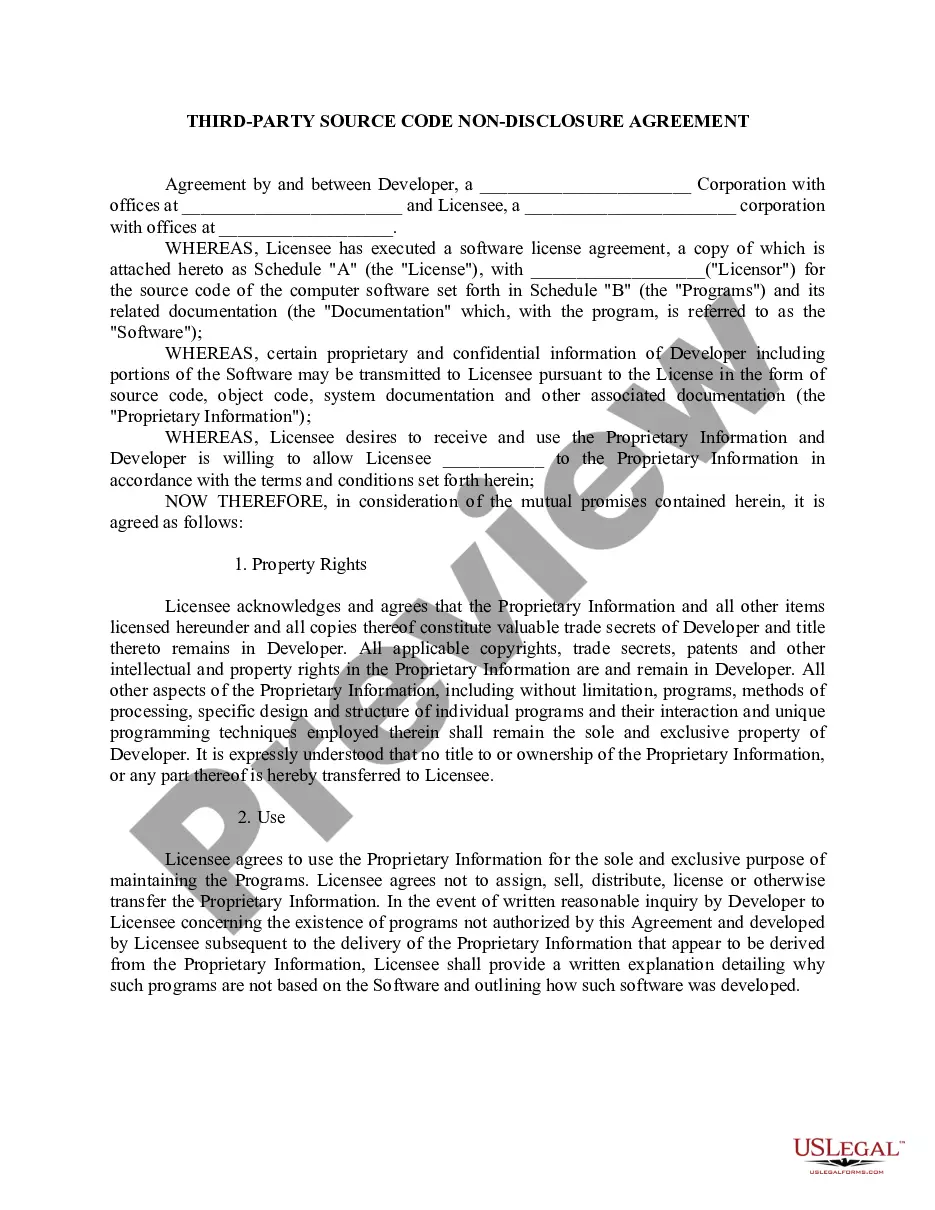
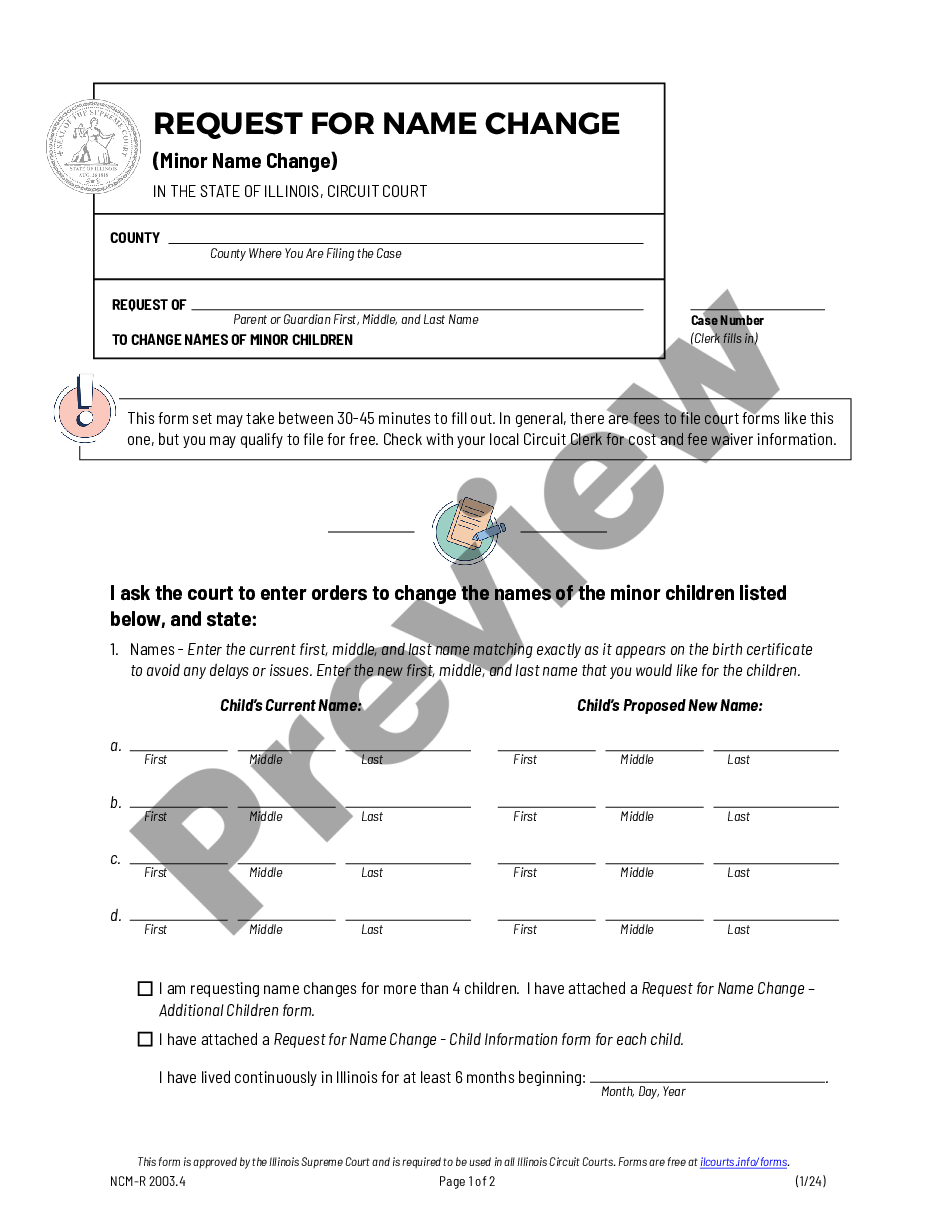



How to fill out Termination Review Form?
If you wish to finalize, acquire, or print legal document templates, utilize US Legal Forms, the largest collection of legal forms available online.
Employ the website's user-friendly and efficient search feature to locate the documents you require.
A range of templates for commercial and personal purposes are sorted by categories and states, or keywords.
Every legal document template you purchase is yours indefinitely. You have access to every form you saved within your account. Visit the My documents section and select a form to print or download again.
Complete and download, and print the Massachusetts Termination Review Form with US Legal Forms. There are numerous professional and state-specific forms you can utilize for your business or personal requirements.
- Utilize US Legal Forms to discover the Massachusetts Termination Review Document in just a few clicks.
- If you are already a US Legal Forms user, Log Into your account and press the Obtain button to locate the Massachusetts Termination Review Document.
- You can also access forms you previously saved in the My documents section of your account.
- If you are using US Legal Forms for the first time, follow the guidelines below.
- Step 1. Make sure you have selected the form for the appropriate city/state.
- Step 2. Use the Review option to scrutinize the form's details. Don't forget to read the summary.
- Step 3. If you are not satisfied with the form, use the Search area at the top of the page to find alternative types of your legal form template.
- Step 4. Once you've found the form you need, click the Buy now button. Choose the payment plan you prefer and fill in your information to register for an account.
- Step 5. Process the payment. You may use your Visa, MasterCard, or PayPal account to complete the transaction.
- Step 6. Select the format of your legal form and download it to your device.
- Step 7. Complete, modify, and print or sign the Massachusetts Termination Review Form.
Form popularity
FAQ
If you are able to perform the essential functions of your job, you cannot be fired because you have a disability. You also can't be fired because your employer believes you have a disabling condition.
Although it seems almost impossible to believe, employers in Massachusetts, or in any other employee-at-will state, can fire any employee at any time for any reason or even for no reason at all. An employer can terminate any employee, with or without notice.
If your workplace has fewer than 11 workers, your sick time may be unpaidbut you can't be fired or punished for taking it. All covered employees are protected against being fired or punished for using or requesting their sick time (including threats, discipline, demotion, reduction in hours, termination, etc.).
Wrongful termination occurs where an employee is discharged for unlawful reasons, which can include discrimination based on a protected class or retaliation. Employees who suffer a wrongful termination may bring a claim under both state and federal law.
Under the Fair Labor Standards Act (FLSA), employers in the United States are not required to provide a written notice of termination when ending the employment contract of an employee.
The Fair Work Act states that an employer cannot dismiss an employee if an employee is temporarily absent from work due to an illness or injury. A 'temporary absence' includes an absence where the employee is away for three months or less. This can include a combination of paid and unpaid personal leave.
You'll essentially need two kinds of paperwork: documents you need to gather before you actually fire the person (such as their hours worked and paid-time-off balances due), and documents you'll need to bring to the termination meeting itself such as a severance agreement or their final paycheck.
Massachusetts law requires that employers provide terminated employees with a notice from the Department of Unemployment Assistance (DUA) concerning how to file for unemployment benefits.
This means that either the employer or the employee may end the employment relationship at any time, for any reason, or for no reason at all. Generally, neither party is required to give any form of notice or warning before terminating the employment relationship.
Employees who have been wrongfully terminated may pursue their claims through the Massachusetts Commission Against Discrimination (MCAD), the Equal Employment Opportunity Commission (EEOC), or in federal or Massachusetts court.