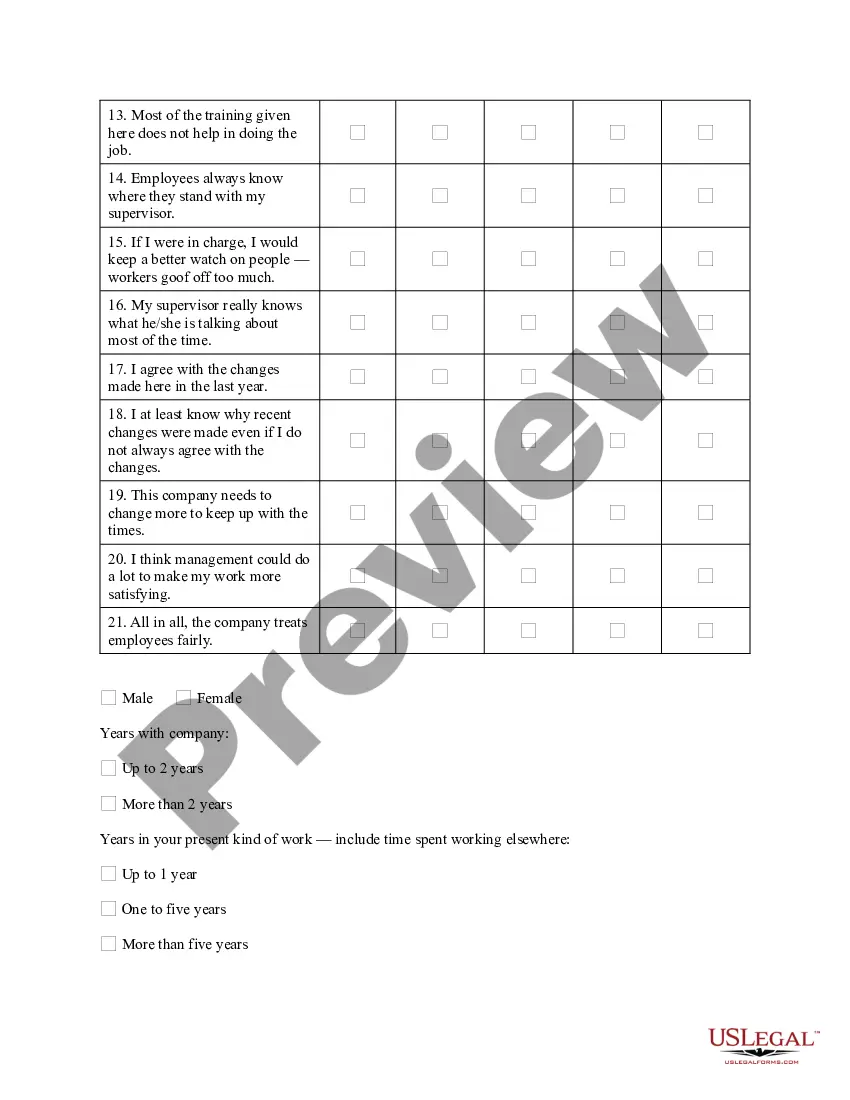
Massachusetts Employee Attitude Survey
Description
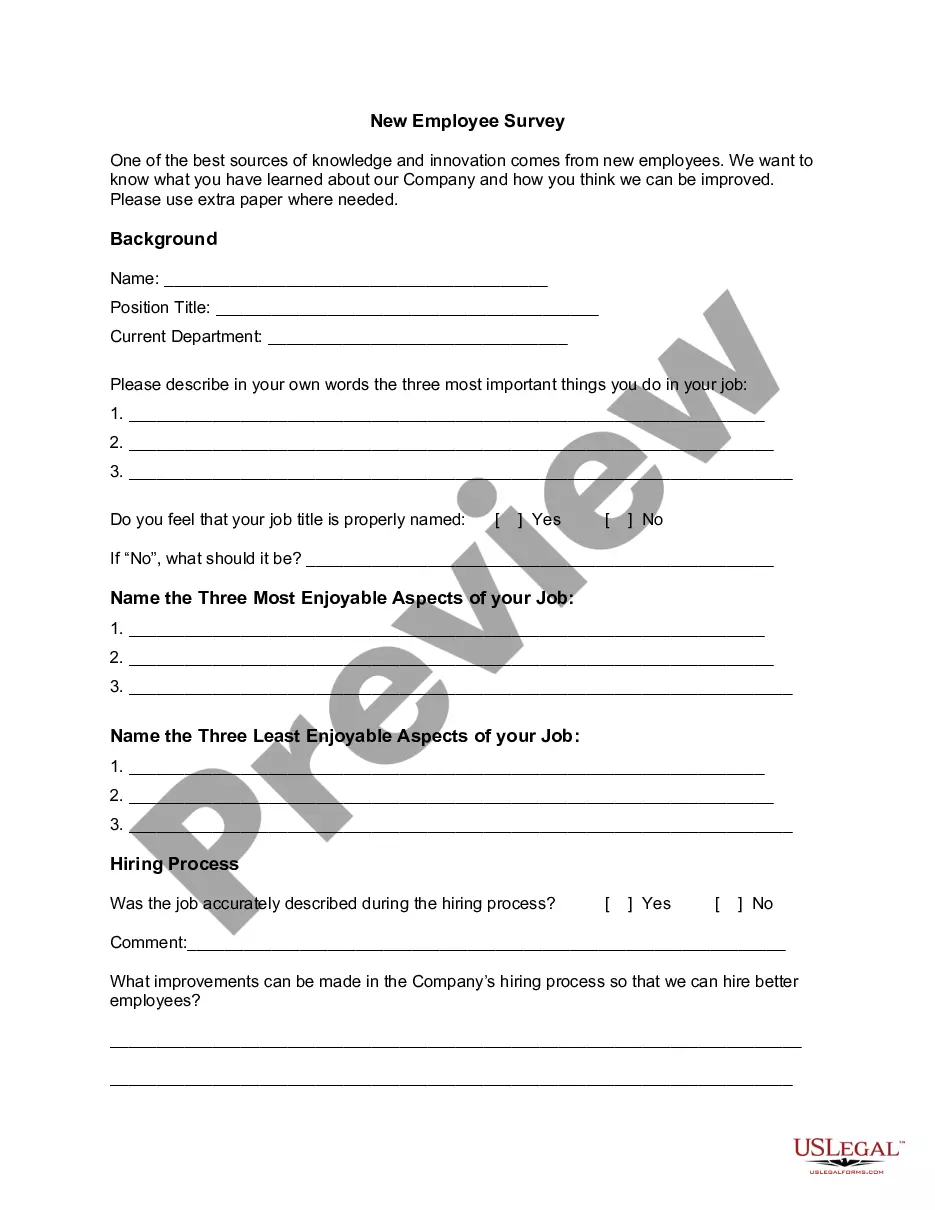
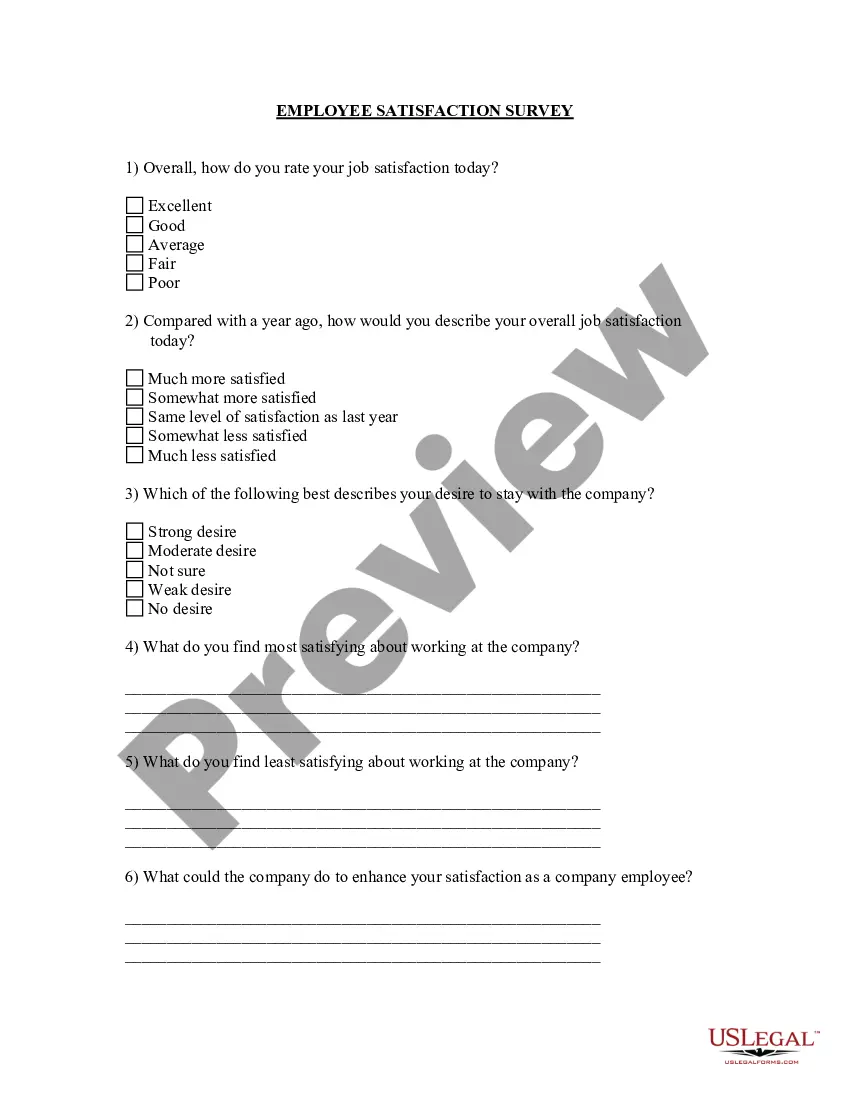
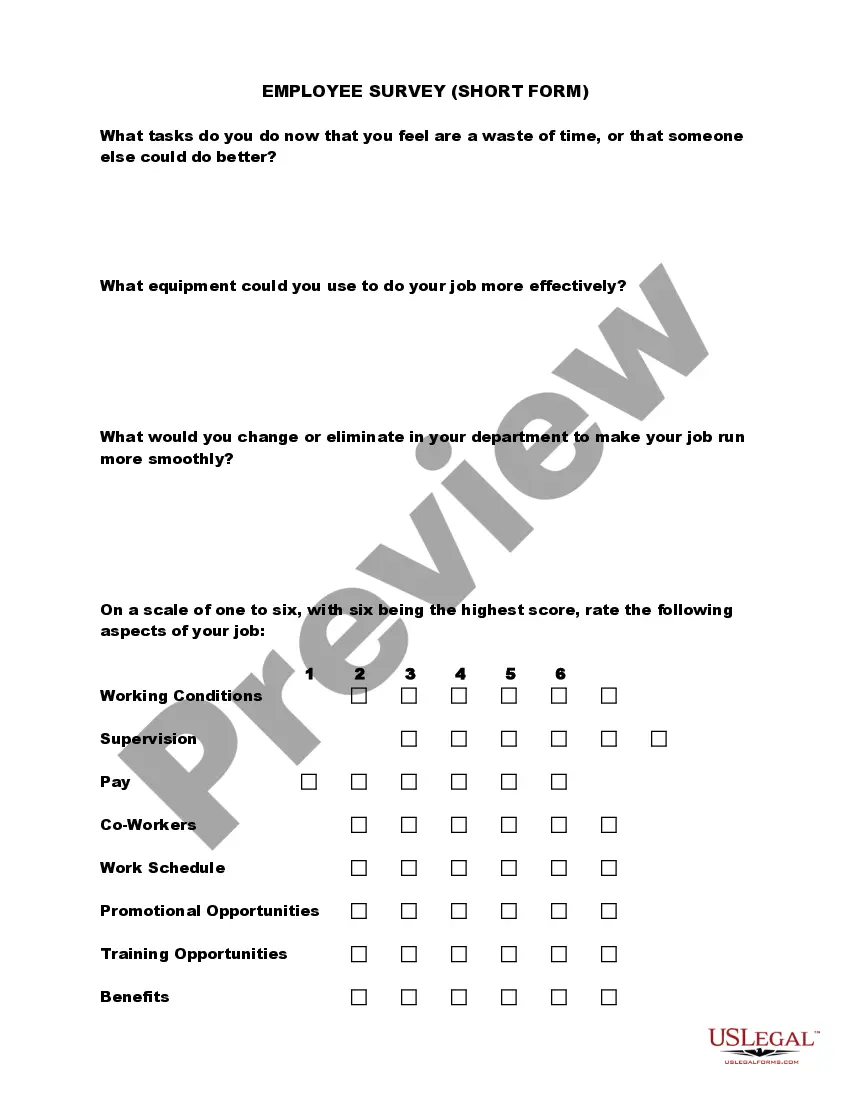
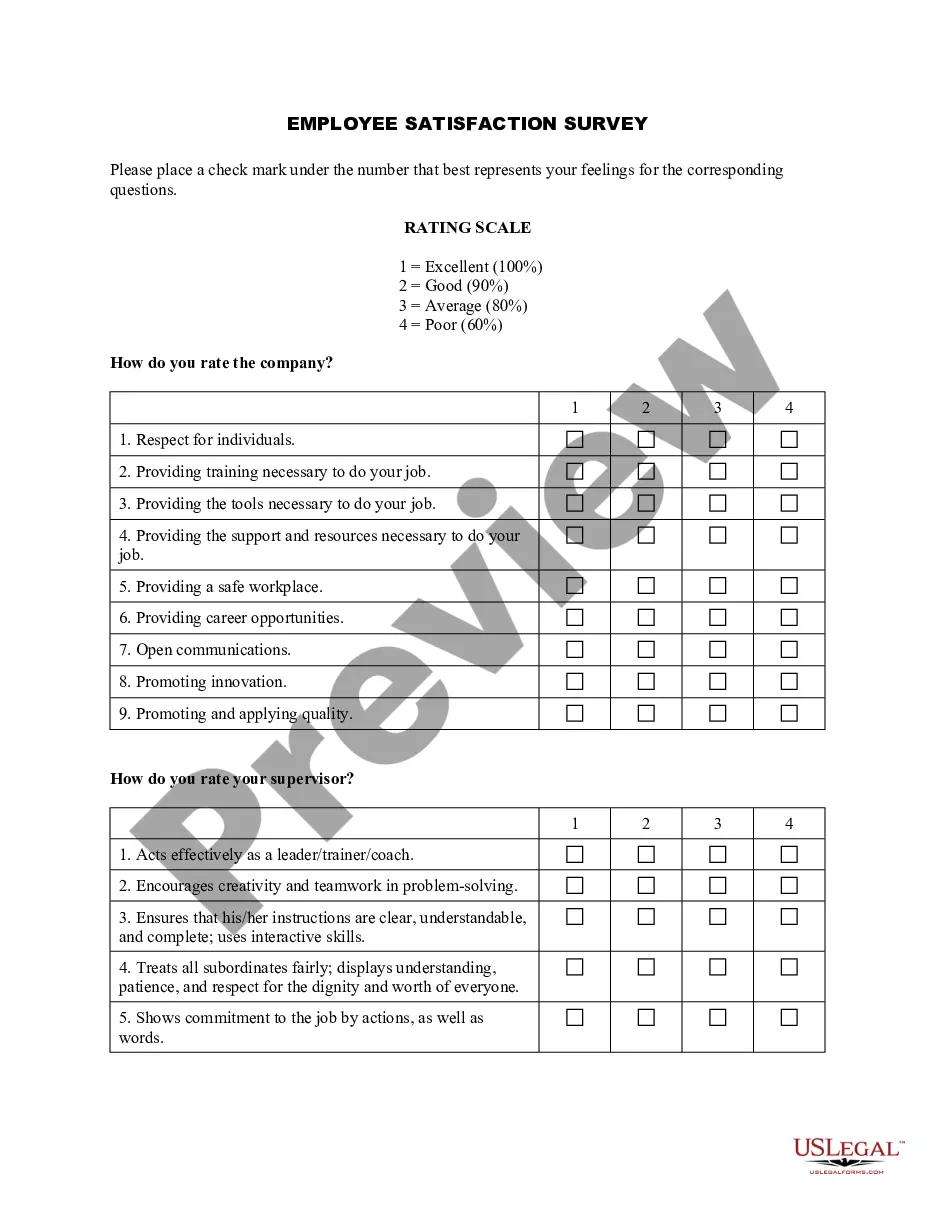
Get your form ready online
Our built-in tools help you complete, sign, share, and store your documents in one place.
Make edits, fill in missing information, and update formatting in US Legal Forms—just like you would in MS Word.
Download a copy, print it, send it by email, or mail it via USPS—whatever works best for your next step.
Sign and collect signatures with our SignNow integration. Send to multiple recipients, set reminders, and more. Go Premium to unlock E-Sign.
If this form requires notarization, complete it online through a secure video call—no need to meet a notary in person or wait for an appointment.
We protect your documents and personal data by following strict security and privacy standards.

Make edits, fill in missing information, and update formatting in US Legal Forms—just like you would in MS Word.

Download a copy, print it, send it by email, or mail it via USPS—whatever works best for your next step.

Sign and collect signatures with our SignNow integration. Send to multiple recipients, set reminders, and more. Go Premium to unlock E-Sign.

If this form requires notarization, complete it online through a secure video call—no need to meet a notary in person or wait for an appointment.

We protect your documents and personal data by following strict security and privacy standards.
Looking for another form?


How to fill out Employee Attitude Survey?
US Legal Forms - one of the largest collections of legal forms in the country - offers a wide range of legal document templates that you can download or print.
By using the site, you will find thousands of forms for business and personal purposes, categorized by type, state, or keywords.
You can access the latest versions of forms like the Massachusetts Employee Attitude Survey in just a few minutes.
If the form does not meet your requirements, use the Search field at the top of the screen to find the one that does.
Once you are satisfied with the form, confirm your choice by clicking the Get now button. Then, select your preferred pricing plan and provide your information to create an account.
- If you already have an account, Log In and download the Massachusetts Employee Attitude Survey from the US Legal Forms library.
- The Download button will appear on each form you view.
- You can find all previously downloaded forms in the My documents section of your account.
- If you are using US Legal Forms for the first time, here are simple steps to get started.
- Ensure you have selected the correct form for your area/county.
- Click the Review button to examine the form's content.
Form popularity
FAQ
12 Tips for writing survey answersSurvey answer choices should be clear and concise.Don't use 'extreme absolutes'3. Answers should be 'collectively exhaustive'Limit your number of answers per question.Provide 'No Opinion' answer options (when necessary)Good survey answers are 'Mutually Exclusive'More items...
Often, employers will bill an employee engagement survey as anonymous or confidential. However, some employees report getting fired for an anonymous survey in which they criticized the company.
"They are not technically anonymous because the company is typically receiving 2026 data that indicates the employee's business unit, tenure, etc.," they said. "Depending on the number of these demographic questions, this approach can generate 2026 concern and skepticism regarding confidentiality."
The best way to answer this question is by being as honest as possible about the problem while providing concrete examples of how it affects your work. For example, if you're not able to meet productivity goals because you're constantly working through technical issues, this is a great time to mention that.
As a rule, most employee opinion surveys are voluntary. If you notice, many survey results are tabulated based on employee participation rate because that's what boosts the survey's validity. It's uncommon to get 100 percent participation in workplace surveys.
The best way to answer this question is by being as honest as possible about the problem while providing concrete examples of how it affects your work. For example, if you're not able to meet productivity goals because you're constantly working through technical issues, this is a great time to mention that.
Confidential employee surveys provide employees with some privacy. But certain employee identifiers are associated with the response, so they're not totally anonymous. While these identifiers are visible to a certain group of people, only a few people in the organization have access to this information.
Be sure to:Keep it clear. Introduce pulse surveys to your organization with a clear and concise explanation, one that highlights what they are and why they're being used.Keep it comfortable.Keep it anonymous.Keep it employee-centric.Keep it short.Keep it relevant.Keep it transparent.Keep it coming.
Employees who fear a Zoom gaffe could get them fired may have some reason to be wary, a new survey suggests. Almost 1 in 4 bosses at U.S. companies have fired a staffer for a video or audio conference blunder, according to a survey of 200 managers by Wakefield Research.