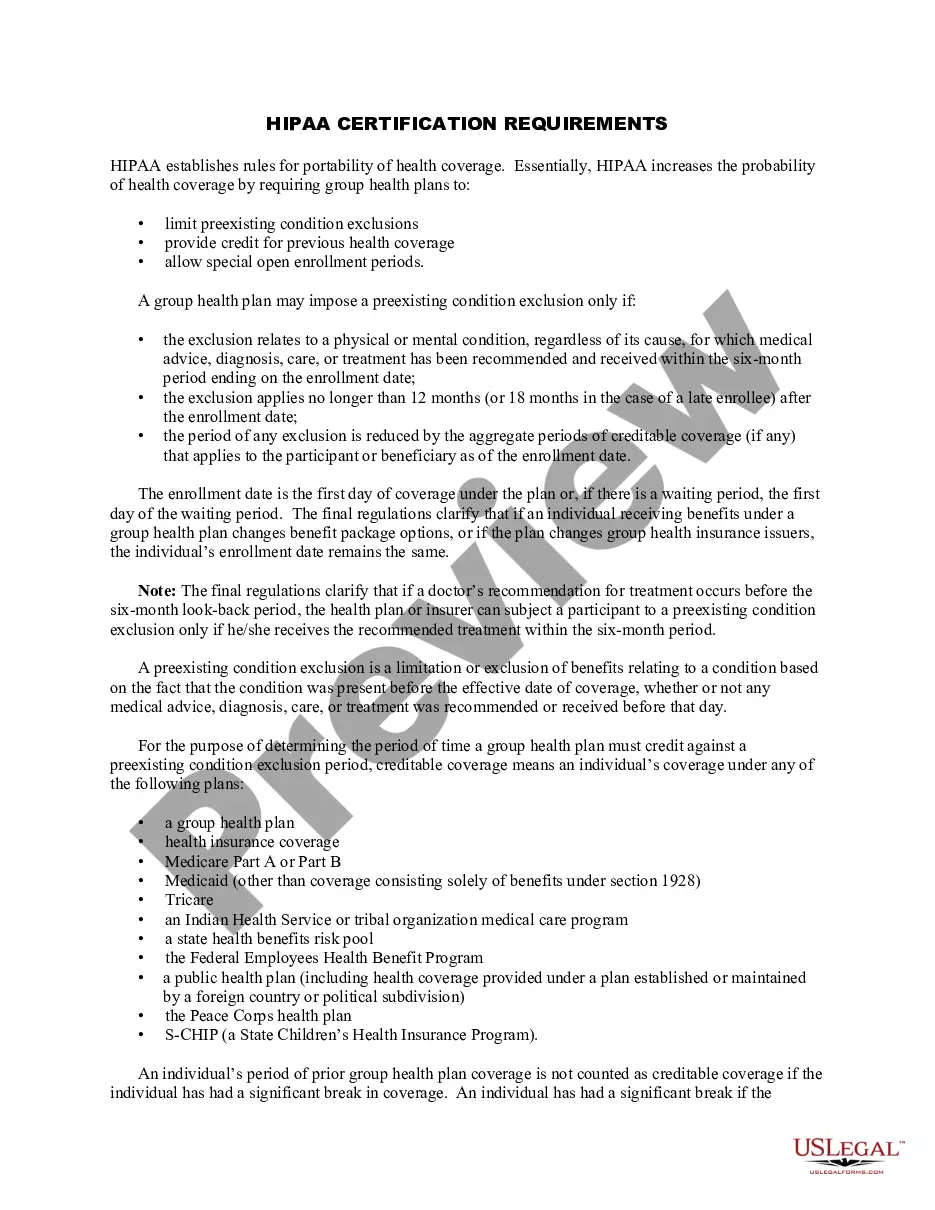
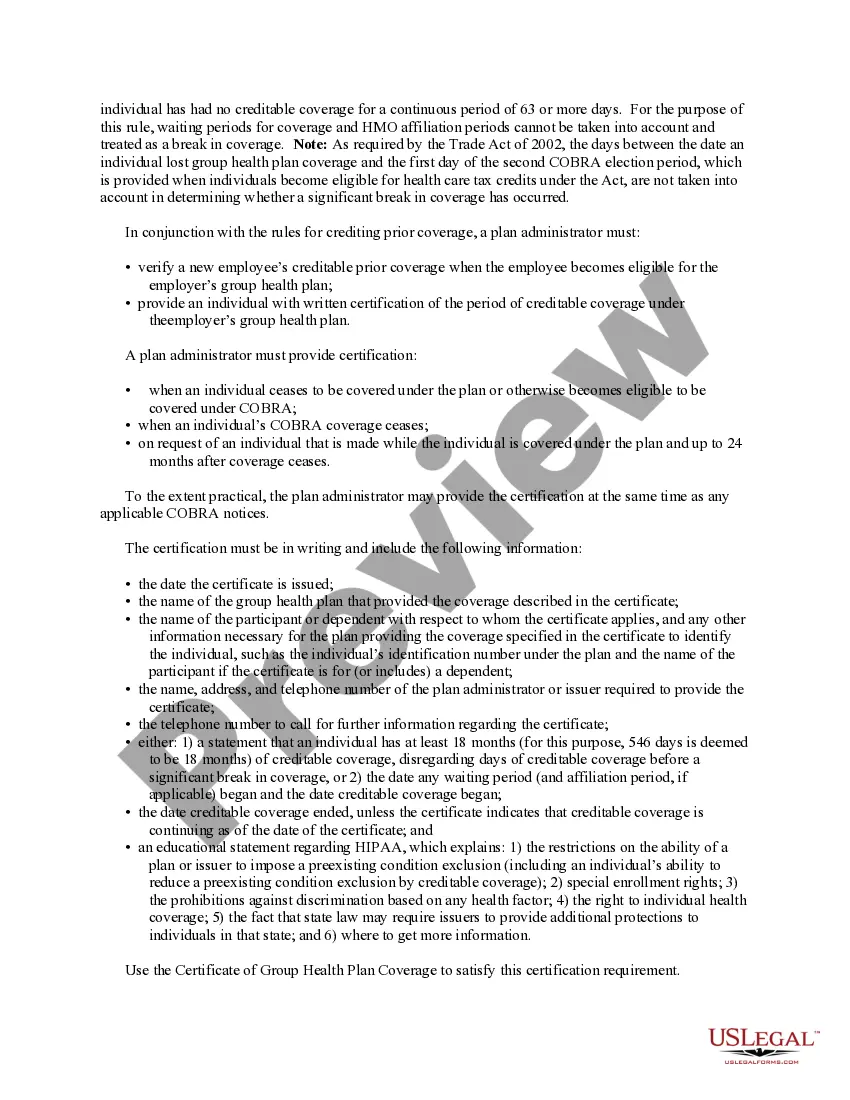
Massachusetts HIPAA Certification Requirements
Description
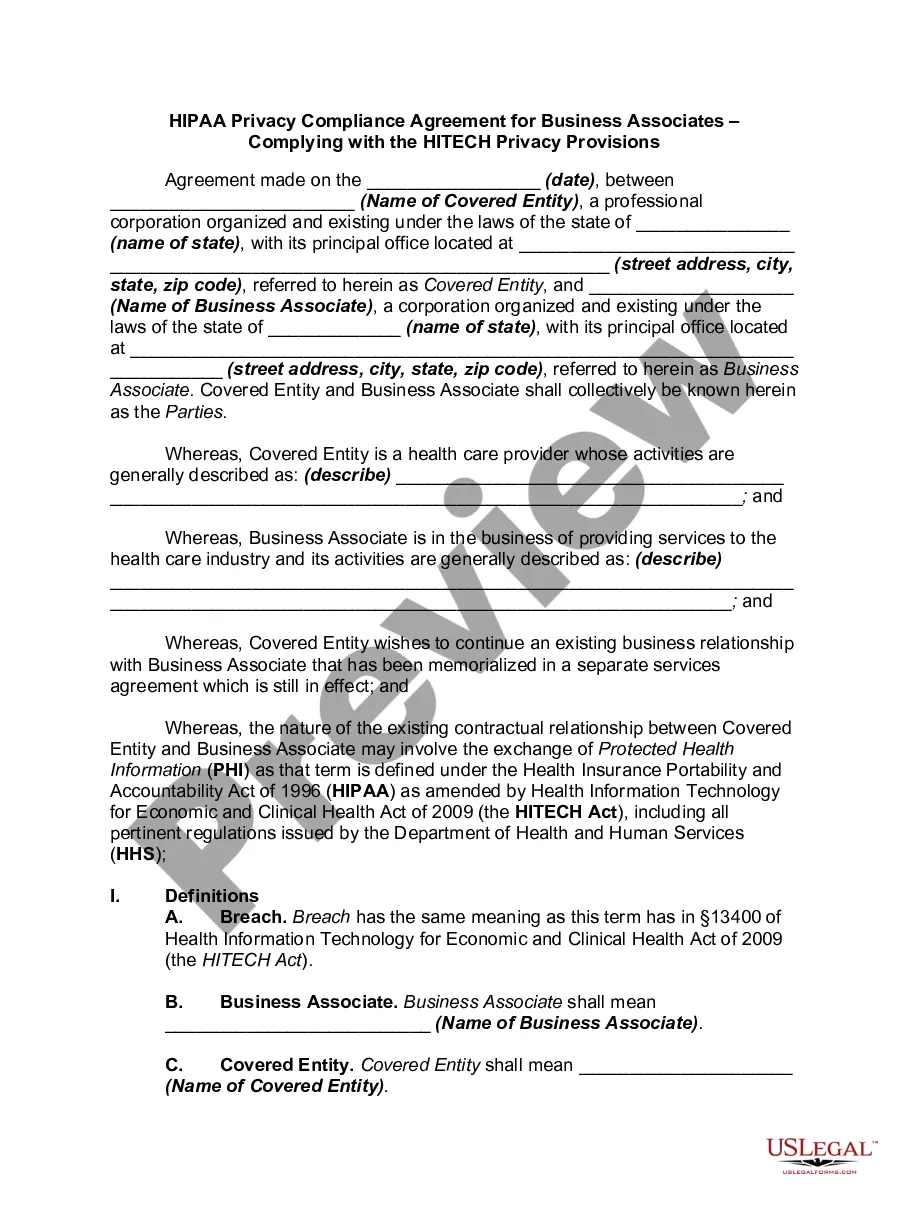
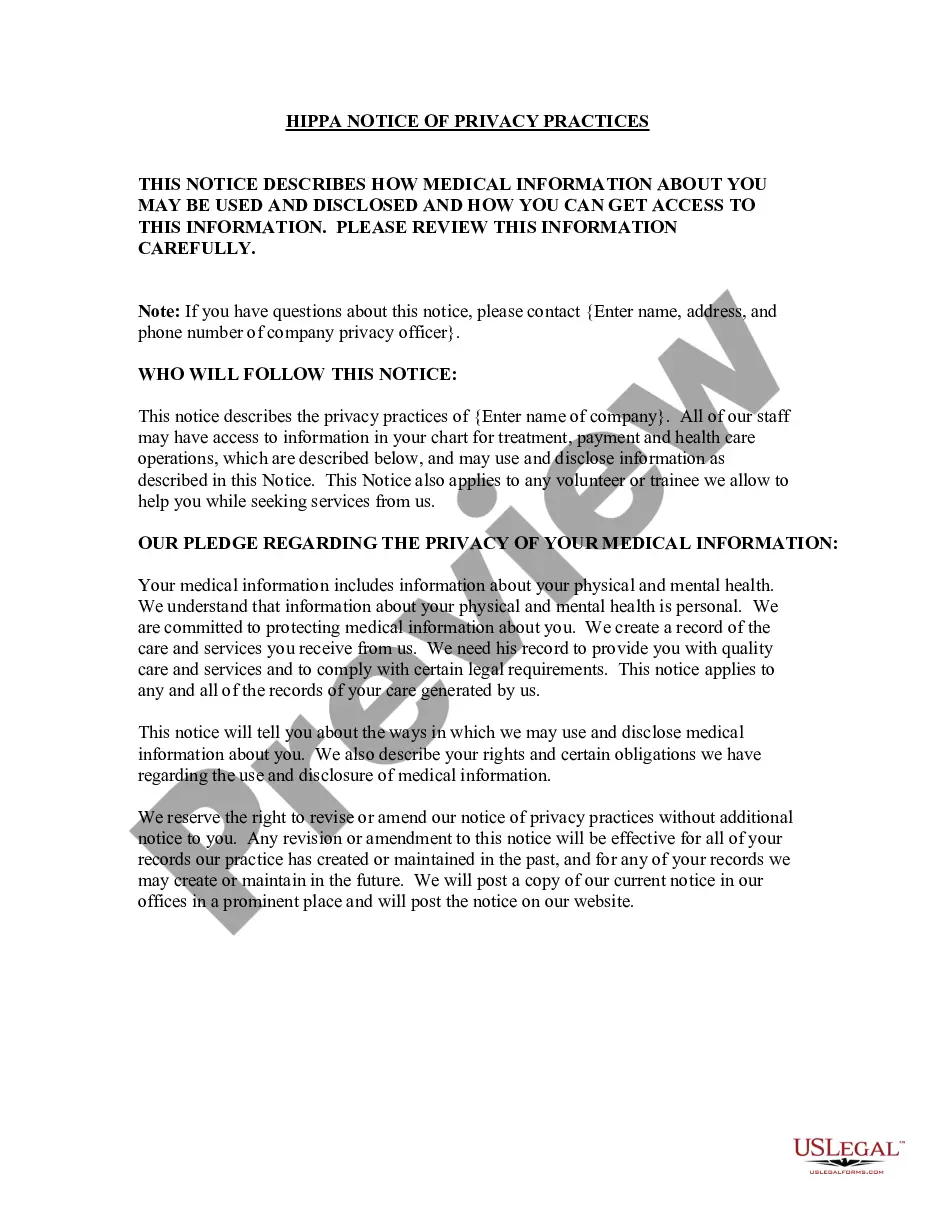
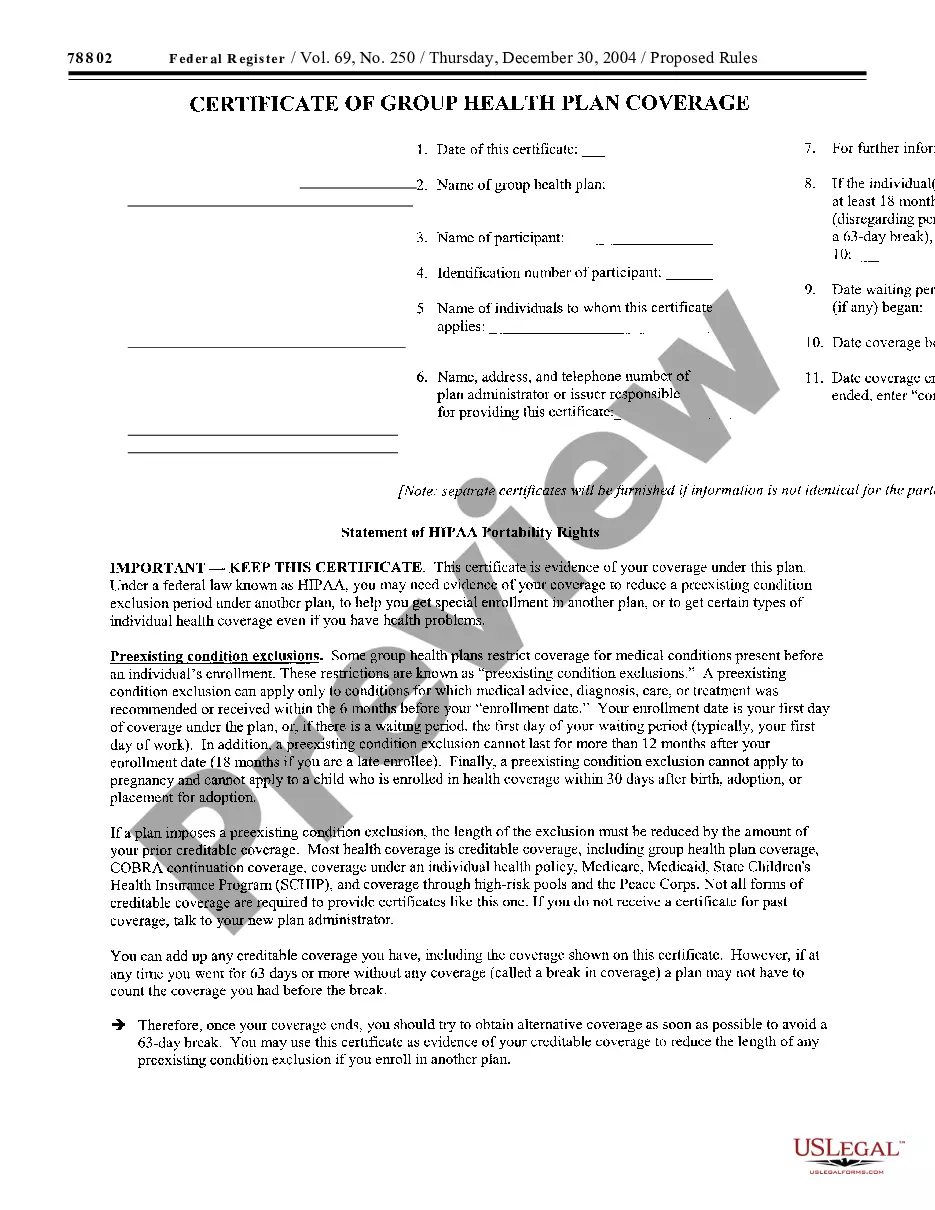
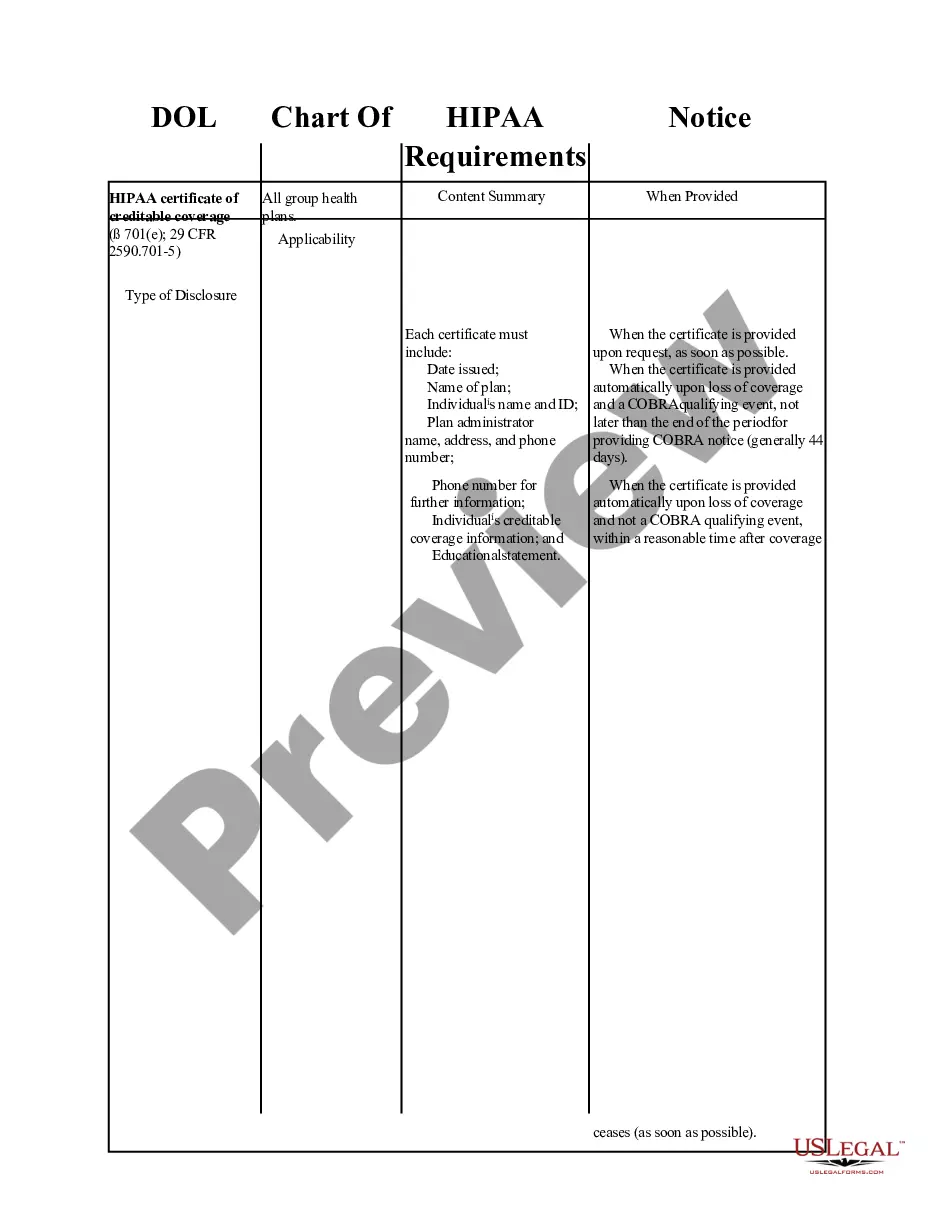
Get your form ready online
Our built-in tools help you complete, sign, share, and store your documents in one place.
Make edits, fill in missing information, and update formatting in US Legal Forms—just like you would in MS Word.
Download a copy, print it, send it by email, or mail it via USPS—whatever works best for your next step.
Sign and collect signatures with our SignNow integration. Send to multiple recipients, set reminders, and more. Go Premium to unlock E-Sign.
If this form requires notarization, complete it online through a secure video call—no need to meet a notary in person or wait for an appointment.
We protect your documents and personal data by following strict security and privacy standards.

Make edits, fill in missing information, and update formatting in US Legal Forms—just like you would in MS Word.

Download a copy, print it, send it by email, or mail it via USPS—whatever works best for your next step.

Sign and collect signatures with our SignNow integration. Send to multiple recipients, set reminders, and more. Go Premium to unlock E-Sign.

If this form requires notarization, complete it online through a secure video call—no need to meet a notary in person or wait for an appointment.

We protect your documents and personal data by following strict security and privacy standards.
Looking for another form?





How to fill out HIPAA Certification Requirements?
If you need to fill out, acquire, or print sanctioned document templates, utilize US Legal Forms, the largest repository of legal forms available online.
Take advantage of the site’s straightforward and user-friendly search to locate the documents you require.
A variety of templates for business and personal applications are organized by categories and suggestions, or keywords.
Every legal document template you receive is yours indefinitely. You have access to every form you downloaded within your account. Click the My documents section and select a form to print or download again.
Be proactive and download, and print the Massachusetts HIPAA Certification Requirements with US Legal Forms. There are thousands of specialized and state-specific forms available for your business or personal needs.
- Utilize US Legal Forms to find the Massachusetts HIPAA Certification Requirements in just a few clicks.
- If you are already a US Legal Forms user, Log In to your account and click the Acquire button to access the Massachusetts HIPAA Certification Requirements.
- You can also access forms you previously downloaded from the My documents section of your account.
- If you are using US Legal Forms for the first time, refer to the instructions below.
- Step 1. Ensure you have selected the form for the appropriate area/region.
- Step 2. Use the Preview option to review the form’s details. Make sure to read the description.
- Step 3. If you are dissatisfied with the form, utilize the Search field at the top of the screen to find other types in the legal form category.
- Step 4. Once you have found the form you need, click the Get now button. Choose the payment plan you prefer and enter your details to sign up for an account.
- Step 5. Process the payment. You can use your credit card or PayPal account to complete the transaction.
- Step 6. Select the format of the legal form and download it to your system.
- Step 7. Complete, review and print or sign the Massachusetts HIPAA Certification Requirements.
Form popularity
FAQ
Hospitals, doctors, clinics, psychologists, dentists, chiropractors, nursing homes, and pharmacies are considered Healthcare Providers and need to be HIPAA compliant. Examples of Health Plans include health insurance companies, HMOs, company health plans, Medicare, and Medicaid.
The simple answer is, if you work in healthcare in any capacity, you need to be HIPAA compliant. The misconception that only covered entities (CEs) need to be HIPAA compliant has led to many organizations being audited and fined. If you are handling protected health information (PHI) you need to be HIPAA compliant.
For certain organizations, the short answer is yes, HIPAA training for employees is mandatory. HIPAA compliance training must be implemented for every organization that requires it, regardless of size or annual budget.
HIPAA requires that both covered entities and business associates provide HIPAA training to members of their workforce who handle PHI. This means that even small physician's offices need to train their personnel on HIPAA. Doctors need to be trained.
HIPAA Compliance and Certification Services HIPAA (Health Insurance Portability and Accountability Act of 1996) is United States legislation,which provides data privacy and security provisions to safeguard medical information.
Covered entities (anyone providing treatment, payment, and operations in healthcare) and business associates (anyone who has access to patient information and provides support in treatment, payment, or operations) must meet HIPAA Compliance.
Because Covered Entities and Business Associates are required to keep HIPAA-related papers for at least six years, in theory, HIPAA Certification has a shelf life of six years - although this may be considerably longer in reality.
How to Become HIPAA Compliant in 7 StepsCreate Privacy and Security Policies for the Organization.Name a HIPAA Privacy Officer and Security Officer.Implement Security Safeguards.Regularly Conduct Risk Assessments and Self-Audits.Maintain Business Associate Agreements.Establish a Breach Notification Protocol.More items...?
Organizations that do not have to follow the government's privacy rule known as the Health Insurance Portability and Accountability Act (HIPAA) include the following, according to the US Department of Health and Human Services: Life insurers. Employers. Workers' compensation carriers.
1) Does OSHA/HIPAA training need to be conducted annually? Yes, annual OSHA training for all employees is mandatory, and training for new-hire employees must be completed within ten days of hire. HIPAA requires organizations to provide training for all employees, new workforce members, and periodic refresher training.