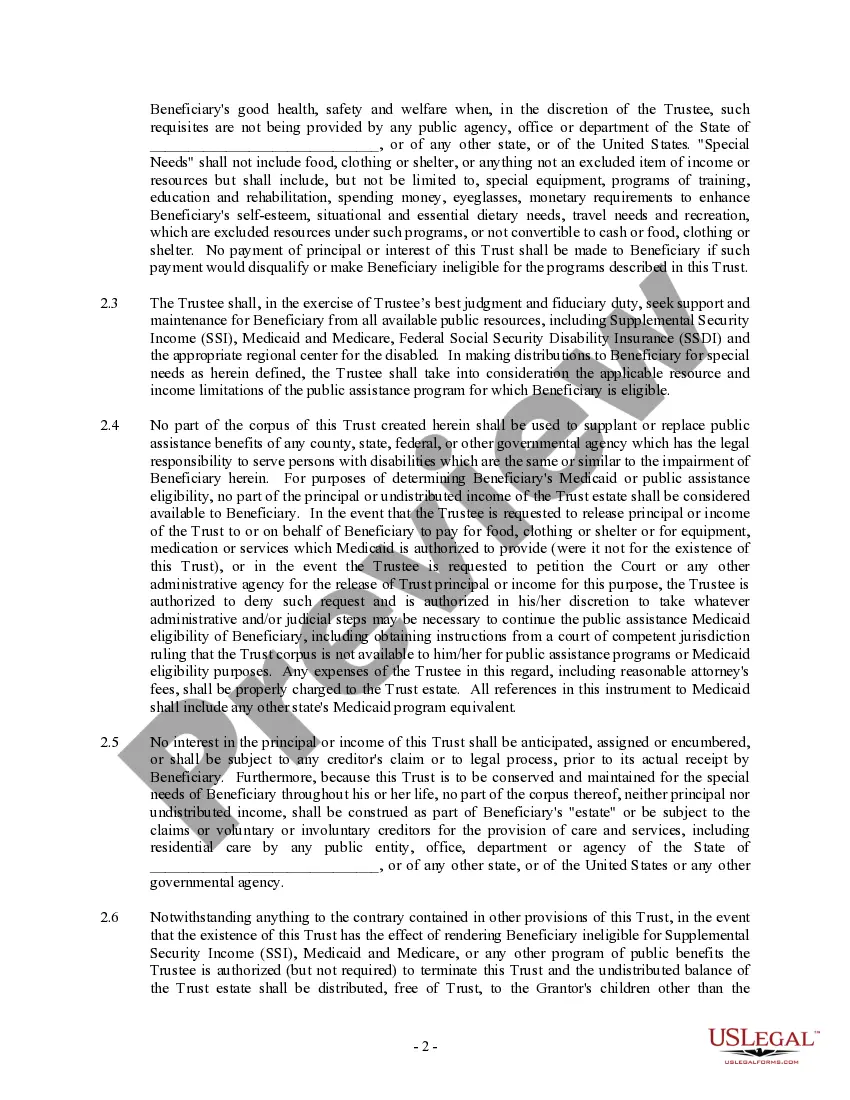
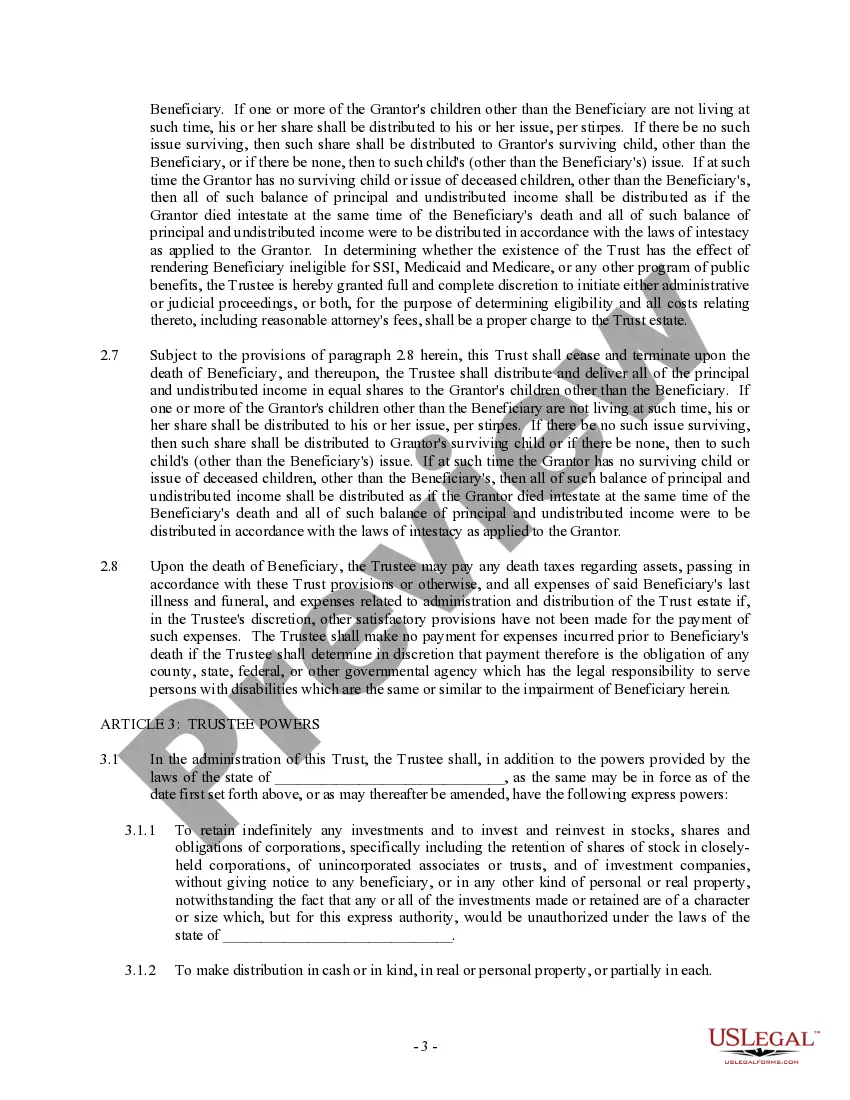
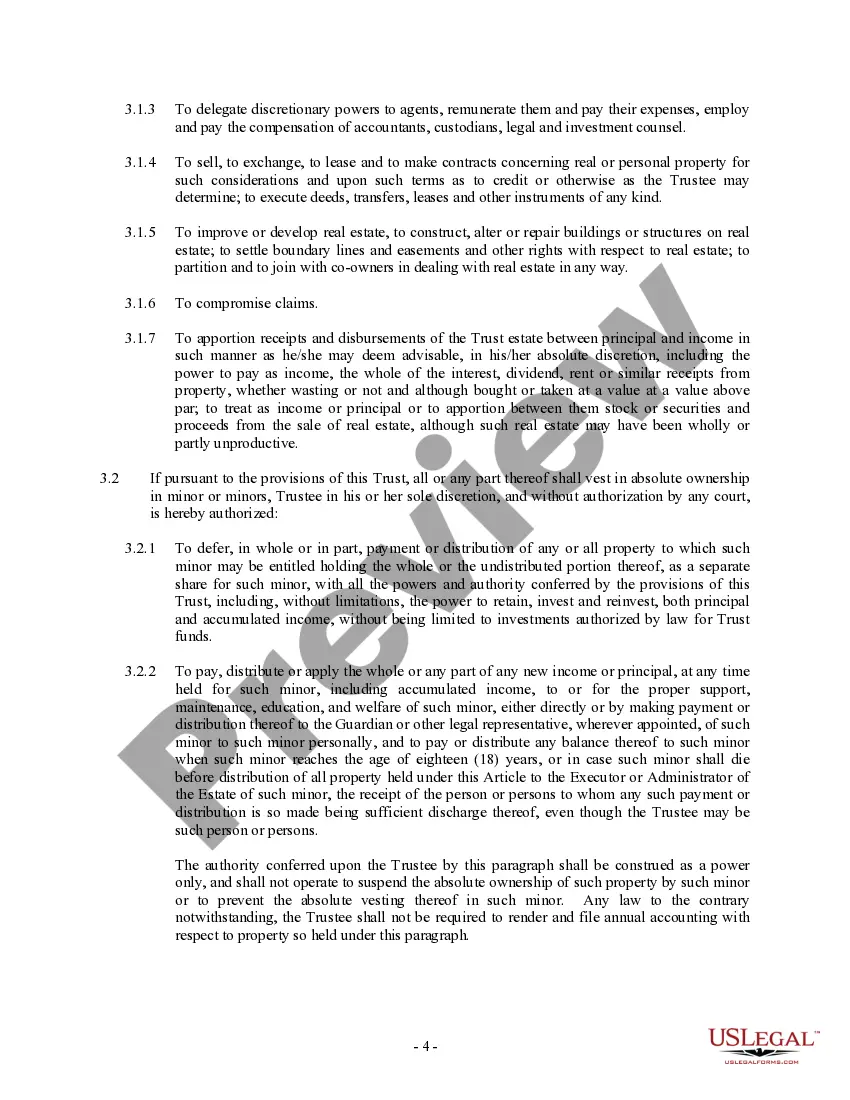
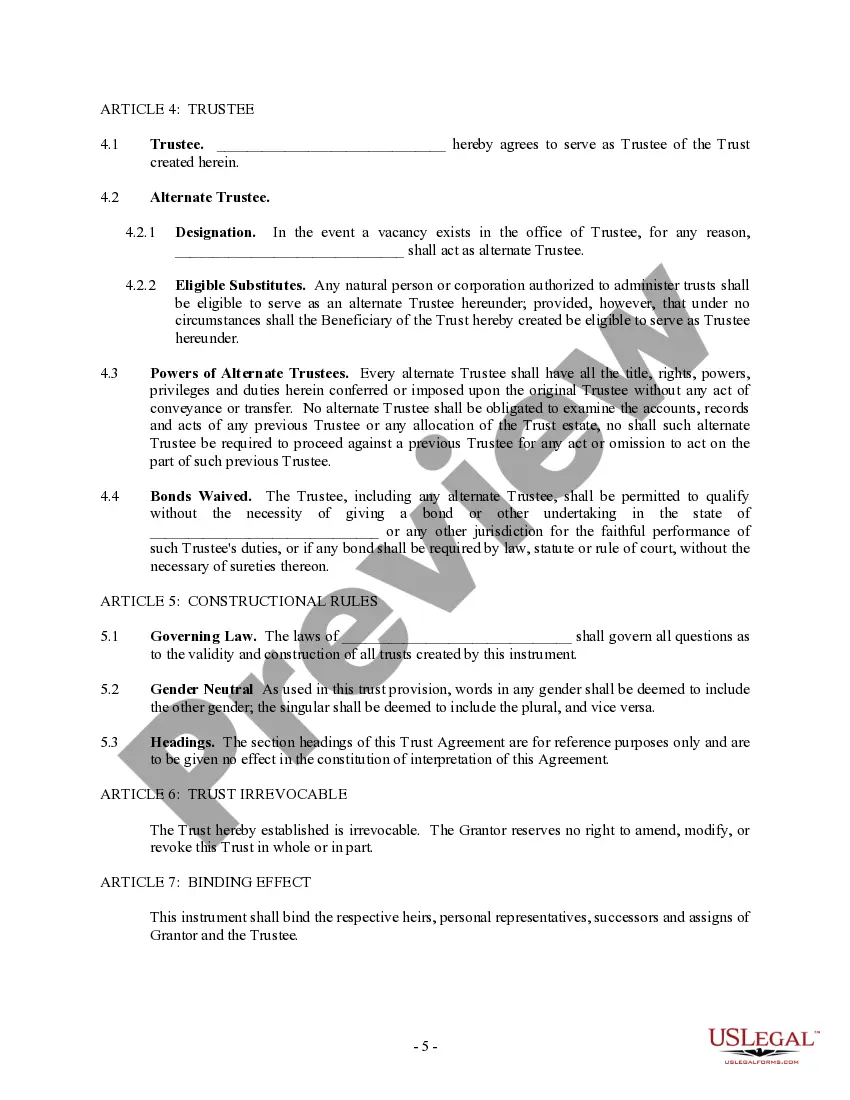
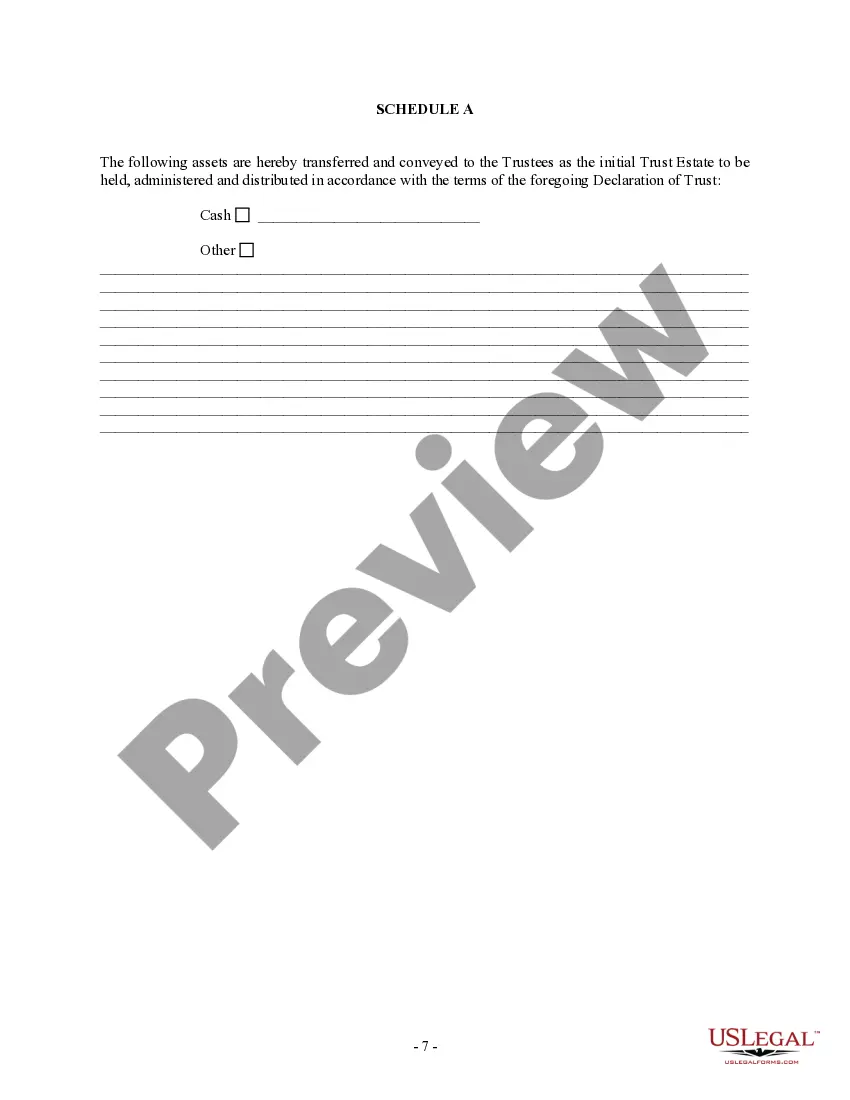
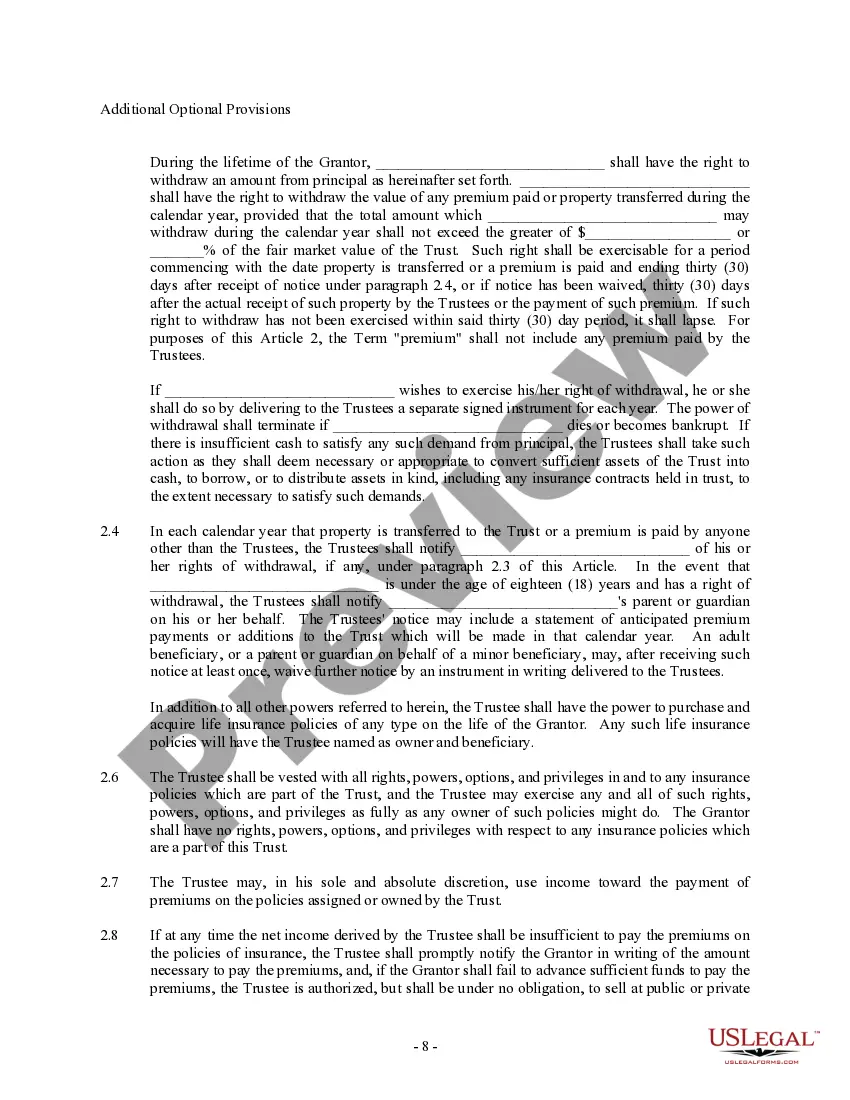
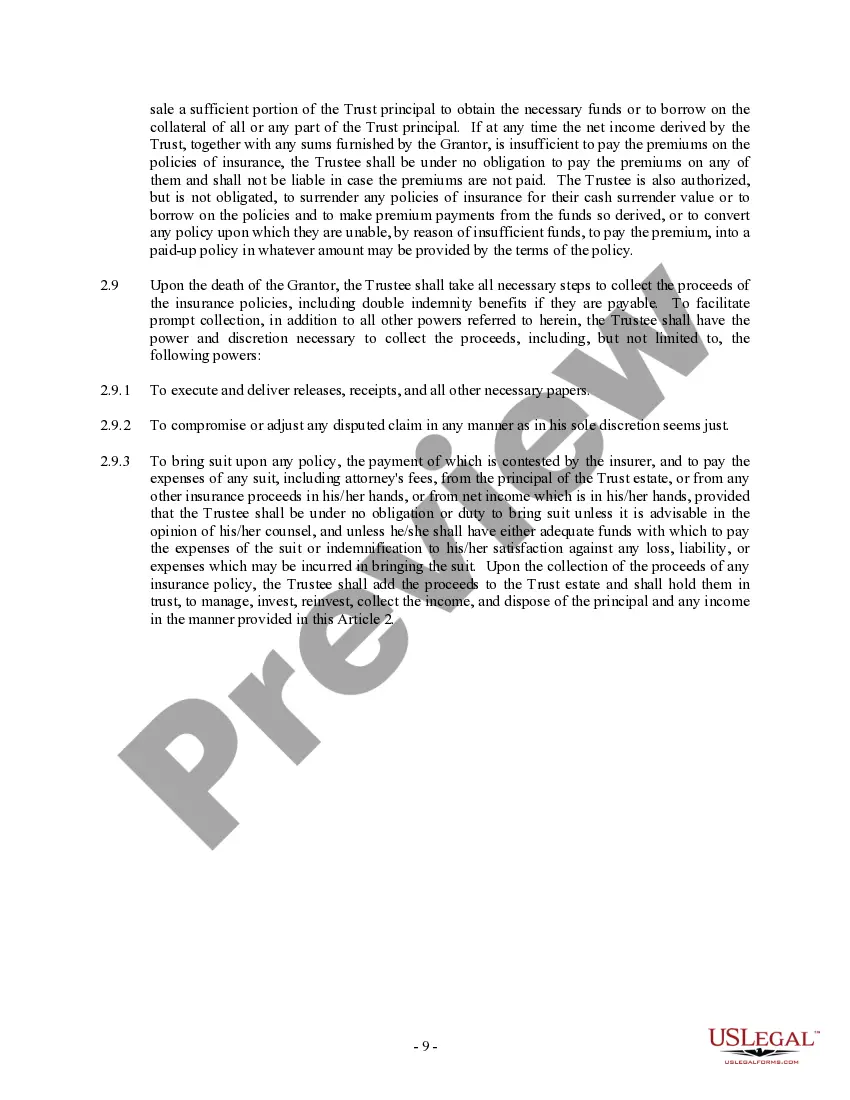
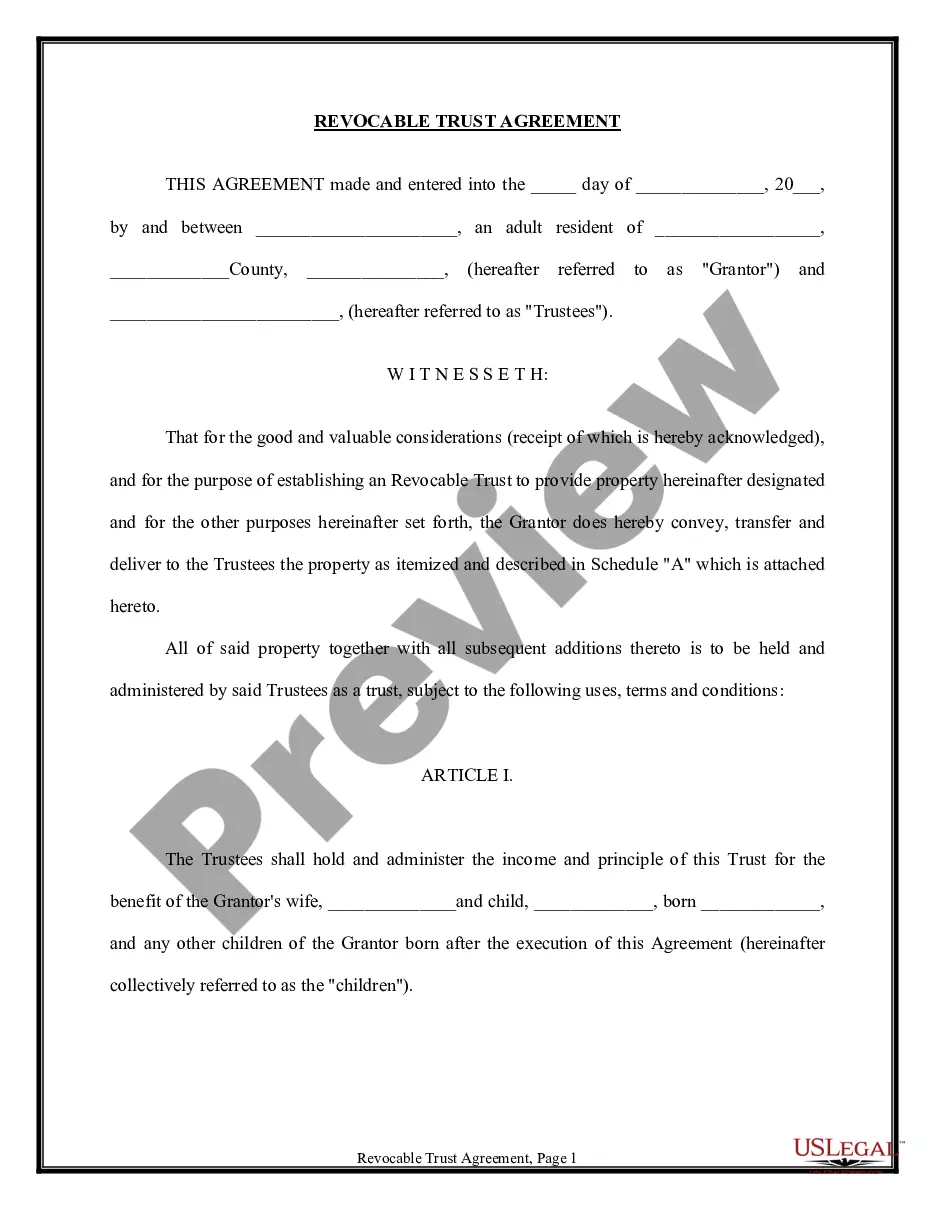
The grantor establishes an irrevocable trust and assigns, conveys, transfers and delivers to the trustee certain property and the trustee accepts such property as the initial trust estate. It is the grantor's primary concern that the trust continue in existence as a supplemental and emergency fund to public assistance for the sake of the beneficiary throughout his/her life. Other provisions of the trust agreement include: the management and disposition of the trust estate, trustee powers, and additional optional clauses.
Massachusetts Trust Agreement - Family Special Needs
950 downloads
Description
Free preview




Get your form ready online
Our built-in tools help you complete, sign, share, and store your documents in one place.
Built-in online Word editor
Make edits, fill in missing information, and update formatting in US Legal Forms—just like you would in MS Word.
Export easily
Download a copy, print it, send it by email, or mail it via USPS—whatever works best for your next step.
E-sign your document
Sign and collect signatures with our SignNow integration. Send to multiple recipients, set reminders, and more. Go Premium to unlock E-Sign.
Notarize online 24/7
If this form requires notarization, complete it online through a secure video call—no need to meet a notary in person or wait for an appointment.
Store your document securely
We protect your documents and personal data by following strict security and privacy standards.

Make edits, fill in missing information, and update formatting in US Legal Forms—just like you would in MS Word.

Download a copy, print it, send it by email, or mail it via USPS—whatever works best for your next step.

Sign and collect signatures with our SignNow integration. Send to multiple recipients, set reminders, and more. Go Premium to unlock E-Sign.

If this form requires notarization, complete it online through a secure video call—no need to meet a notary in person or wait for an appointment.

We protect your documents and personal data by following strict security and privacy standards.
Looking for another form?

How to fill out Trust Agreement - Family Special Needs?
If you require to complete, acquire, or print legal document templates, utilize US Legal Forms, the largest selection of legal forms available online.
Take advantage of the site’s straightforward and user-friendly search feature to locate the documents you need.
Various templates for business and personal use are organized by categories and states, or keywords.
Step 4. After locating the form you require, click the Purchase now button. Choose the pricing plan you prefer and enter your credentials to register for an account.
Step 5. Complete the transaction. You can use your credit card or PayPal account to finalize the purchase.
- Utilize US Legal Forms to quickly find the Massachusetts Trust Agreement - Family Special Needs.
- If you are already a US Legal Forms user, sign in to your account and click the Acquire button to access the Massachusetts Trust Agreement - Family Special Needs.
- You can also retrieve forms you have previously downloaded from the My documents section of your account.
- If you are using US Legal Forms for the first time, please follow the directions below.
- Step 1. Ensure you have selected the form for the correct city/state.
- Step 2. Utilize the Preview option to review the form’s content. Don’t forget to read the summary.
- Step 3. If you are dissatisfied with the document, use the Search area at the top of the screen to find alternative versions of the legal document template.
Form popularity
FAQ
In Massachusetts, individuals who have a disability or chronic illness may qualify for a special needs trust. Typically, this includes individuals who receive government benefits, such as Supplemental Security Income (SSI) or Medicaid. A Massachusetts Trust Agreement - Family Special Needs is designed to provide financial support without jeopardizing eligibility for these important benefits. If you are considering this option, it's wise to consult with a legal expert to navigate the specific requirements.
The best place for a person on disability depends on their individual needs and preferences. Many find that community-based settings provide a supportive environment, whereas others may prefer living with family. A Massachusetts Trust Agreement - Family Special Needs can assist in planning and ensuring that necessary resources are allocated for housing that best suits the individual’s situation.
A special needs trust is often the most suitable type of trust for a disabled beneficiary. This trust allows the beneficiary to receive funds without jeopardizing their eligibility for government benefits. Crafting a Massachusetts Trust Agreement - Family Special Needs ensures that the benefactor's resources enhance the beneficiary's well-being while preserving their access to essential benefits.
There is no legal minimum amount required to establish a special needs trust in Massachusetts, but it is advisable to consider the needs of the beneficiary. Establishing a trust with sufficient funds is essential to provide for various necessities, including healthcare, education, and quality of life. Utilizing a Massachusetts Trust Agreement - Family Special Needs can help you outline these necessities and set clear financial goals.
In Massachusetts, a trust does not need to be notarized to be valid, but having it notarized can add an extra layer of authenticity. Proper execution is vital, including the necessary signatures and witnessing. A well-drafted Massachusetts Trust Agreement - Family Special Needs protects all parties involved, ensuring clarity and legitimacy in case of disputes.
A discretionary trust can create uncertainty regarding distributions. The trustee has complete control over how and when to distribute funds, which may lead to conflicts among beneficiaries. Additionally, if the trust does not clearly outline the criteria for distribution, it may lead to feelings of unease or jealousy among family members. Hence, understanding the implications of a Massachusetts Trust Agreement - Family Special Needs is crucial.
If you created a revocable special needs trust for your son years ago, it’s wise to review it now to ensure it still meets your family's needs. Changes in laws, financial situations, or your son’s circumstances may necessitate adjustments. Consulting with a legal expert who understands the nuances of a Massachusetts Trust Agreement - Family Special Needs is a proactive step. They can help ensure that your trust remains effective and compliant as your son’s needs evolve.
Some challenges with special needs trusts include potential mismanagement of funds and misunderstanding the rules surrounding benefits. If not properly structured, the trust might inadvertently disqualify your loved one from vital assistance. Additionally, ongoing compliance and documentation can be complicated, which is why working with legal experts is beneficial. A Massachusetts Trust Agreement - Family Special Needs can guide you through these complexities.
In Massachusetts, a special needs trust allows you to provide financial support to a loved one without jeopardizing their public benefits. The trust holds assets and disburses funds for qualified expenses, ensuring compliance with state regulations. This arrangement allows your beneficiary to maintain eligibility for government assistance, helping them live a better quality of life. Utilizing a Massachusetts Trust Agreement - Family Special Needs can simplify this process.
While most assets can be placed into a revocable trust, certain assets should not be included. These can include retirement accounts, health savings accounts, and life insurance policies that name specific beneficiaries. Additionally, assets that depend on personal services, like a business, often require separate agreements. Understanding these limitations is important when drafting your Massachusetts Trust Agreement - Family Special Needs.