Massachusetts Charitable Remainder Inter Vivos Annuity Trust
Description
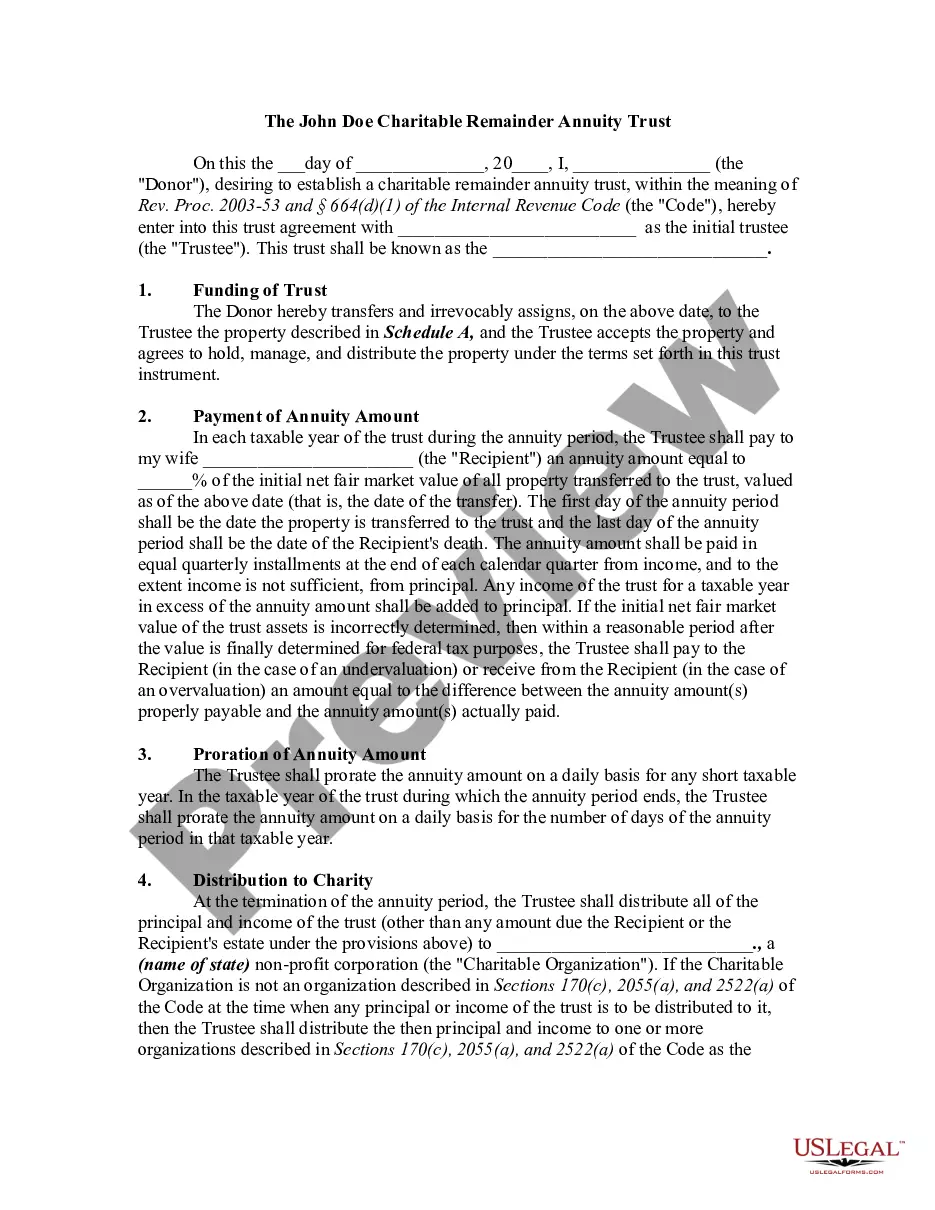
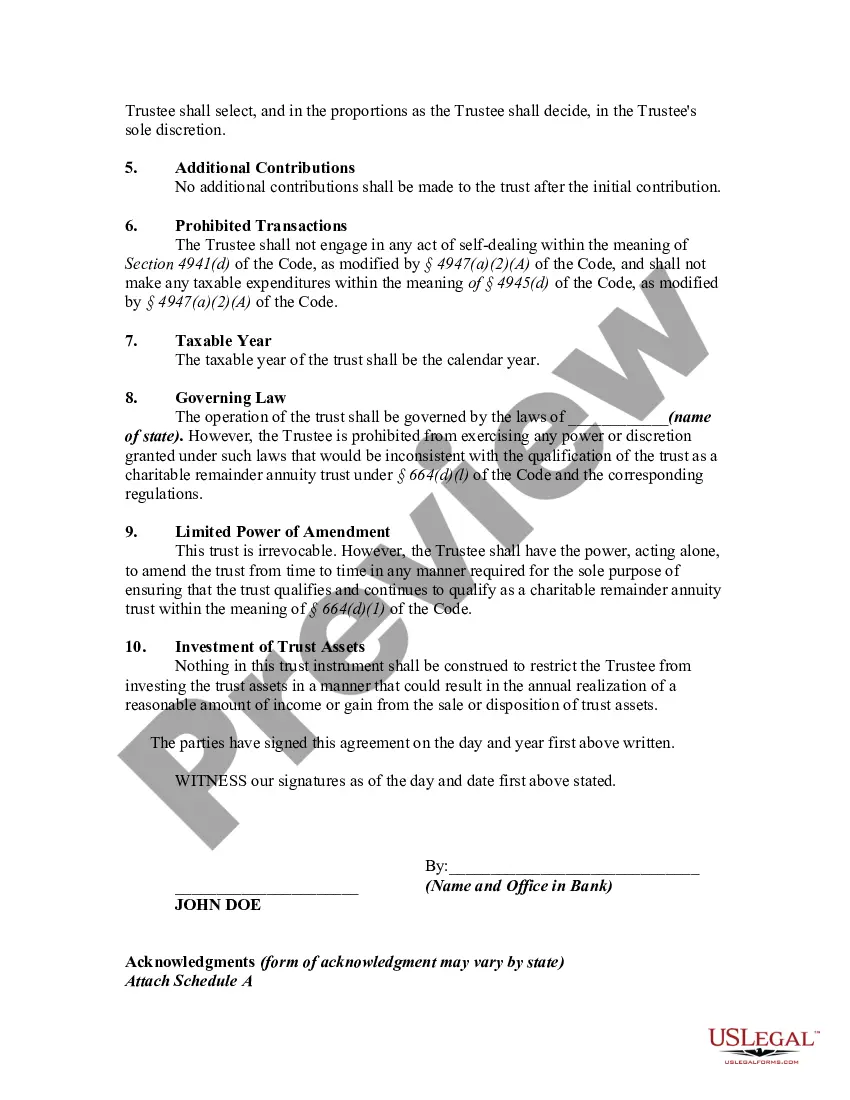
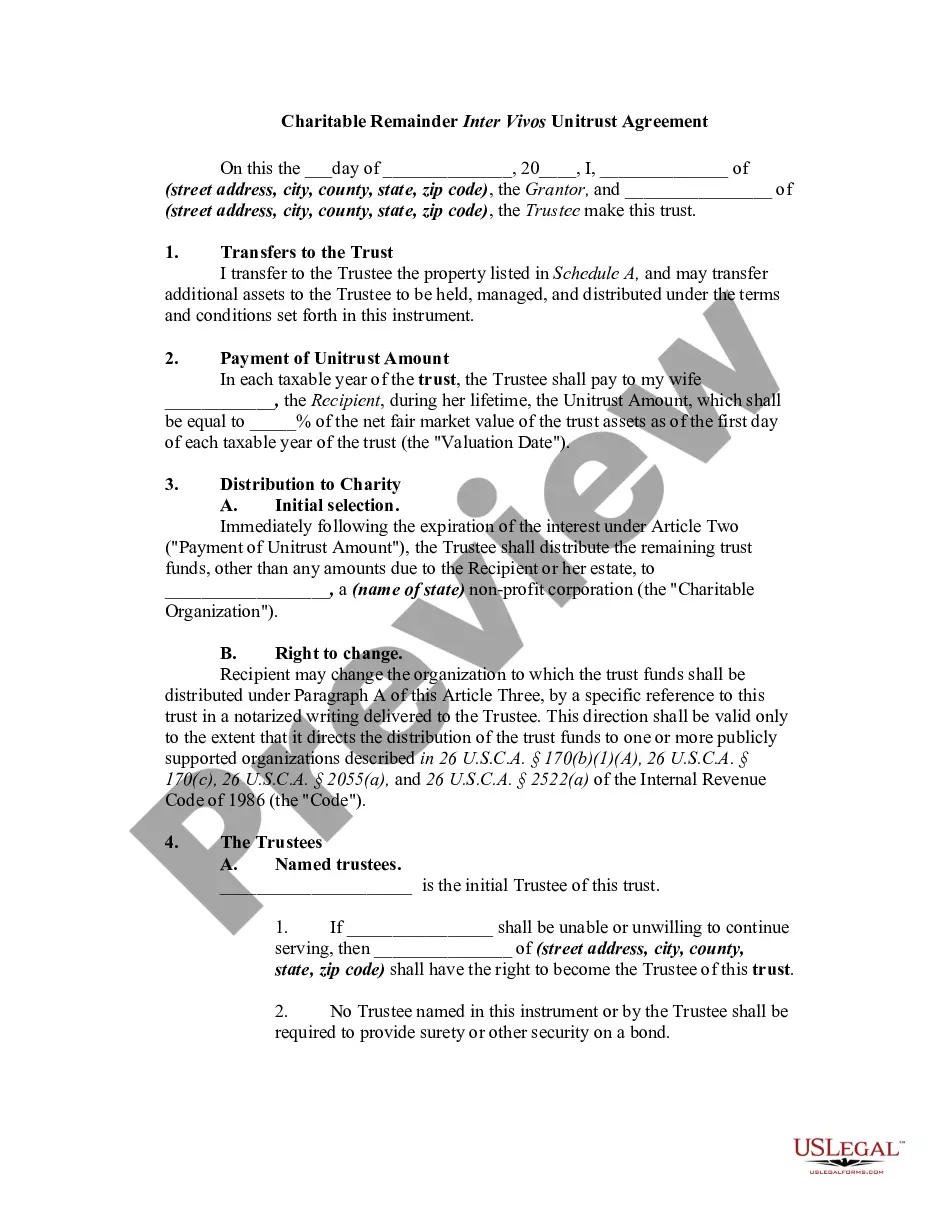
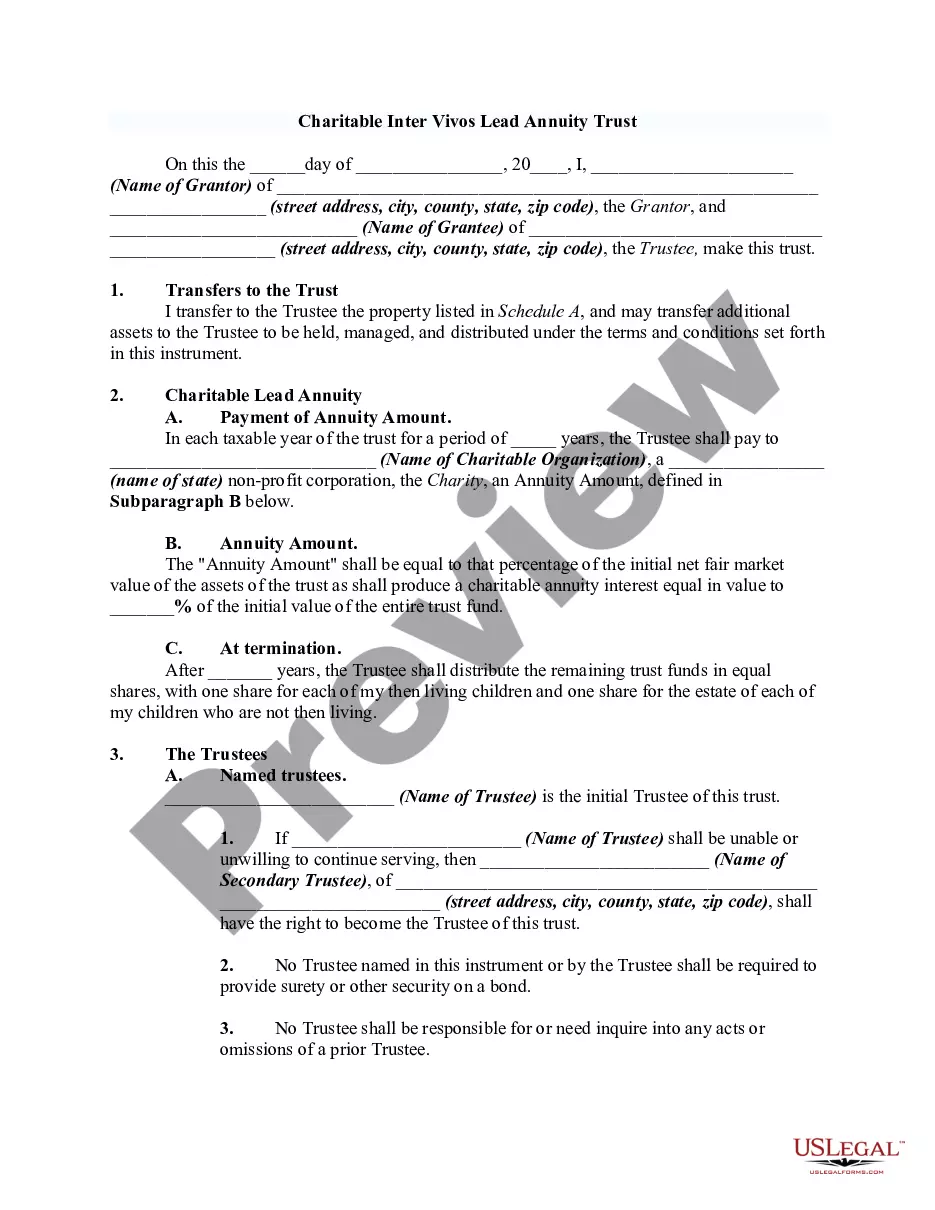
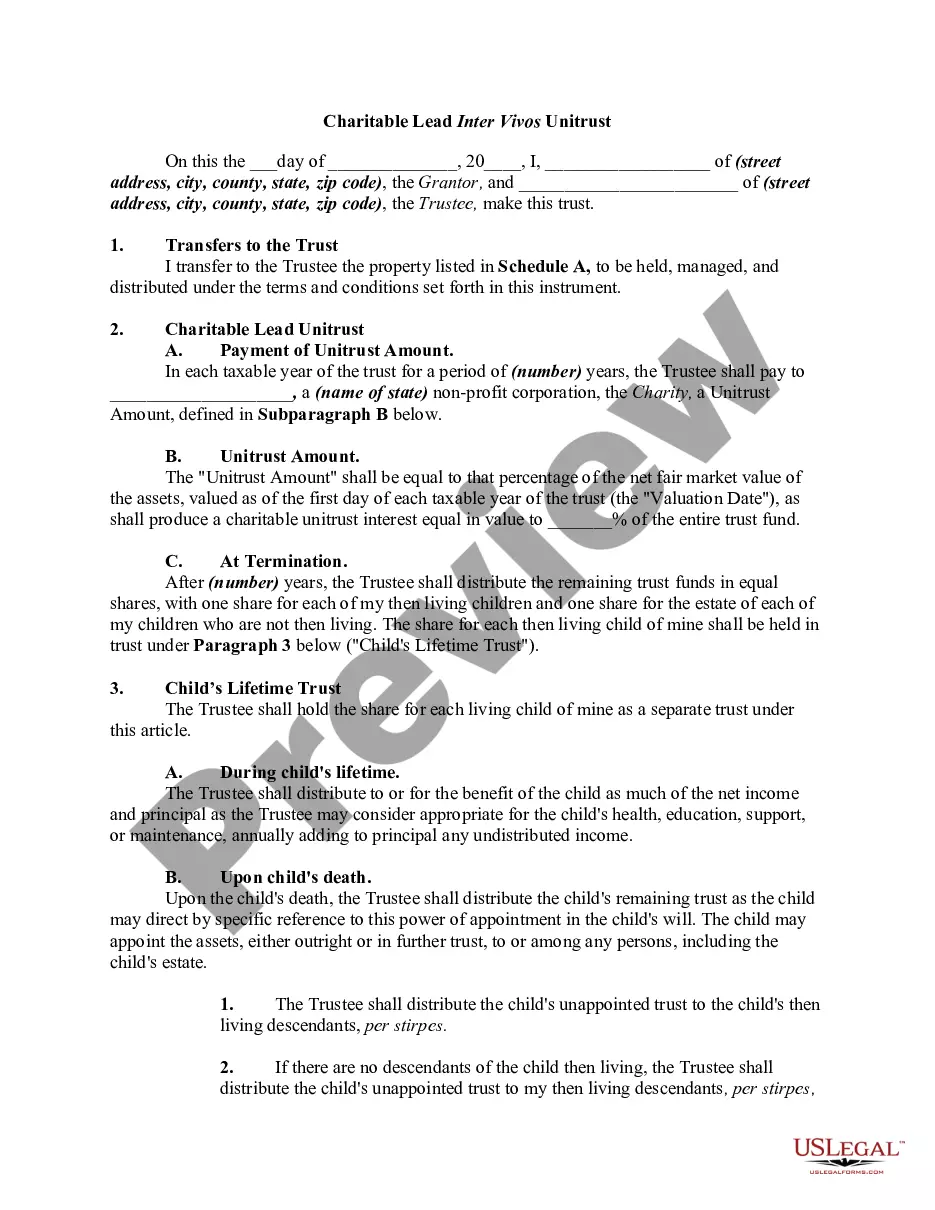
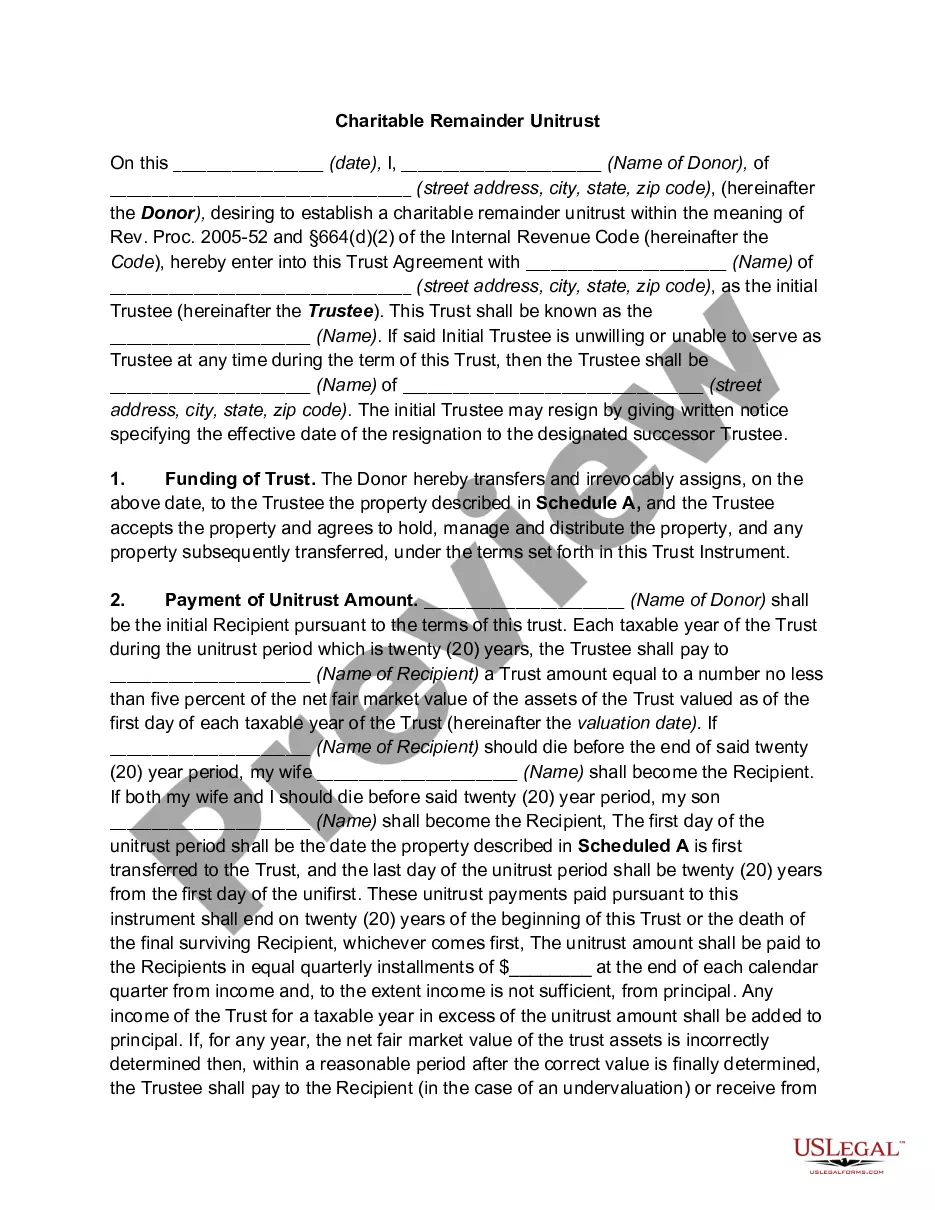
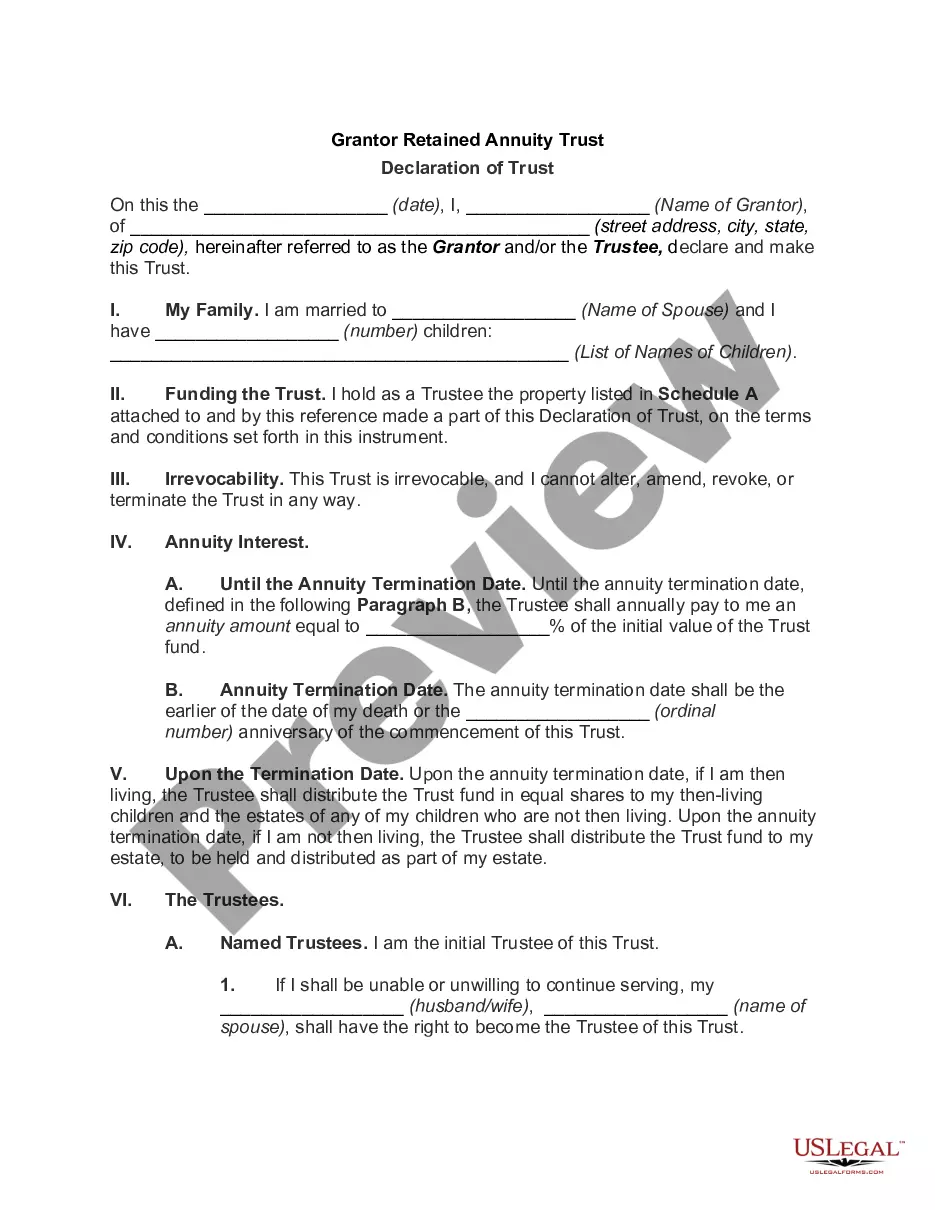








How to fill out Charitable Remainder Inter Vivos Annuity Trust?
Finding the appropriate legal document template can be challenging.
Certainly, there are numerous templates available online, but how do you locate the correct version you require.
Utilize the US Legal Forms website.
First, ensure you have selected the correct form for your city/region. You can preview the form using the Review button and check the form details to confirm this is suitable for you. If the form doesn't meet your needs, use the Search area to find the correct form. Once you are confident the form is correct, press the Purchase now button to obtain the form. Choose the pricing plan you want and enter the necessary details. Create your account and purchase the order using your PayPal account or credit card. Select the file format and download the legal document template to your device. Complete, edit, print, and sign the obtained Massachusetts Charitable Remainder Inter Vivos Annuity Trust. US Legal Forms is the largest library of legal forms where you can find various document templates. Use the service to download professionally crafted documents that comply with state requirements.
- The service offers thousands of templates, including the Massachusetts Charitable Remainder Inter Vivos Annuity Trust, suitable for both business and personal purposes.
- All forms are reviewed by experts and meet federal and state requirements.
- If you are already registered, Log In to your account and click on the Obtain button to access the Massachusetts Charitable Remainder Inter Vivos Annuity Trust.
- Use your account to browse through the legal forms you have previously acquired.
- Go to the My documents tab in your account to obtain an extra copy of the document you need.
- If you are a new user of US Legal Forms, here are some simple instructions to follow.
Form popularity
FAQ
In Massachusetts, the income generated from a Massachusetts Charitable Remainder Inter Vivos Annuity Trust may be subject to taxation, depending on various factors such as the type of income and the trust's structure. Generally, beneficiaries must report the income they receive from the trust on their tax returns. It is important to consult a tax professional to understand the specific tax implications for your situation. This ensures you navigate the legal landscape effectively and maximize your benefits while fulfilling your charitable intentions.
The purpose of a Massachusetts Charitable Remainder Inter Vivos Annuity Trust is to provide income to the trust creator during their lifetime while benefiting charitable organizations after their passing. This structure allows individuals to support their favorite charities while receiving consistent income. Furthermore, it helps in tax planning by offering potential tax deductions at the time of the trust's creation. By establishing such a trust, you are making a meaningful contribution to society while securing your financial interests.
Placing your house in a trust, like a Massachusetts Charitable Remainder Inter Vivos Annuity Trust, can offer several benefits, including asset protection and potential tax advantages. Trusts can also facilitate a smoother transfer of ownership upon your passing. It's essential to consult with a legal advisor to determine the best course of action for your specific situation.
Yes, trusts in Massachusetts can be taxable, particularly if they generate income. Depending on the type of trust, such as a Massachusetts Charitable Remainder Inter Vivos Annuity Trust, the taxation may vary. Trusts may need to file their income tax returns, and understanding your specific trust's tax obligations is key to effective estate planning.
A charitable remainder trust typically files Form 5227 with the IRS, reporting its income and distributions. This form is important for maintaining transparency and ensuring compliance with tax regulations. If you're utilizing a Massachusetts Charitable Remainder Inter Vivos Annuity Trust, keeping accurate records and filing your forms correctly is crucial for maximizing your tax benefits.
In Massachusetts, the estate tax applies to estates over a certain value, which changes from time to time. Currently, the threshold is approximately $1 million. To help mitigate potential tax liabilities when inheriting, consider utilizing a Massachusetts Charitable Remainder Inter Vivos Annuity Trust, as it can provide both income and charitable benefits, while potentially shielding assets from estate taxes.
Form 2 is the Massachusetts fiduciary income tax return, and it is filed with the Massachusetts Department of Revenue. You can submit your Form 2 directly through their online portal or by mailing it to the appropriate address. If you have created a Massachusetts Charitable Remainder Inter Vivos Annuity Trust, you may need to file this form to report any income generated by the trust.
In Massachusetts, trusts can be subject to both state and federal taxes. If a trust generates income, it may be taxed on that income at the state level. The Massachusetts Charitable Remainder Inter Vivos Annuity Trust allows for specific tax benefits, enabling you to potentially minimize taxable income while benefiting a charity.
A revocable trust holds assets that can still be taxed as part of your estate in Massachusetts. This means that, upon your passing, the assets within the trust may be subject to the Massachusetts estate tax, especially if they exceed the exemption limit. If you are looking to reduce estate taxes, consider exploring options like a Massachusetts Charitable Remainder Inter Vivos Annuity Trust. This type of trust can provide benefits while potentially lowering tax liabilities.
A charitable gift annuity is a simple contract between the donor and a charity, providing fixed payments to the donor, while a charitable remainder annuity trust is more complex. The Massachusetts Charitable Remainder Inter Vivos Annuity Trust allows for a broader range of asset types and offers flexibility in income distribution. Evaluating these differences can help donors choose the best option for their charitable and financial goals.