Massachusetts Revocable Living Trust for Husband and Wife with No Children
What is this form?
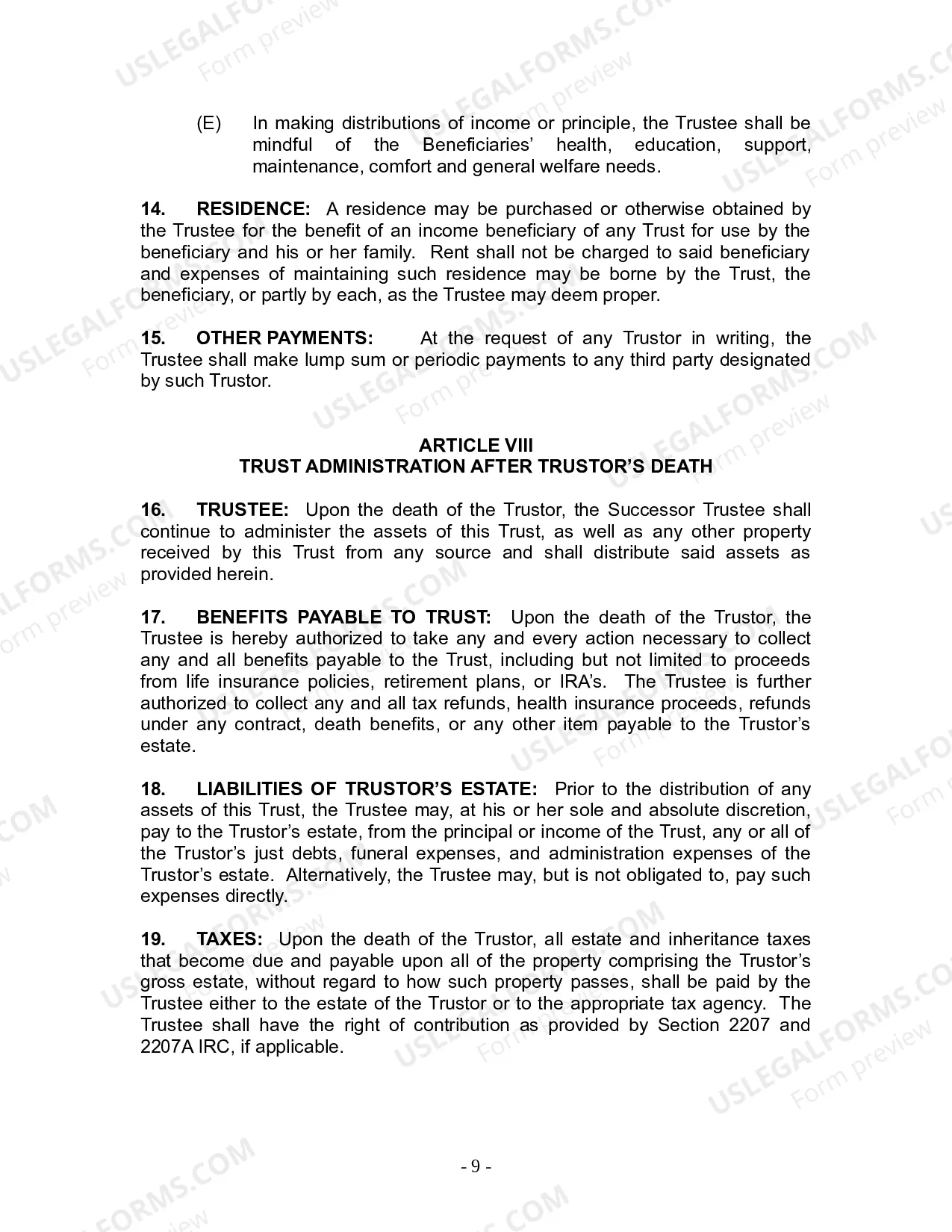
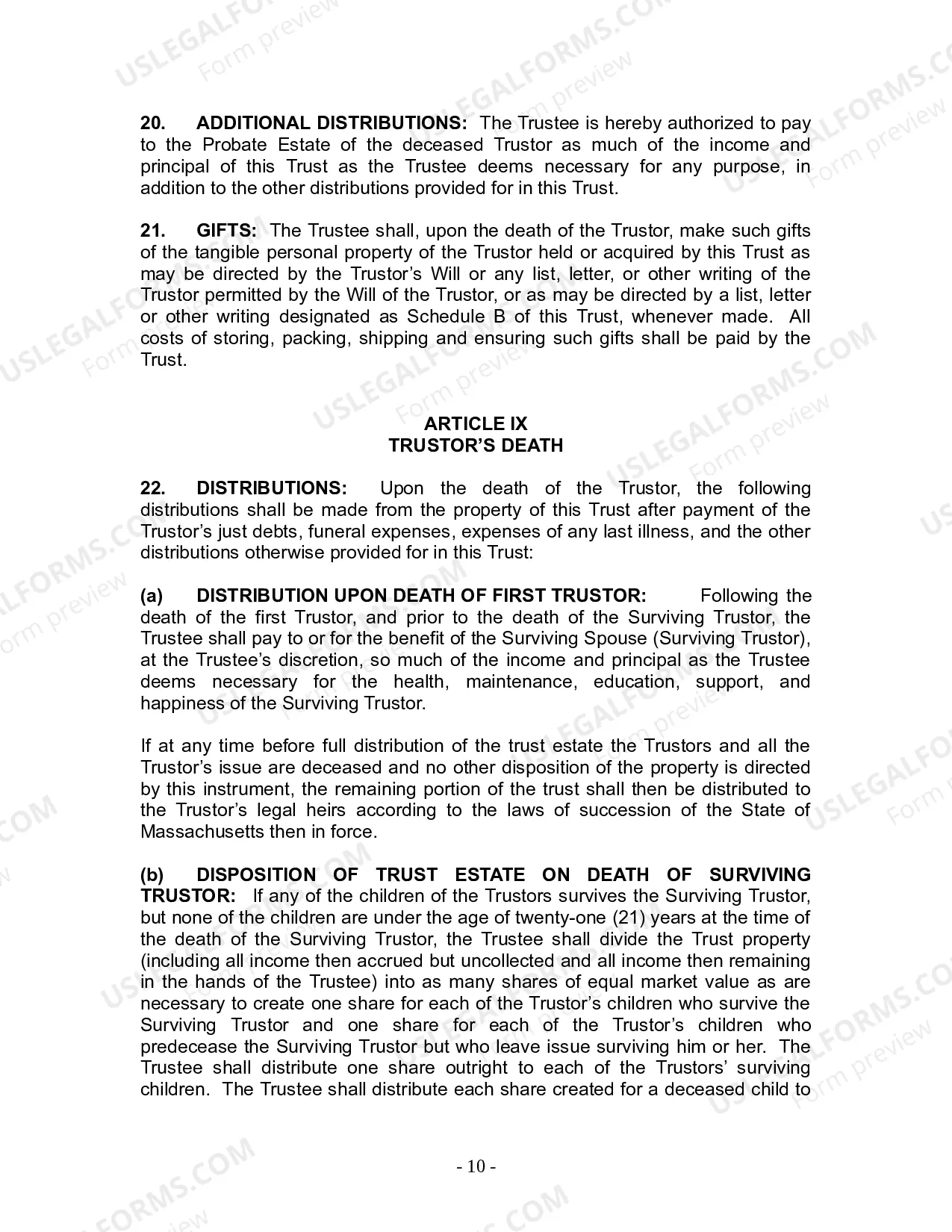
This Revocable Living Trust for Husband and Wife with No Children is a legal document that allows a married couple without children to create a trust during their lifetime. A revocable living trust is designed to manage assets and property, ensuring that they are distributed according to specific instructions upon the death of the trustors without going through probate. This form differentiates itself by catering specifically to couples without children, allowing them to maintain control of their assets while simplifying the transfer process after their passing.
Key parts of this document
- Trust Agreement: Establishes the details and terms of the trust.
- Trustor Identification: Names the husband and wife establishing the trust.
- Trustee Appointment: Designates who will manage the trust assets.
- Assets of the Trust: Lists the property and assets included in the trust.
- Distribution Terms: Specifies how assets will be distributed after the death of the trustors.





Common use cases
This form should be used by couples who wish to manage their assets during their lifetime while establishing a clear plan for asset distribution after death. It is ideal for those who want to avoid the complications and delays of probate, particularly if they do not have children or other heirs needing formal provisions. Scenarios include managing joint property, ensuring timely access to resources for surviving spouses, or setting up a means to reduce tax liabilities upon death.
Who can use this document
- Married couples without children who wish to create a comprehensive estate plan.
- Individuals seeking to exert control over their joint assets during their lifetime.
- Couples looking to ensure the smooth transfer of their estate after one or both pass away.
- Individuals wanting to minimize probate costs and streamline asset distribution.
How to complete this form
- Identify the parties involved: Enter the names of the husband and wife acting as trustors.
- Designate the trustee: Specify who will manage the trust, which can be one or both trustors.
- List the assets: Clearly outline all property and assets being transferred into the trust.
- Set distribution terms: Indicate how assets should be distributed after the death of the trustors.
- Sign the document: Ensure all parties sign in the presence of a notary, if required, to validate the trust.
Notarization guidance
This form does not typically require notarization unless specified by local law. It is advisable, however, to consult legal advice to ensure all requirements are met for execution.
Get your form ready online
Our built-in tools help you complete, sign, share, and store your documents in one place.
Make edits, fill in missing information, and update formatting in US Legal Forms—just like you would in MS Word.
Download a copy, print it, send it by email, or mail it via USPS—whatever works best for your next step.
Sign and collect signatures with our SignNow integration. Send to multiple recipients, set reminders, and more. Go Premium to unlock E-Sign.
If this form requires notarization, complete it online through a secure video call—no need to meet a notary in person or wait for an appointment.
We protect your documents and personal data by following strict security and privacy standards.

Make edits, fill in missing information, and update formatting in US Legal Forms—just like you would in MS Word.

Download a copy, print it, send it by email, or mail it via USPS—whatever works best for your next step.

Sign and collect signatures with our SignNow integration. Send to multiple recipients, set reminders, and more. Go Premium to unlock E-Sign.

If this form requires notarization, complete it online through a secure video call—no need to meet a notary in person or wait for an appointment.

We protect your documents and personal data by following strict security and privacy standards.
Common mistakes to avoid
- Failing to properly fund the trust with assets, which can lead to probate issues.
- Not including clear instructions for asset distribution.
- Overlooking the need for periodic review and updates of the trust document.
- Neglecting to discuss the trust terms with intended beneficiaries.
Why use this form online
- Convenience of downloading and completing the form at any time.
- Editability allows for updates and changes as circumstances evolve.
- Reliability, with templates drafted by licensed attorneys ensuring legal correctness.
Main things to remember
- A revocable living trust allows couples to manage assets during their lifetime and provide instructions for disposition after death.
- This form is tailored for married couples without children, simplifying estate management.
- Proper completion and funding of the trust are essential to avoid probate issues.
Looking for another form?
Form popularity
FAQ
If you die intestate, according to Massachusetts intestacy law, everything goes to your next of kin. Your next of kin are the people who have the closest relation to you. If you're married, then that's your spouse. If you're not married, your closest blood relations or equivalent, will inherit your property.
Separate trusts may offer better protection from creditors, if this is a concern. For example, at the death of the first spouse, the deceased spouse's trust becomes irrevocable, which makes it harder to access by creditors. And yet the surviving spouse can still access it for income and other needs.
In California, surviving spouses already receive all of the community property upon the death of their spouse.However, creating a joint will is still an option in California, and while it might help a couple save some time and money on their estate plan, it can also lead to some complex problems.
How Is Next of Kin Determined? To determine next of kin in California, go down the list until someone exists in the category listed.For example, if decedent had no surviving spouse or registered domestic partner, but was survived by adult children, then the adult children would be next of kin.
Typically, when a married couple utilizes a Revocable Living Trust based estate plan, each spouse creates and funds his or her own separate Revocable Living Trust. This results in two trusts. However, in the right circumstances, a married couple may be better served by creating a single Joint Trust.
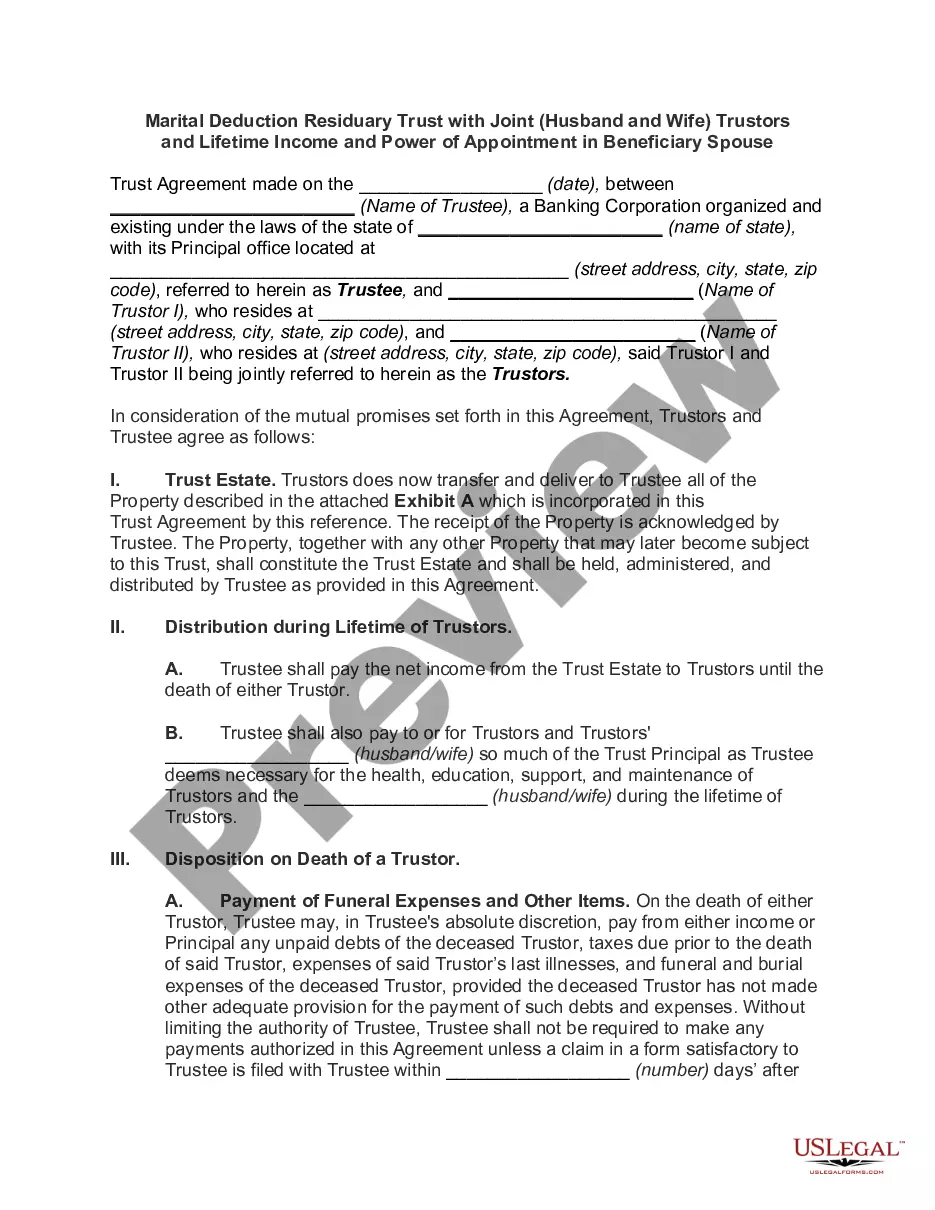
At the time of your death, the assets in your family trust are protected by the exemption, and the assets in your marital trust are protected by the marital deduction. No estate taxes are due.
Q: Can a person have more than one trust? A: Yes, it is not that uncommon for a person to be the beneficiary of multiple trusts. However, caution should be used. Trusts come in many shapes and sizes and can serve multiple purposes and can be established by you or by someone else for your benefit.
Joint trusts are easier to fund and maintain.In a joint trust, after the death of the first spouse, the surviving spouse has complete control of the assets. When separate trusts are used, the deceased spouses' trust becomes irrevocable and the surviving spouse has limited control over assets.