Massachusetts Instructions for Users of Affidavit of Indigency and Its Supplement - In Forma Pauperis
What is this form?
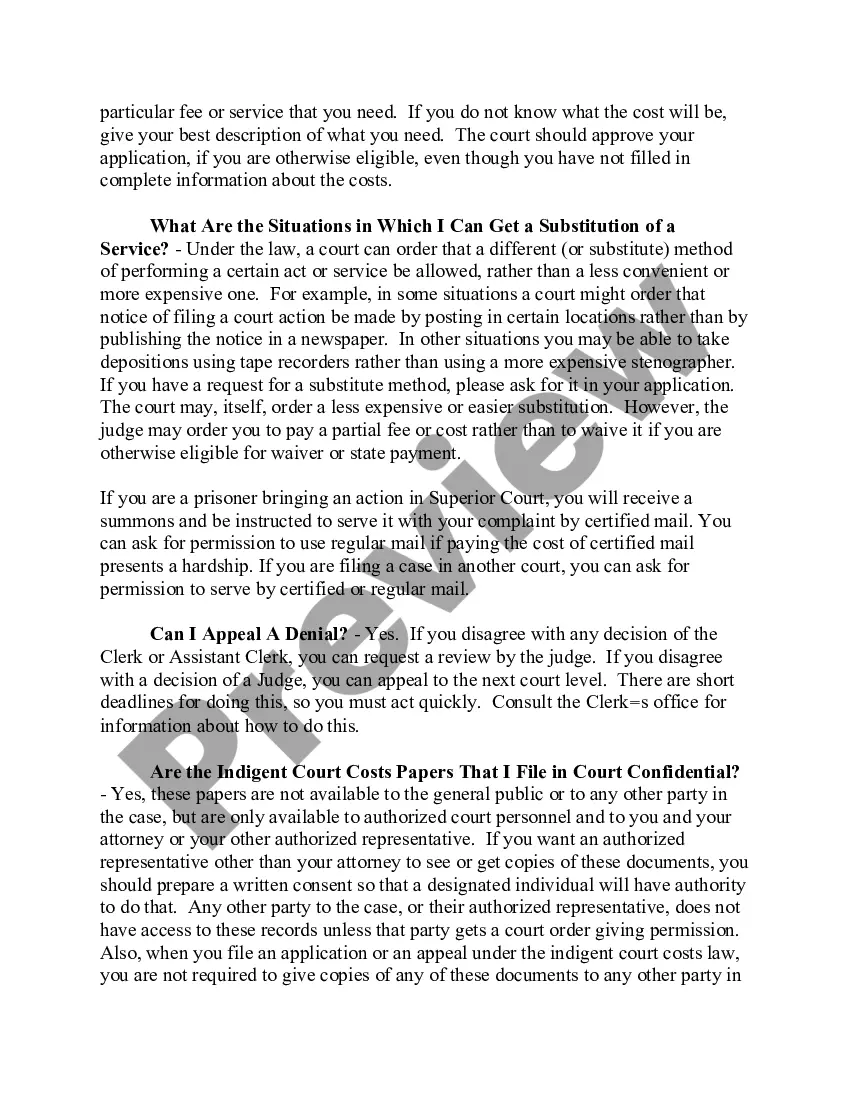
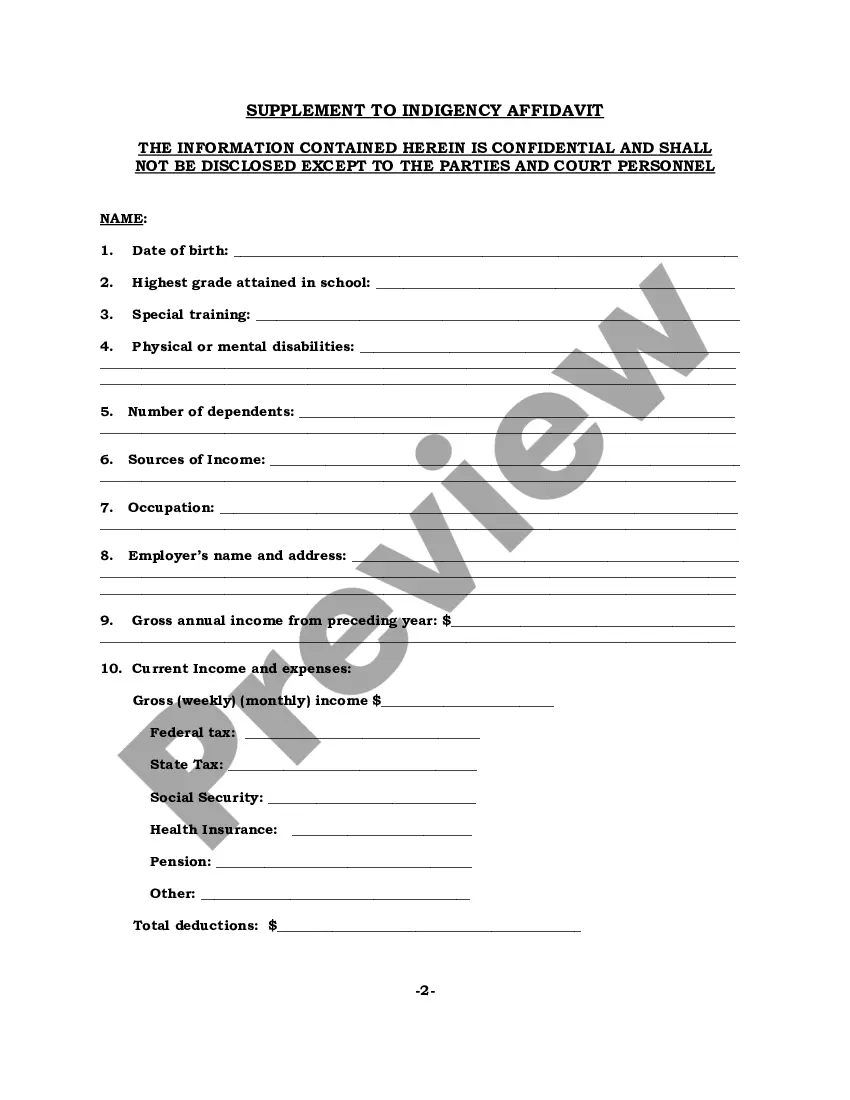
The Affidavit of Indigency and Its Supplement â In Forma Pauperis is an official document used to apply for a waiver of court fees for individuals who cannot afford them. This form allows eligible persons to have the state cover costs associated with court proceedings, which can include filing fees and service fees. It is specifically designed for residents of Massachusetts and complies with the state's laws and regulations.
Key parts of this document
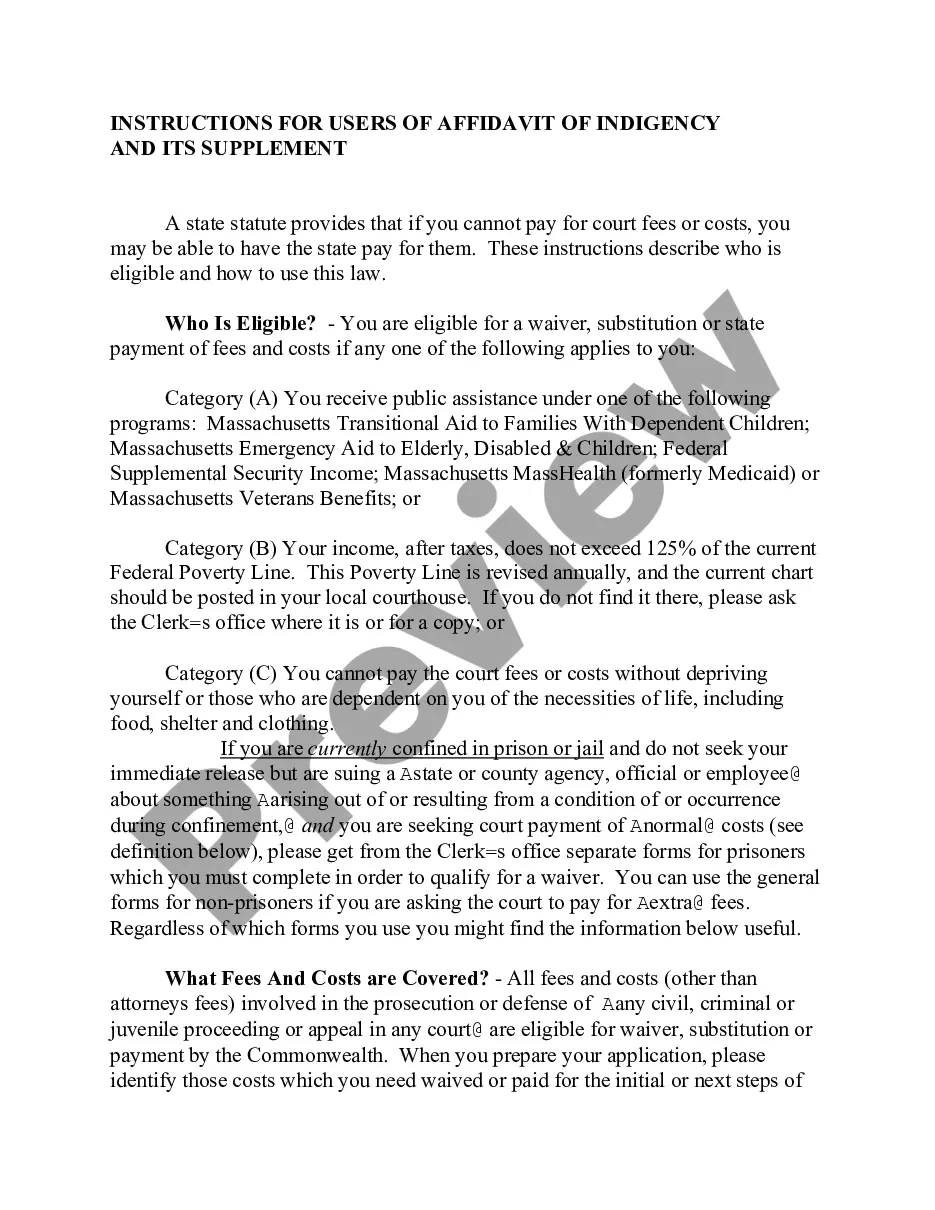
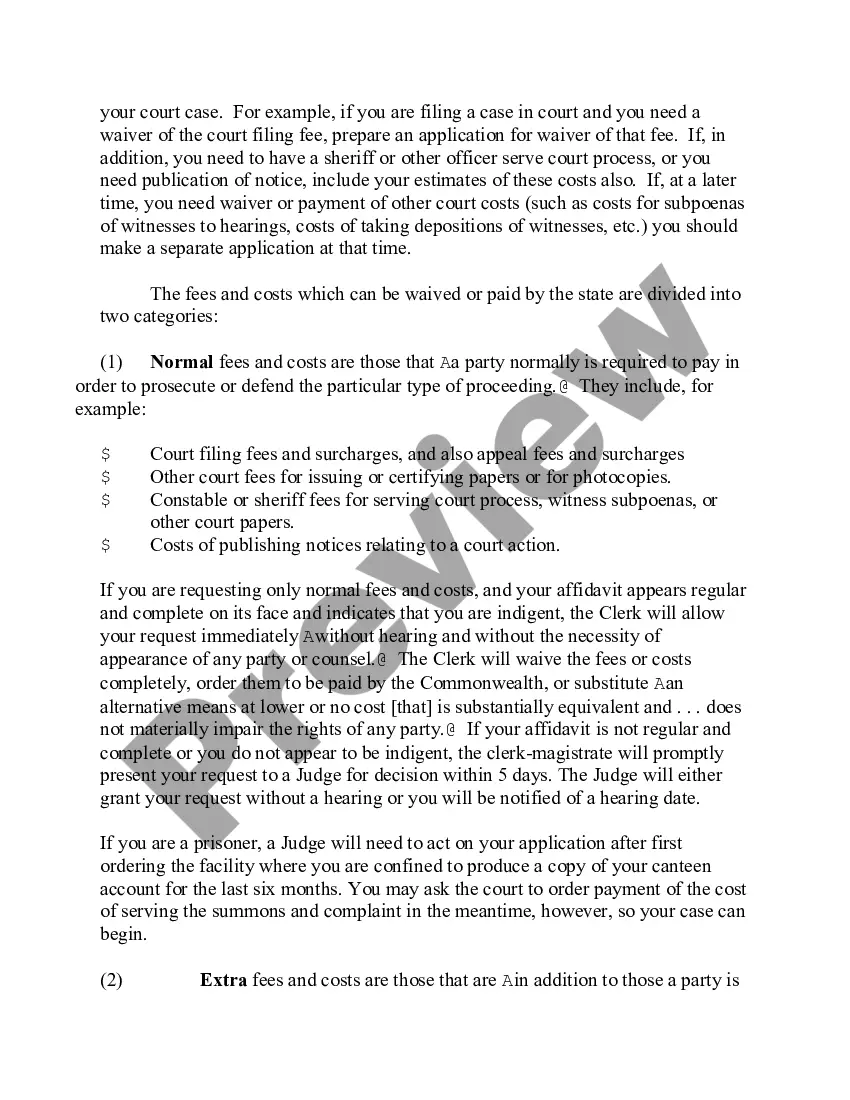
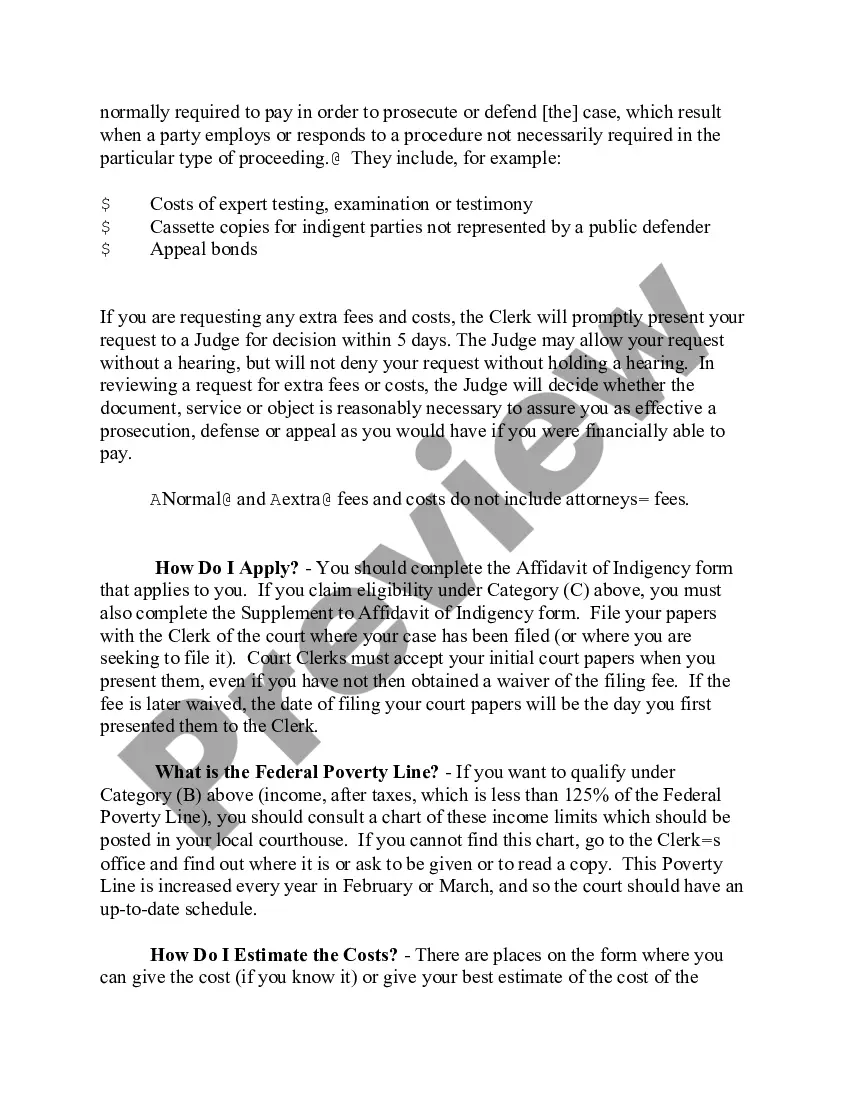
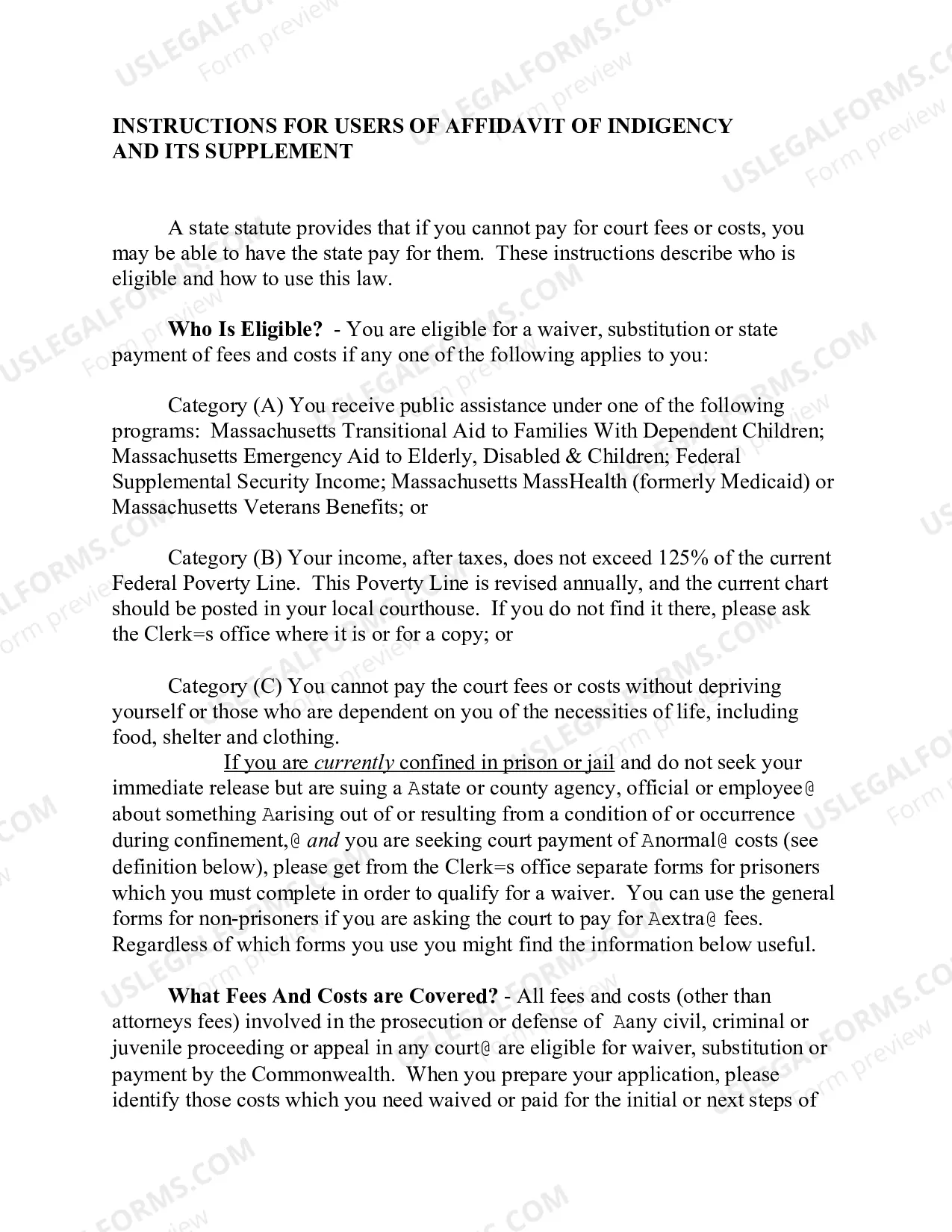
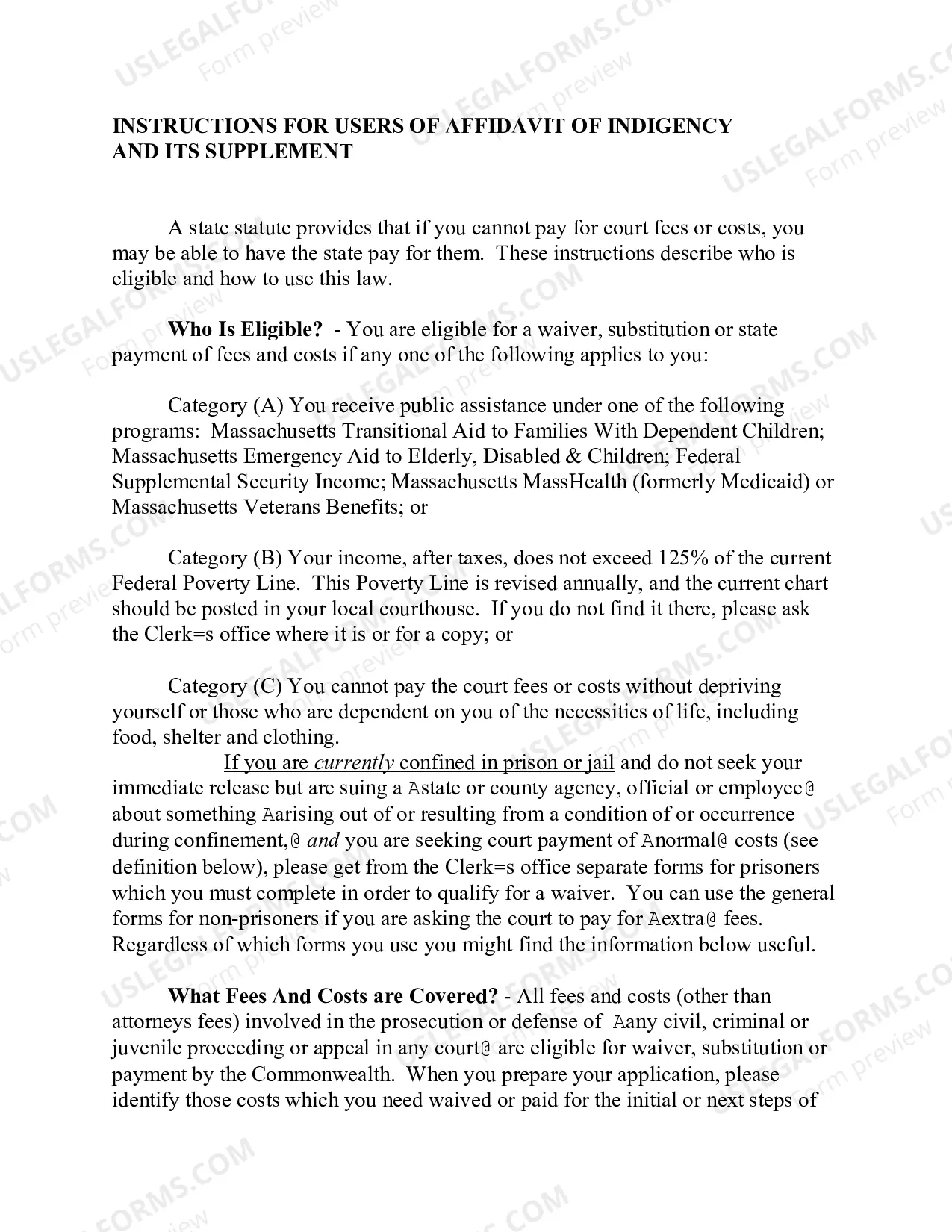
- Eligibility categories for fee waivers, including public assistance and income limits.
- Detailing which fees and costs can be waived or paid by the state.
- Instructions on how to apply with the Affidavit of Indigency and Supplement.
- Information about appealing a denial of fee waiver.
- Privacy assurance regarding the documents filed in court.

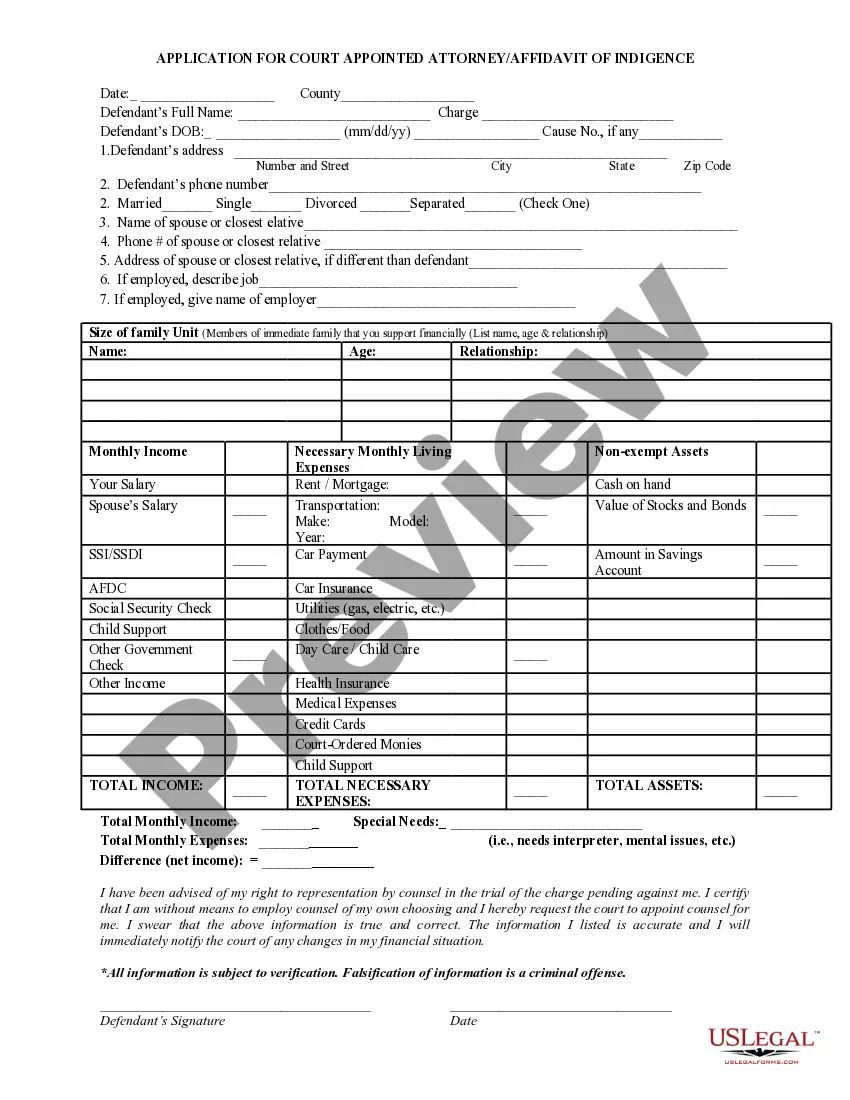
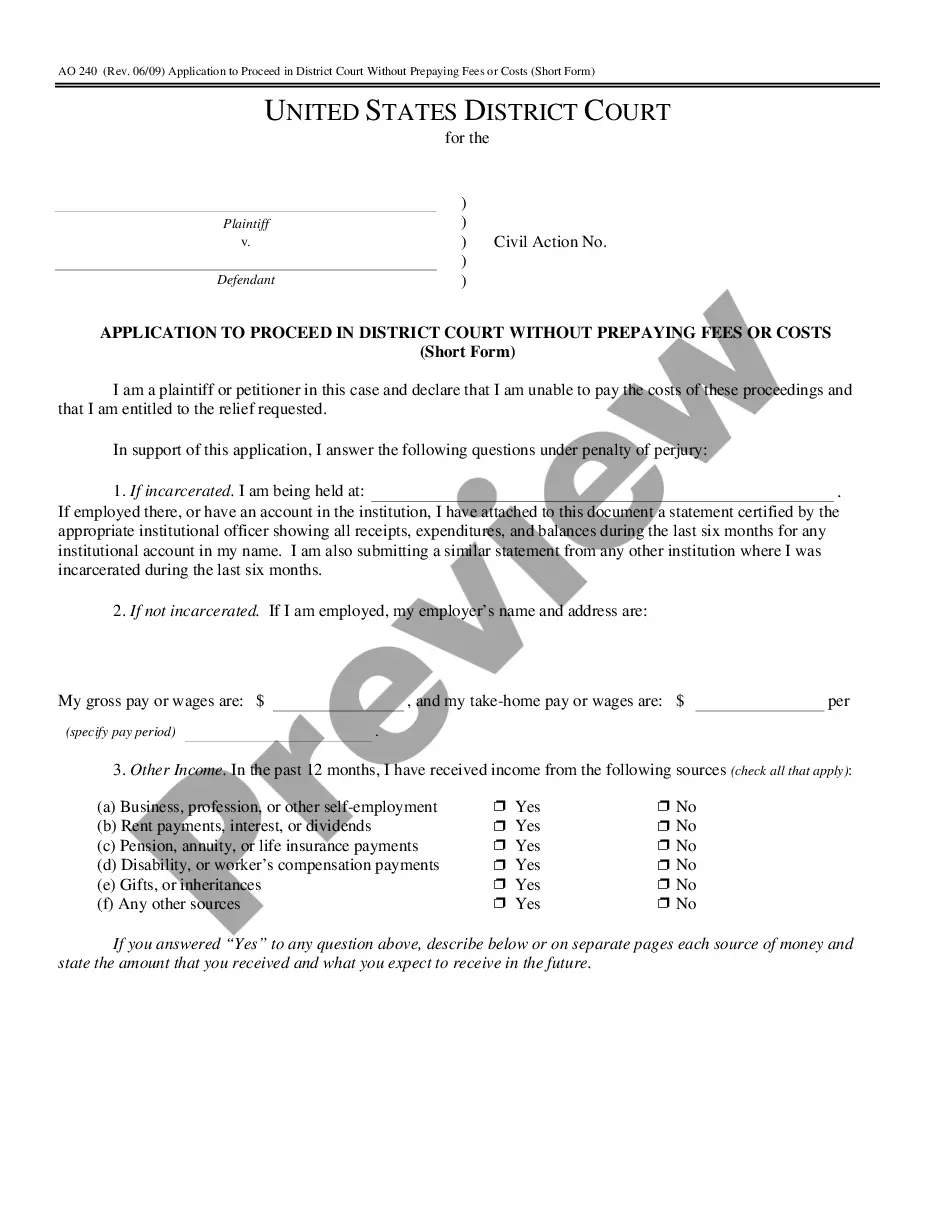
When to use this document
You should use the Affidavit of Indigency when you are facing court fees that you cannot afford. Situations may include filing a civil case, appealing a court decision, or defending against a criminal charge. If your income and circumstances prevent you from meeting these costs without sacrificing basic life necessities, this form is essential for seeking assistance from the court.
Who needs this form
- Individuals currently receiving public assistance benefits.
- People whose income is below 125 percent of the Federal Poverty Line.
- Anyone unable to pay court costs without depriving themselves or dependents of basic needs.
- Prisoners pursuing legal action related to their confinement.
Instructions for completing this form
- Identify your eligibility category from the listed options.
- Fill out the Affidavit of Indigency form, and if necessary, the Supplement form for additional details.
- Provide an estimate of the fees you seek to waive or state payment coverage for.
- Submit the completed forms to the Clerk of the court where your case is filed.
- Consult local courthouse resources or Clerkâs office if additional information is needed.
Notarization guidance
This form does not typically require notarization unless specified by local law. However, it is essential to check court-specific requirements where you file your case.
Get your form ready online
Our built-in tools help you complete, sign, share, and store your documents in one place.
Make edits, fill in missing information, and update formatting in US Legal Forms—just like you would in MS Word.
Download a copy, print it, send it by email, or mail it via USPS—whatever works best for your next step.
Sign and collect signatures with our SignNow integration. Send to multiple recipients, set reminders, and more. Go Premium to unlock E-Sign.
If this form requires notarization, complete it online through a secure video call—no need to meet a notary in person or wait for an appointment.
We protect your documents and personal data by following strict security and privacy standards.

Make edits, fill in missing information, and update formatting in US Legal Forms—just like you would in MS Word.

Download a copy, print it, send it by email, or mail it via USPS—whatever works best for your next step.

Sign and collect signatures with our SignNow integration. Send to multiple recipients, set reminders, and more. Go Premium to unlock E-Sign.

If this form requires notarization, complete it online through a secure video call—no need to meet a notary in person or wait for an appointment.

We protect your documents and personal data by following strict security and privacy standards.
Common mistakes
- Failing to clearly state eligibility or leave out necessary documentation.
- Not providing estimates for variable costs when applicable.
- Neglecting to check the latest Federal Poverty Line figures when applying under Category B.
- Not following submission procedures for different court types (e.g., not using separate forms for prisoners).
Why complete this form online
- Convenient access to legal forms anytime, from anywhere.
- Editable digital format allows for easy customization.
- Reliability of attorney-drafted documents ensuring compliance with current laws.
Looking for another form?


Form popularity
FAQ
In determining indigency, the judge shall recognize ability to pay as a variable depending on the nature, extent and liquidity of assets, the disposable net income of the defendant, the nature of the offense, the effort and skill required to gather pertinent information and the length and complexity of the proceedings.
An applicant, including an applicant who is a minor or an adult tax-dependent person, is indigent if the applicant's income is equal to or below 200 percent of the then-current federal poverty guidelines prescribed for the size of the household of the applicant by the United States Department of Health and Human
Impoverished, or unable to afford the necessities of life. A defendant who is indigent has a constitutional right to court-appointed representation, according to a 1963 Supreme Court decision, Gideon v. Wainright.
Indigent. 1) n. a person so poor and needy that he/she cannot provide the necessities of life (food, clothing, decent shelter) for himself/herself. 2) n. one without sufficient income to afford a lawyer for defense in a criminal case.
A valid proof of receipt will consist of a copy of the most recent Verification of Benefits Form, Notice of Action Approval Letter, or Award Letter. Indigence Application form within 60 days of the issuance of the parking citation or 10 days from the hearing determination, whichever is later.
You must fill out a form called an Affidavit of Indigency. This form tells the court you cannot afford the fees related to your case. If the clerk or a judge approves the form, you will not have to pay. You can get an Affidavit of Indigency and the Supplement to the Affidavit of Indigency at any court house or online.
Indigent means to be a poor or needy person. Our laws look at how much money a person has, how much debt they have and how many assets they have to determine whether or not they can afford to hire their own representation or if they need a court-appointed attorney to represent them.