Massachusetts Letter from Landlord to Tenant for Failure to keep all plumbing fixtures in the dwelling unit as clean as their condition permits - Remedy or lease terminates
About this form
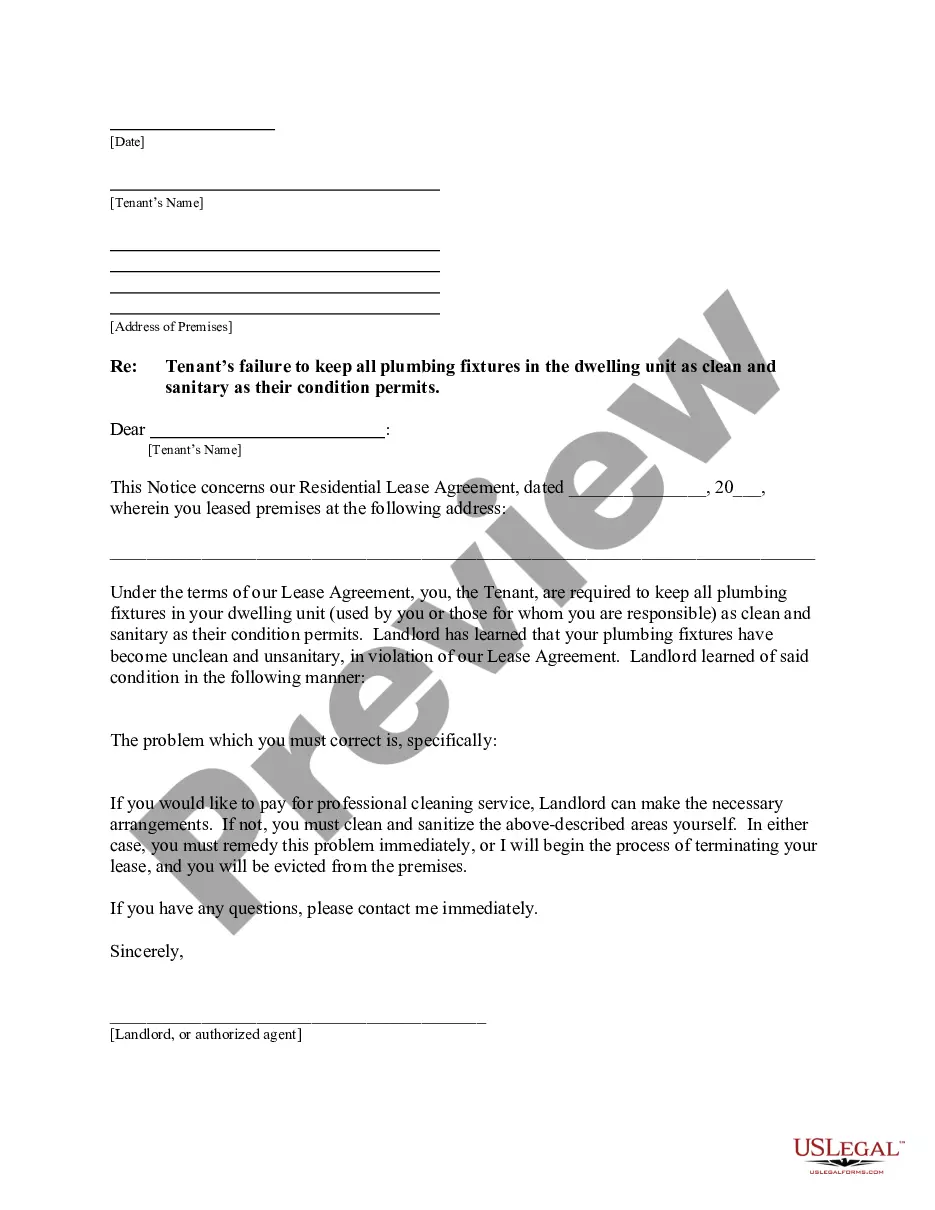
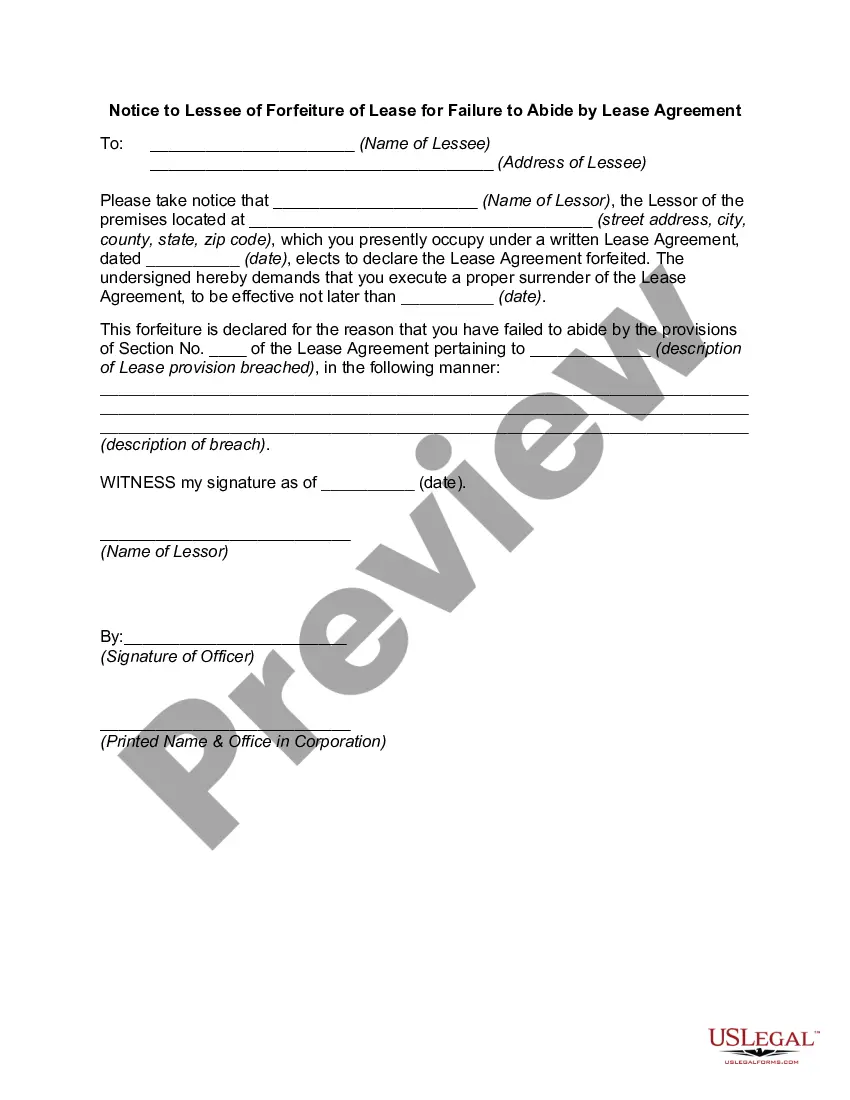
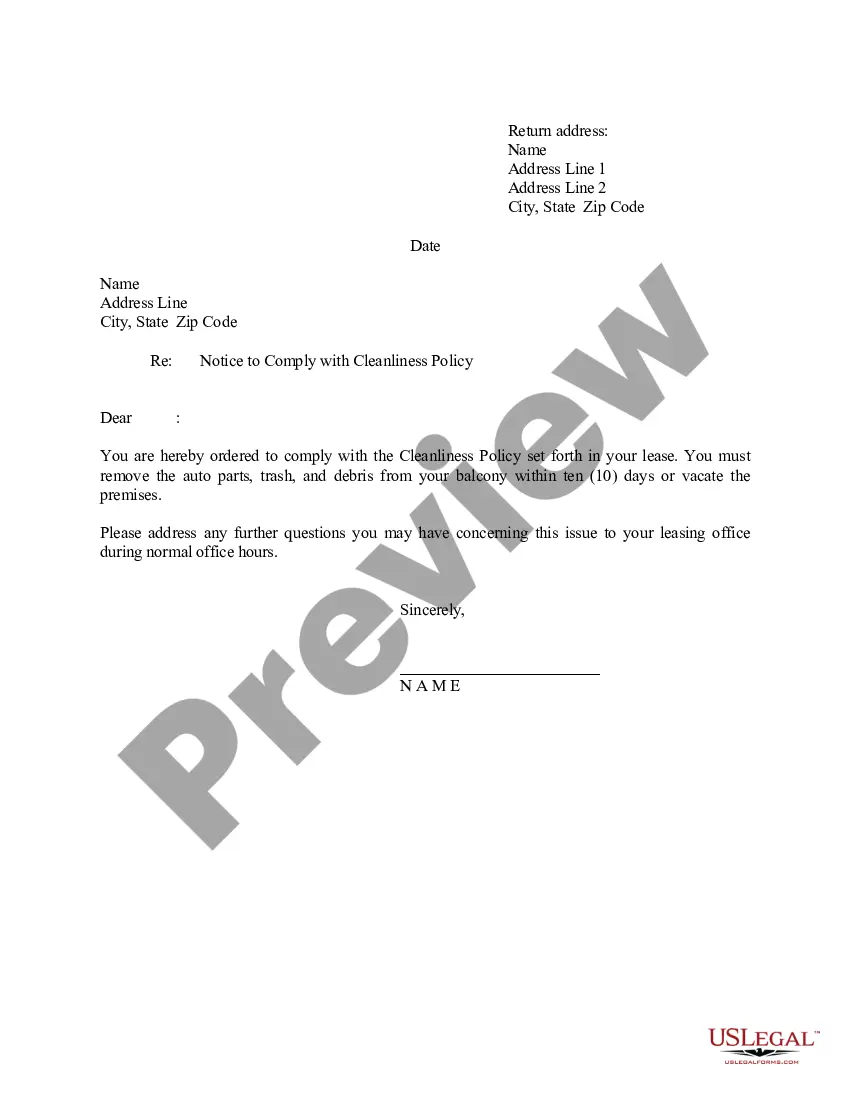
This form is a notice from a landlord to a tenant regarding the failure to maintain plumbing fixtures in the rental property. The letter emphasizes that if the tenant does not remedy the situation, the lease will automatically terminate. This form differs from general eviction notices because it specifically addresses the maintenance of plumbing conditions, which may lead to lease termination if neglected.
Main sections of this form
- Identification of the landlord and tenant, including contact information.
- Description of the plumbing issues that require attention.
- Warning about the potential automatic lease termination if issues are not resolved.
- Instructions for the tenant to contact the landlord for any questions.
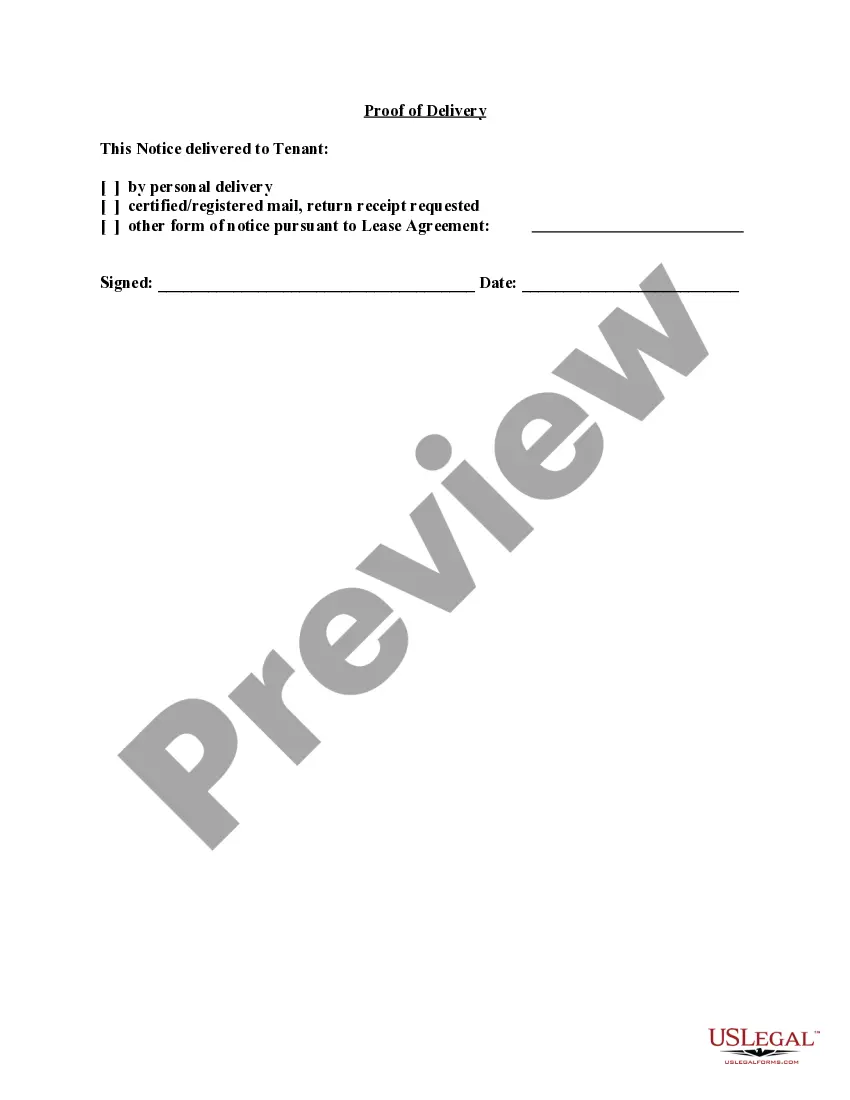
- Proof of delivery section for the landlord to confirm receipt of the notice.


Common use cases
This form should be used when a landlord notices deterioration or neglect of plumbing fixtures by a tenant. It serves as a formal notice to communicate the specific maintenance expectations outlined in the lease and notifies the tenant of the potential consequences of inaction.
Who needs this form
- Landlords seeking to address maintenance issues with their tenants.
- Property managers acting on behalf of landlords.
- Tenants who have received this notice and need to understand their obligations.
How to prepare this document
- Enter the landlord's name and contact information at the top of the form.
- Fill in the tenant's name and property address to identify the parties involved.
- Clearly describe the plumbing issues that necessitate this notice.
- Include a deadline for the tenant to respond or rectify the issue.
- Sign the notice and specify the date of delivery.
- Document how the notice was delivered to the tenant in the proof of delivery section.
Is notarization required?
Notarization is generally not required for this form. However, certain states or situations might demand it. You can complete notarization online through US Legal Forms, powered by Notarize, using a verified video call available anytime.
Get your form ready online
Our built-in tools help you complete, sign, share, and store your documents in one place.
Make edits, fill in missing information, and update formatting in US Legal Forms—just like you would in MS Word.
Download a copy, print it, send it by email, or mail it via USPS—whatever works best for your next step.
Sign and collect signatures with our SignNow integration. Send to multiple recipients, set reminders, and more. Go Premium to unlock E-Sign.
If this form requires notarization, complete it online through a secure video call—no need to meet a notary in person or wait for an appointment.
We protect your documents and personal data by following strict security and privacy standards.

Make edits, fill in missing information, and update formatting in US Legal Forms—just like you would in MS Word.

Download a copy, print it, send it by email, or mail it via USPS—whatever works best for your next step.

Sign and collect signatures with our SignNow integration. Send to multiple recipients, set reminders, and more. Go Premium to unlock E-Sign.

If this form requires notarization, complete it online through a secure video call—no need to meet a notary in person or wait for an appointment.

We protect your documents and personal data by following strict security and privacy standards.
Typical mistakes to avoid
- Failing to provide a clear description of the plumbing issues.
- Not including contact information for the landlord.
- Omitting a deadline for the tenant to respond.
- Not keeping a record of how the notice was delivered.
Benefits of using this form online
- Quick and easy access to a legally vetted template.
- Editable to suit specific circumstances and preferences.
- Convenient downloading options for keeping records.
- Helps ensure compliance with local and state laws regarding tenant notices.
Legal use & context
This form is a legally binding communication between a landlord and a tenant. It is important for maintaining clear expectations regarding lease obligations and can serve as evidence in case of a legal dispute concerning lease termination or property maintenance issues.
Summary of main points
- This letter serves as a formal notice for the tenant to maintain plumbing fixtures.
- Failing to comply may lead to termination of the lease.
- Proper documentation and delivery of this notice are vital for legal enforceability.
Looking for another form?
Form popularity
FAQ
Know your state's landlord/tenant laws. Read and respond to the court summons. Try to work out a settlement. Consider legal counsel. Show up for court. Look sharp and provide evidence.
The NSW tenant factsheet states that urgent repairs, including blocked toilets, are the responsibility of the landlord. When urgent repairs are required, the tenant must notify the landlord as soon as possible - preferably in writing.
If your landlord breaches the warranty of habitability or the warranty of quiet enjoyment, you may be able to sue her to recover monetary damages.In some states, such as California and Arizona, you may be able to seek emotional distress damages if the landlord's actions were particularly egregious.
If you're seeking damages for emotional distress caused by a landlord's discrimination, or punitive damages for especially blatant and intentional discrimination, a lawsuit may well be your best bet. Understand what's involved in suing your landlord. You may file a lawsuit in either federal or state court.
If there is a problem, such as a burst pipe resulting from the landlord's failure to maintain the property, the tenant cannot be held responsible. If a tenant has detected a problem and reported it to the landlord, it is the owner's responsibility to fix them.
The landlord receives written notice of the existing violations from the inspecting agency; and. The landlord is given five days from the date of notice to begin repairs or to contract for outside services and 14 days to substantially complete all necessary repairs.
Duty to provide habitable premises You must provide habitable apartments and common areas for the entire tenancy in accordance with the minimum standards of the State Sanitary Code which seeks to protect the health, safety, and well-being of your tenants and the general public.
When you rent, your landlord is responsible for maintaining the functional aspects of your home such as plumbing, electricity, and heating. Landlords must also generally take action when flooding, a clogged pipe, pest infestation, or other problems occur.
As stated in the Landlord and Tennant Act 1985, it is the landlord's responsibility to maintain their drainage, pipes and other areas of plumbing. If a drain becomes blocked through tenant misuse however, then the tenant is liable for the cost of repairs.