Massachusetts Bond for Written Contract - Corporation or LLC
What this document covers
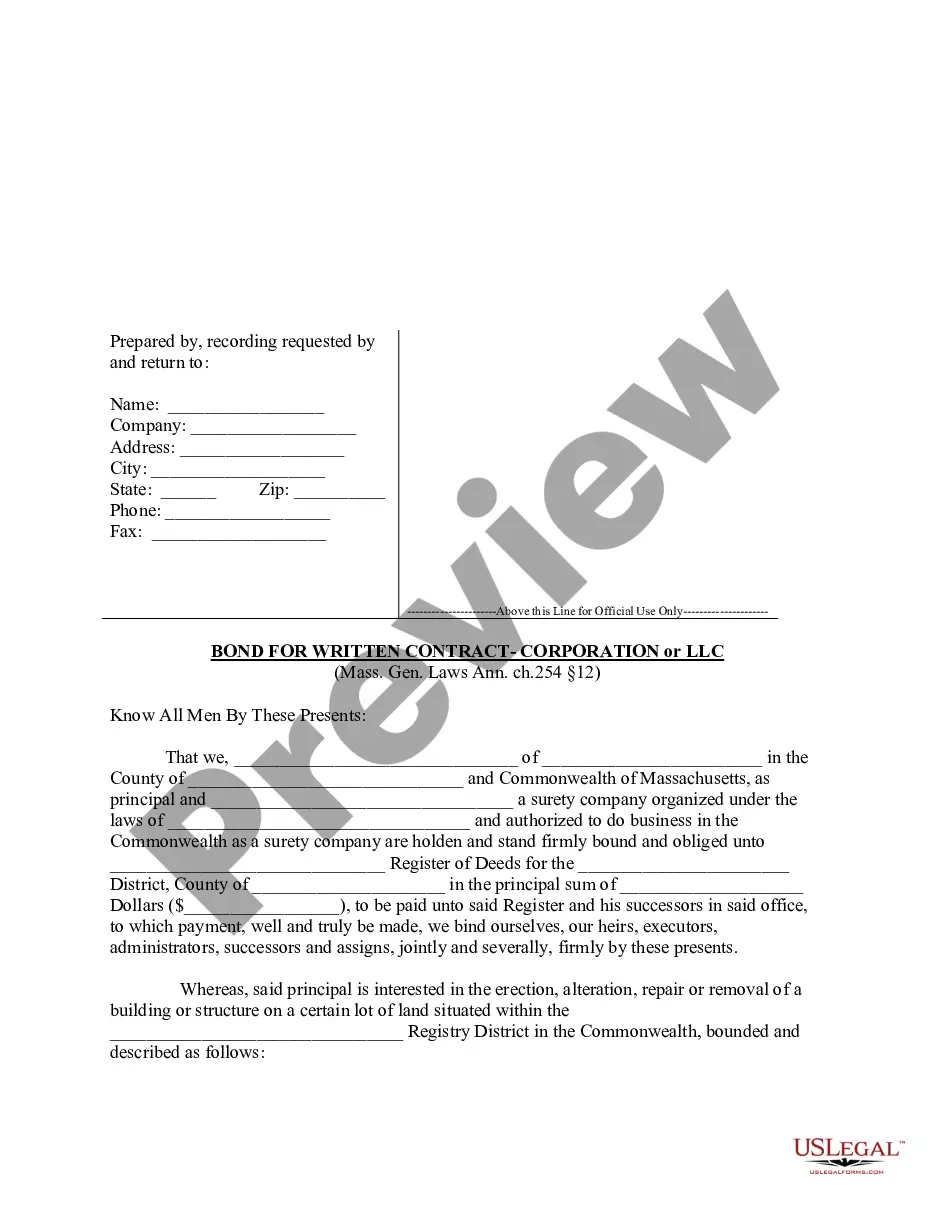
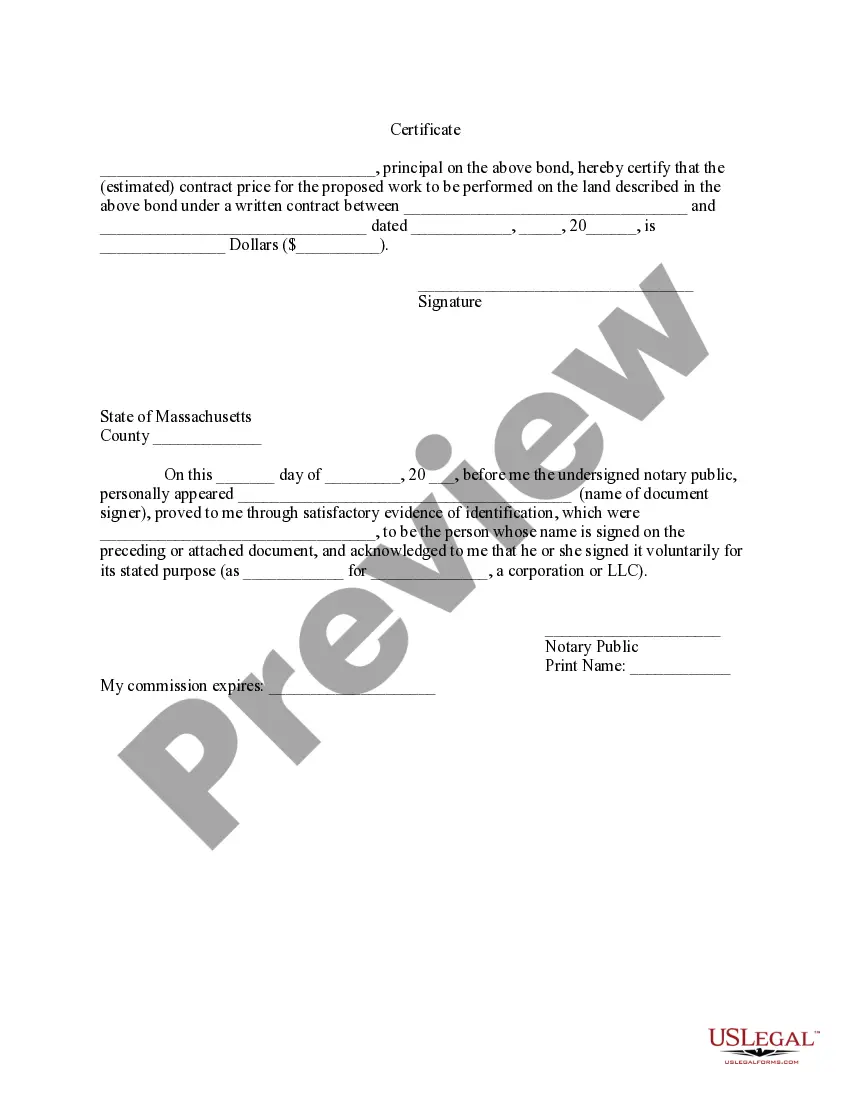
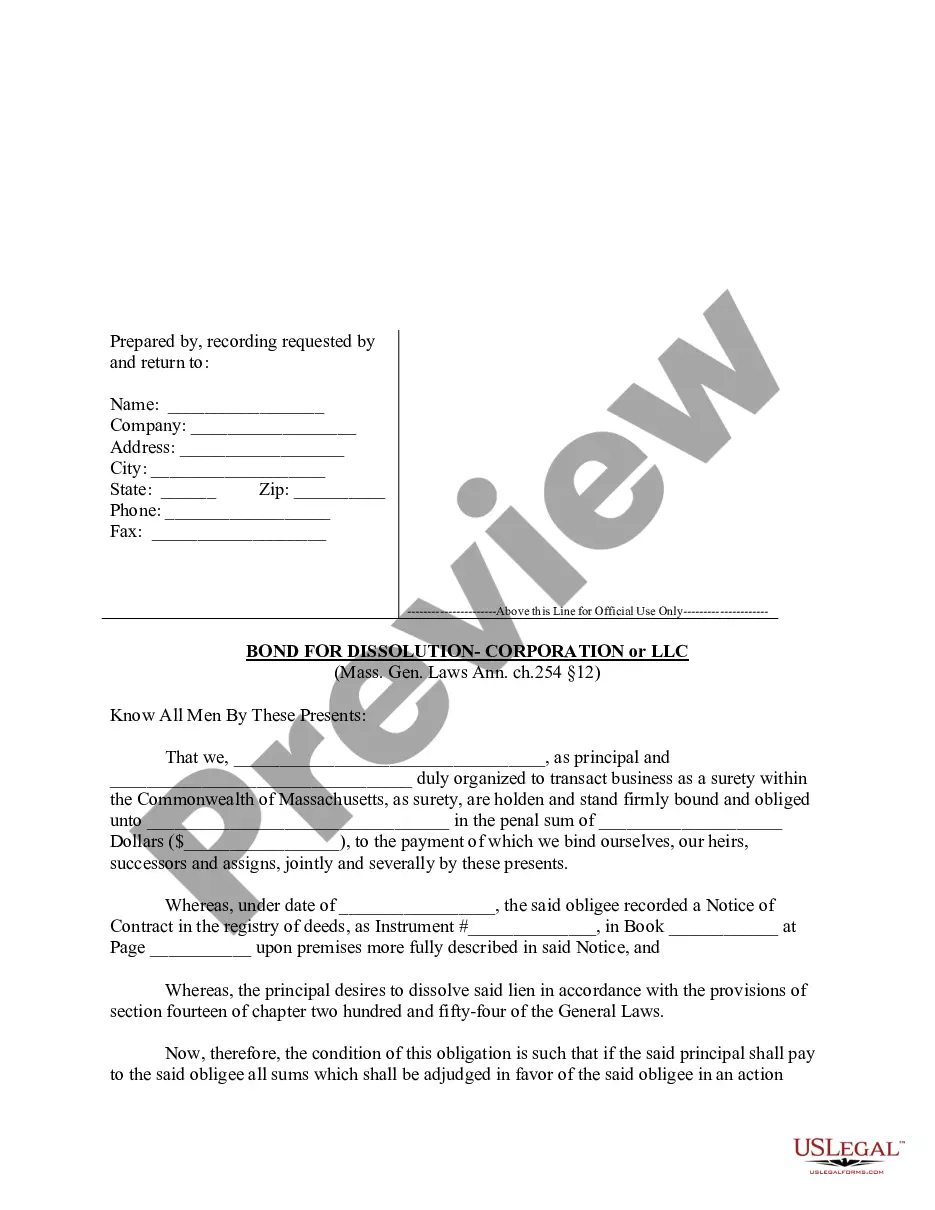
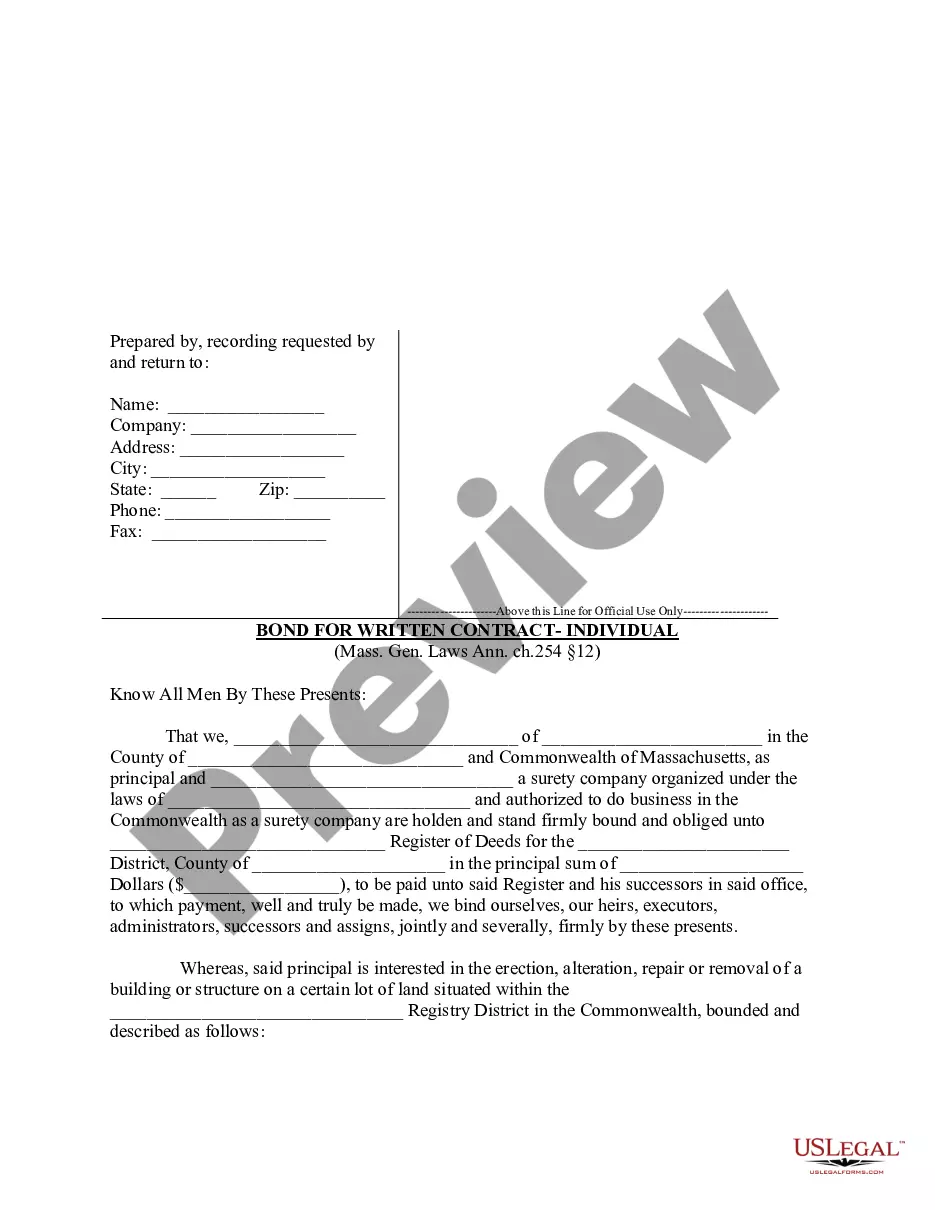
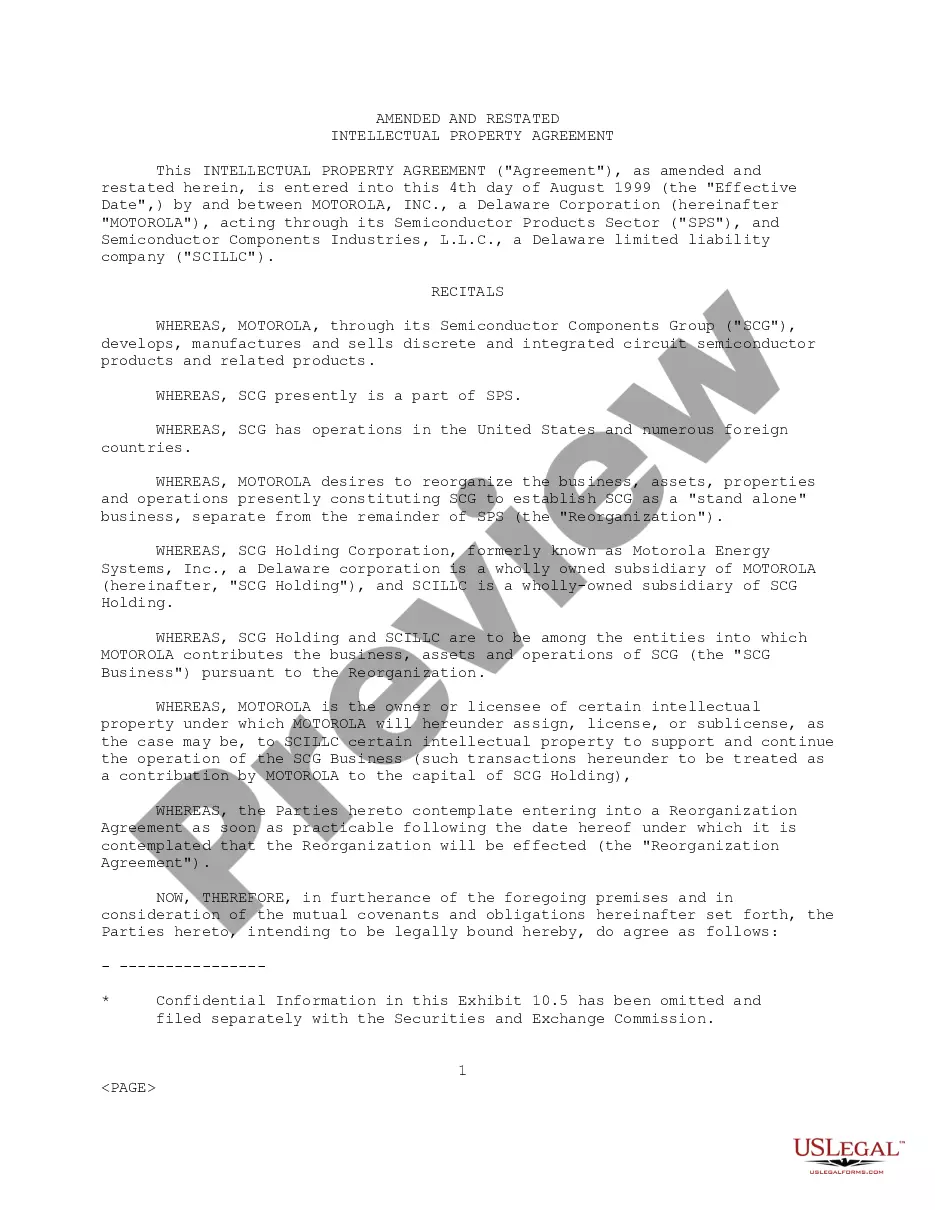
The Bond for Written Contract is a legal document used by a corporation or LLC to ensure that a building project on a specific lot is free from liens. This form secures the payment for all labor and materials used in the construction, alteration, repair, or removal of buildings. It protects both the principal and the surety company by establishing a financial obligation to the Register of Deeds, distinct from similar contracts that may not include such a bond. This form is typically associated with the requirements under Massachusetts General Laws, Chapter 254.
Key parts of this document
- Principal and surety company information.
- Payment amount and obligations to the Register of Deeds.
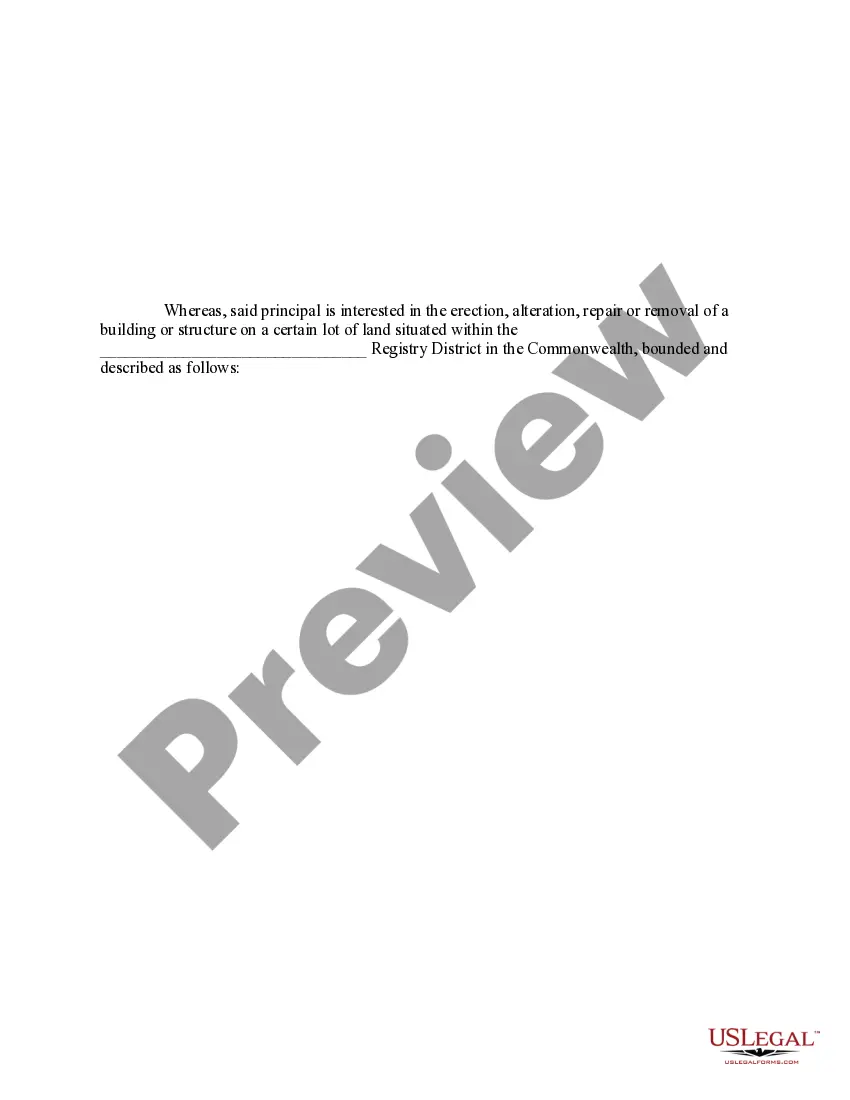
- Description of the property where the work will be performed.
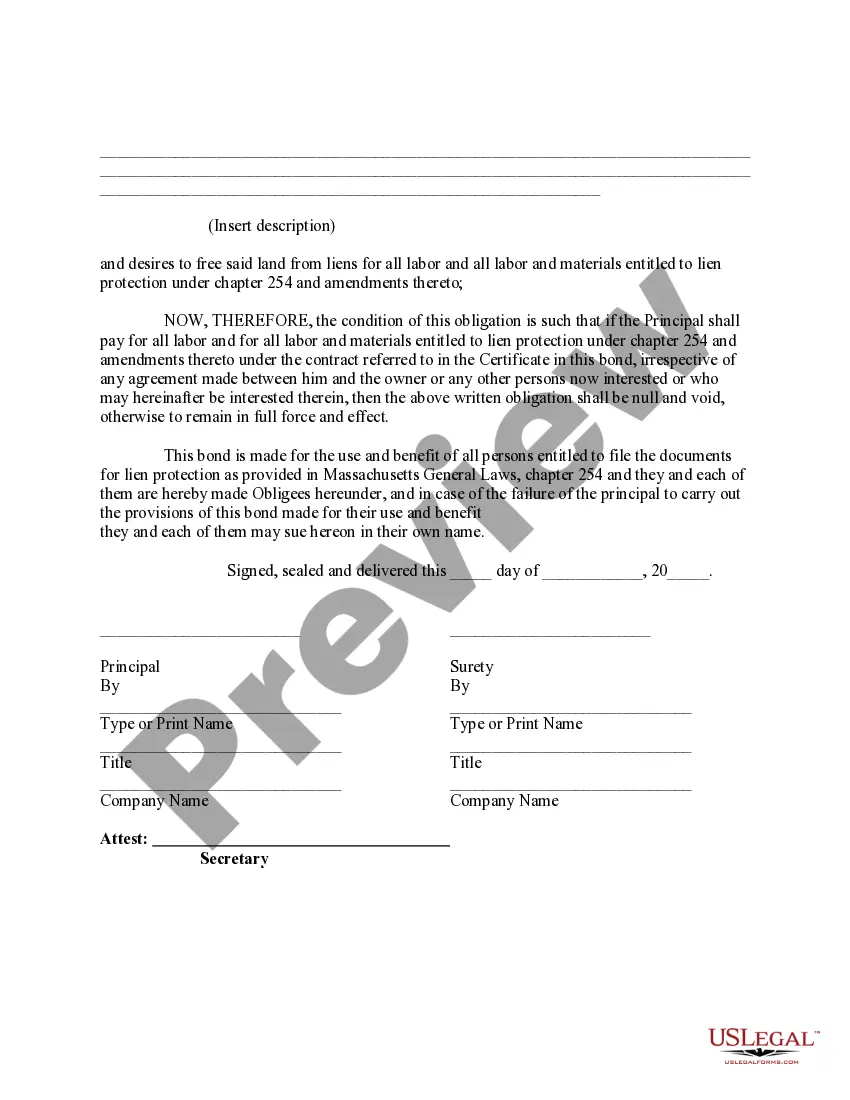
- Conditions under which the bond obligation is void.
- Signature requirements from the principal and the surety.
- Notary acknowledgment section for validation.

When this form is needed
This form should be used when a corporation or LLC is entering into a construction project that requires bond protection to safeguard against potential labor and material liens. It is essential when the principal seeks to demonstrate financial responsibility and protect all parties involved in the construction, as required by Massachusetts law.
Who can use this document
- Corporations planning construction, alteration, repair, or demolition projects.
- Limited Liability Companies (LLCs) engaging in similar building activities.
- Surety companies providing financial backing for such projects.
- Contractors and subcontractors seeking lien protection under Massachusetts law.
Instructions for completing this form
- Identify and enter the names of the principal and the surety company.
- Specify the total principal sum to be guaranteed.
- Provide a detailed description of the property involved in the project.
- Sign the document where indicated by both the principal and the surety.
- Have the form notarized by a certified notary public.
Notarization requirements for this form
This document requires notarization to meet legal standards. US Legal Forms provides secure online notarization powered by Notarize, allowing you to complete the process through a verified video call, available 24/7.
Get your form ready online
Our built-in tools help you complete, sign, share, and store your documents in one place.
Make edits, fill in missing information, and update formatting in US Legal Forms—just like you would in MS Word.
Download a copy, print it, send it by email, or mail it via USPS—whatever works best for your next step.
Sign and collect signatures with our SignNow integration. Send to multiple recipients, set reminders, and more. Go Premium to unlock E-Sign.
If this form requires notarization, complete it online through a secure video call—no need to meet a notary in person or wait for an appointment.
We protect your documents and personal data by following strict security and privacy standards.

Make edits, fill in missing information, and update formatting in US Legal Forms—just like you would in MS Word.

Download a copy, print it, send it by email, or mail it via USPS—whatever works best for your next step.

Sign and collect signatures with our SignNow integration. Send to multiple recipients, set reminders, and more. Go Premium to unlock E-Sign.

If this form requires notarization, complete it online through a secure video call—no need to meet a notary in person or wait for an appointment.

We protect your documents and personal data by following strict security and privacy standards.
Common mistakes
- Failing to accurately describe the property location.
- Omitting signatures from required parties.
- Incorrectly entering the payment amount, leading to confusion.
- Neglecting to obtain the necessary notarization.
Benefits of completing this form online
- Convenient access to downloadable and customizable templates.
- Time-saving ability to complete forms electronically.
- Reliability of forms drafted by licensed attorneys to ensure legal compliance.
Looking for another form?
Form popularity
FAQ
Getting bonded in Massachusetts is very easy thanks to Lance Surety Bonds' online application. It takes just a few minutes to fill in and submit. Once you have provided the necessary information, we will contact you with a bond quote and a request to submit a few extra documents.
Update your business address with the Department of Revenue (DOR). Notify DOR of your change of business address electronically with MassTaxConnect. Print and mail a paper Form AI-1.
How much does a contractor license bond cost in California? The bond costs between $69 and $465 depending on the personal credit, license history, and classification of the contractor.
The main difference between liability insurance and surety bonds is which party gets financially restored, according to Alliance Marketing & Insurance Services, or AMIS.Insurance protects the business itself from losses, whereas bonds protect the person the company is working for.
Massachusetts imposes a five percent sales tax on retail sales of tangible personal property in Massachusetts by any vendor.As consumers of tangible personal property, construction contractors pay sales tax to their suppliers on their purchases. See Ace Heating, 371 Mass.
On average, the cost for a surety bond falls somewhere between 1% and 15% of the bond amount. That means you may be charged between $100 and $1,500 to buy a $10,000 bond policy. Most premium amounts are based on your application and credit health, but there are some bond policies that are written freely.
California contractors are required to maintain an active $15,000 license bond (or cash equivalent) on file with the CSLB as a condition of being licensed.
If a contractor is "bonded", it means that you are financially protected if the contractor doesn't complete a job for you, or the job is poorly executed. Insurance, on the other hand, covers any liability claims that may arise during a job.
Construction bonds are a type of surety bond that protects against disruptions or financial loss due to a contractor's failure to complete a project or failure to meet contract specifications. These bonds ensure a construction project's bills will get paid.