Louisiana Application for Work or Employment - Clerical, Exempt, Executive, or Nonexempt Position
Description
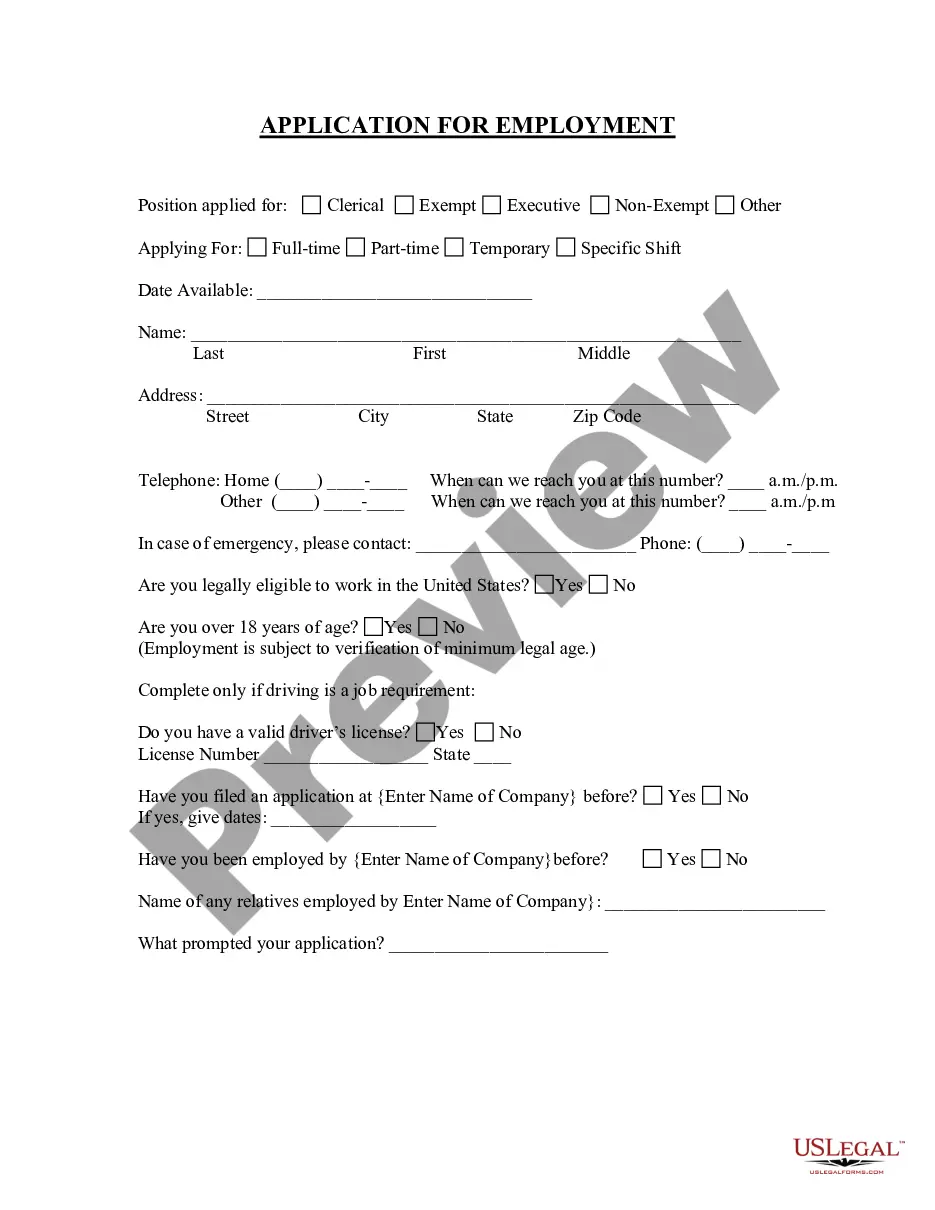
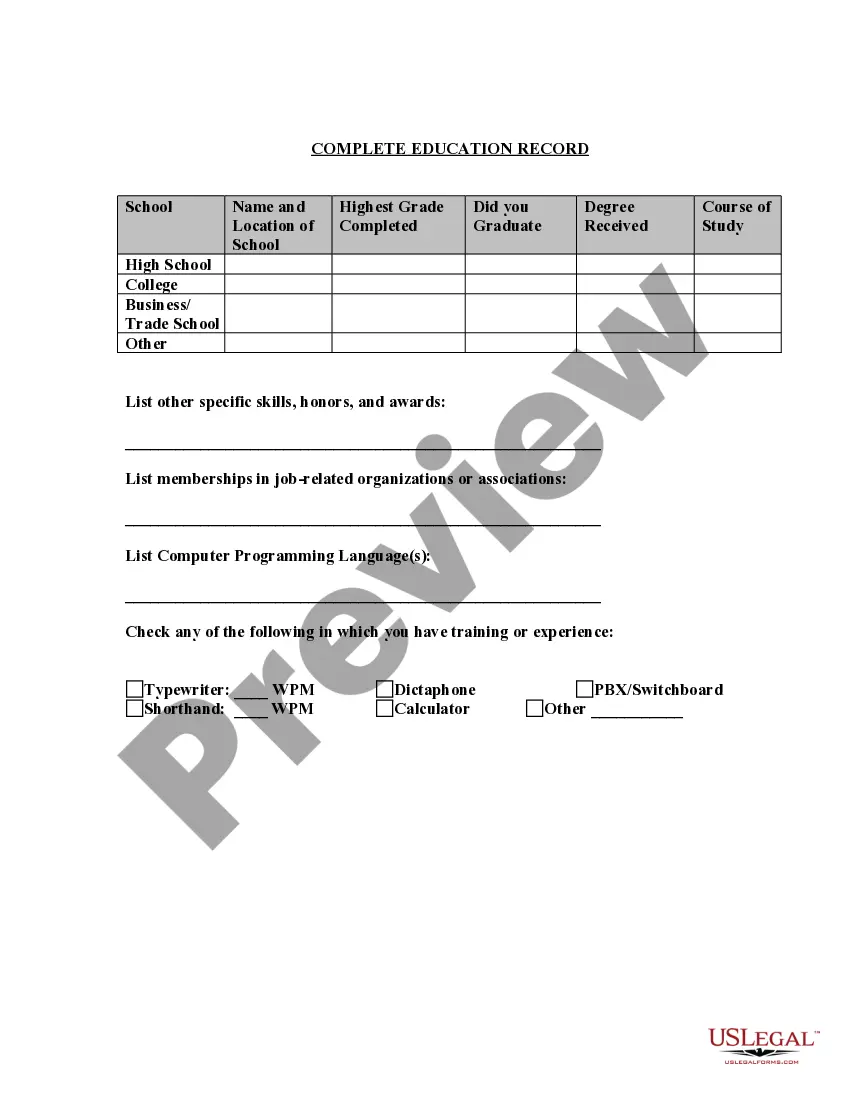
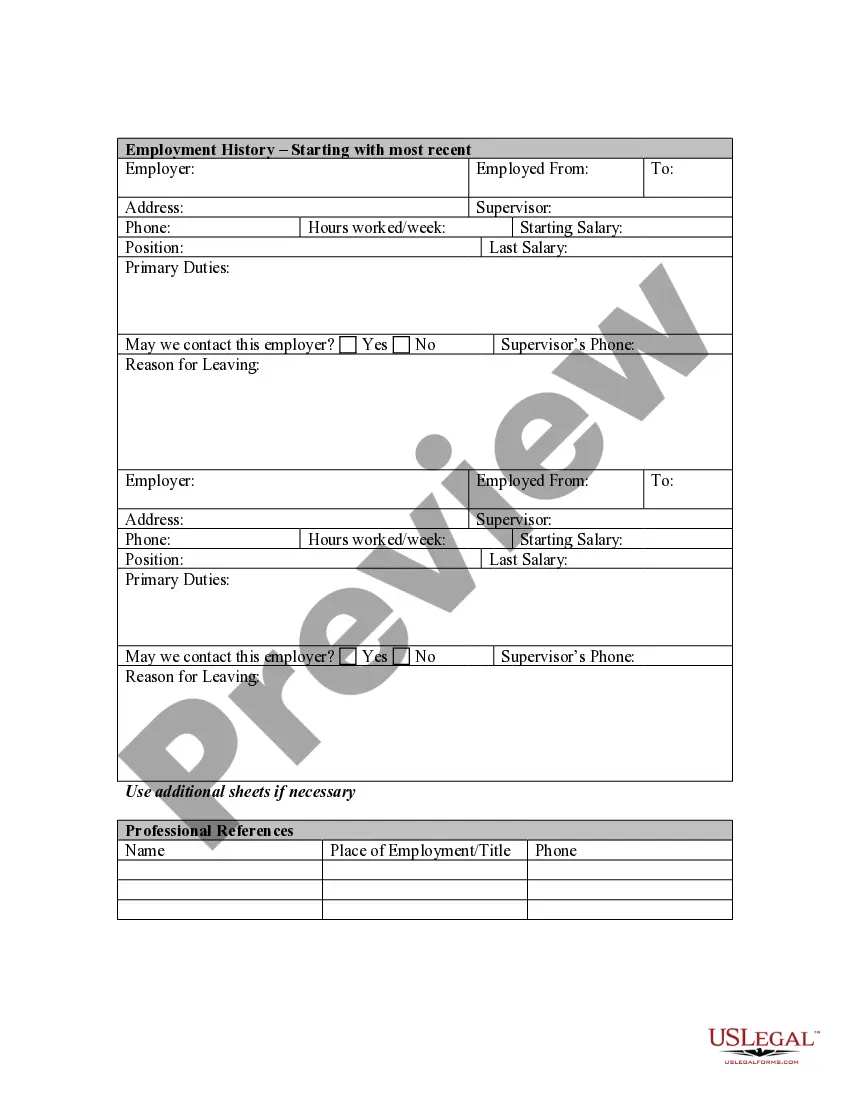
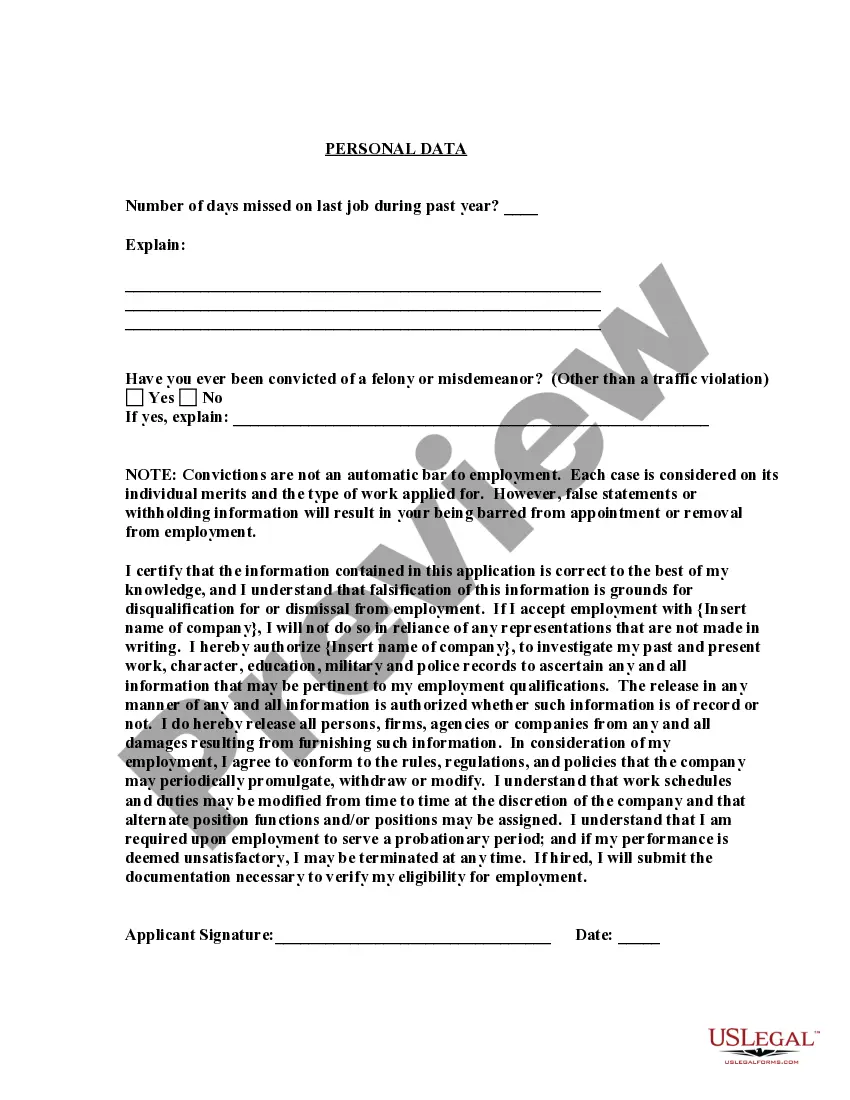

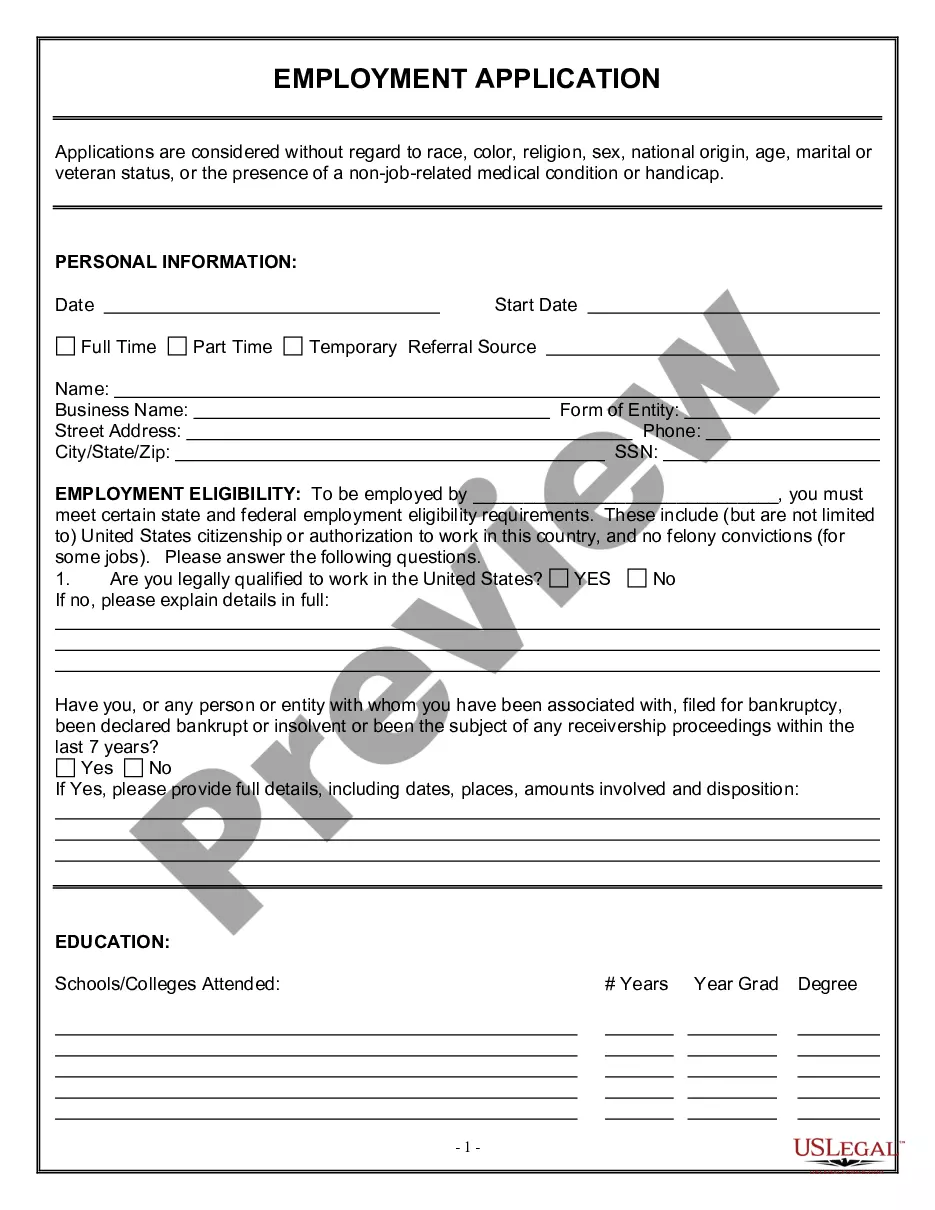
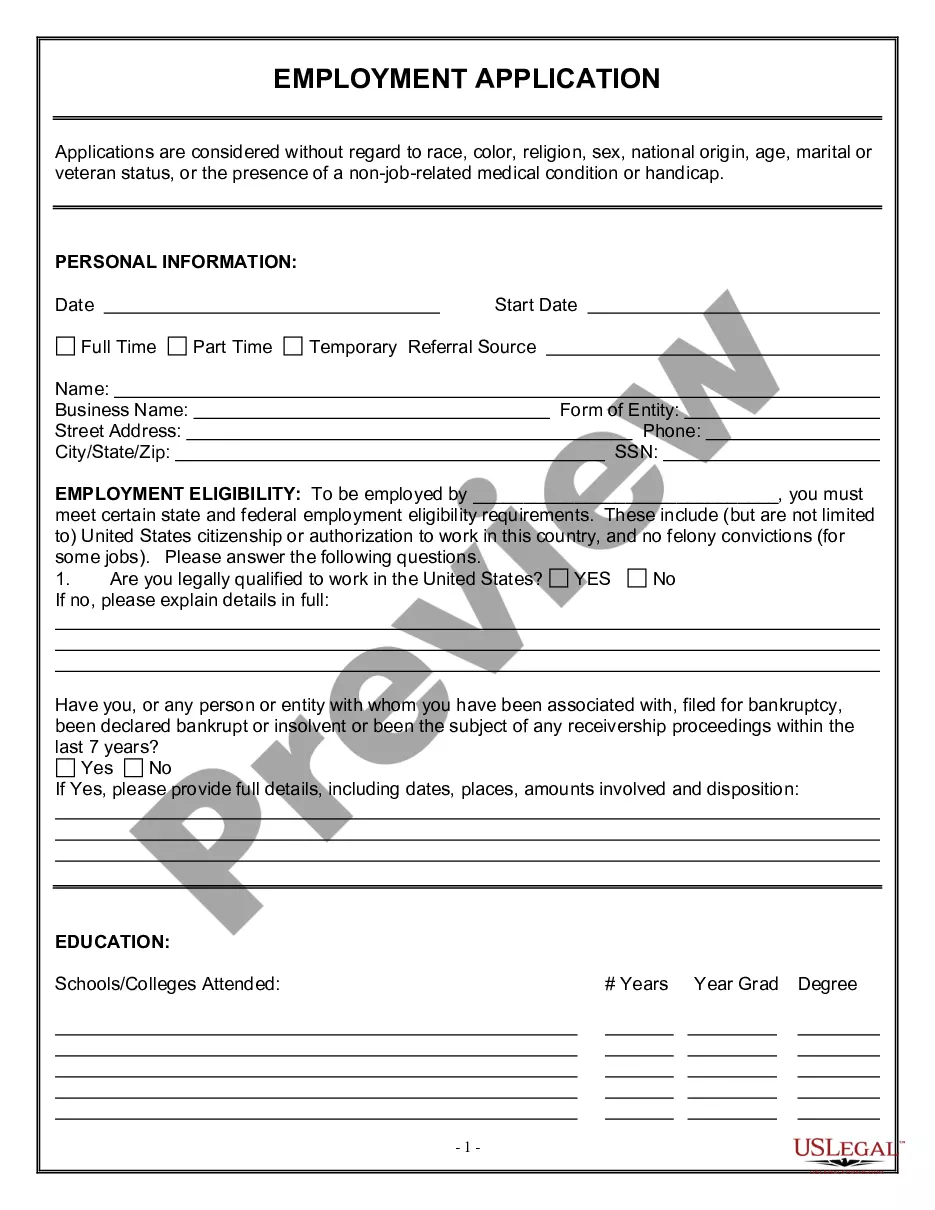
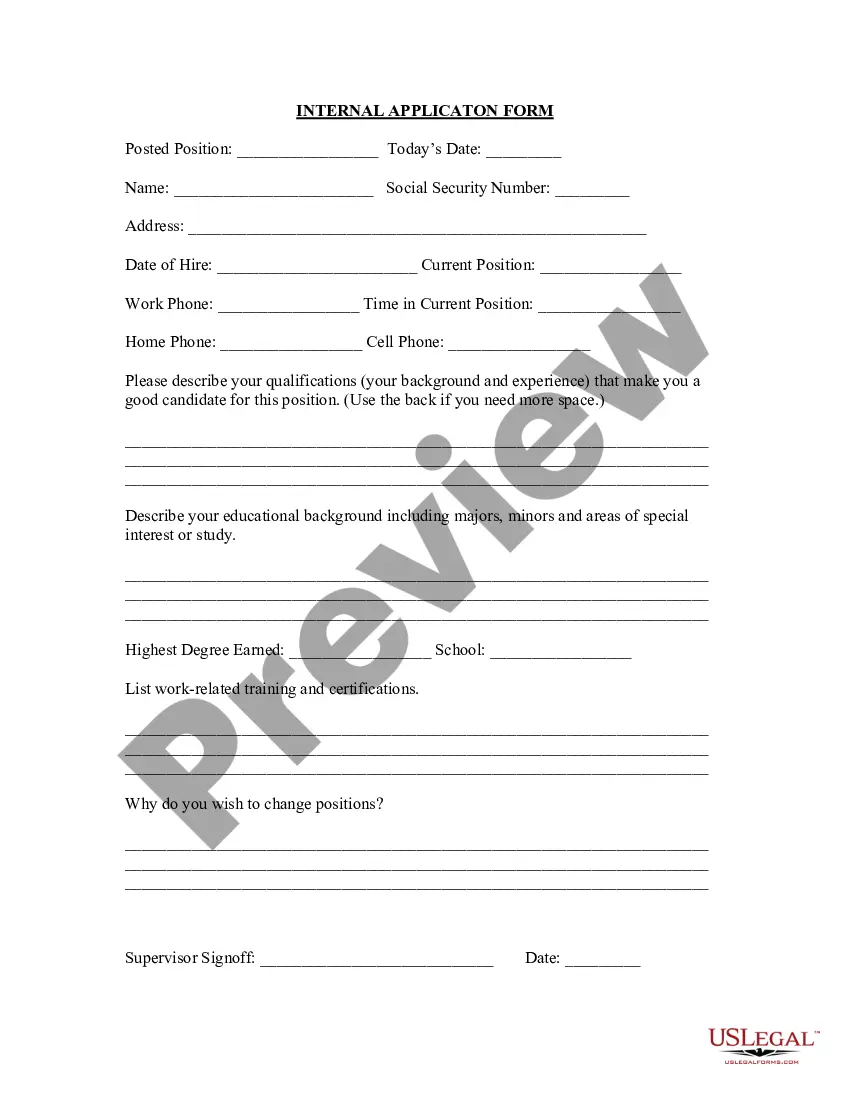
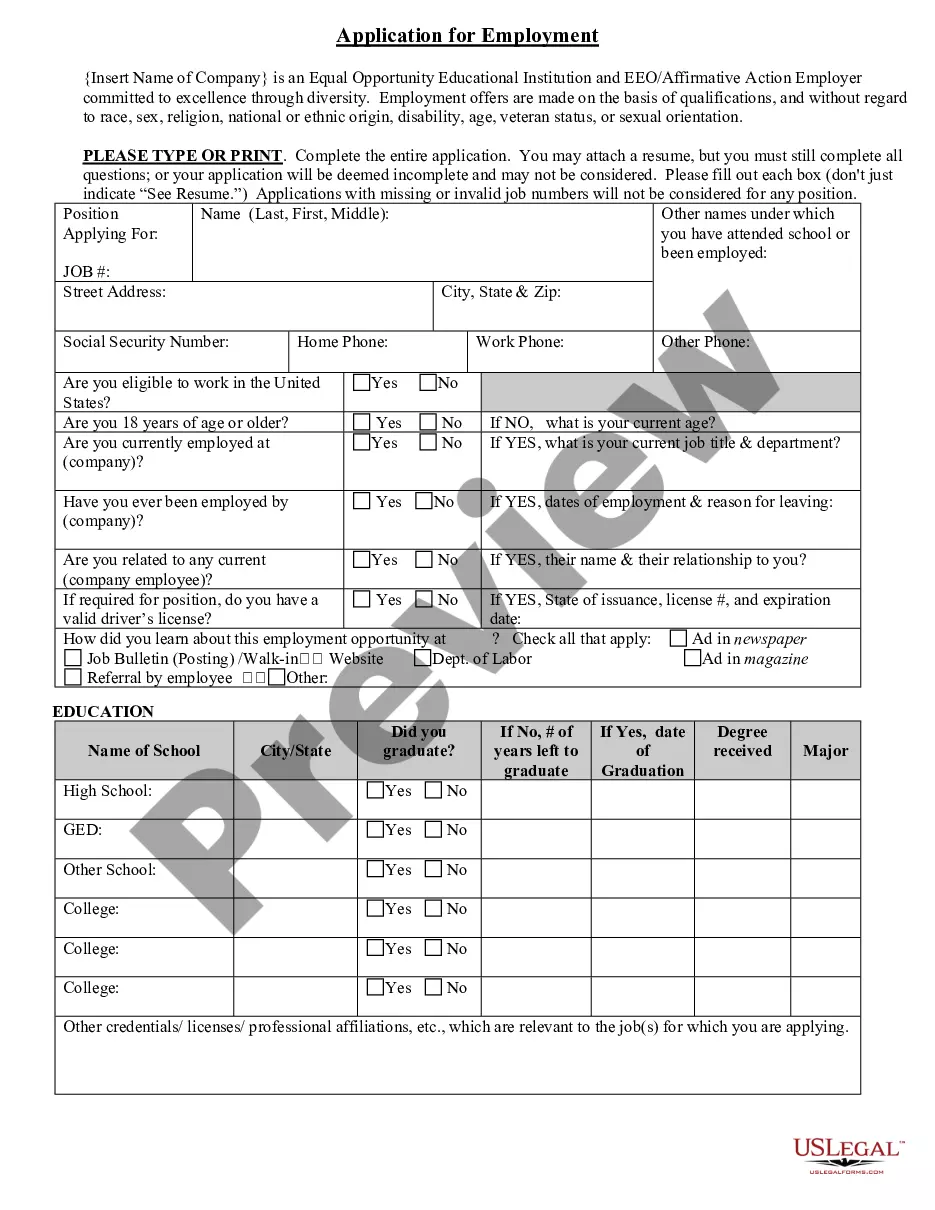
Get your form ready online
Our built-in tools help you complete, sign, share, and store your documents in one place.
Make edits, fill in missing information, and update formatting in US Legal Forms—just like you would in MS Word.
Download a copy, print it, send it by email, or mail it via USPS—whatever works best for your next step.
Sign and collect signatures with our SignNow integration. Send to multiple recipients, set reminders, and more. Go Premium to unlock E-Sign.
If this form requires notarization, complete it online through a secure video call—no need to meet a notary in person or wait for an appointment.
We protect your documents and personal data by following strict security and privacy standards.

Make edits, fill in missing information, and update formatting in US Legal Forms—just like you would in MS Word.

Download a copy, print it, send it by email, or mail it via USPS—whatever works best for your next step.

Sign and collect signatures with our SignNow integration. Send to multiple recipients, set reminders, and more. Go Premium to unlock E-Sign.

If this form requires notarization, complete it online through a secure video call—no need to meet a notary in person or wait for an appointment.

We protect your documents and personal data by following strict security and privacy standards.
Looking for another form?

How to fill out Application For Work Or Employment - Clerical, Exempt, Executive, Or Nonexempt Position?
You can dedicate hours online searching for the official document template that meets your state and federal requirements.
US Legal Forms provides thousands of official forms that have been reviewed by professionals.
It is easy to obtain or print the Louisiana Application for Work or Employment - Clerical, Exempt, Executive, or Nonexempt Position from my service.
If available, use the Review button to look through the document template as well.
- If you already have a US Legal Forms account, you can Log In and click the Download button.
- Then, you can complete, edit, print, or sign the Louisiana Application for Work or Employment - Clerical, Exempt, Executive, or Nonexempt Position.
- Every official document template you download is yours permanently.
- To download another copy of a previously acquired form, go to the My documents tab and click the appropriate button.
- If you are using the US Legal Forms website for the first time, follow these simple instructions.
- First, make sure you have selected the correct document template for your selected area/town.
- Review the form description to ensure you have chosen the right form.
Form popularity
FAQ
In Louisiana, a 13-year-old may work a limited number of hours under specific conditions. Generally, they can work 3 hours on school days and 8 hours on non-school days, totaling no more than 18 hours during a school week. It's important to follow these guidelines to ensure compliance with state laws. For detailed information on employment for minors, the Louisiana Application for Work or Employment - Clerical, Exempt, Executive, or Nonexempt Position may provide relevant insights.
Exempt employee statuses typically apply to managers, executives, and certain professionals who perform specific tasks beyond routine roles. Common examples include department heads, creative professionals, and skilled workers like engineers or physicians. These positions often require independent thinking and high-level decision-making abilities. Understanding the distinctions in the Louisiana Application for Work or Employment - Clerical, Exempt, Executive, or Nonexempt Position can greatly help in identifying eligible roles.
With few exceptions, to be exempt an employee must (a) be paid at least $23,600 per year ($455 per week), and (b) be paid on a salary basis, and also (c) perform exempt job duties. These requirements are outlined in the FLSA Regulations (promulgated by the U.S. Department of Labor).
An exempt employee is an employee who does not receive overtime pay or qualify for minimum wage. Exempt employees are paid a salary rather than by the hour, and their work is executive or professional in nature.
Key takeaway: The advantages of hiring exempt employees include no overtime pay and more knowledge and responsibility. Downsides include higher pay rates and no ability to deduct pay for hours not worked.
Who is eligible for overtime pay? To qualify as an exempt employee one who does not receive overtime pay staff members must meet all the requirements under the duties and salary basis tests.
The federal overtime laws stipulate that the minimum salary requirement for administrative, professional, and executive exemptions is $684 per week, or $35,568 per year.
An exempt employee is not entitled to overtime pay according to the Fair Labor Standards Act (FLSA). To be exempt, you must earn a minimum of $684 per week in the form of a salary. Non-exempt employees must be paid overtime and are protected by FLSA regulations.
An exempt employee is not entitled overtime pay by the Fair Labor Standards Act (FLSA). These salaried employees receive the same amount of pay per pay period, even if they put in overtime hours. A nonexempt employee is eligible to be paid overtime for work in excess of 40 hours per week, per federal guidelines.
Federal Exemptions from Overtime: To be considered "exempt," these employees must generally satisfy three tests: Salary-level test. Effective January 1, 2020, employers must pay employees a salary of at least $684 per week. The FLSA's minimum salary requirement is set to remain the same in 2022.