Louisiana Self-Defense
Description
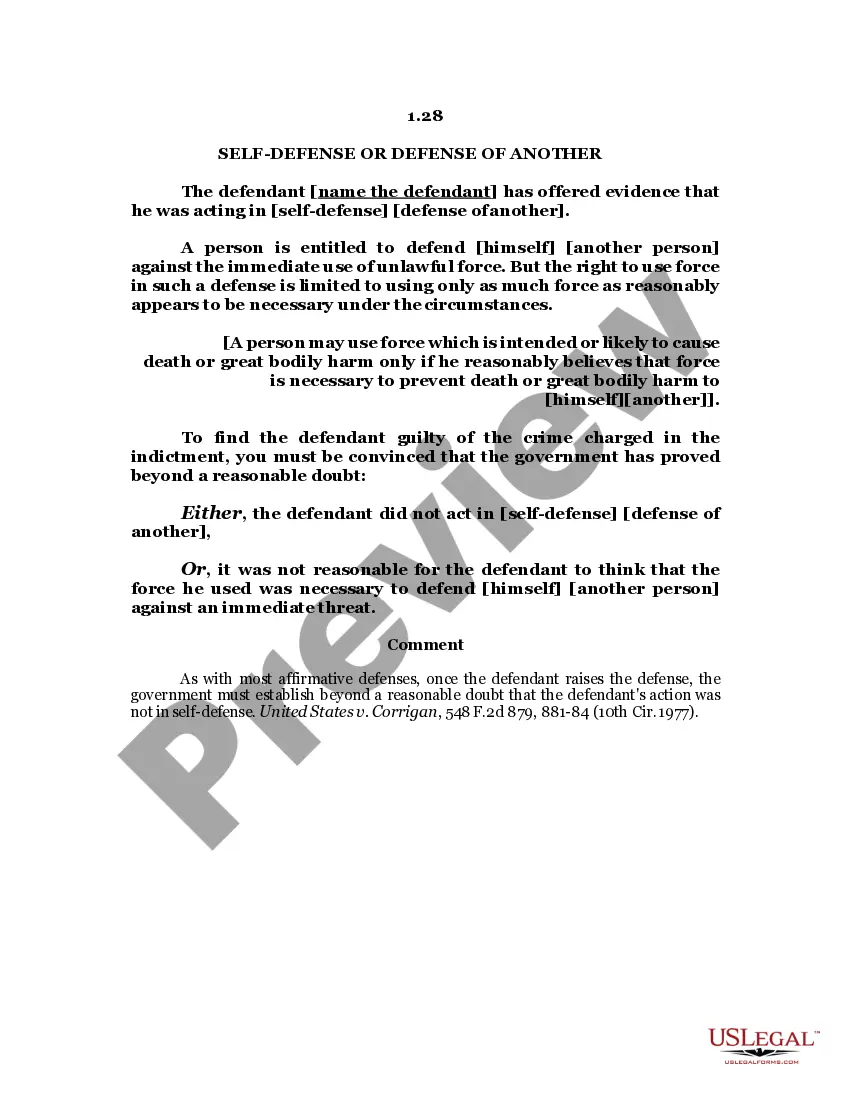
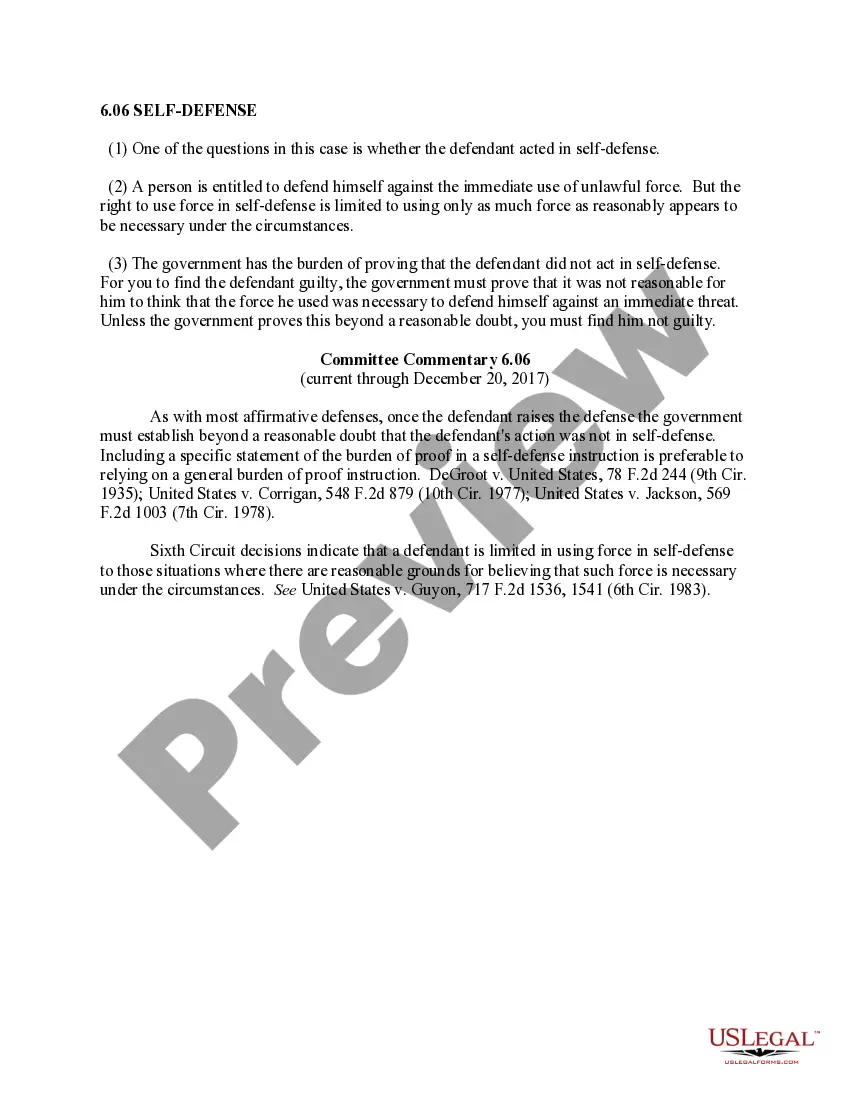
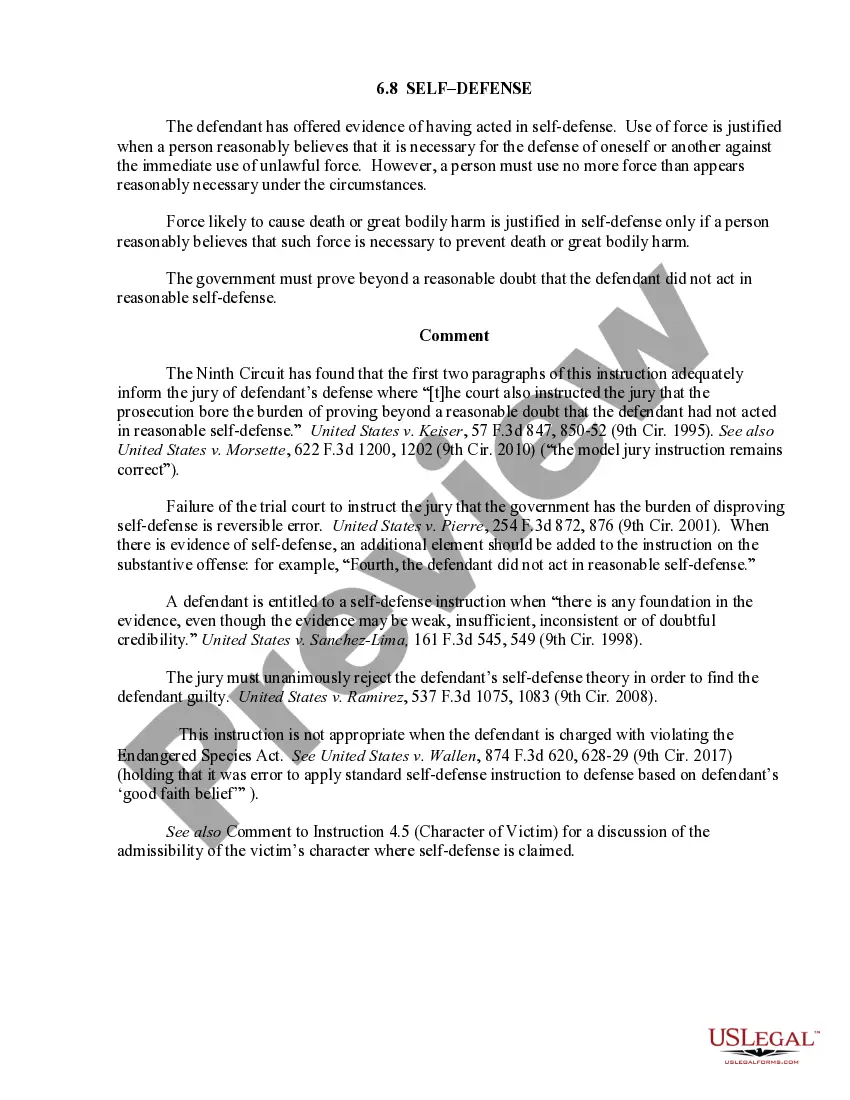
Get your form ready online
Our built-in tools help you complete, sign, share, and store your documents in one place.
Make edits, fill in missing information, and update formatting in US Legal Forms—just like you would in MS Word.
Download a copy, print it, send it by email, or mail it via USPS—whatever works best for your next step.
Sign and collect signatures with our SignNow integration. Send to multiple recipients, set reminders, and more. Go Premium to unlock E-Sign.
If this form requires notarization, complete it online through a secure video call—no need to meet a notary in person or wait for an appointment.
We protect your documents and personal data by following strict security and privacy standards.

Make edits, fill in missing information, and update formatting in US Legal Forms—just like you would in MS Word.

Download a copy, print it, send it by email, or mail it via USPS—whatever works best for your next step.

Sign and collect signatures with our SignNow integration. Send to multiple recipients, set reminders, and more. Go Premium to unlock E-Sign.

If this form requires notarization, complete it online through a secure video call—no need to meet a notary in person or wait for an appointment.

We protect your documents and personal data by following strict security and privacy standards.
Looking for another form?

How to fill out Self-Defense?
Are you presently in a scenario where you require documents for potential business or specific purposes nearly every day.
There are numerous legal document templates accessible online, but finding versions you can trust is not easy.
US Legal Forms offers thousands of form templates, including the Louisiana Self-Defense, which are designed to comply with state and federal regulations.
Utilize US Legal Forms, the most extensive collection of legal forms, to save time and avoid mistakes.
The service offers expertly crafted legal document templates that can be used for various purposes. Create an account on US Legal Forms and start making your life a bit easier.
- If you are already familiar with the US Legal Forms website and possess an account, simply Log In.
- Then, you can download the Louisiana Self-Defense template.
- If you do not have an account and wish to start using US Legal Forms, follow these instructions.
- Locate the form you need and ensure it is for your correct state/region.
- Utilize the Preview button to view the form.
- Read the description to confirm that you have selected the correct document.
- If the form is not what you are looking for, use the Search field to find the form that fits your requirements.
- Once you find the right form, click Get now.
- Choose the pricing plan you prefer, fill out the necessary information to create your account, and pay for the transaction with your PayPal or credit card.
- Select a convenient document format and download your copy.
- Find all the document templates you have purchased in the My documents section. You can download another copy of Louisiana Self-Defense anytime, if needed. Simply click on the required form to download or print the document template.
Form popularity
FAQ
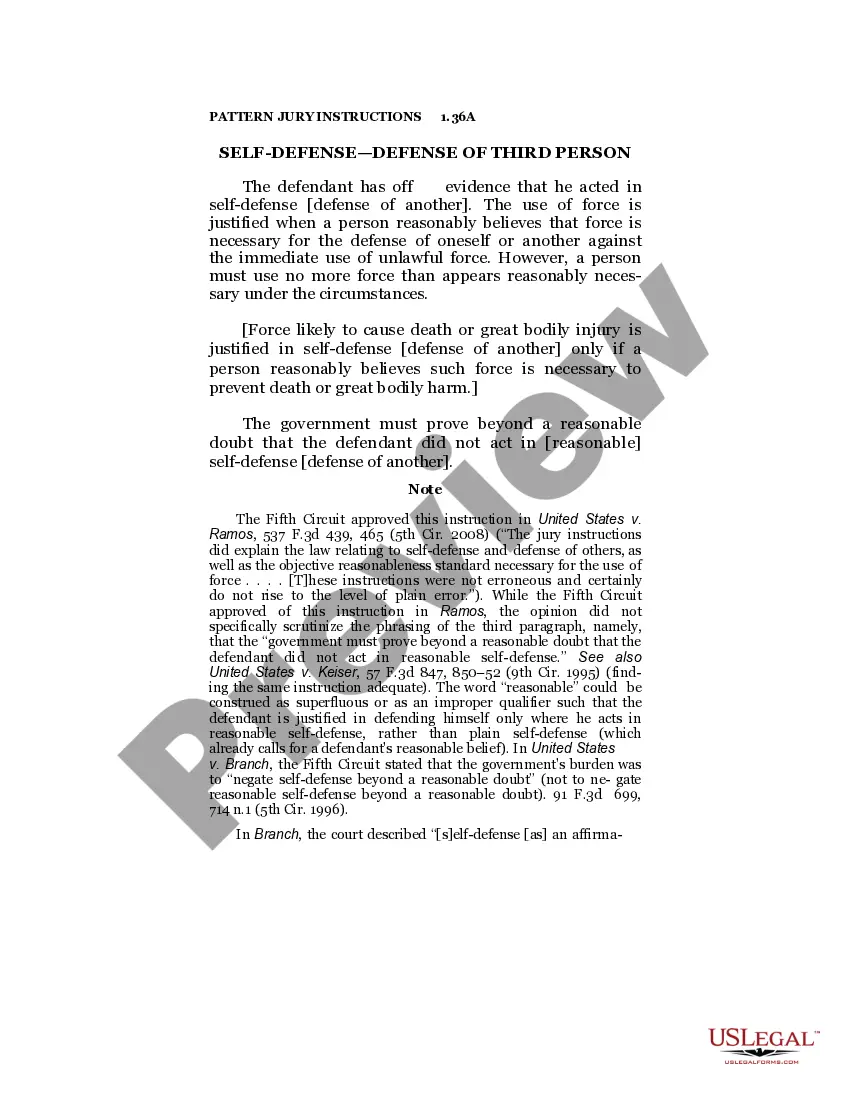
A person who is the aggressor or who brings on a difficulty cannot claim the right of self-defense unless he withdraws from the conflict in good faith and in such a manner that his adversary knows or should know that he desires to withdraw and discontinue the conflict.
Louisiana Law Louisiana has a stand your ground law which removes the duty to retreat from any place a person has a right to be before using force in self-defense. The law specifically prohibits considering the possibility of retreat as a factor when determining the reasonableness or necessity of force.
Several states in the United States have adopted the castle doctrine, including California, Colorado, Illinois, Iowa, Oregon, Vermont, Virginia, Washington, and Wyoming.
Louisiana Law Louisiana has a stand your ground law which removes the duty to retreat from any place a person has a right to be before using force in self-defense. The law specifically prohibits considering the possibility of retreat as a factor when determining the reasonableness or necessity of force.
(2) "True threats" occur when a person communicates a serious expression of an intent to commit an unlawful act of violence upon a person or group of persons with the intent to place such persons in fear of bodily harm or death. The person need not actually intend to carry out the threat.
The Louisiana Castle Doctrine states that a person may use deadly force against someone who has committed an unlawful and forcible entry into their personal property, whether that be their home, motor vehicle, or shed, for example.
In Louisiana, the state observes both the castle doctrine and the stand-your-ground laws. Both laws protect individuals from prosecution if they use deadly force to defend themselves against a forcible felony involving danger.