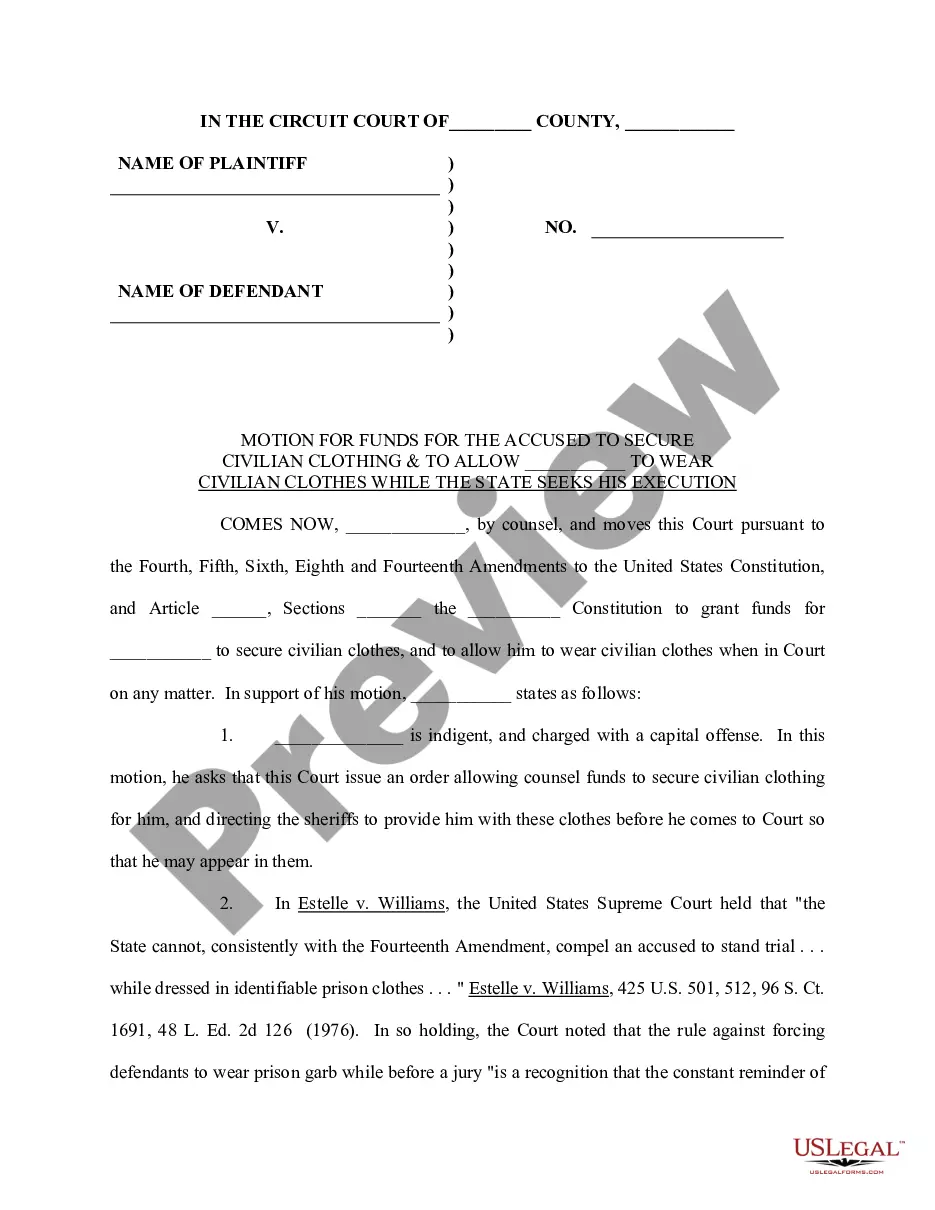
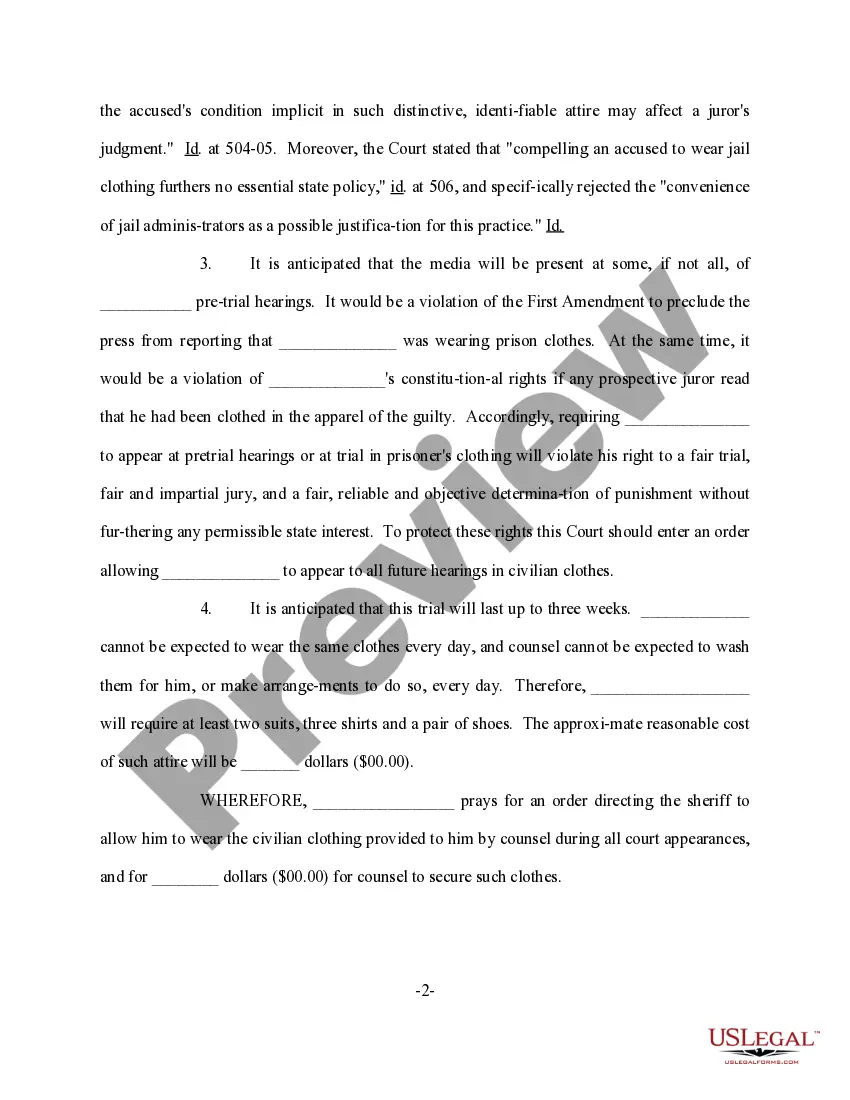
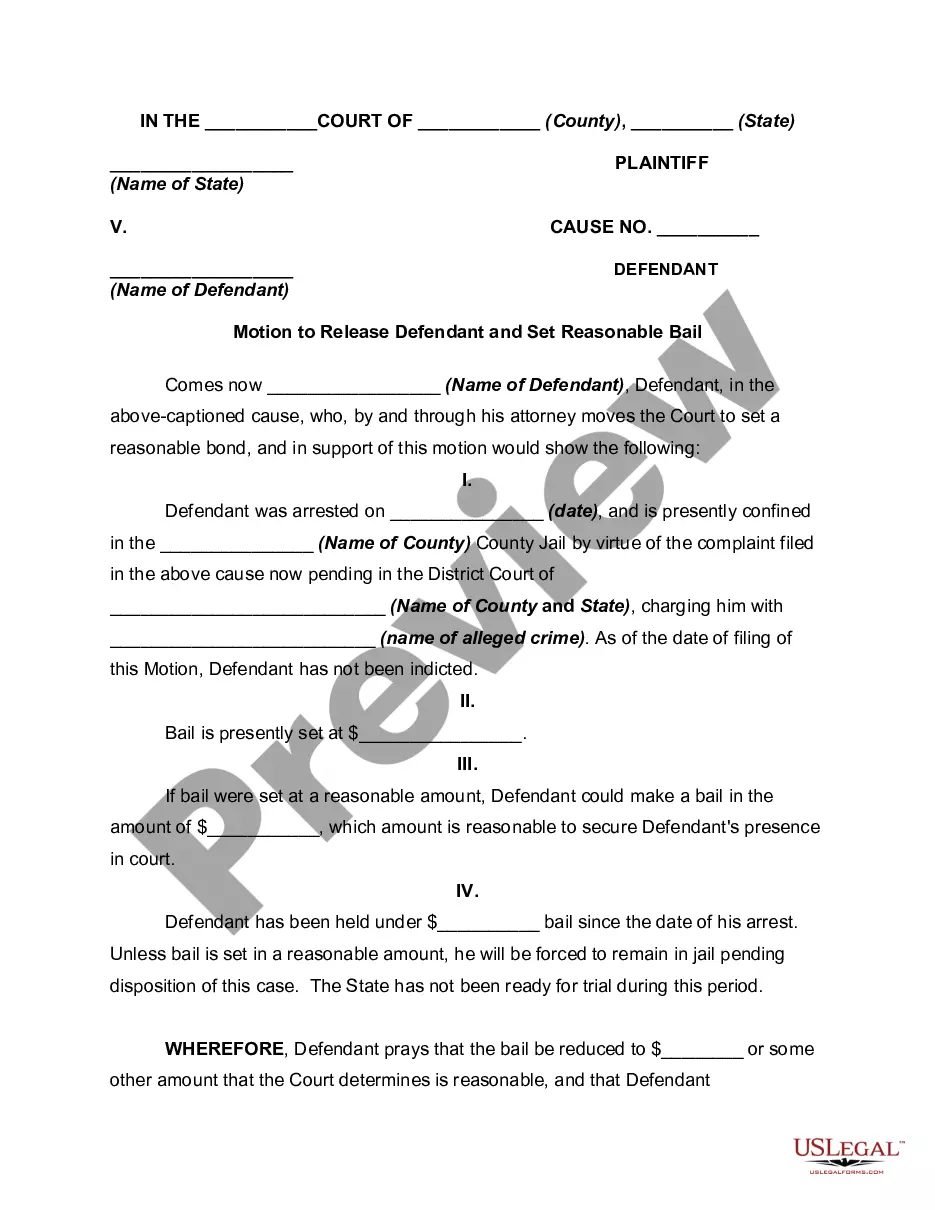
Louisiana Motion for Funds for the Accused to Secure Civilian Clothing and to Allow Defendant to Wear Civilian Clothes While the State Seeks His Execution
Description
Get your form ready online
Our built-in tools help you complete, sign, share, and store your documents in one place.
Make edits, fill in missing information, and update formatting in US Legal Forms—just like you would in MS Word.
Download a copy, print it, send it by email, or mail it via USPS—whatever works best for your next step.
Sign and collect signatures with our SignNow integration. Send to multiple recipients, set reminders, and more. Go Premium to unlock E-Sign.
If this form requires notarization, complete it online through a secure video call—no need to meet a notary in person or wait for an appointment.
We protect your documents and personal data by following strict security and privacy standards.
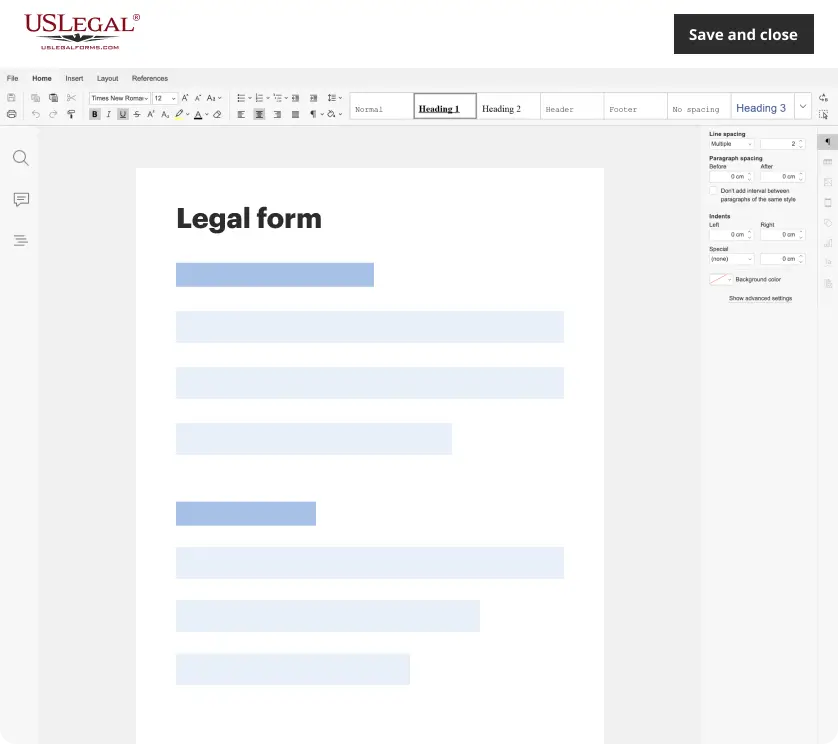
Make edits, fill in missing information, and update formatting in US Legal Forms—just like you would in MS Word.
Download a copy, print it, send it by email, or mail it via USPS—whatever works best for your next step.
Sign and collect signatures with our SignNow integration. Send to multiple recipients, set reminders, and more. Go Premium to unlock E-Sign.
If this form requires notarization, complete it online through a secure video call—no need to meet a notary in person or wait for an appointment.
We protect your documents and personal data by following strict security and privacy standards.
Looking for another form?
How to fill out Motion For Funds For The Accused To Secure Civilian Clothing And To Allow Defendant To Wear Civilian Clothes While The State Seeks His Execution?
You might spend countless hours on the web looking for the official document template that meets the requirements of both state and federal regulations. US Legal Forms offers a vast array of legal forms that have been vetted by professionals.
It is easy to obtain or print the Louisiana Motion for Funds for the Accused to Secure Civilian Clothing and to Allow Defendant to Wear Civilian Clothes While the State Seeks His Execution from your service.
If you have a US Legal Forms account, you can Log In and click on the Download button. After that, you can complete, modify, print, or sign the Louisiana Motion for Funds for the Accused to Secure Civilian Clothing and to Allow Defendant to Wear Civilian Clothes While the State Seeks His Execution. Each legal document template you acquire is yours permanently.
Select the pricing plan you prefer, enter your information, and create an account on US Legal Forms. Complete the transaction. You can use your Visa or Mastercard or PayPal account to pay for the legal form. Choose the file format of the document and download it to your device. Make adjustments to your document if needed. You can complete, modify, sign, and print the Louisiana Motion for Funds for the Accused to Secure Civilian Clothing and to Allow Defendant to Wear Civilian Clothes While the State Seeks His Execution. Download and print numerous document templates using the US Legal Forms website, which offers the largest selection of legal forms. Utilize professional and state-specific templates to address your business or personal needs.
- To obtain another copy of the obtained form, go to the My documents tab and click on the corresponding button.
- If you are using the US Legal Forms website for the first time, follow the straightforward instructions below.
- First, ensure that you have chosen the correct document template for the state/city of your choice.
- Review the form outline to confirm that you have selected the appropriate form.
- If available, use the Review button to check the document template as well.
- If you wish to obtain another version of the form, use the Search field to find the template that meets your needs.
- Once you have located the template you require, click Purchase now to proceed.
Form popularity
FAQ
Primary tabs Defendant, in criminal cases, is the person accused of the crime. In civil cases, the defendant is the person or entity that is being sued by the plaintiff. In certain types of actions, the defendant is called the respondent.
Right to Appear in Civilian Clothes. The defendant has a right to appear in civilian clothing (instead of a prison or jail uniform) to avoid the risk that the jury's judgment will be tainted and the defendant's right to a presumption of innocence will be compromised.
The Supreme Court amendments provide that a defendant has waived his right to be present at the trial of a capital or noncapital case in two circumstances: (1) when he voluntarily absents himself after the trial has begun; and (2) where he "engages in conduct which is such as to justify his being excluded from the ...
Defendant has a right to be present at trial, but this is a personal right which may be expressly waived. Waiver may also be implied when the defendant is voluntarily absent after trial has begun, or so disruptive that he or she must be removed from the courtroom.
Blazier, 68 M.J. 439 (the Confrontation Clause of the Sixth Amendment provides that in all criminal prosecutions, the accused shall enjoy the right to be confronted with the witnesses against him; this gives accuseds the right to question not only witnesses providing oral, in-court testimony, but also the declarant of ...