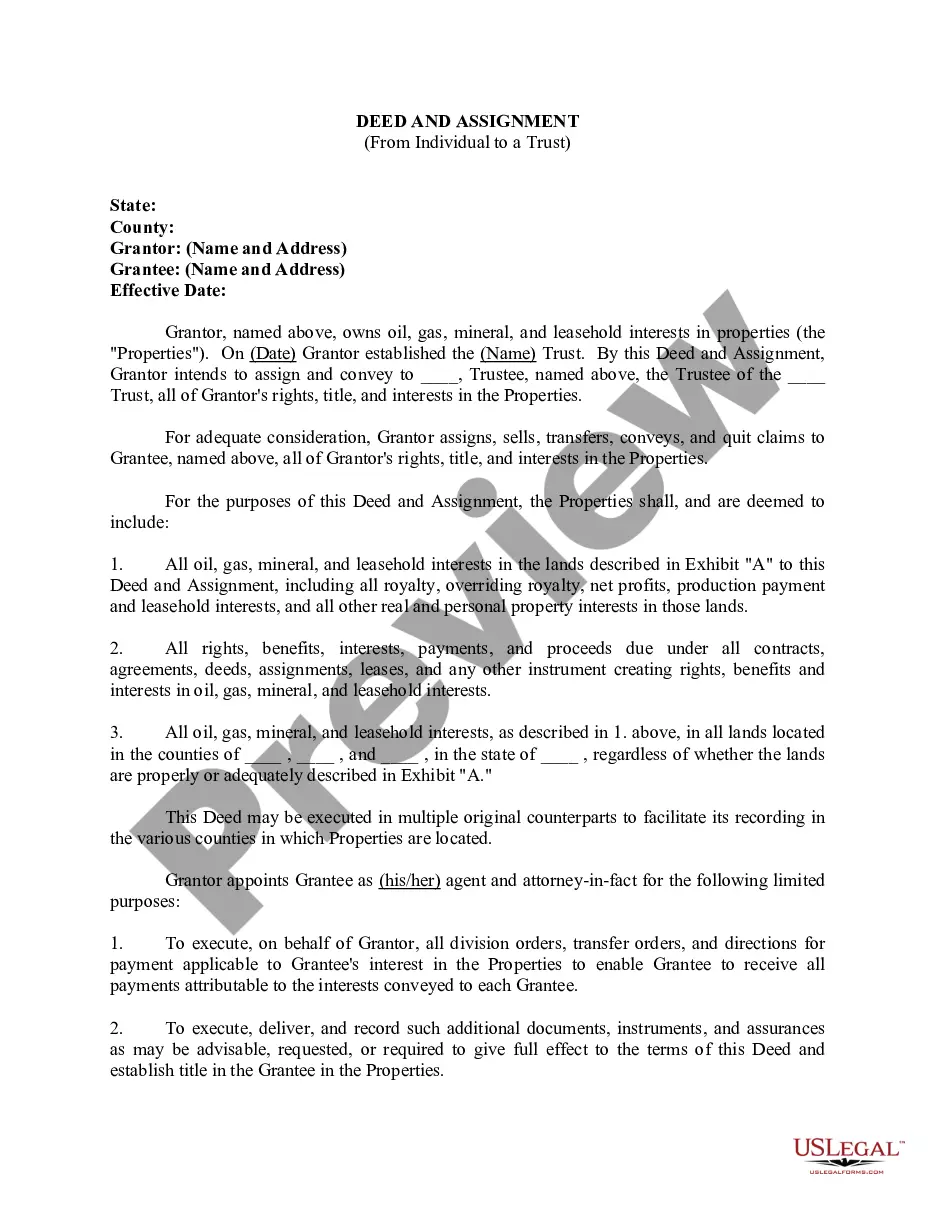
Grantor(s) convey, with limited warranty, unto the grantee all of grantor(s) mineral interest, including but not limited to oil, gas, carbon dioxide, and all other minerals in, on and under certain property described in the document.
Louisiana Oil, Gas and Mineral Deed - Individual or Two Individuals to an Individual
State:
Multi-State
Category:
Control #:
US-00576
Format:
Word;
Rich Text
214 downloads
Description
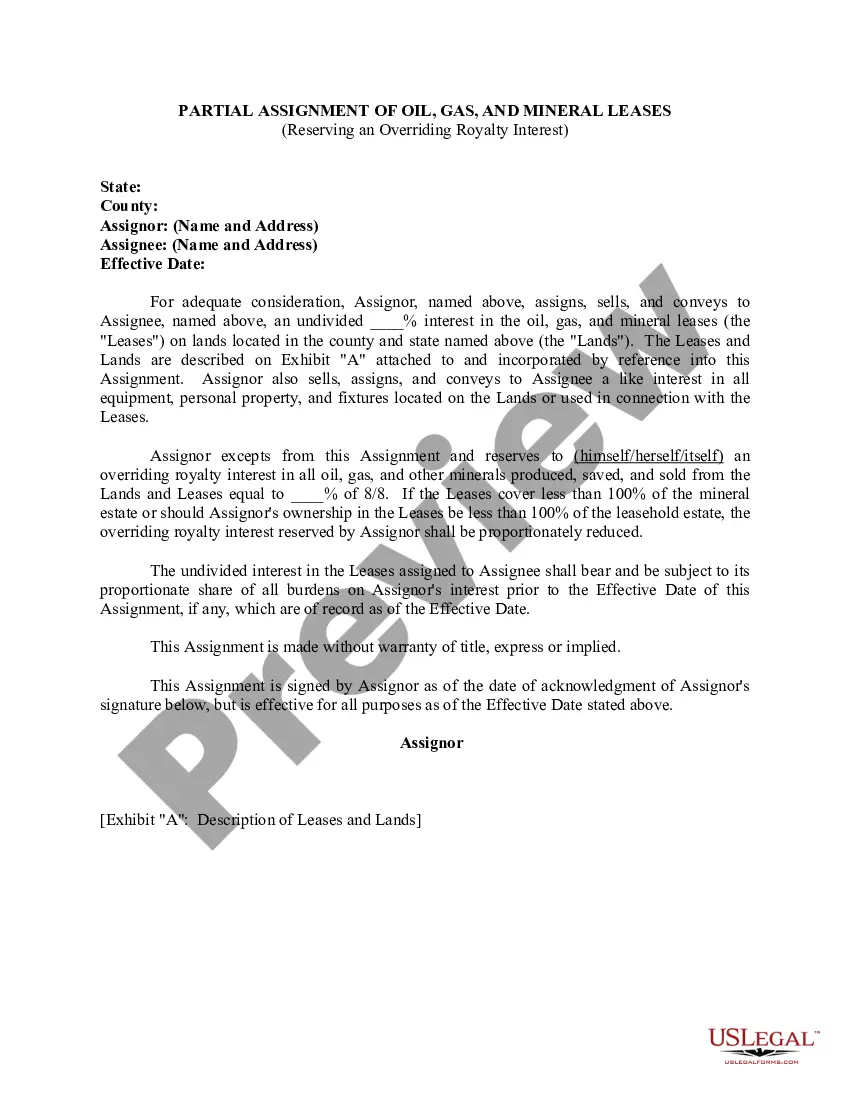
Free preview
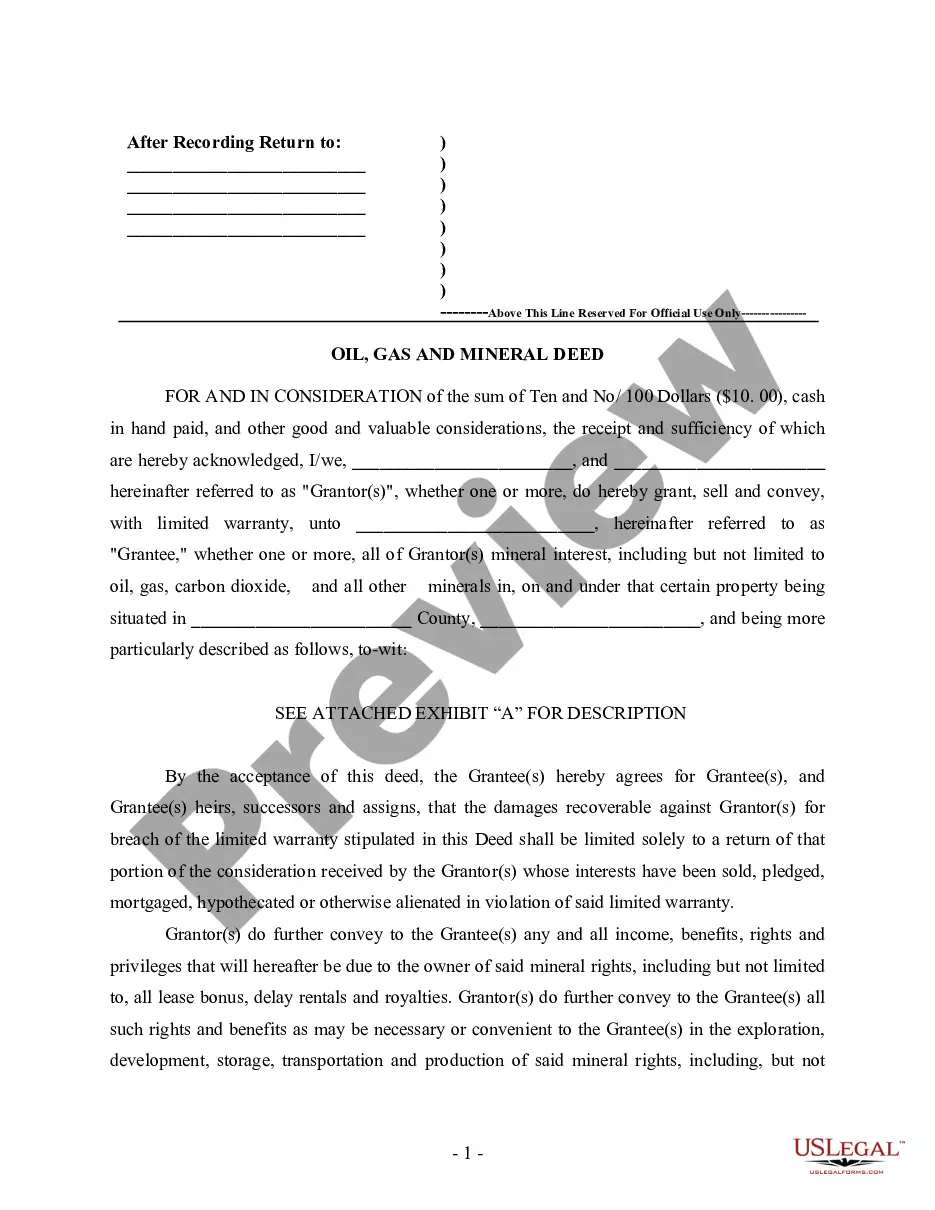
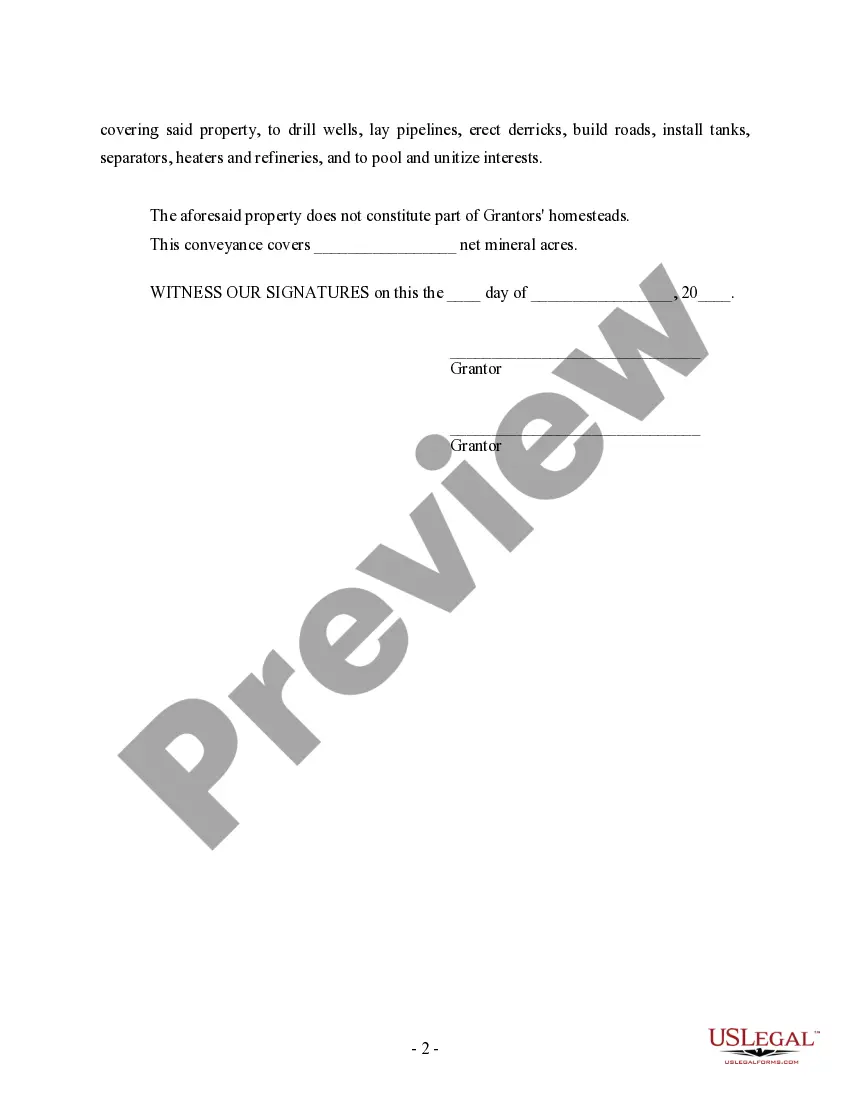
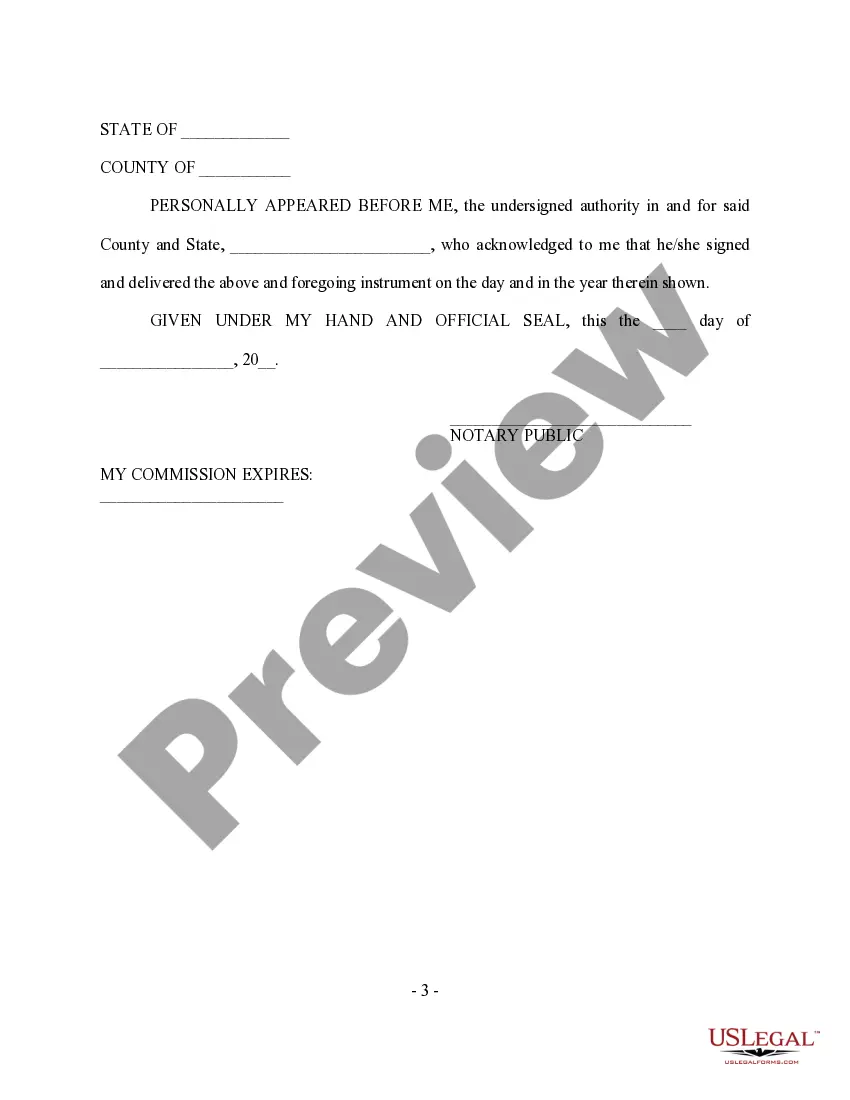

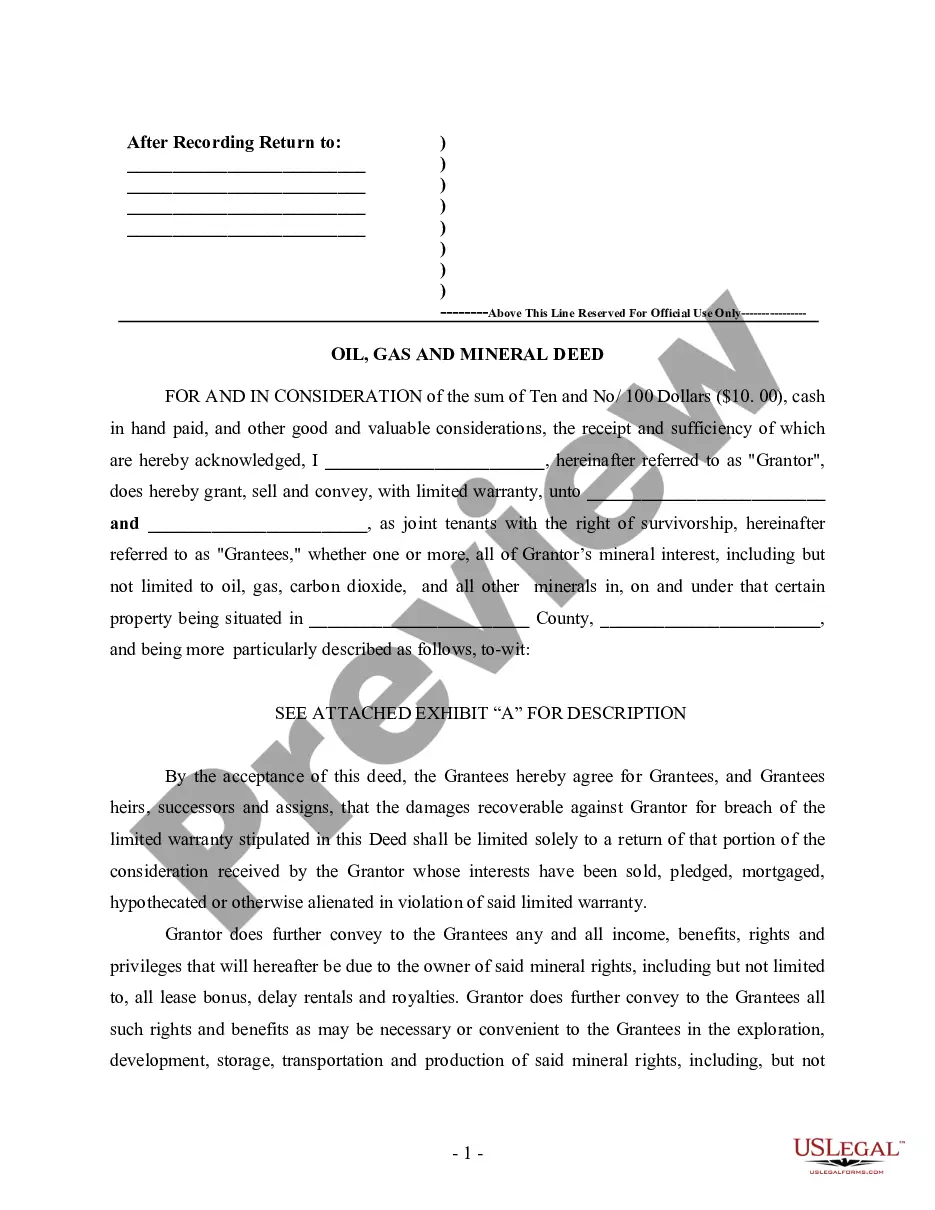
Get your form ready online
Our built-in tools help you complete, sign, share, and store your documents in one place.
Built-in online Word editor
Make edits, fill in missing information, and update formatting in US Legal Forms—just like you would in MS Word.
Export easily
Download a copy, print it, send it by email, or mail it via USPS—whatever works best for your next step.
E-sign your document
Sign and collect signatures with our SignNow integration. Send to multiple recipients, set reminders, and more. Go Premium to unlock E-Sign.
Notarize online 24/7
If this form requires notarization, complete it online through a secure video call—no need to meet a notary in person or wait for an appointment.
Store your document securely
We protect your documents and personal data by following strict security and privacy standards.

Make edits, fill in missing information, and update formatting in US Legal Forms—just like you would in MS Word.

Download a copy, print it, send it by email, or mail it via USPS—whatever works best for your next step.

Sign and collect signatures with our SignNow integration. Send to multiple recipients, set reminders, and more. Go Premium to unlock E-Sign.

If this form requires notarization, complete it online through a secure video call—no need to meet a notary in person or wait for an appointment.

We protect your documents and personal data by following strict security and privacy standards.
Looking for another form?
How to fill out Oil, Gas And Mineral Deed - Individual Or Two Individuals To An Individual?
You can dedicate time online searching for the legal document template that meets the federal and state requirements you need. US Legal Forms offers a vast array of legal documents that can be reviewed by experts.
You can easily download or print the Louisiana Oil, Gas and Mineral Deed - Individual or Two Individuals to an Individual from our service. If you already have a US Legal Forms account, you can Log In and click on the Acquire button. After that, you can complete, modify, print, or sign the Louisiana Oil, Gas and Mineral Deed - Individual or Two Individuals to an Individual.
Each legal document template you obtain is yours indefinitely. To get another copy of the downloaded form, go to the My documents tab and click on the respective button. If you are using the US Legal Forms website for the first time, follow the simple instructions below: First, ensure that you have selected the correct document template for the state/region of your choice. Review the form outline to verify you have selected the appropriate form. If available, use the Preview button to view the document template as well.
- If you want to find another version of your form, use the Search field to locate the template that fits your needs.
- Once you have found the template you want, click Acquire now to proceed.
- Select the pricing plan you wish, enter your details, and sign up for an account on US Legal Forms.
- Complete the payment process. You can use your credit card or PayPal account to purchase the legal document.
- Choose the format of your document and download it to your system.
- Make adjustments to your document if necessary. You can complete, modify, sign, and print the Louisiana Oil, Gas and Mineral Deed - Individual or Two Individuals to an Individual.
- Download and print numerous document templates using the US Legal Forms website, which provides the largest collection of legal documents. Utilize professional and state-specific templates to address your business or personal needs.
Form popularity
FAQ
If the hydrocarbons are beneath a navigable waterway in Louisiana, the property is referred to as State Water Bottoms. In other instances, the mineral rights may be owned by the State of Louisiana but an individual may own the real estate; there are a number of possible combinations.
Ownership types Surface rights owners own the surface and substances such as sand and gravel, but not the minerals. The company or individual who owns the mineral rights owns all mineral substances found on and under the property. There are often different surface and mineral owners on the same land.
What Are Mineral Rights and Who Has Them? Mineral rights in Texas are the rights to mineral deposits that exist under the surface of a parcel of property. This right normally belongs to the owner of the surface estate; however, in Texas those rights can be transferred through sale or lease to a second party.
No Will: If the deceased does not have a will, the process gets a bit complex. The mineral rights are usually divided ing to the state's intestate succession laws. Often children, spouses, or close relatives inherit the rights. Trusts: Some mineral rights owners might put their rights in a trust.
The landowner can enter into an agreement to lease the mineral servitude to a lessee who will then have free reign to extract whatever minerals they find. The main term of the lease is between 3 to 10 years and can never be more than 10 years long, as that's when the mineral servitude will revert to the owner.
If you collect royalty income of $100,000, you could pay $30,000+ in taxes and only keep $70,000 and it would takes years to collect. Your basis in mineral rights can affect how much tax you owe when selling mineral rights vs collecting royalties. If you inherited mineral rights, it nearly always makes sense to sell.
Royalty is a portion of the proceeds from the sale of production which is paid monthly to the mineral rights owner. The royalty is usually described in the lease as a fraction such as 1/8th, or 1/6th.
Surface rights are what you own on the surface of the property. These include the space, the buildings and the landscaping. Mineral rights, on the other hand, cover the specific resources beneath the surface. In areas designated for mining, it's common for surface rights and mineral rights to be separate.