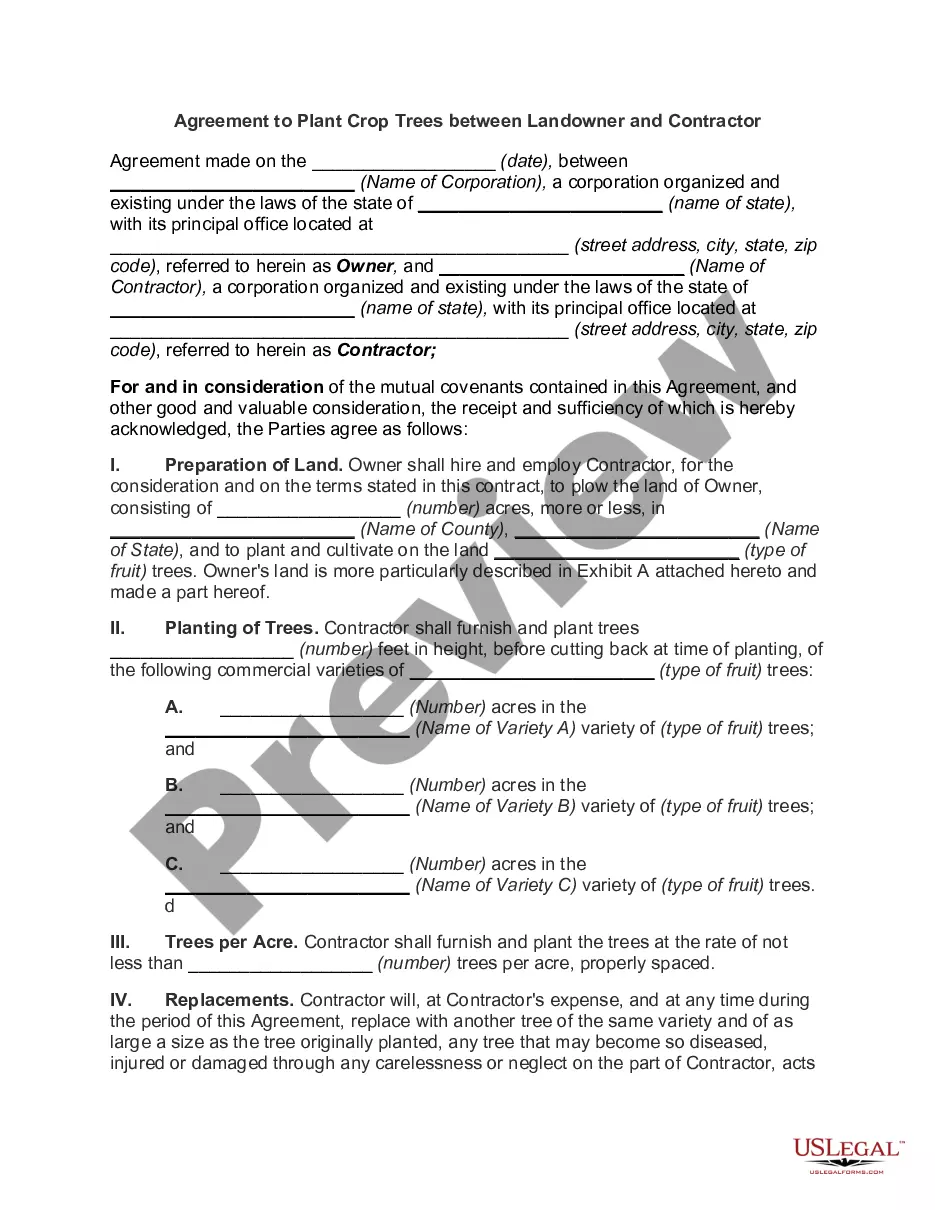
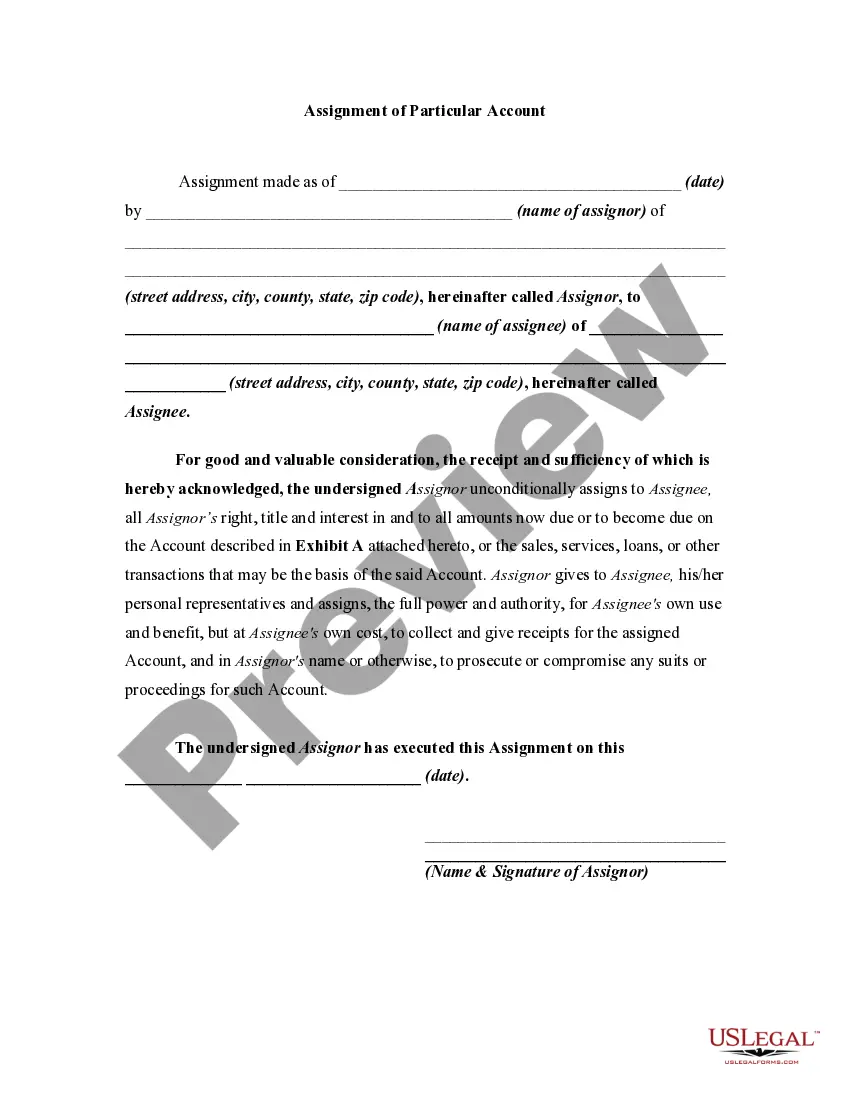
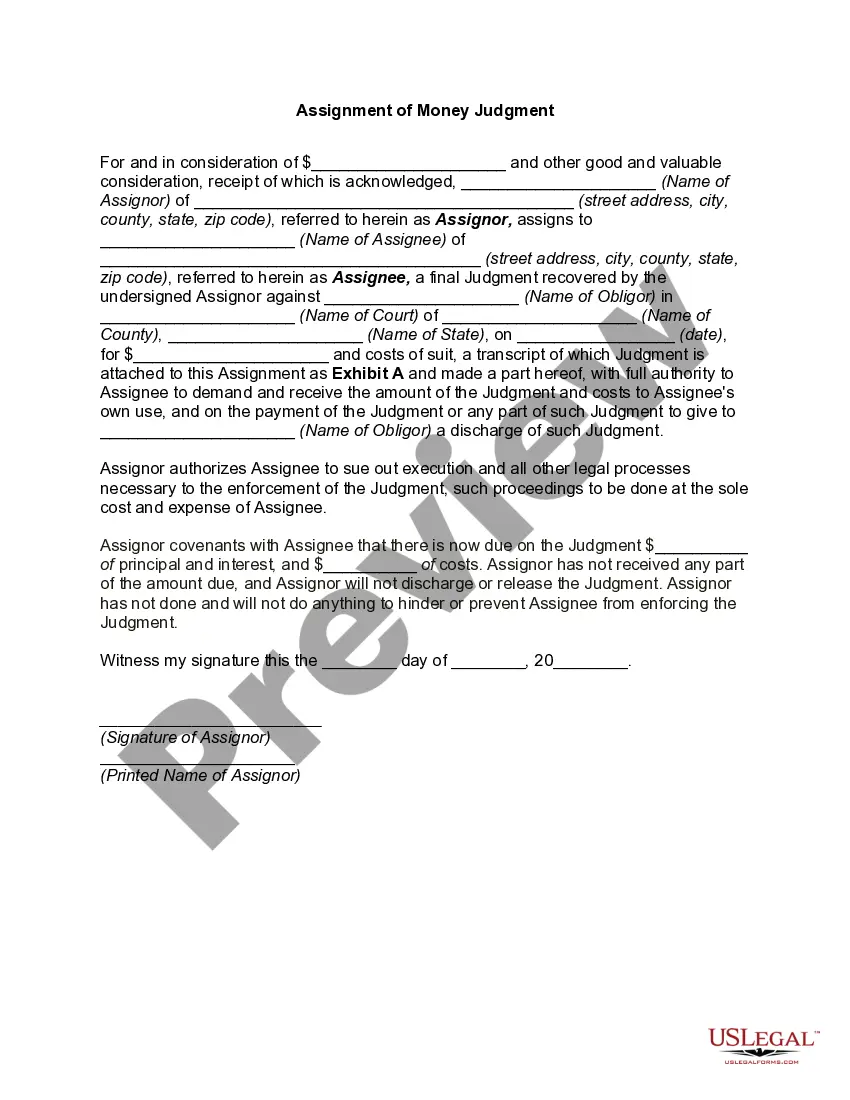
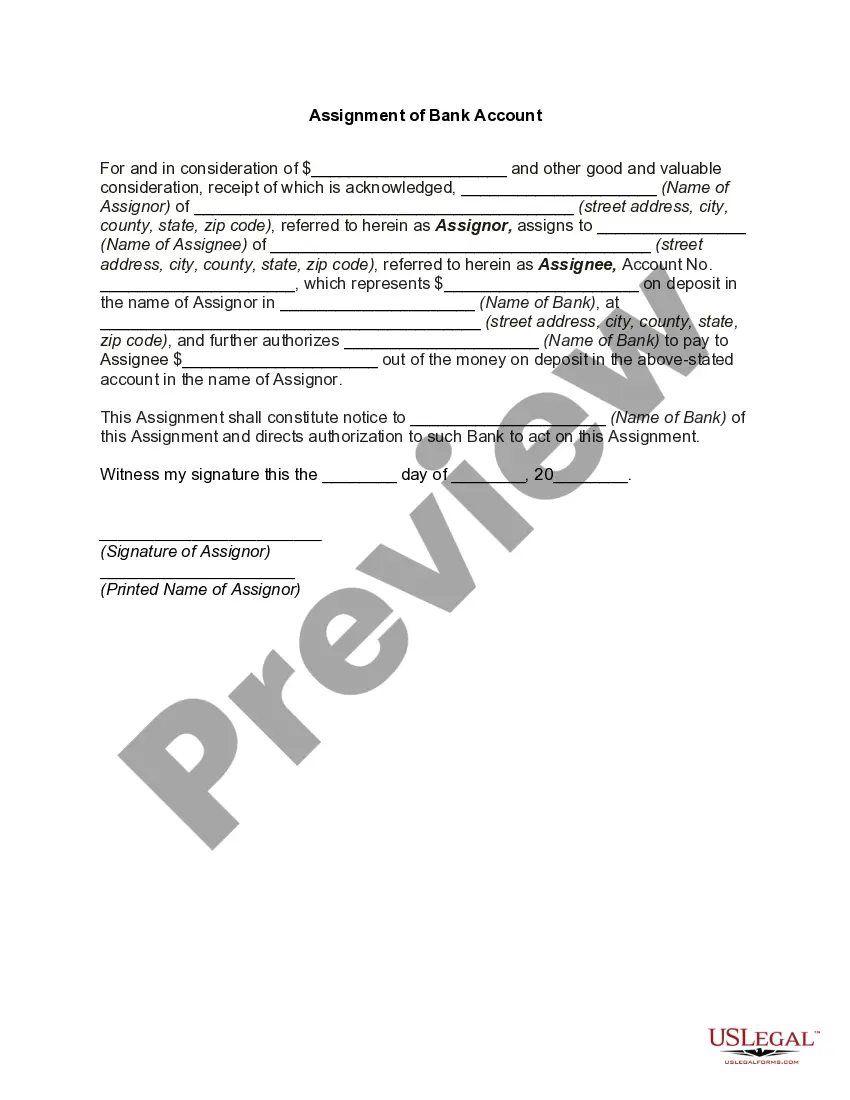
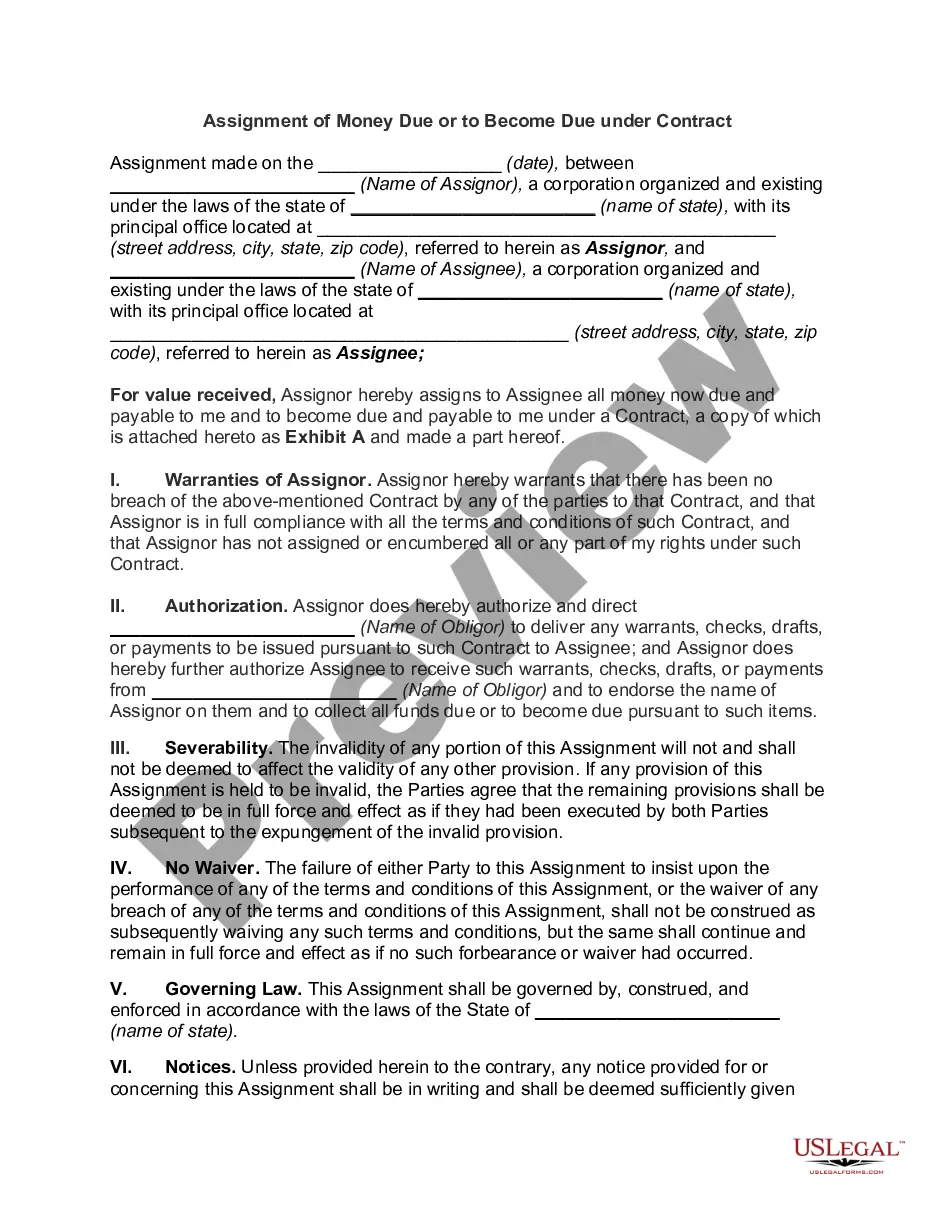
This form is an Assignment of Money Due. The assignor agrees to grant to the assignee all title and interest in a certain debt or money due as described in the agreement. The form also provides that it is the responsibility of the assignor to collect the debt.
Louisiana Assignment of Money Due
Category:
State:
Multi-State
Control #:
US-00422
Format:
Word;
Rich Text
Instant download
Description
Get your form ready online
Our built-in tools help you complete, sign, share, and store your documents in one place.
Built-in online Word editor
Make edits, fill in missing information, and update formatting in US Legal Forms—just like you would in MS Word.
Export easily
Download a copy, print it, send it by email, or mail it via USPS—whatever works best for your next step.
E-sign your document
Sign and collect signatures with our SignNow integration. Send to multiple recipients, set reminders, and more. Go Premium to unlock E-Sign.
Notarize online 24/7
If this form requires notarization, complete it online through a secure video call—no need to meet a notary in person or wait for an appointment.
Store your document securely
We protect your documents and personal data by following strict security and privacy standards.

Make edits, fill in missing information, and update formatting in US Legal Forms—just like you would in MS Word.

Download a copy, print it, send it by email, or mail it via USPS—whatever works best for your next step.

Sign and collect signatures with our SignNow integration. Send to multiple recipients, set reminders, and more. Go Premium to unlock E-Sign.

If this form requires notarization, complete it online through a secure video call—no need to meet a notary in person or wait for an appointment.

We protect your documents and personal data by following strict security and privacy standards.
Looking for another form?




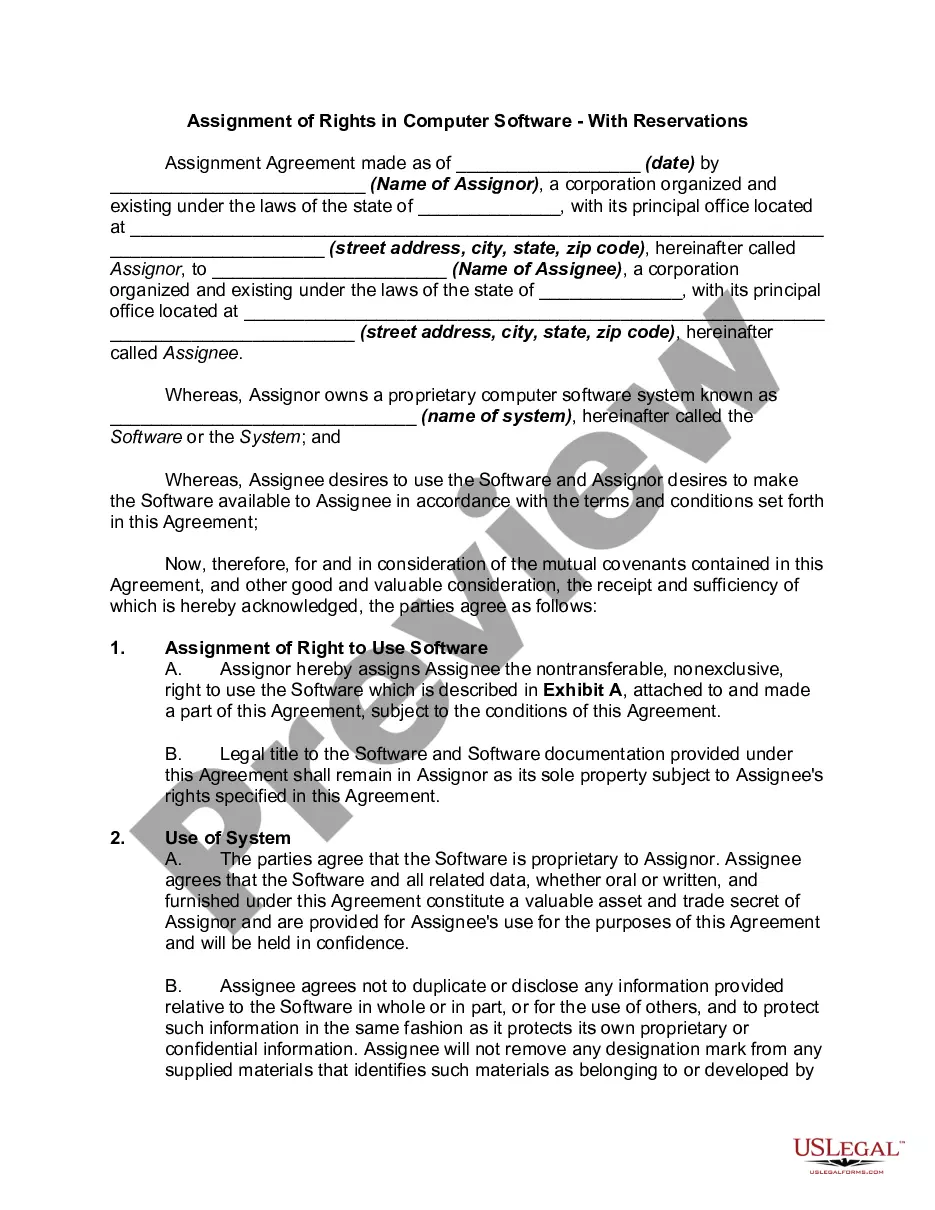
How to fill out Assignment Of Money Due?
Are you presently in a situation where you need documents for either commercial or personal purposes almost every time.
There are numerous legal document templates available online, but finding ones you can trust isn't easy.
US Legal Forms offers a vast collection of form templates, such as the Louisiana Assignment of Money Due, that are designed to meet federal and state requirements.
Utilize US Legal Forms, the largest selection of legal forms, to save time and prevent errors.
The service offers professionally crafted legal document templates that can be used for a variety of purposes.
Create an account on US Legal Forms and start making your life a bit easier.
- If you are already acquainted with the US Legal Forms website and have an account, simply Log In.
- Then, you can download the Louisiana Assignment of Money Due template.
- If you do not have an account and wish to start using US Legal Forms, follow these steps.
- Find the form you need and ensure it corresponds to the correct region/state.
- Use the Review button to examine the form.
- Check the details to ensure you have selected the correct form.
- If the form isn't what you are looking for, use the Search field to locate the form that meets your needs and criteria.
- Once you find the correct form, click Acquire now.
- Choose the payment plan you prefer, input the required information to create your account, and pay for your order using your PayPal or Visa or Mastercard.
- Select a convenient document format and download your copy.
- Access all the document templates you have purchased in the My documents menu.
- You can obtain an additional copy of the Louisiana Assignment of Money Due at any time if needed.
- Click the desired form to download or print the document template.
Form popularity
FAQ
You typically have one year to file a lawsuit for personal injury or damage to property in Louisiana, while other claims may allow for different time limits. Understanding these deadlines is essential to ensure you do not miss your opportunity to seek justice. The Louisiana Assignment of Money Due may also provide clarity on your rights in these situations. For more comprehensive information, consider using US Legal Forms to access relevant legal documents.
The 65% law in Louisiana allows creditors to garnish up to 65% of an individual's disposable earnings for the payment of debts, including child support and other obligations. This law is significant for creditors looking to collect money due while ensuring that debtors retain enough income for their basic needs. Utilizing the Louisiana Assignment of Money Due can help you secure your rightful payments efficiently. Explore US Legal Forms for guidance on implementing this law.
In Louisiana, you generally have ten years to sue someone for money owed, as this falls under the state's prescription period for contracts. However, this time frame can vary based on specific circumstances or types of debts. Understanding the nuances of the Louisiana Assignment of Money Due can help you navigate these legal timelines effectively. For assistance, platforms like US Legal Forms provide valuable resources.
The 90-day rule in Louisiana refers to the period within which a judgment creditor must take action to enforce their judgment. Specifically, the creditor must initiate the collection process within 90 days of the judgment being rendered. Failing to do so may result in losing the ability to collect on that judgment. This is where understanding the Louisiana Assignment of Money Due becomes crucial for timely enforcement.
To collect money after winning a judgment in Louisiana, you can begin by obtaining a writ of fieri facias from the court. This legal document allows you to seize the debtor's property or garnish their wages. Using the Louisiana Assignment of Money Due can also facilitate the process, ensuring you receive what you are owed. Additionally, consider utilizing resources like US Legal Forms to streamline your collection efforts.
(1)(a) Upon receipt of a notice to withhold, the payor of income shall withhold from the income of the obligor the amount ordered for support, as it becomes due, together with an additional sum, determined by the obligee, subject to the limitations provided by R.S. 81, to discharge the past due amount, and shall ...
RS .3 ? Entry on or remaining in places or on land after being forbidden.
RS - Simple burglary. A. Simple burglary is the unauthorized entering of any dwelling, vehicle, watercraft, or other structure, movable or immovable, or any cemetery, with the intent to commit a felony or any theft therein, other than as set forth in R.S. .
Simple robbery in Louisiana entails using force and intimidation on a person to steal their items without using a weapon. The charges are not as severe as armed robbery because it does not involve using a dangerous weapon. However, simple robbery charges are a felony and have severe penalties.
The Louisiana Wage Payment Act, La. R.S. 1 (the ?Act?) requires employers to pay employees all wages due upon termination of employment. Furthermore, all wages due must be paid on or before the next regular payday or no later than 15 days following the date of discharge or resignation, whichever occurs first.