Louisiana Essential Documents for the Organized Traveler Package
What is this form package?
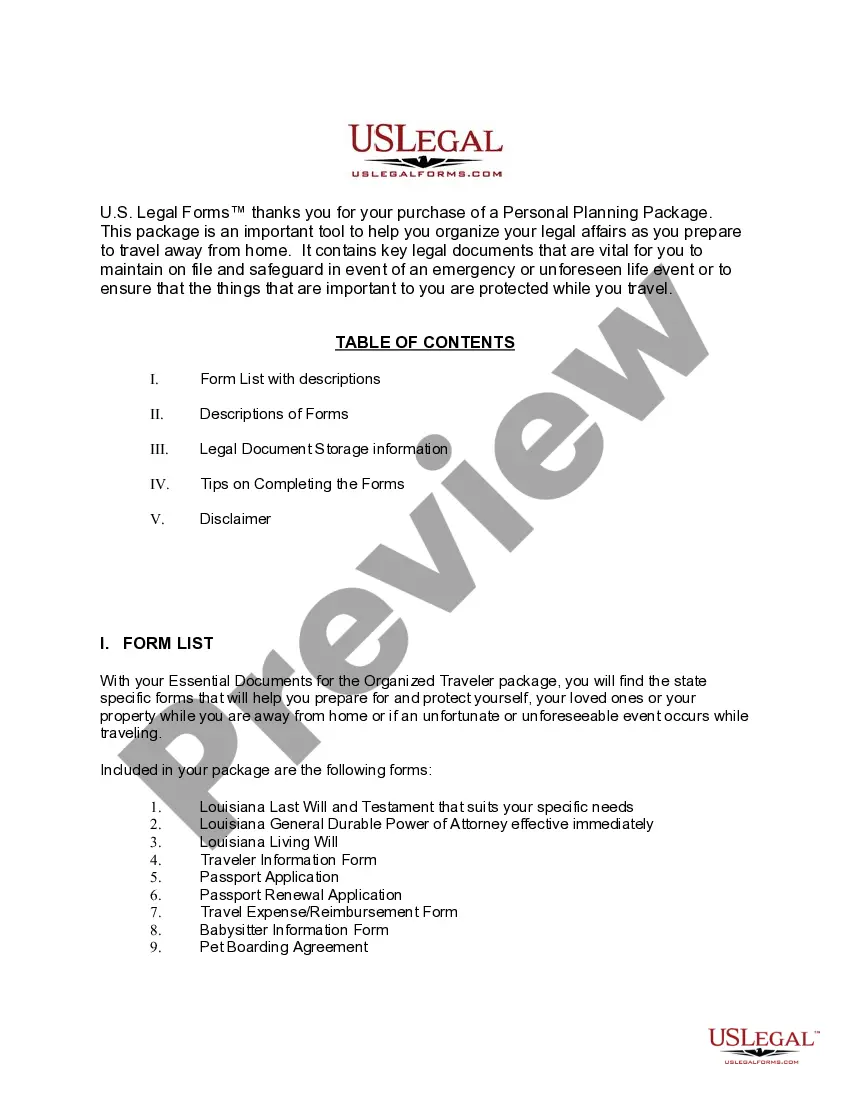
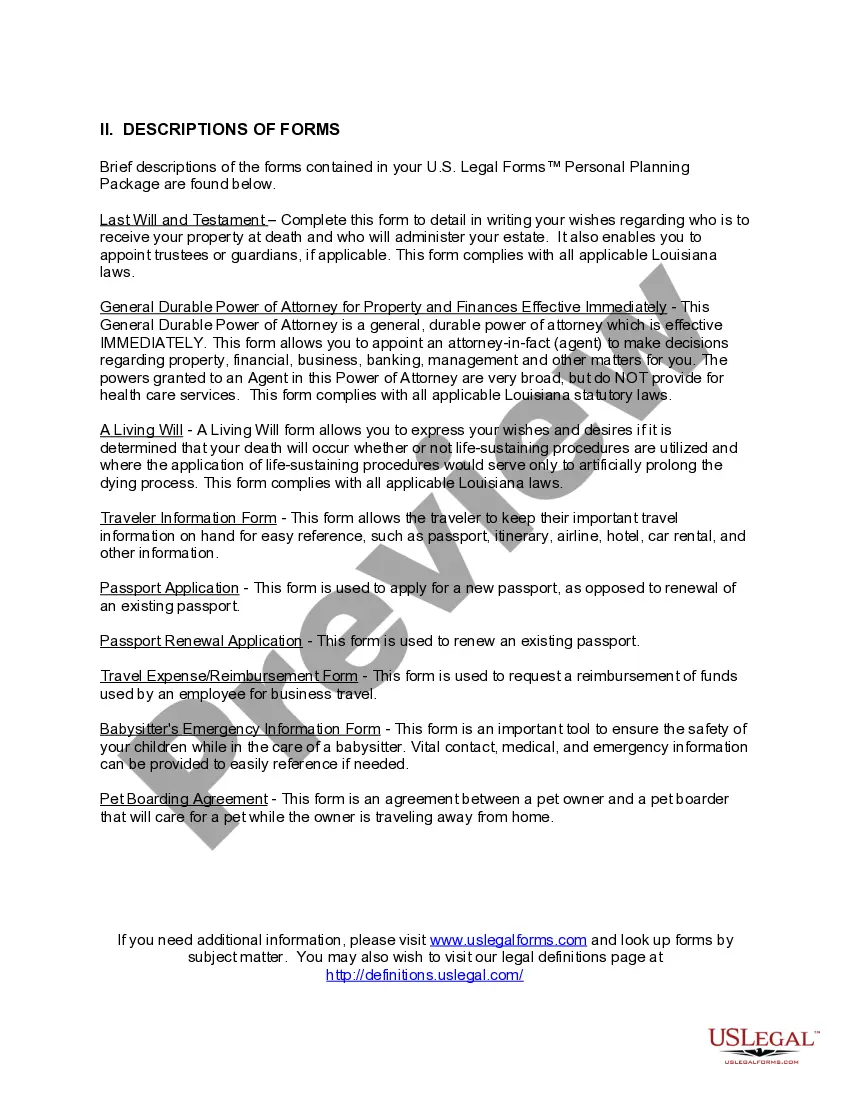
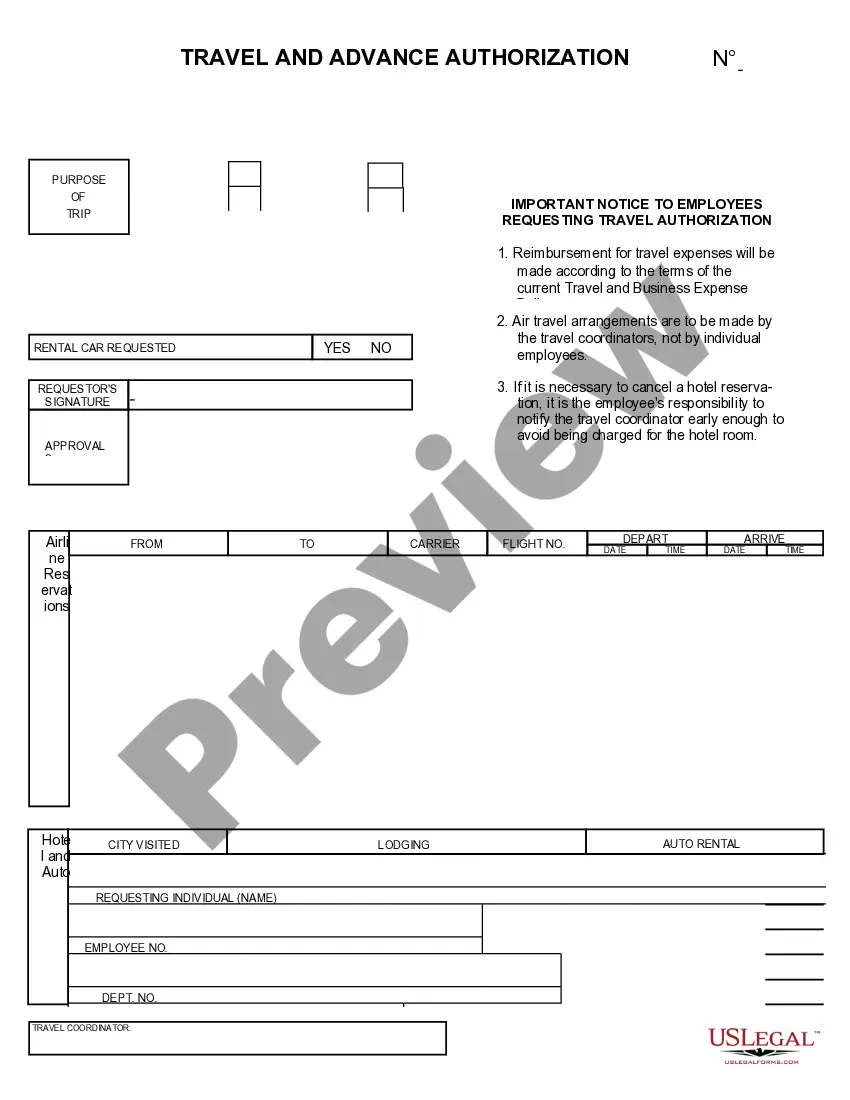
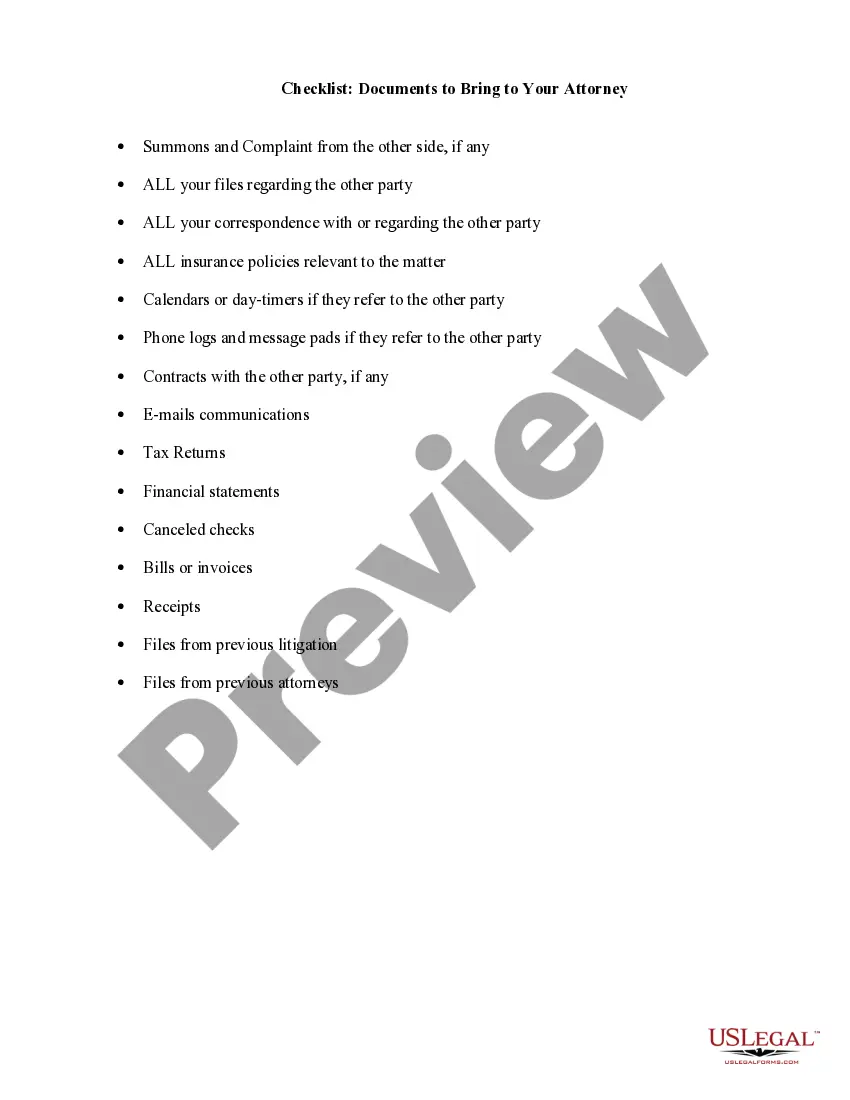
The Louisiana Essential Documents for the Organized Traveler Package is a comprehensive collection of legal forms designed specifically for individuals who travel. This package aims to ensure that travelers are prepared for their journeys by keeping essential information organized and minimizing potential difficulties that may arise while traveling. Unlike other travel-related form packages, this one includes important documents such as power of attorney, wills, and travel information forms tailored to Louisiana's legal requirements.
Forms you’ll find in this package
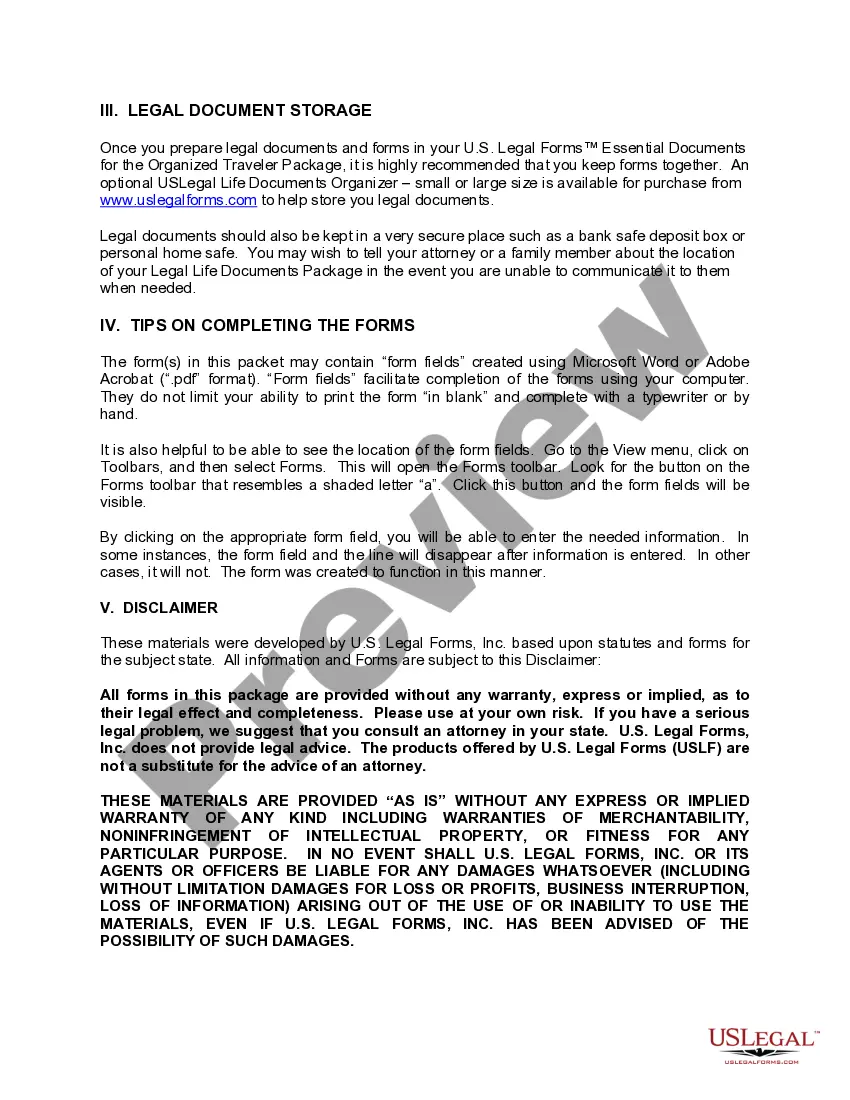
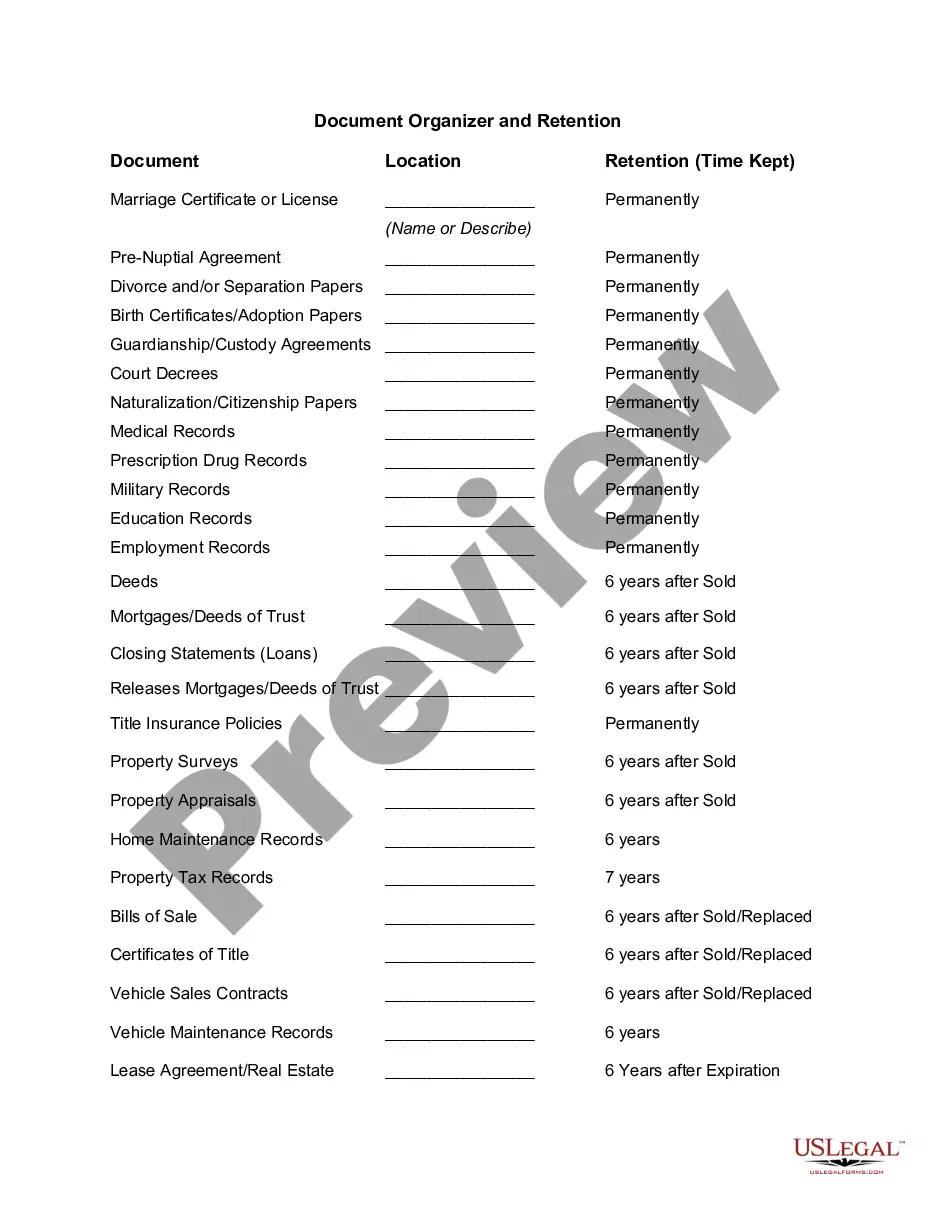
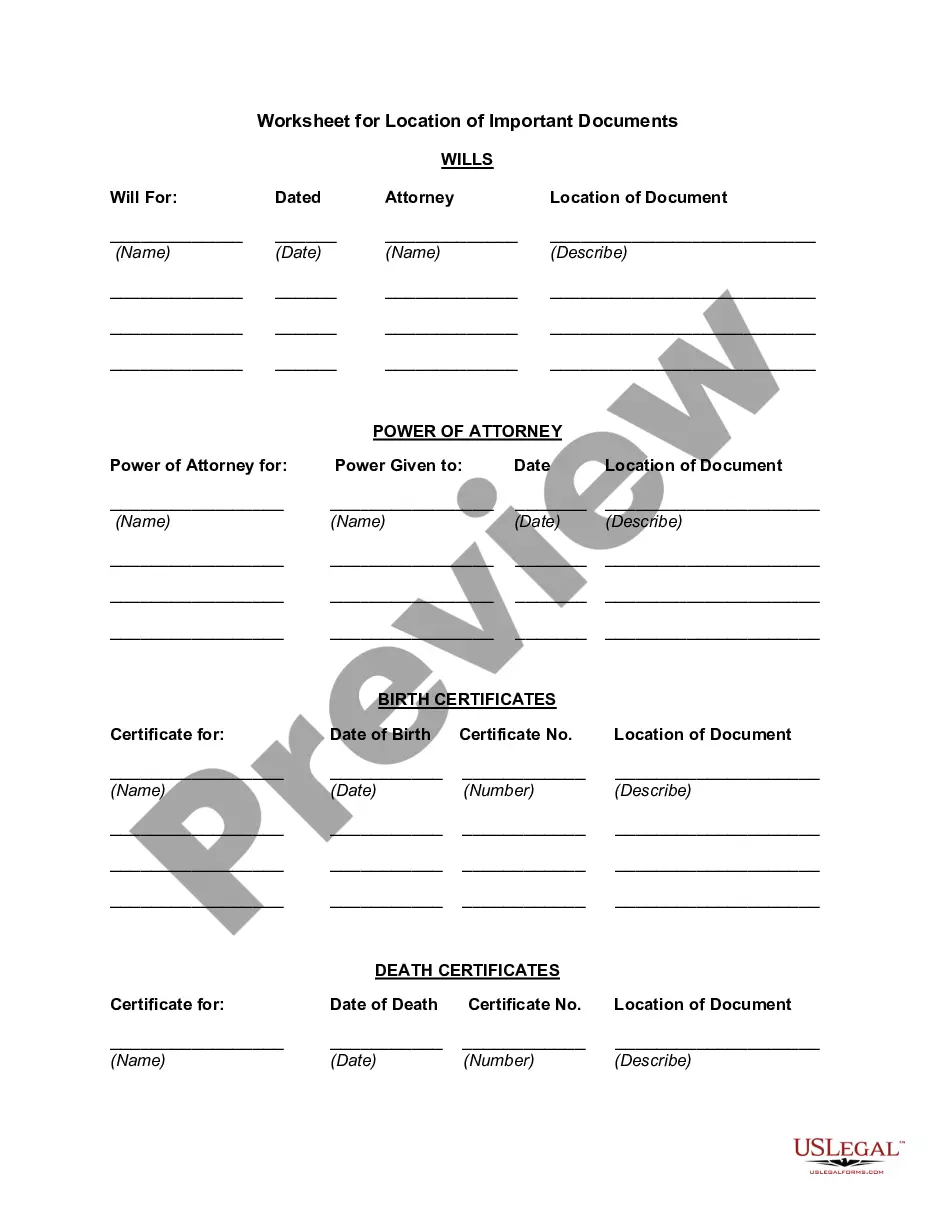
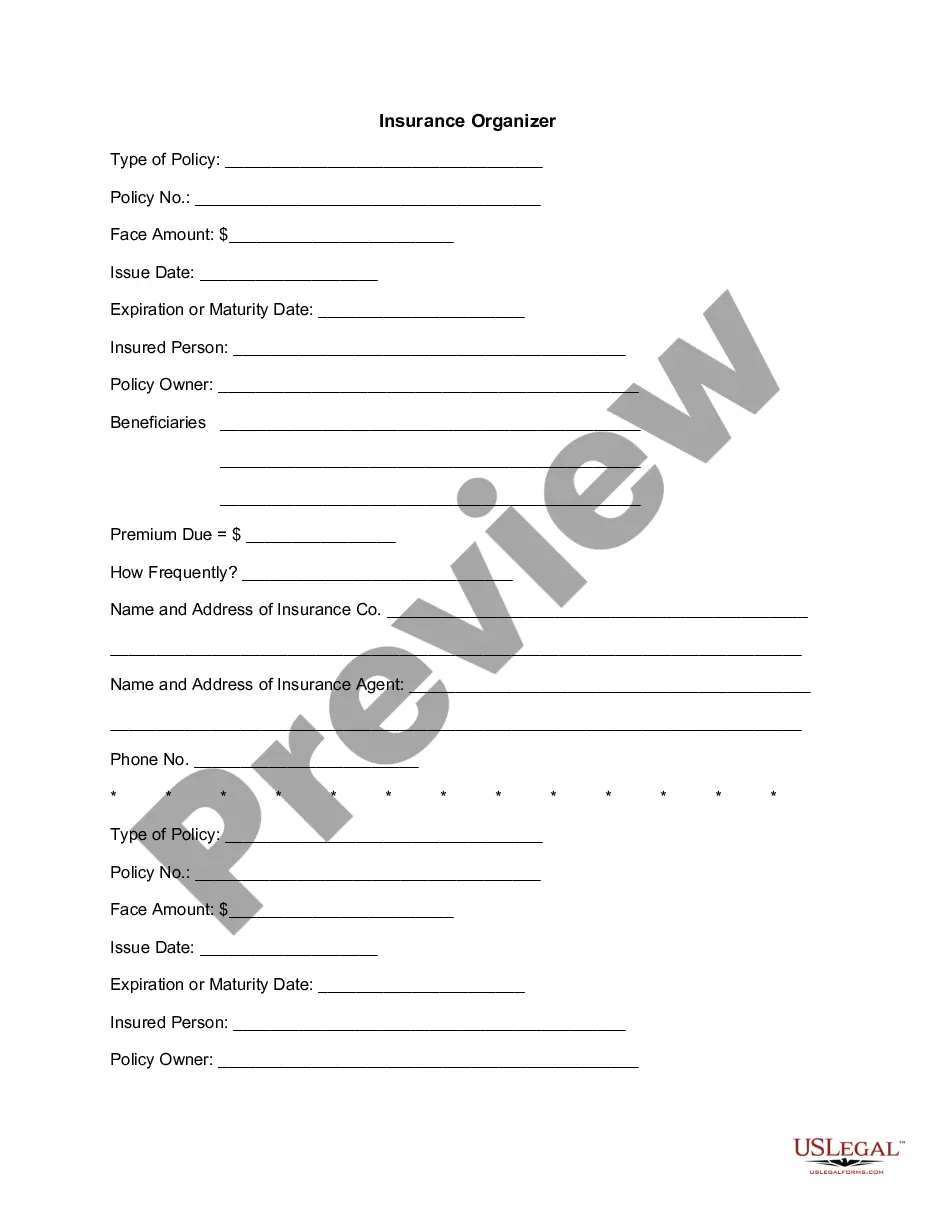
When this form package is needed
This package is useful in various scenarios, including:
- Planning a vacation, ensuring all important travel details are documented.
- Traveling for business, where control over financial and health decisions is necessary.
- Leaving children or pets in the care of babysitters or pet boarders while away.
- Preparing for medical emergencies or unexpected events that may arise during travel.
Who can use this document
- Individuals planning personal or business travel.
- Parents needing emergency information for babysitters.
- Pet owners organizing care arrangements while traveling.
- Travelers who want to ensure their legal documents are in order before departure.
- Any traveler seeking to minimize stress and confusion during their journeys.
How to complete these forms
- Review all included forms to identify relevant documents for your situation.
- Gather necessary personal information, such as identification and travel details.
- Complete the forms using clear and accurate information, entering dates and signatures where required.
- Ensure the forms are stored securely, both digitally and physically.
- Consult with a legal professional if you have questions about any forms.
Do documents in this package require notarization?
Some forms in this package need notarization to be legally binding. Our online notarization service, powered by Notarize, lets you verify and sign documents remotely through an encrypted video session, available 24/7.
Get your form ready online
Our built-in tools help you complete, sign, share, and store your documents in one place.
Make edits, fill in missing information, and update formatting in US Legal Forms—just like you would in MS Word.
Download a copy, print it, send it by email, or mail it via USPS—whatever works best for your next step.
Sign and collect signatures with our SignNow integration. Send to multiple recipients, set reminders, and more. Go Premium to unlock E-Sign.
If this form requires notarization, complete it online through a secure video call—no need to meet a notary in person or wait for an appointment.
We protect your documents and personal data by following strict security and privacy standards.

Make edits, fill in missing information, and update formatting in US Legal Forms—just like you would in MS Word.

Download a copy, print it, send it by email, or mail it via USPS—whatever works best for your next step.

Sign and collect signatures with our SignNow integration. Send to multiple recipients, set reminders, and more. Go Premium to unlock E-Sign.

If this form requires notarization, complete it online through a secure video call—no need to meet a notary in person or wait for an appointment.

We protect your documents and personal data by following strict security and privacy standards.
Common mistakes to avoid
- Not completing all required fields in the forms.
- Failing to sign forms or obtain necessary signatures.
- Using outdated versions of forms for legal matters.
- Assuming all documents are valid across all states without checking specific legal requirements.
Benefits of completing this package online
- Convenient access to essential legal forms from anywhere with an internet connection.
- Editable forms that allow you to customize information easily before printing.
- Reliable resources created by licensed attorneys, ensuring legal compliance.
- Quick download to save time on preparing essential documents for travel.
Legal use & context
- These documents can be used to assign authority to another individual in case of emergencies.
- The power of attorney and living will comply with Louisiana statutes, offering enforceability.
- Properly completed forms can help avoid legal complications during travel.
Quick recap
- This package provides essential legal forms tailored for travelers from Louisiana.
- Understanding and completing these forms can safeguard your interests while away.
- Utilizing this package prepares you for unexpected situations during travel.
Looking for another form?
Form popularity
FAQ
Testing of contacts has large implications for laboratory as well as contact tracing resources. If resources permit, all close contacts should be tested for SARS-CoV-2. Where resources exist, testing should be performed as soon as symptoms develop for symptomatic contacts. Testing all close contacts regardless of symptoms may increase sensitivity of a surveillance system, but this approach requires high availability of testing personnel, supplies, PPE, and laboratory staff. If positive, the contact should begin isolating. If negative, contacts should continue to self-quarantine for a full 14 days after last exposure and follow all recommendations of jurisdictional public health authorities
If you don't get tested, you should isolate for at least 10 days from when your symptoms first started and at least 24 hours have passed since you have been fever- free without using fever reducing medications.
If you don't get tested, stay home and self-quarantine for 10 days after travel. Avoid being around people who are at increased risk for severe illness for 14 days, whether you get tested or not.
Aerosols are emitted by a person infected with coronavirus even one with no symptoms when they talk, breathe, cough, or sneeze. Another person can breathe in these aerosols and become infected with the virus. Aerosolized coronavirus can remain in the air for up to three hours.
Your last day of quarantine is 10 days from the date after you last had close contact.
There are no travel restrictions within Illinois. However, non-essential travel to the areas of high incidence is discouraged.
Please help slow the spread of COVID-19 by answering if you get a call from LA PublicHealth or 1-833-641-0305 (see Contact Tracing). If you tested positive but have not gotten a call yet, please call 1-833-540-0473 from 8 AM to PM, 7 days a week.
Specifically, researchers have reported that people with mild to moderate COVID-19 remain infectious no longer than 10 days after their symptoms began, and those with more severe illness or those who are severely immunocompromised remain infectious no longer than 20 days after their symptoms began.
If you don't get tested, you should isolate for at least 10 days from when your symptoms first started and at least 24 hours have passed since you have been fever- free without using fever reducing medications.