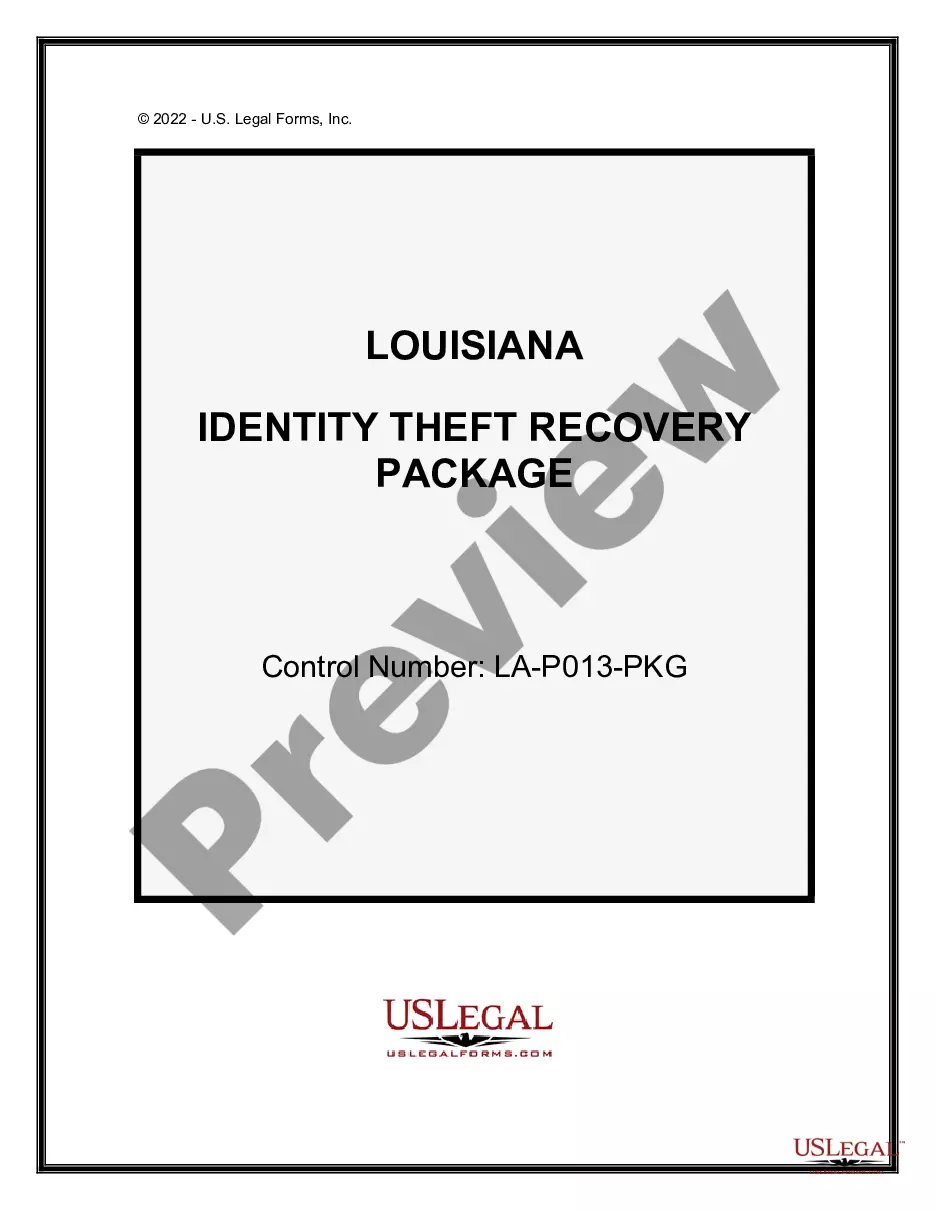
Louisiana Identity Theft Recovery Package
What this form package covers
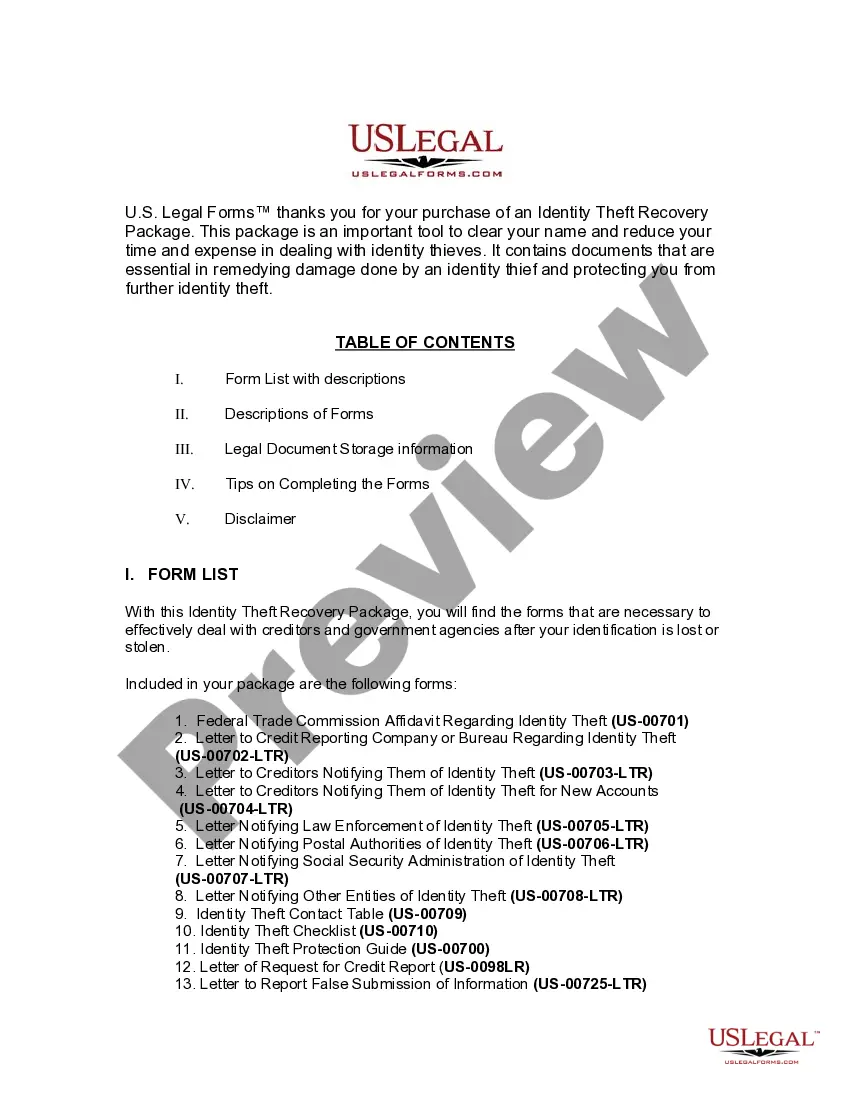
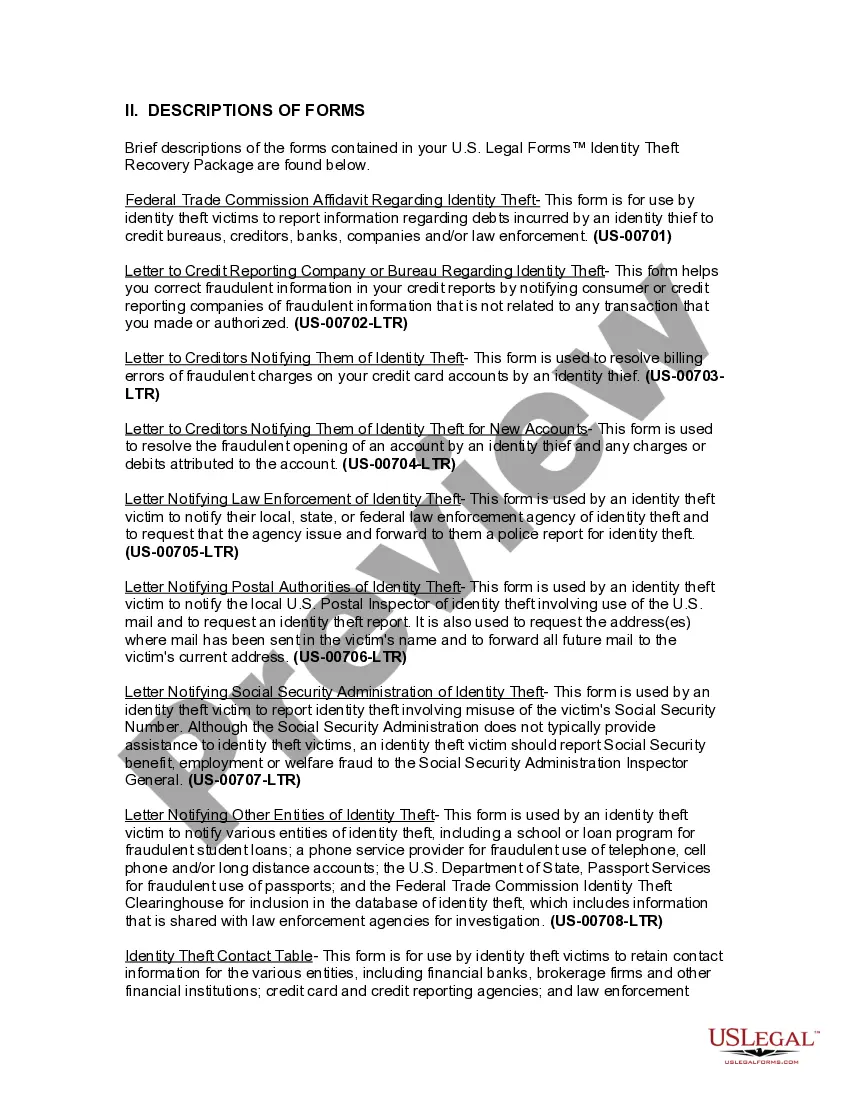
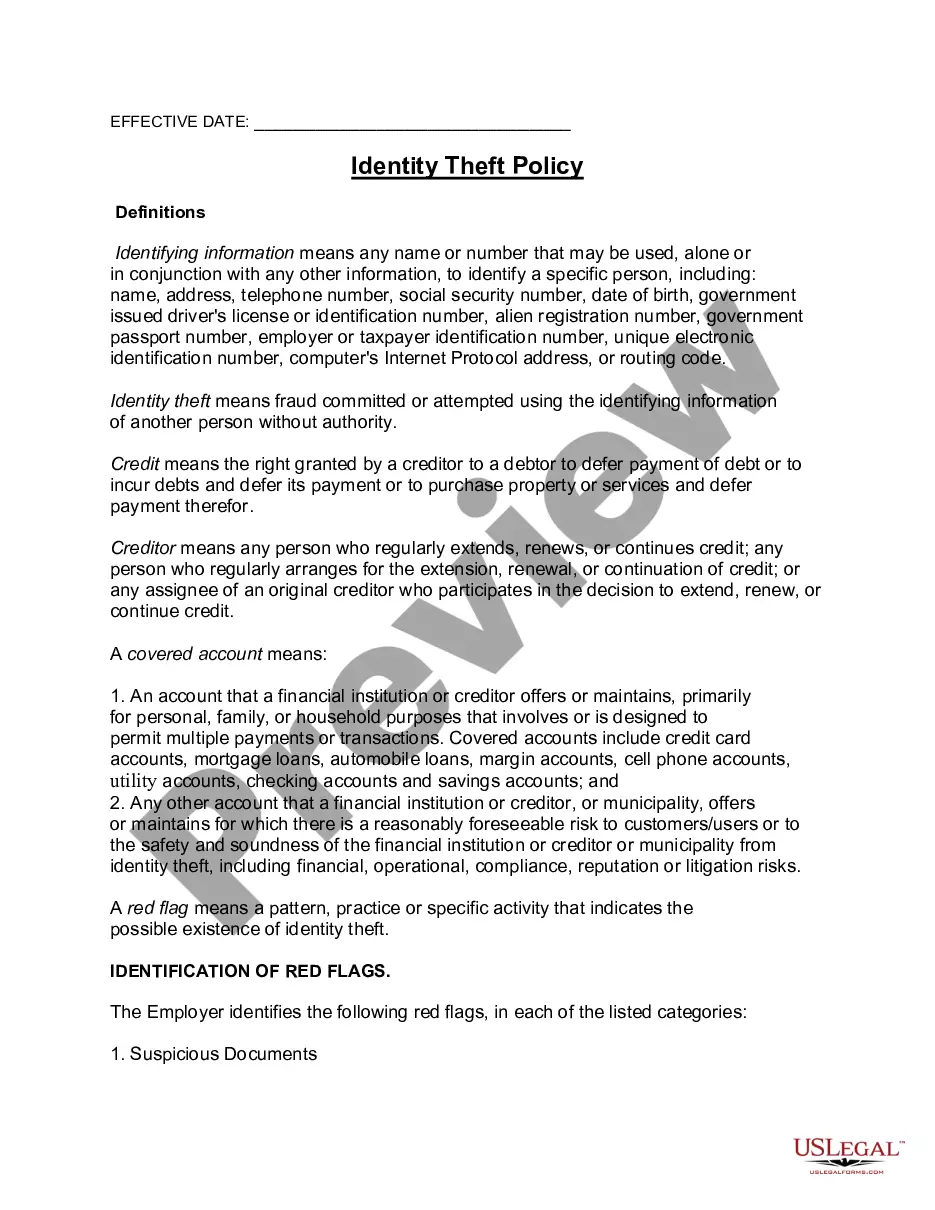
The Louisiana Identity Theft Recovery Package is a comprehensive set of legal forms designed specifically for individuals who have fallen victim to identity theft. This package helps victims effectively communicate with creditors and government agencies, allowing them to clear their names and protect their financial assets. Unlike other legal packages, this one focuses on the unique challenges associated with identity theft, providing tailored resources to navigate the recovery process efficiently.
Forms you’ll find in this package
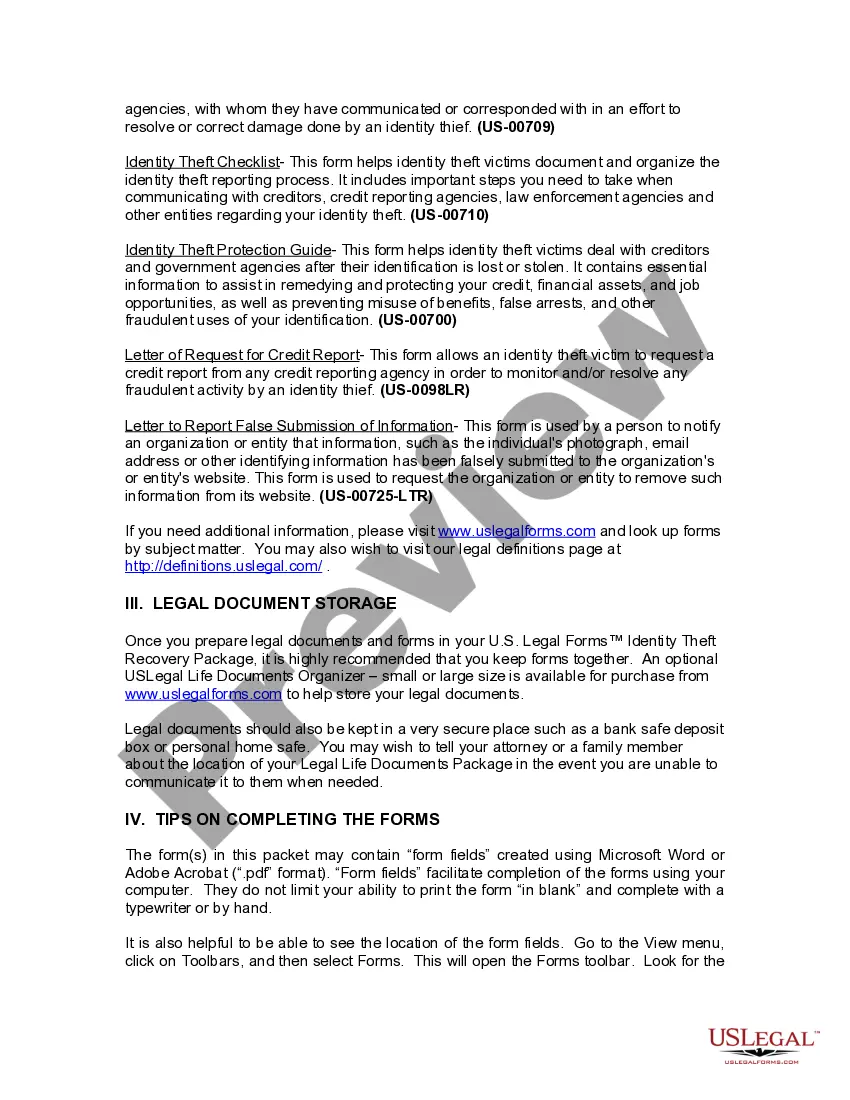
- Identity Theft Protection Guide
- Federal Trade Commission Affidavit regarding Identity Theft
- Letter to Credit Reporting Company or Bureau regarding Identity Theft
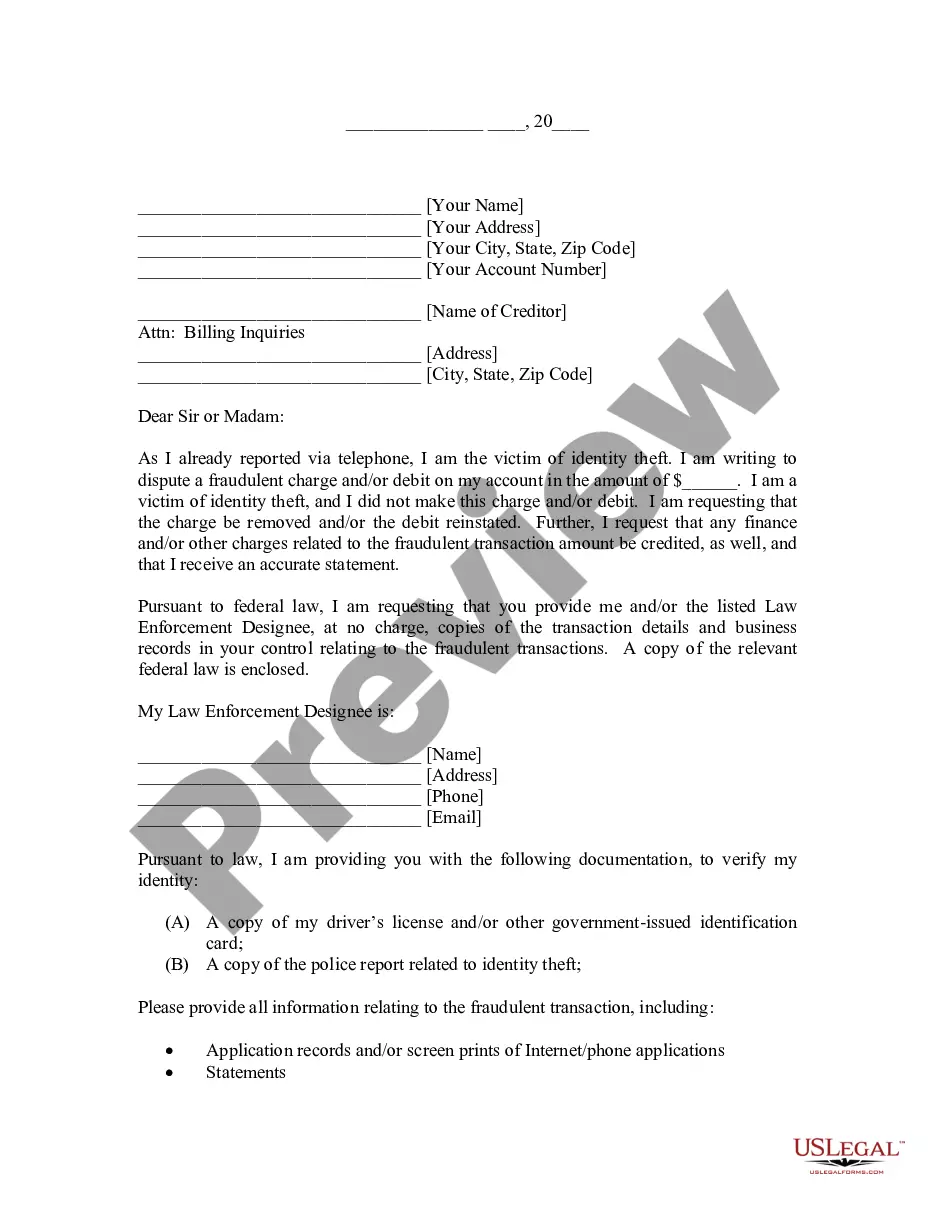
- Letter to Creditors notifying them of Identity Theft
- Letter to Creditors Notifying Them of Identity Theft for New Accounts
- Letter Notifying Law Enforcement of Identity Theft
- Letter Notifying Postal Authorities of Identity Theft
- Letter Notifying Social Security Administration of Identity Theft
- Letter to Other Entities Notifying Them of Identity Theft
- Identity Theft Contact Table
- Identity Theft Checklist
- Sample Letter to Report False Submission of Information
- Sample Letter for Request for Free Credit Report Allowed by Federal Law
When to use this document
This package is essential when you suspect that your personal identification has been lost or stolen and misused. Use it if you encounter fraudulent charges on your credit accounts, need to notify law enforcement of identity theft, or require assistance in correcting inaccuracies in your credit reports. It's also helpful if you want to communicate with agencies like the Social Security Administration or the Postal Service regarding misuse of your information.
Who should use this form package
- Individuals whose personal identification has been stolen.
- Victims of identity theft seeking to restore their credit and financial standing.
- Persons needing guidance on how to notify authorities and creditors about identity theft.
- Individuals looking for a structured approach to dealing with the aftermath of identity theft.
Steps to complete these forms
- Review each form included in the package to understand its purpose and requirements.
- Gather necessary information such as dates, personal details, and lists of affected accounts.
- Complete each form carefully, ensuring accuracy of information entered.
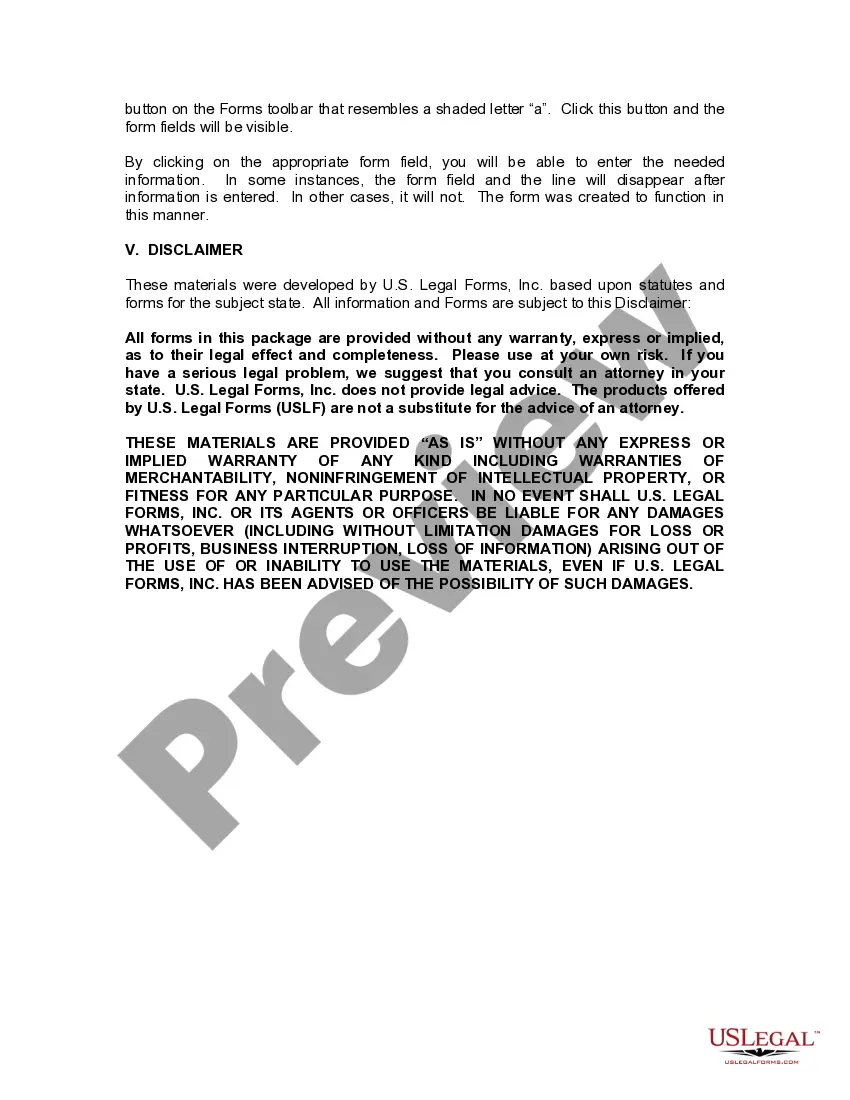
- Sign and date forms where required, and make copies for your records.
- Send the completed forms to the appropriate agencies and creditors as outlined.
Do forms in this package need to be notarized?
Notarization is generally not required for forms in this package. However, specific circumstances or local laws may require it. You can complete notarization remotely through US Legal Forms, powered by Notarize, with 24/7 availability.
Get your form ready online
Our built-in tools help you complete, sign, share, and store your documents in one place.
Make edits, fill in missing information, and update formatting in US Legal Forms—just like you would in MS Word.
Download a copy, print it, send it by email, or mail it via USPS—whatever works best for your next step.
Sign and collect signatures with our SignNow integration. Send to multiple recipients, set reminders, and more. Go Premium to unlock E-Sign.
If this form requires notarization, complete it online through a secure video call—no need to meet a notary in person or wait for an appointment.
We protect your documents and personal data by following strict security and privacy standards.

Make edits, fill in missing information, and update formatting in US Legal Forms—just like you would in MS Word.

Download a copy, print it, send it by email, or mail it via USPS—whatever works best for your next step.

Sign and collect signatures with our SignNow integration. Send to multiple recipients, set reminders, and more. Go Premium to unlock E-Sign.

If this form requires notarization, complete it online through a secure video call—no need to meet a notary in person or wait for an appointment.

We protect your documents and personal data by following strict security and privacy standards.
Common mistakes to avoid
- Failing to keep copies of submitted forms for personal records.
- Not providing accurate or complete information in the forms.
- Neglecting to follow up with agencies after submitting forms.
- Overlooking the need for a police report where necessary.
Advantages of online completion
- Convenience of downloading forms from anywhere at any time.
- Editability of forms allows for customization based on individual circumstances.
- Reliability of 100% attorney-drafted forms ensures legal compliance.
- Time-saving access to necessary documents without the need for a lawyer's office visit.
Looking for another form?


Form popularity
FAQ
Report the fraud Contact the organisation or agency that issued your identity document and your financial institution. and tell them what happened. Report cybercrime securely to the Australian Cyber Security Centre at ReportCyber.
Identity theft is a wobbler in California law, meaning that it can be treated as either a felony or misdemeanor.Because identity theft is so widespread, the federal government also has jurisdiction to prosecute identity theft cases. The penalty for federal identity theft is up to 30 years prison time.
The four types of identity theft include medical, criminal, financial and child identity theft.
Go to your local police office with: Tell the police someone stole your identity and you need to file a report.
You may be able to have your identity theft charges dropped if: You didn't obtain use a person's information unlawfully If you did not obtain or use someone else's personal information unlawfully, you are not guilty of identity theft.
Notify affected creditors or banks. Put a fraud alert on your credit report. Check your credit reports. Freeze your credit. Report the identity theft to the FTC. Go to the police. Remove fraudulent info from your credit report.
You can call the Federal Trade Commission (FTC) at 1-877-438-4338 or TDD at 1-866-653-4261, or online at http://www.consumer.ftc.gov/features/feature-0014-identity-theft to report identity theft.
Aggravated identity theft is punishable by a mandatory minimum sentence of imprisonment for two years or by imprisonment for five years if it relates to a terrorism offense. At least thus far, the government has rarely prosecuted the five-year terrorism form of the offense.