Louisiana Lease of Equipment
What this document covers
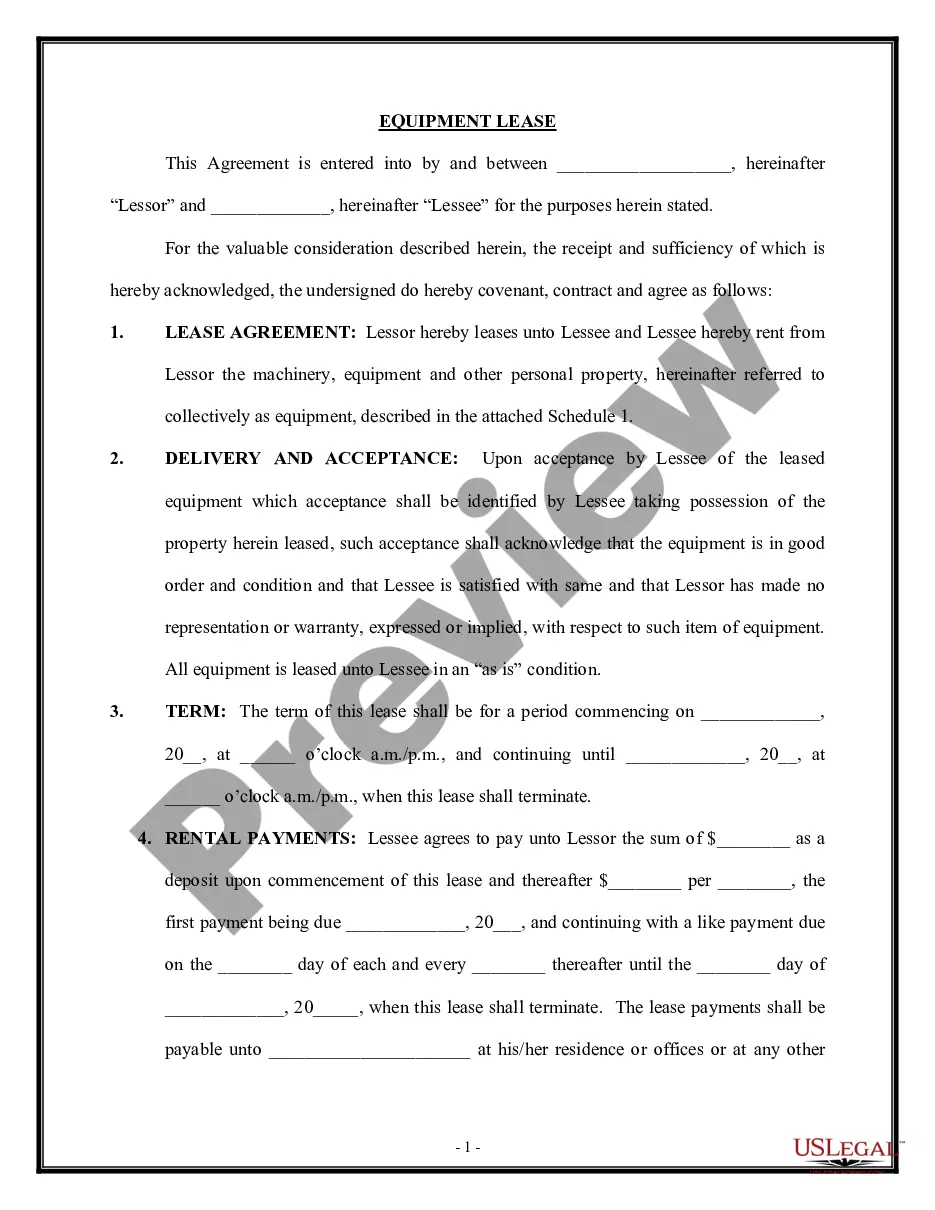
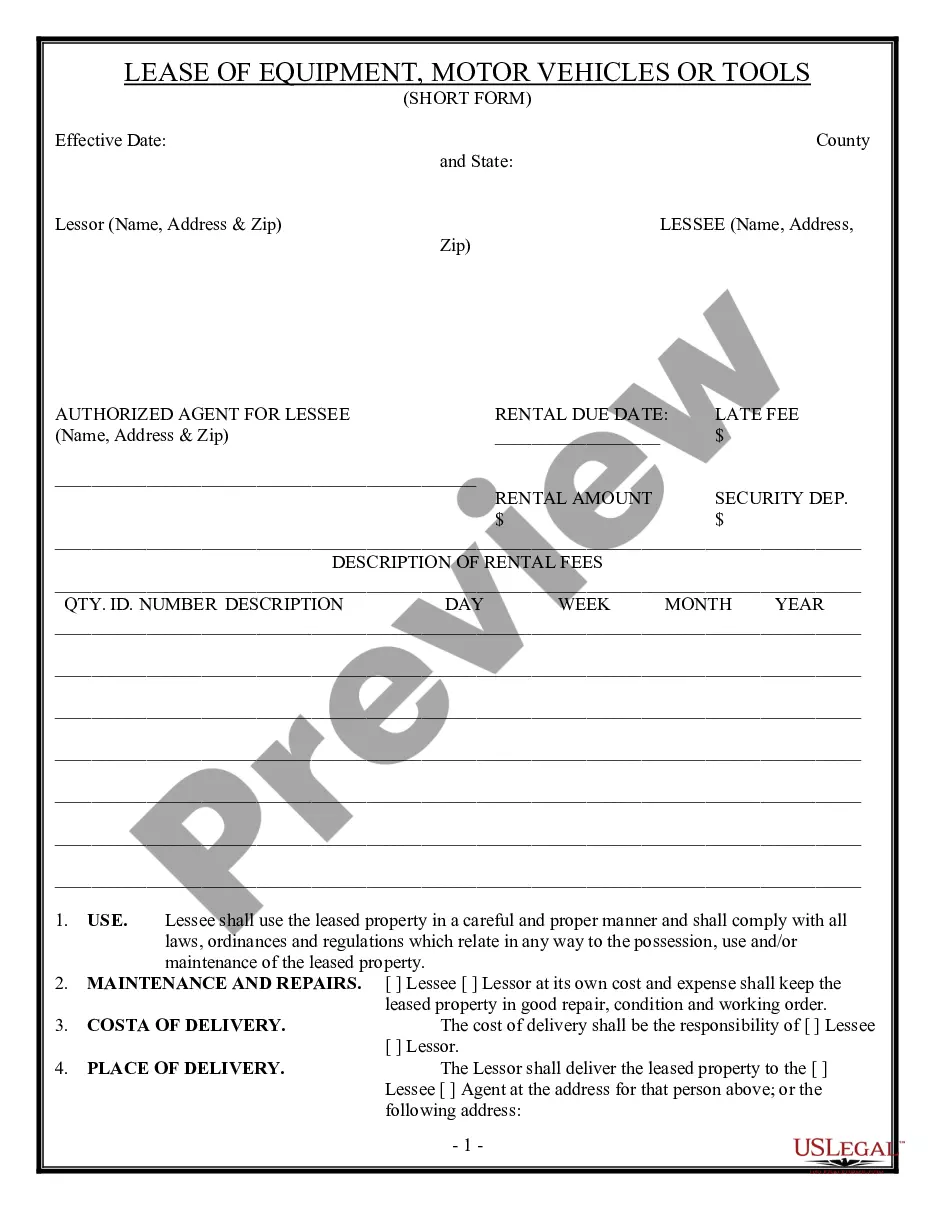
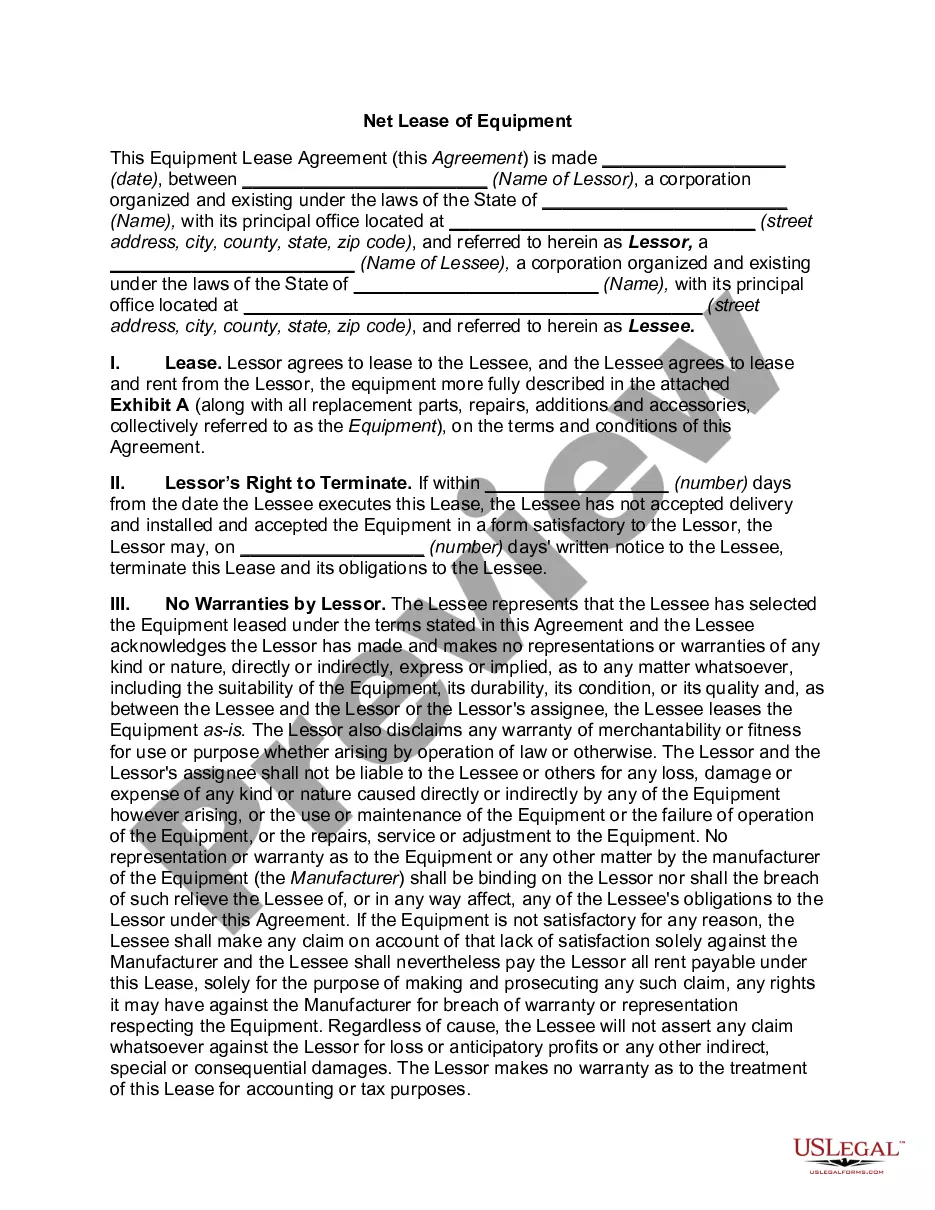
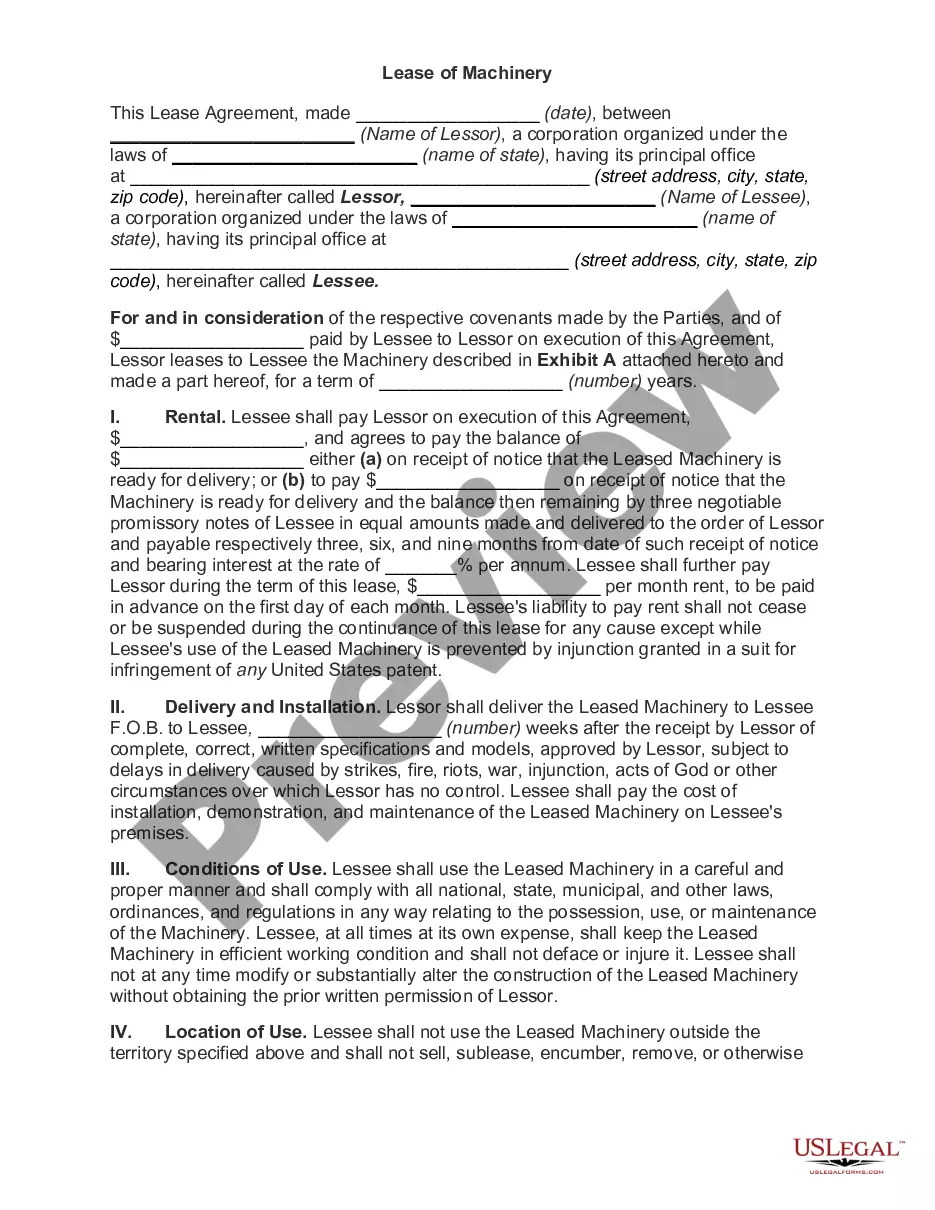
The Lease of Equipment is a legally binding agreement that outlines the terms under which equipment is leased from a lessor to a lessee. It is considered a "true lease," meaning it does not serve as security for a loan. This form provides clarity on the responsibilities of both parties and includes provisions for risks, damage liability, and insurance. Unlike other lease agreements, this form emphasizes compliance with Louisiana's legal standards regarding the leasing of movable properties.
Key components of this form
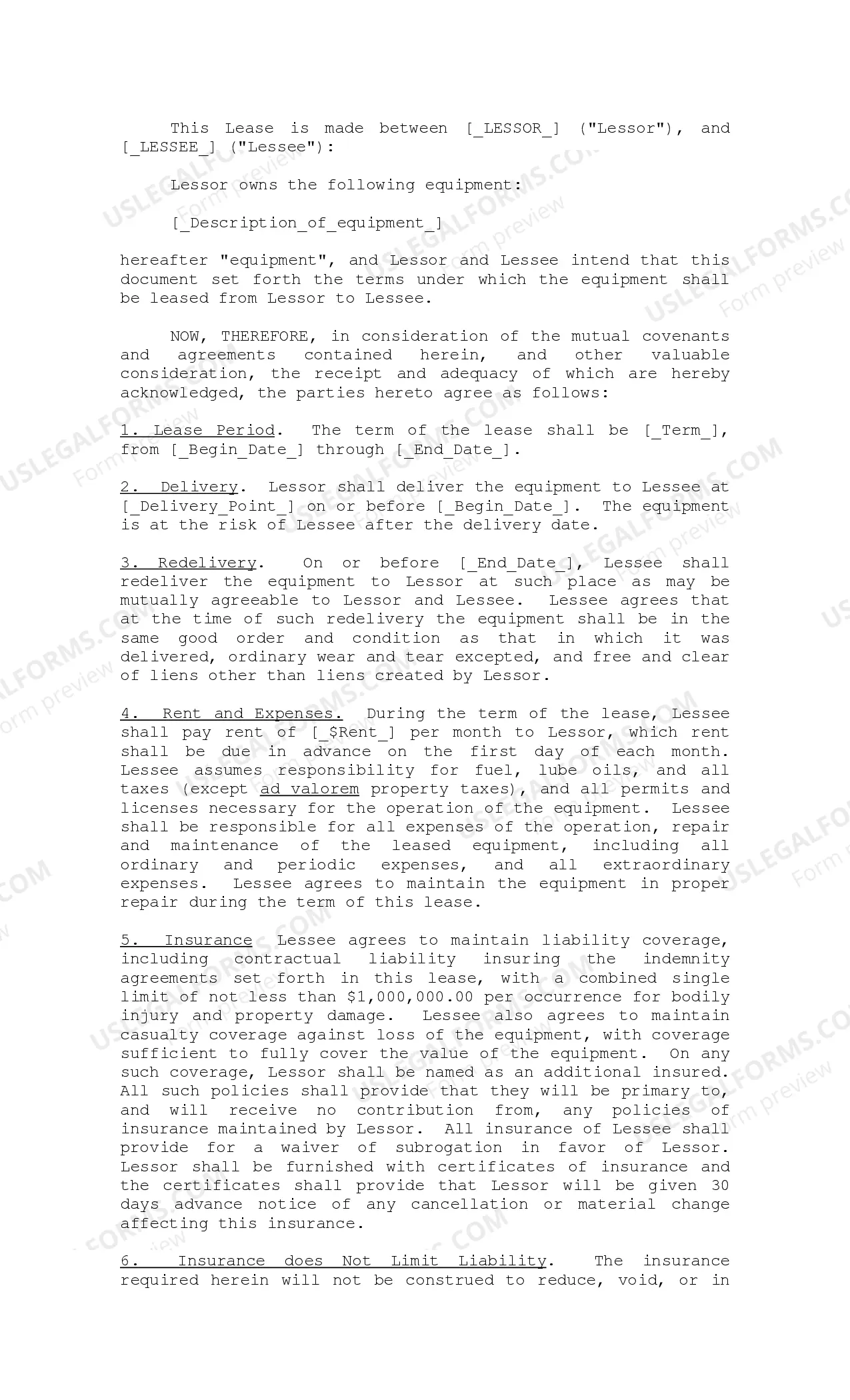
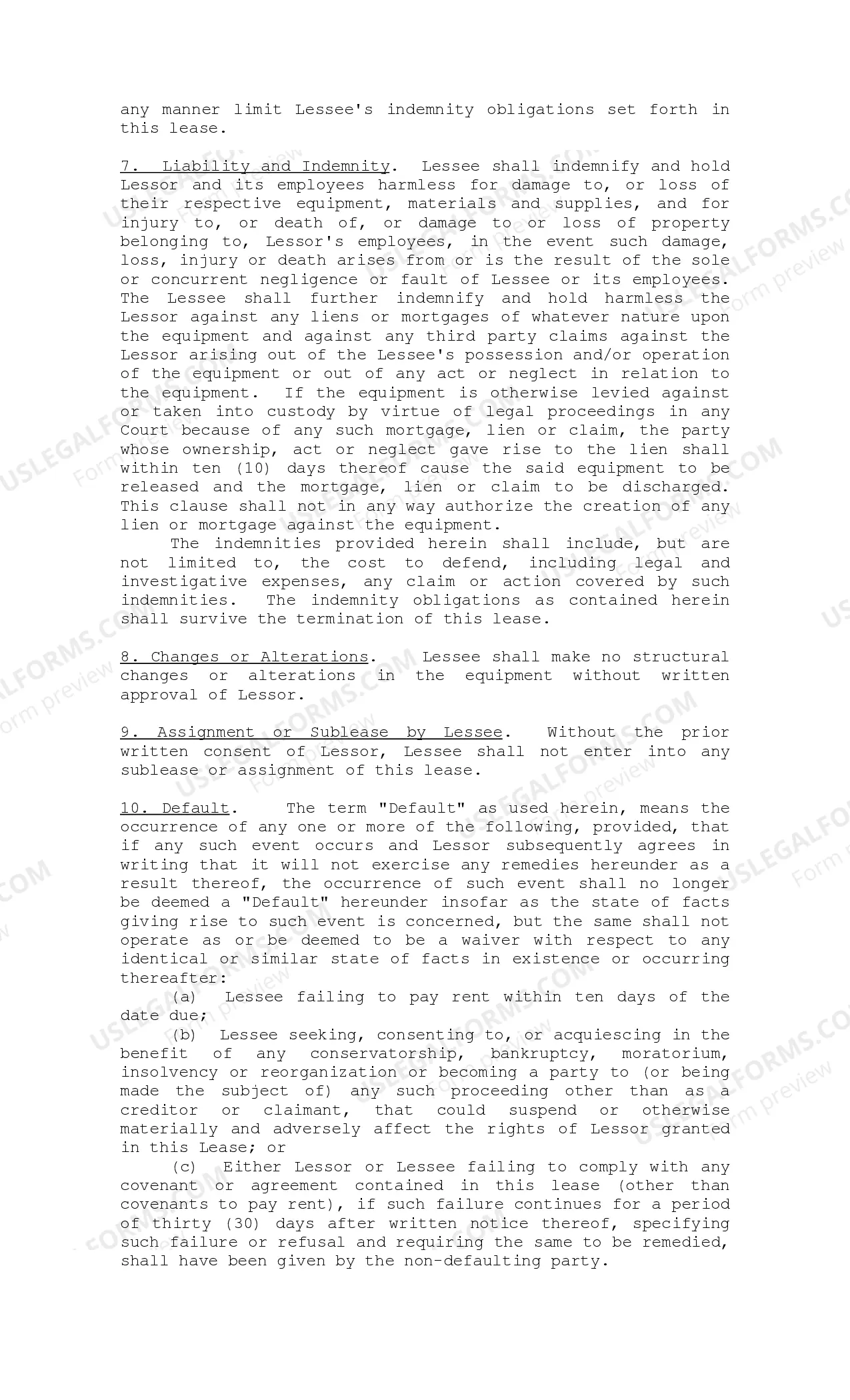
- Lease period: Specifies the duration of the lease, including start and end dates.
- Delivery details: Outlines where and when the equipment will be delivered.
- Rent and expenses: Describes the rental amount due and additional costs assumed by the lessee.
- Insurance requirements: Details the insurance obligations of the lessee, including coverage limits and naming the lessor as an additional insured.
- Indemnity clauses: Defines the lessee's responsibilities for damages and liabilities arising from the use of the equipment.
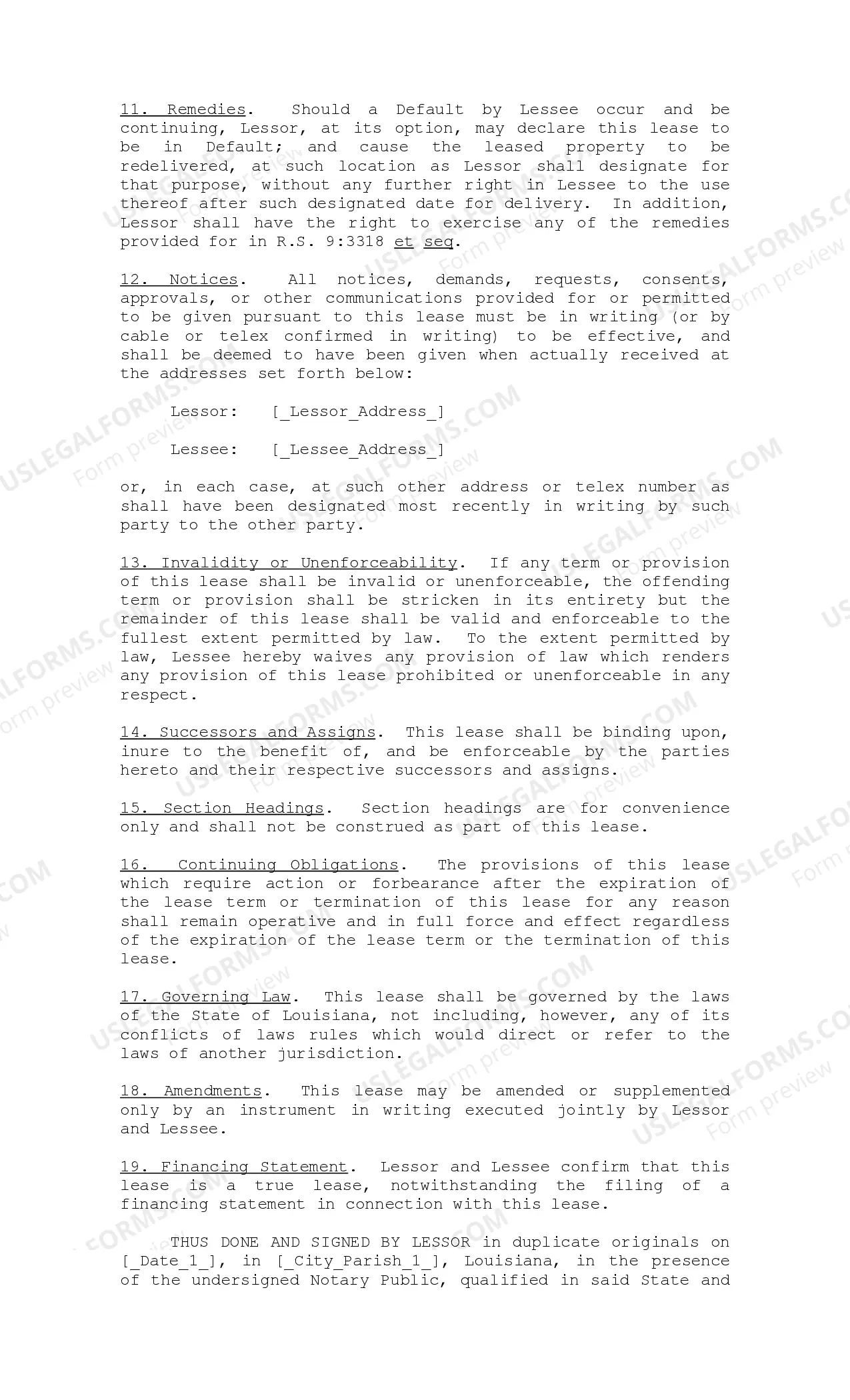
- Default and remedies: Explains the conditions that constitute a default by the lessee and the lessor's remedies in such cases.
When this form is needed
This Lease of Equipment should be used whenever a business or individual wants to lease equipment without transferring ownership. It is particularly useful in scenarios such as construction projects, equipment rental companies, or any situation where specific machinery or devices are required for a limited time. This form ensures both parties understand their rights and obligations, minimizing potential disputes.
Who can use this document
- Businesses renting out equipment to clients.
- Individuals or organizations needing temporary access to specialized equipment.
- Property owners wishing to lease equipment while retaining ownership.
- Anyone involved in a transaction that requires clear delineation of rental terms and responsibilities.
Completing this form step by step
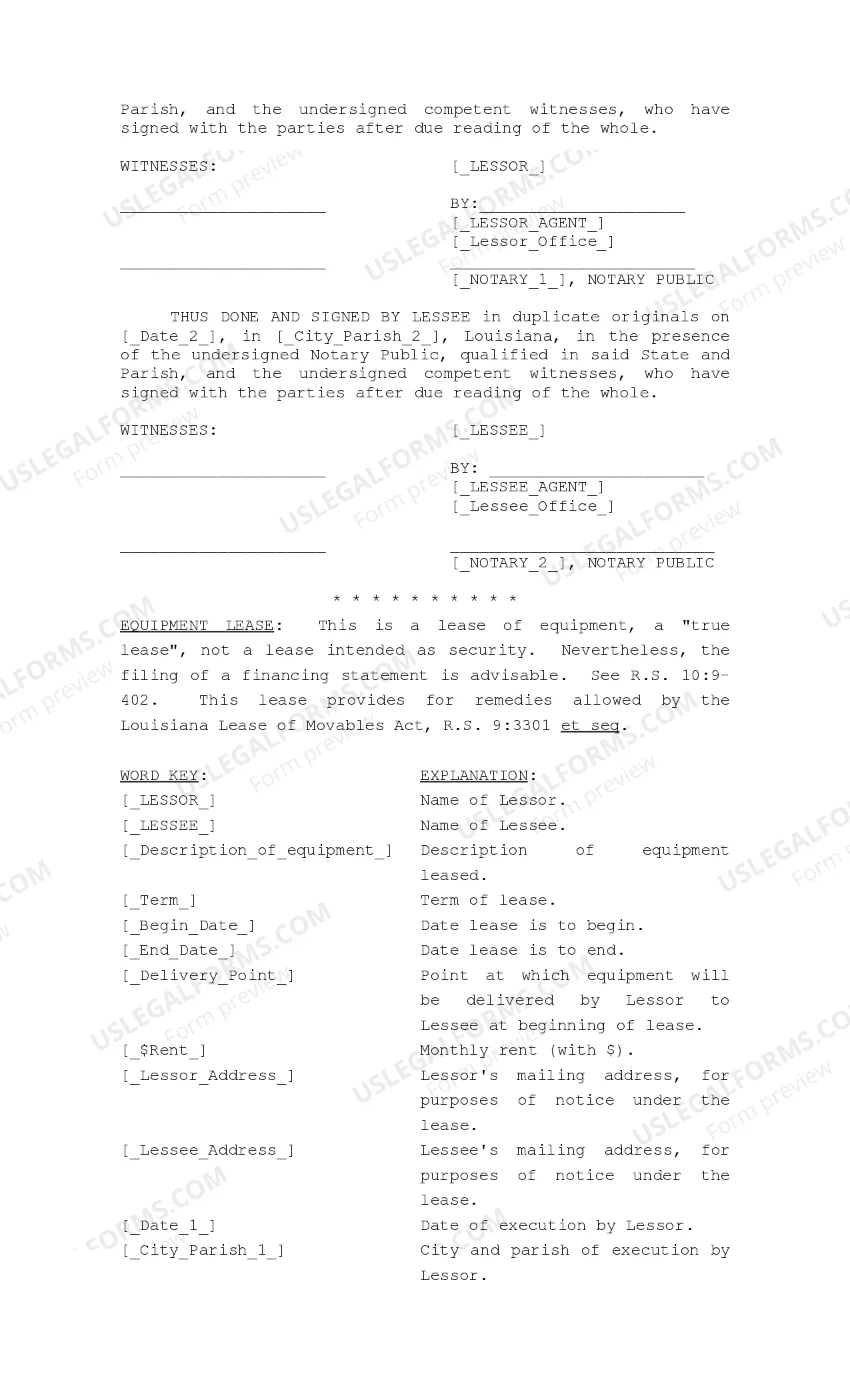
- Identify the parties: Fill in the names and contact information for the lessor and lessee.
- Describe the equipment: Clearly outline the type of equipment being leased.
- Enter the lease period: Specify the start and end dates of the lease.
- Detail the rent and expenses: Indicate the monthly rental amount and any other financial obligations.
- Fill in insurance details: Provide the required insurance coverage amounts and conditions.
- Obtain signatures: Ensure both parties sign the document in the presence of a notary public, if required.
Notarization guidance
To make this form legally binding, it must be notarized. Our online notarization service, powered by Notarize, lets you verify and sign documents remotely through an encrypted video session.
Get your form ready online
Our built-in tools help you complete, sign, share, and store your documents in one place.
Make edits, fill in missing information, and update formatting in US Legal Forms—just like you would in MS Word.
Download a copy, print it, send it by email, or mail it via USPS—whatever works best for your next step.
Sign and collect signatures with our SignNow integration. Send to multiple recipients, set reminders, and more. Go Premium to unlock E-Sign.
If this form requires notarization, complete it online through a secure video call—no need to meet a notary in person or wait for an appointment.
We protect your documents and personal data by following strict security and privacy standards.

Make edits, fill in missing information, and update formatting in US Legal Forms—just like you would in MS Word.

Download a copy, print it, send it by email, or mail it via USPS—whatever works best for your next step.

Sign and collect signatures with our SignNow integration. Send to multiple recipients, set reminders, and more. Go Premium to unlock E-Sign.

If this form requires notarization, complete it online through a secure video call—no need to meet a notary in person or wait for an appointment.

We protect your documents and personal data by following strict security and privacy standards.
Common mistakes
- Failing to clearly describe the equipment, leading to confusion about what is included in the lease.
- Not specifying the rent amount or payment terms, which can cause disputes later.
- Neglecting to include insurance requirements, potentially exposing both parties to financial risk.
- Overlooking the need for notarization, if required, which can affect the enforceability of the lease.
- Not detailing the responsibilities for maintenance and repairs, which can lead to disagreements.
Why complete this form online
- Convenience: Users can fill out and download the lease form from anywhere at any time.
- Editability: Easily customize the form to fit specific needs before finalizing the lease agreement.
- Reliability: Ensure the lease template is drafted by licensed attorneys, adding a layer of legal security.
- Accessibility: Immediate access to legal templates without the need for costly consultations.
Looking for another form?

Form popularity
FAQ
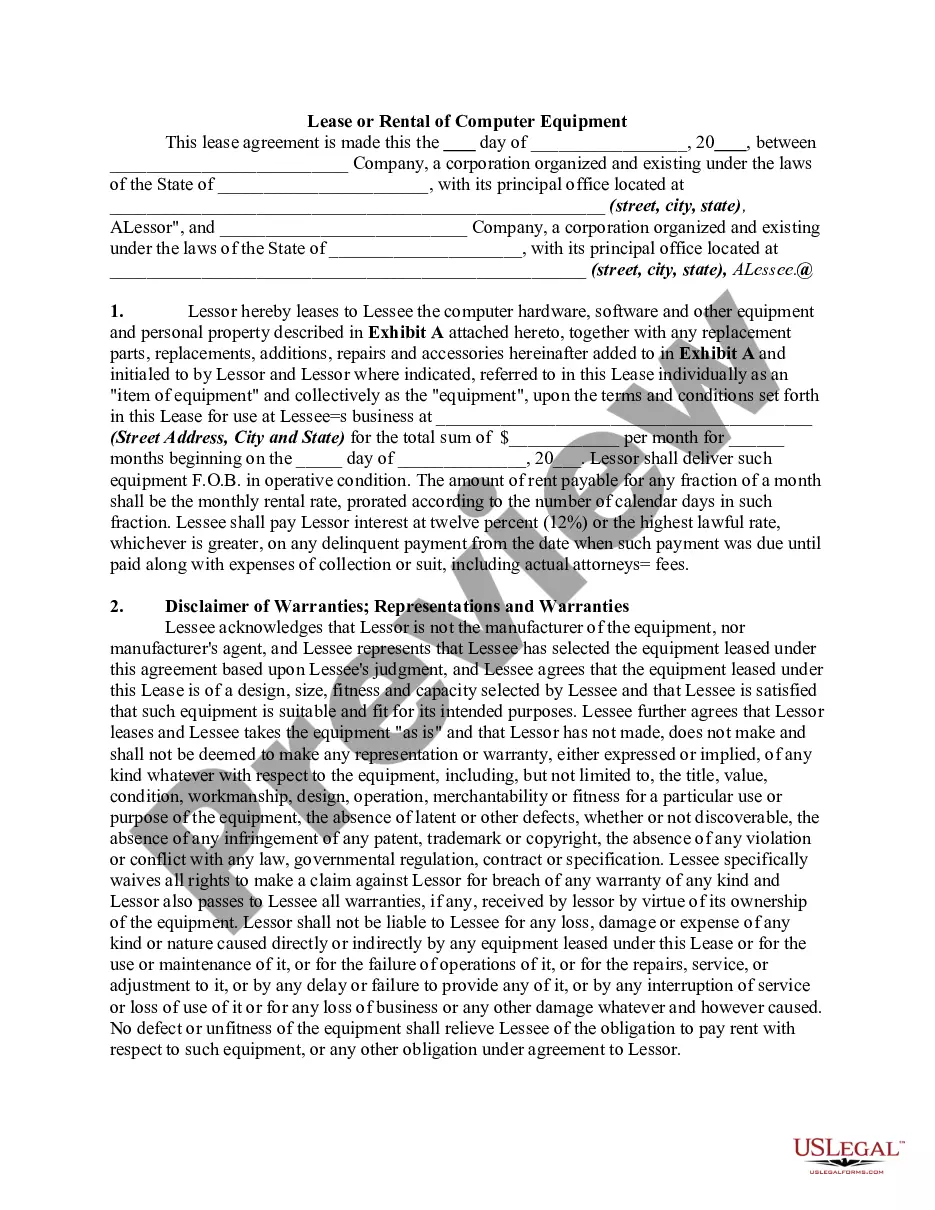
An equipment lease agreement is a contractual agreement where the lessor, who is the owner of the equipment, allows the lessee to use the equipment for a specified period in exchange for periodic payments. The subject of the lease may be vehicles, factory machines, or any other equipment. PP&E is impacted by Capex,.
Use the equation associated with calculating equipment lease payments. Payment = Present Value - (Future Value / ( ( 1 + i ) ^n) / 1- (1 / (1 +i ) ^ n ) / i. In this equation, "i" represent the interest rate as a monthly decimal. Convert the interest rate to a monthly decimal.
Equipment leasing is a type of financing in which the small business owner rents the equipment rather than purchasing it. Business owners can lease expensive equipment such as machinery, vehicles, computers and other tools needed to run a business.
Contents of a lease agreement: Names of the lessor and lessee or their agents. Description of the property. Amount of rent and due dates, grace period, late charges. Mode of rent payment.
At the end of the lease, you typically have the option to purchase the equipment at its fair market value, as determined by the leasing company, renew the lease, or return the equipment. An FMV lease is an operating lease, which means it doesn't offer the benefits or responsibilities of ownership to the small business.
Most lessors earn profit through significant charges outside of the regular term rent stream, including interim rent, retained deposits, fees, lease extensions, non-compliant return charges, fair market value definitions, and end-of-lease buyouts for equipment that cannot be returned.
In simple terms, equipment leasing has some similarities to an equipment loan, however it's the lender that buys the equipment and then leases (rents) it back to you for a flat monthly fee. Most equipment leases come at a fixed interest rate and fixed term to keep those payments the same every month.