Louisiana Paternity Law and Procedure Handbook
What is this form?
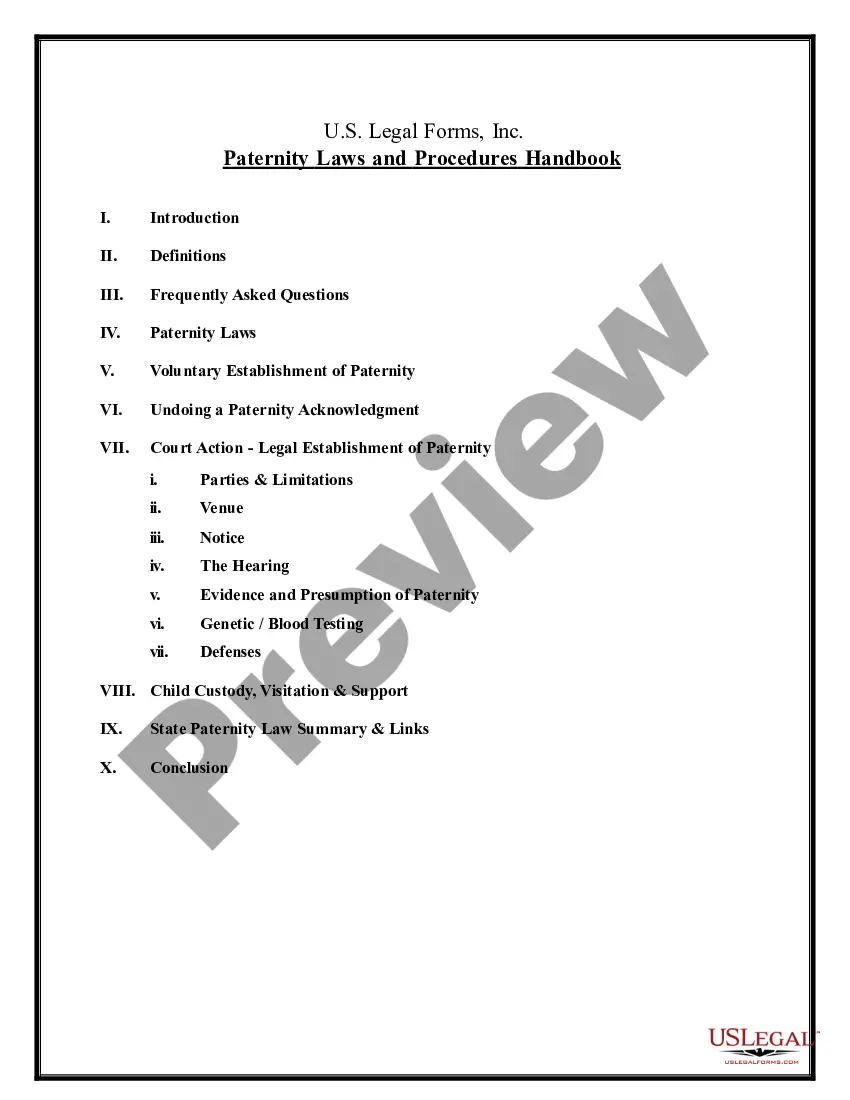
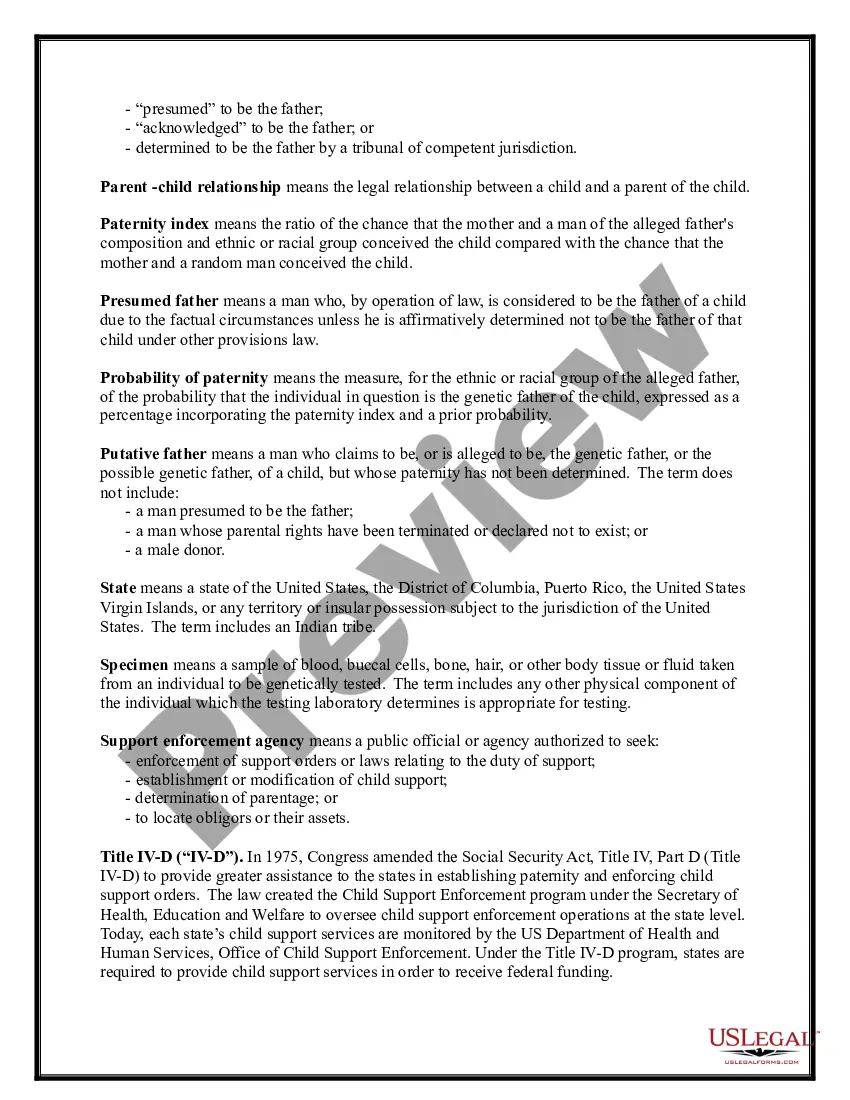
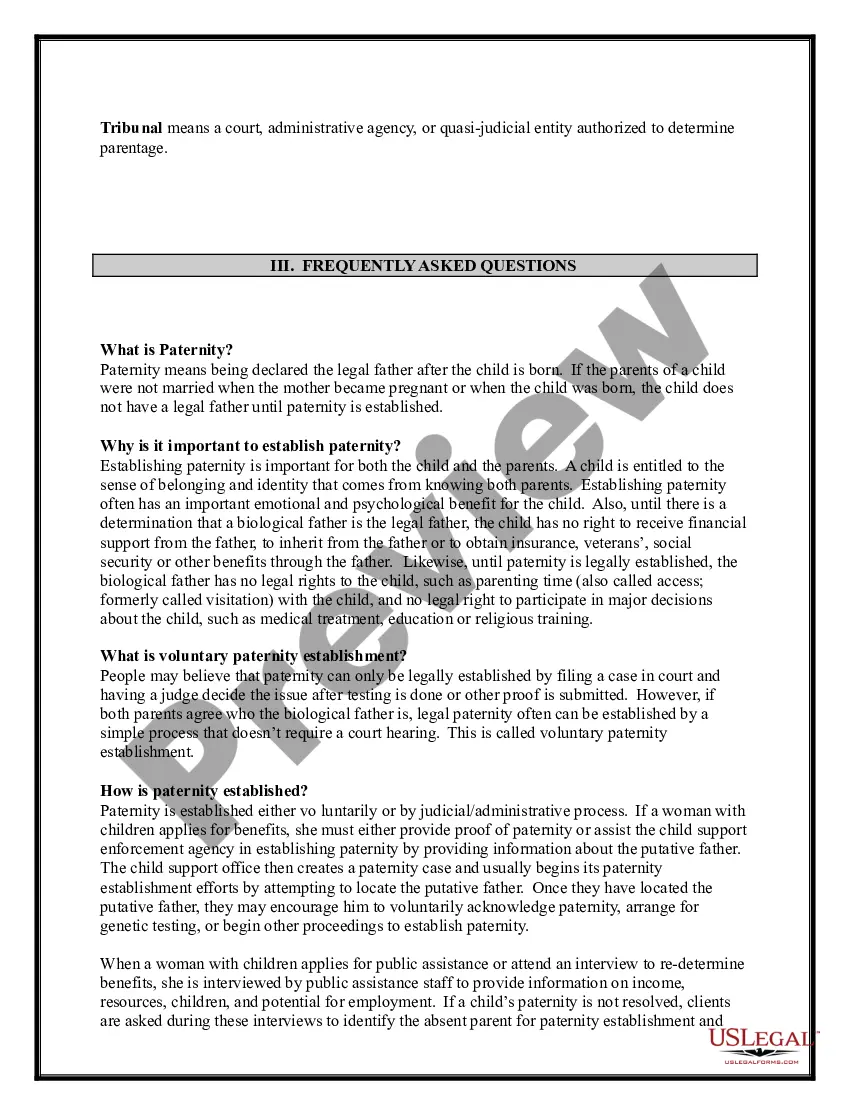
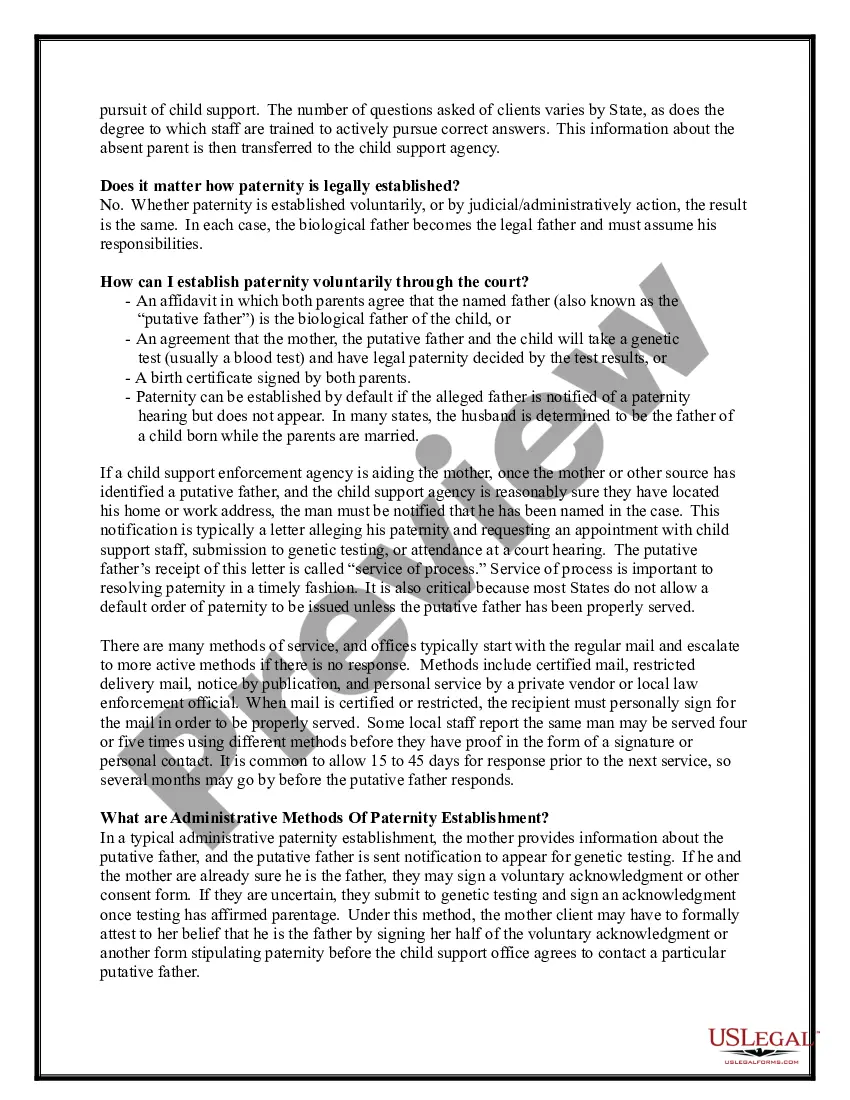
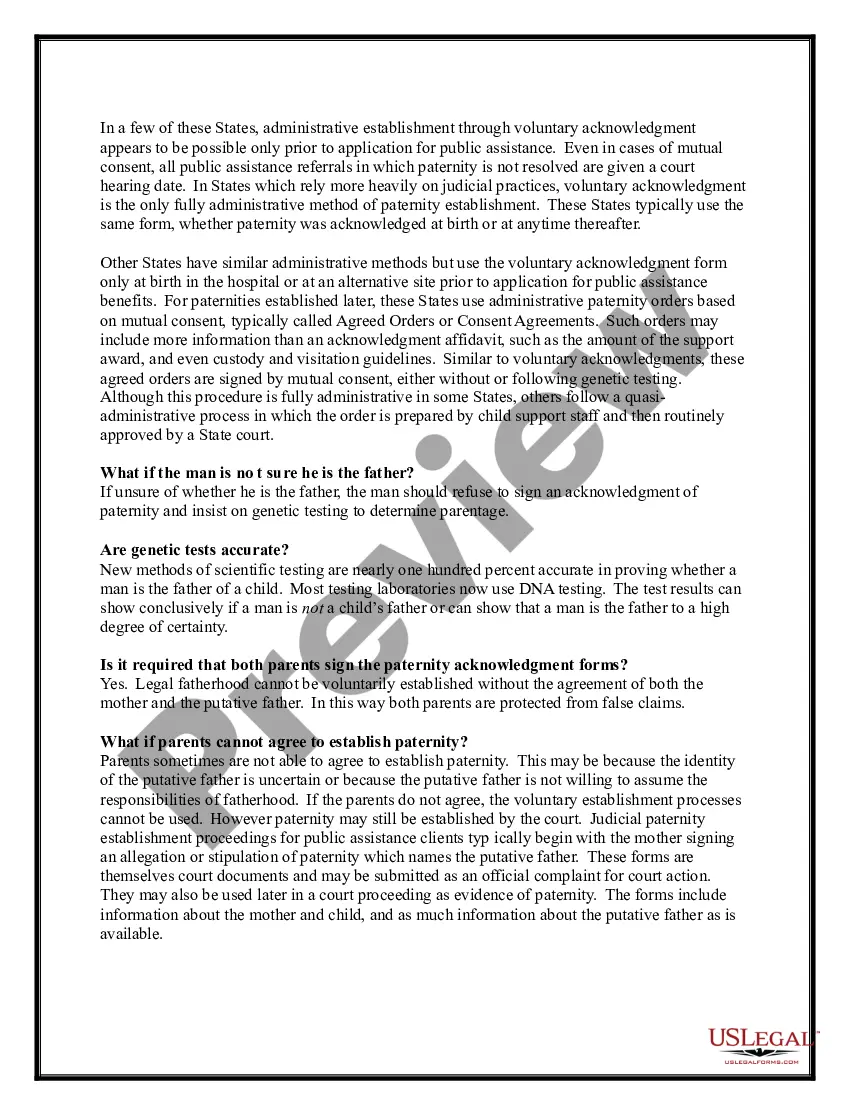
The Paternity Law and Procedure Handbook is a comprehensive guide designed to help individuals understand the legal processes surrounding the establishment of paternity. This handbook provides clear and accessible information regarding state-specific paternity laws, voluntary establishment methods, court actions, and genetic testing procedures. It is not a legal form itself but serves as a valuable resource for anyone navigating the complexities of paternity issues across different U.S. states.
Main sections of this form
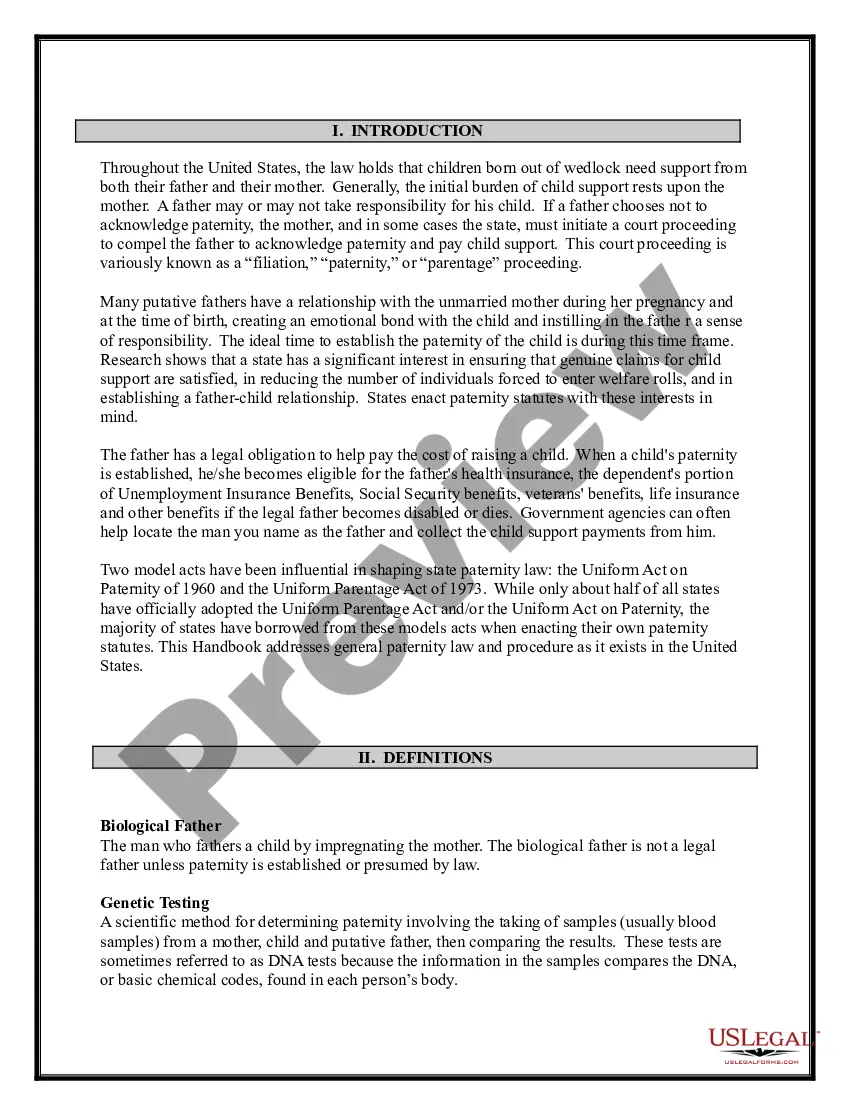
- Introduction to paternity laws and obligations in the U.S.
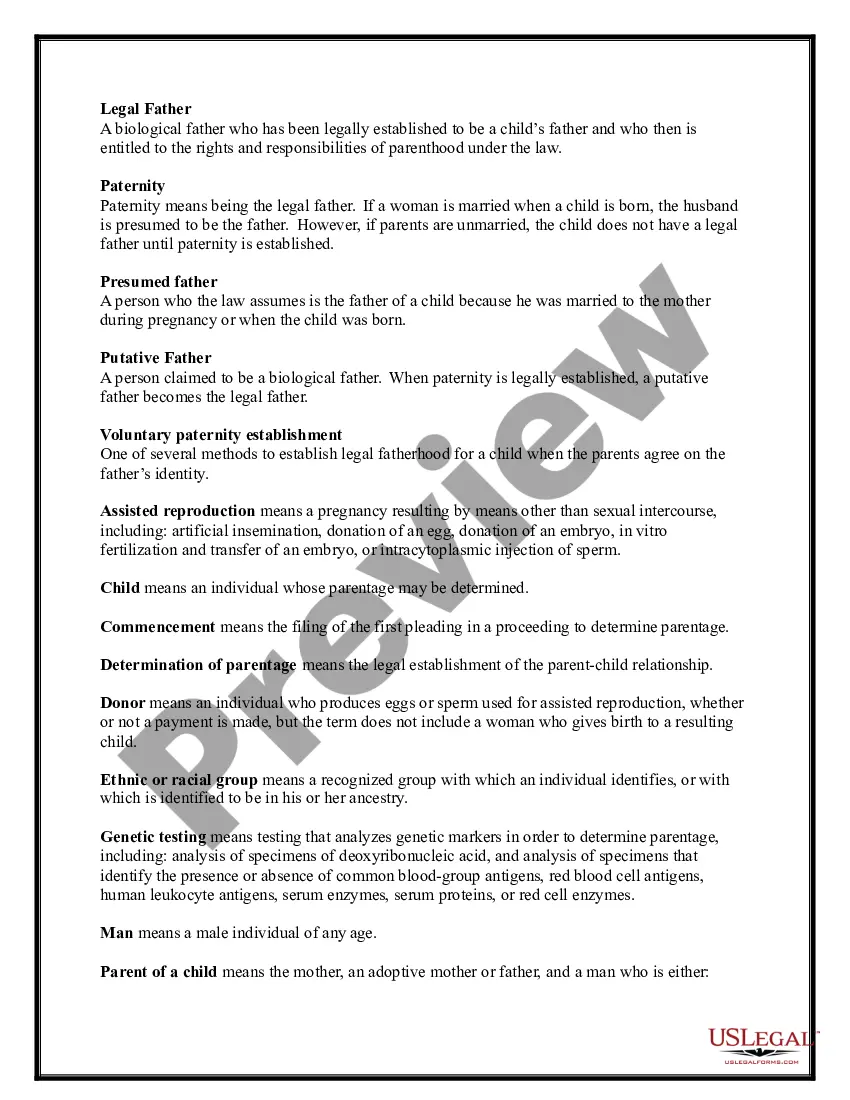
- Definitions of key terms such as biological father, legal father, and putative father.
- A detailed FAQ section addressing common concerns about establishing paternity.
- Information on voluntary establishment of paternity and court actions for legal recognition.
- Summary of state-specific paternity laws and links to relevant resources.


When this form is needed
This handbook is essential for mothers seeking to establish the legal paternity of their child, fathers wanting to assert their paternity rights, or anyone involved in custody and child support arrangements. It is useful for understanding the steps needed when paternity is contested or when seeking legal recognition of a father-child relationship in various states.
Who this form is for
- Unmarried parents looking to establish paternity.
- Individuals seeking to understand the implications of paternity on child support and custody.
- Legal representatives or attorneys needing a supportive resource for their clients.
- Any person involved in a paternity dispute or seeking information about their rights and responsibilities regarding paternity.
Steps to complete this form
- Read the introduction and definitions to understand paternity terminology.
- Review the FAQ section for common questions and scenarios related to paternity.
- Follow the guidelines for voluntary paternity establishment if both parents agree on the father's identity.
- Understand the steps necessary for instituting a court action if paternity is disputed.
- Consult state resources linked within the handbook for specific procedural requirements.
Does this form need to be notarized?
This form does not typically require notarization to be legally valid. However, some jurisdictions or document types may still require it. US Legal Forms provides secure online notarization powered by Notarize, available 24/7 for added convenience.
Get your form ready online
Our built-in tools help you complete, sign, share, and store your documents in one place.
Make edits, fill in missing information, and update formatting in US Legal Forms—just like you would in MS Word.
Download a copy, print it, send it by email, or mail it via USPS—whatever works best for your next step.
Sign and collect signatures with our SignNow integration. Send to multiple recipients, set reminders, and more. Go Premium to unlock E-Sign.
If this form requires notarization, complete it online through a secure video call—no need to meet a notary in person or wait for an appointment.
We protect your documents and personal data by following strict security and privacy standards.

Make edits, fill in missing information, and update formatting in US Legal Forms—just like you would in MS Word.

Download a copy, print it, send it by email, or mail it via USPS—whatever works best for your next step.

Sign and collect signatures with our SignNow integration. Send to multiple recipients, set reminders, and more. Go Premium to unlock E-Sign.

If this form requires notarization, complete it online through a secure video call—no need to meet a notary in person or wait for an appointment.

We protect your documents and personal data by following strict security and privacy standards.
Typical mistakes to avoid
- Failing to acknowledge paternity voluntarily when both parents agree.
- Not pursuing genetic testing when paternity is disputed.
- Missing the timeframe to contest an acknowledgment of paternity.
- Assuming all states have the same laws regarding paternity establishment.
Why complete this form online
- Easy access to crucial information without needing to visit legal offices.
- Downloadable content allows users to review materials at their convenience.
- Up-to-date legal resources reflecting current state laws and procedures.
Looking for another form?
Form popularity
FAQ
There are two methods that unmarried Louisiana couples with a baby can take to establish paternity: the parents can sign an affidavit of acknowledgement, or the question of the baby's paternity can be adjudicated (decided) by a judge of district court after someone files a paternity lawsuit.
What Is Reasonable Access for Fathers? The law states that parents are entitled to reasonable access to their children. Unfortunately, there is no one-size-fits-all approach to this every family is unique and what is reasonable for one family will seem extraordinary to another.
Birth certificate. If a birth certificate declares the father and he signs it, this is a legally binding qualification of paternity. DNA test. Court order.
In cases where parents can't agree, a judge will decide visitation and custody based on the child's best interests.Both parents are bound by the terms of a custody order. If your child refuses to go to visits with the other parent, you could still be on the hook for failing to comply with a custody order.
The legal definition of an unfit parent is when the parent through their conduct fails to provide proper guidance, care, or support. Also, if there is abuse, neglect, or substance abuse issues, that parent will be deemed unfit.
Once you establish legal paternity, the mother cannot move away with the child over the father's objection without leave of court. However, if you do not establish paternity, the mother can move away or deny visitation rights, regardless of the father's objections.
Some judges have stated that a 5-year-old child is too young to have an opinion on custody and won't consider such a young child's opinion at all. If the child is at least 12 years old, courts will usually give the child's preference some weight. Courts don't have to follow a child's custodial preference.
When children are born, they naturally form an automatic, strong, and loving bond with their parents.When it comes to parental rights, a Louisiana father's right to custody and visitation is equal to that of a child's mother, whether the father is aware of these rights or not.
Jointly registering the birth of the child with the mother (from 1 December 2003) getting a parental responsibility agreement with the mother. getting a parental responsibility order from a court.