Louisiana Notice of Application for Authority to Grant an Office Lease on Succession Property
Overview of this form
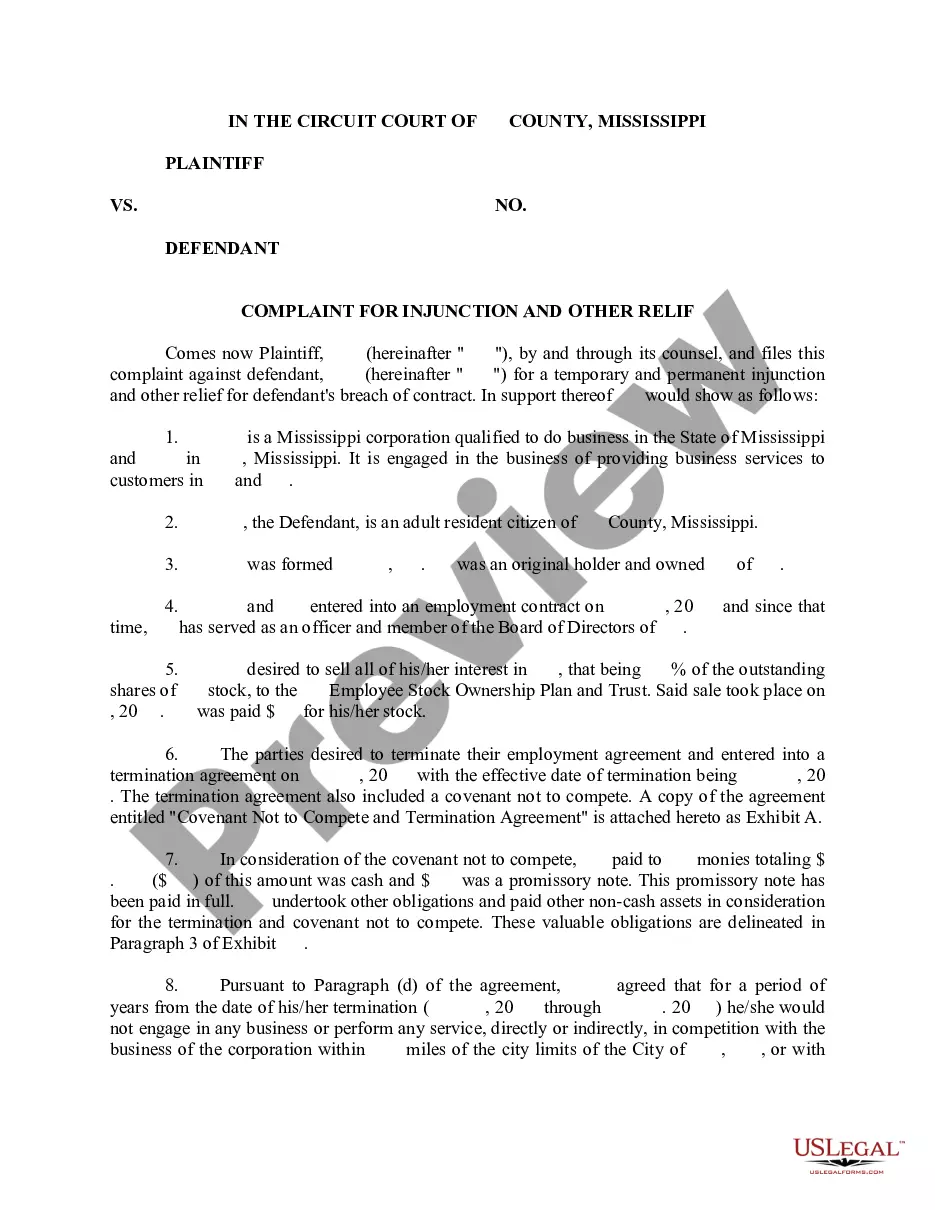
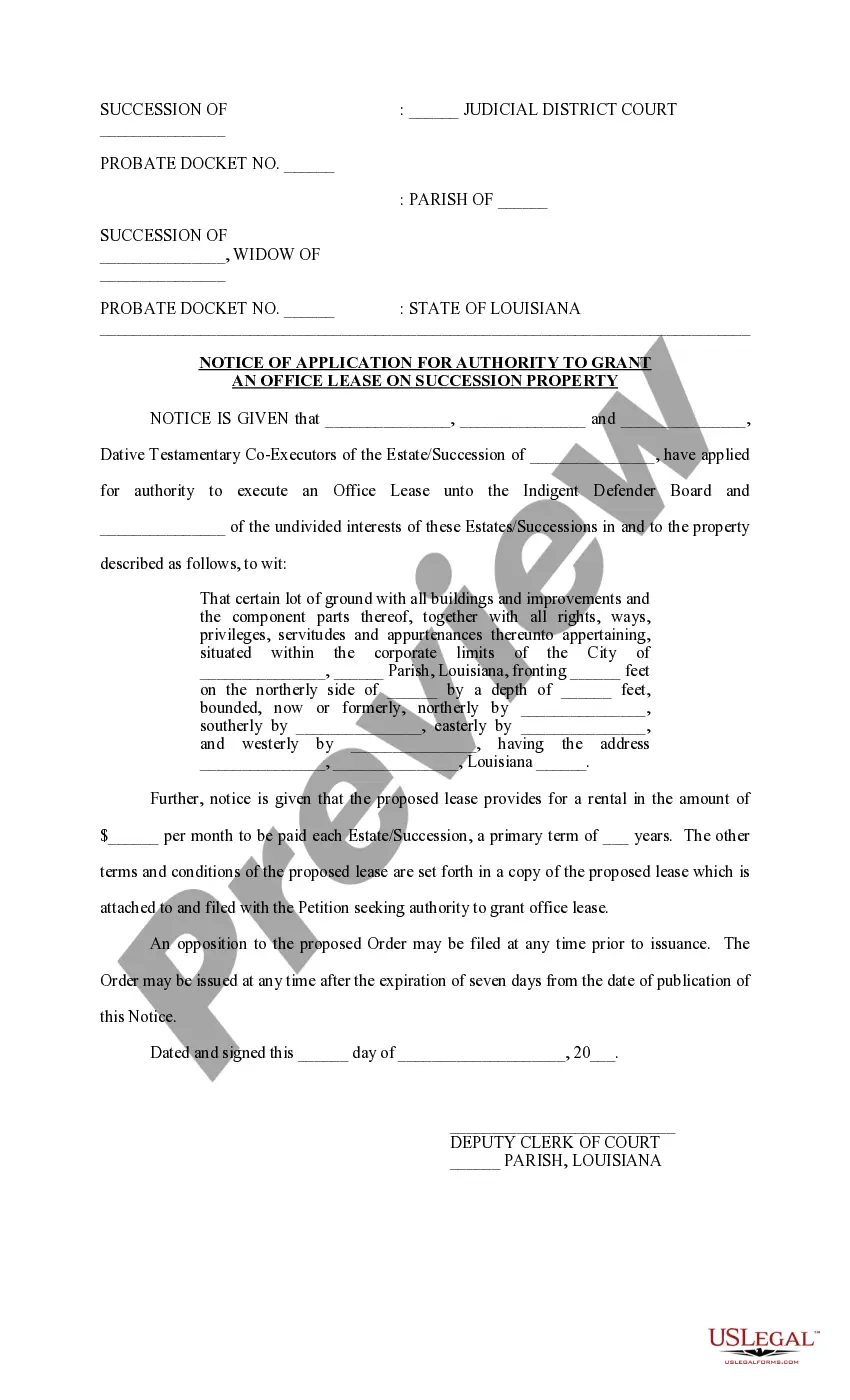
The Notice of Application for Authority to Grant an Office Lease on Succession Property is a legal notice used to inform interested parties about a proposed lease of property that is part of a succession. This form outlines the details of the property and the lease terms, differentiating it from other lease forms by focusing specifically on succession properties and their management after an individual's passing.
Form components explained
- Probate docket number for identification
- Names of co-executors managing the estate
- Description of the property being leased
- Terms of the proposed office lease, including rental amount
- Timeline for publication and opposition period

When this form is needed
This form should be used when co-executors of an estate want to lease an office space that is part of a succession property. If the lease is contested, this notice details the process for filing an opposition. It is typically used in probate situations where clear communication about property management is essential for all involved parties.
Intended users of this form
- Co-executors or administrators of an estate
- Individuals managing succession properties in Louisiana
- Parties interested in leasing property from a succession
Steps to complete this form
- Identify the probate docket number and relevant parties involved.
- Provide a clear description of the property, including its address and dimensions.
- State the proposed rental amount and duration of the lease.
- Specify the terms and any additional conditions associated with the lease.
- Complete the required signatures from the co-executors and the Deputy Clerk of Court.
Does this form need to be notarized?
This document requires notarization to meet legal standards. US Legal Forms provides secure online notarization powered by Notarize, allowing you to complete the process through a verified video call, available 24/7.
Get your form ready online
Our built-in tools help you complete, sign, share, and store your documents in one place.
Make edits, fill in missing information, and update formatting in US Legal Forms—just like you would in MS Word.
Download a copy, print it, send it by email, or mail it via USPS—whatever works best for your next step.
Sign and collect signatures with our SignNow integration. Send to multiple recipients, set reminders, and more. Go Premium to unlock E-Sign.
If this form requires notarization, complete it online through a secure video call—no need to meet a notary in person or wait for an appointment.
We protect your documents and personal data by following strict security and privacy standards.

Make edits, fill in missing information, and update formatting in US Legal Forms—just like you would in MS Word.

Download a copy, print it, send it by email, or mail it via USPS—whatever works best for your next step.

Sign and collect signatures with our SignNow integration. Send to multiple recipients, set reminders, and more. Go Premium to unlock E-Sign.

If this form requires notarization, complete it online through a secure video call—no need to meet a notary in person or wait for an appointment.

We protect your documents and personal data by following strict security and privacy standards.
Typical mistakes to avoid
- Leaving out critical information about the property description or lease terms.
- Failing to mention the proper probate docket number.
- Not adhering to the publication timeline for the notice.
Benefits of completing this form online
- Convenient access to professionally drafted legal forms tailored to your needs.
- Editable format allows for easy customization to fit your specific situation.
- Reliable templates ensure compliance with state-specific regulations.
Key takeaways
- The form serves as a legal notice regarding leasing succession property.
- It allows for public notification and potential opposition to the lease.
- Completion and submission must comply with Louisiana probate laws.
Looking for another form?
Form popularity
FAQ
The time it takes to get probate or letters of administration varies according to the circumstances. It may only take three to five weeks if there are no complications, inheritance tax is not payable, the estate is straightforward and all forms are filled in properly.
Determine who has priority to serve. State law establishes the qualifications for an administrator and sets the order of priority that the court must follow in making an appointment. Prepare to file a petition to administer. Collect the necessary information. File the petition with the court.
Appointment of Executor or Administrator In the absence of a will, the court appoints an administrator for the estate, typically the next of kin. Completion of the executor or administrator appointment takes about six to eight weeks once the executor files the petition or the court makes a selection.
By the time the executor takes inventory and creditors have an opportunity to submit claims, it will be at least six months. Expect succession to take from six months to a year before the final assets may be distributed to the heirs. In complicated situations, that timeline may be extended to several years.
Normally, one or more of the executors named in the will applies for the grant of probate. Otherwise (if the person died without a will or the will did not appoint executors) a beneficiary or relative can be the administrator and can apply for letters of administration.
Typically, it takes four to six weeks after the decedent's death to appoint an executor or administrator. Even in the most routine probates, the law requires a minimum four-month wait after the Notice to Creditors has been issued before any action can be taken to distribute or close the estate.
To be appointed executor or personal representative, file a petition at the probate court in the county where your loved one was living before they died. In the absence of a will, heirs must petition the court to be appointed administrator of the estate.
In Louisiana, your children are forced heirs if, at the time of your death, they have not attained age 24. Children of any age, who because of mental incapacity or physical infirmity, are permanently incapable of taking care of their person or administering their estate at the time of your death are also forced heirs.
To be appointed executor or personal representative, file a petition at the probate court in the county where your loved one was living before they died. In the absence of a will, heirs must petition the court to be appointed administrator of the estate.