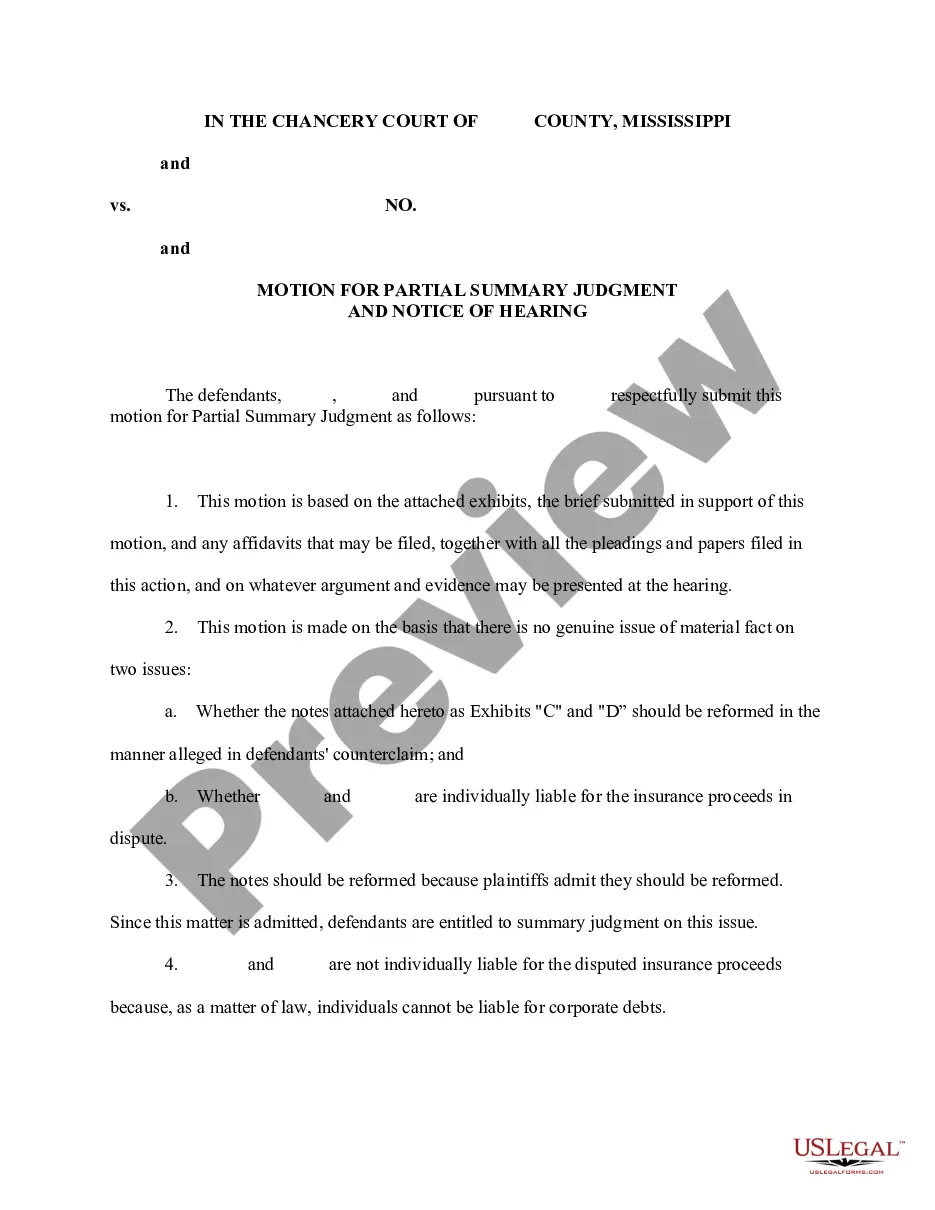
Louisiana Letter to Client regarding Oversight and Case Status for Divorce
Understanding this form
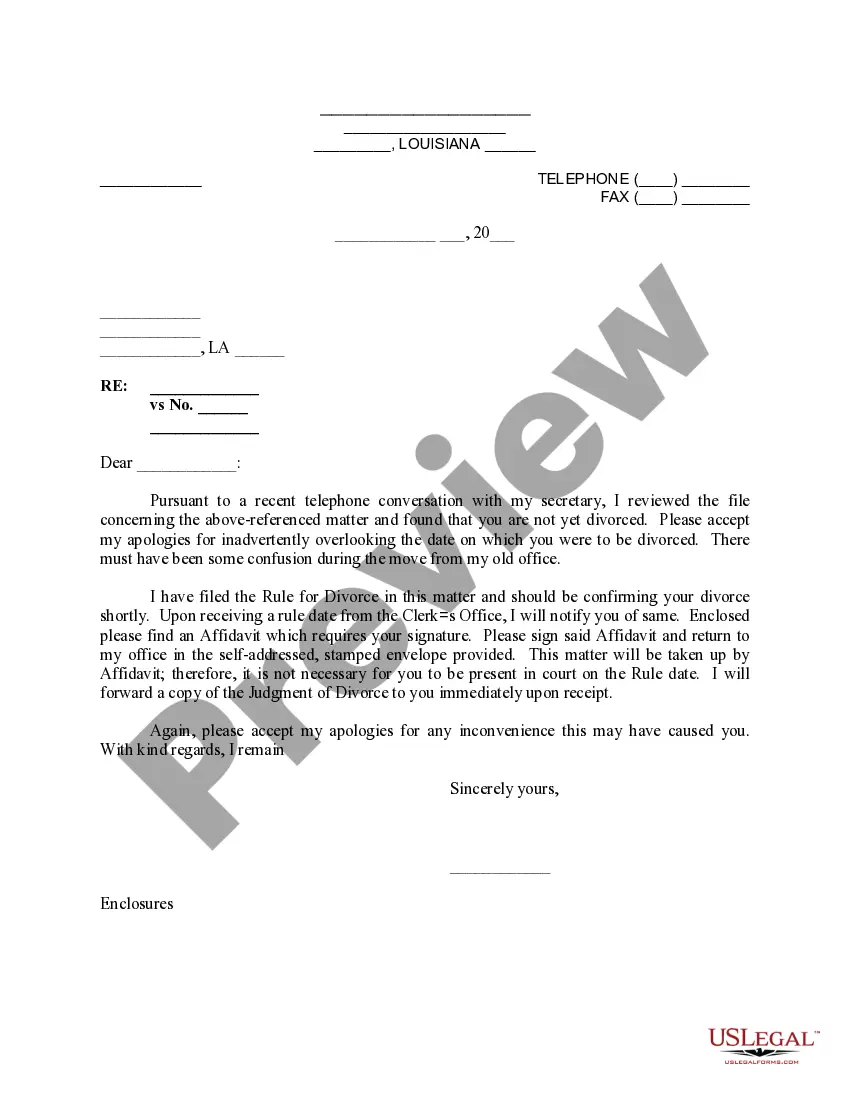
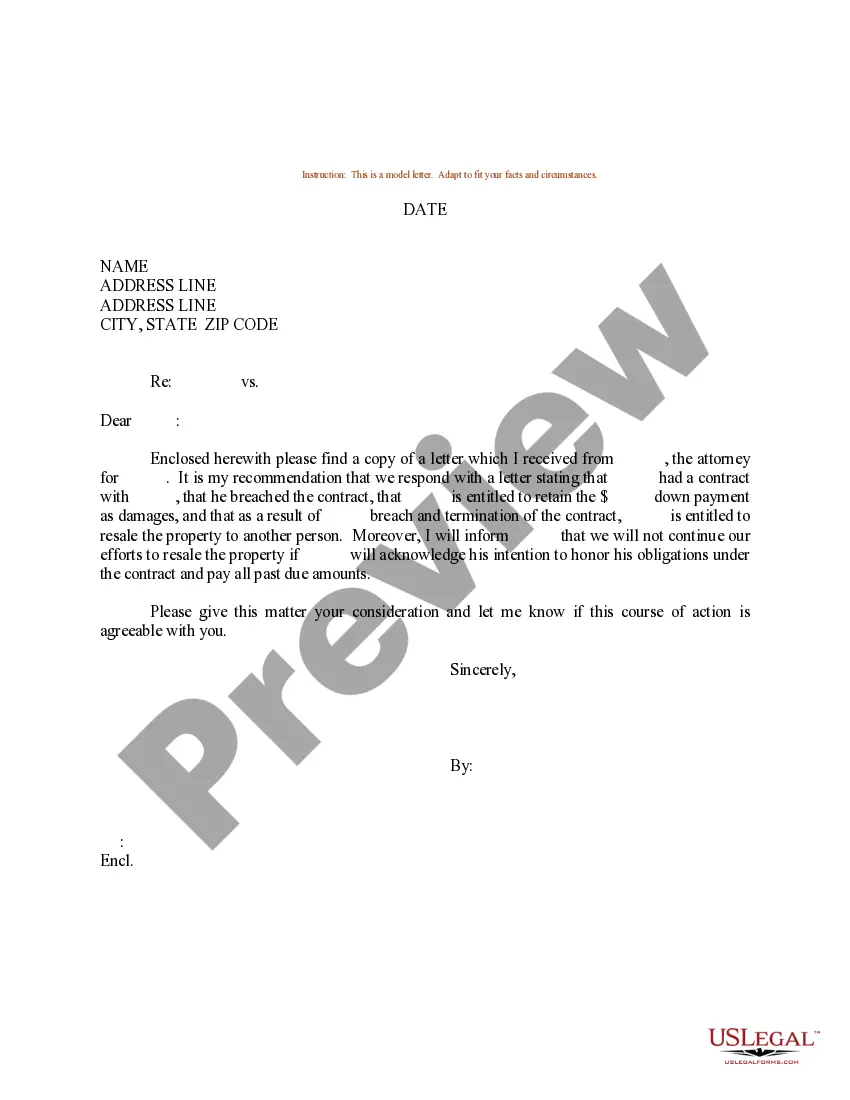
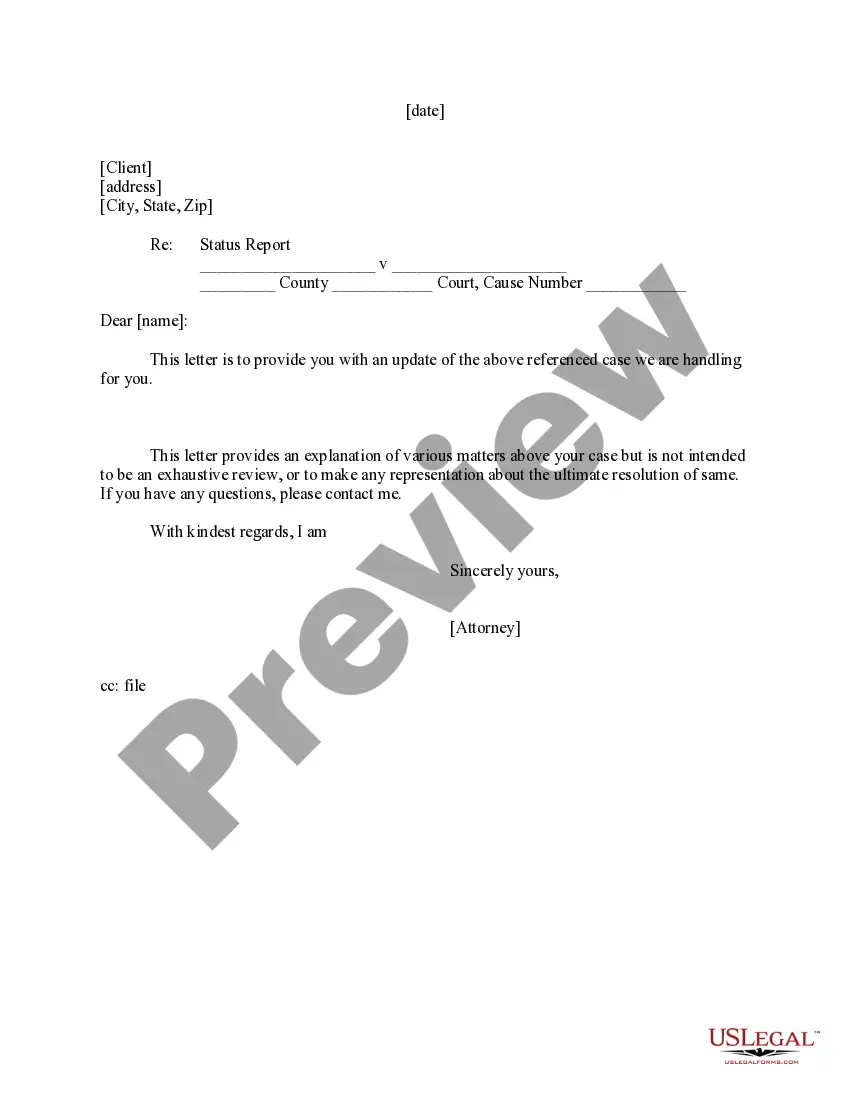
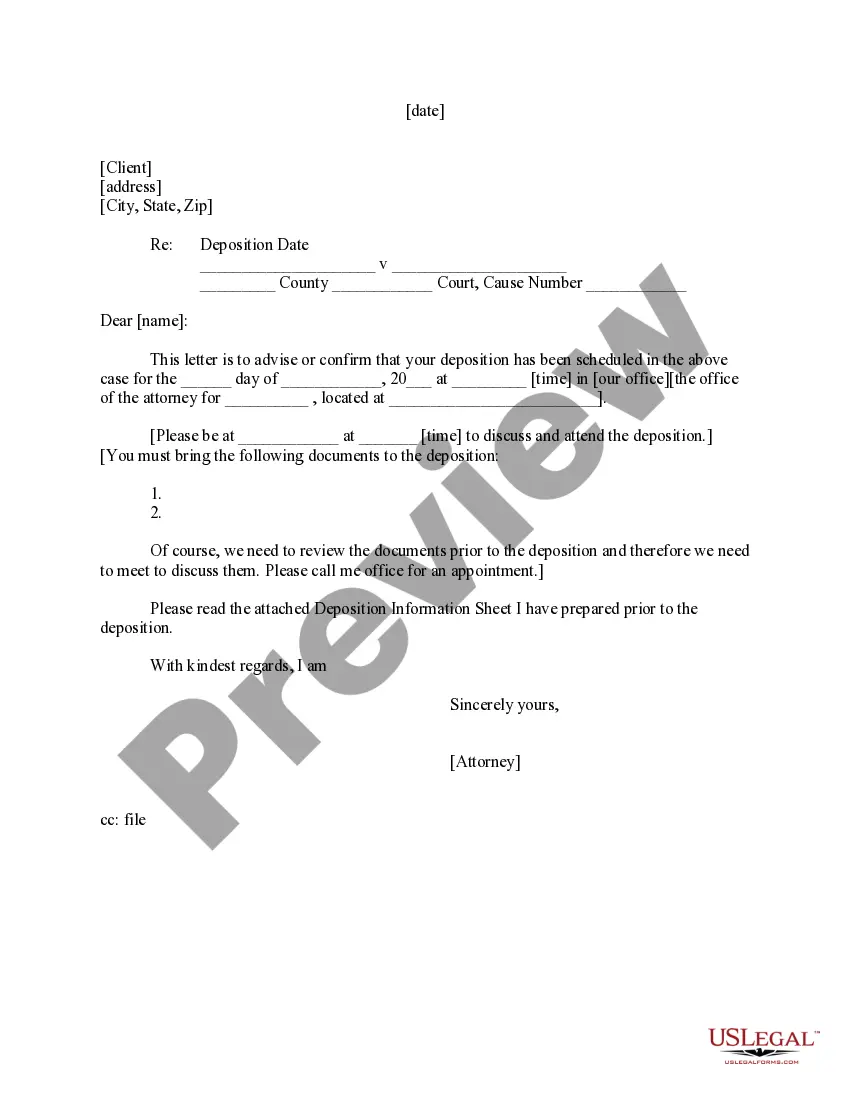
This form is a Letter to Client regarding Oversight and Case Status for Divorce. It is used by attorneys to communicate with clients about their divorce case, particularly to address any oversights that may have occurred during the case proceedings. This form is unique as it provides an official apology for delays, reassures the client about the status of their divorce, and includes the necessary steps to finalize the process.
Key components of this form
- Letterhead including the attorney's contact information
- Date of correspondence and case details
- Apology for oversight regarding divorce filing
- Confirmation that the Rule for Divorce has been filed
- Instructions for client regarding an Affidavit
- Assurance of further updates on case status
Situations where this form applies
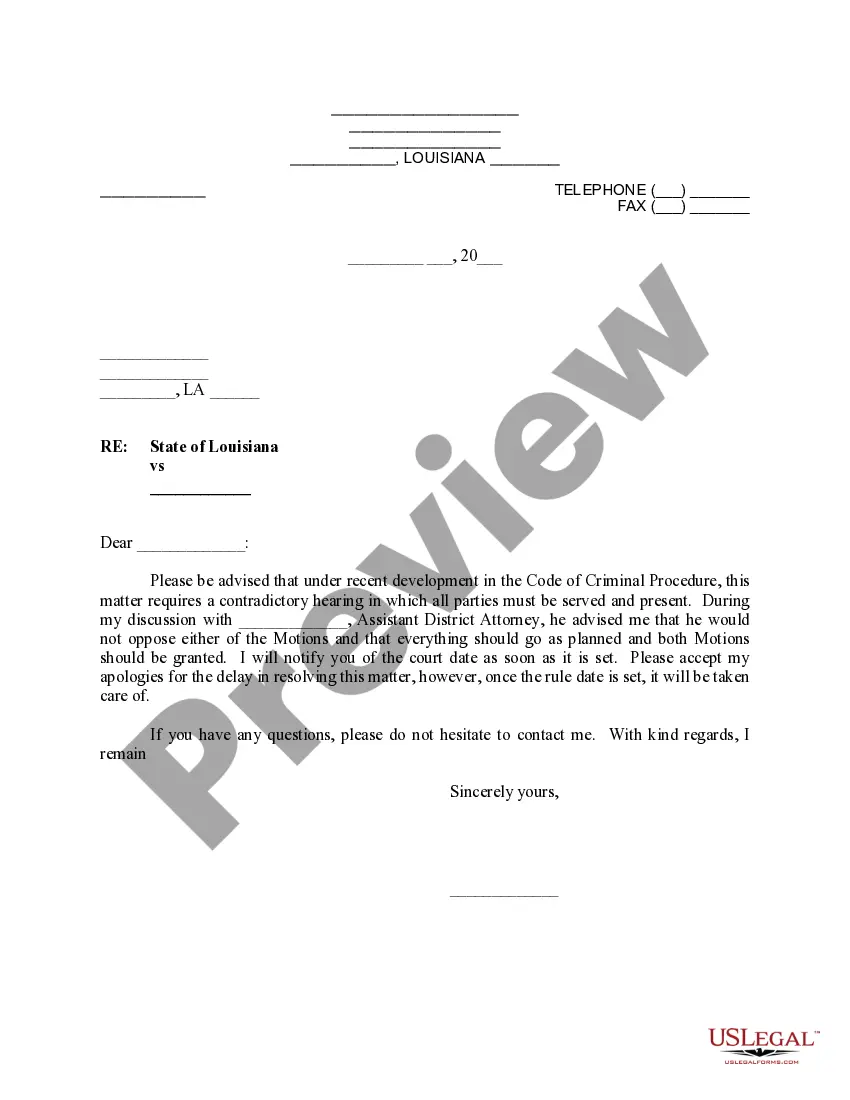
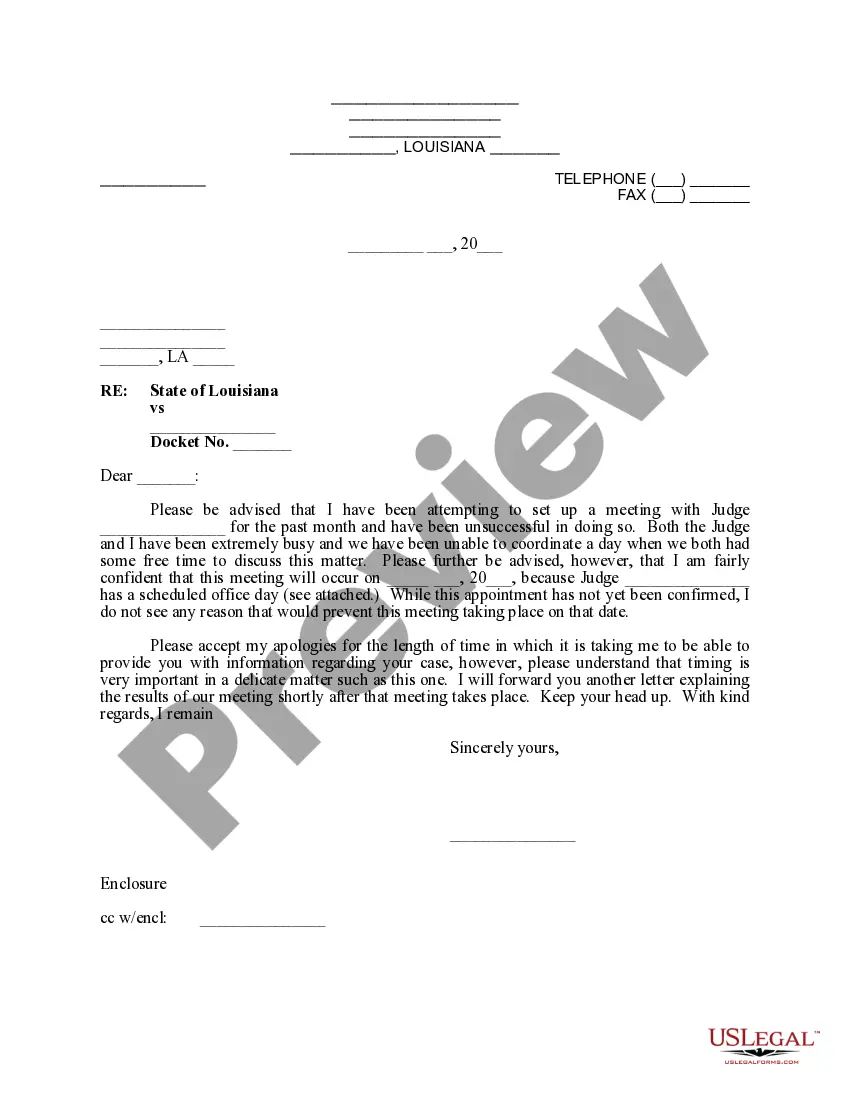
This letter is necessary when an attorney needs to inform a client about an oversight in their divorce filing. It is especially useful when a delay occurs that affects the case timeline, allowing the attorney to maintain client trust and provide clarity moving forward.
Intended users of this form
- Attorneys handling divorce cases
- Law firms needing to communicate effectively with clients
- Clients to whom the attorney serves as counsel
How to prepare this document
- Fill in your and your client's information at the top of the letter
- Specify the date and case details in the relevant sections
- Include a written apology for any oversights regarding the divorce case
- Confirm the filing of the Rule for Divorce and provide further instructions
- Sign the letter appropriately before sending it
Is notarization required?
This form does not typically require notarization unless specified by local law. Clients should review their state's requirements to confirm.
Get your form ready online
Our built-in tools help you complete, sign, share, and store your documents in one place.
Make edits, fill in missing information, and update formatting in US Legal Forms—just like you would in MS Word.
Download a copy, print it, send it by email, or mail it via USPS—whatever works best for your next step.
Sign and collect signatures with our SignNow integration. Send to multiple recipients, set reminders, and more. Go Premium to unlock E-Sign.
If this form requires notarization, complete it online through a secure video call—no need to meet a notary in person or wait for an appointment.
We protect your documents and personal data by following strict security and privacy standards.

Make edits, fill in missing information, and update formatting in US Legal Forms—just like you would in MS Word.

Download a copy, print it, send it by email, or mail it via USPS—whatever works best for your next step.

Sign and collect signatures with our SignNow integration. Send to multiple recipients, set reminders, and more. Go Premium to unlock E-Sign.

If this form requires notarization, complete it online through a secure video call—no need to meet a notary in person or wait for an appointment.

We protect your documents and personal data by following strict security and privacy standards.
Typical mistakes to avoid
- Failing to provide complete client details in the letter
- Not addressing the specific oversight clearly
- Overlooking to include the Affidavit for client signature
Why complete this form online
- Immediate access to a professionally drafted letter
- Easy customization to fit each clientâs unique situation
- Time-saving by avoiding the need for in-person meetings
What to keep in mind
- This form facilitates clear communication between attorneys and clients regarding divorce case statuses.
- It is essential to remedy any recent oversights in the legal process.
- Clients are informed of their next steps through this formal letter.
Looking for another form?
Form popularity
FAQ
Through the support of their BBB Accredited Businesses, BBBs work for a trustworthy marketplace by maintaining standards for truthful advertising, investigating and exposing fraud against consumers and businesses, and providing information to consumers before they purchase products and services.
Generally, once a complaint is filed it is reviewed and processed by the BBB, on average, within 2 business days. Complaints are usually closed, on average, within 30 days, but can take longer depending on the progress being made.
Because the BBB archives information about businesses, unanswered complaints are considered unflattering by consumers. Therefore, it is advisable that companies deal with complaints to keep their business records clear and so that it doesn't dissuade future potential customers.
Through its investigation into the organization and its practices, CNNMoney found that the BBB's rating system is seriously flawed -- resulting in grades that appear to be arbitrary and change erratically.
A: Usually 3-10 business days. It varies slightly by local BBB and depends on the review process between the customer, BBB and business. The customer must verify their submission by clicking on an email link sent to them. The review is then sent to the business to give them a chance to respond.
BBB works to get the complaint processed within 48 hours. Business will be asked to respond in 10 business days from the date you filed the complaint. Consumer will be notified of the business response when the BBB receives it and will be asked to respond within 5 days.
While the BBB cannot force a company to do anything, the BBB does offer consumers valuable insight into companies and may be able to resolve issues through arbitration.
BBB complaint process is to help two parties resolve a dispute.The BBB Dispute Resolution Counsellor (who handles the complaint) works with both parties to try and help them come to their own mutually acceptable resolution. BBB acts as a neutral third party, and does not make a decision to resolve the matter.
It isn't a government organization and they don't have any legal authority. The BBB is composed of 112 individual regional bureaus, all of which are independently operated and funded through accreditation fees.They determine BBB policy and standards, but they don't directly manage the regional groups.