Louisiana Answers to Interrogatories and Request for Production of Documents
What is this form?
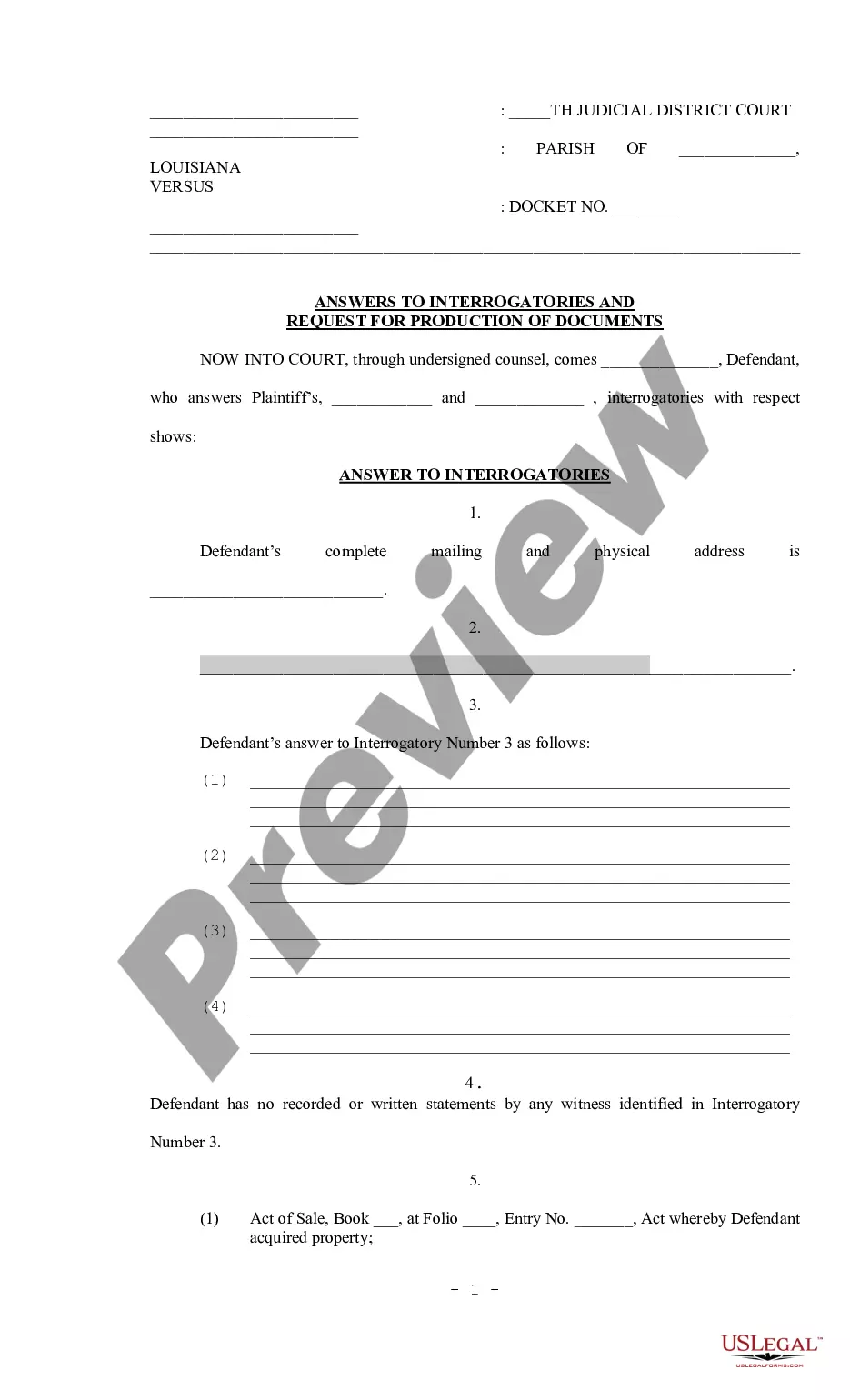
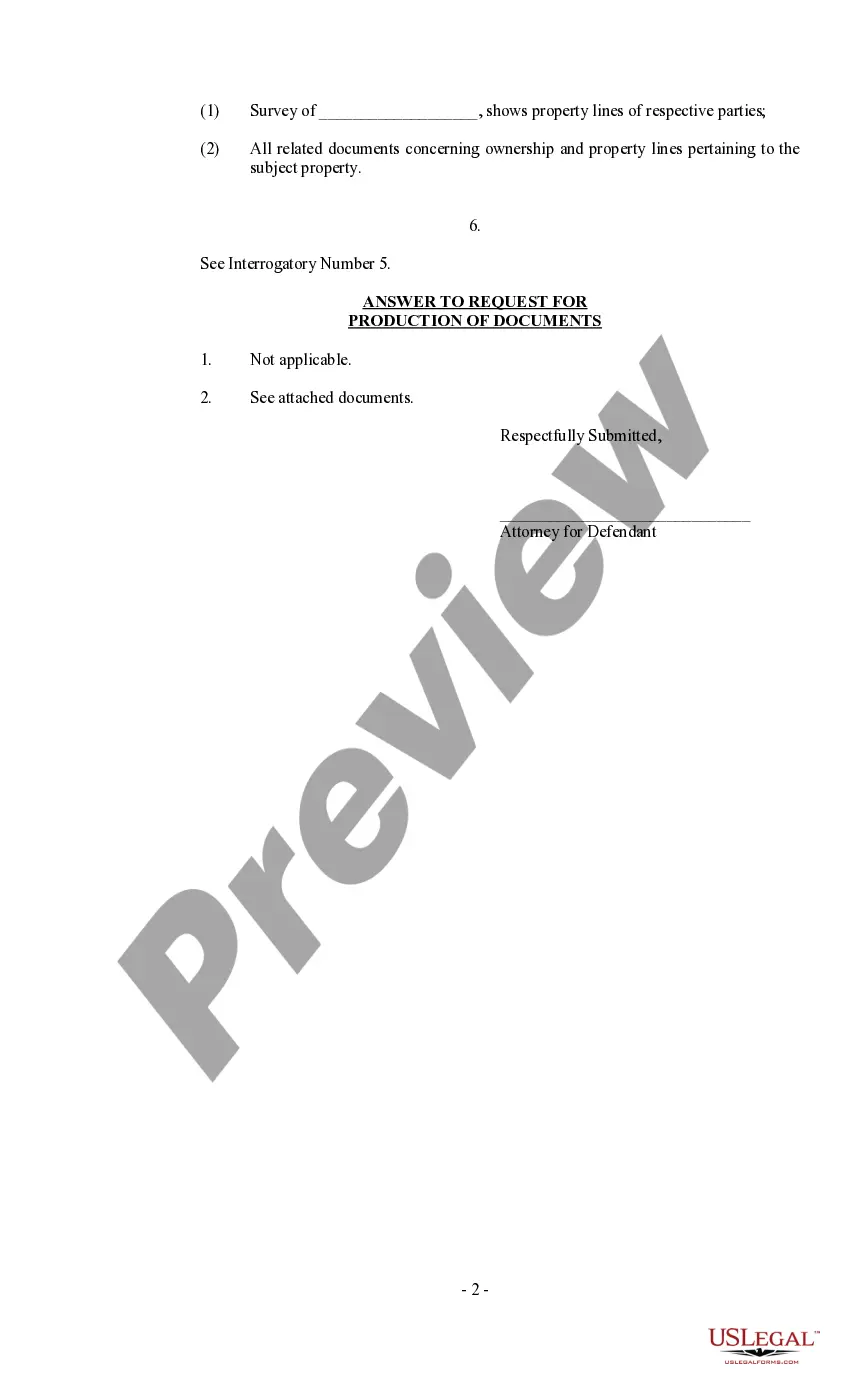
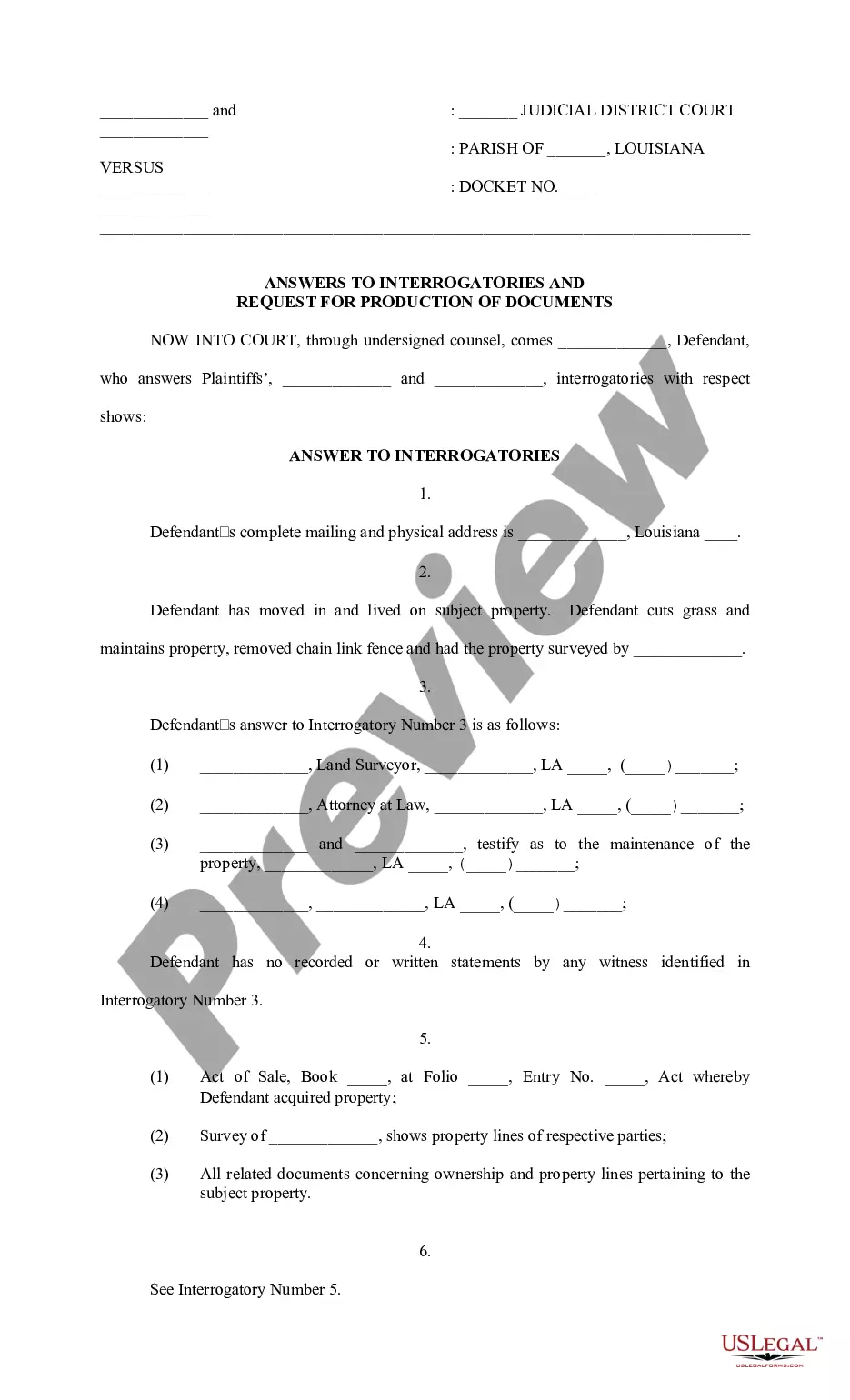
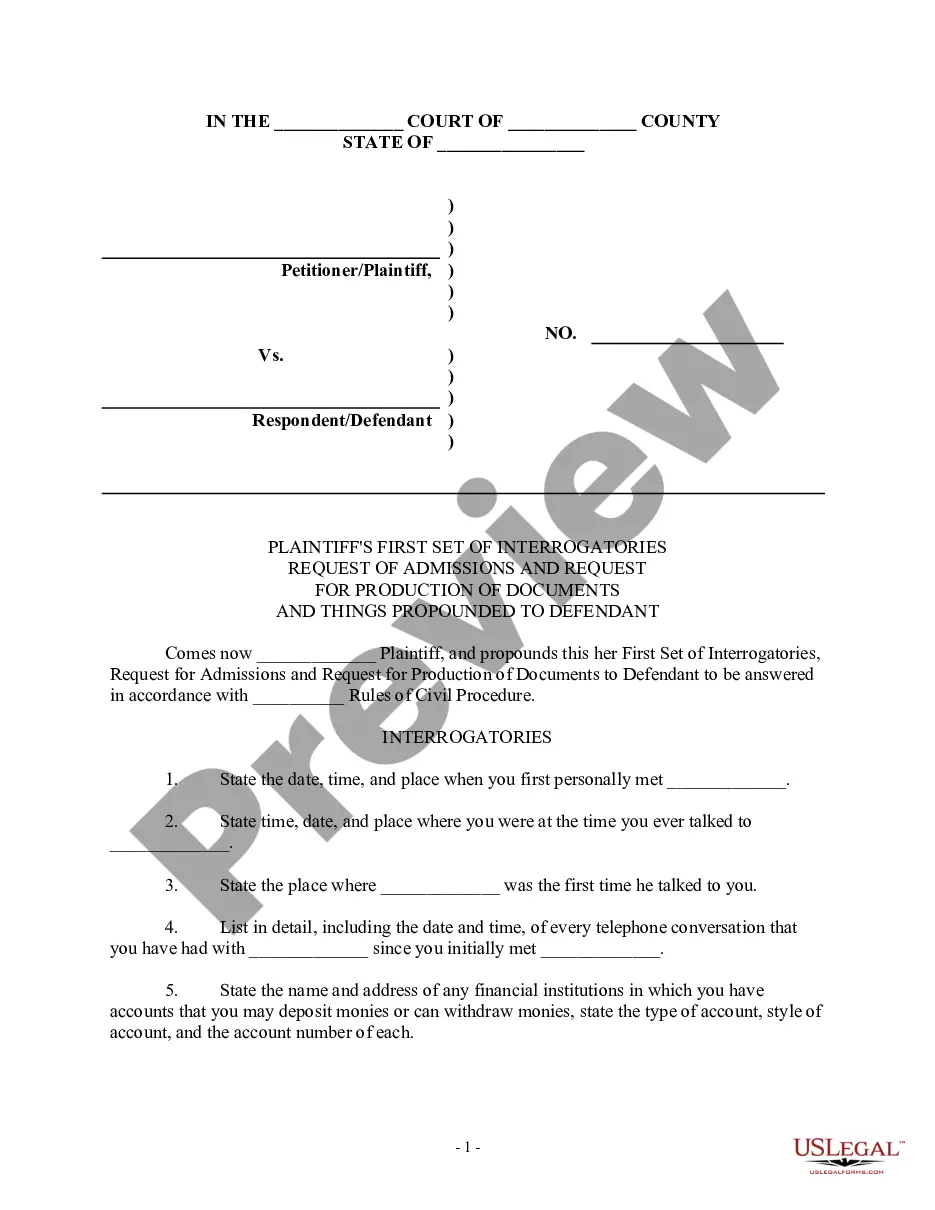
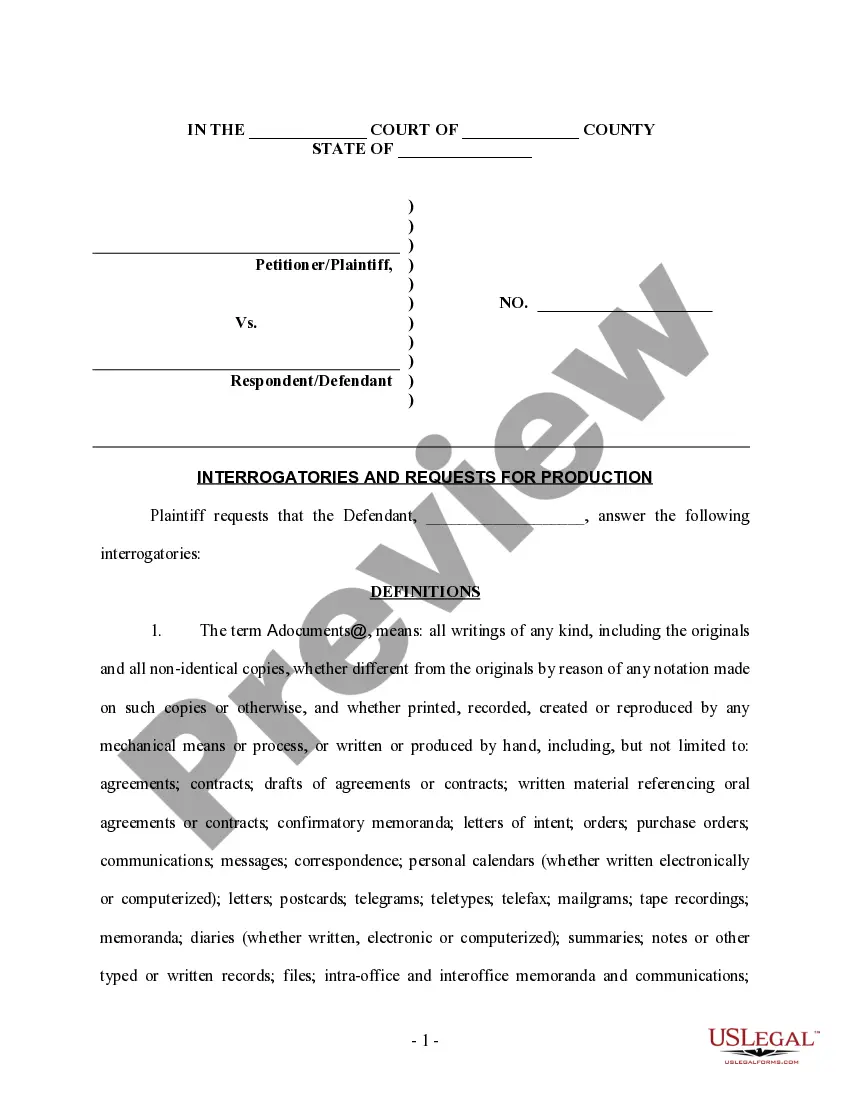
This form provides Answers to Interrogatories and Requests for Production of Documents, a crucial part of the discovery process in Louisiana legal proceedings. This form allows defendants to respond to specific requests from plaintiffs to provide information and documents relevant to the case. It is essential for ensuring that both parties are adequately informed during the litigation process, distinguishing it from other legal forms related to interrogatories or document requests.
Key components of this form
- Identification of parties involved in the case, including their addresses.
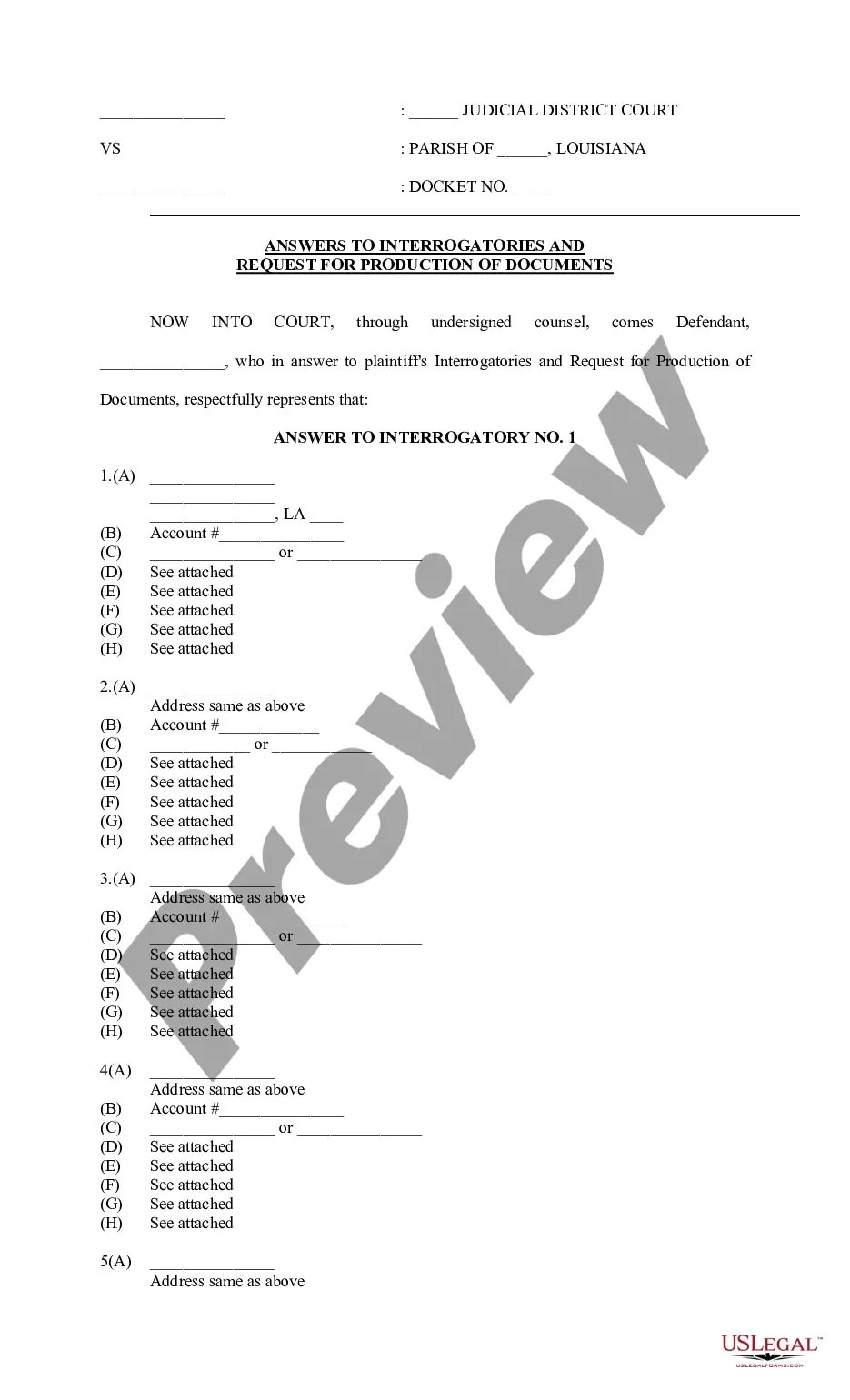
- Numbered response section for answering interrogatories specifically posed by the plaintiffs.
- Document request section to provide or deny access to requested documents.
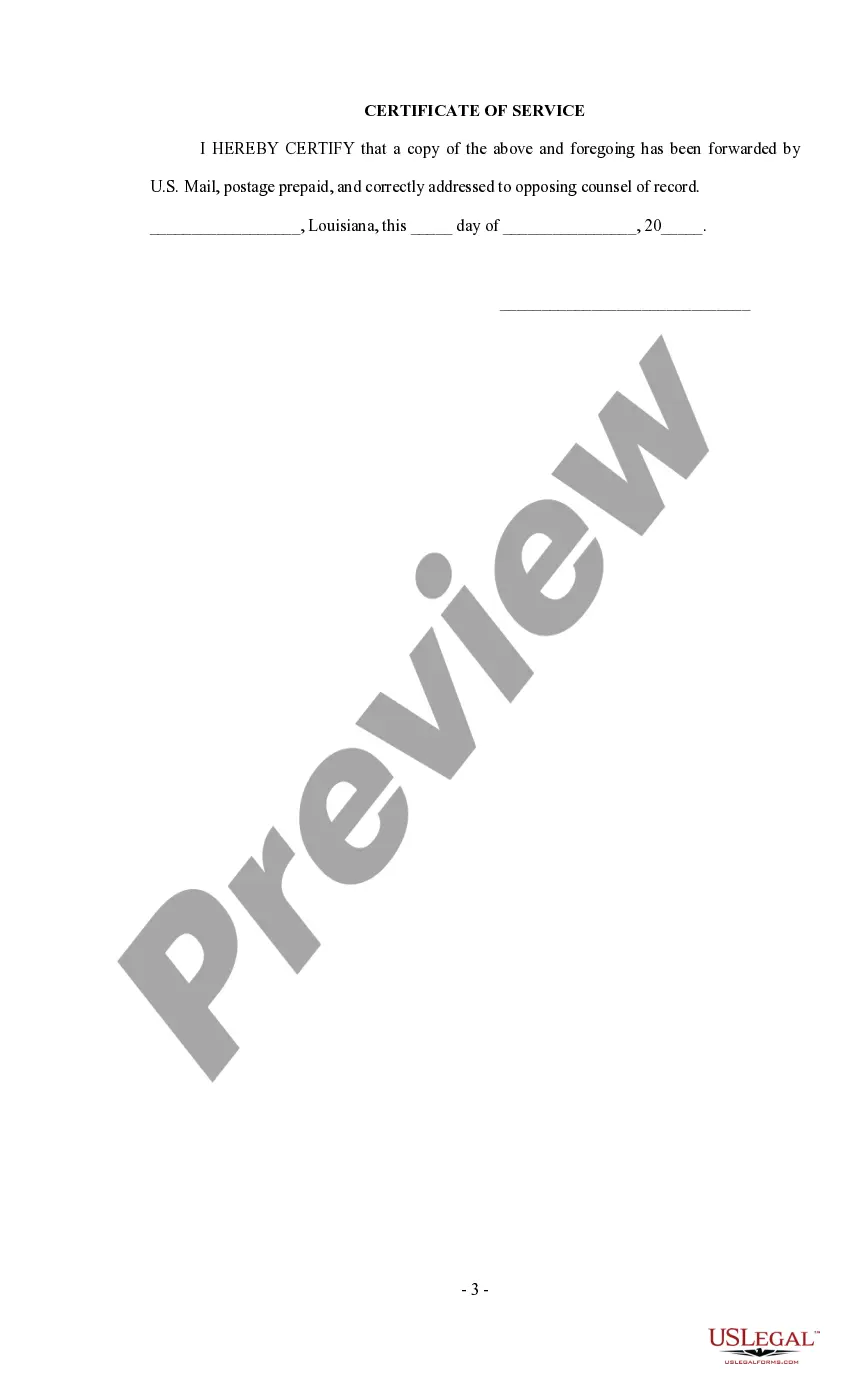
- Certificate of service to confirm that all relevant parties received the filed documents.
When this form is needed
This form should be used during the discovery phase of a lawsuit in Louisiana, especially when a defendant needs to respond to questions (interrogatories) and document requests from the plaintiff. It is applicable in cases where the plaintiff seeks detailed information or documentation related to the claims made in their complaint.
Who can use this document
This form is designed for:
- Defendants in a civil lawsuit in Louisiana.
- Legal representatives of the defendants responding to discovery requests.
- Individuals involved in litigation who require a structured way to provide information and documents.
Completing this form step by step
- Identify the parties involved by entering their full names and addresses.
- Answer each interrogatory by referencing the question number and providing a clear, concise response.
- Indicate which, if any, documents are being produced in response to the requests for production.
- Include a certificate of service to confirm that copies of the completed form have been sent to all other parties involved.
- Sign and date the document to finalize your responses.
Does this document require notarization?
This form usually doesn’t need to be notarized. However, local laws or specific transactions may require it. Our online notarization service, powered by Notarize, lets you complete it remotely through a secure video session, available 24/7.
Get your form ready online
Our built-in tools help you complete, sign, share, and store your documents in one place.
Make edits, fill in missing information, and update formatting in US Legal Forms—just like you would in MS Word.
Download a copy, print it, send it by email, or mail it via USPS—whatever works best for your next step.
Sign and collect signatures with our SignNow integration. Send to multiple recipients, set reminders, and more. Go Premium to unlock E-Sign.
If this form requires notarization, complete it online through a secure video call—no need to meet a notary in person or wait for an appointment.
We protect your documents and personal data by following strict security and privacy standards.

Make edits, fill in missing information, and update formatting in US Legal Forms—just like you would in MS Word.

Download a copy, print it, send it by email, or mail it via USPS—whatever works best for your next step.

Sign and collect signatures with our SignNow integration. Send to multiple recipients, set reminders, and more. Go Premium to unlock E-Sign.

If this form requires notarization, complete it online through a secure video call—no need to meet a notary in person or wait for an appointment.

We protect your documents and personal data by following strict security and privacy standards.
Typical mistakes to avoid
- Failing to answer all interrogatories or requests clearly.
- Omitting necessary attachments for document requests.
- Not including a proper certificate of service.
- Using incomplete or vague responses that do not adequately address the questions asked.
Advantages of online completion
- Convenience of downloading and completing the form at your own pace.
- Easily editable, allowing for quick changes and updates as needed.
- Comprehensive guidance ensures that all necessary information is included.
Looking for another form?

Form popularity
FAQ
Responding to Form InterrogatoriesAnswer each question, being careful to answer each subpart, if one exists. Read the question carefully, and answer only what it asks. You may attach exhibits, if necessary. The response must be verified, meaning you must swear that the responses given are true.
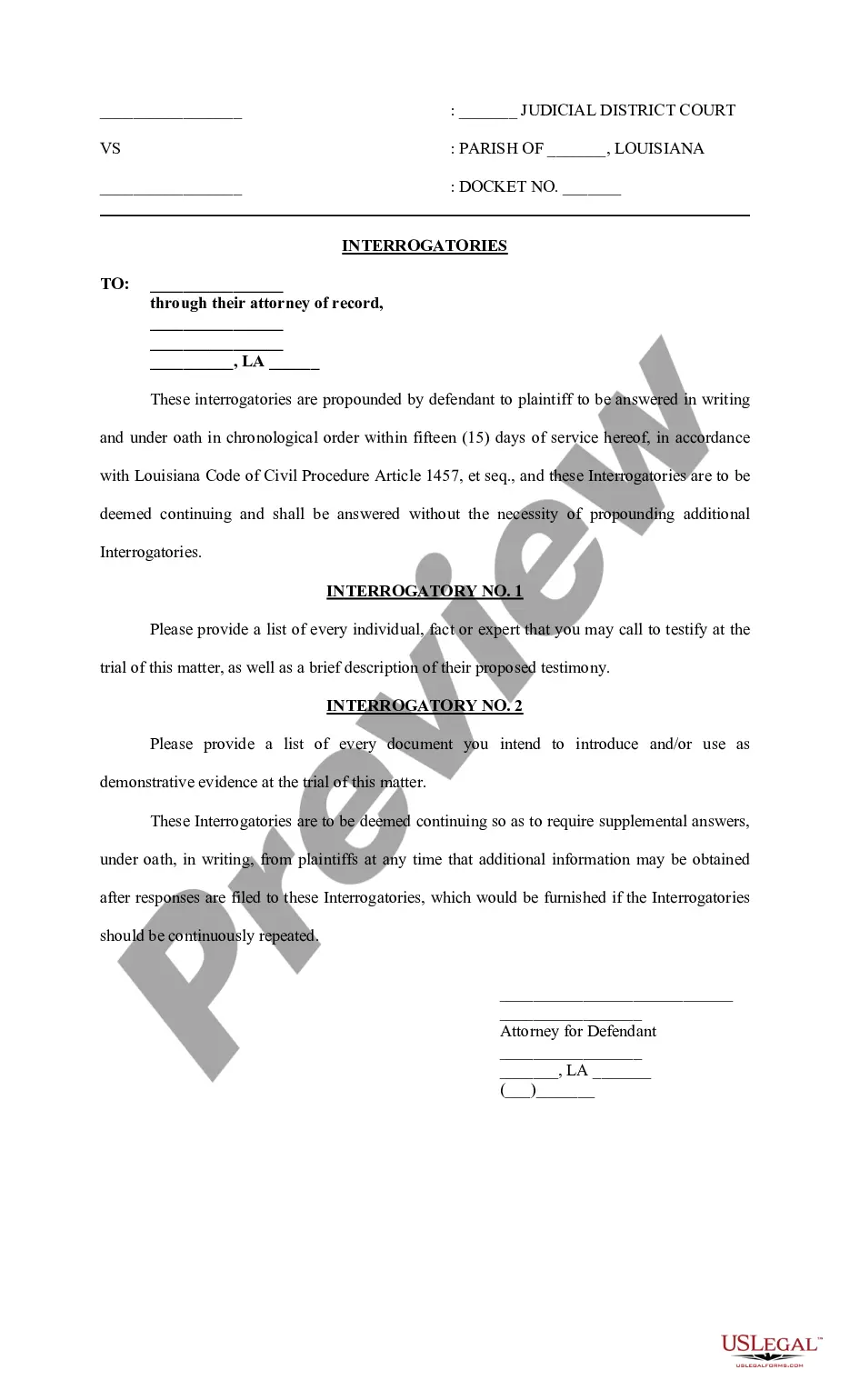
In law, interrogatories (also known as requests for further information) are a formal set of written questions propounded by one litigant and required to be answered by an adversary in order to clarify matters of fact and help to determine in advance what facts will be presented at any trial in the case.
Thank you for your inquiry regarding our product or service. Thank you for your interest in our product or service. We would like to thank you for your letter inquiring about our product. We truly appreciate your letter asking for information about our service.
The issues discussed above in connection with interrogatories are also the issues which you need to cover in your requests for production. However, because requests for production do not yield a written answer, you can ask both for specific documents and for general categories of documents.
In certain cases, you might be able to write a letter to the other side and request the documents that you need. However, in more formal cases, you will likely have to draft more formal discovery demands. There are usually forms available for this in local law libraries, from the court clerk's office, or online.
A request for production is a discovery device used to gain access to documents, electronic data, and physical items held by an opposing party in a legal matter. The aim is to gain insight into any relevant evidence that the opposing party holds.
If a request asks for a document, make a copy of the document; in your response, describe the document and say that a copy is attached; and attach a copy of the document to the responses you send back to the other side.
The making available by a party of documents in his possession, custody or power for inspection by the other party or for use as evidence at trial.
When responding to Requests for Admissions, remember to answer as follows: Admit: If any portion of the Request for Admission is true then you must admit to that portion of the request. You are also allowed to have a hybrid response admit the part of the request that is true while denying another part.