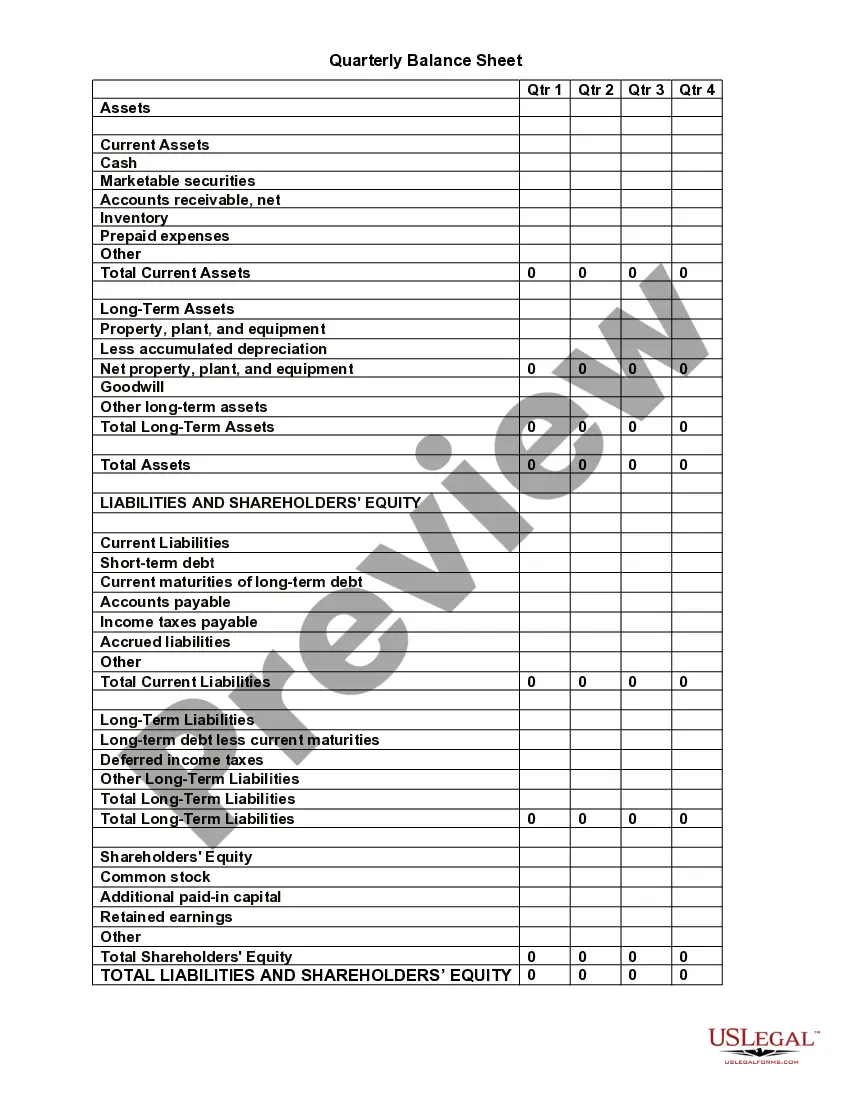
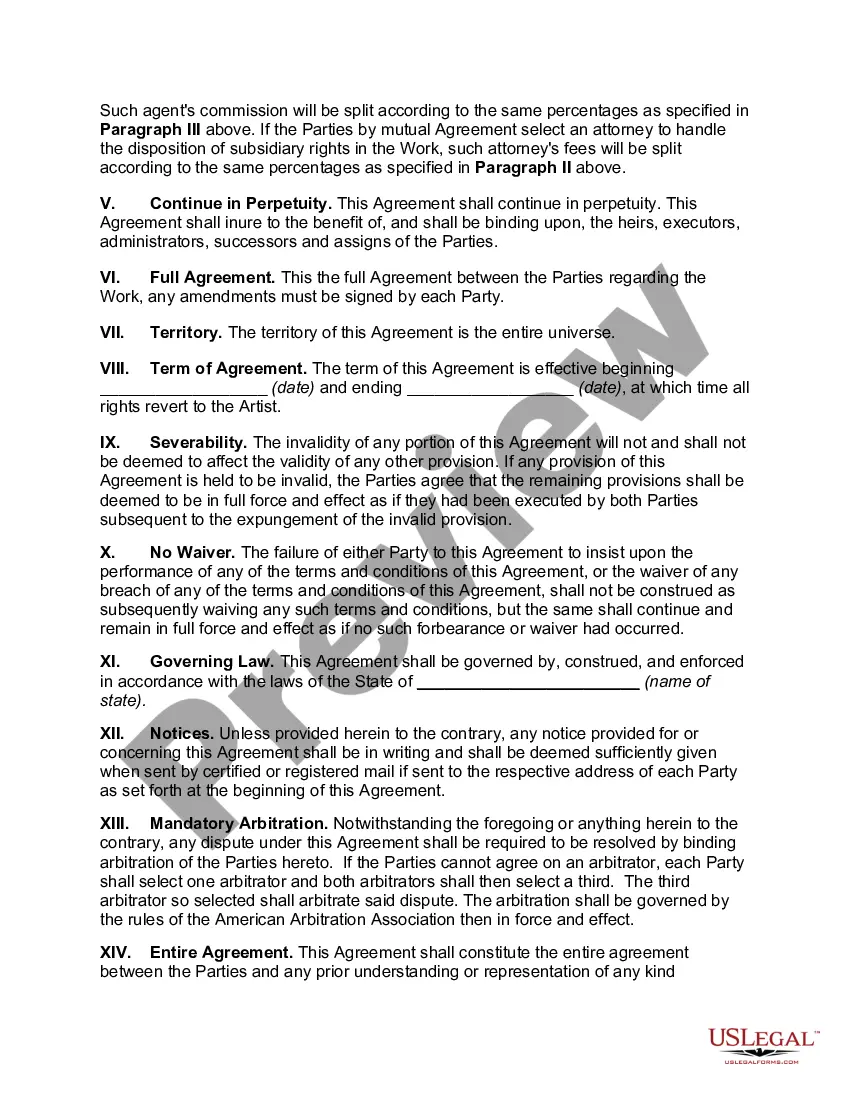
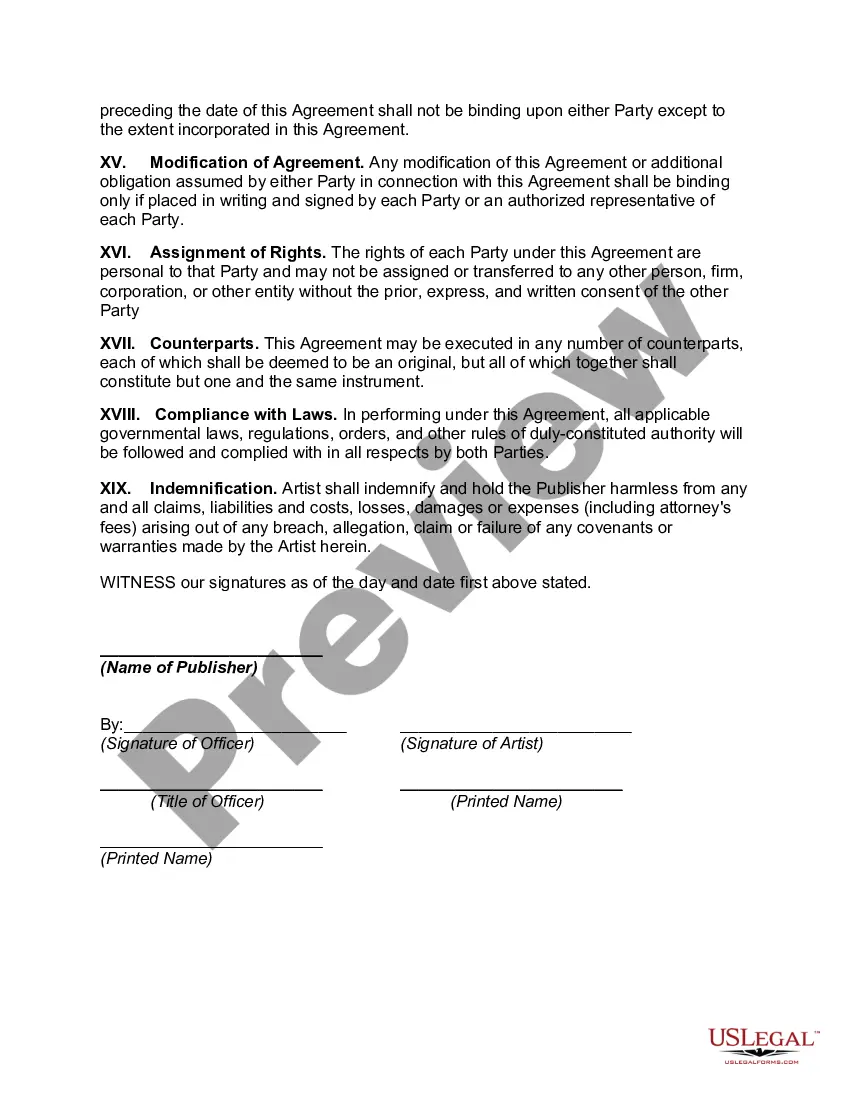
Kentucky Royalty Split Agreement
Description
Get your form ready online
Our built-in tools help you complete, sign, share, and store your documents in one place.
Make edits, fill in missing information, and update formatting in US Legal Forms—just like you would in MS Word.
Download a copy, print it, send it by email, or mail it via USPS—whatever works best for your next step.
Sign and collect signatures with our SignNow integration. Send to multiple recipients, set reminders, and more. Go Premium to unlock E-Sign.
If this form requires notarization, complete it online through a secure video call—no need to meet a notary in person or wait for an appointment.
We protect your documents and personal data by following strict security and privacy standards.

Make edits, fill in missing information, and update formatting in US Legal Forms—just like you would in MS Word.

Download a copy, print it, send it by email, or mail it via USPS—whatever works best for your next step.

Sign and collect signatures with our SignNow integration. Send to multiple recipients, set reminders, and more. Go Premium to unlock E-Sign.

If this form requires notarization, complete it online through a secure video call—no need to meet a notary in person or wait for an appointment.

We protect your documents and personal data by following strict security and privacy standards.
Looking for another form?





How to fill out Royalty Split Agreement?
If you wish to obtain comprehensive, download, or print authorized document templates, utilize US Legal Forms, the largest collection of legal forms available online.
Leverage the site’s simple and user-friendly search feature to locate the documents you require.
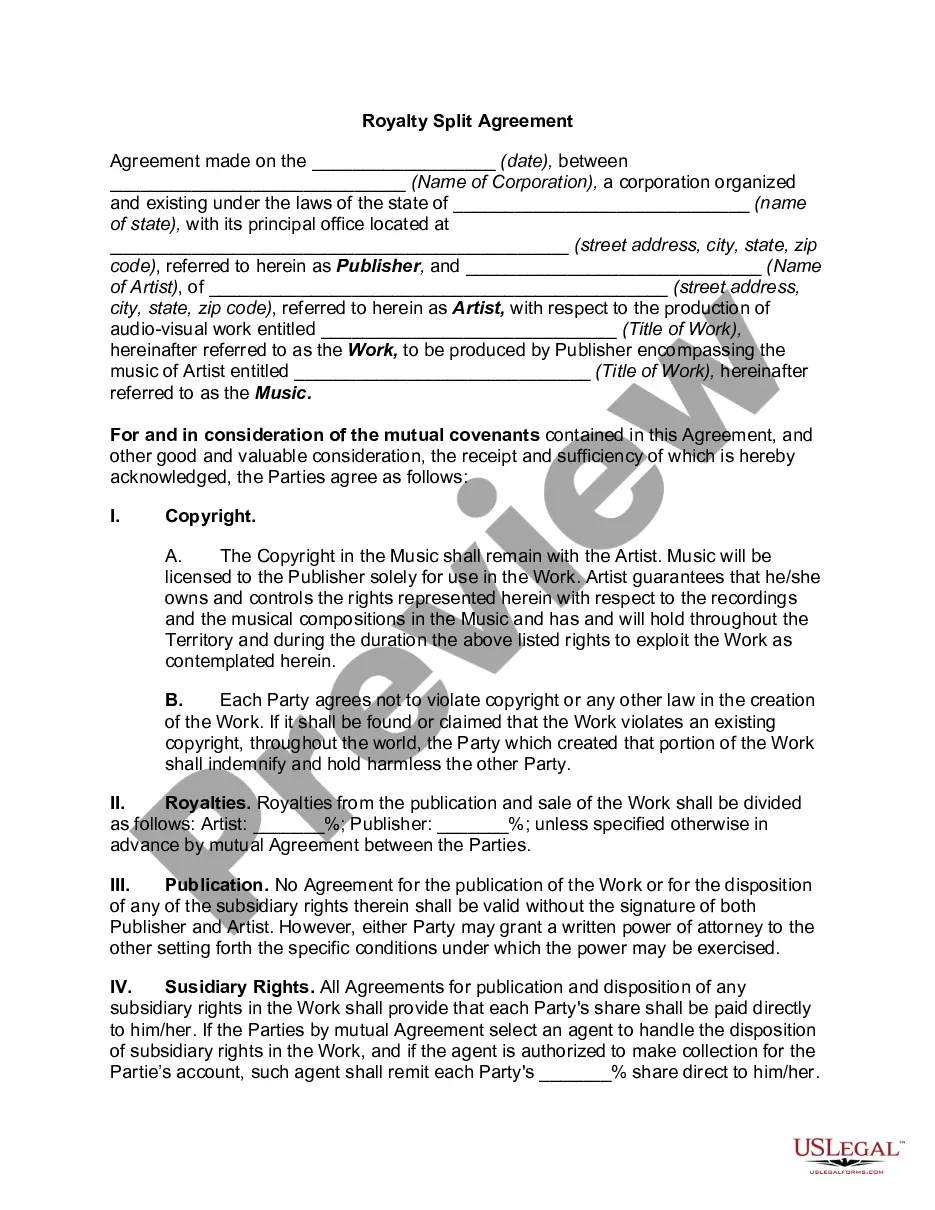
Various templates for commercial and personal purposes are organized by categories and states, or keywords. Utilize US Legal Forms to find the Kentucky Royalty Split Agreement in just a few clicks.
Each legal document template you obtain is your property permanently. You have access to every form you downloaded within your account. Click the My documents section and select a form to print or download again.
Compete with and download, and print the Kentucky Royalty Split Agreement with US Legal Forms. There are numerous professional and state-specific templates you can utilize for your business or personal needs.
- If you are already a US Legal Forms customer, Log In to your account and click the Obtain button to acquire the Kentucky Royalty Split Agreement.
- You can also access forms you previously downloaded from the My documents section of your account.
- If you are using US Legal Forms for the first time, follow the steps below.
- Step 1. Make sure you have selected the form for your specific city/state.
- Step 2. Use the Review option to examine the form’s details. Don’t forget to read the description.
- Step 3. If you are not satisfied with the form, take advantage of the Search field at the top of the screen to find other versions of the legal form template.
- Step 4. Once you have found the form you want, click the Acquire now button. Choose the pricing plan you prefer and enter your details to register for an account.
- Step 5. Process the order. You can use your credit card or PayPal account to complete the transaction.
- Step 6. Choose the format of the legal form and download it to your device.
- Step 7. Complete, edit, and print or sign the Kentucky Royalty Split Agreement.
Form popularity
FAQ
The 80/20 royalty split typically refers to a scenario where 80% of the royalties go to one party, often the songwriter or primary creator, while 20% goes to others, such as the publisher. This structure can be detailed in a Kentucky Royalty Split Agreement to clarify each party's expectations. It's crucial to establish these percentages upfront to prevent misunderstandings later.
Royalty payments are negotiated once through a legal agreement and paid on a continuing basis by licensees to owners granting a license to use their intellectual property or assets over the term of the license period. Royalty payments are often structured as a percentage of gross or net revenues.
Royalty rates vary per industry, but a good rule of thumb is between 2-3% on the low end, and 7-10% on the high end. I have licensed consumer products for as low as 3% and as high as 7%, with 5% being the most common and a generally fair number.
Royalty payments are computed by multiplying the royalty rate against net sales. For example, a royalty rate of 5% multiplied by net sales of $1,000 equals a net sales royalty of $50. Royalty rates for licensing vary depending on the artwork involved.
In most cases, licensors prefer a royalty rate that falls within 25% to 75% range of the sublicensing income. Their stake usually amounts to more than half of all profits. In rare cases, the licensee can negotiate a rate split and apply their own royalty obligation to the sale of sub-licensed products.
Royalty splits when a song gets recorded and money starts rolling in2026 The publisher gets to first recoup the money they have paid a writer for advances and demo costs (for all songs, not just the one that got recorded). Therefore, they split royalties according to the contract.
The government-mandated royalty rate is 10.5 percent of the gross revenue minus the cost of public performance. The average rate per stream is about 200b$0.005200b.
The 25% rule also refers to a technique for determining royalties, which stipulates that a party selling a product or service based on another party's intellectual property must pay that party a royalty of 25% of the gross profit made from the sale, before taxes.
We recommend to split royalties and rights evenly between each band member to keep things easy. In hip hop, the producer will usually request 50%, while the other top liners will split the remaining 50%.
A distributor collects royalties directly from stores/streaming platforms on behalf of labels. An artist's label will then collect the recording royalties and distribute them to the artist. If an artist is not with a label, the artist will collect the recording royalties directly from the distributor.