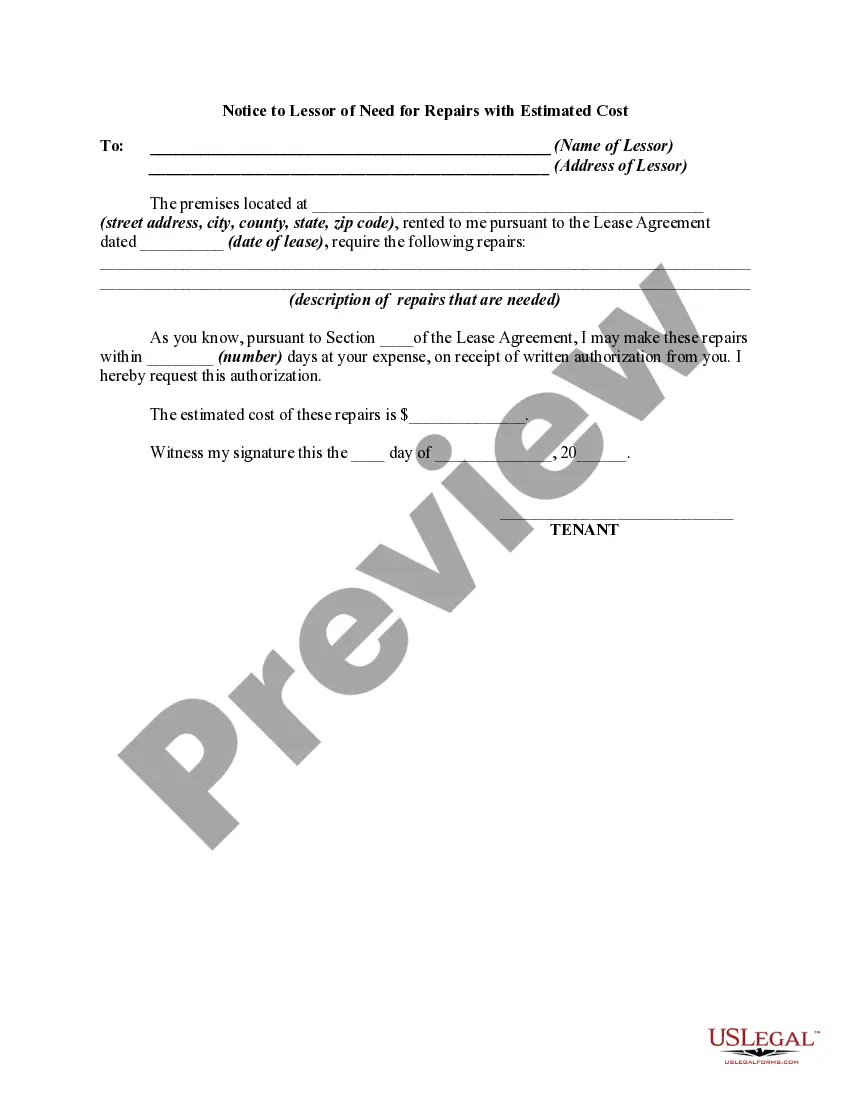
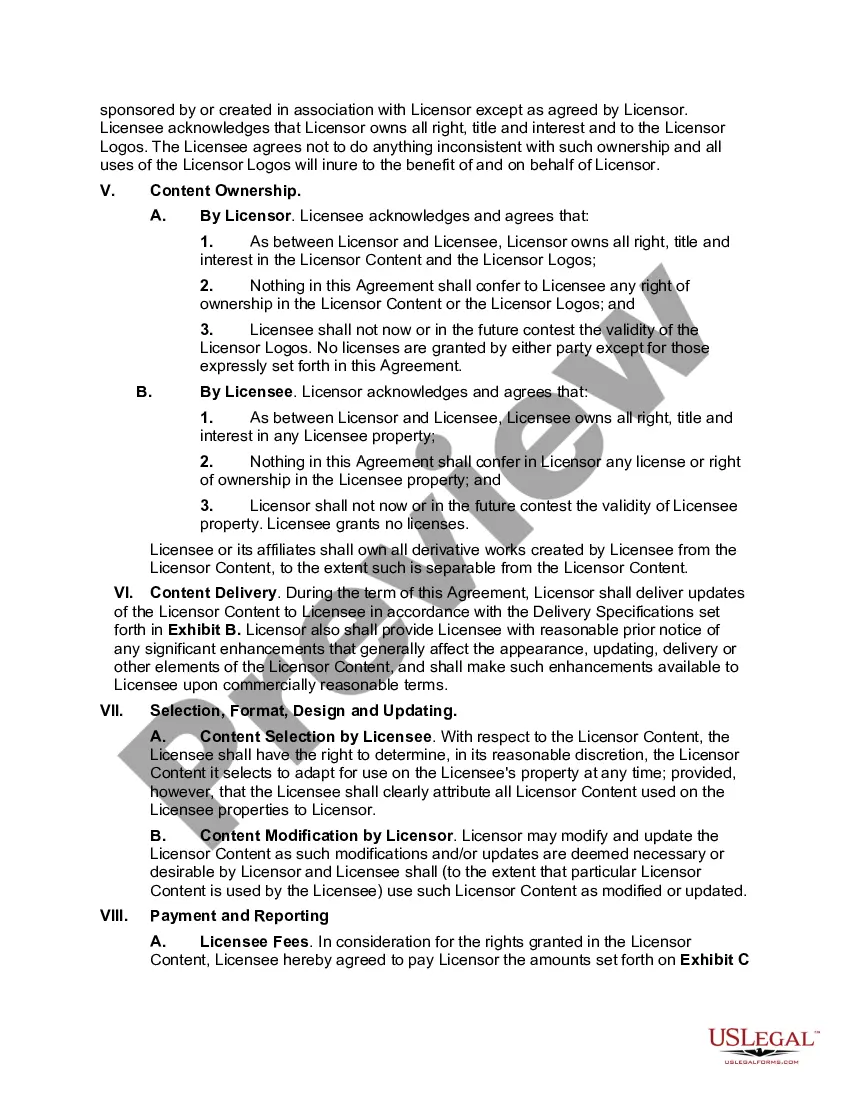
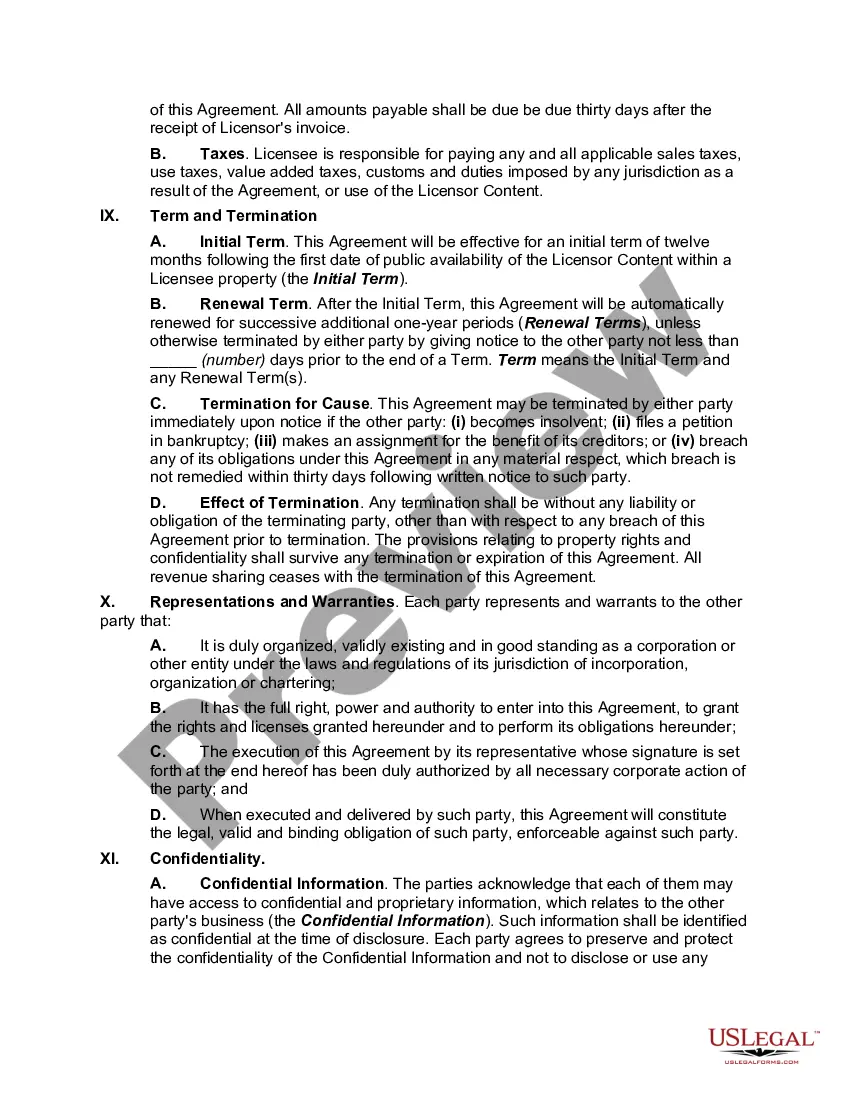
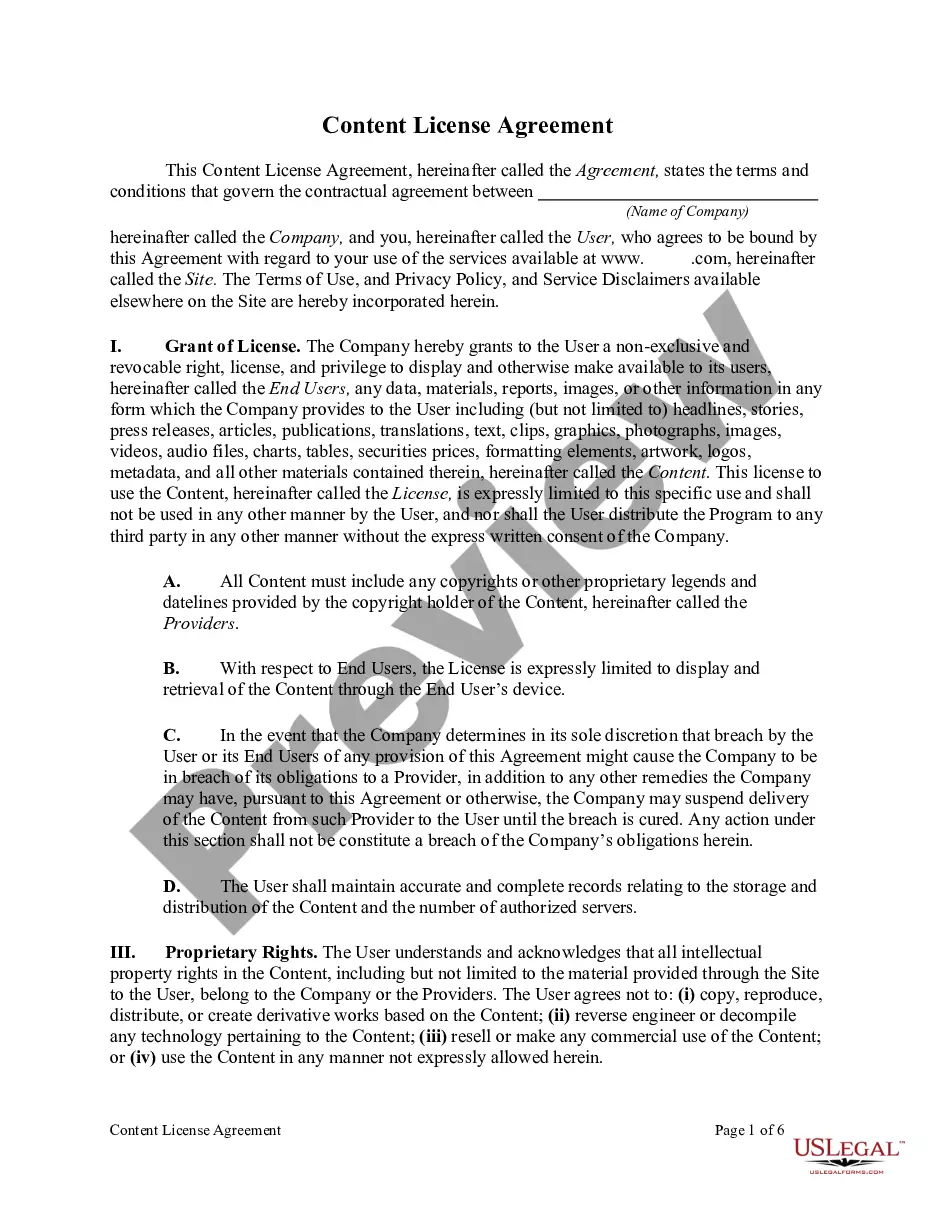
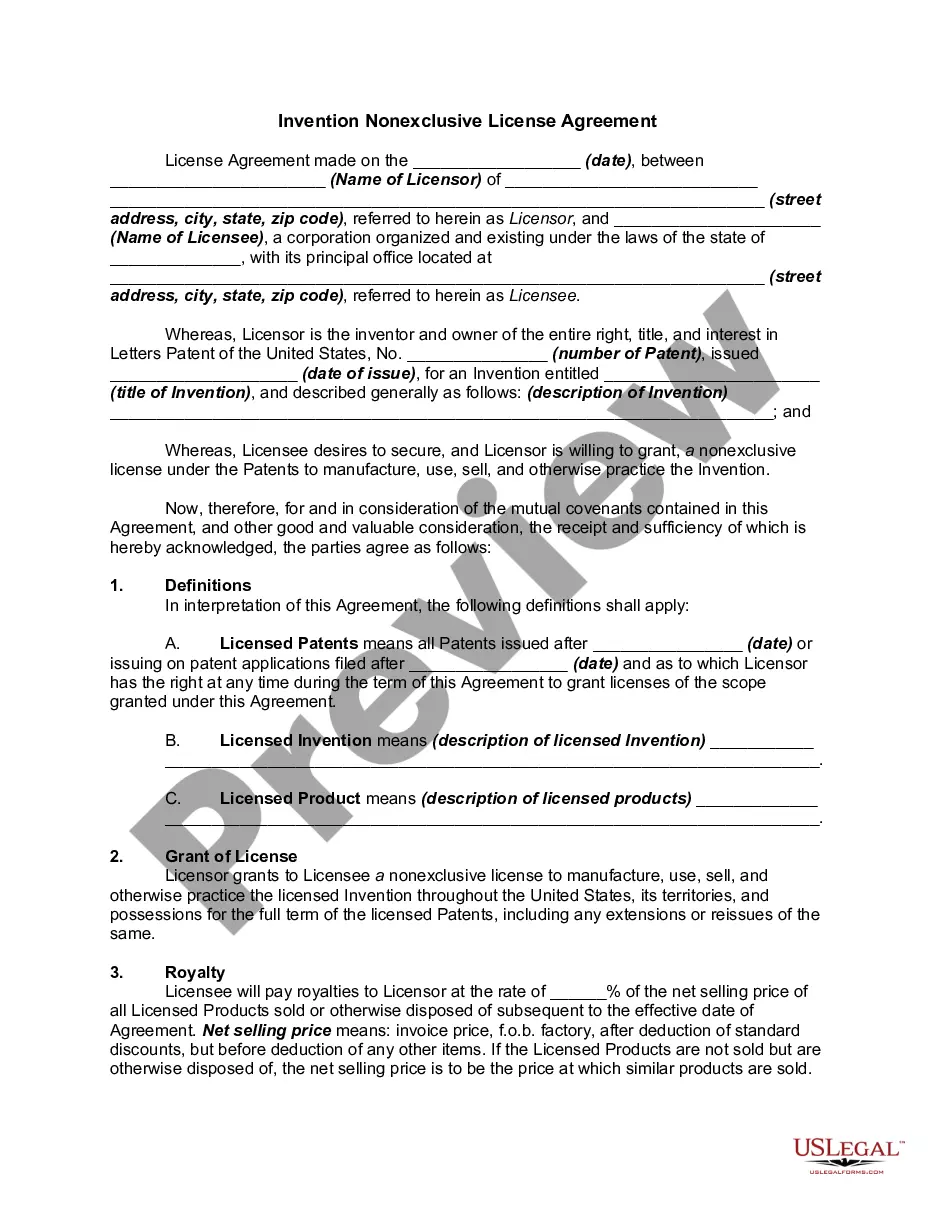
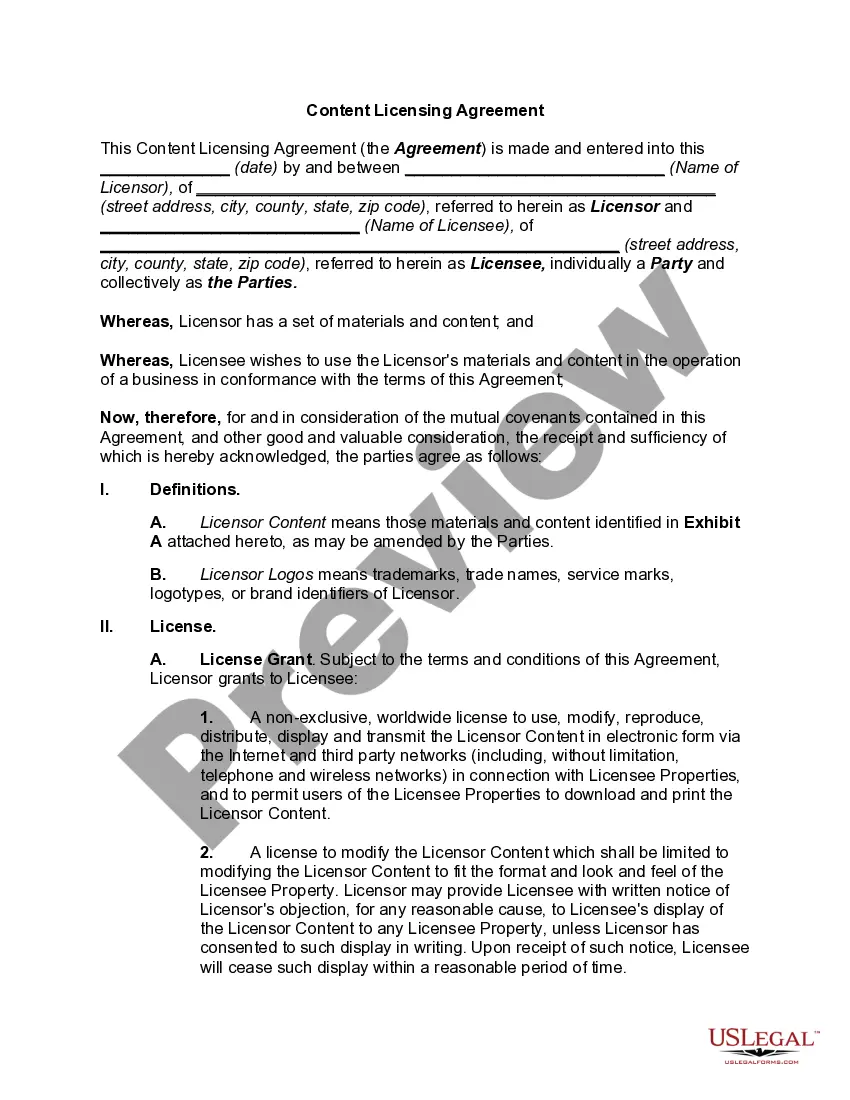
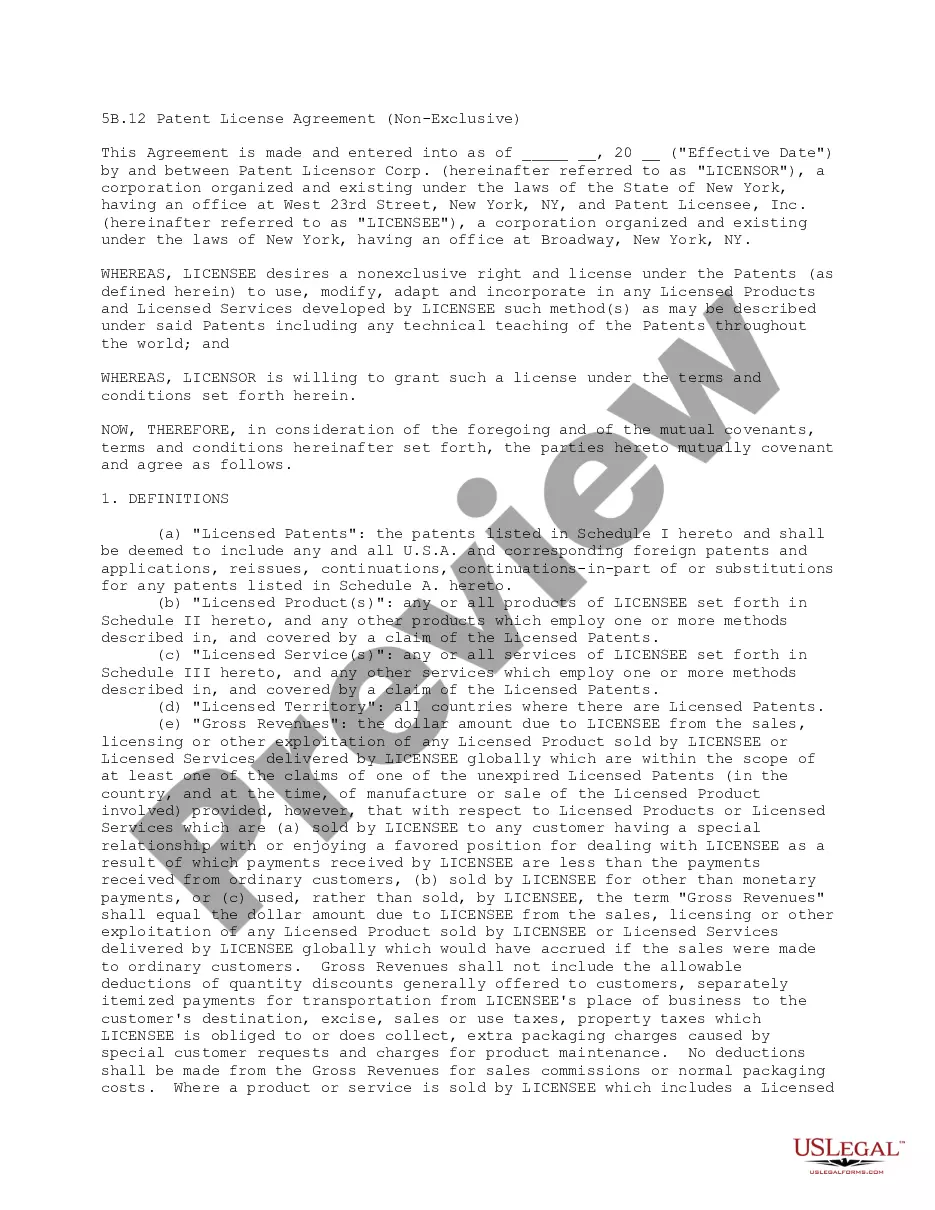
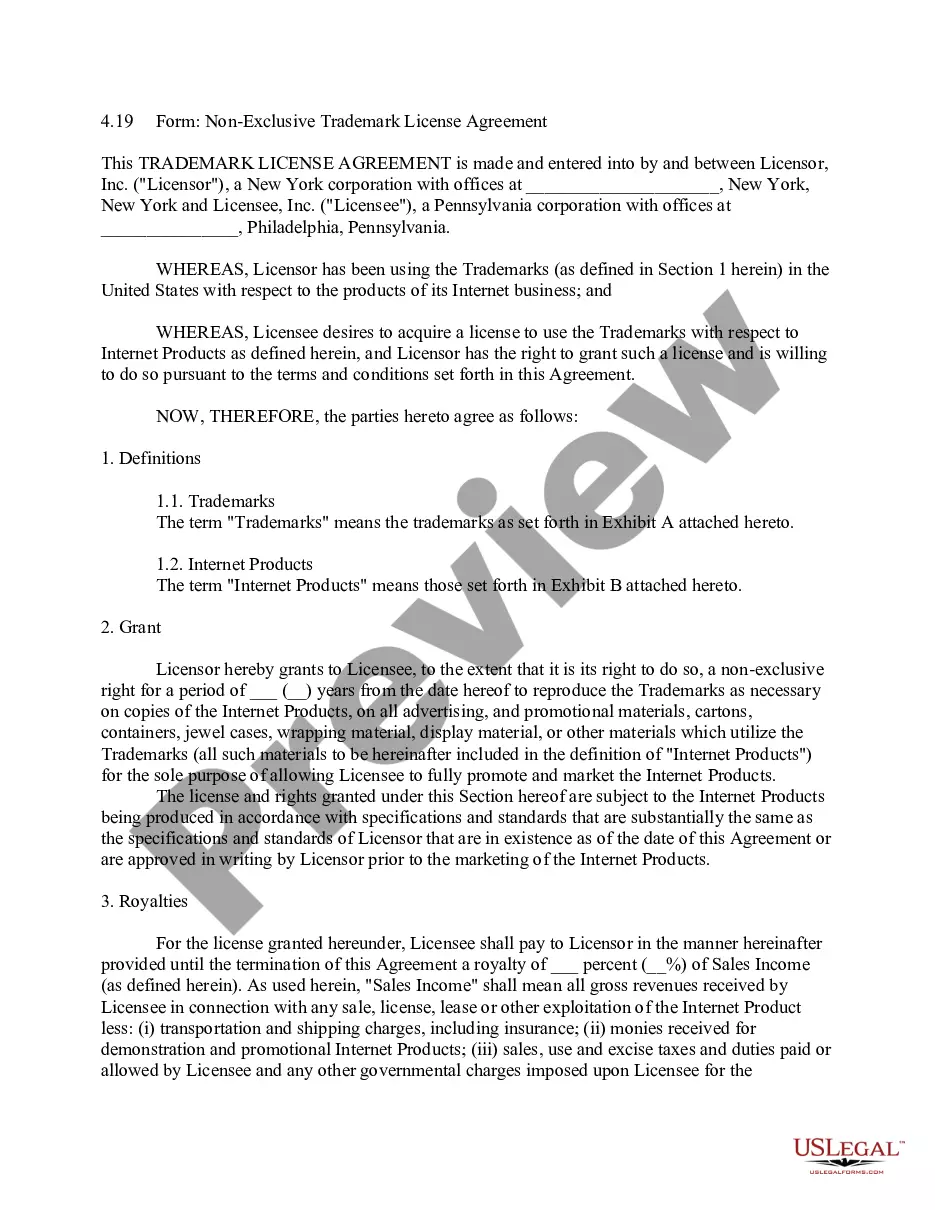
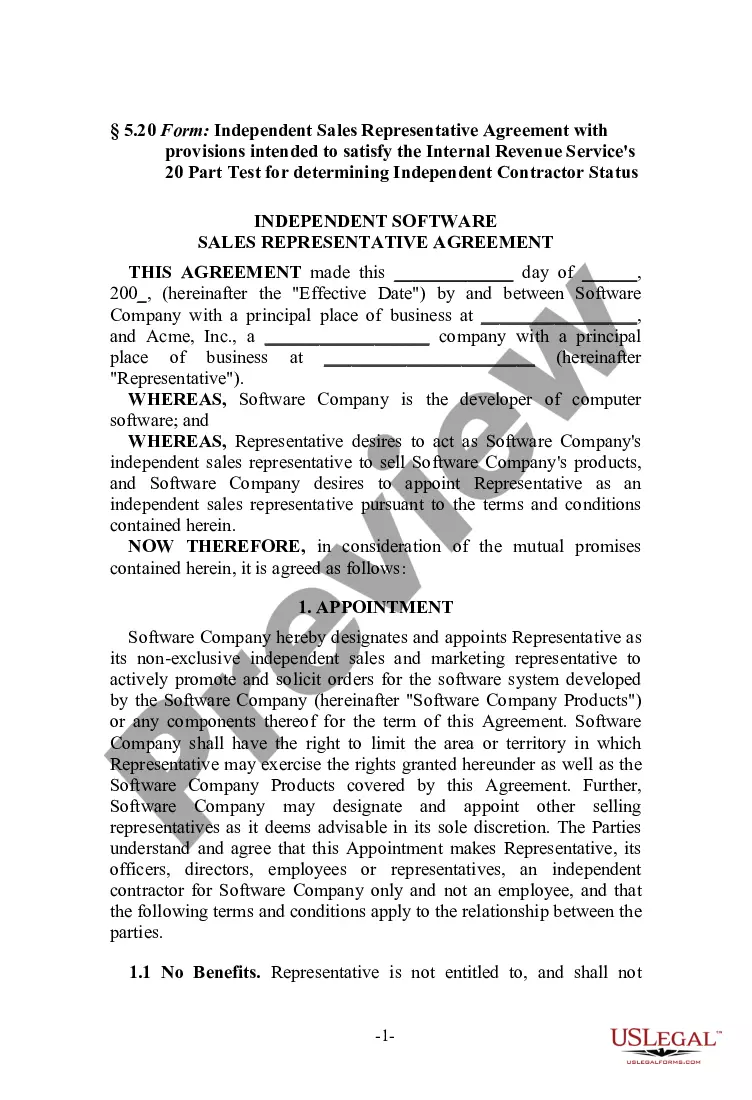
Kentucky Nonexclusive Content Licensing Agreement
Description
Get your form ready online
Our built-in tools help you complete, sign, share, and store your documents in one place.
Make edits, fill in missing information, and update formatting in US Legal Forms—just like you would in MS Word.
Download a copy, print it, send it by email, or mail it via USPS—whatever works best for your next step.
Sign and collect signatures with our SignNow integration. Send to multiple recipients, set reminders, and more. Go Premium to unlock E-Sign.
If this form requires notarization, complete it online through a secure video call—no need to meet a notary in person or wait for an appointment.
We protect your documents and personal data by following strict security and privacy standards.

Make edits, fill in missing information, and update formatting in US Legal Forms—just like you would in MS Word.

Download a copy, print it, send it by email, or mail it via USPS—whatever works best for your next step.

Sign and collect signatures with our SignNow integration. Send to multiple recipients, set reminders, and more. Go Premium to unlock E-Sign.

If this form requires notarization, complete it online through a secure video call—no need to meet a notary in person or wait for an appointment.

We protect your documents and personal data by following strict security and privacy standards.
Looking for another form?



How to fill out Nonexclusive Content Licensing Agreement?
You can spend hours online looking for the legal document template that meets the state and federal standards you require.
US Legal Forms offers a vast selection of legal forms that have been reviewed by experts.
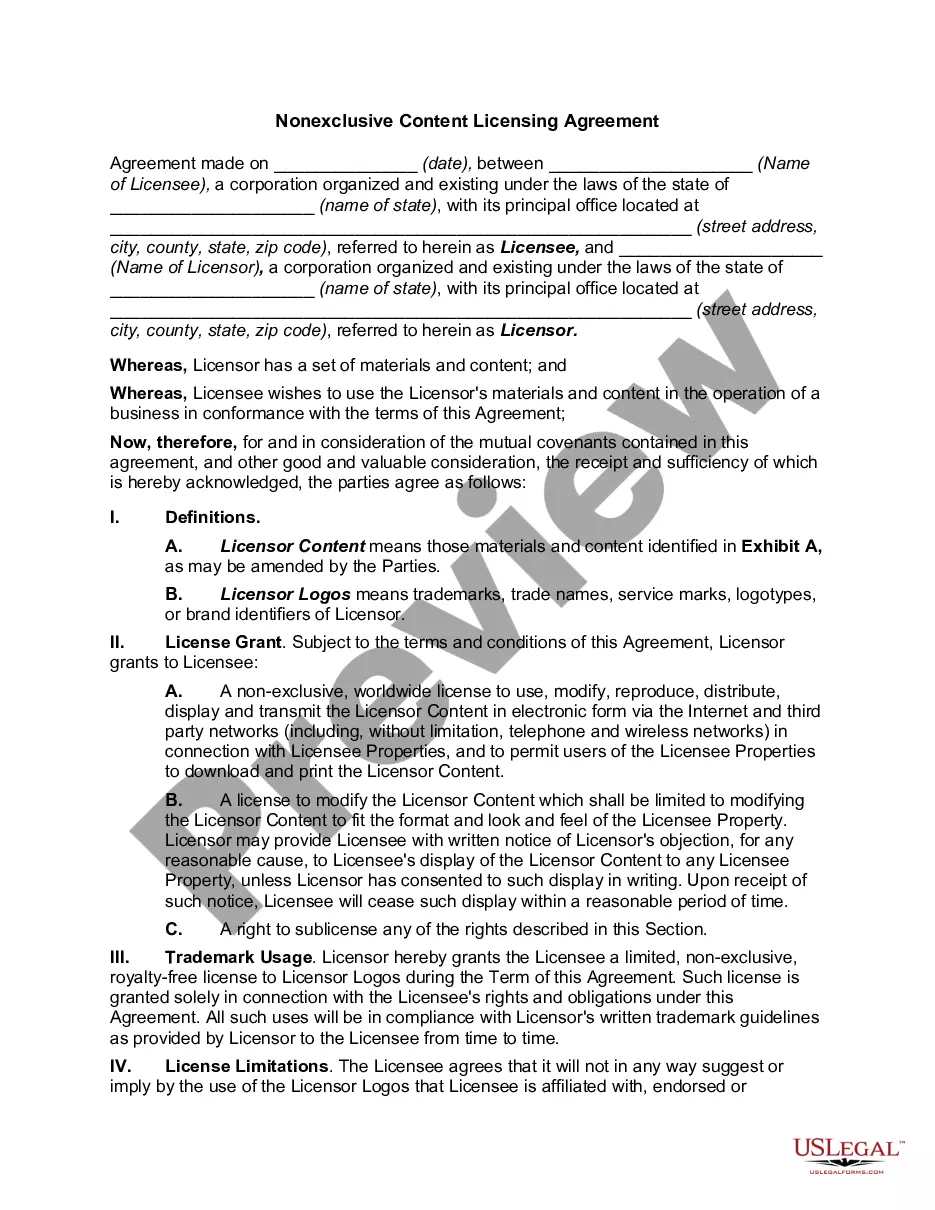
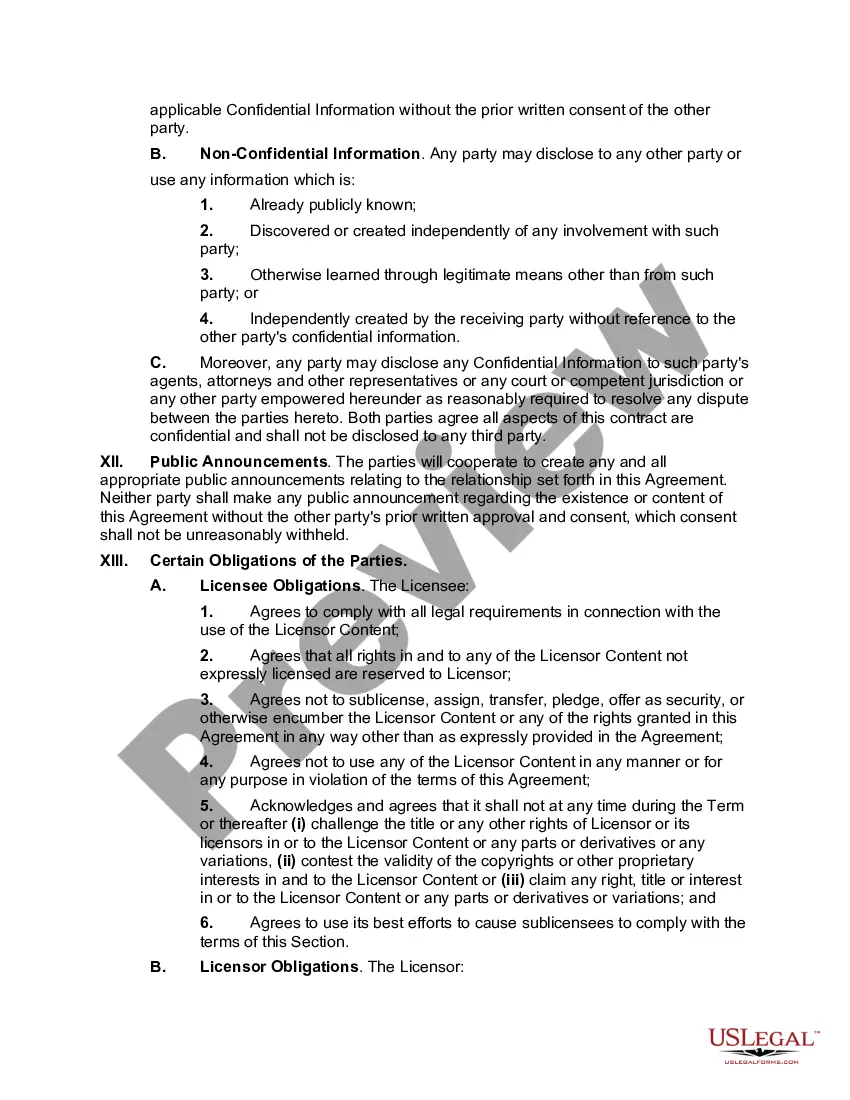
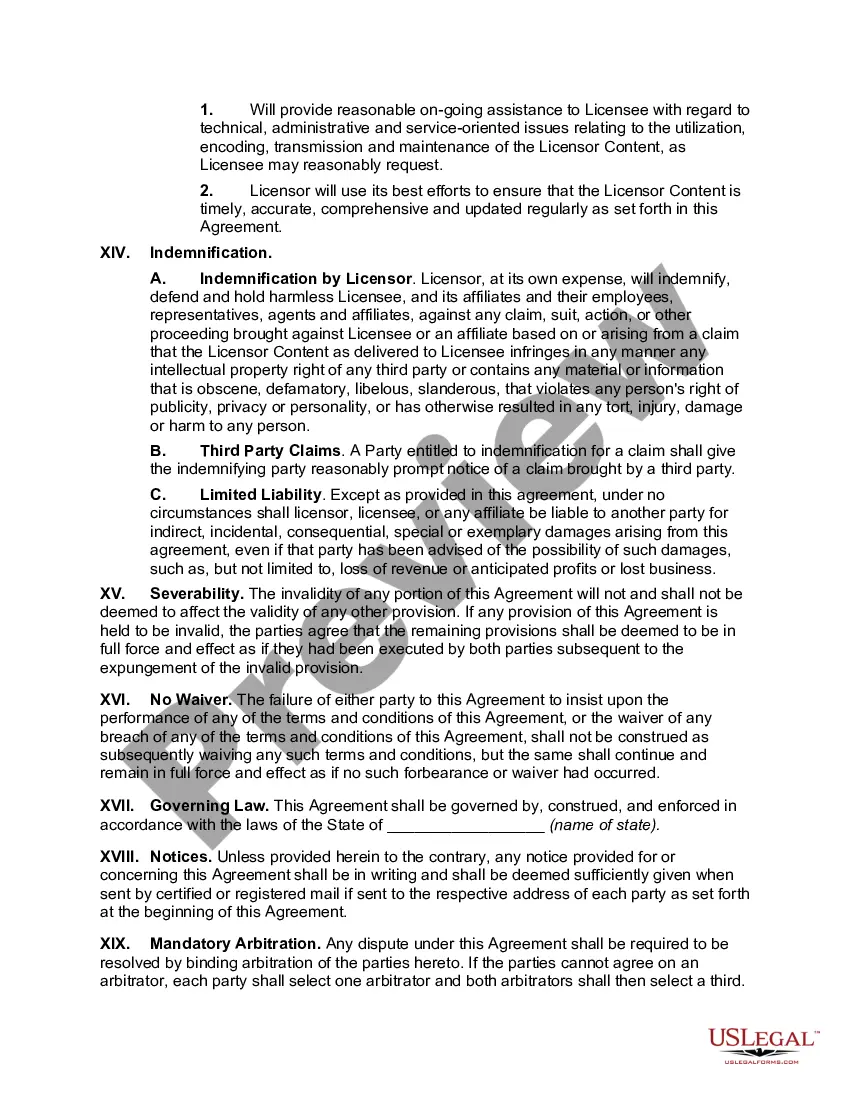
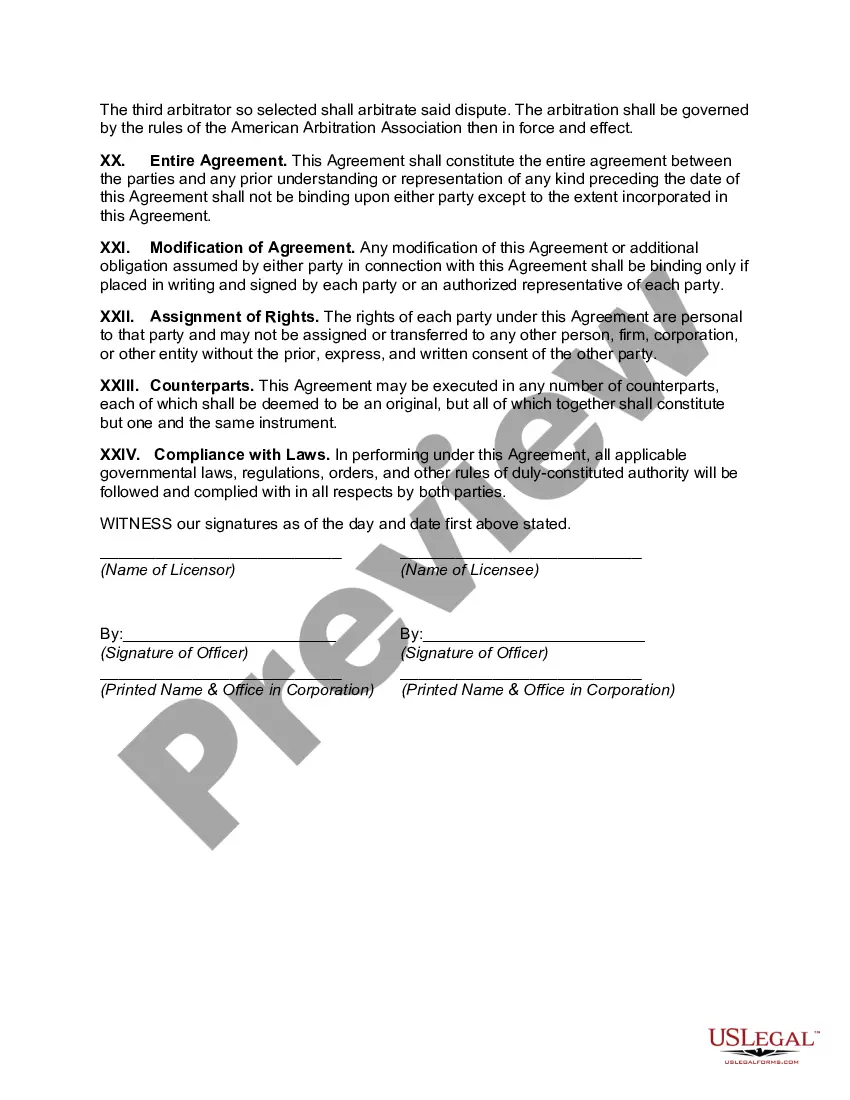
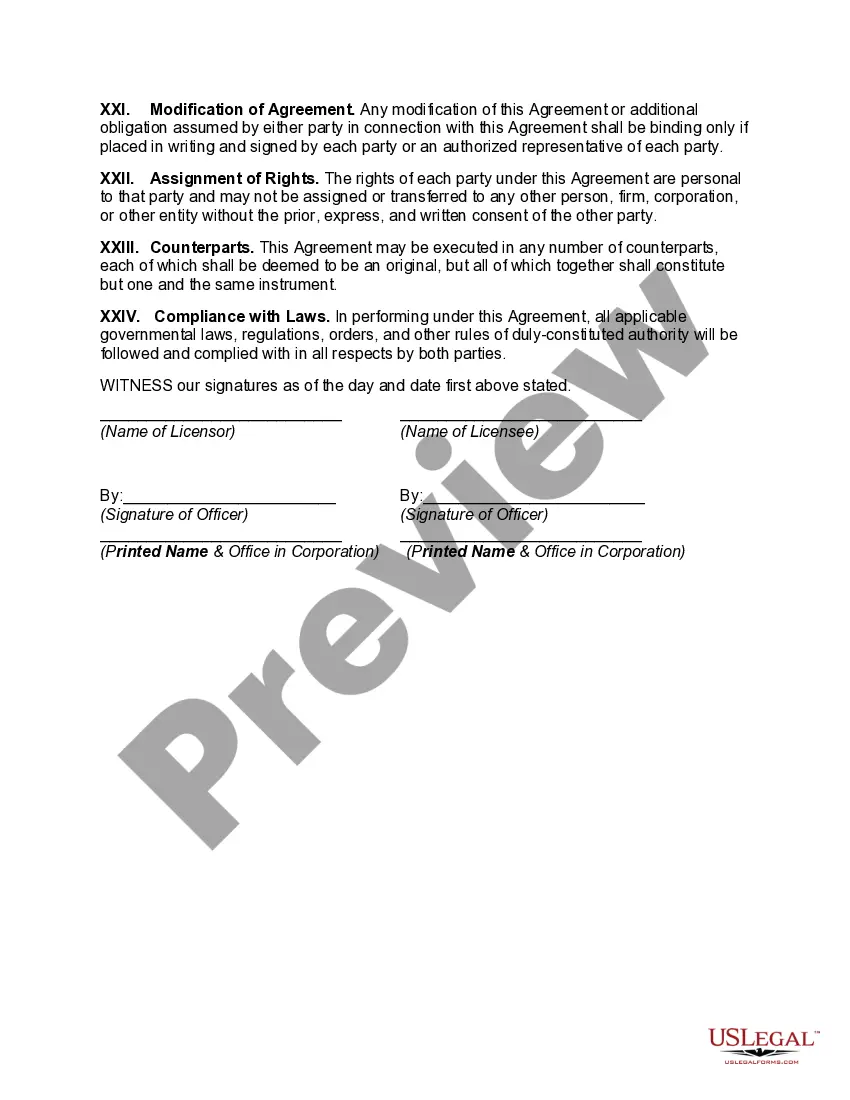
It is easy to download or print the Kentucky Nonexclusive Content Licensing Agreement from their service.
If you need to find another version of your form, use the Search box to locate the template that fits your needs and specifications.
- If you have a US Legal Forms account, you can Log In and click the Purchase button.
- Next, you can complete, edit, print, or sign the Kentucky Nonexclusive Content Licensing Agreement.
- Every legal document template you obtain is yours indefinitely.
- To download another copy of a purchased form, visit the My documents section and click the corresponding button.
- If you are accessing the US Legal Forms site for the first time, follow the simple instructions below.
- First, ensure that you have selected the correct document template for your state/region of choice.
- Check the form description to confirm you have chosen the appropriate template.
Form popularity
FAQ
exclusive license allows multiple parties to use the same content without exclusive rights. This type of license is beneficial when you want to reach a broader audience while retaining ownership of your content. The Kentucky Nonexclusive Content Licensing Agreement serves as a good example, providing a clear framework for both parties regarding usage rights.
A content license agreement is a legal contract between an author (licensor) and another party (licensee) that is put in place when someone wants to license intellectual property (IP) rights.
Most licensing agreements will be valid only for a certain length of time....Scope of the AgreementExclusivity.Territory Rights.Guarantees of Sales.
Exclusive Licence grants to the licensee the right to use the intellectual property, but means that the licensor remains free to exploit the same intellectual property and to allow any number of other licensees to also exploit the same intellectual property.
Precisely identifying which intellectual property will be the subject of the license is necessary to ensure both parties are on the same page and not exceeding their rights.Scope of the Grant.Exclusivity.Territory.Term.Compensation.Termination.Conclusion.
Intellectual property rights are the rights given to persons over the creations of their minds. They usually give the creator an exclusive right over the use of his/her creation for a certain period of time.
Sole, on the one hand, means only one person has the legal right to use the product. Exclusive, however, actually means only one other person has that right.
An exclusive license grants the licensee singular permission to exploit the intellectual property in question. No other entity, including the party granting the license (the licensor), is allowed to use the intellectual property covered by the license unless specific carve-outs are included in the agreement.
A copyright exclusive license is one in which ownership in one or more rights is transferred by the copyright owner. A copyright nonexclusive license occurs when the owner retains ownership of the copyright and/or may license the same right to others.
Virtually every type of license agreement includes some form of initial payment and ongoing royalty to the licensor. Royalty formulas vary widely, however. They may be based on gross sales, net sales, net profits, fixed sum per product sold, or a minimum payment to be made to the licensor over a given period of time.