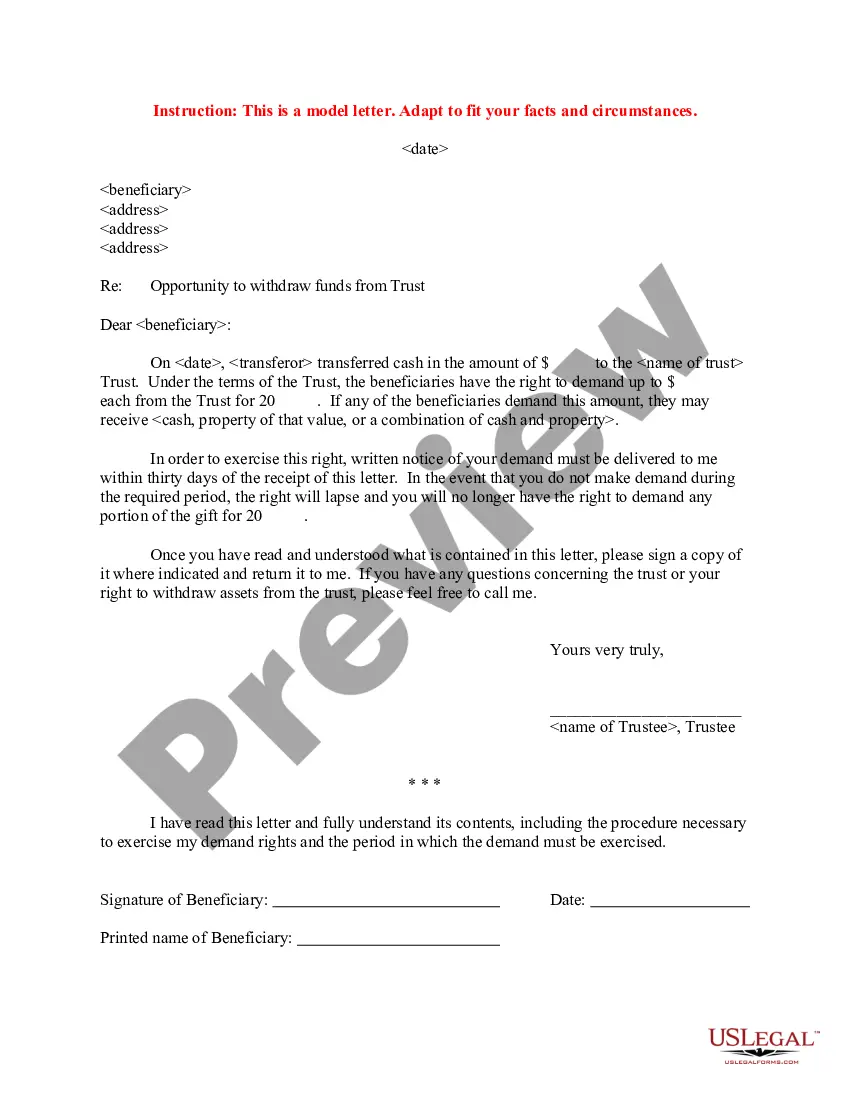
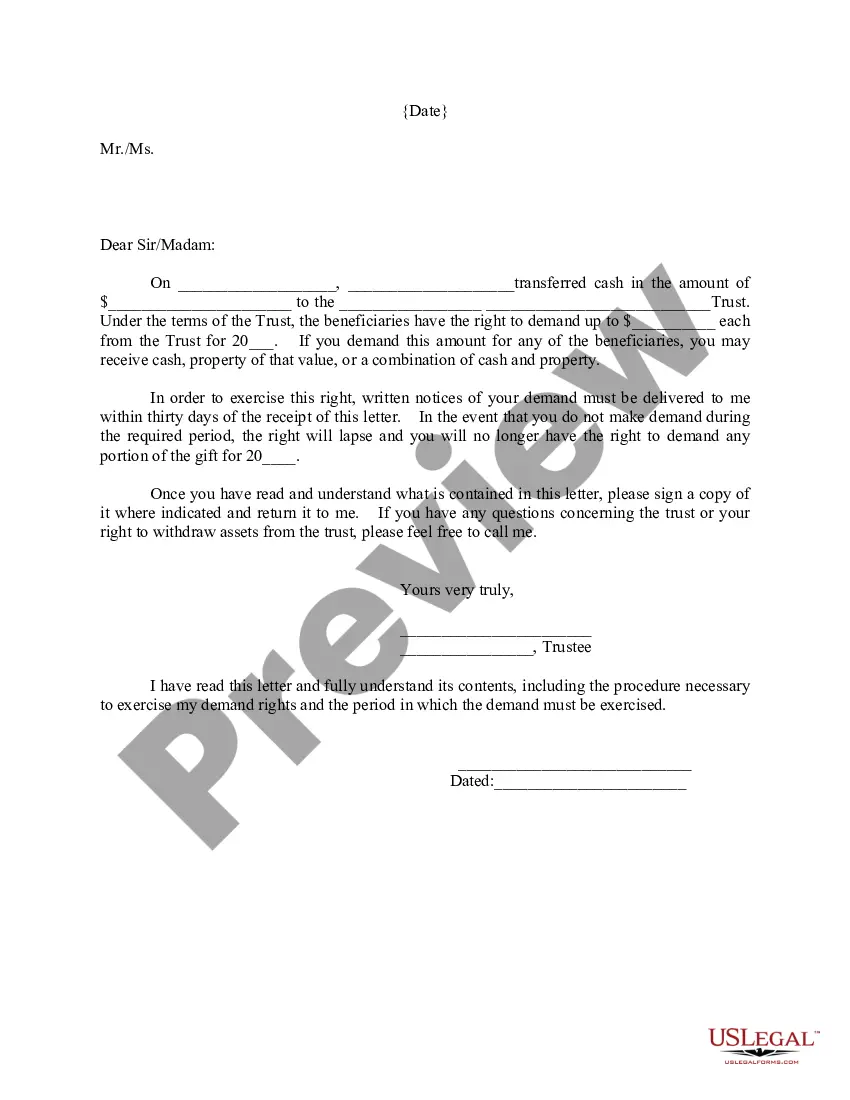
Kentucky Sample Letter to Beneficiaries regarding Trust Money
Description
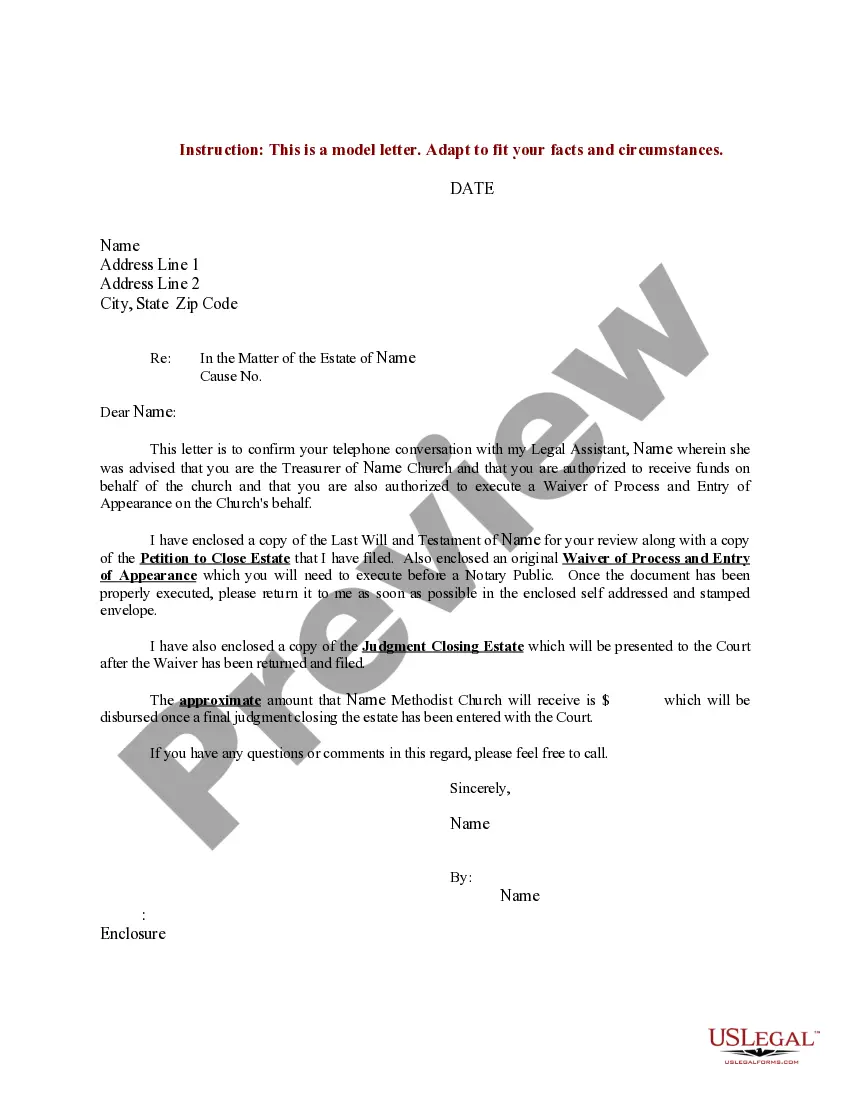





How to fill out Sample Letter To Beneficiaries Regarding Trust Money?
US Legal Forms - among the largest libraries of lawful kinds in the States - offers an array of lawful papers themes it is possible to acquire or produce. Making use of the web site, you can get a large number of kinds for enterprise and specific purposes, categorized by groups, states, or key phrases.You can find the newest types of kinds like the Kentucky Sample Letter to Beneficiaries regarding Trust Money in seconds.
If you currently have a subscription, log in and acquire Kentucky Sample Letter to Beneficiaries regarding Trust Money from the US Legal Forms collection. The Obtain key can look on each and every develop you perspective. You get access to all previously delivered electronically kinds inside the My Forms tab of your own profile.
If you want to use US Legal Forms for the first time, allow me to share simple guidelines to help you started off:
- Ensure you have picked the best develop to your town/area. Select the Review key to check the form`s articles. See the develop explanation to actually have chosen the proper develop.
- If the develop doesn`t satisfy your needs, take advantage of the Look for discipline towards the top of the display to obtain the one which does.
- When you are satisfied with the form, affirm your decision by clicking the Purchase now key. Then, choose the prices prepare you like and supply your accreditations to sign up for an profile.
- Method the deal. Make use of your bank card or PayPal profile to complete the deal.
- Choose the format and acquire the form in your gadget.
- Make changes. Fill up, revise and produce and signal the delivered electronically Kentucky Sample Letter to Beneficiaries regarding Trust Money.
Each and every web template you put into your money lacks an expiry particular date which is your own for a long time. So, if you would like acquire or produce another duplicate, just check out the My Forms portion and click on about the develop you will need.
Get access to the Kentucky Sample Letter to Beneficiaries regarding Trust Money with US Legal Forms, by far the most extensive collection of lawful papers themes. Use a large number of expert and status-specific themes that fulfill your business or specific requires and needs.
Form popularity
FAQ
Here are the essentials, in most states: Explain that the trust exists. ... Provide your name and contact information. ... Tell beneficiaries that they have the right to see a copy of the trust document and that you will send them one if they request it. ... Give the deadline for court challenges.
The grantor can opt to have the beneficiaries receive trust property directly without any restrictions. The trustee can write the beneficiary a check, give them cash, and transfer real estate by drawing up a new deed or selling the house and giving them the proceeds.
A good first step for the beneficiary is to meet with the trustee who is tasked with executing the terms of the trust. It may be an individual, such as a CPA or lawyer, family member, or potentially a corporate trustee such as Wells Fargo Bank.
The trust can pay out a lump sum or percentage of the funds, make incremental payments throughout the years, or even make distributions based on the trustee's assessments. Whatever the grantor decides, their distribution method must be included in the trust agreement drawn up when they first set up the trust.
Typically, beneficiaries of a standard revocable trust can anticipate their inheritance distribution within a 12 to 18-month window. However, this duration can vary based on the trust's intricacies and any potential challenges faced during administration.
When a trust beneficiary receives a distribution from the trust's principal balance, he does not have to pay taxes on it, the reason being the Internal Revenue Service (IRS) assumes this money was already taxed before it was placed into the trust.
Bank accounts, retirement accounts, and life insurance will automatically transfer an inheritance if beneficiaries are designated. Listing beneficiaries on these accounts can be the easiest and quickest way to transfer those assets outside probate court.
Here are some things to consider when drafting a letter to your executor or trustee. Your thoughts about wealth. ... Describe key players in the family. ... What matters to you? ... Give your trustee the power to make decisions, even when that means saying no.