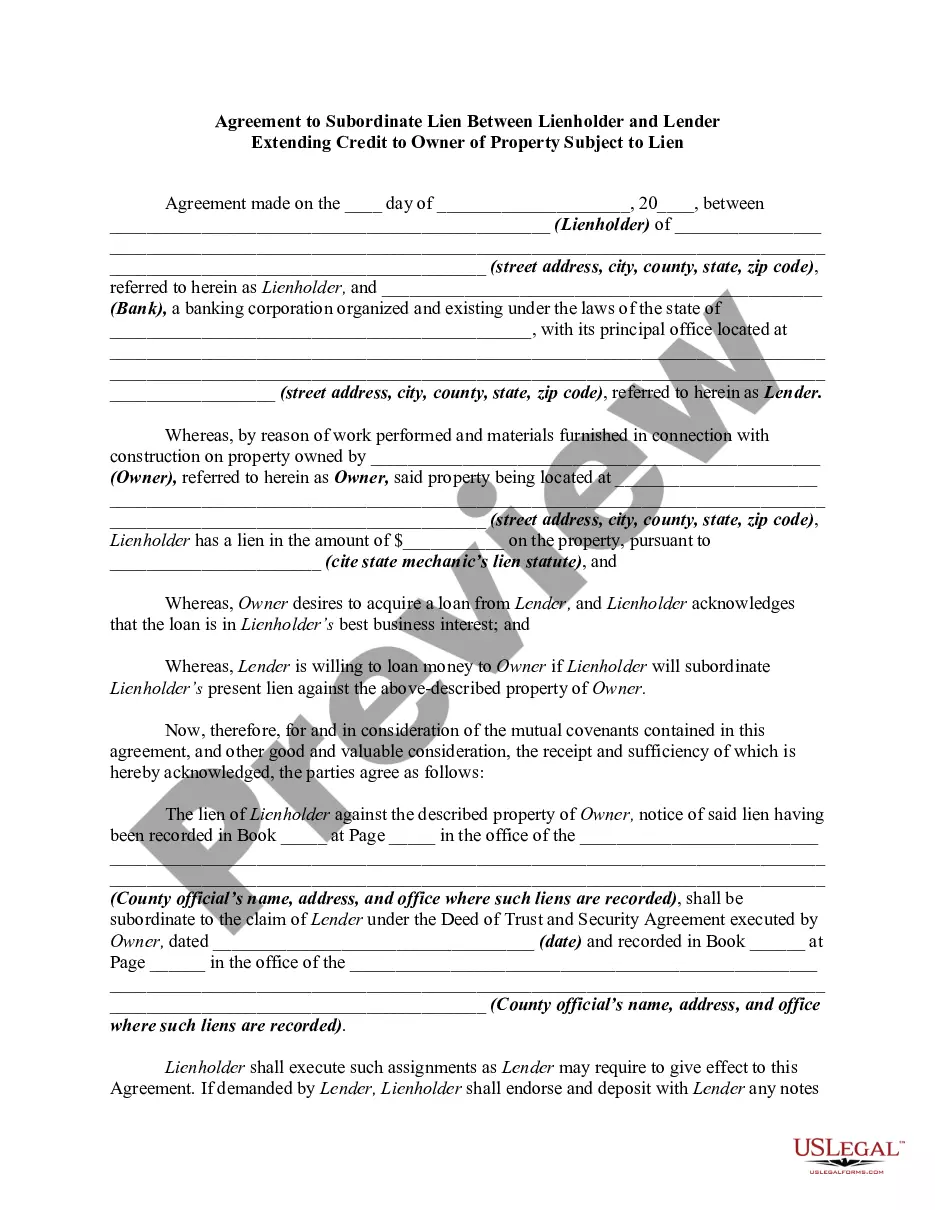
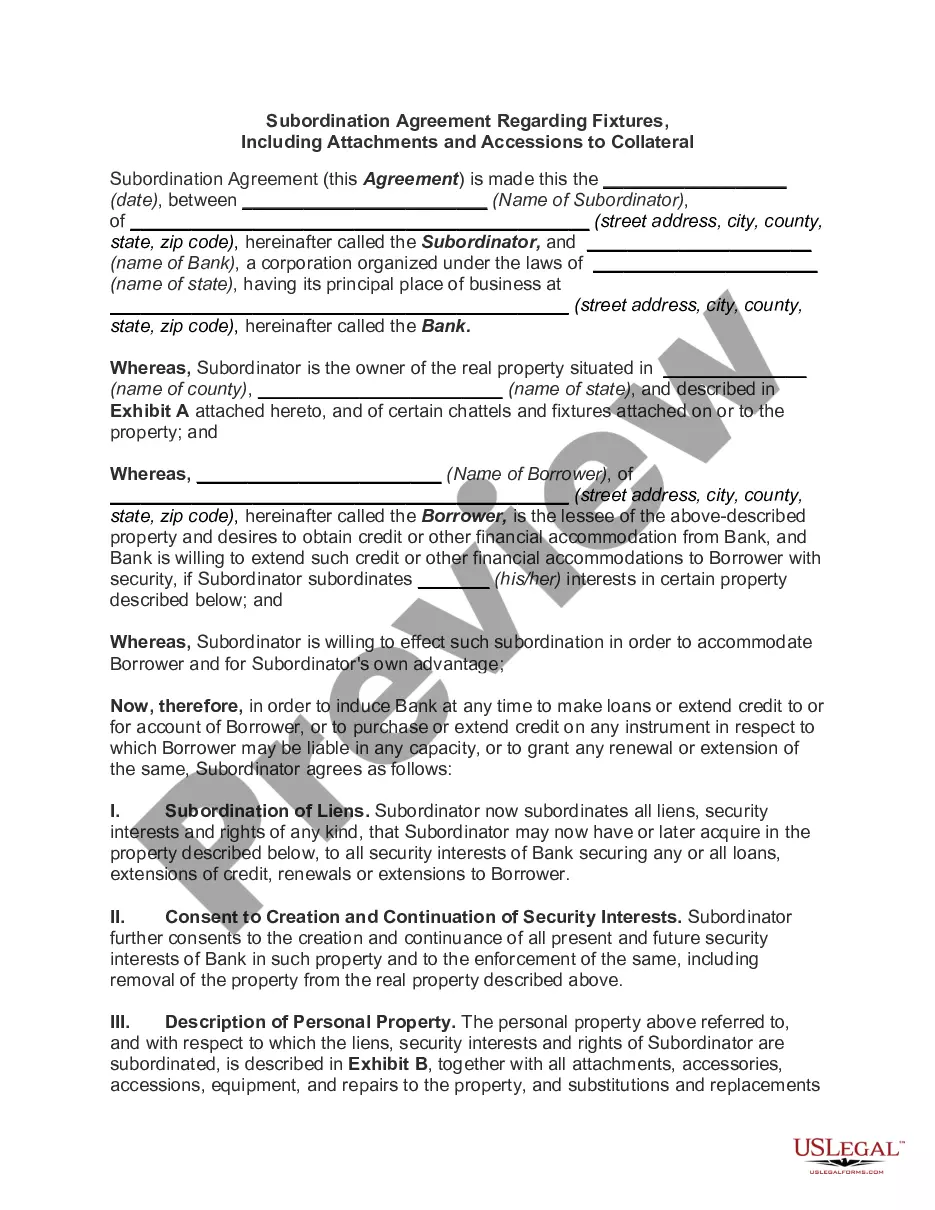
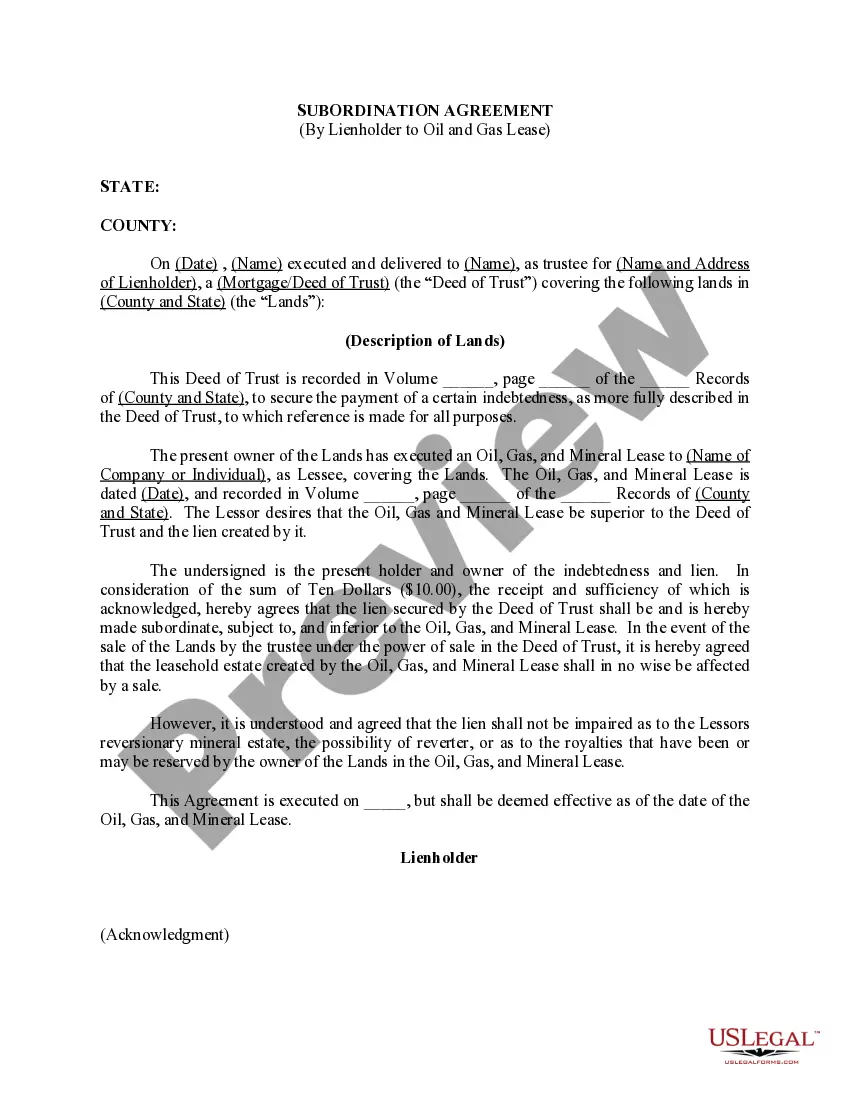
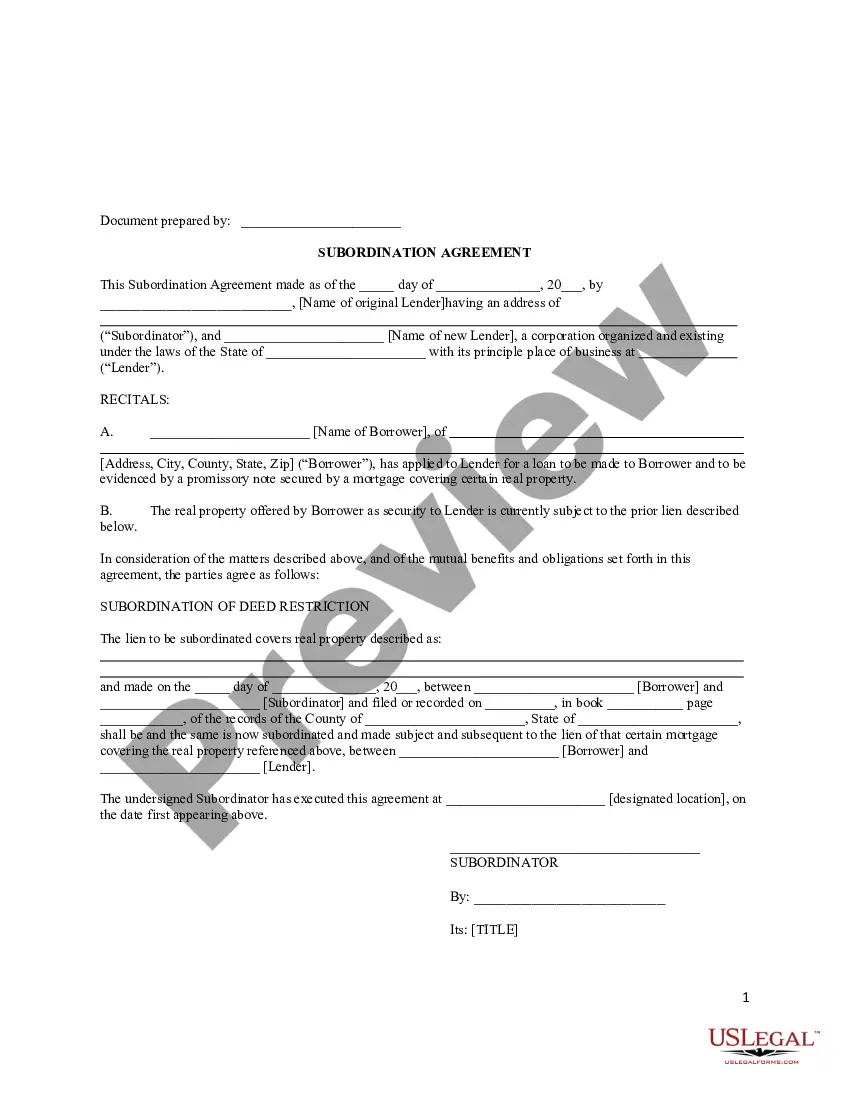
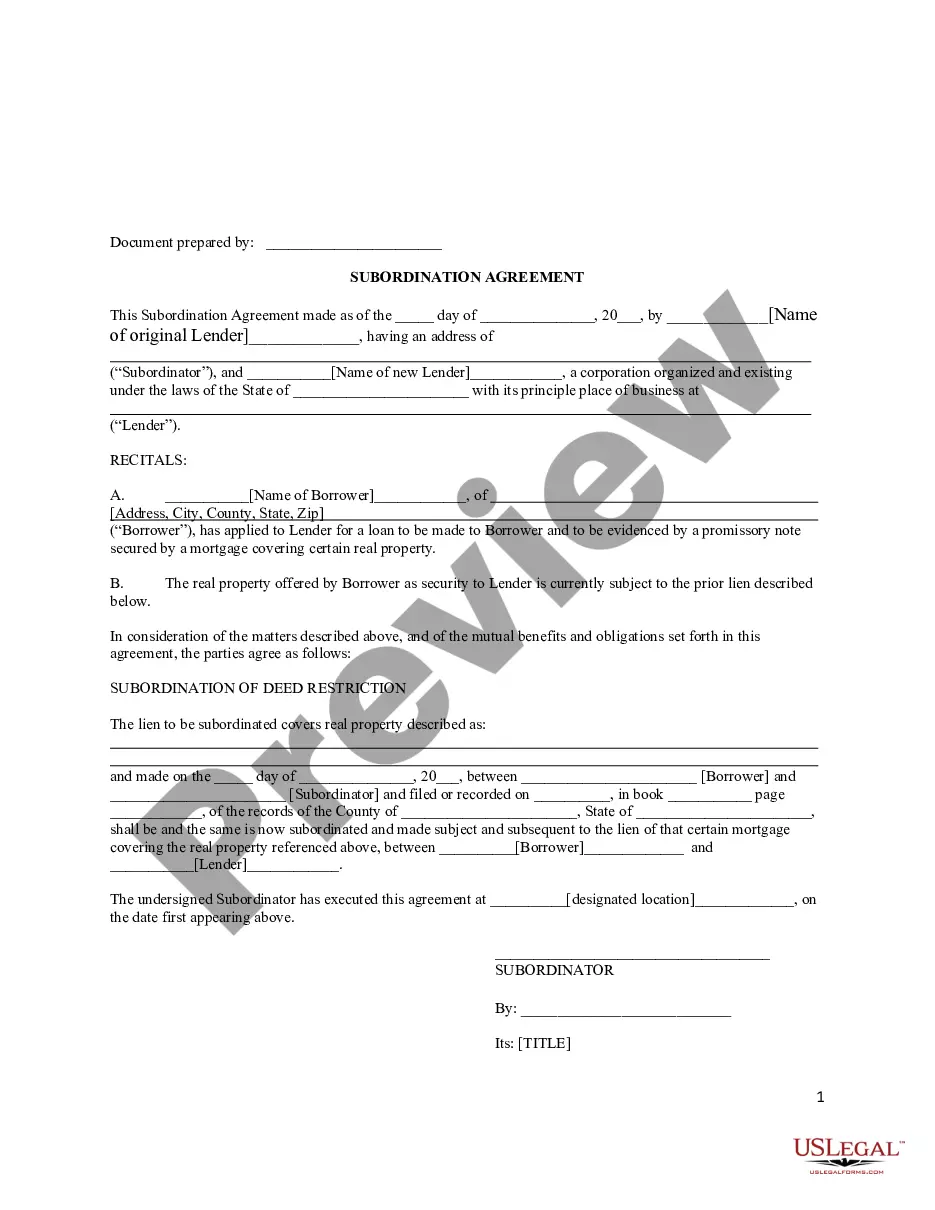
Kentucky Subordination Agreement - Lien
Description
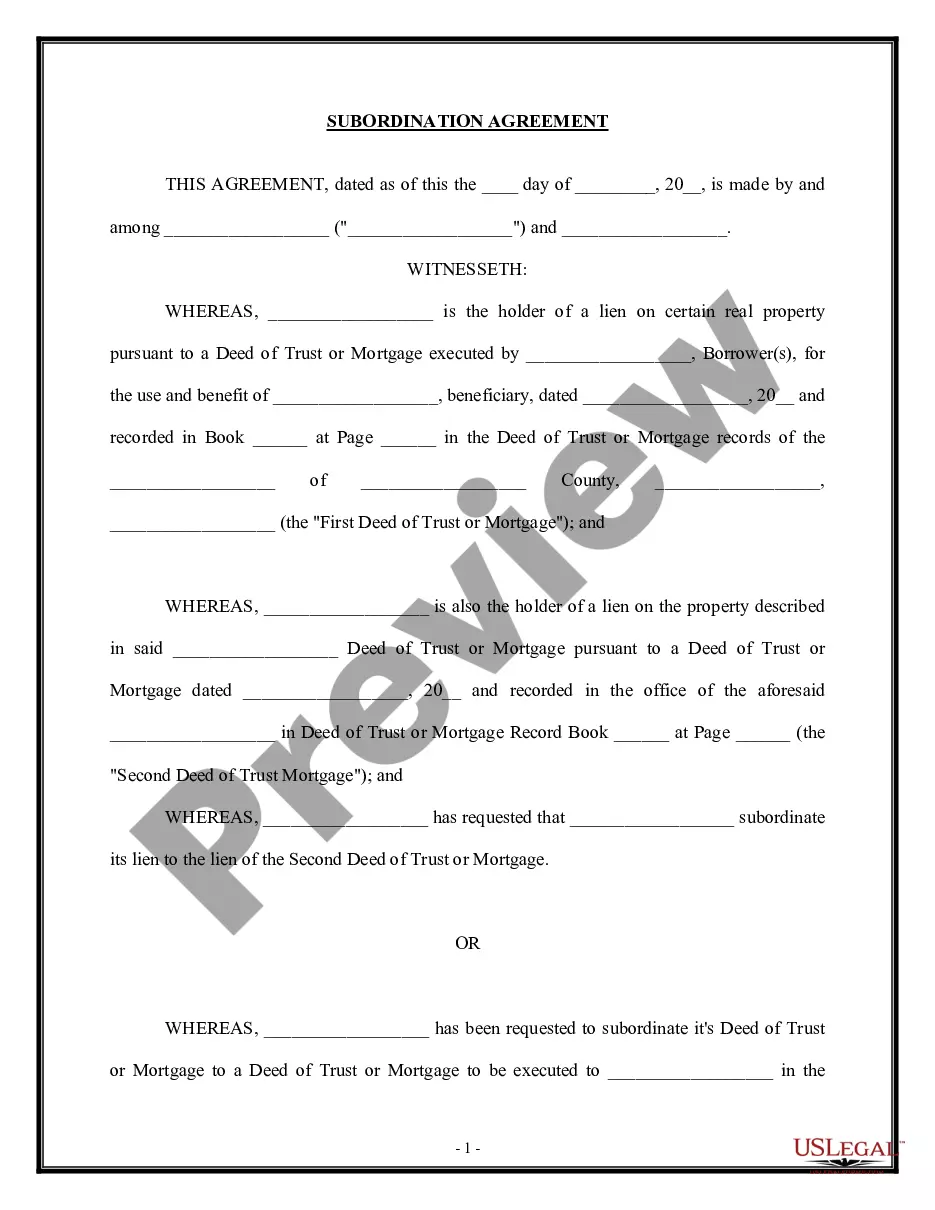
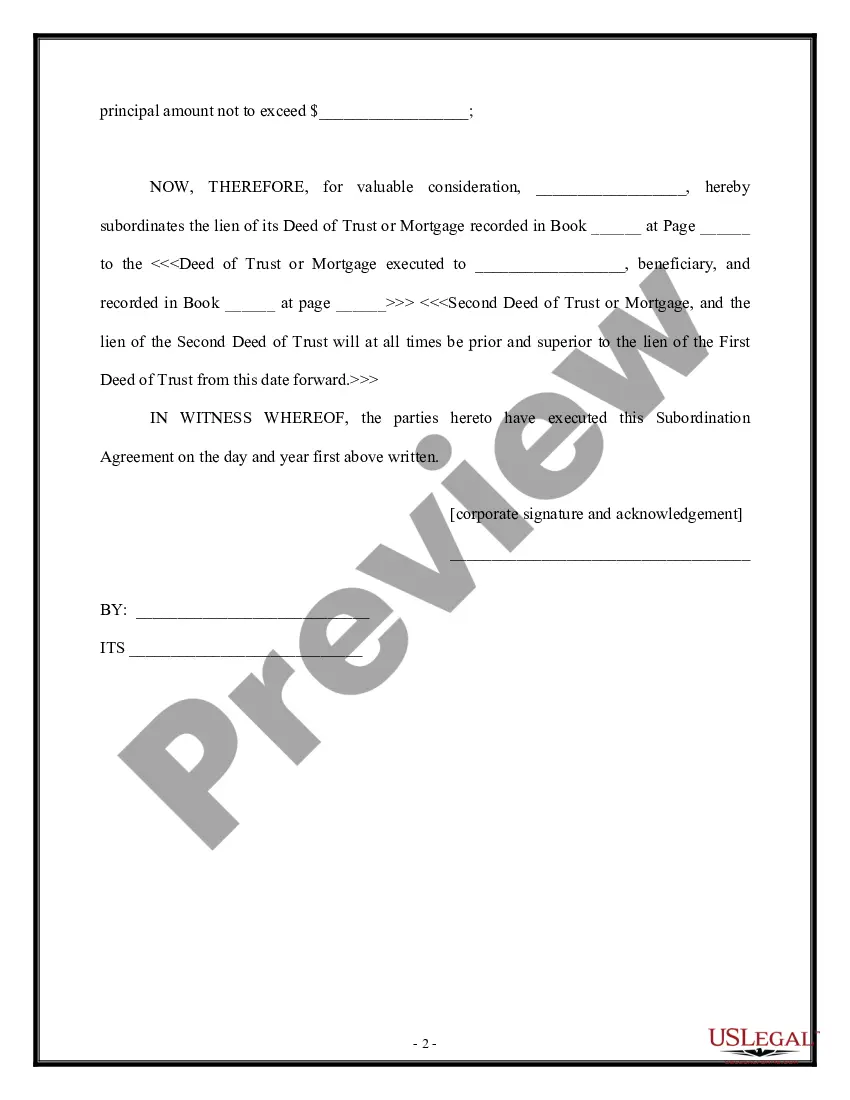
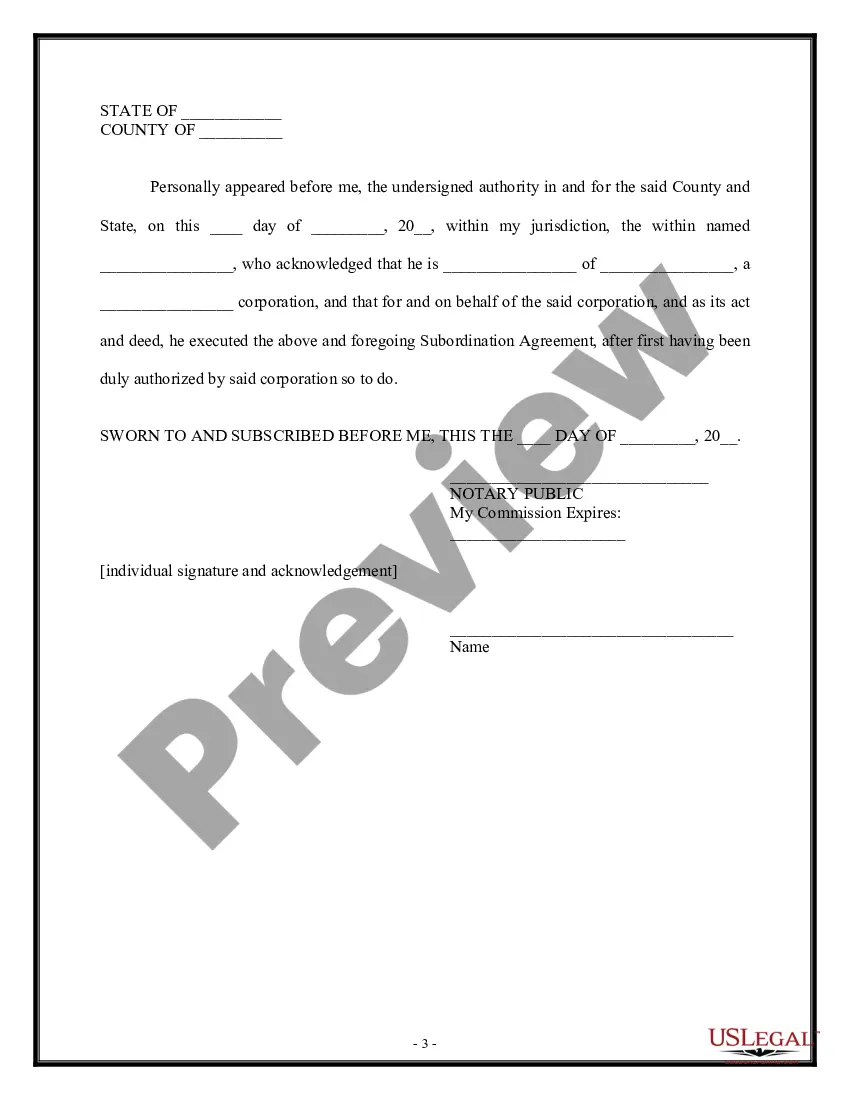
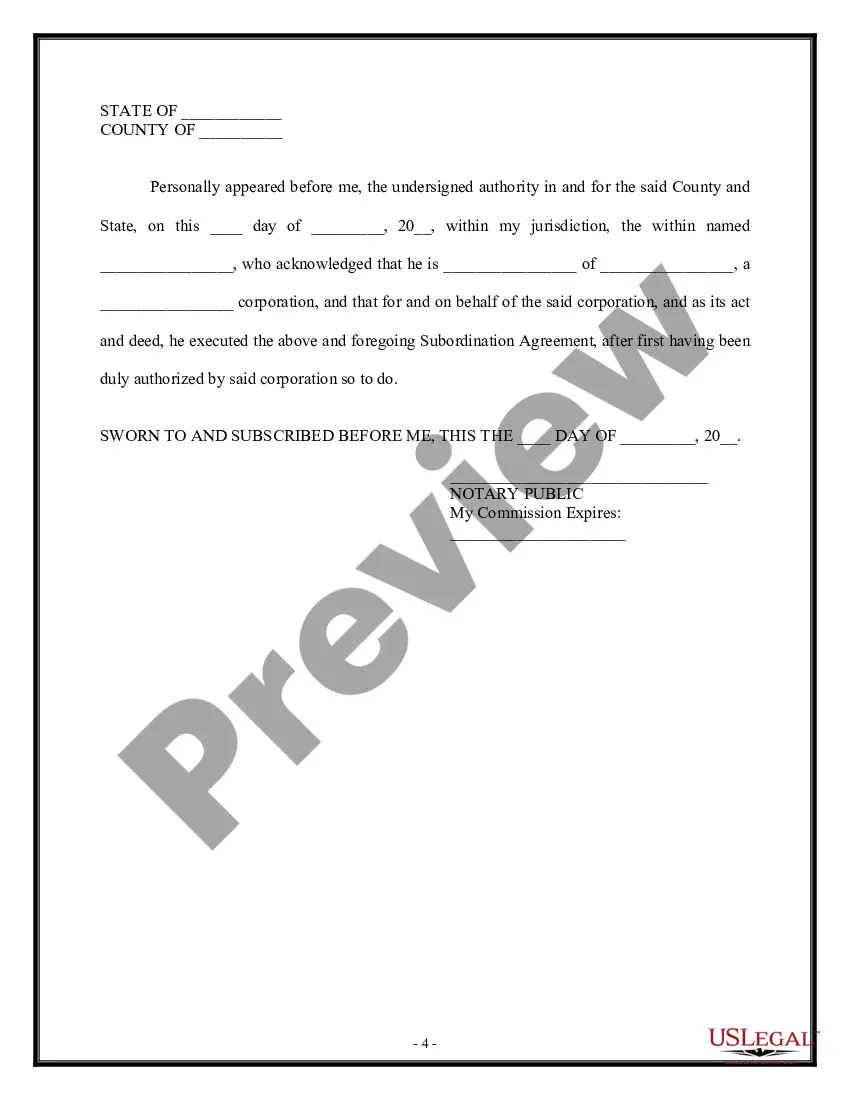
Get your form ready online
Our built-in tools help you complete, sign, share, and store your documents in one place.
Make edits, fill in missing information, and update formatting in US Legal Forms—just like you would in MS Word.
Download a copy, print it, send it by email, or mail it via USPS—whatever works best for your next step.
Sign and collect signatures with our SignNow integration. Send to multiple recipients, set reminders, and more. Go Premium to unlock E-Sign.
If this form requires notarization, complete it online through a secure video call—no need to meet a notary in person or wait for an appointment.
We protect your documents and personal data by following strict security and privacy standards.

Make edits, fill in missing information, and update formatting in US Legal Forms—just like you would in MS Word.

Download a copy, print it, send it by email, or mail it via USPS—whatever works best for your next step.

Sign and collect signatures with our SignNow integration. Send to multiple recipients, set reminders, and more. Go Premium to unlock E-Sign.

If this form requires notarization, complete it online through a secure video call—no need to meet a notary in person or wait for an appointment.

We protect your documents and personal data by following strict security and privacy standards.
Looking for another form?






How to fill out Subordination Agreement - Lien?
US Legal Forms - one of the most prominent collections of legal documents in the United States - offers a variety of legal document templates you can download or print. By using the site, you can find thousands of forms for business and personal purposes, organized by categories, states, or keywords. You can locate the latest versions of forms such as the Kentucky Subordination Agreement - Lien within moments.
If you already have a subscription, Log In and retrieve the Kentucky Subordination Agreement - Lien from the US Legal Forms collection. The Download button will appear on every document you view. You have access to all previously downloaded forms in the My documents section of your account.
If you wish to use US Legal Forms for the first time, here are simple steps to help you get started: Ensure you have selected the correct document for your city/state. Click the Preview button to examine the form's details. Review the document description to confirm you have selected the right form. If the form does not meet your requirements, utilize the Search field at the top of the page to find one that does. If you are satisfied with the form, confirm your choice by clicking the Get now button. Then, choose the payment plan you prefer and provide your information to register for an account. Complete the transaction. Use your credit card or PayPal account to finalize the purchase. Select the format and download the form to your device. Make modifications. Fill out, edit and print and sign the downloaded Kentucky Subordination Agreement - Lien.
- Every template you add to your account has no expiration date and is yours permanently.
- So, if you wish to download or print another copy, just go to the My documents section and click on the form you need.
- Access the Kentucky Subordination Agreement - Lien with US Legal Forms, the most extensive collection of legal document templates.
- Utilize thousands of professional and state-specific templates that fulfill your business or personal needs and requirements.
Form popularity
FAQ
Despite its technical-sounding name, the subordination agreement has one simple purpose. It assigns your new mortgage to first lien position, making it possible to refinance with a home equity loan or line of credit. Signing your agreement is a positive step forward in your refinancing journey.
Lien subordination refers to the order in which claims on collateral are prioritized. This takes place most often among senior secured lenders and does not imply that one tranche of senior debt has payment preference over another.
Subordination agreements are used to legally establish the order in which debts are to be repaid in the event of a foreclosure or bankruptcy. In return for the agreement, the lender with the subordinated debt will be compensated in some manner for the additional risk.
An example is a trust document that includes a subordinate clause. This requires it to state that once the primary lien becomes active, a secondary lien becomes automatically subordinate. For instance, if a trust pays education funding as a first priority, the first lien is tuition.
Two types of subordination agreements are: Executory Subordination and Automatic Subordination. These differ in the timing of when priority rights are given and the contractual performance required by the subordinated party.
A subordination agreement prioritizes debts, ranking one behind another for purposes of collecting repayment from a debtor in the event of foreclosure or bankruptcy. A second-in-line creditor collects only when and if the priority creditor has been fully paid.
Copies of tax liens can be obtained from the county court clerk in the county where the lien is filed.
A mortgage subordination refers to the order the outstanding liens on your property get repaid if you stop making your mortgage payments. For example, your first home loan (primary mortgage) is repaid first, with any remaining funds paying off additional liens, including second mortgages, HELOCs and home equity loans.