Kentucky Revocable Living Trust for Husband and Wife with No Children
Understanding this form
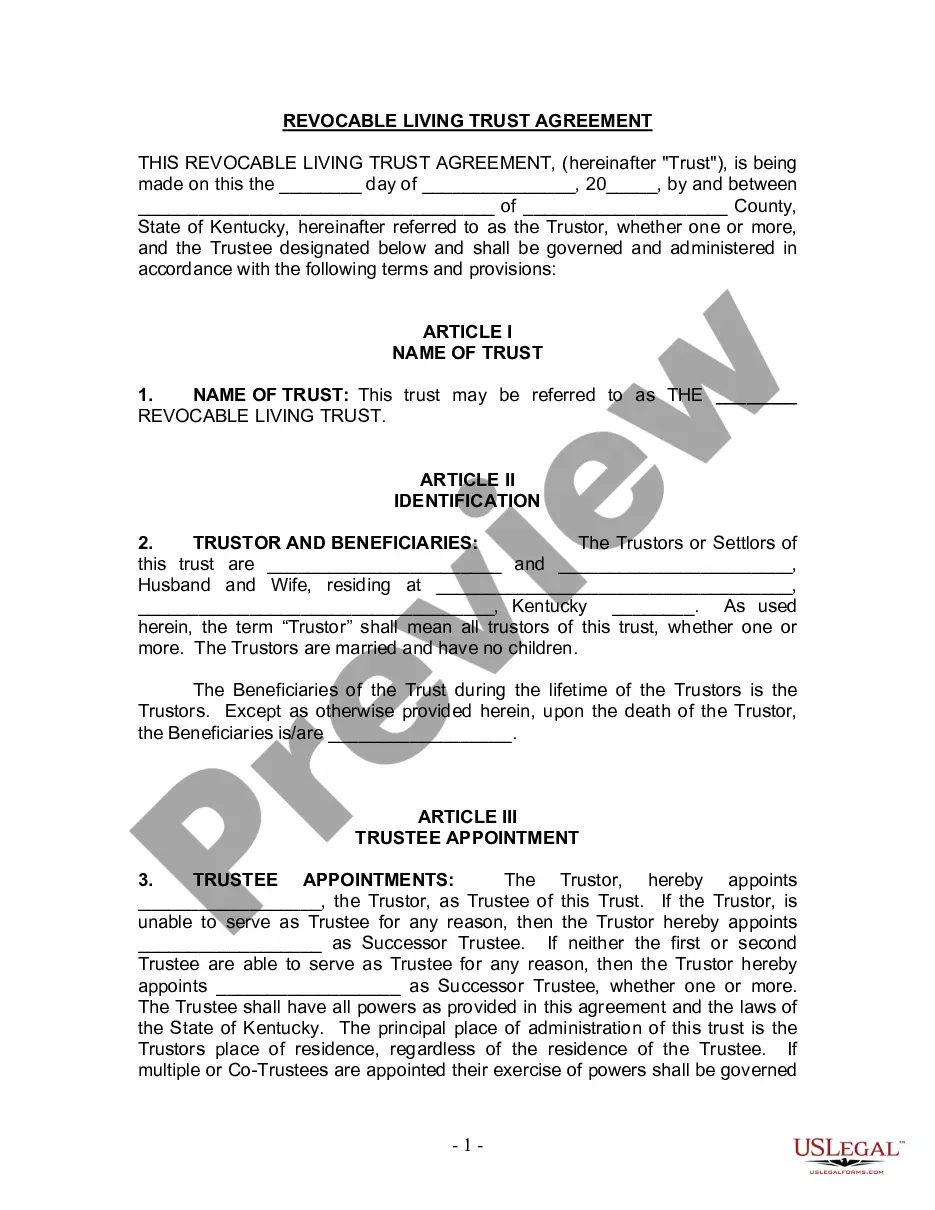
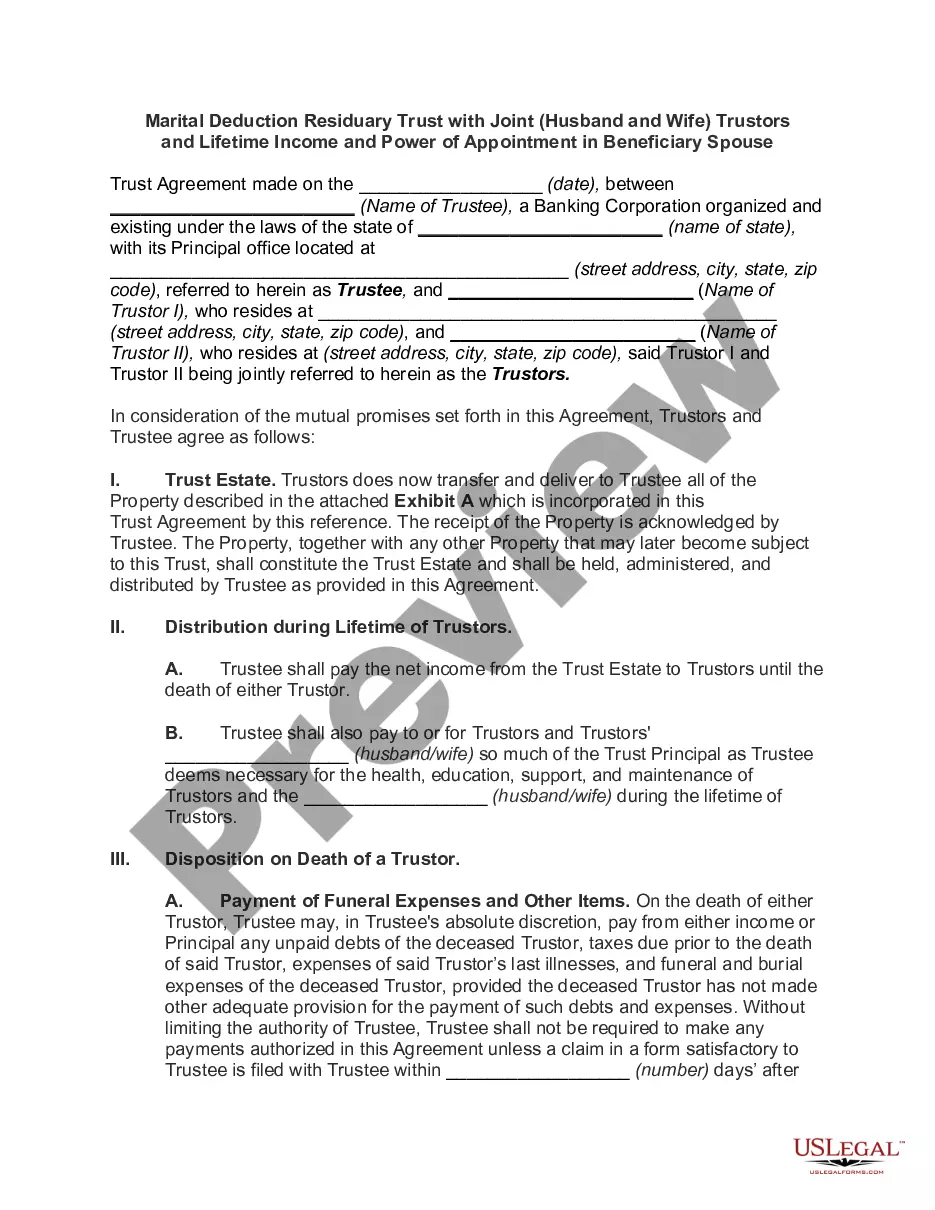
This Revocable Living Trust for Husband and Wife with No Children is a legal document that allows a married couple to manage their assets during their lifetime and dictate how these assets will be distributed after their deaths. Unlike a will, a living trust helps avoid probate, enabling a faster and more efficient transfer of property. This form specifically caters to couples without children and provides for asset management by a designated trustee, which can be one of the creators of the trust.
Key components of this form
- Name of Trust: Allows the creators to designate a name for their trust.
- Trustor and Beneficiaries: Identifies the trust creators as both trustors and beneficiaries during their lifetimes.
- Trustee Appointment: Outlines who will serve as the trustee and successor trustee if necessary.
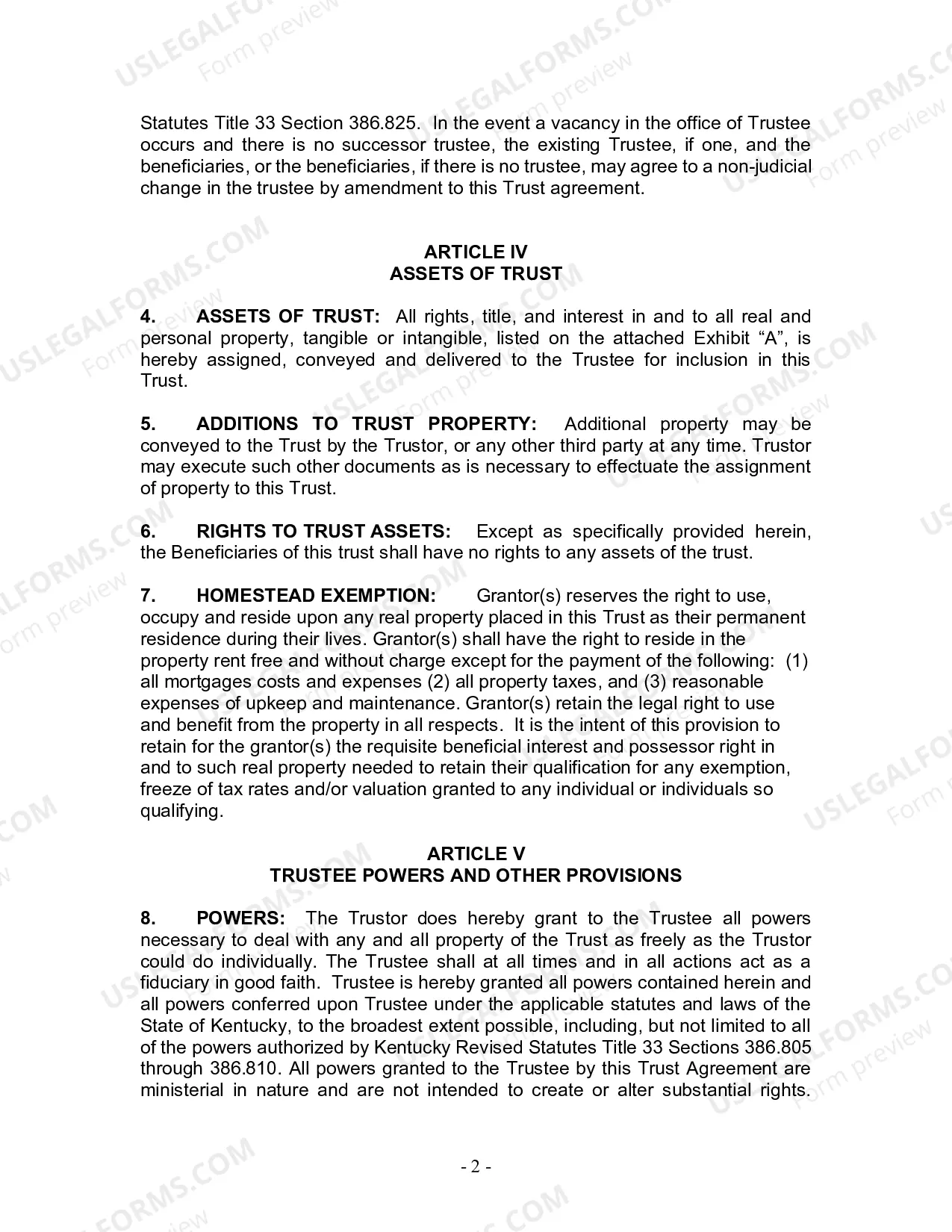
- Assets of Trust: Lists the assets included in the trust along with provisions for additional property.
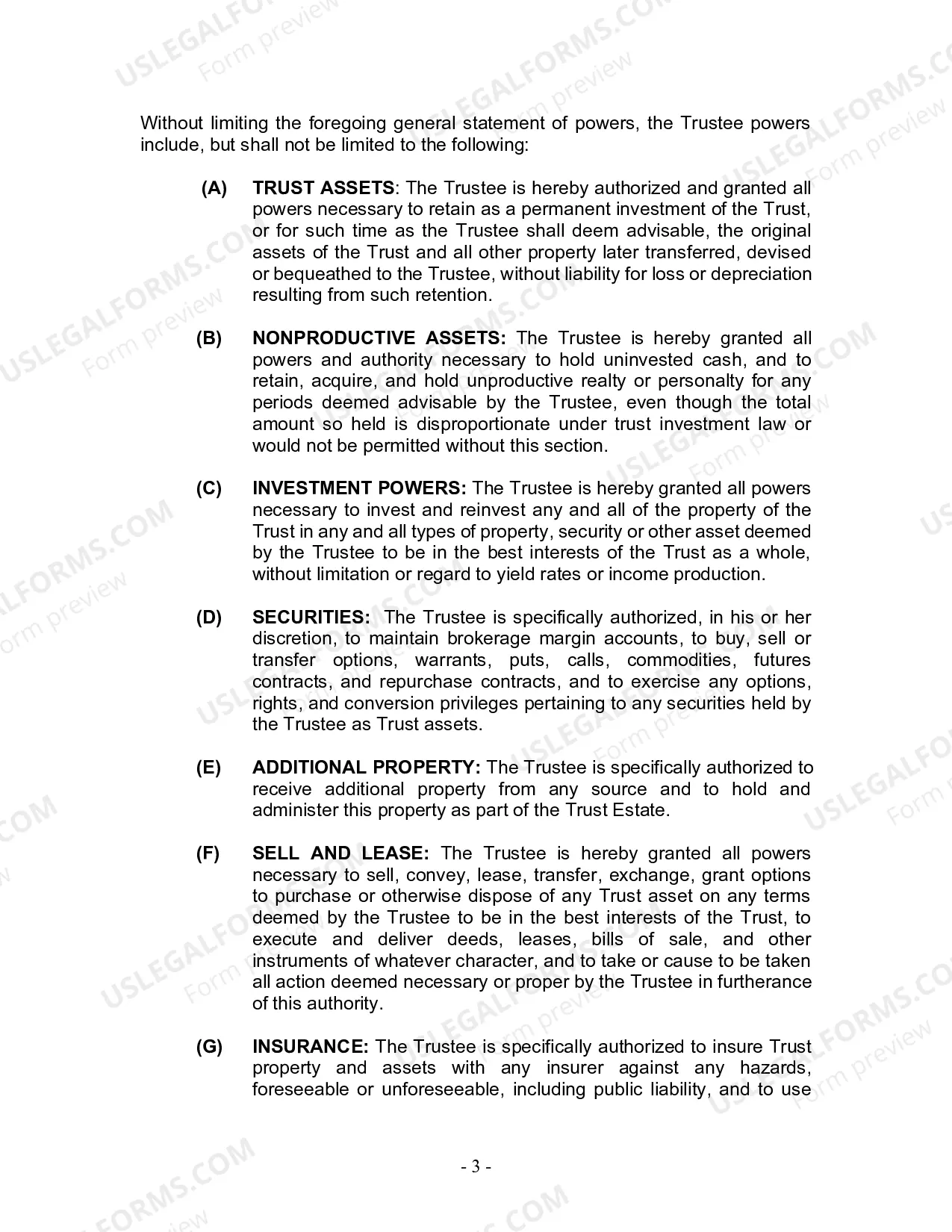
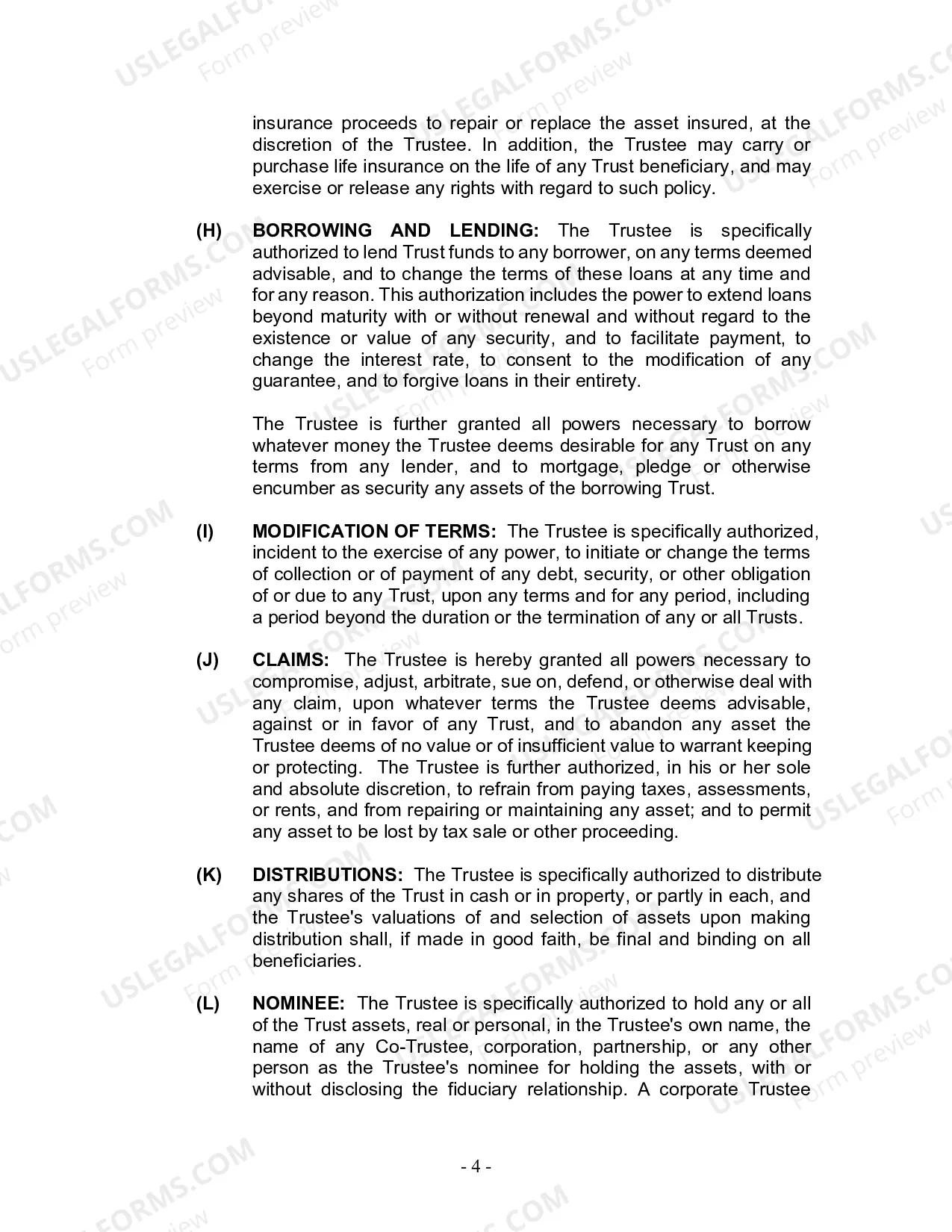
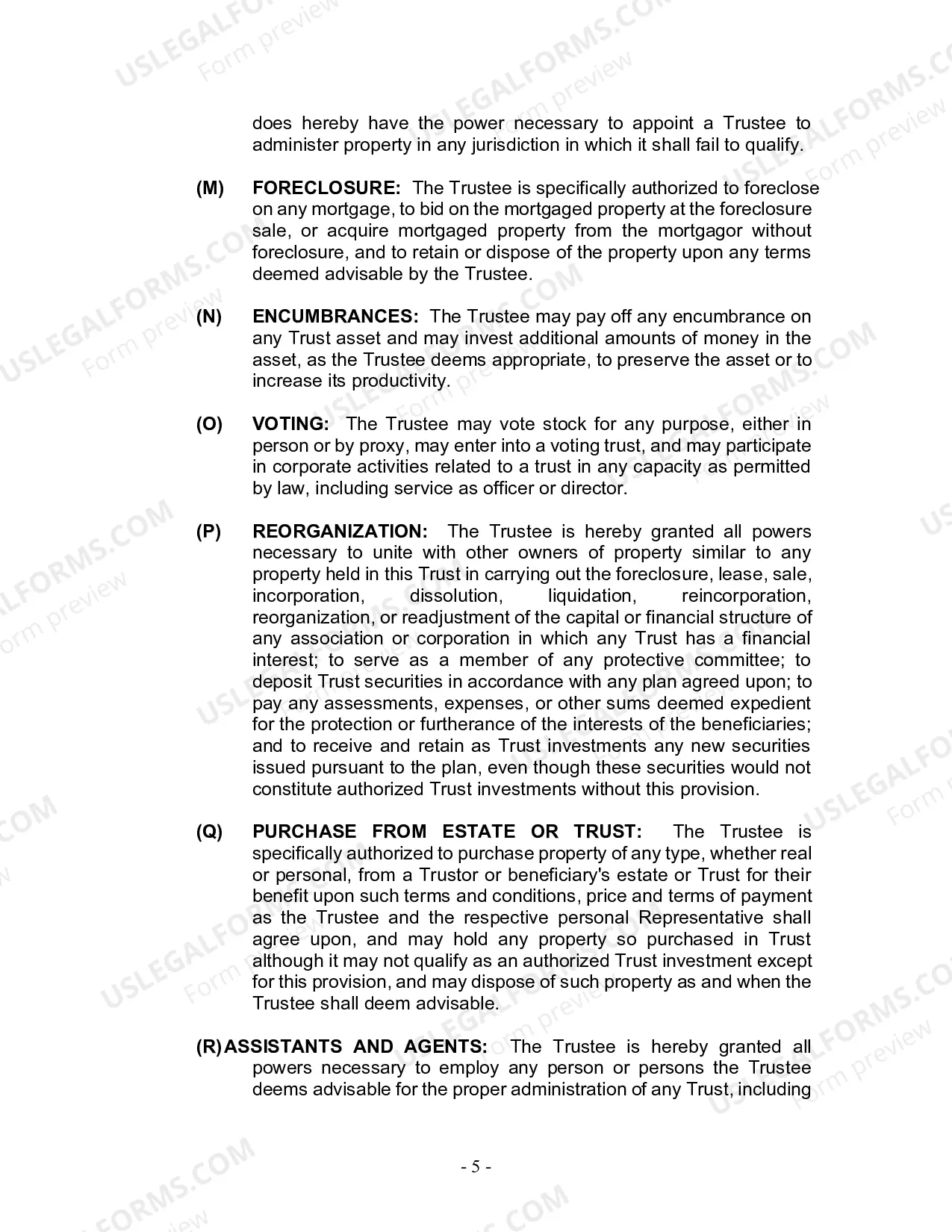
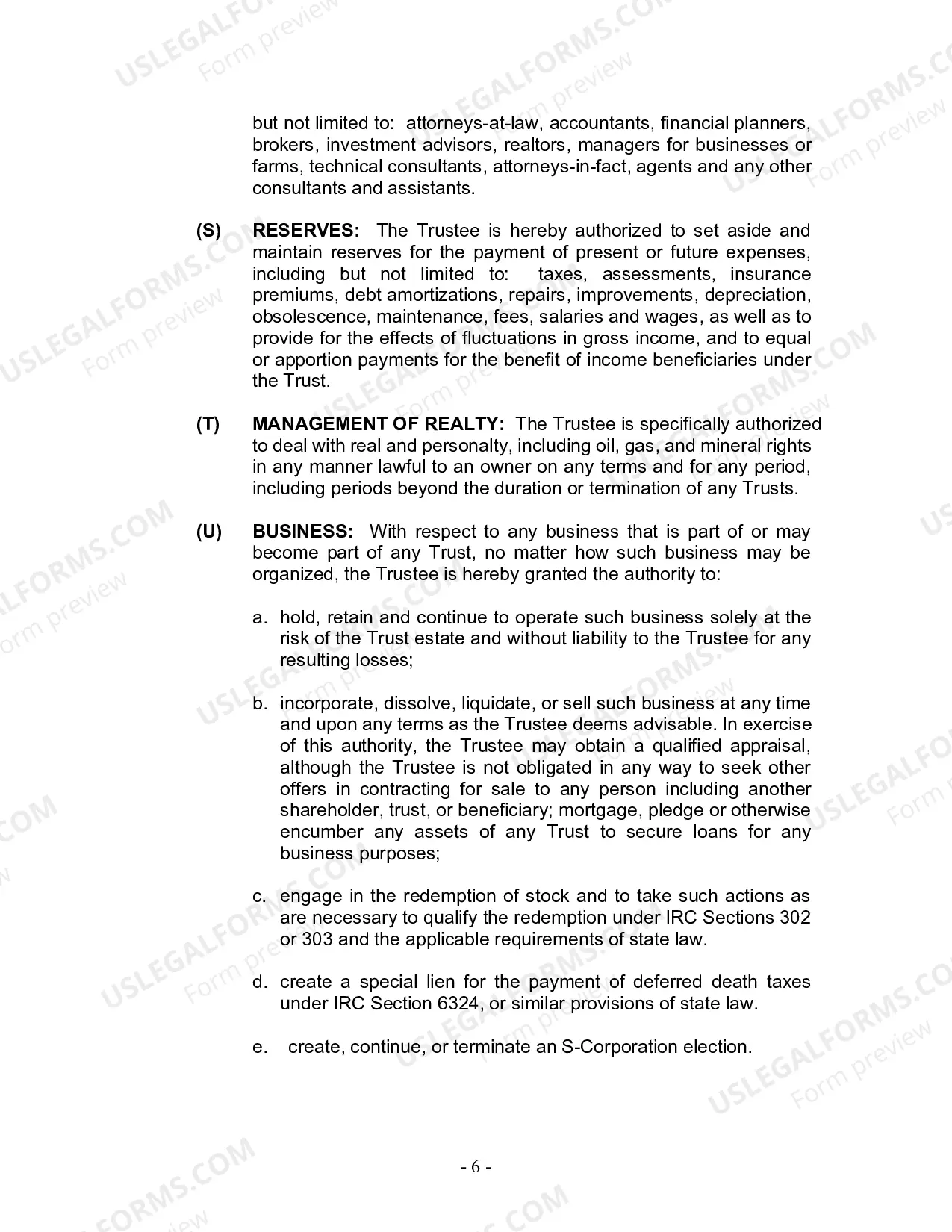
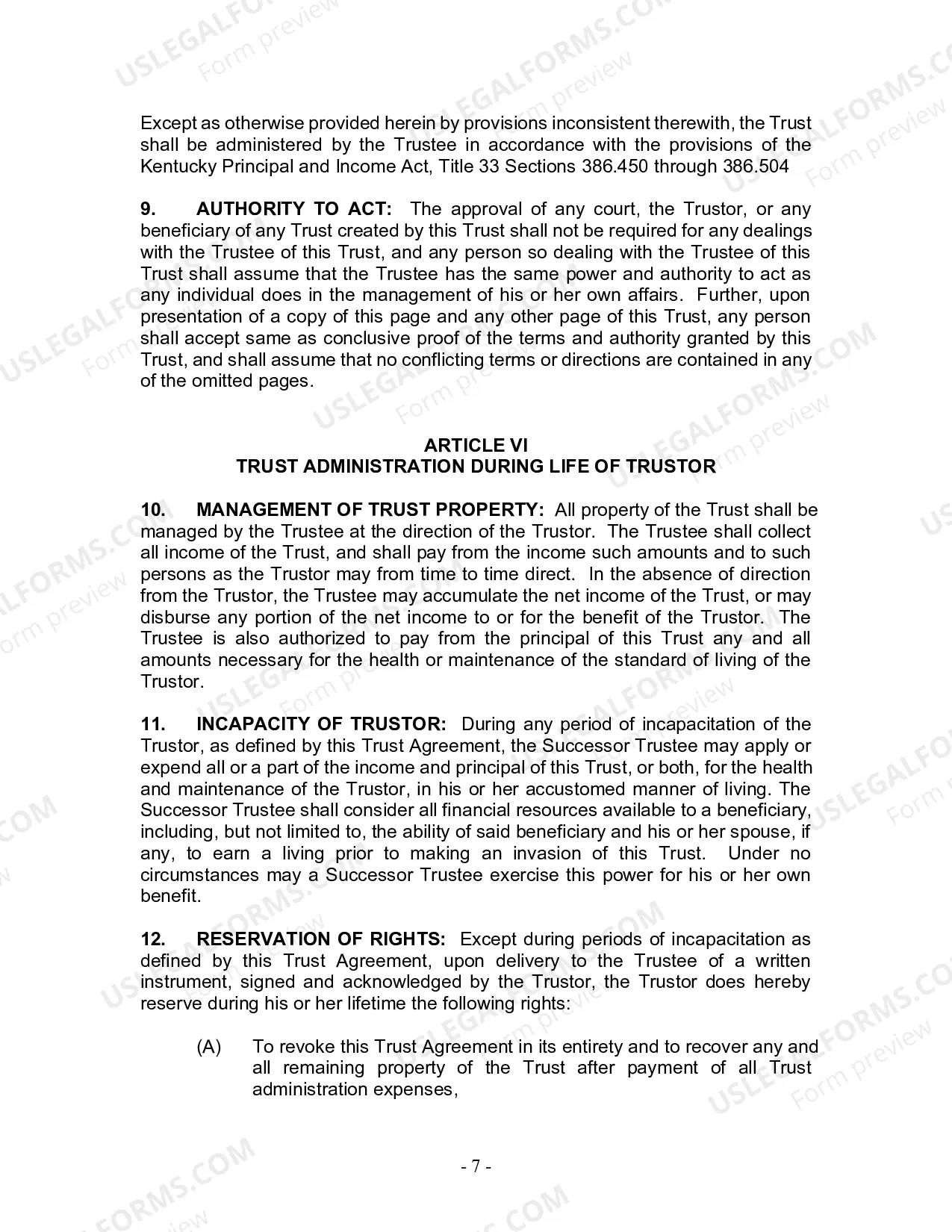
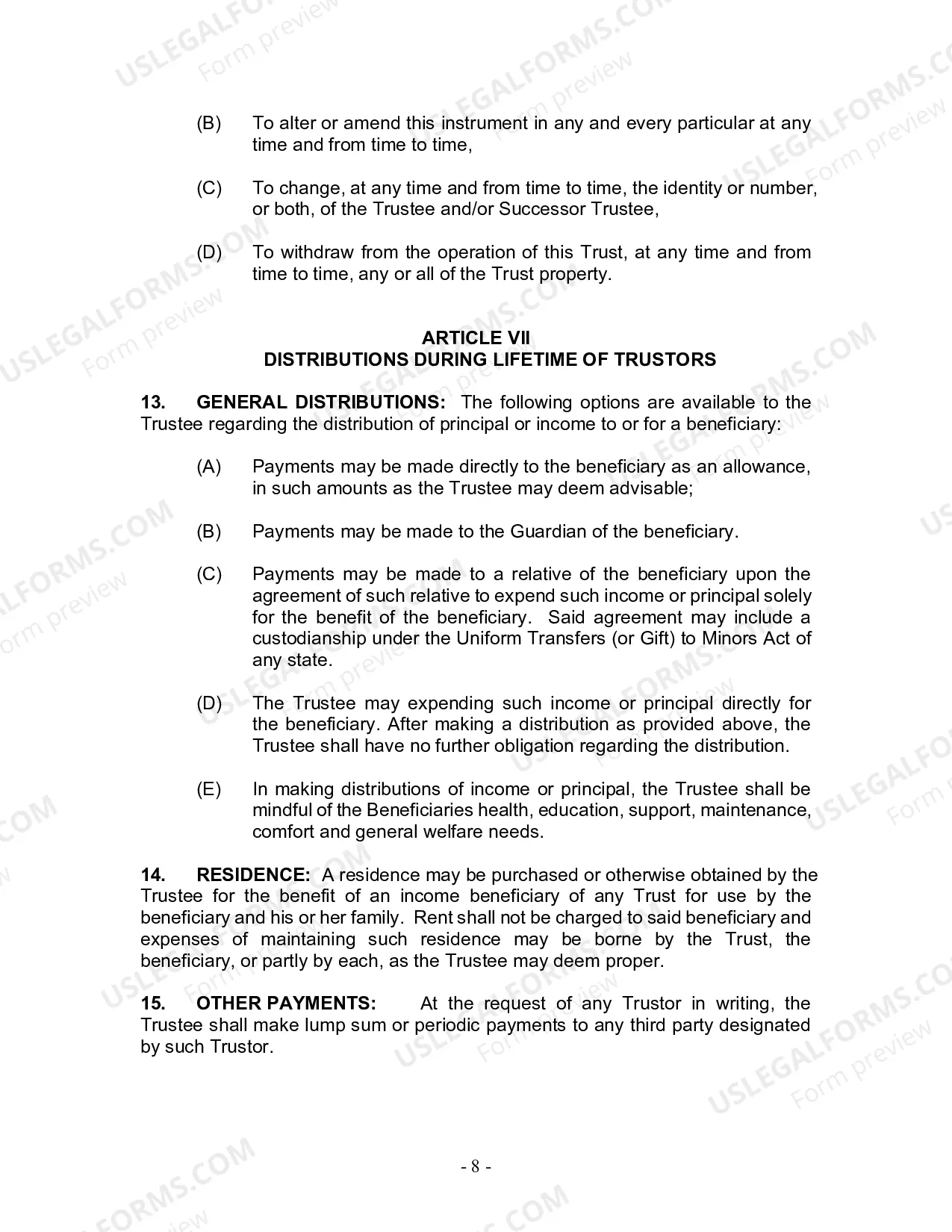
- Trustee Powers: Enumerates the powers granted to the trustee for managing trust assets.
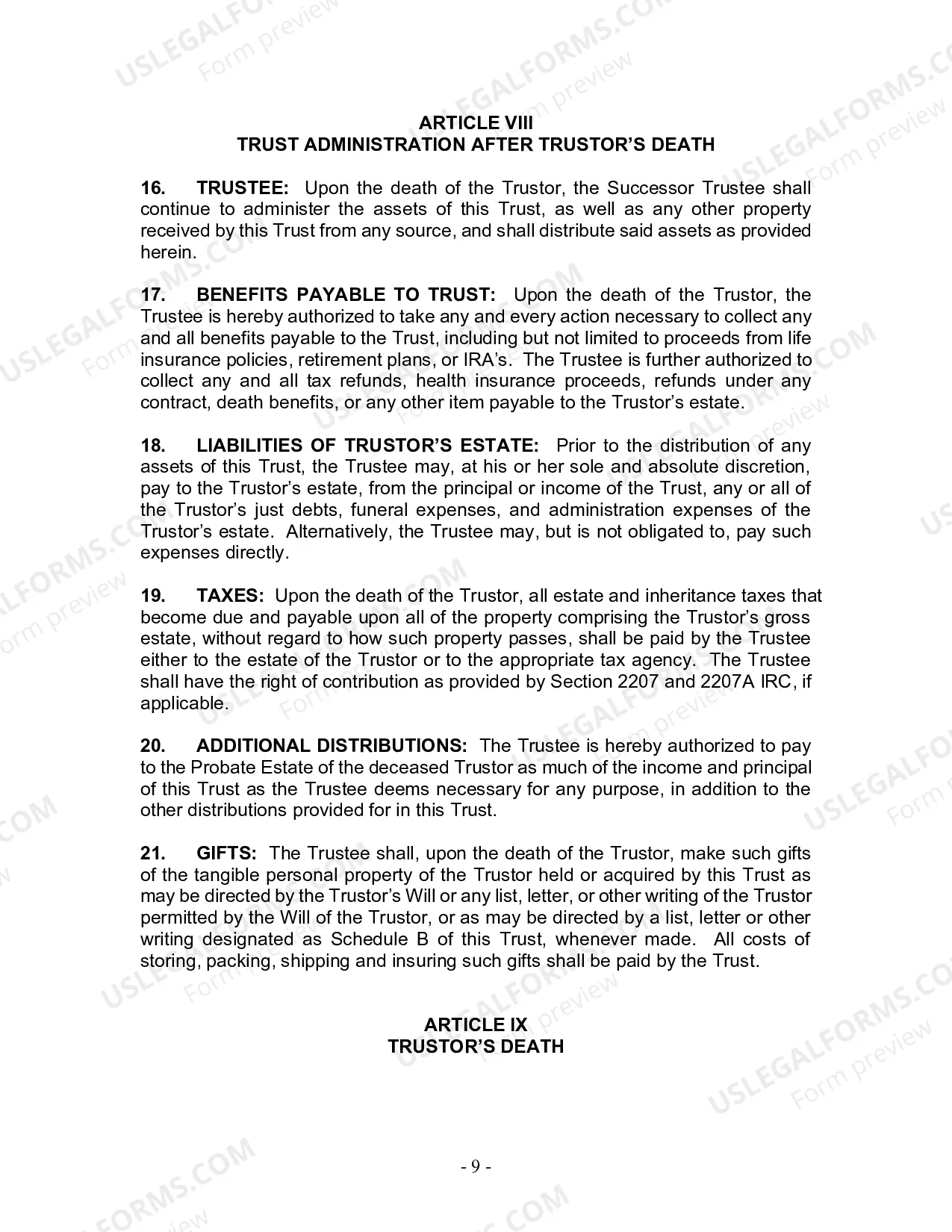
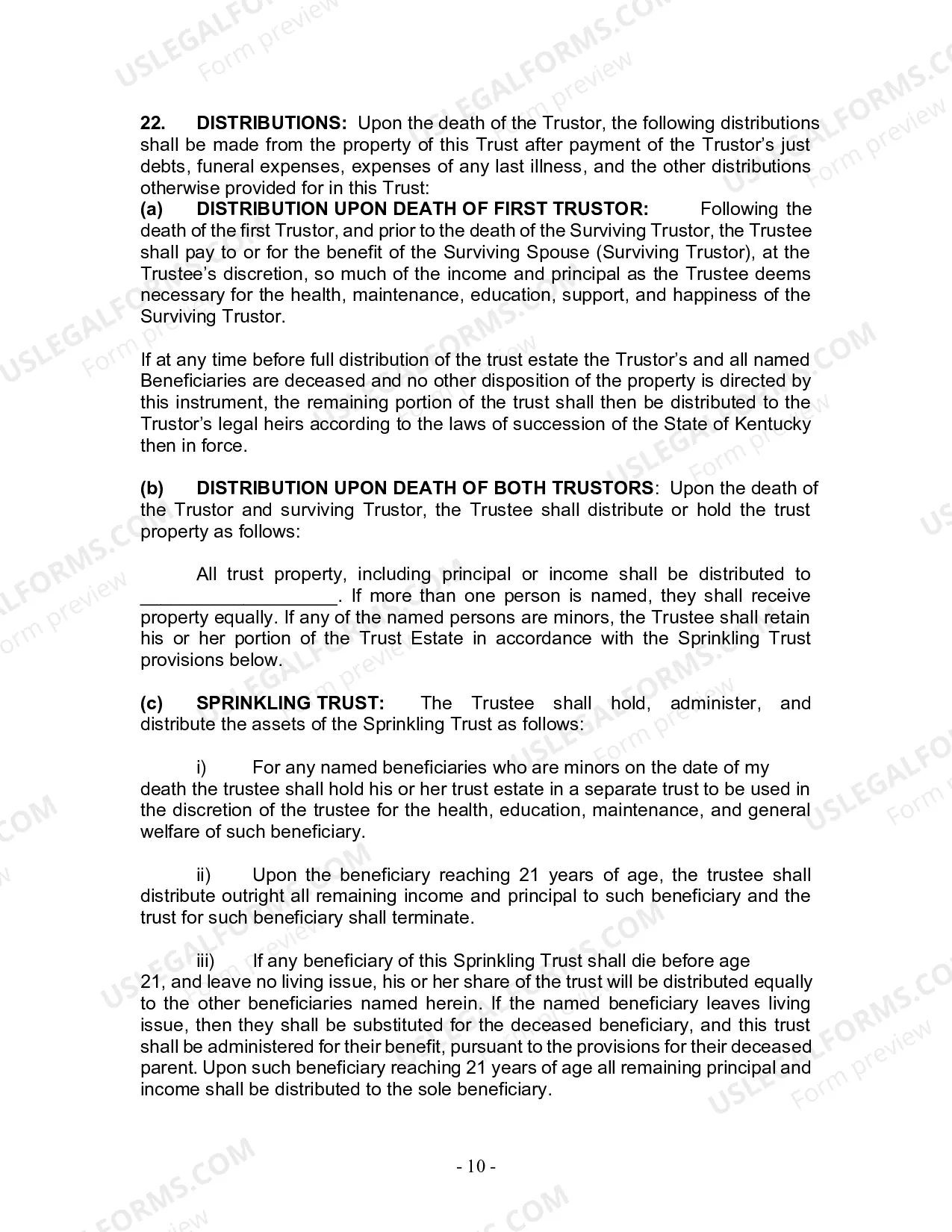
- Distribution Upon Death: Specifies how the assets will be distributed upon the death of the trustors.




Common use cases
This form is ideal for a married couple without children who want to arrange their estate planning efficiently. It is used when the couple wishes to avoid probate and ensure a smooth transition of ownership of their assets after their passing. This trust can also be beneficial if the couple wants to maintain control over their assets while alive, yet have a clear plan for distribution upon their deaths.
Who needs this form
This form is suitable for:
- Married couples without children seeking to establish a clear estate plan.
- Couples wanting to manage their assets collaboratively while avoiding probate.
- Individuals looking to designate specific individuals as trustees for effective management of their property.
How to complete this form
- Identify the trust creators (Trustors) and enter their names and addresses.
- Designate a name for the trust as required in the trust agreement.
- List all assets included in the trust and provide descriptions in the designated section.
- Select a trustee who will manage the trust assets and provide their information.
- Fill out the provisions regarding how assets will be distributed upon both trustors' deaths.
- Sign and date the document in the presence of a notary, if required by state law.
Notarization requirements for this form
This form needs to be notarized to ensure legal validity. US Legal Forms provides secure online notarization powered by Notarize, allowing you to complete the process through a verified video call, available anytime.
Get your form ready online
Our built-in tools help you complete, sign, share, and store your documents in one place.
Make edits, fill in missing information, and update formatting in US Legal Forms—just like you would in MS Word.
Download a copy, print it, send it by email, or mail it via USPS—whatever works best for your next step.
Sign and collect signatures with our SignNow integration. Send to multiple recipients, set reminders, and more. Go Premium to unlock E-Sign.
If this form requires notarization, complete it online through a secure video call—no need to meet a notary in person or wait for an appointment.
We protect your documents and personal data by following strict security and privacy standards.

Make edits, fill in missing information, and update formatting in US Legal Forms—just like you would in MS Word.

Download a copy, print it, send it by email, or mail it via USPS—whatever works best for your next step.

Sign and collect signatures with our SignNow integration. Send to multiple recipients, set reminders, and more. Go Premium to unlock E-Sign.

If this form requires notarization, complete it online through a secure video call—no need to meet a notary in person or wait for an appointment.

We protect your documents and personal data by following strict security and privacy standards.
Typical mistakes to avoid
- Failing to clearly identify all trust assets which can lead to confusion in distribution.
- Not updating the trust when acquiring new assets or changing family circumstances.
- Neglecting to choose a reliable trustee who understands their responsibilities.
Why complete this form online
- Convenience of downloading and filling out the form at your own pace.
- Editability allows for easy updates as your estate planning needs change.
- Reliable and attorney-drafted content ensures legal compliance and thoroughness.
Key takeaways
- This Living Trust is specifically designed for married couples without children.
- A living trust can help avoid probate, offering a smoother transition of assets upon death.
- Utilizing this form online provides convenience and access to legally vetted templates.
- Proper completion and notarization are crucial for the trust's validity.
Definitions you should know
- Trustor: The person(s) creating the trust, typically the husband and wife in this scenario.
- Trustee: The individual or institution appointed to manage the trust assets.
- Beneficiary: The individual(s) or entity designated to receive benefits from the trust.
- Revocable Trust: A trust that allows the Trustor to change or cancel it during their lifetime.
Looking for another form?
Form popularity
FAQ
' Dower rights are the interest that a person has in real property owned by his or her spouse.What this means when a married individual wants to transfer real property that he or she owns in his/her own name, a release of dower rights signed by the grantor's spouse will be included in the deed.
In Kentucky, if you die without a will, your spouse will inherit property from you under a law called dower and curtesy. Usually, this means that your spouse inherits 1/2 of your intestate property. The rest of your property passes to your descendants, parents, or siblings.
How Is Next of Kin Determined? To determine next of kin in California, go down the list until someone exists in the category listed.For example, if decedent had no surviving spouse or registered domestic partner, but was survived by adult children, then the adult children would be next of kin.
Dower and curtesy rights exist by statute in Kentucky. They are inchoate (undeveloped) rights, and every spouse has them to their spouse's property. As soon as you say "I do" you have the right, if your spouse dies, to roughly one half of their property.
Marital property is basically everything elseany property that comes into the marriage that is not separate property. An asset is marital property if either spouse acquired it during the marriage (such as income from employment) or they obtained it jointly (such as a primary residence).
A surviving spouse's right to receive a set portion of the deceased spouse's estate -- usually one-third to one-half. Dower (not to be confused with a dowry) refers to the portion to which a surviving wife is entitled, while curtesy refers to what a man may claim.
Most married couples own most of their assets jointly. Assets owned jointly between husband and wife pass automatically to the survivor.This requires the will to be probated and an executor to be appointed in order to secure the assets. There are exceptions to the probate requirement for estates of $50,000 or less.
Children - if there is no surviving married or civil partner If there is no surviving partner, the children of a person who has died without leaving a will inherit the whole estate. This applies however much the estate is worth. If there are two or more children, the estate will be divided equally between them.
California is a community property state, which means that following the death of a spouse, the surviving spouse will have entitlement to one-half of the community property (i.e., property that was acquired over the course of the marriage, regardless of which spouse acquired it).