Kentucky Post Judgment Discovery
What this document covers
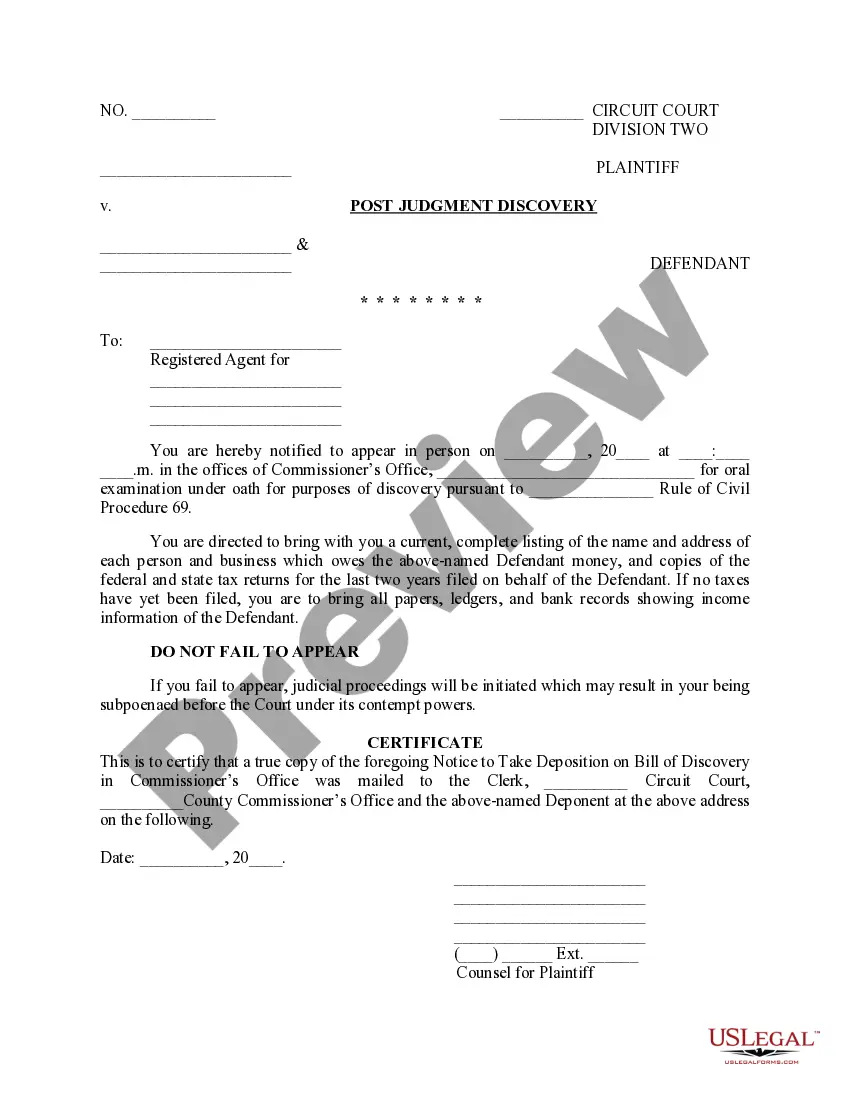
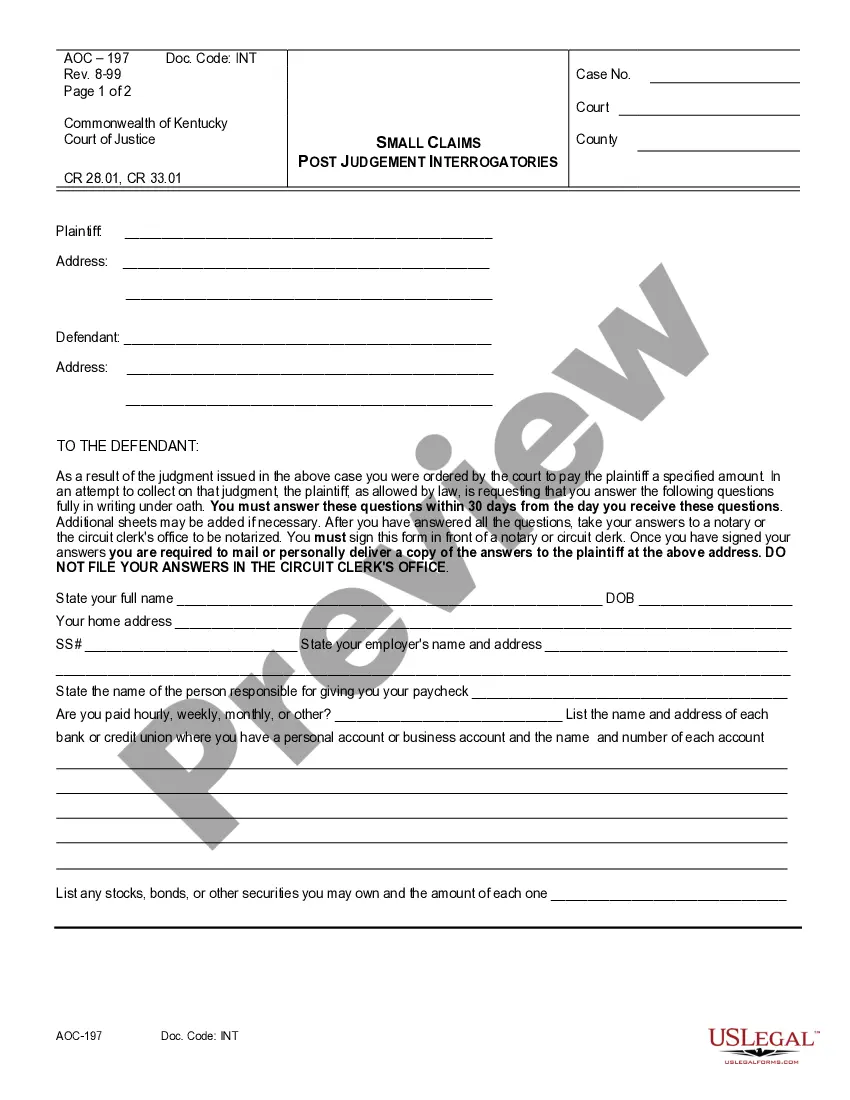
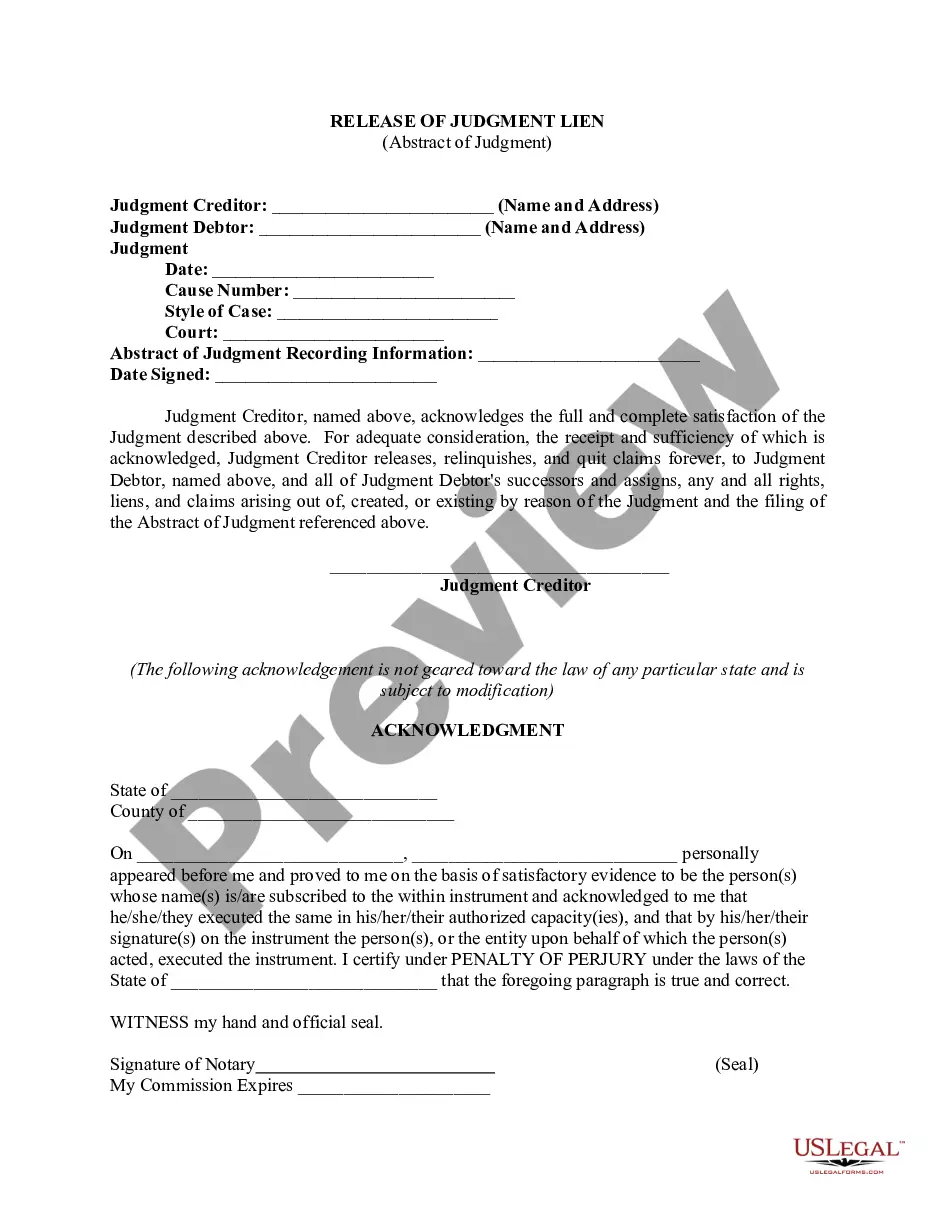
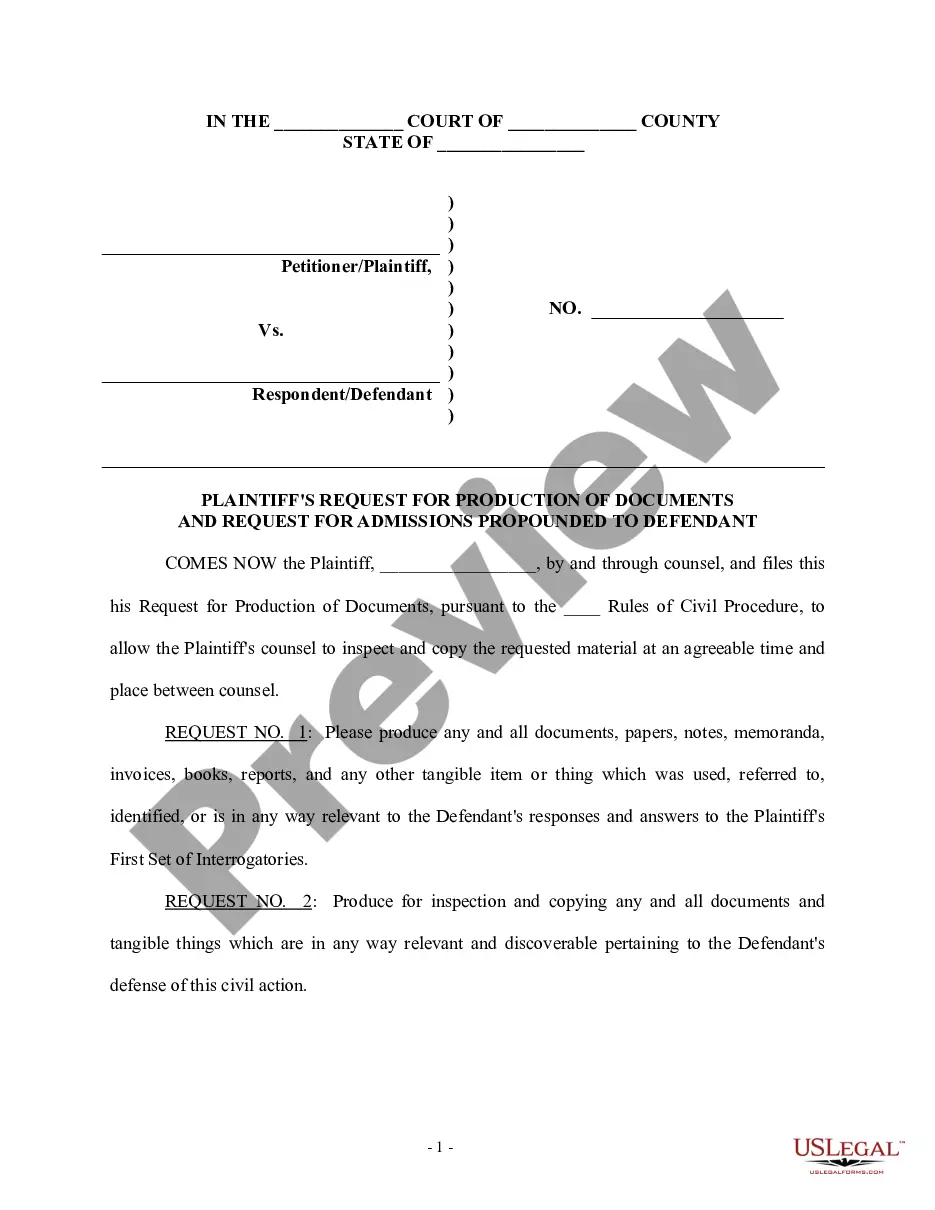
The Post Judgment Discovery form is a legal document used to request information regarding a debtor's financial status after a judgment has been made. This form allows the plaintiff to obtain essential details, such as copies of federal and state tax returns, which can aid in the collection of the judgment amount. It is specifically designed for situations involving the enforcement of a court's monetary decision, making it distinct from other discovery forms used during the trial phase.
Key components of this form
- Case details including the name of the court, division, and parties involved.
- Notification to the debtor to appear for an oral examination under oath.
- Requirements for the debtor to bring specific financial documentation, including tax returns.
- Consequences of failing to appear, including potential judicial proceedings.
- Certification section to affirm the mailing of the notice to relevant parties.
Situations where this form applies
This form should be used when a creditor has obtained a judgment against a debtor and needs to gather further information regarding the debtorâs financial situation. It is particularly useful in cases where the creditor wants to locate assets or enforce the judgment through collection methods, thereby ensuring that the creditor can pursue payment effectively.
Who this form is for
- Creditors or plaintiffs who have a court judgment in their favor.
- Attorneys representing plaintiffs in collection actions.
- Individuals or businesses seeking to understand and collect outstanding debts owed to them.
How to complete this form
- Fill out the case details, including the court name and case number.
- Enter the date and time for the oral examination of the debtor.
- List the documents the debtor is required to bring, such as financial records and tax returns.
- Ensure that the notification is correctly addressed to the debtor's registered agent.
- Complete the certification section confirming that copies were sent to the appropriate parties.
Does this document require notarization?
This form does not typically require notarization unless specified by local law. However, it is important to check your jurisdiction's rules to ensure compliance with any specific requirements regarding notarization for legal documents.
Get your form ready online
Our built-in tools help you complete, sign, share, and store your documents in one place.
Make edits, fill in missing information, and update formatting in US Legal Forms—just like you would in MS Word.
Download a copy, print it, send it by email, or mail it via USPS—whatever works best for your next step.
Sign and collect signatures with our SignNow integration. Send to multiple recipients, set reminders, and more. Go Premium to unlock E-Sign.
If this form requires notarization, complete it online through a secure video call—no need to meet a notary in person or wait for an appointment.
We protect your documents and personal data by following strict security and privacy standards.

Make edits, fill in missing information, and update formatting in US Legal Forms—just like you would in MS Word.

Download a copy, print it, send it by email, or mail it via USPS—whatever works best for your next step.

Sign and collect signatures with our SignNow integration. Send to multiple recipients, set reminders, and more. Go Premium to unlock E-Sign.

If this form requires notarization, complete it online through a secure video call—no need to meet a notary in person or wait for an appointment.

We protect your documents and personal data by following strict security and privacy standards.
Avoid these common issues
- Failing to provide a complete and accurate date and time for the oral examination.
- Neglecting to specify all required documentation the debtor must bring.
- Inaccurately completing the case details, causing potential delays in the process.
Advantages of online completion
- Convenient access to a legally drafted form without needing to visit a law office.
- Ease of customization and editing to fit specific case requirements.
- Reliable templates created and reviewed by licensed attorneys to ensure accuracy and compliance.
Looking for another form?
Form popularity
FAQ
Rule 59 in Kentucky outlines the motion for a new trial, allowing parties to request a retrial based on specific grounds like newly discovered evidence or improper conduct during the initial trial. This rule is significant during Kentucky Post Judgment Discovery, as it can provide opportunities to challenge or reconsider previous judgments. Knowing how to navigate this rule can be an asset in your legal strategy.
A judgment lien in Kentucky is a legal claim against a person's property to secure payment of a court judgment. This lien can arise when a creditor seeks to enforce their rights following a court ruling. Understanding judgment liens is essential for Kentucky Post Judgment Discovery, as they can impact asset recovery strategies and overall case outcomes.
In Kentucky, the statute of limitations for a judgment lien is typically ten years. After this period, the lien may become unenforceable unless renewed by proper legal procedures. Understanding this timeline is vital during Kentucky Post Judgment Discovery, as it affects how and when creditors can enforce their rights. Legal platforms can offer guidance on these processes.
A judgment debtor exam in Kentucky is a court procedure where the creditor can question the debtor about their financial situation. This examination aims to reveal hidden assets that can satisfy the outstanding judgment. To make this process efficient, Kentucky Post Judgment Discovery becomes essential. Utilizing platforms like US Legal Forms can streamline this procedure.
Yes, a judgment lien can be placed on jointly owned property in Kentucky. This means that if one owner has an outstanding judgment, the lien can affect the other owner's ability to sell or refinance the property. It's important to know how this applies in your case, particularly during Kentucky Post Judgment Discovery. Seeking legal advice can provide clarity on your rights and obligations.
In Kentucky, various types of personal property can be seized to satisfy a judgment. This may include bank accounts, vehicles, and certain valuable items. Understanding what can be seized is crucial for both creditors and debtors, especially during Kentucky Post Judgment Discovery. Consulting a legal service like US Legal Forms can help clarify the specifics of your situation.