Kentucky Brick Mason Contract for Contractor
Understanding this form
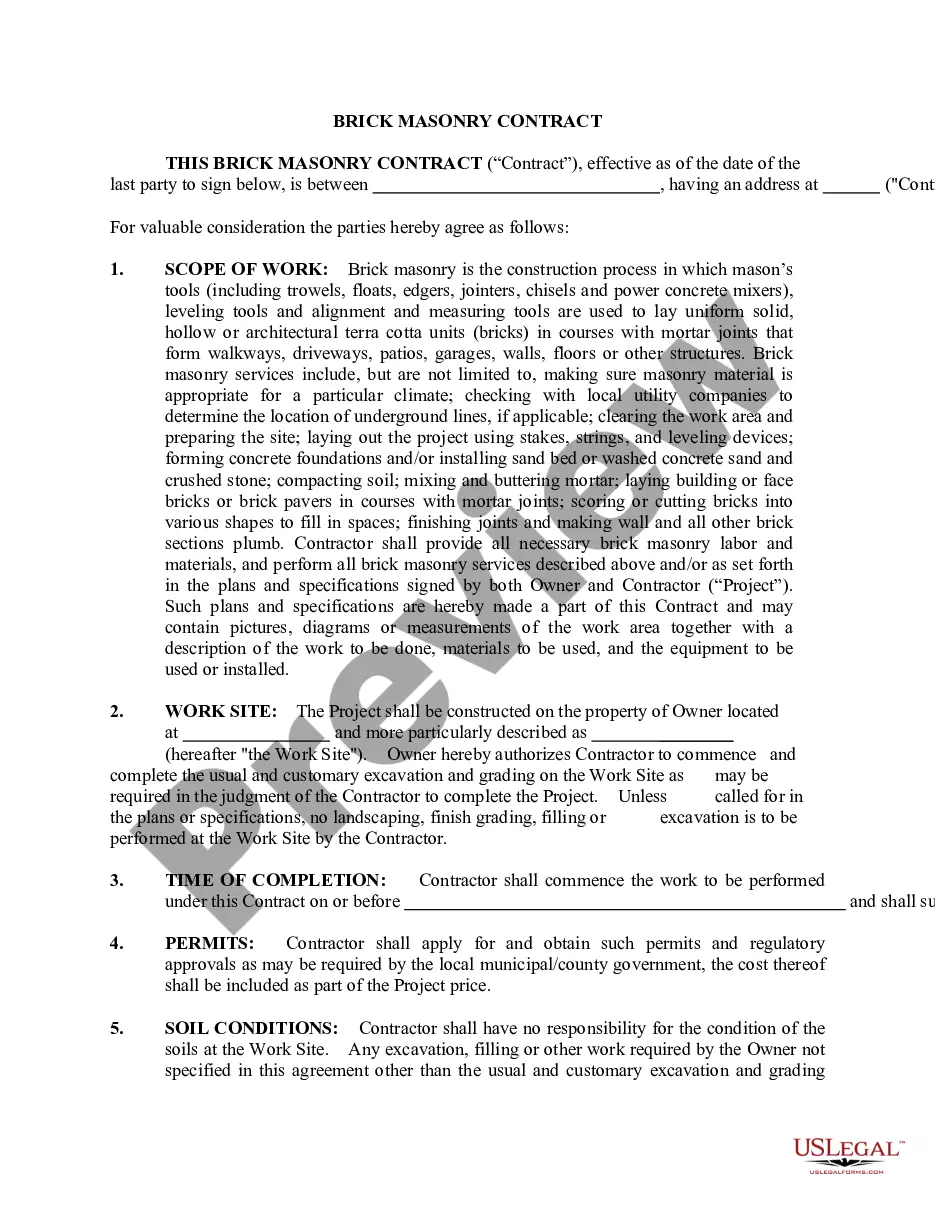
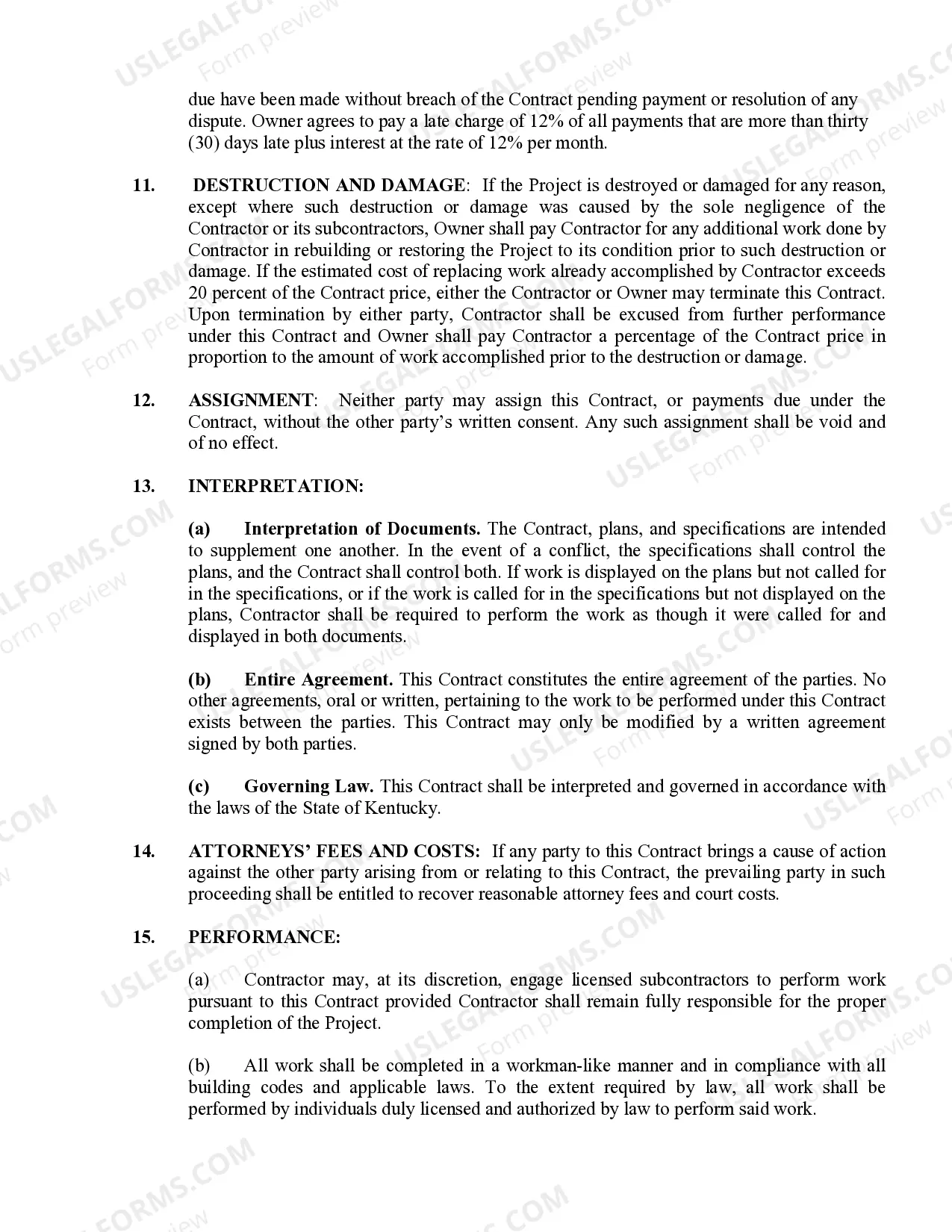
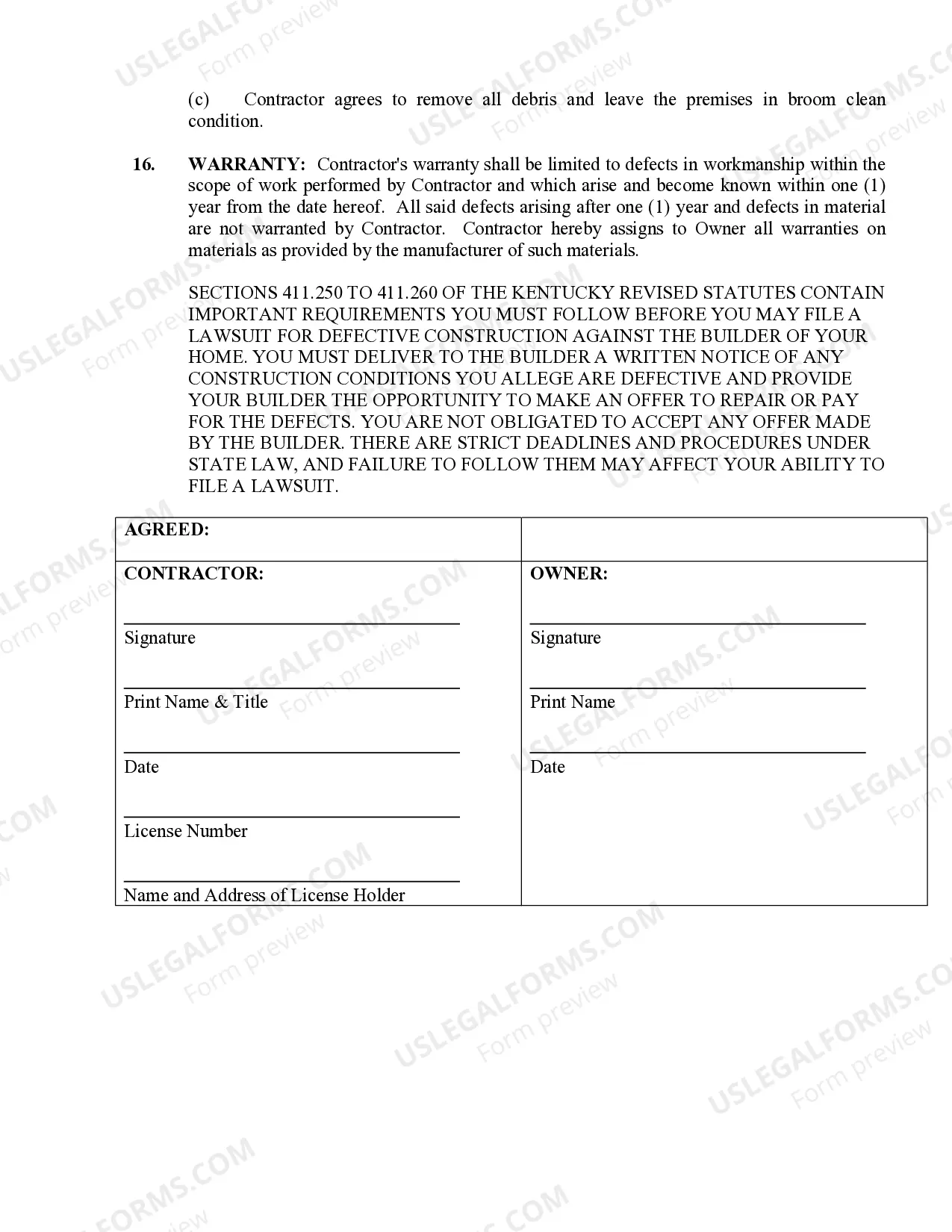
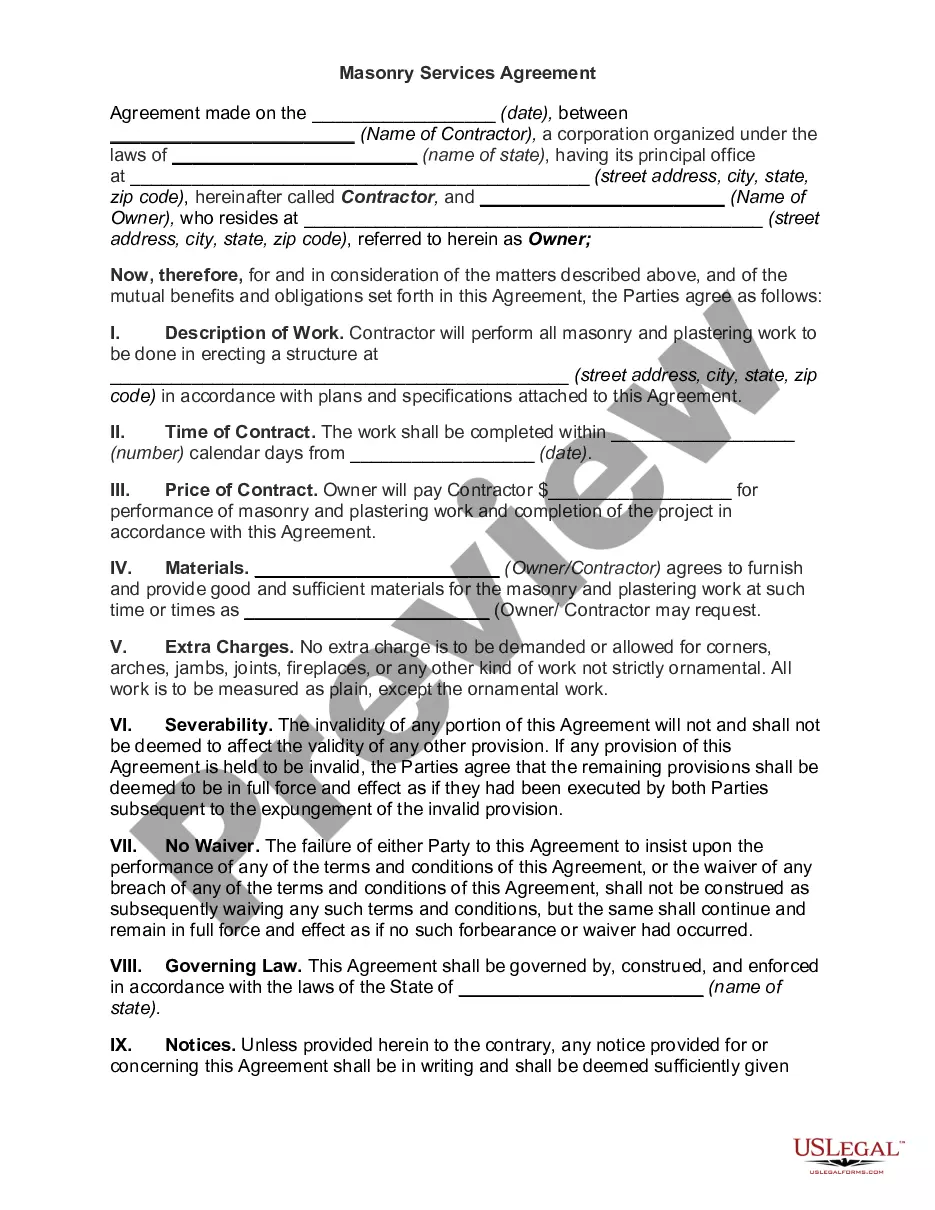
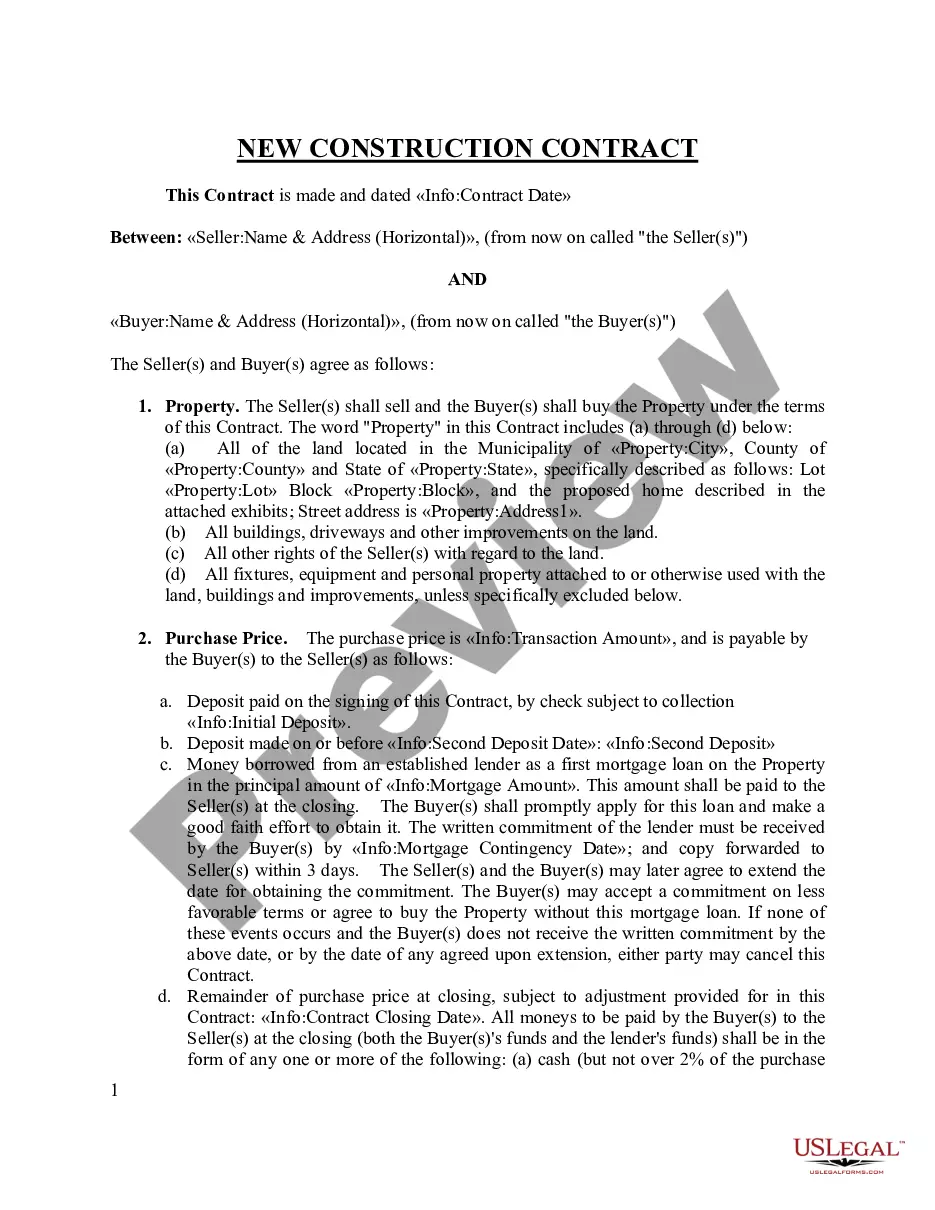
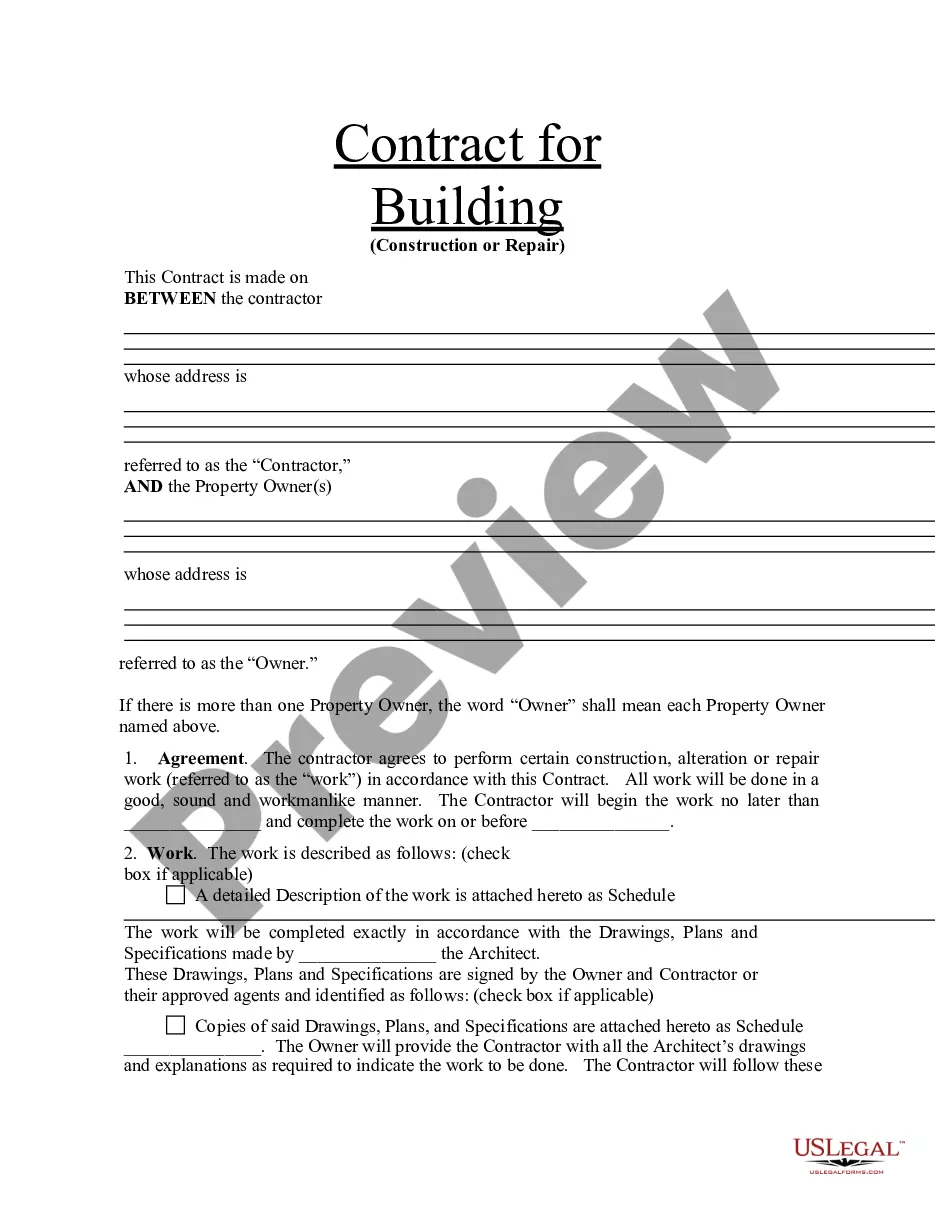
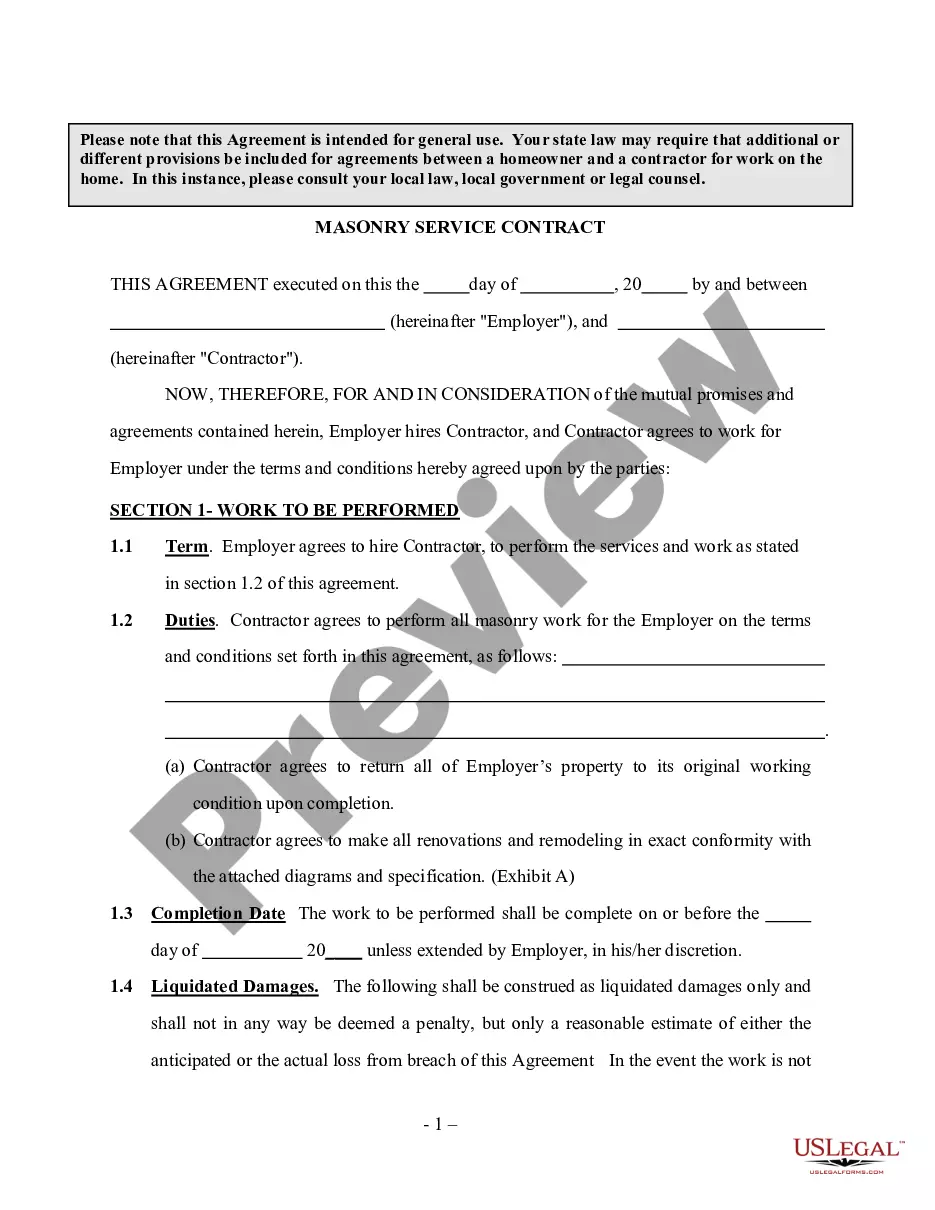
The Brick Mason Contract for Contractor is a legally binding agreement between brick mason contractors and property owners. It outlines the terms and conditions under which brick masonry work will be performed, including payment arrangements, change orders, and warranty provisions. This contract is tailored specifically for compliance with the laws of Kentucky and provides clear guidelines for both parties to ensure a smooth construction process.
What’s included in this form
- Work site information detailing the location where the project will be carried out.
- Permits section outlining the contractor's responsibility to obtain necessary local permits.
- Soil conditions clause indicating that the contractor is not liable for soil-related issues at the site.
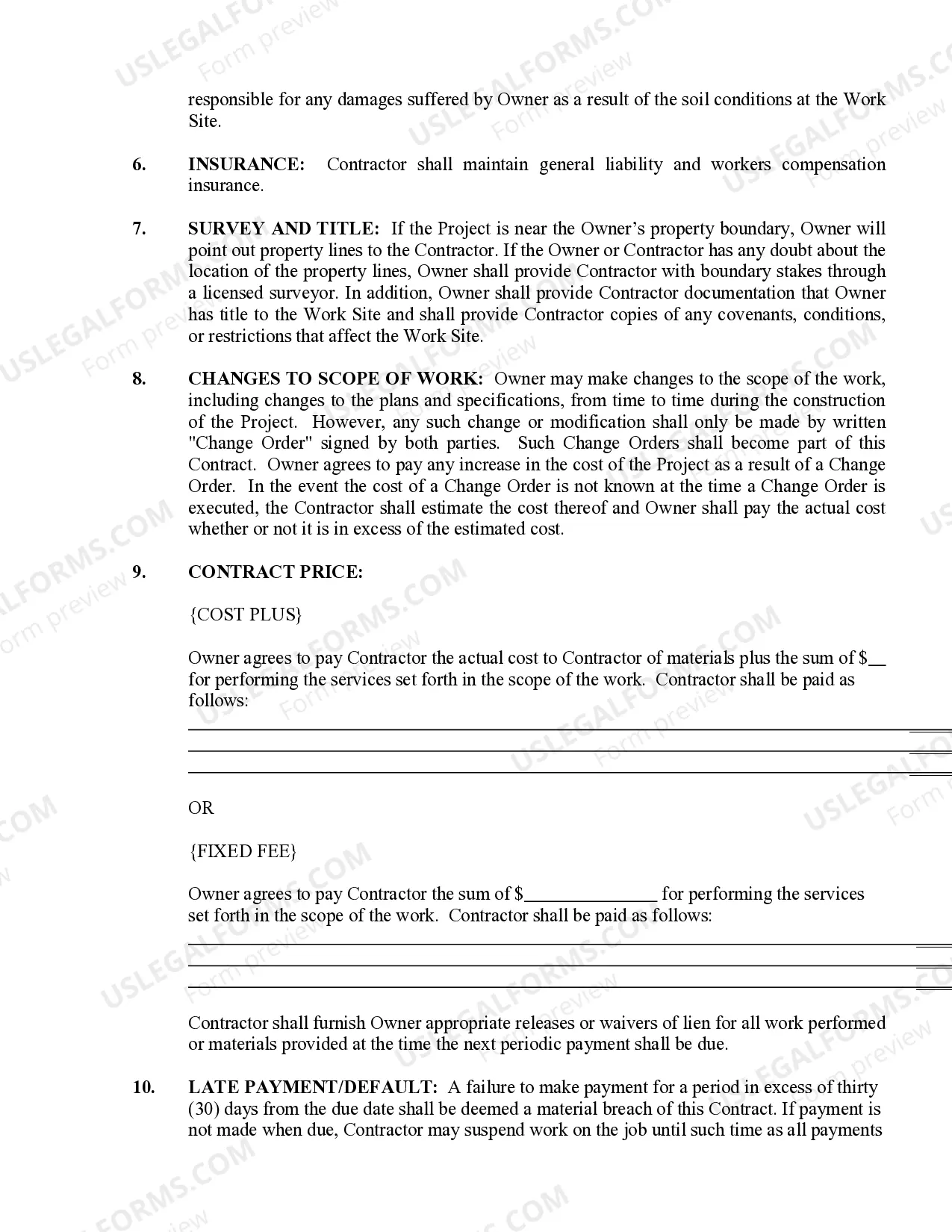
- Insurance requirements for the contractor to maintain general liability and workers' compensation insurance.
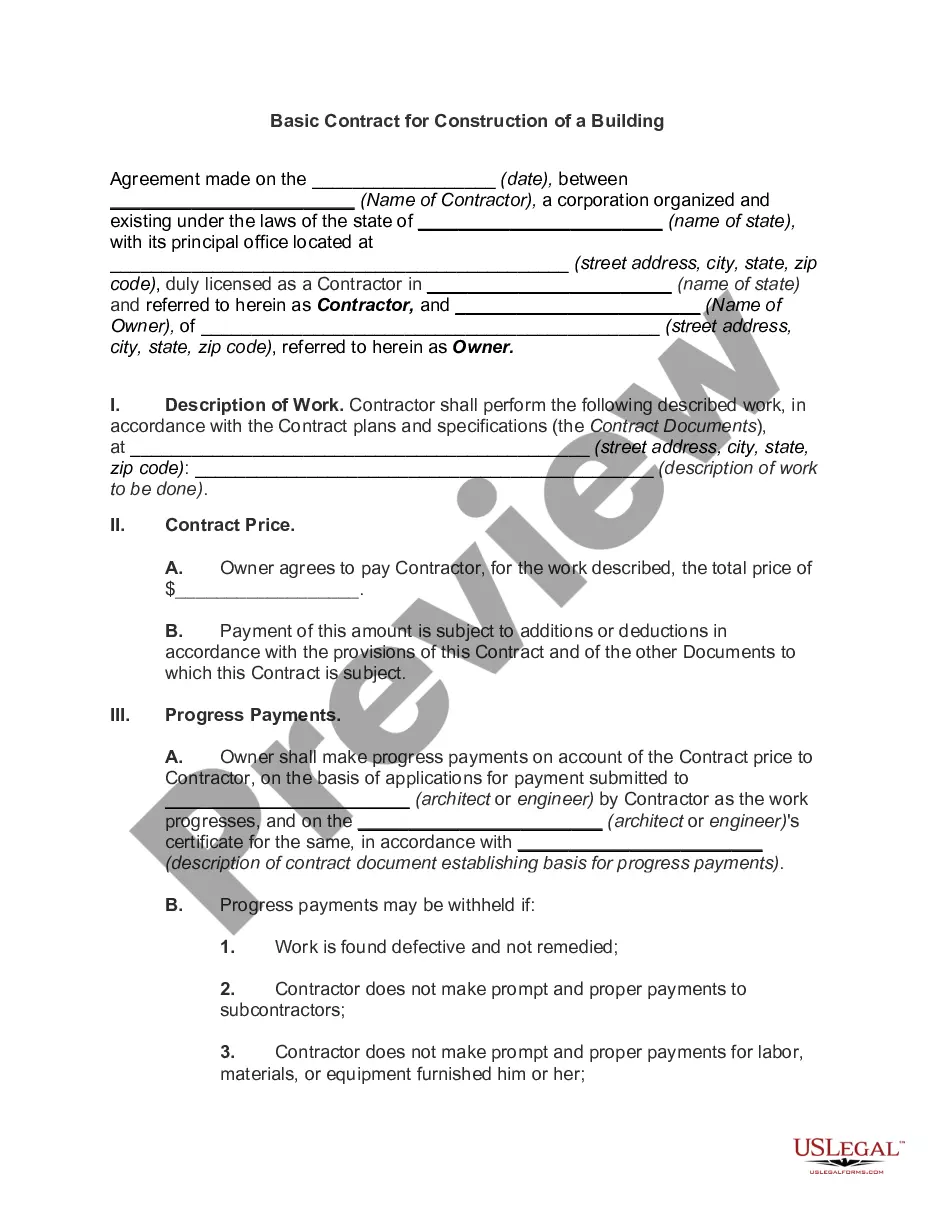
- Change order provisions allowing the owner to modify the scope of work during construction.
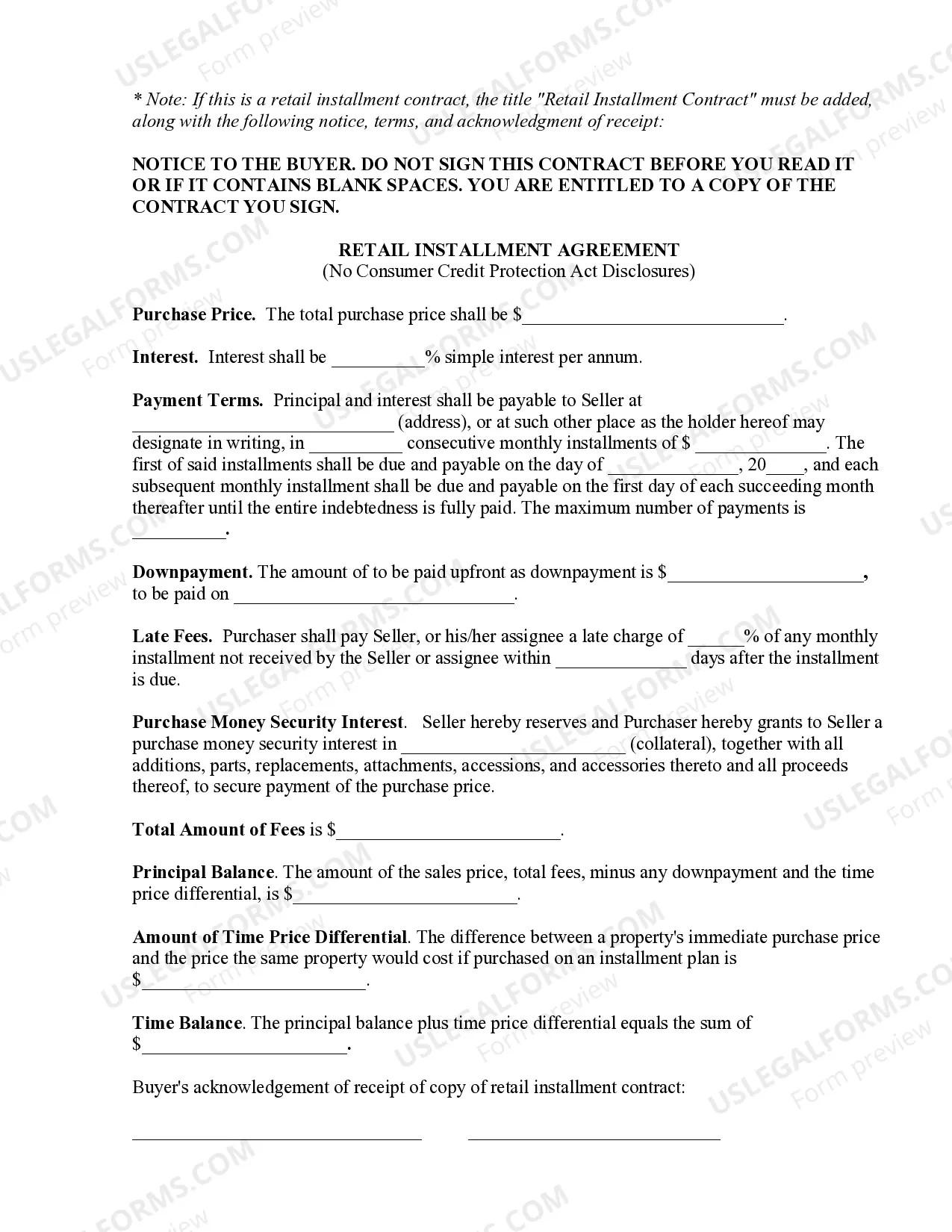
- Contract price structuring for cost plus or fixed fee arrangements.


Situations where this form applies
This form should be used when a property owner hires a brick mason contractor for construction or remodeling projects involving brick masonry. It is appropriate when the project scope is defined and payment terms are established, whether on a cost-plus basis or a fixed fee. The contract helps clarify both parties' responsibilities and provisions for unforeseen changes during the project.
Who this form is for
- Property owners looking to hire a brick mason contractor for any masonry-related project.
- Brick mason contractors who require a standard contract template to govern their work.
- Individuals or entities seeking to ensure compliance with Kentucky's construction laws.
Completing this form step by step
- Identify the parties involved, including the property owner and contractor.
- Specify the exact location of the work site.
- Enter the details regarding payment arrangements (cost plus or fixed fee).
- Outline any change orders required for modifications during the project.
- Sign and date the contract to formalize the agreement.
Notarization guidance
Notarization is generally not required for this form. However, certain states or situations might demand it. You can complete notarization online through US Legal Forms, powered by Notarize, using a verified video call available anytime.
Get your form ready online
Our built-in tools help you complete, sign, share, and store your documents in one place.
Make edits, fill in missing information, and update formatting in US Legal Forms—just like you would in MS Word.
Download a copy, print it, send it by email, or mail it via USPS—whatever works best for your next step.
Sign and collect signatures with our SignNow integration. Send to multiple recipients, set reminders, and more. Go Premium to unlock E-Sign.
If this form requires notarization, complete it online through a secure video call—no need to meet a notary in person or wait for an appointment.
We protect your documents and personal data by following strict security and privacy standards.

Make edits, fill in missing information, and update formatting in US Legal Forms—just like you would in MS Word.

Download a copy, print it, send it by email, or mail it via USPS—whatever works best for your next step.

Sign and collect signatures with our SignNow integration. Send to multiple recipients, set reminders, and more. Go Premium to unlock E-Sign.

If this form requires notarization, complete it online through a secure video call—no need to meet a notary in person or wait for an appointment.

We protect your documents and personal data by following strict security and privacy standards.
Common mistakes
- Failing to specify or agree on the payment terms, leading to future disputes.
- Not obtaining necessary permits, which can result in legal issues.
- Overlooking change order provisions, resulting in misunderstandings about project scope changes.
Why complete this form online
- Immediate access to a professionally drafted contract template.
- Convenience of downloading and customizing the form to fit your specific needs.
- Assurance of compliance with Kentucky state laws, reducing legal risks.
Legal use & context
- This contract serves as a legally enforceable agreement that clarifies roles and responsibilities.
- Including specific clauses helps protect both parties in case of disputes.
- Adhering to state requirements enhances the contract's validity in legal matters.
Looking for another form?
Form popularity
FAQ
If the employer fails to provide the employee with a contract, they could land up in jail (section 93 of the BCEA) or be liable for a hefty fine (schedule 2 of the BCEA).If there is no contract, or if the employee has never been informed, then he/she has the right to conclude that it does not exist.
Yes, absolutely. Starting work without a signed contract means that your position isn't clear, or even worse it's weak.It also means that the contract is legally enforceable and will be able to support you if you decide to take legal action.
Length of Contract. Each client contractor agreement should outline the length of the working relationship. Project Description. Payment Terms. Nondisclosure Terms. Rights and Responsibilities. Termination Clause. Disclaimers.
First of all, you can sue your contractor for breach of contract, even without a written contract, and she can sue you as well.See Nolo's article, "Breach of Contract Cases in Small Claims Court," for more on this. However, an alleged oral contract does create difficult evidentiary questions for the judge.
Name of contractor and contact information. Name of homeowner and contact information. Describe property in legal terms. List attachments to the contract. The cost. Failure of homeowner to obtain financing. Description of the work and the completion date. Right to stop the project.
For most types of projects you hire an independent contractor (IC) to do, the law does not require you to put anything in writing. You can meet with the IC, agree on the terms of your arrangement, and have an oral contract or agreement that is legally binding. Just because you can doesn't mean you should, however.
A contractor is a person or company that works on a contractual basis, negotiating deals with different clients to work on specific jobs or projects.Unlike employees, contractors do not carry out regular work for a single employer. Instead, they work for a number of different clients as and when required.
There is no legal requirement for an employee to have a written contract of employment, although having something in writing can make it easier to understand what your contractual obligations and rights are. Sometimes employment contracts can be verbal, which is especially common in small businesses.
Get it in writing. Keep it simple. Deal with the right person. Identify each party correctly. Spell out all of the details. Specify payment obligations. Agree on circumstances that terminate the contract. Agree on a way to resolve disputes.